FEB 9, 2025


Homilies
Homilies
- Bishop Barron
- 1-MINUTE HOMILY
- 2-Minute Homily
- Fr. Peter Hahn
- Fr. Jude Langeh
- MORE VIDEOS
BISHOP
BARRON
SUNDAY
SERMON
PODCASTS
Bishop Barron
Archive

5th Sunday of Year C

5th Sunday of Year C
ONE
MINUTE
HOMILY

TIME-STAMPED VIDEOS
The Jesuit-Post

5th Sunday of Year C

5th Sunday of Year C
TWO
MINUTE
HOMILY


5th Sunday of Year C

5th Sunday of Year C
FATHER
PETER
HAHN

5th Sunday of Year C

5th Sunday of Year C

5th Sunday of Year C
FATHER
JUDE
LANGEH




⬇️ Dcn. Peter McCulloch

2019 | 2022 | 2025
5th Sunday of Year C

On Schindler’s Conversion

Have you seen the movie Schindler’s List (1993)? I visited Oskar Schindler’s factory in Krakow, Poland, in 2016. It’s now a museum.
Oskar Schindler (1908-74) was a Czech businessman and German spy who joined the Nazi Party in 1939. That year he also started managing a factory in Krakow, using Jewish labour.
In the beginning, he was an amoral, hard-drinking womaniser and gambler who loved making money. But through the war something inside him changed. He began noticing how poorly the Jews were treated...
So, why do I tell this story? It’s because it’s a good example of how God calls us all to conversion. And it’s a process that’s replicated in Luke’s Gospel today.
Jesus is teaching on the shore of the Sea of Galilee...
This discussion guide has been generated by the WORD THIS WEEK'S Catholic AI Assistant based on Deacon McCulloch's homily.
Introduction: Discuss the setting of the sermon, including the key scripture passages: Isaiah 6:1-8, 1 Corinthians 15:1-11, and Luke 5:1-11.
Opening Reflection:
- Have you seen the movie "Schindler’s List"? How did it impact your understanding of Oskar Schindler’s story?
- Oskar Schindler started as a Nazi profiteer. What stands out to you about his transformation throughout the war?
Oskar Schindler’s Journey:
- How does the sermon describe Oskar Schindler before his transformation?
- Discuss the steps in Schindler’s gradual change. How did his actions and intentions evolve?
- What role do you think seeing, listening, and responding played in Schindler’s conversion?
Spiritual Transformation:
- How does Schindler’s story illustrate the process of spiritual conversion?
- Reflect on the idea that God speaks through our senses and conscience. How might one be attentive to these messages in daily life?
- In what ways is Schindler’s incremental commitment similar to the steps of conversion in Luke’s Gospel?
Parallel with Peter’s Experience:
- What similarities can you find between Oskar Schindler’s transformation and Peter’s experience with Jesus in Luke 5:1-11?
- How does Peter’s journey from reluctance to commitment mirror potential stages of our own conversion?
The Call to Action:
- How does the notion of a gradual and personal call to action resonate with you?
- Discuss the barriers that might prevent someone from answering this call. What does "the pain of change" mean in this context?
- Where have you observed similar conversion stories, either personally or in others?
Conclusion and Application:
- Reflect on the impact of Schindler’s actions. What does his legacy of saving 1,200 Jews teach about the power of commitment and courage?
- How might God be calling you to make a difference in your community or life today? Consider specific actions or changes you feel prompted to make.
- Close with a reflection on St. Therese of Lisieux's quote and discuss how the first step in this journey could look in your life.
Closing Prayer: Invite participants to pray for guidance in their personal journey of conversion and transformation.
This adaptation of Deacon McCulloch's homily was generated by our Catholic Assistant AI bot, to help preachers share key insights from the homily with children and teens.
Hey everyone! Have you ever watched the movie "Schindler’s List"? It's pretty impactful and tells the story of a guy named Oskar Schindler. I actually visited his factory in Krakow, Poland. It's now a museum that shares a powerful piece of history.
Oskar Schindler wasn't always a hero. In 1939, he was part of the Nazi Party and ran a factory using Jewish labor. At first, he was all about money, drinks, and gambling. But during World War II, something inside him started to change. He saw how unfairly the Jewish people were being treated and couldn't ignore it.
Slowly, Schindler began to protect the people working for him, even going as far as to bribe officials to save Jewish lives. He used lies and tricks to keep as many people as possible out of the gas chambers. He even ran his factories inefficiently to mess up the Nazi efforts!
By the end of the war, Schindler had spent all his money to save 1,200 Jews. Later, he was named ‘Righteous Among the Nations’ by Israel. When he passed away, he was buried in Jerusalem, fulfilling his last wish.
So, how did Schindler transform from a self-centered businessman to someone who risked everything for others? It wasn’t something that happened overnight. It took a few years for him to change, especially near the end of the war. He listened to his heart and conscience, and gradually, he made choices that saved lives.
In the Bible, there's a similar story about Simon Peter. One day, Jesus asked Peter if he could use his boat to teach people by the sea. Peter was unsure at first, but he remembered that Jesus had healed his mother-in-law, so he agreed. Later, Jesus asked Peter to go fishing, even though he hadn't caught anything all day. Reluctantly, Peter agreed, and they ended up catching a ton of fish. This amazed him, and he realized how incredible Jesus was.
Both Schindler and Peter went through a process of change. It began with observing and listening, then slowly trying to do good. As they got more involved, their hearts were touched, and they felt hesitant, thinking they weren’t good enough. But they were reassured and eventually took a personal commitment to follow their calling.
Change can seem scary at first, but it’s really about moving towards love and doing what's right. Like St. Therese of Lisieux said, the hardest part is taking that first step, the one that involves change. After that, things get a lot easier.
Today, you have the power to make a positive difference in the world around you. Are you listening to that call? How might you answer it in your own life?
DISCLAIMER: Adaptations (like translations), may not fully capture the nuances or precise meanings of the original text. It's essential to read the original homily which can be accessed by clicking on the title above

2019 | 2022 | 2025
5th Sunday of Year C


In today’s Gospel today, Luke tells the conversion story of the apostle Peter, and it spells out the stages we all tend to go through as we gradually turn towards Jesus.
It begins by simply observing what’s happening from a distance. Then it involves listening to what’s being said, and allowing it to move our hearts. Next, it involves accepting small commitments within our comfort zone, helping where we can.
Then we’re amazed when the call becomes specific and deeply personal, and something powerful happens inside us. And we start to feel unworthy, perhaps even scared. But then we’re reassured. And finally, that’s followed by acceptance and a deep, personal commitment to Jesus.
These are the steps we all typically experience in entering the life of Christ, and they certainly applied to Gary Sinise.
How do they apply in your own spiritual journey?
This discussion guide has been generated by the WORD THIS WEEK'S Catholic AI Assistant based on Deacon McCulloch's homily.
Introduction
This discussion guide is designed to facilitate meaningful conversations around themes of transformation, service, and commitment in one's spiritual journey. Through the story of actor Gary Sinise and biblical references, participants will explore the complexities of conversion and personal growth.
Section 1: Understanding Christian Conversion
Discussion Questions:
- How do you typically perceive Christian conversion? Does it align with the idea of it being a slow process rather than a one-time event?
- Reflect on your own journey. Have you experienced any gradual changes in your beliefs or values?
Activity:
- Share a personal story or example from your life where a slow transformation has occurred. What were the factors that contributed to this change?
Section 2: Gary Sinise's Story
Synopsis:
- Gary Sinise, born in Chicago, found his path from acting to faith. His journey highlights key experiences, including portraying Lt. Dan in "Forrest Gump," his later involvement with veterans, and his family's struggles which led them towards the Catholic Church.
Discussion Questions:
- What impact did Gary’s portrayal of Lt. Dan have on his life and sense of purpose?
- How did Moira’s conversion influence Gary and their family dynamics?
Reflective Exercise:
- Consider a turning point in your life that inspired a desire to help others. What was your motivation?
Section 3: Impact of Service
Key Points:
- After the 9/11 tragedy, Gary was driven to contribute positively through various acts of service. His efforts culminated in the establishment of the Gary Sinise Foundation, underscoring how service to others can heal personal grief and provide purpose.
Discussion Questions:
- How does service to others play a role in your spiritual or personal life?
- Have you found that helping others has helped heal your own emotional wounds? Share your experience.
Practical Application:
- Identify a cause you feel drawn to support. Discuss ways to get involved individually or as a group.
Section 4: Spiritual Stages and Personal Reflection
Scriptural Reference:
- The sermon references Luke's Gospel to describe the stages of conversion. Highlighting observation, listening, small commitments, personal call, reassurance, and acceptance.
Discussion Questions:
- How do these stages resonate with your experience? Which stage do you feel you are currently in?
- How do you interpret God’s calling in your life? Are there specific moments where this felt evident?
Reflective Activity:
- Spend a few moments in quiet reflection, thinking of a time when you felt called to commit to something greater. Consider writing down this experience.
Section 5: Living in Joy
Quote Reflection:
- Reflection on the passage from "Jesus Calling," as it pertains to experiencing and sharing joy through faith.
Discussion Questions:
- How do you interpret the idea of being a "reservoir of the Spirit’s fruit"?
- In what ways can you remain open to the influence of spirituality and allow it to spread joy to others?
Closing Exercise:
- Consider one practical step you can take this week to stay close to your faith and let this joy flow through you. Share your plans with the group and offer encouragement to one another.
This adaptation of Deacon McCulloch's homily was generated by our Catholic Assistant AI bot, to help preachers share key insights from the homily with children and teens.
Hey everyone! Let’s talk about a super interesting guy and his journey with faith. You might know the actor Gary Sinise from the movie Forrest Gump, where he played Lieutenant Dan. Well, Gary's path to becoming a Christian was not a quick one—it was something that unfolded over time.
Gary grew up in Chicago, back in the 1950s, in a family that didn't really go to church much. He kind of rebelled in school but found his passion in acting. He also met Moira Harris through acting, got married, and they had three kids.
So, in Forrest Gump, Gary's character, Lt. Dan, goes through some serious stuff. He loses his legs in the Vietnam War and becomes really bitter. But later, he faces a huge storm on a shrimp boat in Alabama and comes out of it with a newfound peace with God, a new wife, and hope.
After the movie came out in 1994, Gary was honored by disabled veterans for his role. He was amazed by the support and asked himself, "What have I really done to deserve this?" Lt. Dan was a huge symbol for many injured veterans, who often felt ignored. This moved Gary deeply, and he started thinking about how he could help.
Gary got involved in supporting veterans and first responders, like paramedics and firefighters, through fundraising and public speaking. His band, the Lt. Dan Band, also played for charity.
Meanwhile, Gary’s family was going through a tough time. Moira, his wife, was struggling with alcoholism. Someone at an AA meeting suggested she become Catholic, and in 2000, she did. They even sent their kids to a Catholic school, but Gary wasn't interested at first.
However, he eventually agreed to give it a try. They started going to Mass together, and Gary noticed the positive impact it had on his family.
Then 9/11 happened, and it really shook Gary. At a memorial Mass, he learned that helping others could heal broken hearts. This motivated him to visit hospitals, war zones, and support children in Iraqi schools. He found healing through these acts of kindness and started thinking that maybe God had a plan for him.
In 2010, Gary surprised everyone by joining the Catholic Church. A year later, he launched the Gary Sinise Foundation to support all his initiatives.
This whole journey is a lot like what we read in the Gospel of Luke about the apostle Peter. It shows how people gradually turn towards Jesus. It starts by just noticing what’s going on, listening to the message, and then taking small steps that feel comfortable. Eventually, it all clicks personally, and although it might feel scary at first, there's reassurance and a deeper commitment to Jesus.
Gary Sinise's journey is a great example of this process. Now think about your own journey. How do these steps show up in your life?
To wrap this up, here's a quote Gary often shares from a book called Jesus Calling. It talks about how God works through us to bless others:
I am creating something new in you: a bubbling spring of Joy that spills over into others’ lives. Do not mistake this Joy for your own or try to take credit for it… Instead, watch in delight as My Spirit flows through you to bless others. Let yourself become a reservoir of the Spirit’s fruit.
So, keep close to God, be open to what He's doing in your life, and don't try to control it. Just enjoy the journey.
DISCLAIMER: Adaptations (like translations), may not fully capture the nuances or precise meanings of the original text. It's essential to read the original homily which can be accessed by clicking on the title above
⬇️ Fr. Austin Fleming
5th Sunday of Year C

The Summons by Graham Maule and John Bell
Will you come and follow me
If I but call your name?
Will you go where you don’t know
And never be the same?
Will you let my love be shown,
Will you let my name be known,
Will you let my life be grown
In you and you in me?

This video sings what the Lord asks of us:
what he summons out of us, day in and day out..
The Summons
This discussion guide has been generated by the WORD THIS WEEK’S Catholic AI Assistant based on the song The Summons.

Exploring Commitment:
– What does it mean to “go where you don’t know” and to “never be the same”? Discuss how these themes relate to personal growth and transformation.
– How can we let God’s love be shown through our actions and decisions in daily life?
Self-Sacrifice and Service:
– In what ways does leaving oneself behind align with serving others, both “cruel and kind”? Reflect on instances where helping others challenged your comfort zone.
– How do you interpret the idea of letting God answer prayers through you? Share examples of times you felt used to fulfill a larger purpose.
Empathy and Healing:
– Discuss the metaphorical meaning of letting the blind see and setting prisoners free. How can these themes apply to situations in your community?
– How can we perform acts of kindness “unseen” without seeking recognition? Why is this important?
Self-Acceptance and Faith as Tools for Change:
– How can we love the parts of ourselves we often hide? Discuss how accepting oneself fully can impact our interactions with the world.
– In what ways can faith be used as a tool to reshape the world around us? Share ideas for practical actions that can be taken in this regard.
Responding to the Call:
– Reflect on the image of following in God’s footsteps. How does this influence the way you view your life’s path and decisions?
– How can we make a commitment to move, live, and grow in alignment with divine guidance?
Dealing with Overwhelm:
– The sermon suggests not to be overwhelmed by these questions but to ponder them daily. How might breaking down these spiritual quests into daily actions help in maintaining focus and purpose?
– What are some personal strategies you use to ensure that you are aligning your daily actions with your spiritual intentions?

5th Sunday of Year C

Photograph by Fr Lawrence Lew OP of a window from St Cyprian’s church in London.
Homily Excerpt
Fifth Sunday in Ordinary Time (C) | Fr David McLean reflects on the living message of the Gospel of salvation that brings hope to every generation.

Paul wants to remind the Corinthians of the gospel that he had preached to them, the gospel which they had received. He is, of course, not referring to a book. When someone mentions ‘a gospel’, we tend to think of the four gospels of the New Testament. There is a tendency to think of the word in the written form. We may even think of Luke, the gospel we have at today’s Mass. Paul, however, is not referring to a written book.
5th Sunday of Year C

Homily Excerpt
Fifth Sunday of the Year. Fr Richard Finn preaches on the response of faith to God’s call.
It’s unfashionable to say so, but God often makes us afraid! Just look at today’s readings. Isaiah’s vision of God leads the prophet to cry out that he is ‘lost’. In the Gospel, when Simon sees Jesus command the riches of the sea, when the fishermen fill the boats with their catch until they start to sink, Simon cries out in fear for Jesus to leave, so aware is Simon of his own sinfulness. We might then wonder how far a largely unacknowledged fear of God, of God’s holiness, hides within the hearts of many who prefer to keep God, and all things religious, at a safe distance. We might also wonder if such a fear doesn’t hide within our own hearts. Can the very goodness of God disconcert us, as it lights up those parts of our mortal lives we prefer to remain out of sight or remembrance?
5th Sunday of Year C
Homily Excerpt
Fifth Sunday of the Year. Fr Dermot Morrin preaches on the call of St Peter.
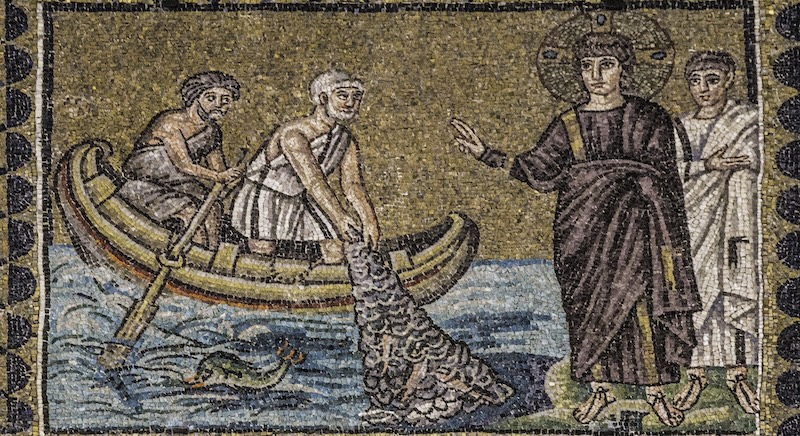
Jesus says, ‘Henceforth you will be catching men’. The word used here is different from the one used earlier when Simon Peter says that they had not caught any fish. This word used here by Jesus for catching men was used in hunting and in war. It meant taking someone alive. The one captured is rather captivated, caught up in the holy nets of the Lord and therein truly gains his or her life.
You couldn’t fish with those nets on your own. It took a few people to handle those nets, so in a very real sense, it was the nets and using them which had brought these four apostles together. But on that beautiful morning it was Jesus alone who was cast his net. These four are caught by faith in Jesus. Jesus captures them. Their ties of family, friendship and business are transformed into a single bond which is far deeper and far wider. It is the bond of faith in Jesus.
⬇️ Fr. Charles E. Irvin
5th Sunday of Year C
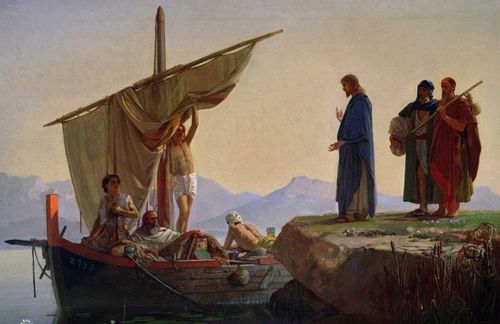

We find Simon Peter in today’s gospel account in a moment of failure. We shouldn’t think it was his only failure. He probably encountered many other such moments in the years he had been in the business of fishing. Was this failure the last straw? Was this the final failure for him? Was he about to abandon his fishing business and start out all over again in a new business? We don’t know. But many of us do know the feeling; many of us have had moments of such profound doubt that we’ve been ready to give up.
This discussion guide has been generated by the WORD THIS WEEK’S Catholic AI Assistant based on Fr. Irvin’s homily. NEED HELP? Copy and paste a question into the chat bot in the lower right corner of the screen and have our Catholic Assistant help you.
Introduction and Context:
1. Background of Simon Peter:
– Discuss Simon Peter’s role as a fisherman and why it was significant. What responsibilities did he have?
– Consider the pressures he may have faced in his profession and how they relate to the importance of success in his life.
2. Moments of Doubt and Failure:
– Reflect on the moments of failure that Simon Peter experienced. How might these have shaped his character?
– Share personal experiences of doubt and failure. How do these moments affect our self-perception?
3. Nostalgia and Self-Reflection:
– How do memories, both good and bad, influence our present actions and feelings about success or failure?
– Discuss how these reflections can lead to either growth or stagnation.
Discussion Questions:
1. Facing Immense Forces:
– In Paul’s letter to the Ephesians, he speaks of struggles beyond flesh and blood. What modern “forces” do you think we face today?
– How can acknowledging these forces help us in our personal and spiritual battles?
2. Isaiah’s Challenges:
– Explore Isaiah’s feelings of defeat. What external and internal pressures contributed to his state?
– How do public perception and personal belief systems impact someone’s sense of efficacy and purpose?
3. The Role of Faith and Perspective:
– Consider the statement that limiting God by our imagination limits ourselves. How can expanding our view of God change our mindset?
– Discuss how faith is more than adherence to doctrines. How does it manifest in our daily actions and responses to life?
Personal Reflection:
1. Responding to Failures:
– Have you seen failure as an opportunity in your life? How did your perspective change the outcome?
– How do Peter and Isaiah’s stories inspire you to respond to challenges?
2. Seeing Beyond Limitations:
– Identify a limitation you have placed on yourself or God. What steps can you take to remove this barrier?
– In what areas of your life do you rely too heavily on your strength, and how can you shift that reliance towards faith?
Practical Applications:
1. Developing Resilience:
– List ways in which past difficulties have strengthened you or taught you valuable lessons.
– Set goals for how you can respond differently to future challenges, inspired by Peter and Isaiah.
2. Living with Purpose:
– Identify areas in your life where you feel called to make a difference. How does faith play a role in your pursuit?
– Reflect on how embracing God’s possibilities can empower your daily life and personal mission.
Conclusion:
1. Embracing Opportunities:
– Summarize key insights gained from examining Peter and Isaiah’s experiences.
– Encourage setting a mindset of growth and faith, using life’s challenges as stepping stones.
2. Empowerment through Faith:
– Reiterate the belief that “with God all things are possible.” How can this belief transform your approach to life’s trials?
– Challenge each participant to identify one area where they can actively apply these teachings in their life this week.
⬇️ Fr. George Smiga
- Two Approaches to Pain (2004)
- Catching People (2007)
- Talking or Fishing (2010)
- God is Not Kidding (2013)
- From Transition to Call (2015)
5th Sunday of Year C
Each week, THE WORD THIS WEEK presents an excerpt from Fr. Smiga’s homily archive. To access all of the homilies for this Sunday, click on the title above. Then scroll down the page to find the text of this homily.

2019 HOMILY – Years later, as he approached his own death, Peter may have remembered his first meeting with Jesus in this way: “It was a discouraging day. We had worked all night and caught nothing. I knew that I would never be able to pay off the debt on my new boat with this kind of luck. As I stood there brooding over the empty nets, a man stepped into my boat. I knew who he was—the new Rabbi that everyone was talking about. He wanted to preach from my boat. It was a peculiar request. But since I had no fish to sell and was free that day, I obliged him.
“As I listened to his words, they moved me. I began to wonder whether his promise of a better word could be true. Could God indeed be acting to bring about the kingdom?’ It was the power of his words that led me to agree to his next request: to go in the deep water and lower my nets. I knew there were no fish to be caught in the lake that day. I was a fisherman. If we had worked all night and caught nothing, we certainly were not going to catch anything in the middle of the day. But, as I pulled my net out of the water filled with fish, I looked into his eyes and my heart stopped. Because in that moment, I realized what he wanted. He didn’t want my boat. He didn’t want the fish. He wanted me.
This discussion guide has been generated by the WORD THIS WEEK’S Catholic AI Assistant based on Fr. Smiga’s homily.
Introduction and Context:
1. Background of Simon Peter:
– Discuss Simon Peter’s role as a fisherman and why it was significant. What responsibilities did he have?
– Consider the pressures he may have faced in his profession and how they relate to the importance of success in his life.
2. Moments of Doubt and Failure:
– Reflect on the moments of failure that Simon Peter experienced. How might these have shaped his character?
– Share personal experiences of doubt and failure. How do these moments affect our self-perception?
3. Nostalgia and Self-Reflection:
– How do memories, both good and bad, influence our present actions and feelings about success or failure?
– Discuss how these reflections can lead to either growth or stagnation.
Discussion Questions:
1. Facing Immense Forces:
– In Paul’s letter to the Ephesians, he speaks of struggles beyond flesh and blood. What modern “forces” do you think we face today?
– How can acknowledging these forces help us in our personal and spiritual battles?
2. Isaiah’s Challenges:
– Explore Isaiah’s feelings of defeat. What external and internal pressures contributed to his state?
– How do public perception and personal belief systems impact someone’s sense of efficacy and purpose?
3. The Role of Faith and Perspective:
– Consider the statement that limiting God by our imagination limits ourselves. How can expanding our view of God change our mindset?
– Discuss how faith is more than adherence to doctrines. How does it manifest in our daily actions and responses to life?
Personal Reflection:
1. Responding to Failures:
– Have you seen failure as an opportunity in your life? How did your perspective change the outcome?
– How do Peter and Isaiah’s stories inspire you to respond to challenges?
2. Seeing Beyond Limitations:
– Identify a limitation you have placed on yourself or God. What steps can you take to remove this barrier?
– In what areas of your life do you rely too heavily on your strength, and how can you shift that reliance towards faith?
Practical Applications:
1. Developing Resilience:
– List ways in which past difficulties have strengthened you or taught you valuable lessons.
– Set goals for how you can respond differently to future challenges, inspired by Peter and Isaiah.
2. Living with Purpose:
– Identify areas in your life where you feel called to make a difference. How does faith play a role in your pursuit?
– Reflect on how embracing God’s possibilities can empower your daily life and personal mission.
Conclusion:
1. Embracing Opportunities:
– Summarize key insights gained from examining Peter and Isaiah’s experiences.
– Encourage setting a mindset of growth and faith, using life’s challenges as stepping stones.
2. Empowerment through Faith:
– Reiterate the belief that “with God all things are possible.” How can this belief transform your approach to life’s trials?
– Challenge each participant to identify one area where they can actively apply these teachings in their life this week.
5th Sunday of Year C
Life-Issue Homilies for Sunday
Lifeissues.net is mainly concerned with publishing articles directly related to issues raised in Evangelium Vitae, but also offers weekly pro-life homilies.
RELATED PAGE:
Frank Pavone Video/Notes on Abortion
5th Sunday of Year C

The Call to Holiness

Most of the time saints and even the Lord are pictured as having haloes. This depiction has lost its meaning for modern people. The meaning of the halo is the representation of the holiness that flows from deep within a person. A halo isn’t a circular piece of metal. A halo is a union with God that overflows from the life of a person committed to the Lord. A halo is a glow, a radiance of the Divine Life within someone.
Please note that the provided video clip serves as an additional resource to complement the homily. It might not have a direct correlation with the contributor’s original content. These videos aim to inspire preachers to enrich their own homilies, drawing ideas and insights from both the written material and the visual content they’ve explored.
This discussion guide has been generated by the WORD THIS WEEK’S Catholic AI Assistant based on Fr. Pellegrino’s homily.
1. The Call of Isaiah:
– How does Isaiah’s vision of God’s holiness help us understand our own call to mission?
– What is the significance of the angel purifying Isaiah’s lips with an ember? How does this relate to our experiences of forgiveness and preparation for God’s work?
2. Peter, James, and John:
– Why did Peter, James, and John leave their boats full of fish to follow Jesus? How does their experience reflect a deeper understanding of holiness and purpose?
– Reflect on Peter’s reaction: “Depart from me, Lord, for I am a sinful man.” How do you relate to Peter’s feelings of unworthiness when confronted with the Lord’s holiness?
3. Holiness in Our Lives:
– How do we experience the holiness of the Lord in our lives, particularly during the Eucharistic Prayer at Mass?
– Discuss how recognizing our own sinfulness can lead us to a deeper relationship with God and a commitment to His mission.
Discussion Prompts
1. Imagery and Holiness:
– How does the imagery of haloes and radiating holiness relate to our understanding of living a life dedicated to God?
– Share examples of people you know or historical figures who embody this kind of holiness.
2. The Saints:
– Consider the imperfections and vices of saints like Matthew, Jerome, and Augustine. How does their journey to holiness inspire you?
– Discuss the idea that real holiness involves overcoming personal struggles and inclinations.
3. Mission and Sacrifice:
– What “fish” or material goods are we called to leave behind to follow the Lord?
– Share personal experiences of leaving behind comfort and security in order to fulfill God’s mission.
Activities
1. Holiness Examination:
– Individually or in pairs, reflect on areas of your life that need purification or change to better align with God’s mission.
2. Community Mission Plan:
– As a group, identify a charitable project or community service opportunity that reflects God’s holiness and fulfills His mission locally. Make plans to participate together.
3. Personal Mission Statement:
– Write a personal mission statement that describes how you plan to reflect God’s holiness in your daily life. Share with the group for feedback and support.
5th Sunday of Year C
Children Go Where I Send Thee
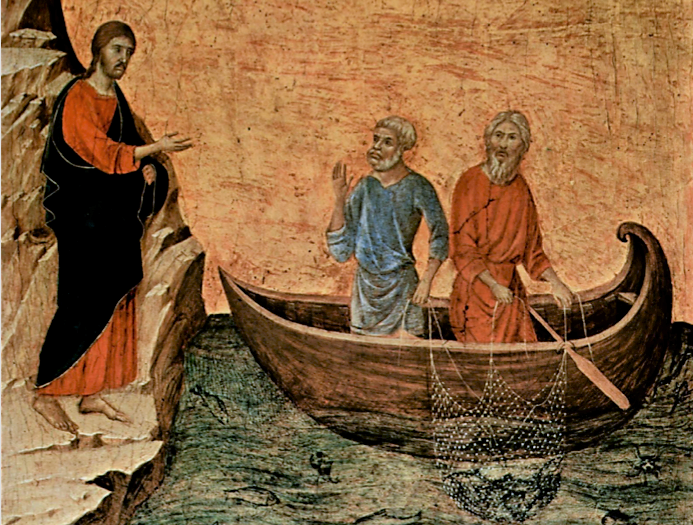
Let’s see how the Lord grows Peter’s faith
I. The Help that isn’t Hard
II. The Hesitation that must be Healed
III. The Harvest that is Hauled
IV. The Humility that Heightens

5th Sunday of Year C
Justice Homilies
Fr. Jude Siciliano, O.P. was ordained in 1969. For fourteen years he taught homiletics at the Graduate Theological Union in Berkeley, CA, and is a past president of the Catholic Association of Teachers of Homiletics. He was a volunteer chaplain at San Quentin Prison and was actively involved with “People of Faith Against the Death Penalty,” in North Carolina. He preaches parish retreats and also travels throughout the country giving preaching workshops.
⬇️ Bishop John Kobina Louis
5th Sunday of Year C

Sunday Homilies

Bishop John Kobina Louis, PhD, is an auxiliary bishop of the Archdiocese of Accra, Ghana. He was ordained as an auxiliary bishop on 19th April 2023.
⬇️ Fr. Michael Chua
5th Sunday of Year C

Homily Excerpt

Someone once told me that St Peter is such a likeable character and I had to agree. Here we have a person who wears his foibles like a badge. Whether it be his imprudent bravado to follow the Lord, his utter horror at hearing how the Lord must suffer at the hands of his enemies and the natural reaction of trying to reason Him out of committing suicide, his concern for status, his penchant for taking leadership even when uninvited, and finally, even his cowardly denial of the Lord when the Lord most needed him. He sounds too much like us.
5th Sunday of Year C

Homily Excerpt
“Leave me Lord! I am a sinful man.” Part of Peter’s response, the part where he declares himself to be the sinner, would seem anachronistic to modern man, although they would both share a similar repulsion. In the case of Peter, the repulsion arose from self-loathing, fully aware of his own depravity. But modern man’s loathing of the sacred arises from his self-sufficiency. In a world where the individual believes himself to be close to divine, immortal, invincible, God and the realm of the sacred will both appear intrusive and be regarded as threats to man’s autonomy and dominance.
5th Sunday of Year C

Homily Excerpt
The story of the baptism of the Lord is found in all four gospels with tiny but significant differences. In the Fourth Gospel, the account is reported speech or a hear say account by St John the Baptist, whereas Matthew, Mark and Luke record this event directly as if they had witnessed it or received the testimony of other witnesses. But in all three Synoptic gospels, we see both similarities and differences in the basic order. Matthew, Mark, and Luke all follow the same basic order of events: the appearance of St John the Baptist and an introduction to his ministry followed by the Baptism of the Lord.
5th Sunday of Year C

Homily Excerpt

In this Sunday’s First Reading, Isaiah “saw the Lord sitting on a throne, high and lofty.” Even “the hem of his robe filled the temple.” The seraphim attending him called to one another incessantly, “Holy, holy, holy is the Lord of hosts!” Consider the human reaction to God’s holiness. Isaiah said, “Woe is me! I am lost, for I am a man of unclean lips; yet my eyes have seen the King, the Lord of hosts!” When St. Peter realized who Jesus must be, he “fell down at Jesus’ knees, saying, ‘Go away from me, Lord, for I am a sinful man.’”


⬇️ Fr. Tommy Lane
5th Sunday of Year C
- If Jesus could use the Twelve Apostles with their weaknesses he can certainly also use us
- Ridding ourselves of sin like Isaiah, Paul and Peter to follow the Lord in Peace 2007
- Related Homilies: It’s okay to have nothing and be unworthy - Jesus does the rest 2011
- People in the Bible Answering their Vocations 2006
- Leave the Boat and build up God’s kingdom
- Vocations in the Bible - Answering God’s Call
- Homilies on priesthood
- Christ continues to minister to us through his Priests 2012
- stories about vocation
5th Sunday of Year C

A hallmark of what some academics have called the “postmodern world” is the loss of transcendence. It is supposed that there is no other reality than the projections we humans construct, whether individually or communally. All of existence seems to have been unmasked as a distorted mirror of our passion for power and pleasure.
We do not need some pedant to lecture us on deconstructionism in order to feel its effects. Nor need we realize that the great prophecies of postmodernism are found in Nietzsche’s will to power, Marx’s money-Molech or Freud’s seething cauldron of the id. We see, hear, and smell the theory every day, in our streets, in the courthouses, on radios and television. Power, money, and pleasure reign supreme as the values by which to measure our lives and happiness.
This discussion guide has been generated by the WORD THIS WEEK’S Catholic AI Assistant based on Fr. Kavanaugh’s homily. NEED HELP? Copy and paste a question into the chat bot in the lower right corner of the screen and have our Catholic Assistant help you.
1. Understanding Transcendence:
– Define transcendence and discuss its significance in spiritual and religious contexts.
– How does the sermon describe the loss of transcendence in the postmodern world?
2. Postmodernism’s Impact:
– Discuss how postmodernism perceives reality as subjective and self-constructed.
– How are values such as power, money, and pleasure portrayed as dominant in the postmodern context?
Human Will and Divine Authority
3. Worship of the Human Will:
– Reflect on how the sermon describes the glorification of choice and human will in contemporary society.
– What are the implications of rejecting external standards of truth and goodness?
4. Christ’s Call Beyond Human Constructs:
– How does the sermon contrast human self-constructed openness with true openness to transcendence?
Biblical Illustrations of Transcendence
5. The Experience of Isaiah:
– Analyze Isaiah’s reaction to encountering God’s holiness and glory.
– What lessons can be drawn about human sinfulness and humility from Isaiah’s response?
6. Peter and the Great Catch of Fish:
– Discuss the story of Peter in Luke’s Gospel and the notion of trusting a will beyond human understanding.
– How does Peter’s acknowledgment of his sinfulness relate to his recognition of divine power?
Responding to Transcendence
7. Empowerment Through Admitting Inadequacy:
– Why is recognizing our smallness and inadequacy important before God’s greatness?
– How do Isaiah and Peter exemplify empowerment through their encounter with the transcendent?
8. The Contemporary Challenge:
– Reflect on why the idea of a God independent of human control is difficult for the modern mindset.
– What are the suggested steps towards accepting the need for salvation beyond human means?
Concluding Thoughts and Calls to Action
9. The Promise of God’s Favor:
– According to the reflection, how is salvation possible and meaningful through Jesus Christ?
– Discuss the role of faith and divine grace in transcending postmodern limitations on meaning and purpose.
5th Sunday of Year C
Homily Excerpt
When were the times you simply felt unworthy of God’s love? When were those times? I bet there are people here who feel that way today. My friends, in the times we feel most unworthy, Jesus calls us to sail into deep water, a dangerous place and at times a frightening place. It is when we take the risk of trusting the Lord in all things can we begin to see in ourselves what God sees. In that light, what does that image of sailing into deep water mean for you in your life right now? What does it look like? You see, it is when we have that faith, when we have that courage, and we have that trust Jesus calls us to, amazing things can happen. We can be surprised by grace.

5th Sunday of Year C

Failure is a Fact of Life
Failure is a fact of life, it happens to all of us. We try to do something, but fall short of the goal. The experience comes in all shapes and sizes. Sometimes it is relatively immaterial: we play a game and lose. We burn the pot roast. We try to lose a few pounds, but end up gaining. These are failures of a sort, but we soon forget them and they do not have a lasting effect on our lives.
⬇️ Fr. Jagodensky, SDS
5th Sunday of Year C
Homily Excerpt
The Holy Spirit asks each of us, “How do our words impact/affect the lives of others?” “How do my decisions impact/affect the lives of others?” “How can my life become ‘Holy’ through Her seven gifts?”
St. Peter made how many mistakes and misspoken words and he got a basilica named after him…and a Chair!
Take this home and think about it. Holiness is saying “Yes” to the least part of us and making it the greatest. (I don’t know why I wrote that but I believe it to be true.) Pray about the least becoming your greatest.