FEB 16, 2025


Homilies
Homilies
- Bishop Barron
- 1-MINUTE HOMILY
- 2-Minute Homily
- Fr. Peter Hahn
- Fr. Jude Langeh
- MORE VIDEOS
BISHOP
BARRON

6th Sunday of Year C


6th Sunday of Year C
ONE
MINUTE
HOMILY

TIME-STAMPED VIDEOS
The Jesuit-Post
6th Sunday of Year C

6th Sunday of Year C

6th Sunday of Year C
TWO
MINUTE
HOMILY

6th Sunday of Year C

6th Sunday of Year C

6th Sunday of Year C
FATHER
PETER
HAHN
6th Sunday of Year C

6th Sunday of Year C

6th Sunday of Year C

6th Sunday of Year C
FATHER
JUDE
LANGEH

6th Sunday of Year C

6th Sunday of Year C


⬇️ Dcn. Peter McCulloch

6th Sunday of Year C

The Farmer and the Poor God
Click below to show/hide questions.
This discussion guide has been generated by the WORD THIS WEEK'S Catholic AI Assistant based on Deacon McCulloch's homily.

1. Understanding the Parable:
- Summarize the story of the farmer and the poor god. What do the farmer's initial actions say about his mindset concerning prosperity and happiness?
- Why does the family initially decide to flee from the poor god? How does this reflect common attitudes towards poverty and wealth?
2. Transformation Through Cooperation:
- Discuss the turning point in the story when the farmer and his family begin to work together with the poor god. How does their cooperation impact their happiness and well-being?
- How does this collaboration change the farmer's and his family’s perception of wealth and prosperity?
3. Reflection on Biblical Texts:
- Reflect on Jeremiah 17:5-8. How does this passage relate to the story of the farmer and the poor god? What does it suggest about where we place our trust?
- Consider 1 Corinthians 15:12,16-20. What does this passage communicate about the foundations of true life and faith?
- In the Gospel reading from Luke 6:17,20-26, why does Jesus say, "Woe to you who are rich"? How does this warning connect with the parable?
4. Defining True Riches:
- Explore what truly gives us life and fulfillment according to the sermon and its related scriptures. How does love play a role in transformation and contentment?
- How does the farmer's realization about his own wealth (family and community) challenge societal values on material wealth?
5. Practical Application:
- Discuss ways we may unwittingly "chase after rich gods" in our lives. How can we recognize and embrace the "poor gods" who bring genuine happiness and community?
- What steps can individuals or groups take to foster love and cooperation in their communities, as demonstrated by the farmer’s family?
Reflection and Prayer:
- Encourage the group to reflect on their personal relationship with material wealth and community values. How does this story impact your understanding of happiness and fulfillment?
- Conclude with a prayer focusing on gratitude for the "poor gods" in our lives and asking for wisdom to seek and nurture what truly enriches us.
Homily Excerpt

This story is about us. In today’s Gospel, Jesus warns, ‘Woe to you rich.’ This might seem a strange thing to say when everyone today wants to be rich.
But here’s the question: What truly gives us life? Is it possessions? Is it anything that can be bargained, bought or sold?
What gives us life is love. The love we find in our homes, our families and our friends. Love is what truly transforms lives.
That’s why Jesus warns us, ‘Woe to you rich’.
Jesus is our poor God. Lock your doors; don’t let him leave.
Please note that the video clips on this page are not part of contributor’s original content have been selected to aid preachers to enrich their own homilies, drawing ideas and insights from both the written material and the visual content they’ve explored.
The Photographer
Click below to show/hide questions.
This discussion guide has been generated by the WORD THIS WEEK'S Catholic AI Assistant based on Deacon McCulloch's homily.
Introduction
Reflect on the core message: Sometimes, things we ignore or neglect turn out to be precious. How does this theme relate to both material possessions and human experiences?
Section 1: The Forgotten Treasure
- Story Reflection: Discuss the anecdote from Prague about the unloved Madonna statue. How does this story introduce the idea of overlooked value?
- Personal Connection: Have you ever discovered worth or beauty in something you initially overlooked? Share your experiences.
Section 2: The Teachings of Jesus
- Scripture Focus: Reflect on Jesus' Sermon on the Plain (Luke's Gospel). How does Jesus redefine what is valuable?
- Group Discussion: Why might poverty, hunger, and tears be considered God’s greatest concerns?
- Reflection Questions:
- What worldly values do people often prioritize over spiritual values?
- How does Jesus’ teaching challenge modern values and lifestyles?
Section 3: The Photographer’s Story
- Narrative Overview: Explain the story of the photographer in Ecuador and his encounter with the young girl.
- Emotional Impact: Discuss how the actions of the young girl shifted the photographer’s worldview. What lessons can we learn from her generosity?
- Personal Reflection: How do acts of unexpected kindness or generosity change your perception of wealth and resources?
Section 4: The Kingdom of Heaven
- Theological Reflection: How did the girl’s actions provide a glimpse of the kingdom of heaven?
- Discuss: Why is love, generosity, and beauty important in God’s kingdom, despite material poverty?
Section 5: Application and Challenge
- Practical Application:
- In what ways can we refocus our lives to value what’s truly important in God’s eyes?
- How can our community support those who are poor, hungry, or suffering?
- Action Steps: Set personal or group commitments to practice Jesus’ teachings in everyday life.
Closing Thoughts
- Discuss how small acts of love and generosity can transform both the giver and the receiver. How can these ideas shape our community?
Prayer and Reflection
- Conclude with prayer or a moment of meditation, focusing on valuing what God values and asking for guidance in practicing these lessons.
Homily Excerpt

Megan McKenna tells the story of a photographer taking photos of human catastrophes for a new book. In the 1980s, this photographer was in Ecuador, which had been hit by torrential rain, landslides and starvation. Several relief organisations flew in plane-loads of food, including corn, milk, rice and fruit.
He set himself up with his camera on a main street, crowded with people looking tired, sick and hungry. They’d lost their homes and possessions; some had lost relatives and even whole families.
He noticed one young girl, aged nine or ten. She was thin and straggly, hair matted and clothes torn. She was waiting in line with hundreds of others for food.

The Road Less Travelled
Click below to show/hide questions.
This discussion guide has been generated by the WORD THIS WEEK'S Catholic AI Assistant based on Deacon McCulloch's homily.
Introduction
- Reflect on the story of Alice in Wonderland and her encounter with the Cheshire Cat. How does this relate to the decisions we face in life?
- Introduce the metaphor of life's fork in the road and the significance of choosing the right path.
Scriptural Exploration
Jeremiah 17:5-8
- Identify the two roads described by Jeremiah. What do they symbolize?
- Discuss the consequences of putting trust in man versus trusting in God.
- How can we be like the "flourishing tree" in times of personal drought and heat?
Psalm 1
- Compare the message of Psalm 1 with Jeremiah 17:5-8.
- Discuss the imagery of a fruitful tree and winnowed chaff. What do they represent in your life?
Luke 6:17, 20-26
- Explore the Sermon on the Plain. What values does Jesus emphasize?
- Discuss the implications of the blessings and woes mentioned by Jesus.
- How does Jesus' message challenge societal norms and personal priorities?
Reflective Questions
- What does the "road less travelled" mean to you in the context of your faith journey?
- Reflect on Robert Frost's poem "The Road Not Taken." How does its imagery influence your understanding of choice and consequence?
- Why do you think the path of God’s values is less travelled in modern society?
Practical Application
- Identify specific choices where you might face a "fork in the road." How can these scripture passages guide these decisions?
- Consider daily actions that align with taking the "high road" towards God’s kingdom. Share and discuss ways to implement them.
Closing Reflection
- Read and discuss the poem "Choose this Day" mentioned at the end of the sermon.
- How can this poem serve as a daily reminder of the road you wish to take?
- Commit to choosing God's path in upcoming decisions, encouraging group support and prayer.
Conclusion
- Encourage group members to support one another in navigating life's forks with faith.
- Summarize the importance of choosing the right path and its impact on eternal life.
Homily Excerpt

In Lewis Carroll’s story Alice in Wonderland, Alice comes to a fork in the road and is puzzled. She asks the Cheshire Cat, ‘which way should I go?’
‘That depends a good deal on where you want to get to,’ he says.
Alice says she doesn’t much care where she goes, so the Cat replies: ‘Then it doesn’t matter which way you go.’
Today, our world is a confusion of roads going in countless directions. Some clever people have invented GPS to help us get around, but where should you go when you reach a fork in the road of life?
In today’s first reading, the prophet Jeremiah says that there are basically only two roads in life, and they go in opposite directions. One crosses a salty desert towards death, and the other follows a refreshing stream towards life.
Which one is which? Jeremiah says the wrong way is when we put our trust in man and the things of the flesh, for that’s when we’ll end up like dry scrub in a wasteland…
⬇️ Fr. Austin Fleming
6th Sunday of Year C

Curses and blessings – blessings and woes! And as soon as we hear these words many of us will think of and turn to circumstances in our lives which we have experienced and named as a blessing or curse.
And the temptation is to think that somehow it’s God who has chosen to bless or curse us: to imagine that God looks down upon us all with a bag of blessings in one hand and a bag of woes in the other showering them upon us, letting them fall where they might. Or the temptation to think, worse yet, that with divine accuracy, God aims blessings at some and curses at others, as he chooses, never failing to hit his intended target – for good or for ill!
This discussion guide has been generated by the WORD THIS WEEK’S Catholic AI Assistant based on Father Austin’s homily. NEED HELP? Copy and paste a question into the chat bot in the lower right corner of the screen and have our Catholic Assistant help you.
Discussion Introduction:
The sermon titled “Curses and blessings – blessings and woes” invites us to reflect on how we perceive blessings and curses in our lives. It challenges the common belief that God distributes these based on divine preference and urges us to consider the importance of where we plant our faith.
Discussion Questions:
1. Initial Reactions:
– What are your immediate thoughts or emotions after hearing the sermon?
– How do the concepts of blessings and curses resonate with your personal experiences?
2. Understanding God’s Role:
– How does the sermon challenge the traditional view of God as a distributor of blessings and curses?
– Why is it important to shift our understanding away from this view?
3. The Teachings of Jeremiah:
– What does Jeremiah’s metaphor of planting near water tell us about the choices we make?
– In what ways does trusting in human invention rather than God lead to consequences in our lives?
4. The Church’s Reflection:
– Reflect on the question posed about the Catholic Church’s history: Has it rooted itself in God’s ways or drifted away?
– How can we learn from the Church’s history in our individual spiritual journeys?
5. Perceived “Blessings” and “Curses”:
– How might those who seem outwardly blessed actually experience emptiness?
– How can experiencing challenges and “curses” lead to deeper spiritual growth?
6. Personal Application:
– What “soil” have you planted your hopes and dreams in?
– Where do you currently seek your life’s nourishment and sustenance?
7. Implications of Trust and Faith:
– How does the example of Jesus on the Cross illustrate trust in God amidst suffering?
– In challenging times, where do you find your trust and strength?
8. The Eucharist as Nourishment:
– How does the concept of the Eucharist serve as spiritual nourishment according to the sermon?
– What role does the Eucharist play in your own spiritual life?
Practical Takeaways:
– Assess where you plant your trust and ensure it’s in alignment with God’s teachings.
– Reflect regularly on your sources of true nourishment and consider shifts that might align you closer with divine wisdom.
– Engage in community discussions about how we, as a Church and as individuals, can better root ourselves in God’s promises.
Prayer and Reflection:
Conclude your discussion with a moment of prayer or personal reflection, seeking guidance in making choices that lead to authentic blessings and grounding your life in faith.

6th Sunday of Year C

Photograph by Fr Lawrence Lew OP of a window in the Stanford Memorial Church in California.
This discussion guide has been generated by the WORD THIS WEEK'S Catholic AI Assistant based on the Dominican Blackfiars' homily for this week. NEED HELP? Copy and paste a question into the chat bot in the lower right corner of the screen and have our Catholic Assistant help you.
1. Understanding the Context
- Reflect on the imagery of living in a time of "anarchic turmoil" as a metaphor for the Christian journey. How does this image relate to the concept of living with future ideals in a present world?
- Discuss the idea of Christians being inserted into a "new history." What does it mean to live a life that is both "timely and timeless"?
2. The Present and Future Reality
- Explore the significance of living as though the Kingdom of Heaven is here-and-now. How does this affect the Christian life today?
- How do the teachings of Christ guide Christians in navigating a world that often feels in chaos or conflict?
3. The Dynamic Tense of the Beatitudes
- Analyze the difference in verb tenses in the beatitudes. Why is the beatitude for the poor present-tensed, while others are future-tensed?
- Discuss the role of divine pronouncement and action in the present-tense beatitude. How does this impact the understanding of divine power and action?
4. The Dual Nature of Divine Word: Blessings and Curses
- Engage with the theological concept of the divine Word being both affirmative and negating. How do blessing and curse function together?
- What are the implications of Jesus’ ‘woe to those who are rich’ in relation to the divine blessings?
5. Material Poverty vs. Spiritual Poverty
- Compare and contrast the interpretations of the Sermon on the Plain and the Sermon on the Mount regarding the "poor." How does Luke’s emphasis on material poverty challenge or enrich our understanding of the Kingdom of God?
- Discuss the church’s responsibility to the materially poor. How does acknowledging the poor as first citizens of the Kingdom affect the mission of the church?
6. Testimony of the Faithful
- Reflect on the story of the woman on the train. How does her story serve as a testament to the power and support provided by faith and the sacraments?
- Consider the roles of giver and receiver in blessings. How does this story illustrate the reciprocal nature of faith and encouragement?
7. Personal Reflection and Action
- Think about how you might live out the principles discussed in the sermon in your daily life. What practical steps can you take to embody the values of the Kingdom of Heaven?
- How can individuals and groups support one another in this journey of living "future-tensed" lives?
8. Group Prayer or Meditation
- Conclude your discussion by praying or meditating on how each participant can embrace the present and future calling of their Christian life, supporting each other in their faith journeys.
Homily Excerpt
6th Sunday of Ordinary Time (C) | Fr Oliver Keenan ponders the blessedness of the poor and the blessings still to come.

Imagine that we lived in a time of great anarchic turmoil, a time when revolutionary fervour had just overthrown an immoral tyrant but a new order of law and justice had not yet been established. In trying to bring about change for the better, we might have no choice but to act as if the longed for era of justice and peace were already here. We might find ourselves living lives that were already voluntarily patterned by the laws and ideals of an era of history that was just being born, and which might never materialise.
We Christians find ourselves in a similar set of circumstances, but for opposite reasons. To become a Christian is to be inserted into a new history; to be a Christian is to live that history out in the midst of a history that we are leaving behind…

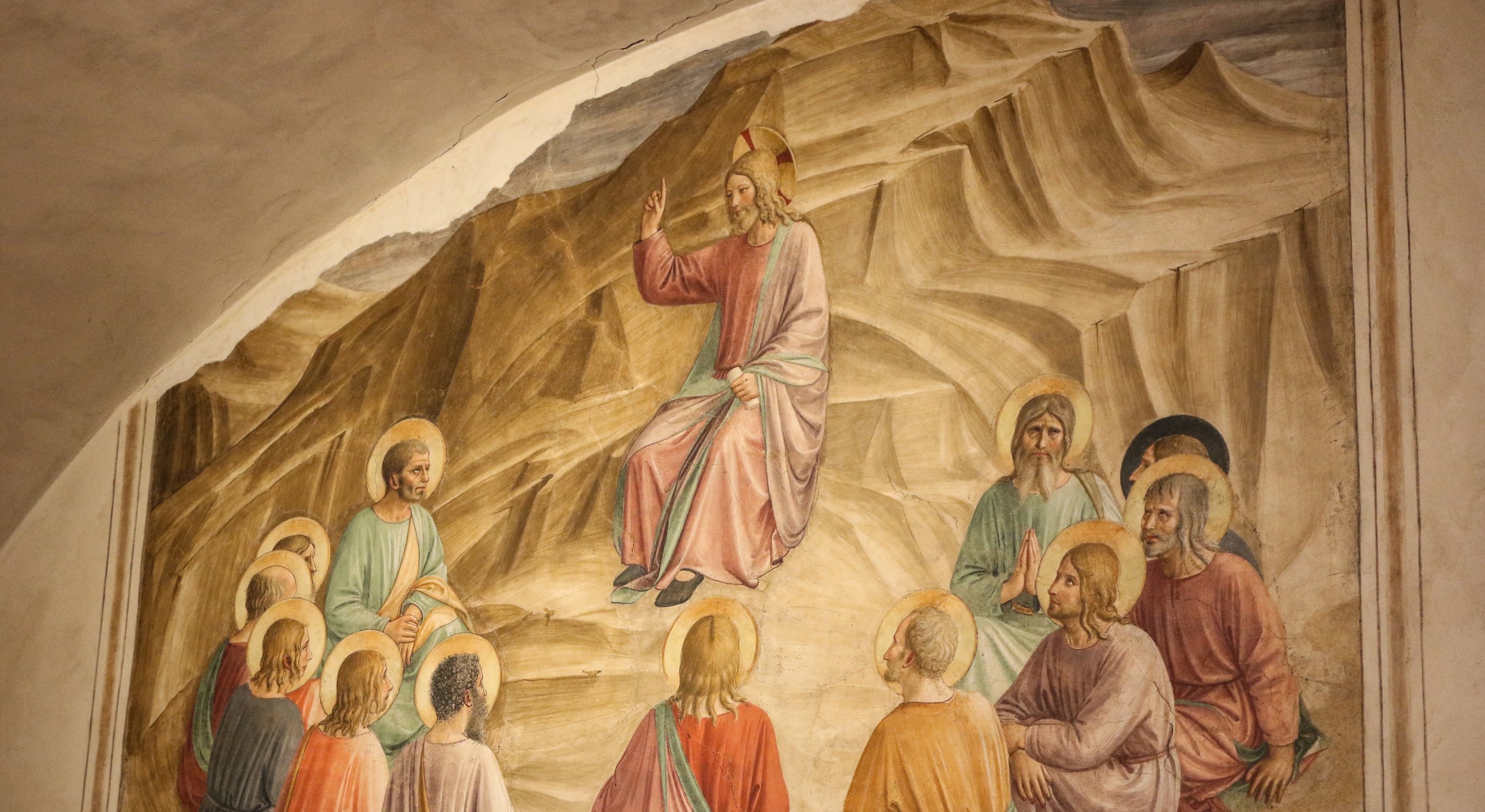
Detail photograph by Fr Lawrence Lew OP from All Saints by Fra Angelico
This discussion guide has been generated by the WORD THIS WEEK'S Catholic AI Assistant based on the Dominican Blackfiars' homily for this week. NEED HELP? Copy and paste a question into the chat bot in the lower right corner of the screen and have our Catholic Assistant help you.
Introduction
This guide is intended to facilitate a comprehensive discussion on Fr Leon Pereira's sermon. It focuses on the themes of heroism, morality, grace, and the balance between eternal salvation and temporal liberation.
Eternal Salvation vs. Temporal Liberation
- Fr Pereira argues for the coexistence of eternal salvation and temporal liberation. In what ways can Christians address both the spiritual and material needs of the world?
- Discuss examples of how this balance can be practically achieved in today's society.
Moral Failings and Sin
- The sermon presents characters from the film "Priest" who deal with moral issues in different ways. How does societal perception of morality influence our judgment of others' actions?
- What are the implications of living in chronic toleration of sin versus recognizing our sins?
- Reflect on the importance of striving for a life in the Spirit while acknowledging human fallibility.
The Role of Grace in Christian Life
- Fr Pereira criticizes what he sees as a 'graceless' Christianity. Discuss the role of grace in overcoming personal and communal challenges within the Church.
- How can Christians navigate the balance between grace, mercy, and accountability?
Christian Heroism vs. Blame
- Explore the notion of Christian heroism as presented in the sermon. Why does Fr Pereira believe that heroism is an essential aspect of true Christian living?
- How does the sermon address the tendency to blame God for personal failures and weaknesses?
- In what ways can acknowledging God’s love and grace empower believers to act courageously in their faith?
Societal Impacts and the Church's Role
- Fr Pereira discusses current societal and Church issues, such as exaggerated mercy and redefining sins. How can the Church maintain its moral teachings while adapting to contemporary challenges?
- What is the balance between religious teachings and social action, especially during a crisis like the pandemic?
Reflection and Personal Application
- Reflect on your own life in light of the sermon. Are there areas where you might be allowing societal norms to overshadow your spiritual convictions?
- How can you integrate the idea of Christian heroism into your daily actions and decisions?
- Discuss ways in which your community can support each other in striving for a balanced Christian life, grounded in both grace and accountability.
Conclusion
Encourage participants to share their key takeaways from the discussion and how they might apply these insights to their personal faith journey. Consider setting goals for the group to work towards embodying the principles discussed, with the recognition that Christian heroism is rooted in grace and a commitment to live out one's faith authentically and courageously.
Homily Excerpt
Sixth Sunday of the Year. Fr Leon Pereira issues a call to heroism.
The gibe that Christians believe in ‘pie in the sky’ derides an otherworldly eternal salvation, while neglecting the needs of this world. These two, eternal salvation and temporal liberation, must co-exist. No one denies that we ought to liberate the socially, economically and politically oppressed. The dispute is over how.
In the film Priest (1994), the older priest is a kind, pastoral man. He is left-wing and into Liberation Theology. He also has a concubine with whom he cohabits. This last moral failing is depicted sympathetically; after all, he does so much good. The younger priest is kind but rigid (rigidity—the bête noire of our time!). He becomes humble and loving by accepting a sexually-active homosexual relationship. The film-makers were evidently not fans of clerical celibacy!
This discussion guide has been generated by the WORD THIS WEEK'S Catholic AI Assistant based on the Dominican Blackfiars' homily for this week. NEED HELP? Copy and paste a question into the chat bot in the lower right corner of the screen and have our Catholic Assistant help you.
Introduction to 'The Two Ways':
1. Scriptural References: Discuss how Moses, the Psalm, Jeremiah, and Jesus present the concept of 'the two ways' - the path of life and the path of death. How do these analogies help in understanding the moral teachings of Christianity?
2. Natural Wisdom and God's Law: Reflect on the idea that God's law is beneficial and not arbitrary. Consider examples from various cultures that align with the virtues advocated by Christianity. What are the implications of these similarities?
The Nature of Virtue and Evil:
1. Virtue As Human Betterment: What are the advertised benefits of virtue according to human wisdom? Discuss how virtues like patience, humility, and generosity can improve personal and communal life.
2. The Seduction of Evil: Why might evil be considered superficially attractive? What does the sermon say about the long-term effects of indulging in destructive impulses?
Christian Distinctiveness in Teachings:
1. An Unexpected Narrow Way: How does Jesus’ teaching on the beatitudes differ from conventional wisdom about virtue and vice? Discuss the paradox of the 'narrow way' being narrower than expected.
2. The Reversal of Values: Explore the theme of the great reversal that Jesus announces. What does it mean to live as a subject of the Kingdom of God rather than the kingdoms of this world?
Present and Future Satisfaction:
1. Delayed Gratification? Analyze the concept of present suffering for future satisfaction. Is this merely a call for delayed gratification or something deeper according to Jesus' teachings?
2. Source of Satisfaction: Compare those who rely on human means for fulfillment to those who find satisfaction in God's provisions. What implications does this have for Christian living?
Unwavering Discipleship and Holiness:
1. Call to Discipleship: What does it mean to follow Jesus based on the beatitudes? Discuss the ultimate aim of discipleship as proposed in the sermon.
2. Suffering and Holiness: How does suffering in union with Jesus become a means of achieving holiness? Relate this to the promise of a glorious future for Christians.
Resurrection and the Great Reversal:
1. St Paul’s Reflection: Discuss the significance of St Paul’s statement regarding the resurrection. Why is the resurrection central to the Christian understanding of life and death?
2. The Narrow Way of Life: Reflect on the sermon’s conclusion that the Christian path, while narrow and difficult, leads to eternal life. How does this perspective influence the daily lives of believers?
Conclusion and Reflection:
1. Personal and Group Reflection: Encourage members to share personal insights or struggles with living according to the beatitudes. How can the community support each member in this journey?
2. Actionable Steps: Propose practical ways to embody the beatitudes in everyday life. How can these actions promote personal and communal growth in faith?
Homily Excerpt
Sixth Sunday of the Year. Fr Bede Mullens shows how the life of the beatitudes is a lot more than merely human wisdom.
Early Christian moral teaching was often presented in terms of ‘the two ways’: the way that leads to life, and the way that leads to death. There is plenty of Scriptural warrant for this manner of speaking. Moses, towards the conclusion of Deuteronomy, presents to the people ‘life and blessing’ as the reward of obedience to God’s law, ‘death and curse’ as the punishment of disobedience. Today’s Psalm and the prophecy of Jeremiah both compare the righteous to a well-watered tree, while the unjust are likened to dry scrub or chaff. Christ himself uses a range of equivalent parables: the broad way and the narrow way, the house built on sand and the house built on rock, the good tree which bears good fruit and the bad tree bearing bad.
⬇️ Fr. Charles E. Irvin
6th Sunday of Year C
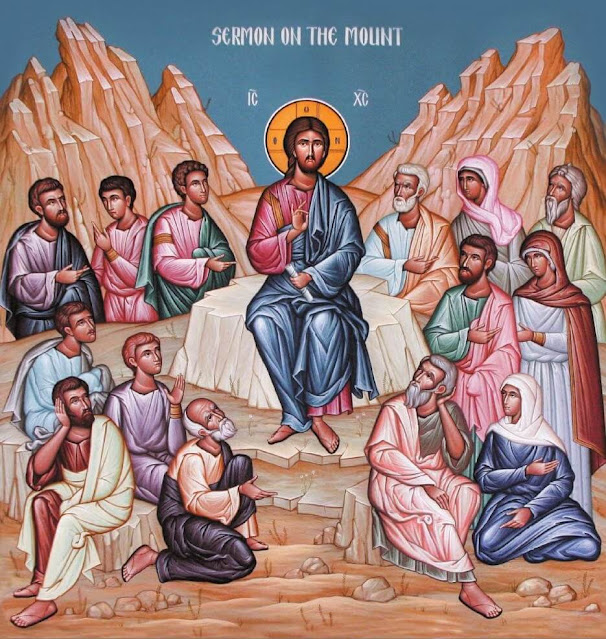

Jesus has a system of values that is contrary to this world’s values. The only question that remains is, “Are you crazy enough to accept them and live by them?”
The Sermon on the Mount is not just pretty poetry. It does not offer us a merely sentimental religion. The Sermon on the Mount presents us with high standards, along with the promise that God will be with us no matter how tough life gets for us. “Take my yoke upon you and learn from me,” Jesus said, “for I am meek and humble of heart; and you will find rest for yourselves, for my yoke is easy, my burden light.”
This discussion guide has been generated by the WORD THIS WEEK’S Catholic AI Assistant based on Fr. Irvin’s homily. NEED HELP? Copy and paste a question into the chat bot in the lower right corner of the screen and have our Catholic Assistant help you.
Introduction
In this discussion guide, we will explore themes from the sermon regarding challenges to religious belief, the values taught by Jesus, and how these can be understood and applied in our lives. This guide aims to facilitate personal reflection and group interaction about the sermon’s topics.
Overview of Key Themes
1. Criticism of Religion:
– The sermon begins by addressing criticisms often levied against Christianity, specifically targeting biblical stories and beliefs.
2. Countercultural Teachings of Jesus:
– Jesus’ teachings are highlighted as countercultural, praising those in humble circumstances and challenging societal norms of wealth and success.
3. Spiritual Perception:
– Emphasizes the importance of viewing things through a spiritual lens to truly understand Jesus’ teachings.
4. Temporary Worldly Satisfaction vs. Eternal Joy:
– The sermon contrasts the temporary nature of worldly pleasures with the enduring joy found in faith.
5. Valuing Inner Fulfillment Over External Success:
– Focuses on deeper fulfillment and happiness derived from spiritual pursuits rather than material gains.
Discussion Questions
1. Challenges to Faith:
– Have you experienced criticism or skepticism about your faith? How did you respond?
– Why do you think people are critical or dismissive of religious stories and beliefs?
2. Embracing Jesus’ Teachings:
– How do Jesus’ teachings about poverty, hunger, and rejection challenge societal views on success and happiness?
– In what ways are Jesus’ values and teachings considered radical or “crazy” in today’s society?
3. Spiritual Awareness:
– What does it mean to see and judge things spiritually? Can you share an example of when you’ve had a shift in perspective from a worldly view to a spiritual one?
– How does acknowledging the existence of a soul affect your daily life and interactions with others?
4. Material Wealth vs. Spiritual Wealth:
– Do you agree with the sermon’s take on happiness being tied to how we use our resources rather than how much we have?
– How do you define true happiness, and how does it differ from common societal definitions?
5. Dealing with Rejection and Suffering:
– Reflect on a time when you faced rejection or hardship. How did your faith influence your response?
– How can we support each other in carrying life’s burdens, as Jesus has promised to help us carry ours?
6. Living Out Faith:
– What are some ways to align our lives with the values taught in the Sermon on the Mount?
– Consider the examples of figures like Mother Teresa. How can their lives inspire us to live more in line with Jesus’ teachings?
Actionable Steps
1. Reflect on areas in your life where worldly values might be overshadowing spiritual values. Identify steps to realign them.
2. Engage in a group activity or volunteer opportunity that helps you practice and embody the values discussed in the sermon.
3. Spend time in personal or group prayer, asking for strength to live out the values Jesus taught, especially in challenging situations.
Conclusion
The sermon calls us to examine the contrasts between worldly values and the values of Jesus. As you engage in discussions and reflections, consider how these principles apply to your life and contribute to your community. Through this engagement, seek to deepen your spiritual understanding and commitment to living out faith-based values.
⬇️ Fr. George Smiga
- The Gospel and Consumerism (2004)
- Joy to the Poor (2010)
- Blessings and Woes (2019)
- Spreading the Wealth Around (2022)
6th Sunday of Year C
Each week, THE WORD THIS WEEK presents an excerpt from Fr. Smiga’s homily archive. To access all of the homilies for this Sunday, click on the title above. Then scroll down the page to find the text of this homily.

2004 HOMILY – To be an American is to be a consumer. Dangerous things begin to happen when we allow consumerism to influence our relationships: the way that we relate to others, the way that we relate to God. You cannot choose a wife in the way you would shop for a new car. You cannot analyze your relationship to God in the way that you would analyze an investment on the stock market. For all the differences in our culture of race, religion, education, economic status, Americans are united in the fact that they are consumers. We do not all have the same amount of money to spend, but it is our money and spending it gives us power. Whether we spend it at Walmart or Nordstroms, when we are consumers, we are in control. The customer is always right. Clearly the primary mode of recreation in the United States is shopping. When we are depressed we shop. When we are happy we spend. When we are bored we buy. Shop ‘til you drop! It’s the American way.
Now the point of this homily is not to attack consumerism. Consumerism is a part of our culture whether we like it or not. But my point is to warn you that it is dangerous to allow consumerism to influence and to warp our relationships. Because we as American are so fundamentally consumers, we can begin to approach our relationships as a kind of commerce. Taking that step is asking for trouble. Therefore, I want to name three expectations of consumers and illustrate how none of these are helpful in directing our relationship to God or our relationships to others.
This discussion guide has been generated by the WORD THIS WEEK’S Catholic AI Assistant based on Fr. Smiga’s homily.
Introduction:
This guide is designed to facilitate a thoughtful discussion on the themes presented in the sermon. The sermon explores the pitfalls of consumerism in relationships and encourages a shift in perspective towards acceptance, service, and commitment.
Discussion Questions:
1. Opening Reflection:
– What are your initial thoughts on the story of the two friends and the search for the “perfect” partner?
– How does this story connect to the broader message about consumerism and relationships?
2. Consumerism and Relationships:
– How do you see consumerist values influencing personal relationships in your life or community?
– In what ways can consumerism distort our approach to forming connections with others?
3. Expectations of Consumers:
– The sermon mentions three consumer expectations: fairness, benefit, and freedom. Can you provide examples of how these might manifest in personal relationships or spiritual life?
– How can these consumer expectations become problematic when applied to relationships?
4. Fairness vs. Acceptance:
– Discuss the idea of fairness in life as compared to acceptance. How can shifting our focus from fairness to acceptance lead to a healthier mindset?
– What are some challenges you face when trying to cultivate acceptance in situations that seem unfair?
5. Benefit vs. Service:
– How do you interpret the sermon’s call to move from seeking benefits to practicing service and compassion?
– Share an experience where shifting your focus from personal gain to helping others enriched your life.
6. Freedom vs. Commitment:
– How does valuing freedom differ from valuing commitment in relationships?
– Discuss times when loyalty and commitment have deepened your connections with others.
7. Countercultural Values in the Gospel:
– How do Jesus’ teachings on the values of poverty and service serve as a guide for countercultural living?
– What steps can you take to align more with the values of acceptance, service, and commitment in daily life?
8. Application:
– Identify specific areas in your life where the principles discussed could be applied to enhance relationships or spiritual well-being.
– How can you incorporate these countercultural values in your community or family environment?
Closing Reflection:
– Summarize the key insights gained from the discussion.
– How do these insights impact your understanding of relationships and your spiritual journey?
– Share personal commitments or changes you plan to make moving forward.
Final Thoughts:
Use this time to reiterate the importance of embracing acceptance, service, and commitment over consumerist values. Encourage ongoing reflection and action beyond the discussion group. Encourage the group to see the alignment of personal values with spiritual teachings as a continual process of growth and learning.
6th Sunday of Year C
Life-Issue Homilies for Sunday
Lifeissues.net is mainly concerned with publishing articles directly related to issues raised in Evangelium Vitae, but also offers weekly pro-life homilies.
RELATED PAGE:
Frank Pavone Video/Notes on Abortion
6th Sunday of Year C

The Dignity of Man

What possible good can be found in suffering, in death? For the Christian, the value of suffering is found in union with Christ on the Cross. For the Christian the joy of death is union with Christ in paradise. For the world, the suffering Christian brings
another experience of a person turning his or her pain into a prayer for others. For the world, the dying Christian presents another experience of a person taking true wealth
with him or her at death.
The beatitudes in the Gospel of Luke are eminently practical. They recognize our human condition but tell us that despite our insignificance in the eyes of the world, when we allow the Person of Jesus Christ to reign our lives, our lives have infinite value. The theme of the Gospel of Luke is expressed in Mary’s Magnificat: the lowly have been raised up.
You and I have been raised up.
You and I have meaning.
You and I have Jesus.
Please note that the provided video clip serves as an additional resource to complement the homily. It might not have a direct correlation with the contributor’s original content. These videos aim to inspire preachers to enrich their own homilies, drawing ideas and insights from both the written material and the visual content they’ve explored.
This discussion guide has been generated by the WORD THIS WEEK’S Catholic AI Assistant based on Fr. Pellegrino’s homily.
1. Understanding the Context
– Compare and Contrast: Discuss the differences between the Beatitudes as presented in the Gospels of Matthew and Luke. Why do you think these differences exist?
– Consider the intended audiences of each Gospel: Jewish Christians for Matthew, gentile converts for Luke.
– Examine the settings: the Sermon on the Mount (Matthew) versus Jesus on the plain (Luke).
2. The Focus of Luke’s Beatitudes
– Present Condition vs. Future Promise: Why does Luke focus on the current state of being poor, hungry, weeping, and ostracized, rather than future attitudes or conditions?
– Discuss the socio-economic status of Luke’s audience and how this might have influenced his presentation of Jesus’ teachings.
3. Woe Statements
– Interpreting the ‘Woes’: What do the “Woe” statements tell us about the dangers of relying on material wealth and social status?
– Reflect on the statement: “Cursed is the one who trusts in human beings,” and discuss how this resonates in today’s context.
4. Personal Reflection and Transformation
– Spiritual Perspective: How do the Beatitudes in Luke encourage us to shift our focus from worldly to spiritual values?
– Discuss how this message aligns with Jeremiah’s prophecy and the teachings of Pope St. John Paul II about human dignity and spiritual potential.
5. The Mystery of Humanity
– Exploring Identity and Purpose: Reflect on the questions posed in the sermon about our identity, purpose, and the significance of our lives.
– How does sharing in the mystery of Jesus provide answers to these questions?
– Consider the examples of St. Theresa of Liseaux and St. Theresa of Calcutta as illustrations of significant impact through faith.
6. The Role of Suffering and Death
– Finding Meaning in Suffering: Discuss how Christians find value in suffering and death through unity with Christ.
– How does a Christian’s experience and approach to suffering and death differ from the world’s perspective?
7. Practical Application of Luke’s Beatitudes
– Realizing Infinite Value: How do Luke’s Beatitudes challenge us to find value and significance in our lives despite societal perceptions of insignificance?
– Discuss the transformative power of allowing Jesus Christ to reign in our lives, as highlighted in the Magnificat.
8. Personal and Group Reflection
– Raised Up in Christ: In what ways have you or your group experienced being “raised up” as expressed in Luke’s Beatitudes and Mary’s Magnificat?
– Share personal stories or testimonies where faith has transformed you or someone else.
Conclusion
Encourage group members to reflect on how they can embody the values presented in Luke’s Beatitudes in their daily lives, placing trust in God above worldly concerns. Engage in prayer or meditation focusing on openness to God’s transformative power.
6th Sunday of Year C

Blessing or Woe: You Decide
The Gospel passage this Sunday is Luke’s version of the Beatitudes. Being paradoxical, they are difficult to understand. We do not usually refer to the poor as blessed, but rather the well off; we do not typically call those who mourn blessed, but rather the joyful.
The word “beatitude” itself means “supreme blessedness.” In ancient Greek, makarios (blessed) referred to a deep, serene, and stable happiness largely unaffected by external matters. It also corresponds to the Hebrew word asher, which is more of an exclamation.

6th Sunday of Year C
Justice Homilies for Sunday
Fr. Jude Siciliano, O.P. was ordained in 1969. For fourteen years he taught homiletics at the Graduate Theological Union in Berkeley, CA, and is a past president of the Catholic Association of Teachers of Homiletics. He was a volunteer chaplain at San Quentin Prison and was actively involved with “People of Faith Against the Death Penalty,” in North Carolina. He preaches parish retreats and also travels throughout the country giving preaching workshops.
⬇️ Bishop John Kobina Louis
6th Sunday of Year C
Sunday Homilies

Bishop John Kobina Louis, PhD, is an auxiliary bishop of the Archdiocese of Accra, Ghana. He was ordained as an auxiliary bishop on 19th April 2023.
⬇️ Fr. Michael Chua
6th Sunday of Year C

Homily Excerpt

Evangelical poverty can never mean a rejection of all material goods which are good in themselves. But it is an invitation to see that these things are better when they are shared with those who have-not. As we continue our celebration of this Year of Mission, let us not forget the last point of the star. That our encounter with Christ, our learning from missionary testimonies and catecheses, should lead us to missionary charity, and in doing so, may we give true glory and worship to God, who became poor so that we may become rich in His graces.
Homily Excerpt
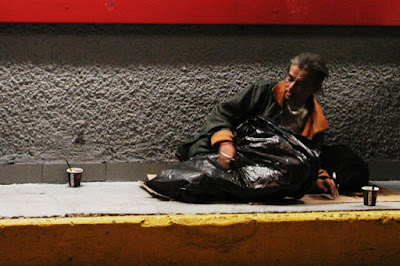
What is it about poverty that is so “blessed” or “happy” or even authentically “human”? We must first make a critical distinction between poverty and destitution. All human beings are entitled to have their basic needs met. The fact that millions are living in our world in the state of destitution, where hunger and disease ravage entire nations, is a great sin against humanity. There is certainly no blessing in this, neither should it ever be a cause of happiness. Every time we withhold our cloak from the naked or our food from the hungry, we sin, not only against the human person, but also against the Lord Himself. But poverty, or at least evangelical poverty, is not identical with destitution. The destitute may think of themselves as forsaken, but the poor are definitely not forsaken by God. Poverty is the state of simplicity, that is the state of having only what one needs. God is the supreme wealth of the poor.

Homily Excerpt
What does a world without trust look like? If subjects no longer trust politicians and their leaders, our society would descend into chaotic anarchy. If consumers no longer trust that their data and money can be safeguarded, then the modern financial system could collapse. If litigants no longer trust the legal and judicial system, justice would be an elusive illusion. Marriages will breakdown, families will divide and communities would be perpetually splintered. Trust is the base layer of all human relationships. Without trust, there can be no value exchange, no community, no intimacy. It would seem that Confucius was right when he declared: “without trust we cannot stand.”
6th Sunday of Year C

Homily Excerpt

Pope Francis has declared 2025 the Jubilee Year of Hope. This Sunday’s readings, especially the First, present belief and trust in God not as just one option among many, but as the only option that offers real hope, even in this world.
“Cursed are those who trust in mere mortals and make mere flesh their strength, whose hearts turn away from the Lord,” says the prophet Jeremiah. In contrast, those who “delight” in “the law of the Lord” are “like trees planted by streams of water,” says the Psalm. “In all that they do, they prosper.”
The fundamental truth—no matter how people scoff at it—is that God made us to know him, love him, and serve him in this world, and to be happy with him forever in the next. To reject this truth is to cut ourselves off from all hope in this world and all happiness in the next.
6th Sunday of Year C

Homily Excerpt

There is no such thing as strangers. There is no such thing in this concept as foreigners. And every war is a fratricide, brothers killing brothers for no good reason.
If we can learn this lesson, then we have the beginning of knowing our need for God, knowing our need for each other. And knowing our need for God, who is so generous that He will fill us with His presence, His joy, His forgiveness and give us all a future together.
⬇️ Fr. Tommy Lane
6th Sunday of Year C
6th Sunday of Year C

If we allow the ways and words of Jesus to have their full force and vitality, we will realize that there is a higher wisdom that confounds all our categories. It is inescapable. If we are to accept Christ, there is something, someone, wholly other than our nature and inclination. The God incarnate in Jesus, the eternal Word made flesh, points to a reality that can never be reduced to human dimension.
Jeremiah, whether we like it or not, in some profound sense was right. We cannot put our trust in humanity. That, weirdly enough, is the devastating program of Nietzsche. He would have us obey only the pulse of our nature, our will to power. This not only denies the authority of God over us; it denies the claim that any other could make upon our wills. It is my survival against yours.
This discussion guide has been generated by the WORD THIS WEEK’S Catholic AI Assistant based on Fr. Kavanaugh’s homily. NEED HELP? Copy and paste a question into the chat bot in the lower right corner of the screen and have our Catholic Assistant help you.
Discussion Guide: Open to the Supernatural
1. Human Trust and Divine Wisdom
– Jeremiah’s Perspective: Discuss Jeremiah’s statement that trusting in humans leads to a curse. Why might this seem nonsensical from a human perspective?
– God’s Ways vs. Human Ways: How do you perceive the difference between human rationality and God’s wisdom as illustrated in the sermon?
2. Christ and Transformation
– Christ’s Impact on Human Nature: How does the sermon describe Christ’s entry into human nature and its transformative power? How might this challenge our everyday perceptions?
– The Limits of Human Understanding: Reflect on the notion that God is far beyond human concepts and desires. How does this affect your view of reliance on divine wisdom?
3. The Teachings of Jesus
– Comparison with Human Impulses: What are the contradictions between human impulses and Jesus’ teachings in the Sermon on the Mount discussed in the sermon?
– Jesus’ Radical Teachings: How do Jesus’ teachings on poverty, hunger, and suffering challenge human desires and societal norms?
4. Nietzsche’s Critique
– Nietzsche’s Opposition: Discuss Nietzsche’s response to Christianity’s teachings. Why does he see them as contrary to human nature?
– Christianity and Power: How does Nietzsche’s philosophy of “will to power” contrast with the Christian view of strength and hope?
5. Modern Christianity’s Adaptation**
– *Watering Down Teachings*: Analyze how modern Christianity may soften Jesus’ radical teachings. Why might this be a common approach?
– *Dorothy Sayers’ Observation*: Discuss Sayers’ metaphor of turning the “lion of Judah” into a “domesticated kitten.” What does this suggest about contemporary Christian practices?
6. Embracing Higher Wisdom
– *Beyond Human Dimension*: Reflect on the message that accepting Christ involves recognizing a reality beyond human logic and natural order.
– *Supernatural Order: What is the relationship between the supernatural order and the significance of Christian practices, such as the Sermon on the Mount and liturgies?
7. Resurrection and Faith
– St. Paul’s Insight: Why does St. Paul emphasize the resurrection as central to Christian faith? How does it relate to the sermon’s theme of divine incomprehensibility?
8. Worship and the Supernatural*
– *Purpose of Worship*: Discuss how worship serves as an expression of the “mighty work of God” rather than merely a celebration of human stories.
– *Conforming to Christ*: How can Christians ensure that their lives are aligned with Christ’s teachings rather than reshaping them to fit human desires?
Reflection Questions:
– What personal challenges arise when trying to align your life with the supernatural perspective discussed in this sermon?
– In what ways can a deeper understanding of this sermon impact your daily decisions and interactions with others?
6th Sunday of Year C
Homily Excerpt
My friends, to summarize the beatitudes, let us gaze for a moment on the cross. Look at the cross. Is Jesus poor? Yes, he is naked on the cross. Is Jesus hungry? Yes, he hadn’t eaten since the previous evening. Is Jesus weeping? Yes, he is in pain, and he is dying. Is Jesus hated? Yes, the Son of God came into the world and the world rejected him. And yet, the cross is the icon of perfect love. There is no better symbol out there of what perfect love looks like. By his wounds, we are healed! The truth is: the sermon on the plain in Luke’s Gospel together with the icon of the cross paradoxically offer us a roadmap to joy, real joy, authentic joy, which will help us grow closer to Jesus who alone can give us the grace to rise above whatever challenge this world can throw at us. Even in February, Jesus remains the way, the truth, and the life!

6th Sunday of Year C

Share What You Have
At a 25th wedding anniversary reception, the husband, who had perhaps had a little too much to drink, began thanking the crowd for coming. He started going on and on about how this was the best marriage in the world, and how much they love one another. When he eventually sat down, his wife said, “Tell me what hurts me.” Bleary-eyed, the husband said, “How do I know what hurts you?” The wife’s answer was swift: “If you don’t know what hurts me, how can you say you love me?”
⬇️ Fr. Jagodensky, SDS
6th Sunday of Year C
Homily Excerpt

Around 5 or 6:00 am. you wake up and perk away a strong cup of coffee, coke, or whatever your wakeup beverage may be. Those still drowsy thoughts begin again to repeat themselves into your heart and soul as they have for years and how many unending years. Thoughts like “a barren bush in the desert that enjoys no change of season,” and “a salt and empty earth.”
Please note that the provided video clips serve as additional resources to complement the homily. They may not have a direct correlation with the contributor’s original content. They aim to inspire preachers to enrich their own homilies, drawing ideas and insights from both the written material and the visual content explored.