FEB 23, 2025


Homilies
Homilies
- Bishop Barron
- 1-MINUTE HOMILY
- 2-Minute Homily
- Fr. Peter Hahn
- Fr. Jude Langeh
- MORE VIDEOS
BISHOP
BARRON
7th Sunday of Year C


ONE
MINUTE
HOMILY

TIME-STAMPED VIDEOS
The Jesuit-Post
7th Sunday of Year C


TWO
MINUTE
HOMILY

7th Sunday of Year C


FATHER
PETER
HAHN
7th Sunday of Year C


FATHER
JUDE
LANGEH

7th Sunday of Year C

7th Sunday of Year C


⬇️ Dcn. Peter McCulloch

7th Sunday of Year C

On a Small Peace
Click below to show/hide questions.
This discussion guide has been generated by the WORD THIS WEEK'S Catholic AI Assistant based on Deacon McCulloch's homily.

Introduction:
1. Reflect on the 1914 Christmas Truce during WWI. How does this historical event highlight the potential for peace, even in times of extreme conflict?
Historical Context:
2. Discuss the significance of the spontaneous ceasefires during WWI. What does this reveal about the common humanity shared by the soldiers on both sides?
3. Reflect on the refusal of an official truce by the leaders compared to the soldiers’ actions. What does this say about leadership and grassroots movements?

Film Reference:
4. Consider the reaction to Christian Carion’s film 'Joyeux Noel'. Why might a military institution be wary of engaging with a film about peace during war?
Christian Heritage and Peace:
5. Explore Andy Rudall's argument about the Christian heritage influencing the truce. How does the message of Christmas relate to reconciliation and peace?
6. In today’s Gospel reading, Jesus instructs to love our enemies. Why is this considered a radical command?
Understanding Agape:
7. Differentiate between storge, eros, philia, and agape. Why is agape significant in the context of loving our enemies according to Jesus’ teachings?
8. Discuss the challenges of practicing agape love. How is it different from natural emotional responses?
Practical Applications:
9. From Lynn R. Davis' book, list and discuss practical ways to show agape love to those we dislike or perceive as enemies. Which strategies resonate most with your personal experience?
10. Reflect on the statement, "Without an enemy there can be no war." How might adopting a mindset of peace and reconciliation transform personal and communal conflicts?
Life Decisions:
11. Consider the sermon’s closing message about choosing to love others as Jesus loves us. What steps can individuals and communities take to commit to this choice in daily life?
Reflective Questions:
12. Share personal stories or experiences where reconciliation or peace triumphed over conflict. How did agape love play a role?
13. How can this message of peace and love be applied to current global or personal conflicts? Discuss the potential impact of individual actions inspired by this sermon.
Conclusion:
14. Summarize the key insights gained from this discussion. How can these insights inspire future actions towards peace and reconciliation?
Homily Excerpt

In 1914, the first year of WWI, over 600,000 men died. That December, Pope Benedict XV begged the warring leaders of Europe for an official truce. Or at least, he pleaded, let the guns fall silent at Christmas. But they refused, saying the war must go on.
Then something odd happened. On Christmas Eve, near Ypres in Belgium, German troops began decorating their trenches. They erected Christmas trees, lit candles and started singing ‘Stille Nacht, Heilege Nacht’.
On the other side, British soldiers started singing Christmas carols, too. And both sides shouted Christmas greetings at each other. Then men started crossing the mud and barbed wire of no-man’s-land to shake hands and exchange gifts of food, tobacco and souvenirs with the enemy. In some places they buried their dead together, and elsewhere they even played soccer…

Love in a Blizzard
Click below to show/hide questions.
This discussion guide has been generated by the WORD THIS WEEK'S Catholic AI Assistant based on Deacon McCulloch's homily.
Introduction:
This discussion guide is based on a sermon that highlights the Christian call to love one’s enemies, as illustrated through a powerful true story from World War II. The sermon draws on biblical passages and encourages reflection on how to embody unconditional love.
Scripture References:
- 1 Samuel 26:2, 7-9, 12-13, 22-23
- 1 Corinthians 15:45-49
- Luke 6:27-38
Story Overview:
Reflect on the true story of Elizabeth Vincken during World War II:
- Elizabeth and her son Fritz offer refuge to both American and German soldiers on Christmas Eve 1944 in the Ardennes.
- Despite the risk of harboring soldiers from opposing sides, Elizabeth encourages peace and healing between them, transcending wartime animosity.
- The key takeaways include acts of kindness, compassion, and the courage to transcend enmity.
Discussion Questions:
1. Understanding the Context:
- What risks did Elizabeth face by inviting soldiers from opposing sides into her home?
- How does this story reflect the chaos and moral dilemmas of wartime?
2. Biblical Integration:
- How do the scriptures referenced relate to the themes of love and reconciliation presented in the story?
- In what ways does Elizabeth's story embody the teachings of Jesus in Luke 6:27-38?
3. Reflection on Love for Enemies:
- How might Elizabeth's actions inspire us to love our enemies in modern contexts?
- What are some practical ways to mirror the kindness and compassion shown by Elizabeth in our interactions with others?
4. Personal Application:
- Share an experience where you have struggled to love someone difficult. What did you learn from that experience?
- How can following Jesus' command to love enemies lead to personal growth and transformation?
5. Broader Implications:
- Discuss how hatred and enmity affect both the hater and the hated.
- How does practicing love towards enemies benefit society as a whole?
Practical Steps:
- Reflect on Lynn R. Davis's suggestions from "51 Ways to Love Your Enemies."
- Choose one suggestion to practice this week. Share your experiences with the group in the next session.
Conclusion:
The story of Elizabeth Vincken serves as a poignant reminder of the power of love and compassion, even in the darkest times. By following the teachings of Jesus, we can transform relationships and communities, remembering that love ultimately prevails over hatred.
Homily Excerpt

One thing that sets genuine Christians apart is their capacity to love enemies and strangers.
After their home in Aachen, Germany, was destroyed by Allied bombing in 1944, Elizabeth Vincken and her son Fritz, aged 12, moved to a quiet forest cabin in the Ardennes.
They didn’t know that the Germans had been planning a major offensive through there, and in December they found themselves surrounded by winter blizzards and booming guns.
On Christmas Eve, Elizabeth heard a knock on the door. She opened it nervously to find three American soldiers, one bleeding badly. She spoke no English; they spoke no German, but she knew they were lost, frozen and hungry, so she invited them in. She risked the death penalty doing this.
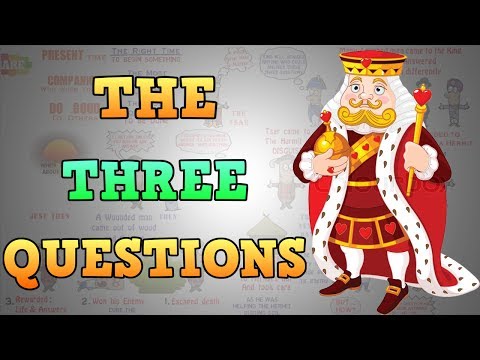
The Parable of the Three Questions
Click below to show/hide questions.
This discussion guide has been generated by the WORD THIS WEEK'S Catholic AI Assistant based on Deacon McCulloch's homily.
Part 1: Reflecting on the Homily
1. Opening Thought
- Jesus advises us to love our enemies and do good to those who hate us. How can we practically apply this teaching in our lives?
2. Key Questions
- What is the significance of loving our enemies?
- How does this message challenge our everyday interactions?
Part 2: Exploring Tolstoy’s Parable of the Three Questions
1. The King's Quest
- The king desires to make sound decisions and seeks answers to three questions:
- When is the right time to do something?
- Who is the most important person to listen to?
- What is the one thing I should always do?
2. Interaction with the Hermit
- Discuss why the hermit initially does not answer the king's questions.
- What role does humility and service play in the king's experience?
3. The Unfolding Events
- Analyze the significance of the king tending to the garden and caring for the wounded man.
- How do these actions answer the king's questions?
Part 3: Understanding the Answers
1. Truth Revealed
- The hermit's explanation:
- The right time is now.
- The most important person is whoever is right in front of you.
- The one thing to always do is show compassion.
2. Personal Reflection
- Reflect on a time when you showed compassion. How did it change the situation or relationship?
- How can adopting this mindset transform conflicts into opportunities for reconciliation and growth?
Part 4: Application and Practice
1. Putting It into Practice
- Identify daily opportunities for compassion.
- Share strategies for staying mindful and present in your interactions.
2. Group Activity
- Role-playing scenarios where participants practice responding with compassion.
- Share experiences and insights gained from the activity.
Conclusion
Invite participants to share their insights and commitments to practicing the teachings discussed. Encourage continued reflection and application in their daily lives.
Homily Excerpt
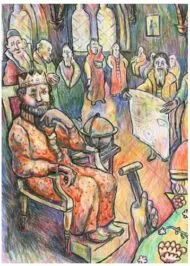
Today, Jesus tells us to love our enemies, to do good to those who hate us. But how might we actually approach this? Leo Tolstoy helps us to understand in his famous Parable of the Three Questions.
There was once a king who wanted to know how to always make good decisions. He decided that if he could answer three questions, he’d always know the right thing to do: When is the right time to do something? Who is the most important person to listen to? And what is the one thing I should always do?
He offered a reward for the best answers, but received no useful replies.
Then the king heard of a wise and holy hermit who lived on a mountain and would only see the poor. So, he disguised himself as a peasant and went to ask him his three questions.
⬇️ Fr. Austin Fleming
7th Sunday of Year C

In a parish I once served as pastor there was a man. I’m going to call him ralph ralph and I had a rocky relationship because ralph disagreed with almost everything. I said and did he let me know frequently and I appreciated his honesty. I remember one sunday morning after mass when ralph on his way out of church stopped to make a complaint this time about the prayers of the faithful namely. The first petition which in that parish was the same every week and it went like this for god’s people everywhere for the work of justice and a harvest of peace for wisdom and compassion in the work of those who govern us for the defense and protection of religious liberty for all for the safety and shelter of refugees for those who serve and protect us for those in harm’s way for an end to war and for our enemies let us pray to the lord well. I asked ralph what it was about that petition that he found to be problematic and he said father praying for our enemies.
This discussion guide has been generated by the WORD THIS WEEK’S Catholic AI Assistant based on Father Austin’s homily. NEED HELP? Copy and paste a question into the chat bot in the lower right corner of the screen and have our Catholic Assistant help you.
Opening Reflection:
How do you typically respond to teachings or instructions that challenge your beliefs or practices? Share an instance where someone disagreed with you openly. How did you handle it?
Prayer for Enemies
Why do you think it’s difficult for many people, like Ralph, to accept the idea of praying for one’s enemies? How do you personally feel about this directive from Jesus?
Scriptural Context
Reflect on Jesus’ teachings about loving and praying for our enemies. What other biblical references can offer additional insight into this command?
Real-life Challenges
Consider the practical challenges someone like Ralph, who served in World War II, might face in reconciling his experiences with Jesus’ teachings. How might past experiences shape one’s perception of loving their enemies?
Complexity of Jesus’ Instructions
Discuss whether Jesus’ command to love our enemies is simple and easy or complicated and difficult. In your experience, is it more of a willingness issue or a complexity issue?
The Cross as a Standard
How can the image of Jesus on the cross serve as inspiration or a model for showing love to others, especially those who might not reciprocate?
Loving in Action
Share practical ways you can love those who don’t love you back. What small steps can you take in your daily interactions to exhibit this kind of love?
How can forgiving others release you from the burdens of anger and resentment?
Frequency of Forgiveness
Reflect on the idea of forgiving “seventy times seven” times. How does this perspective change your approach to forgiveness, and how can it be incorporated into your life?
Loving Beyond Comfort
Consider the Lord’s words about loving those who persecute and reject you. How does this challenge your personal relationships and interactions with others?

7th Sunday of Year C

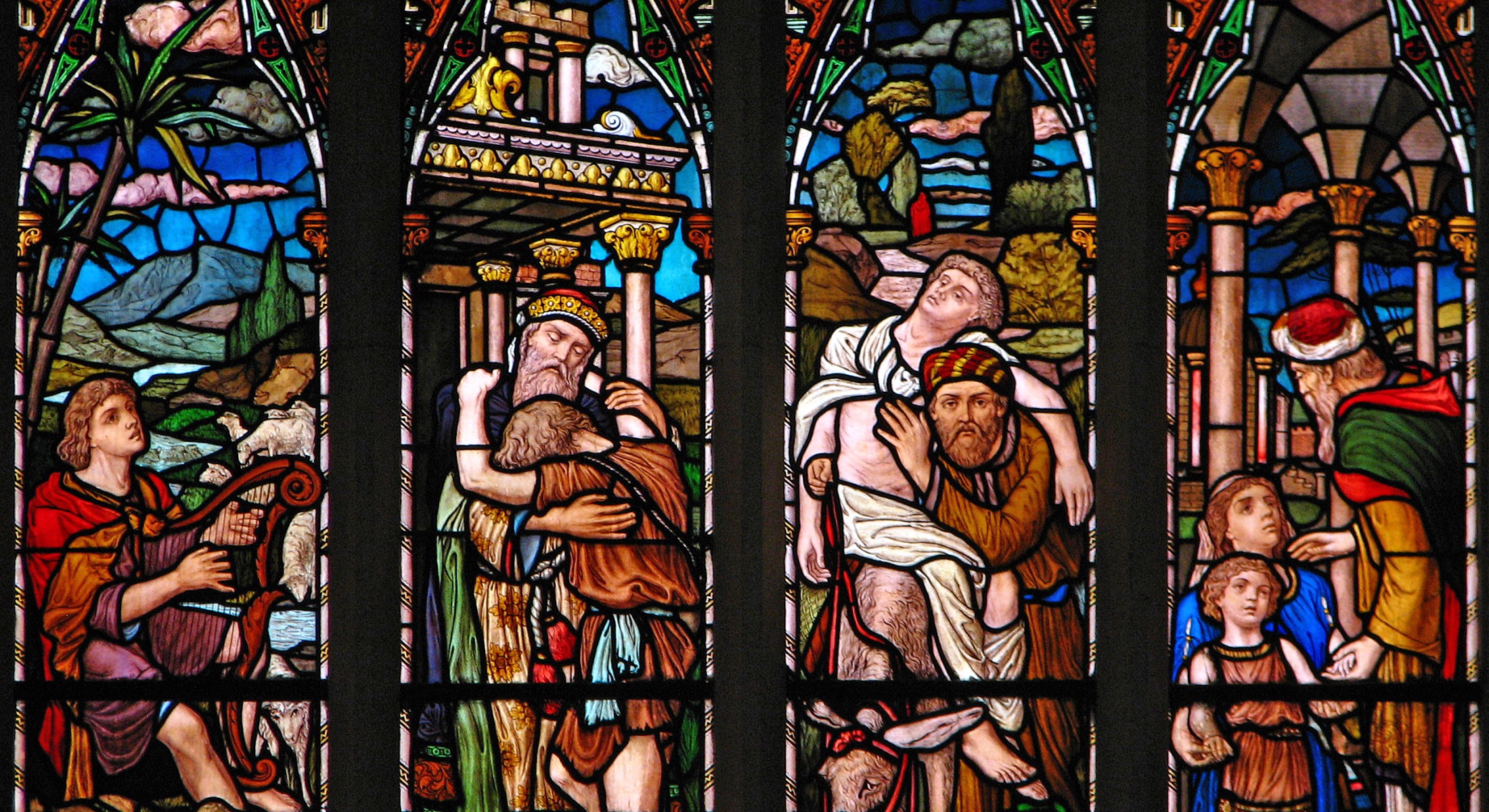
Photograph by Fr Lawrence Lew OP of a window in the Stanford Memorial Church in California.
Click below to show/hide questions.
This discussion guide has been generated by the WORD THIS WEEK'S Catholic AI Assistant based on the Dominican Blackfiars' homily for this week. NEED HELP? Copy and paste a question into the chat bot in the lower right corner of the screen and have our Catholic Assistant help you.
1. Understanding the Context
- Reflect on the imagery of living in a time of "anarchic turmoil" as a metaphor for the Christian journey. How does this image relate to the concept of living with future ideals in a present world?
- Discuss the idea of Christians being inserted into a "new history." What does it mean to live a life that is both "timely and timeless"?
2. The Present and Future Reality
- Explore the significance of living as though the Kingdom of Heaven is here-and-now. How does this affect the Christian life today?
- How do the teachings of Christ guide Christians in navigating a world that often feels in chaos or conflict?
3. The Dynamic Tense of the Beatitudes
- Analyze the difference in verb tenses in the beatitudes. Why is the beatitude for the poor present-tensed, while others are future-tensed?
- Discuss the role of divine pronouncement and action in the present-tense beatitude. How does this impact the understanding of divine power and action?
4. The Dual Nature of Divine Word: Blessings and Curses
- Engage with the theological concept of the divine Word being both affirmative and negating. How do blessing and curse function together?
- What are the implications of Jesus’ ‘woe to those who are rich’ in relation to the divine blessings?
5. Material Poverty vs. Spiritual Poverty
- Compare and contrast the interpretations of the Sermon on the Plain and the Sermon on the Mount regarding the "poor." How does Luke’s emphasis on material poverty challenge or enrich our understanding of the Kingdom of God?
- Discuss the church’s responsibility to the materially poor. How does acknowledging the poor as first citizens of the Kingdom affect the mission of the church?
6. Testimony of the Faithful
- Reflect on the story of the woman on the train. How does her story serve as a testament to the power and support provided by faith and the sacraments?
- Consider the roles of giver and receiver in blessings. How does this story illustrate the reciprocal nature of faith and encouragement?
7. Personal Reflection and Action
- Think about how you might live out the principles discussed in the sermon in your daily life. What practical steps can you take to embody the values of the Kingdom of Heaven?
- How can individuals and groups support one another in this journey of living "future-tensed" lives?
8. Group Prayer or Meditation
- Conclude your discussion by praying or meditating on how each participant can embrace the present and future calling of their Christian life, supporting each other in their faith journeys.
Homily Excerpt
6th Sunday of Ordinary Time (C) | Fr Oliver Keenan ponders the blessedness of the poor and the blessings still to come.

Imagine that we lived in a time of great anarchic turmoil, a time when revolutionary fervour had just overthrown an immoral tyrant but a new order of law and justice had not yet been established. In trying to bring about change for the better, we might have no choice but to act as if the longed for era of justice and peace were already here. We might find ourselves living lives that were already voluntarily patterned by the laws and ideals of an era of history that was just being born, and which might never materialise.
We Christians find ourselves in a similar set of circumstances, but for opposite reasons. To become a Christian is to be inserted into a new history; to be a Christian is to live that history out in the midst of a history that we are leaving behind...

Click below to show/hide questions.
This discussion guide has been generated by the WORD THIS WEEK'S Catholic AI Assistant based on the Dominican Blackfiars' homily for this week. NEED HELP? Copy and paste a question into the chat bot in the lower right corner of the screen and have our Catholic Assistant help you.
Discussion Guide for "Of Gods and Men"
Introduction
- Begin your session by introducing the film "Of Gods and Men" (2010), directed by Xavier Beauvois. Discuss its significance as a spiritual resource, particularly in the context of Lent, and share the film's true story about the community of Cistercian monks in Tibhirine, Algeria, during the 1995 civil war.
Background and Context
1. Historical Setting: Discuss the historical background of Algeria in the 1990s, including the conflict between the corrupt government and the Mujahidin, and the tension stemming from Algeria's colonial past with France.
2. Monastic Community: Explore the role and influence of the monks in the village, focusing on their relationships with the Muslim villagers and their commitment to simplicity, community service, and mutual respect.

Themes for Discussion
1. Violence and Non-Violence:
- Discuss the concept of "turn the other cheek" as presented in the sermon. How do the monks embody this principle in the face of violence and threat?
- How does their stance challenge or resonate with contemporary views on self-defense and responding to aggression?
2. Faith and Martyrdom:
- Reflect on the concept of "martyrdom" as depicted in the film and in the sermon. Consider both physical martyrdom and the "long, dry martyrdom" faced by many believers today.
- What insights does the film provide about faith, sacrifice, and the strength derived from the belief in the Resurrection?
3. Interfaith Relationships:
- Analyze the relationship between the monks and the Muslim villagers, including the interactions with the local imam. How do these relationships serve as examples of interfaith understanding and peacebuilding?
- Discuss the significance of the beatification event involving Muslims and Christians, highlighting the imam's statement about blame.
4. Authority and Wisdom:
- Examine Fr Christian's evolving understanding of authority and how it influences his decisions. Discuss this in light of historical and biblical examples, such as the story of King David and Saul.
- How does the notion of respecting authority, especially when it is in conflict with one's principles, play out in both personal and communal contexts?
Reflective Questions
- How does the film challenge your understanding of courage and strength?
- In what ways do the lives of the monks inspire you to consider your own faith journey and the way you relate to others, especially those of different beliefs?
- How can we apply the lessons of non-violence and faithful endurance in our daily lives?
Practical Application
- Encourage group members to consider how they can foster peace and understanding in their communities, drawing inspiration from the monks' lives.
- Discuss practical steps to support those facing discrimination due to their faith, with an emphasis on compassion and hope.
Conclusion
- End the discussion by reflecting on the transformative power of love and faith. Reiterate how the monks' story serves as a testament to the enduring nature of love, which ultimately "wins out" and "converts."
Homily Excerpt
Seventh Sunday of Ordinary Time. Fr Dominic White reminds us that all Christians are called to martyrdom.
One of my favourite films is Of Gods and Men (2010) by Xavier Beauvois. In fact, as Lent is fast approaching, I’d recommend it as a spiritual resource (that’s also another way of saying that it’s not one to kick back to on a Friday night!). It tells the true story of a community of Cistercian monks in the little Muslim village of Tibhirine in the Atlas Mountains of Algeria...
This is the power of “turn the other cheek”. It’s not a denial of the need to defend the innocent, indeed the right to self-defence. But it is Jesus’ radical call to an end to the tit-for-tat of violence, violence which only breeds violence. Especially where we are attacked for being believers in the Gospel of Peace. While the Algerian martyrs are outstanding cases, I think of many lay people who face daily slurs, misrepresentation and discrimination for their faith – a long, dry martyrdom by pin pricks and disappointment. And their fidelity, constant love of those who cannot or will not understand, are afraid – they see all this in their persecutors – and yes, their joy, their rejoicing in the simple gifts of God.
Click below to show/hide questions.
This discussion guide has been generated by the WORD THIS WEEK'S Catholic AI Assistant based on the Dominican Blackfiars' homily for this week. NEED HELP? Copy and paste a question into the chat bot in the lower right corner of the screen and have our Catholic Assistant help you.
Key Concepts:
1. Understanding Compassion:
- The Latin word "misericordes" translates to compassionate or merciful love.
- This love is characterized by a readiness to forgive and show mercy.
2. St. Thomas Aquinas on Compassionate Love:
- Compassionate love involves feeling sorrow for another's misery as if it were one's own.
- It prompts action to alleviate the other's suffering.
3. Compassion in Action:
- Compassion goes beyond feelings of pity; it seeks to relieve discomfort and promote human flourishing.
- Christ's life and Passion exemplify divine compassion, offering liberation and salvation.
4. Christ's Role:
- Christ embodies the call to be compassionate, showing unconditional love.
- His actions during the Passion reveal the depth of compassionate love.
5. Being Compassionate as God Is:
- Christians are invited to open themselves to Christ's presence and power.
- Through Christ’s Spirit, believers can manifest God's compassionate love in the world.
6. The Freedom of Compassionate Love:
- Compassionate love involves the freedom not to retaliate insult for insult.
- It acts in ways that uplift and promote good, even at personal cost.
Discussion Questions:
1. What does the term "compassionate or merciful love" mean to you personally? How does it differ from simple compassion?
2. How does St. Thomas Aquinas's definition of compassionate love challenge you in your daily life?
3. Reflect on a time you encountered someone else's suffering. How did you respond, and how might this sermon inspire you to respond differently in future similar situations?
4. In what ways does Jesus' life exemplify compassionate love? How can we model our lives on His example?
5. Discuss the relationship between divine perfection and compassion. How do these attributes complement each other as seen in Christ?
6. How can we invoke Christ’s Spirit to help us embody compassion in challenging situations?
Application:
- Reflect on personal encounters this week where compassionate love could be applied.
- Discuss practical steps to ensure that one's actions align with the call to be compassionate as God is compassionate.
- Encourage accountability partnerships within the group to practice compassionate responses in real situations.
Conclusion:
- The call to be compassionate as God is encompasses both feeling and action.
- By embracing Christ’s presence and Spirit, believers can truly reflect the compassionate love of the Father.
Homily Excerpt
Seventh Sunday of the Year. Fr Martin Ganeri preaches on the command to be compassionate as God is compassionate.
In the Latin Bible of the Catholic Church the word translated by compassionate in the Gospel is misericordes. In the Latin Bible this word and the related noun, misericordia, are used in places when the Bible sets out the covenantal love of God for his people, the loving kindness of God, something that involves a readiness to forgive and show mercy. The word, misericordia, is often just translated as ‘mercy,’ but a better way of expressing the relationship it conveys would be ‘compassionate or merciful love.’ The compassionate or merciful love of God for humanity and hence the compassionate or merciful love that men and women should have for each other.
St Thomas Aquinas says of this ‘compassionate merciful love:
A person is said to have compassionate, merciful love when he has sorrow in his heart, being affected by sorrow at the misery of another, as though it were his own. Hence it follows that he endeavours to dispel the misery of the other person, as if it were his own, and this is the effect of this love. (ST 1.21.3)
⬇️ Fr. Charles E. Irvin
7th Sunday of Year C
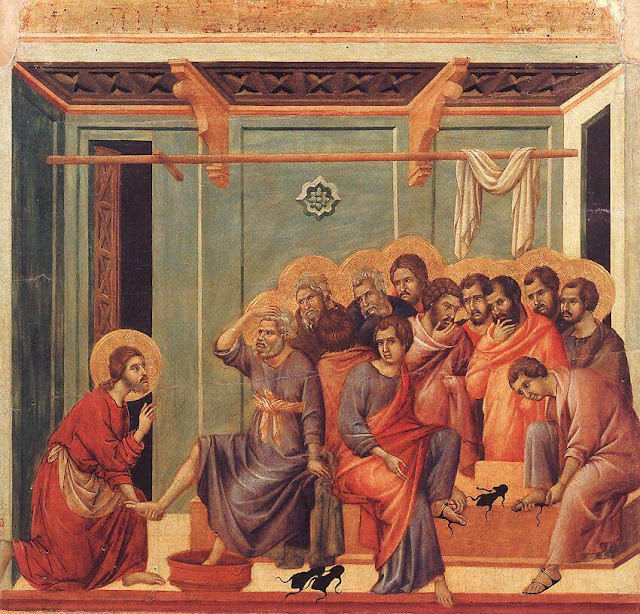

In today’s Gospel reading we hear Jesus telling us to, “Stop judging.” But at the same time, we must all remember that Jesus did, in fact, judge the behavior of others. Take what He had to say to the Pharisees, for just one example. Furthermore, Jesus teaches us to seek what is good and reject what is bad, discern what is right behavior and what is wrong behavior. Where is it written that we are not supposed to judge what is good behavior and what is bad?
The frequent application of the complaint “stop judging” is often directed at committed Christians. We are called fundamentalists, fanatics, or told that we are the thought police of the religious Right. It appears to some folks around us that our rejection of abortion, and our rejection of aspects of the Culture of Death, for just a couple of examples, goes against Jesus’ clear statement about not judging others. But I deny that. Jesus had hard things to say about people who engage in destructive activities.
This discussion guide has been generated by the WORD THIS WEEK'S Catholic AI Assistant based on Fr. Irvin's homily. NEED HELP? Copy and paste a question into the chat bot in the lower right corner of the screen and have our Catholic Assistant help you.
Introduction
Begin your discussion by introducing the sermon’s key themes: the distinction between judging behaviors versus judging individuals, the societal implications of judgment, and the balance between moral guidance and avoiding personal judgment.
Discussion Questions
1. Initial Reactions
- What were your initial thoughts about the sermon?
- How did the message resonate with your personal experiences or beliefs?
2. Parental Concerns and Judgment
- How prevalent do you think the issue of judgment is in parent-teen relationships today?
- What are some effective ways parents can guide their children without being perceived as judgmental?
3. Irony of Judgment
- The sermon highlights an irony in how people judge others while condemning judgment. Can you share examples from personal experiences or observations?
- How can recognizing this irony help in fostering more understanding and less judgmental interactions?
4. Jesus’ Teachings on Judgment
- How does the sermon differentiate Jesus' instructions to “stop judging” from the act of discerning right from wrong?
- In what ways did Jesus demonstrate judgment of behaviors, and how can this be applied in today’s context?
5. Distinction Between Judging People and Behavior
- How can we effectively separate the act from the person when discussing judgment?
- Why is it crucial to make this distinction in societal and personal contexts?
6. Personal Failings and Moral Judgment
- C.S. Lewis suggests focusing on personal failings when discussing morality. How can this perspective contribute to more constructive discussions about judgment?
- Can acknowledging your faults help in advising others, even on issues you haven't personally experienced?
7. The Role of Authority Figures
- How should individuals in positions of authority—like parents, teachers, and religious leaders—approach judgment and guidance?
- Discuss the balance between using firsthand experience and understanding broader societal dangers in providing guidance.
8. Judging Standards Versus Individual Judgment
- Why are standards for human behavior important to uphold societally?
- How can we maintain these standards while aligning with Jesus’ teachings on not judging individuals?
9. Culture Wars and Judgment
- According to the sermon, who or what is the real enemy in today’s cultural conflicts, and why?
- What strategies can be employed to engage constructively in “culture wars” without crossing into personal judgment?
10. Final Reflection
- How can you apply the principle of “hating the sin but loving the sinner” in your daily life?
- In what ways can this sermon and its themes influence your approach to judgment and interactions with others?
Practical Application
- Identify one or two ways you can actively practice loving the sinner while holding firm to moral standards in your community.
- Establish a personal or group commitment to fostering non-judgmental conversations in areas where judgment might typically arise.
Conclusion
Wrap up the discussion by encouraging participants to reflect on how they can integrate the lessons from the sermon into their daily lives. Encourage sharing of insights gained from the discussion.
⬇️ Fr. George Smiga
- Why Love Your Enemy? (2004)
- Assessing the Alternative (2007)
- Imitating GOd's Mercy (2019)
7th Sunday of Year C
Each week, THE WORD THIS WEEK presents an excerpt from Fr. Smiga's homily archive. To access all of the homilies for this Sunday, click on the title above. Then scroll down the page to find the text of this homily.

2004 HOMILY - When someone hates you, you have two choices: you can hate them back or you can refuse to hate. When someone hurts you, you can respond in two ways: you can hurt them back or you can refuse to hurt. In today’s gospel Jesus makes it clear that if we wish to be his disciples, we must refuse to hate, refuse to hurt. This is why he teaches that we are to love our enemies, and why he enshrines that teaching in the golden rule: “Do unto others as you would have them do to you.” Since we would not want others to hate us or hurt us, we should not adopt hateful or hurtful attitudes towards them.
Now this teaching to love our enemies, to follow the golden rule is the most difficult of all Jesus’ teachings. We all struggle against it. We have many objections. It does not make sense. It is impossible to follow. The people who hurt and hate us do not deserve our love and forgiveness. We cannot help but ask, “Why does Jesus want us to do something that is so difficult? Why is he so insistent that we love our enemies?”
This discussion guide has been generated by the WORD THIS WEEK'S Catholic AI Assistant based on Fr. Smiga's homily.
Introduction
- Summarize the central message of the sermon.
- Reflect on why this teaching of Jesus is challenging but crucial.
Choices in Response to Hatred
- Discuss the two choices: hate back or refuse to hate.
- What does Jesus teach about handling hatred?
- Reflect on personal experiences where you had to choose between these options.
The Golden Rule
- Explain the Golden Rule, “Do unto others as you would have them do to you.”
- How does this teaching connect to loving our enemies?
Challenges and Objections
- Why do people struggle with loving their enemies?
- Share personal objections or doubts you may have about this teaching.
Via Negativa
- Explain the concept of via negativa (the negative way) and how it applies to this situation.
- Consider examples from history, current events, or personal experiences where returning hate with hate resulted in negative outcomes.
- What does via negativa suggest about the necessity of Jesus’ teaching?
Applications of Via Negativa in Real Life
- Identify areas in your life where hate or hurt has been met with more hate or hurt. How has this impacted you and those around you?
- Discuss if and how adopting Jesus’ teaching might change these situations for the better.
- Reflect on the broader implications for communities and nations when “getting even” is the norm.
Importance of Forgiveness
- How does forgiveness play a role in breaking cycles of violence?
- Discuss the sermon’s point about not accepting abuse or manipulation while still practicing forgiveness.
Practical Steps for Loving Enemies
- What practical actions can be taken to show love to those who have hurt or hated us?
- Share strategies for managing personal feelings of hate or resentment.
Re-evaluating Jesus' Teachings
- Discuss if the current state of the world influences your view of this teaching.
- Consider why the world’s increasing violence might prompt a reconsideration of these teachings.
Conclusion and Reflection
- Reflect on how habitually responding with love instead of hate could transform personal relationships and society.
- Commit as a group to practice or reflect on the teachings of Jesus concerning loving enemies during the coming week. Discuss potential outcomes and inner transformations that might occur.
7th Sunday of Year C

A High Standard of Love
“If you love those who love you, what credit is that to you?...If you do good to those who do good to you, what credit is that to you?...Lend expecting nothing back…Be merciful, just as your Father is merciful.”
This Gospel passage calls us to a high standard of love, set by the example of God himself. It is particularly appropriate to draw out the application of this standard for the pro-life efforts of God’s people. In striving to restore protection to the most vulnerable members of our society – the unborn, and those whose illnesses have rendered them incapable of responding – we are in fact loving those who cannot love us back, and doing good to those who cannot do good in return. Loving the unborn and unresponsive necessarily requires a love that is free of the motive of looking for something in return.
7th Sunday of Year C

The Christian and Hatred

The Christian is called to bring an experience of God to the world. The Christian is called to proclaim salvation. The Christian is called to proclaim Jesus Christ. But how can we proclaim God if we behave in a manner that is a total antithesis to God? God is Love. How can we proclaim God if we hate? The mission the Lord has sent us on is far more important than the question of who started the fight. By refusing to respond to injury, we alert the world to a new attitude in life. From the cross, Jesus forgave all who participated in his torture and death. From his cell, St. Thomas More, forgave King Henry VIII for destroying his reputation and his life. From our hearts, we have to forgive anyone who has hurt us. The vicious cycle of hatred can only be stopped by people who are determined to love.
This discussion guide has been generated by the WORD THIS WEEK'S Catholic AI Assistant based on Fr. Pellegrino's homily.
Introduction: This discussion guide is designed to help small groups explore the themes and lessons from the sermon. Participants are encouraged to reflect personally and discuss openly, fostering a deeper understanding of the message.
Summary: The sermon centers on the theme of personal responsibility and the dangers of justifying harmful actions by blaming others. It draws on biblical stories and teachings, urging individuals to embrace forgiveness, love, and mercy instead of hatred and retaliation.
Understanding the Conflict:
- What does the initial story of the two boys' fight reveal about human nature and conflict?
- How does blaming others for our actions affect our personal growth and relationships?
Historical and Biblical Illustrations:
- Discuss the historical examples provided, such as the conflict between Arabs and Israelis, Catholics and Protestants, and Russia's actions in Ukraine. What common patterns emerge?
- Reflect on the story of David and Saul. How does David's choice to spare Saul despite having the opportunity to harm him illustrate the sermon's message?
Personal Reflection:
- Consider a time when you felt wronged by someone. How did you handle it?
- In what ways could the sermon's message of forgiveness and understanding alter your perspective and response?
- Have you ever blamed others to justify your actions or feelings? How can recognizing this behavior lead to personal growth?
Forgiveness and Mercy:
- Analyze the Gospel's teaching to "love your enemies" and "be merciful, just as your Father is merciful." Why do you think these teachings are considered radical?
- How can practicing radical charity and love in our daily lives impact those around us and ourselves?
Application in Daily Life:
- How can we, as individuals and as a community, break the cycle of hatred and retaliation?
- What are practical steps we can take to ensure our actions align with the sermon's call to embody God's love and mercy?
The Sermon's Conclusion and Personal Application:
- Address the notion of grudges and their long-term impact. How can holding a grudge diminish our capacity to love and find peace?
- What lessons can we take from the sermon's conclusion about the ultimate importance of love and forgiveness in our lives and beyond?
- How can this sermon guide our interactions in everyday situations?
- What immediate changes can we implement in our lives to live out these principles?
- Encourage participants to share any personal resolutions or commitments they feel led to make after reflecting on the sermon's message.
7th Sunday of Year C

Be Different, Be a Christian
Are you a Christian? Before you answer, consider these other questions: Do you love your enemy? Do you do good to them who hate you? The honest answers to these questions are at the very heart of Christianity and represent what distinguishes a Christian from others. Let’s follow Jesus’ teachings in several stages. In so doing, we can learn our truest identity and how He seeks to transform us.
I. The ATTITUDE of a Christian
II. The ALTITUDE of a Christian
III. The ASSETS of a Christian

7th Sunday of Year C
First Impressions
Fr. Jude Siciliano, O.P. was ordained in 1969. For fourteen years he taught homiletics at the Graduate Theological Union in Berkeley, CA, and is a past president of the Catholic Association of Teachers of Homiletics. He was a volunteer chaplain at San Quentin Prison and was actively involved with "People of Faith Against the Death Penalty," in North Carolina. He preaches parish retreats and also travels throughout the country giving preaching workshops.
⬇️ Bishop John Kobina Louis
7th Sunday of Year C

Sunday Homilies

Bishop John Kobina Louis, PhD, is an auxiliary bishop of the Archdiocese of Accra, Ghana. He was ordained as an auxiliary bishop on 19th April 2023.
⬇️ Fr. Michael Chua
7th Sunday of Year C

Homily Excerpt

To understand what our Lord is saying, we need to clarify two words, ‘love’ and ‘enemies’. Who are our enemies? Now, the question may seem ludicrous but it is important to state the obvious. Most people live in denial and because they do so, they end up either never resolving their issues with their enemies or never attempting even to love them. So, yes, we do need to know and recognise our enemies in order to love them. Our enemies can either be the people that we are hostile towards or the people who are hostile to us. They are persons whom we dislike, whom we even hate or despise. Or they may be the ones who dislike us, hate us or despise us. These are our enemies. Our first reaction would be to repay them in kind – if they are hostile to us, then we are entitled to be hostile to them too. But these are the ones whom we are called to love.
Homily Excerpt
One of the most life-changing quotes that I have carried with me in my arsenal of pithy sayings, something I’ve treasured all these years as a priest is this personal piece of advice I received from the late Fr Phillips Muthu: “Mike, there are no troublemakers in this world. Only people needing to be loved.” What a refreshing new lens? Such an important reminder especially when I’m confronted with someone annoying, insolent, rude and incorrigible. Just at the very moment I’m tempted to blow my top and lash out, this quote brings me back from falling off the precipice of cool-headed sanity: “Mike, there are no troublemakers in this world. Only people needing to be loved.”

Homily Excerpt
What does a world without trust look like? If subjects no longer trust politicians and their leaders, our society would descend into chaotic anarchy. If consumers no longer trust that their data and money can be safeguarded, then the modern financial system could collapse. If litigants no longer trust the legal and judicial system, justice would be an elusive illusion. Marriages will breakdown, families will divide and communities would be perpetually splintered. Trust is the base layer of all human relationships. Without trust, there can be no value exchange, no community, no intimacy. It would seem that Confucius was right when he declared: “without trust we cannot stand.”
7th Sunday of Year C

Homily Excerpt

In this Sunday’s Gospel reading, Jesus utters the heart of his teaching: “Love your enemies; do good to those who hate you; bless those who curse you; pray for those who abuse you.”
He gives practical examples: “If anyone strikes you on one cheek, offer the other also; and from anyone who takes away your coat do not withhold even your shirt. Give to everyone who begs from you; and if anyone takes away your goods, do not ask for them again.”


⬇️ Fr. Tommy Lane
7th Sunday of Year C
- Forgiving 2019
- Related Homilies: Homilies on forgiving others
- stories about reconciliation helping others seeing God in others
7th Sunday of Year C

While the mind of Friedrich Nietzsche was unraveling as the last century ended, Freud's was taut, wrapped around the mystery of unconscious human behavior.
Both thinkers are now celebrated as the great unmaskers of motivation. They spread the awful news that we humans are not as nice as we think. Under our seeming civility and tidy-mindedness lurks a raging thirst for power hunkered down around an oven of anger and lust that Freud dubbed the “id.” Civilization, to Nietzsche's disgust and Freud's approval, supposedly tamed those feral impulses, yet both men suspected that the cooker of repression would explode.
Politically, world wars and holocausts—as recent as events in Rwanda [1994]—seem to have confirmed their frightening visions. In academic circles Nietzsche and Freud are lionized as prophets of deconstruction. And in mean streets, will and power work their ruthless ways.
This discussion guide has been generated by the WORD THIS WEEK'S Catholic AI Assistant based on Fr. Kavanaugh's homily. NEED HELP? Copy and paste a question into the chat bot in the lower right corner of the screen and have our Catholic Assistant help you.
Discussion Guide
Introduction: Context and Key Themes
- The sermon juxtaposes the philosophies of Nietzsche and Freud with biblical teachings, emphasizing the stark contrast between human motivation and divine intervention.
- Highlight the notion that while secular views unveil the darker instincts of human behavior, biblical teachings offer a transformative path that transcends these base instincts.
Section 1: The Philosophies of Nietzsche and Freud
Key Questions:
1. What do Nietzsche and Freud reveal about human nature and motivation?
2. How do world events and history appear to validate Nietzsche and Freud's perspectives on human aggression and the will to power?
Discussion Points:
- Analyze Nietzsche and Freud's views on civilization taming wild human impulses.
- Reflect on the implications of their views on human nature in modern society.
Section 2: Biblical Contrast - David and Saul
Key Questions:
1. How does the story of David and Saul illustrate the emergence of a new moral way?
2. What does David's refusal to harm Saul teach us about revenge and divine anointment?
Discussion Points:
- Discuss the concept of restraint and divine respect in David's actions.
- Explore how this story contrasts with Nietzsche and Freud’s views on human nature.
Section 3: The Sermon on the Mount
Key Questions:
1. How does the Sermon on the Mount redefine the concept of the "anointed of God"?
2. What challenges do Christ’s teachings present to our natural instincts and societal norms?
Discussion Points:
- Examine the revolutionary nature of Christ’s teachings on love, forgiveness, and non-retaliation.
- Consider the radical departure from human instincts as noted by Nietzsche and Freud.
Section 4: Freud's Human Nature
Key Questions:
1. How does Freud's perspective on human aggressiveness challenge the message of Christ?
2. What does Paul’s writing to Corinthians add to this discourse on natural vs. spiritual existence?
Discussion Points:
- Discuss Freud’s view of humanity’s predatory instincts.
- Explore Paul's differentiation between the natural and the spiritual, connecting it to religious teachings.
Section 5: Christ as the Second Adam
Key Questions:
1. What implications does Christ’s role as the second Adam have on human identity and behavior?
2. How does Christ’s new teaching realign human values and behaviors?
Discussion Points:
- Consider how Christ’s existence redefines the nature of “flesh” and spiritual transformation.
- Discuss the impact of adopting Christ's teachings in our lives.
Section 6: Embracing the New Teaching
Key Questions:
1. What reservations might Christians have about fully embracing the Sermon on the Mount?
2. How does the promise of God’s mercy and generosity encourage us to overcome these fears?
Discussion Points:
- Debate the feasibility and challenges of adhering to the principles laid out in the Sermon on the Mount.
- Discuss the role of divine assurance in empowering Christians to aspire to higher spiritual ideals.
Conclusion: Reflections and Personal Application
- Reflect on the contrast between human nature as dissected by Nietzsche and Freud and the transformative power of Christ’s teachings.
- Consider personal attitudes and behaviors that could benefit from the teachings discussed in the sermon.
Action Points:
1. Identify one area in your life where you can practice the principles of the Sermon on the Mount.
2. Share with the group an experience where you’ve witnessed or enacted “love for enemies” in practical terms.
7th Sunday of Year C
Homily Excerpt
This Sunday’s readings and next are interesting for me as a priest because, in the twenty years I have been writing homilies, it is very rare that we get to preach on these sets of readings. The reason for this is because Lent begins so late this year. The 7th and 8th Sundays of ordinary time fall before Ash Wednesday rather than after the Easter Season. You see, they usually arrive after Pentecost and get booted in favor of the solemnities of the Holy Trinity and Corpus Christi, which both have their own set of good readings.
Why is Ash Wednesday so late this year some of you might wonder? This is because the start of Lent is always decided by when Easter is celebrated. Easter Sunday is always celebrated in the Catholic Church on the first Sunday after the first full moon after the vernal equinox in keeping with how Passover was calendared in ancient times. And so, it is rare for us priests to preach on the 7th Sunday of ordinary time, which is unfortunate because the readings this weekend are very good.
We have the story of David who had his enemy in his grasp. Instead of killing his adversary, he shows him mercy instead. We have Jesus continuing his sermon on the plain in Luke’s Gospel challenging us to love our enemies. This is perhaps the toughest challenge the Lord gives us in his ministry and yet Jesus practiced what he preached, dying on the cross for the atonement of our sins.


⬇️ Fr. Jagodensky, SDS
7th Sunday of Year C

Homily Excerpt
Here’s a quote for you, “We believe television news but doubt our faith.” Madonna sang, “I’m A Material Girl.”
Often in life, we reduce our lives to “either/or” decisions. The “both/and” option rarely seems to be considered. Dating back to 1546 is the saying, “Can’t have your cake and eat it too.”
“Can’t have your cake and eat it too.” Hmmm. In a few moments, together, we will take material bread and cause it to become the bread of “new life,” because we believe. The same will occur with material wine. Then, toward the end of Mass, I’ll lift up both materials to show you that the materials haven’t changed, but our beliefs about them have.
Hmmm. If only I could do that with my feisty neighbor. If only I could do with my arrogant boss. If only I could do that with my stubborn teenager. If only I could do that with … myself. The only true sentence is the last one. And, the last sentence has a way of affecting the first three. very important and highly relevant.
Please note that the provided video clips serve as additional resources to complement the homily. They may not have a direct correlation with the contributor's original content. They aim to inspire preachers to enrich their own homilies, drawing ideas and insights from both the written material and the visual content explored.