June 22, 2025
June 22, 2025


Homilies
Homilies
- Bp. Barron
- FR. RUTTIG
- 1-MIN HOMILY
- 2-Min Homily
- MSGR. Peter Hahn
- Fr. Jude Langeh
- FR. MCCARTHY, OSA
BISHOP
BARRON
Body & Blood of Christ (Year C)


FR. KEVIN
RUTTIG
Body & Blood of Christ (Year C)


ONE MINUTE
HOMILY

Body & Blood of Christ (Year C)


TWO MINUTE
HOMILY

Body & Blood of Christ (Year C)


MSGR. PETER
HAHN
Body & Blood of Christ (Year C)


FR. JUDE
LANGEH, CMF


FR. TOM
McCARTHY, OSA

Body & Blood of Christ (Year C)


CHECK OUT
The Word This Week’s
REDESIGNED MOBILE WEBSITE
Optimized for easy access
Deacon Greg’s blog has garnered some 20 million readers from around the world since its inception in 2007.
Body & Blood of Christ (Year C)
It is Astounding to Consider What Bread can Become
This discussion guide has been generated by the WORD THIS WEEK'S Catholic AI Assistant based on Deacon Greg's homily.
Icebreaker: Reflecting on Simple Beginnings
1. Share an experience where you tried to learn or do something new. How did it turn out, and what did you learn from it?
The Process and Miracle of Bread
1. Reflect on Deacon Greg's experience with baking bread. What parallels can you draw with learning any new skill or process?
2. The homily mentions the transformation of ingredients into bread. How does this concept relate to the transformation in the Eucharist?
3. What are your thoughts on Deacon Greg's description that the process of creating bread is wondrous? How does this notion connect to your personal faith journey?
Understanding the Eucharist
1. Deacon Greg's homily suggests a comparison between baking bread and the creation of the Eucharist. How does this analogy deepen your understanding of the Eucharist?
2. What does it mean to you that bread becomes the body of Christ? How is this notion deepened by the comparison to the Incarnation?
3. Discuss the concept that God became man so that man might become God. What implications does this have for your spiritual life and understanding of the Eucharist?
Faith and Belief in the Real Presence
1. Deacon Greg's homily mentions a Gallup poll about belief in the Real Presence. Share your perspective on why belief in the Real Presence may be challenging for some.
2. How can the story and vision of the event at Lanciano help strengthen belief in the Real Presence of the Eucharist?
3. What role does personal experience play in bolstering faith? Share any experiences you might have had that affirm your faith in the Eucharist.
Receiving the Gift of the Eucharist
1. In what ways can the Eucharist be seen as a continuous miracle and mystery?
2. How do personal and communal experiences in your life affirm the idea that Jesus continues to feed and nourish us through His body and blood?
3. After reflecting on this homily, how can you prepare your mind and heart to receive the Eucharist more fully?
Closing Reflection
Reflect on Deacon Greg's final statement about preparing to receive the greatest gift God can give us. How can you integrate this mindset into your daily spiritual practices and life?
Homily Excerpt
2007 HOMILY—When I was young and first living on my own – way back before I was married – I decided to try and teach myself to cook… I don’t know why I thought this was something I needed to know how to do, but I thought I’d give it a shot. If you’ve ever tried this, you know: it’s an all day affair. You take the ingredients and knead the dough and then you knead it again and then you have to wait for it to rise and then you have to actually bake it.
It took hours. And when I was done, I later told a friend about it. He listened very politely and then replied, “You know, Greg, they sell that already made at Safeway. It’s in little plastic bags and it’s called Wonder Bread. You should try it.” That was more or less the beginning and end of my career as a baker.
But — speaking of Wonder Bread …
Body & Blood of Christ (Year C)

ST. AGATHA’S PARISH CLAYFIELD, BRISBANE (4:12) – This video was made for children to help them learn about the Sacrament of Eucharist.
The Power of a Good Meal
This discussion guide has been generated by the WORD THIS WEEK'S Catholic AI Assistant based on Deacon Peter's homily.
Opening Reflection
- Why do you think food is more than just sustenance for the body? Reflect on the roles food plays in our lives beyond mere nutrition.
1. Understanding Food’s Role
- Deacon Peter's homily begins by highlighting the nourishing, healing, and comforting aspects of food. Can you share a personal experience when a meal provided more than just physical sustenance for you?
- Food is seen as a form of expression and community building. How does sharing a meal create or strengthen bonds between people in your experience?
2. Jesus and Meals
- Reflect on the instances in the Gospels where Jesus shared meals with different types of people. Why do you think Jesus placed such importance on dining with others, including those viewed as outcasts?
- How does Jesus’s practice of sharing meals with diverse groups challenge or inspire us today in terms of inclusivity and breaking barriers?
3. The Institution of the Holy Eucharist
- Discuss St. John Vianney’s idea that our souls need nourishment just as our bodies do. How does this perspective change your view of the Eucharist?
- Reflect on the Last Supper and the connection made between it and the feeding of the 5,000. How do these events form the basis for the practice of Eucharist in Christian communities?
4. Eucharist as a Divine Meal
- Deacon Peter describes the Eucharist as more than a symbol; it is considered Jesus himself. How do you understand the concept of transubstantiation where bread and wine become the Body and Blood of Christ?
- Consider the setting of the Eucharist in Mass, often likened to a family meal. How does this view affect your participation in and perception of Mass?
5. Personal and Communal Transformation
- What does it mean to you that the Eucharist’s purpose is to change us and help us go out to nourish others?
- In what ways can the Eucharist influence your daily life and interactions with others?
Reflective Activity
- Spend a few moments in silent prayer or reflection considering how you can invite others to your "table," metaphorically or literally, as a form of inclusion and love.
Homily Excerpt

What does food do for us?
Many people think that food simply fills us up, that it stops us feeling hungry. But it does so much more than that. Good food is nourishing; it helps us grow and be healthy. It can be healing, too, and it’s comforting in times of fear, uncertainty and sadness.
But food is also a wonderful way to express love, and it’s often used to seal business deals.
Indeed, food brings people together. We create a family when we share our table, and we create a community when we have a street barbecue!
In every culture, food is always meaningful. That’s because growing, preparing and serving food always involves both sacrifice and heart.
Jesus knows this. He knows how families and communities are formed, and that breaking bread brings people together. That’s why he so often eats with all sorts of people, including social outcasts.

A Taste of Heaven
This discussion guide has been generated by the WORD THIS WEEK'S Catholic AI Assistant based on Deacon Peter's homily.
Opening Reflection
1. How do meals impact not just our physical sustenance, but also our connections with others?
2. Reflect on a meal that holds significant meaning for you. Why is it memorable?
Biblical Exploration
1. The Bible is full of significant meals. Discuss the meals mentioned in the sermon (e.g., Last Supper, feeding of the multitudes). What do these meals reveal about God's character and intentions?
2. Read Genesis 14:18-20, 1 Corinthians 11:23-26, and Luke 9:11b-17. How do these passages emphasize the communal and divine aspects of meals?
Understanding the Sermon's Themes
1. In what ways can a shared meal "heal wounds, nourish hope, build trust and foster connection," as suggested by the sermon?
2. Discuss the quote by St. Teresa of Avila: "God is in the pots and pans." How does this perspective change your view of food preparation and sharing?
Analysis of "Babette’s Feast"
1. How does the story of Babette mirror the life and sacrifice of Jesus, as mentioned in the sermon?
2. Discuss the transformation experienced by the villagers during the feast. What does this suggest about the power of grace and generosity?
Connecting Personal Experiences
1. Have you ever been part of a gathering where a meal led to deeper connections or healing, much like Babette's feast?
2. How can we apply the wisdom from this sermon in our everyday lives to foster community and connection?
Exploring the Eucharistic Connection
1. How does the Eucharist serve as a symbol of divine generosity and grace in your faith practice?
2. Reflect on the statement: "Grace is never stingy. It’s always extravagant and joy-filled." How does this realization influence your understanding of religious rituals?
Conclusion and Reflection
1. What key insights or inspirations have you gained from this discussion?
2. How can you incorporate the lessons from this sermon into your interactions and community life?
Homily Excerpt
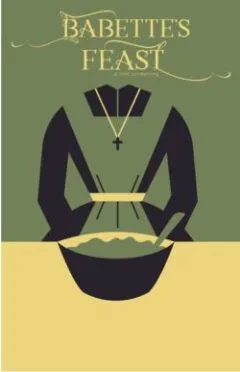
‘The Son of Man has come eating and drinking,’ Jesus says, and his critics are outraged. But Jesus knows what he is doing. He knows that a shared meal can heal wounds, nourish hope, build trust and foster connection. And he knows food preparation is itself an act of love, for as St Teresa of Avila liked to say, ‘God is in the pots and pans.’
We can see this in Gabriel Axel’s 1987 movie, Babette’s Feast… [which] is the story of a meal that is deeply Eucharistic. It involves real food and real wine, and it conveys an invisible grace that changes each person…
Babette is like Jesus. She is misunderstood, but still freely sacrifices all she has for these villagers, so that they might come together in love. And she asks for nothing in return. Like so many of us at Mass, Babette’s guests don’t really understand what’s happening. At first they eat suspiciously, but then something inside them changes.
────── ⋆⋅☆⋅⋆ ──────
Fr. Austin Fleming
Body & Blood of Christ (Year C)

CONCORD PASTOR PRAYERSPOT (15:50) – Fr Austin Fleming presents his homily on The Solemnity of the Body and Blood of Christ, June 19, 2022 from St. Ann’s Church, Good Shepherd Parish, in Wayland, Massachusetts.
Perhaps you’ve read or heard of a survey that was taken in 2019 a survey that reported that only 30 of american catholics believe in the real presence of christ. In the eucharist. The survey was conducted by the pew research center which has nothing to do with pews like the one you’re sitting in the research center is part of the pew trust which was founded in 1948 by a man named joe pugh. There are about 51 million catholics in the united states. The number of catholics responding in the pew survey was 1835 and that number included at least some catholics who have little or no longer any relationship with the church. Among the questions asked was this critical one I’m quoting from the survey. What do you personally believe about the bread and wine used for communion at a catholic mass do.
The bread and wine actually become the body and blood of Jesus Christ or are the bread and wine symbols of the body and blood of Jesus Christ. In the survey 31 said the bread and wine become the actual body and blood of christ while 69 said the bread and wine are symbols of christ’s body and blood. The survey of course did not define two important terms in the key. Question namely actually become and symbol. How do we understand. The phrase actually become even those who believe that the bread and wine actually become the body and blood of christ willingly acknowledge that there is no change in the appearance of the bread and wine. After the consecration. The church itself acknowledges this same thing teaching that while the substance of the bread and wine changes the appearance of bread and wine remain exactly the same how about that word symbol.
This discussion guide has been generated by the WORD THIS WEEK’S Catholic AI Assistant based on Father Austin’s homily. NEED HELP? Copy and paste a question into the chat bot in the lower right corner of the screen and have our Catholic Assistant help you.
1. Introduction to the Survey
– Do you recall the Pew Research Center survey mentioned in the sermon? What was its main finding regarding American Catholics’ beliefs about the Eucharist?
– How reliable do you think surveys like this are in measuring religious beliefs? Why might some Catholics surveyed have little or no relationship with the church?
2. Understanding Key Terms
– What is your understanding of the terms “actually become” and “symbol” as used in the context of the Eucharist?
– How does the analogy of the American flag help explain the concept of a symbol being more than just a marker?
3. Different Forms of Christ’s Presence
– How does the sermon describe the various ways Christ is present during a Catholic Mass?
– Why is the notion of mystery repeatedly highlighted in relation to Christ’s presence?
4. Saint Augustine’s Perspective
– What did Saint Augustine mean by saying, “What your faith obliges you to accept is that the bread is the body of Christ and the chalice the blood of Christ”?
– How does Augustine’s idea of sacraments align with your understanding of the Eucharist?
5. Contemplating the Mystery of Faith
– How does the sermon suggest we approach the mystery of the Eucharist in our lives?
– What role does the concept of mystery play in our everyday experiences and relationships—such as love, friendship, and forgiveness?
6. The Importance of Recognizing Mystery
– According to the sermon, why is it important to honor and respect everyday mysteries in our lives to appreciate the mystery of the Eucharist?
– How do those everyday mysteries enhance your spiritual or personal growth?
7. Dan Berrigan’s Reflection
– Reflect on Dan Berrigan’s poetic imagery regarding the breaking of bread. In what ways does this imagery deepen your understanding of the Eucharist?
– What emotions or thoughts does the idea of meeting a need through the sharing of bread evoke in you?
8. Personal Reflection
– Ponder the question posed in the sermon: What do you believe the bread and wine become during Mass?
– How does this belief influence your participation in the Eucharist or your broader faith journey?
────── ⋆⋅☆⋅⋆ ──────

Dominican Friars
of England & Wales,
Scotland
- Human Words Become God's Word - 2001
- A Mystery We Must Become - 2004
- He Hungers to Love Us- 2007
- Whetting Our Appetites - 2010
- Taking Pleasure in the Things of God - 2013
- Corpus Christi - 2016
- Living Holy Communion - 2019
- The Acceptable Sacrifice - 2022
Body & Blood of Christ (Year C)
This discussion guide has been generated by the WORD THIS WEEK'S Catholic AI Assistant based on the Dominican Blackfriars' homily for this week.
1. Understanding Sacrifice in the Old Testament
- Discuss the role of sacrifice in the Old Testament, focusing on texts like those in Leviticus.
- Reflect on the stories of Cain and Abel and Melchizedek’s offering, emphasizing right worship and sacrifice.
2. Ambivalence Towards Sacrifice in Scripture
- Explore the scriptures that express ambivalence about sacrifice, such as Hosea 6:6 and Psalm 49(50).
- Consider the criticism of empty offerings found in Isaiah 1:13-17, and discuss the distinction between heartless ritual and rightful living.
3. The Significance of Sacrifice Despite Ambivalence
- Analyze why sacrifice retained its significance despite the potential for misunderstanding, focusing on how it prepares us to understand Christ’s sacrifice.
Reflection on Christ’s Perfect Sacrifice
1. Christ’s Offering and Its Perfection
- Discuss how Christ’s sacrifice is different from previous offerings, highlighting its eternal value and purpose.
- Reflect on the shared divine life that Christ offers, making his sacrifice truly unique and sufficient.
2. The Eucharist as Participation in Christ’s Sacrifice
- Explore how the Eucharist allows Christians to partake in the perfect sacrifice of Christ.
- Discuss the concept of the Mass as the source and summit of Christian life, emphasizing its significance in worship.
Practical Applications of Understanding Sacrifice
1. Manifesting God’s Love Through Worship and Action
- Examine how true worship includes loving fellow human beings as Christ loved us, integrating worship with practical love.
- Discuss how Christians are called to express the mystery of God’s love both ritually and through everyday actions.
2. Living in Light of the Eucharist
- Reflect on how honoring the Body and Blood of Christ involves living out the love and unity symbolized in the Eucharist.
- Share personal ideas on how to live a life that is reflective of the Eucharistic celebration and its teachings.
Homily Excerpt

Corpus Christ. Fr Gregory Pearson suggests that the Eucharist helps us to understand the scriptures’ ambivalence about sacrifice.
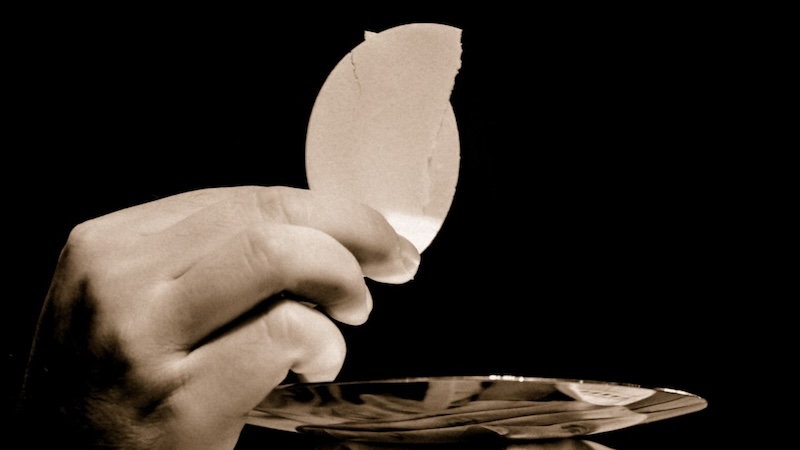
Because Christ’s offering is perfect, a worthy sacrifice to give to God, that means that human beings, in Christ, can now offer truly acceptable worship to God. Not only has Christ offered himself, once for all, as a perfect and living sacrifice, but he has given us the means to participate in that sacrifice in a manner appropriate to our earthly life, allowing us – the Church, his Body – to offer his Body, Blood, Soul and Divinity to the Father under the appearance of bread and wine. The sacrifice of the Mass is the source and summit of our Christian life because it simply is the praise and worship of God in which the life of heaven consists.
In his perfect gift of himself to the Father, however, Christ also perfects his gift of himself to humanity: the Cross is the culmination, the focal point, one might say, of the incarnation, the purpose for which the Son of God took to himself our human nature. In enabling the perfect worship of God by human beings, then, God also manifests the fullness of his love for humanity: on the Cross, he offers himself to the Father for us…
This discussion guide has been generated by the WORD THIS WEEK'S Catholic AI Assistant based on the Dominican Blackfriars' homily for this week. NEED HELP? Copy and paste a question into the chat bot in the lower right corner of the screen and have our Catholic Assistant help you.
1. Opening Reflection: Childhood Wonder
- Reflect on personal experiences of revisiting childhood places. How did those places change or remain the same?
- Discuss the transition from a childlike perception of the world to an adult one. What might cause this shift in perception?
2. The Role of Science and Mystery
- Consider how science has revealed the vastness and mystery of the universe. Why might we still feel alone or insignificant despite these discoveries?
- Discuss the difference between knowing facts and living with their truths. How can embracing both scientific knowledge and mystery enhance our lives?
3. Isolation and Belonging: Lessons from Abraham and Melchizedech
- Explore the symbolism of Melchizedech and Abraham. How does their story illustrate the human quest for belonging?
- Discuss the concept of ‘religion’ as binding people together. How does worship play a role in fostering a sense of community and connectedness?
4. Searching for Identity in the Modern World
- In what ways do modern individuals seek identity and belonging? How does this search compare with historical experiences?
- Reflect on Abraham's identity discovery through God's guidance and worship. How can religious practices today aid individuals in finding their true selves?
5. The Gospel's Isolated Crowd and the Presence of Jesus
- Why did the crowd follow Jesus into isolation? Discuss the various motivations and the feelings of loneliness in a crowd.
- Examine how the Eucharistic language in the feeding of the five thousand narrative symbolizes deeper spiritual truths. What is the significance of Jesus entering the midst of the crowd?
6. The Eucharist: A Source of Belonging and Identity
- Evaluate how participation in the Eucharist binds individuals to Christ and to one another.
- Discuss the transformation of the question "Who am I?" into an opportunity for liberation through the Eucharistic celebration.
7. Freedom and Belonging in Christ’s Sacrifice
- How does the Eucharist provide both freedom and a grounded sense of belonging?
- Analyze the dual nature of this freedom – spiritual and bodily. In what ways does it manifest in believers' lives?
8. Transformation Through Christ: Body and Soul
- Discuss the implications of being incorporated into Christ through receiving the Eucharist. How does this transform both body and soul?
- Reflect on how this divine friendship elevates human nature and offers an eternal share in Christ's love.
9. Strangers in the World, Yet Never Abandoned
- How can believers reconcile feeling like strangers in the world while also feeling embraced by Christ?
- Explore how all that is good and precious is transformed through Christ. How can this understanding influence daily life and spiritual practices?
Homily Excerpt
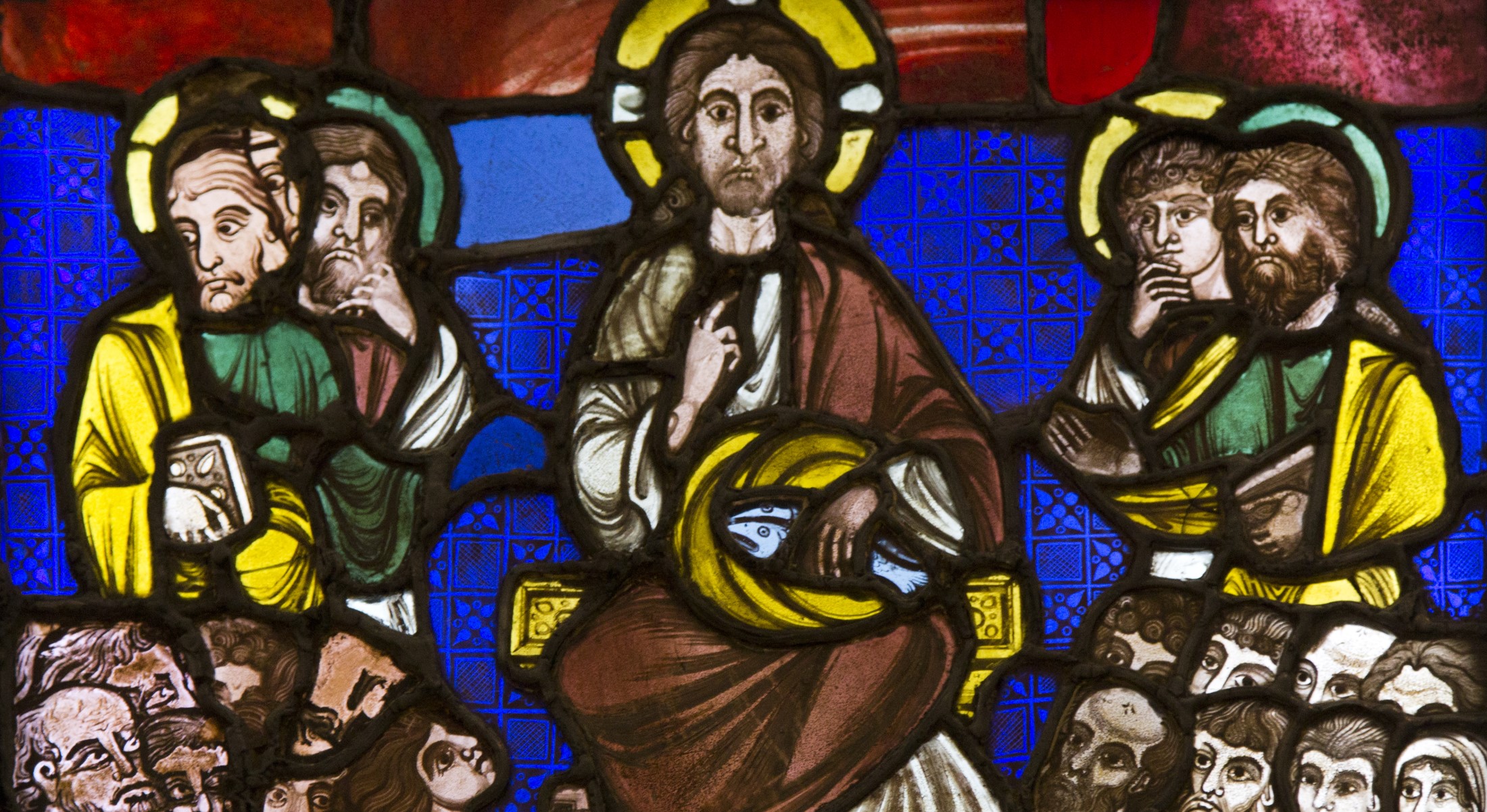
Solemnity of Corpus Christi. Fr David Goodill preaches on the liberating power of the Eucharist.
Have you ever had the experience of revisiting a place you knew as a child and finding it has suddenly shrunk? Perhaps you enjoyed a holiday somewhere and when you go back as an adult the place has lost its charm. Is this our collective experience as human beings? That once we lived in a childlike state and the universe seemed large and mysterious, but now we are grown up and something of that childlike magic has gone.
But where did the magic go? When did we lose it? Science is not to blame. Science tells us that the world is vaster and more mysterious than we imagined it to be. It is one thing, however, to know this, but another to live with this truth. Our knowledge of the world has increased and our ability to control our environment has reached levels previously unknown, but we feel increasingly alone and insignificant in this vast universe.
────── ⋆⋅☆⋅⋆ ──────
Fr. Jude Siciliano, O.P.

Body & Blood of Christ (Year C)
The Eucharistic Call to Community and Self-Giving
EXCERPT: In Jesus’ time, the phrase “body and blood” referred to the whole person. So, when he gives us his body and blood, he gives his entire self. In today’s Gospel, he calls the Twelve to feed the hungry with what little they have. He asks the same of us – to give our whole selves in imitation of him. Feeding the hungry wasn’t just about filling stomachs, was it?
Notice also: the crowd isn’t told to form a line and receive a ration of bread and fish. Instead, Jesus has them sit down “in groups of fifty.” He seems intent on forming small communities, encouraging people to share, to talk, to get to know each other. Sounds like church to me. God’s saving presence continues in the world through us, as we gather and share this meal. Together, we are the Body of Christ…
Earlier in his First Letter to the Corinthians, Paul criticizes the community for receiving the Body of Christ, but failing to be the Body of Christ. The wealthy were not sharing with the poor; the comfortable ignored the weak. Paul reminds them – and us – that at the meal, Jesus took bread, broke it, and said, “This is my body that is for you. Do this in remembrance of me.” To remember him is not merely to think of him, but to live as he did – to give ourselves for others.
────── ⋆⋅☆⋅⋆ ──────
Fr. Charles E. Irvin
Body & Blood of Christ (Year C)
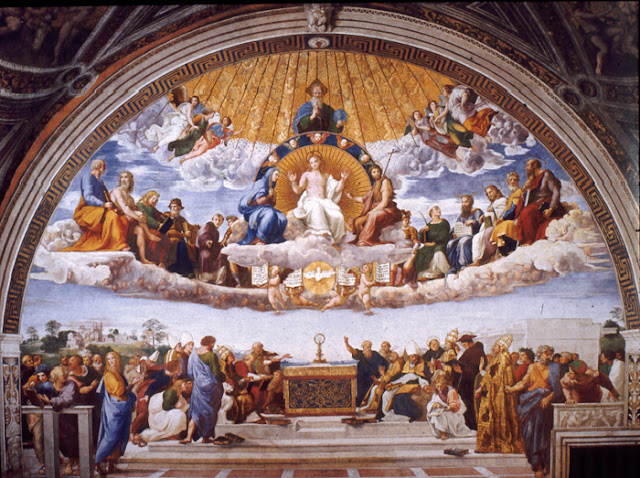
The Eucharistic Call to Active Holiness

We should never simply “get” or “receive” Holy Communion. We enter into Holy Communion; we enter into the totality of Christ’s incarnate life among us. There is an intrinsic interconnection between the Holy Sacrifice of the Mass (which we call Eucharist), Holy Communion, and the Blessed Sacrament. In this sense, “receiving Holy Communion” is a dynamic reality: we receive Christ and in so doing, Christ receives us, and by the power of the Holy Spirit presents us to the Father.
The intended result of our active participation in the whole offering of the Mass will be found in an ethic of life that participates in Christ’s active life in our world, a life that is sent into the world “so that the world might believe” in God’s caring love for us all as His children. We are here at Mass in order to be sent, sent with God’s enterprise, with God’s meaning and purpose for our lives. We come to Mass to join ourselves into Christ in His Mystical Body and into His mission among us.
This discussion guide has been generated by the WORD THIS WEEK’S Catholic AI Assistant based on Fr. Irvin’s homily.
1. Understanding the Centrality of the Eucharist
– Discuss the statement: “Without the Body and Blood of Christ, the Church wouldn’t be what it is.”
– What does it mean that “the Eucharist makes the Church and the Church makes the Eucharist”?
– How do you see the Eucharist as central to the life of the Church?
2. The Holy Sacrifice of the Mass
– Explore the concept of the Mass as a dynamic and continuing act. How does this perspective change your view of the Mass?
– Discuss how the mingling of water and wine symbolizes the unity of humanity and divinity. What does this mean for your daily life?
3. Living Eucharistically
– How do you connect Eucharistic adoration with the active presence of the Mystical Body of Christ in the world?
– What does it mean to take the presence of Christ into the world after Mass?
4. The Mystical Body of Christ
– Analyze the statement: “The Church is the Mystical Body of Christ because the Eucharist constitutes the Church.”
– Discuss how this understanding affects how we perceive the Church and our roles within it.
5. Engaging with the Liturgy
– Reflect on the teaching from the Second Vatican Council regarding the liturgy as the summit and font of the Church.
– How can this teaching influence our approach to Mass and our participation in it?
6. The Paschal Mystery
– Discuss the concept of entering into the Paschal Mystery through the Eucharist. How does this teaching alter your understanding of Communion?
– Reflect on how the Holy Spirit empowers us to enter into Christ’s life through the Eucharist.
7. An Active Response to God’s Call
– Explore the idea that our response to God’s call is present and here on earth. What implications does this have for how we live our faith daily?
– How does our participation in the Mass symbolize our sacrifices and surrender to God?
8. The Dynamic Nature of Holy Communion
– Discuss the concept of “receiving Holy Communion” as a dynamic reality. How does this shape our understanding of Communion as a mutual exchange with Christ?
– What does it mean for you that Christ receives us and presents us to the Father during Communion?
9. Mission Through the Eucharist
– How does the Mass empower us to participate in Christ’s mission in the world?
– Reflect on the idea that we come to Mass to be sent into the world with God’s purpose. How can you incorporate this into your life?
10. Active Participation in the Mass
– Analyze the statement: “Our Holy Communion incorporates us into the Body of Christ.” How does this incorporation go beyond simply receiving?
– Reflect on how fully, actively, and intentionally participating in the Mass transforms our life and mission as Christians.
────── ⋆⋅☆⋅⋆ ──────
Fr. George Smiga
- Doing the Eucharist - 2004
- The Four Eucharistic Verbs- 2010
- The Two SIdes of Bread- 2013
Body & Blood of Christ (Year C)

2004 HOMILY – The Eucharist is not simply something we receive; it is something we do. The Eucharist is not simply a noun; it is fundamentally a verb, an action. Now we believe many important things about the noun of the Eucharist. We believe that the bread and wine become for us the real Body and Blood of the Lord. This is what we celebrate today on the Feast of Corpus Christi. When we eat this bread and drink this cup we receive into our hearts the body, blood, soul and divinity of Jesus. This is a great mystery and a great treasure. We should receive the Eucharist often. But we cannot appreciate the Body and Blood of the Lord, the noun of the Eucharist, if we separate it from the verb of the Eucharist. For it is the action of the Eucharist that allows the bread and wine to become the Body and Blood of Christ for us.
So, what is the action of the Eucharist? It is what we do together every weekend. What do we do? We gather, we listen, we bless, we eat, and we go forth. All these verbs are verbs of Eucharist. We gather from our homes, from our work and come together in this place to create an assembly, a community of believers. The gathering is important because the action of the Eucharist is not the action of one person but of many. It is the action of the church…
This discussion guide has been generated by the WORD THIS WEEK’S Catholic AI Assistant based on Fr. Smiga’s homily.
1. Introduction to the Eucharist as Verb
– Discuss the concept of the Eucharist not only as a noun but also as a verb. How does this perspective change the traditional view of the Eucharist?
2. Understanding the Elements of the Eucharist
– What is the significance of the bread and wine becoming the Body and Blood of Christ? How do we experience this transformation in our hearts?
3. The Actions of the Eucharist
– Explore the five actions: gathering, listening, blessing, eating, and going forth. How do these actions contribute to the Eucharistic celebration?
– Why is the communal aspect of the Eucharist important? How does coming together as a community enrich the experience?
4. Detailed Exploration of Each Action
– Gathering: Reflect on the importance of creating an assembly. How does gathering from different aspects of our lives enrich our sense of community?
– Listening: What role does listening to the Word of God play in the Eucharist? How does it help us remember and recognize God’s presence in our lives?
– Blessing: Discuss the communal aspect of blessing. How does participating in the Eucharistic Prayer together affirm our shared dignity as children of God?
5. Receiving and Going Forth
– Eating: Consider the act of receiving the Body and Blood of the Lord. How does this act nourish us spiritually?
– Going Forth: What is our obligation after participating in the Eucharist? How should the Eucharist influence our interactions with others and our actions in the world?
6. Reflection on Dignity and Obligation
– Examine how the action of blessing reveals our dignity as a community. In what ways does this shared dignity impact our relationships and community life?
– Discuss the obligation to act upon the teachings received during the Eucharist. How can this influence our daily decisions and commitments?
7. Eucharist as a Continuous Action
– Reflect on how the Eucharist is meant to continue beyond the church setting. In what ways can we actively ‘do’ the Eucharist in our daily lives?
8. Personal and Community Commitments
– Share practical ways you and your group can embody the Eucharistic actions in daily life. What changes or commitments can you make individually and collectively to live out these actions?
9. Conclusion
– Recap the idea that the Eucharist is not just something we receive but something we actively participate in. How can this discussion inspire a deeper engagement with the Eucharist moving forward?
────── ⋆⋅☆⋅⋆ ──────
Body & Blood of Christ (Year C)

The Eucharist
EXCERPT: As possible launching points for preaching on the sanctity of life on Corpus Christi, I offer you the following text from our brochure “The Pro-life Commitment is Eucharistic.”
Our commitment to defend our pre-born brothers and sisters is shaped by our faith in the Eucharist as a sacrament of faith, unity, life, worship, and love.
The Eucharist is a sacrament of faith. The Consecrated Host looks no different after the consecration than before. It looks, smells, feels, and tastes like bread. Only one of the five senses gets to the truth. As St. Thomas Aquinas’ Adoro Te Devote expresses, “Seeing, touching, tasting are in Thee deceived. What says trusty hearing that shall be believed?” The ears hear His words, “This is My Body; this is My Blood,” and faith takes us beyond the veil of appearances..
────── ⋆⋅☆⋅⋆ ──────
Body & Blood of Christ (Year C)

Behold the Lamb of God

“Behold the Lamb of God!” At every Mass, immediately before we receive communion, the celebrant holds up the consecrated host and calls us to m ake a profession of faith that this is Jesus. “Behold, the Lamb of God. Behold Him who takes away the sins of the world. Blessed are those called to the supper of the Lamb.” And we say, “Lord, I am not worthy that you should enter under my roof, but only say the word and my soul shall be healed.”
The celebrant does not say that this is a symbol of the Lamb of God. He says that this is the Lamb of God. We emphatically agree with the celebrant when we say that we are unworthy to have the Lord under our roof, inside of us. And so we receive the Lord and pray to Him in this special presence within us.
This discussion guide has been generated by the WORD THIS WEEK’S Catholic AI Assistant based on Msgr. Pellegrino’s homily.
1. Opening Reflection
– Begin with a moment of silence, inviting participants to reflect on the phrase: “Behold the Lamb of God.” Consider what this means personally and how it resonates in one’s faith journey.
2. Scriptural Context
– Discuss the significance of the phrase as it relates to the Eucharist and the Last Supper. How does this phrase connect believers to the events of Calvary and the essence of Communion?
3. The Real Presence
– What does it mean to truly believe that the Eucharist is the Body and Blood of Christ, rather than a symbol? Encourage sharing of personal beliefs and any moments of doubt or confirmation in this area.
4. Case Study: Alice’s Journey
– Summarize Alice’s search for a new parish in Boston. How does her experience illustrate the importance of focusing on the essence of Mass rather than external enhancements?
5. Personal Reflection
– Have participants think about their priorities when attending Mass. Are there moments when they might focus more on external aspects rather than the central act of receiving Communion?
6. The Dying Gifts of Jesus
– Discuss the two gifts Jesus left: the Eucharist and Mary. Reflect on their significance in personal faith and in the broader Catholic tradition.
7. Challenges to Belief
– Explore challenges posed to the belief in the Eucharist and the role of Mary by non-Catholics. Why do these aspects often face opposition, and how can believers reinforce their understanding and faith?
8. Connection to St. John Bosco’s Dream
– Analyze the imagery of the two pillars in St. John Bosco’s dream. How does this vision strengthen the connection between the Eucharist, Mary, and the Church’s guidance through turbulent times?
9. Practical Application
– Discuss practical ways to deepen one’s appreciation and focus during Mass. Encourage sharing of personal practices that help maintain focus on the core reason for attending Mass.
────── ⋆⋅☆⋅⋆ ──────
Body & Blood of Christ (Year C)
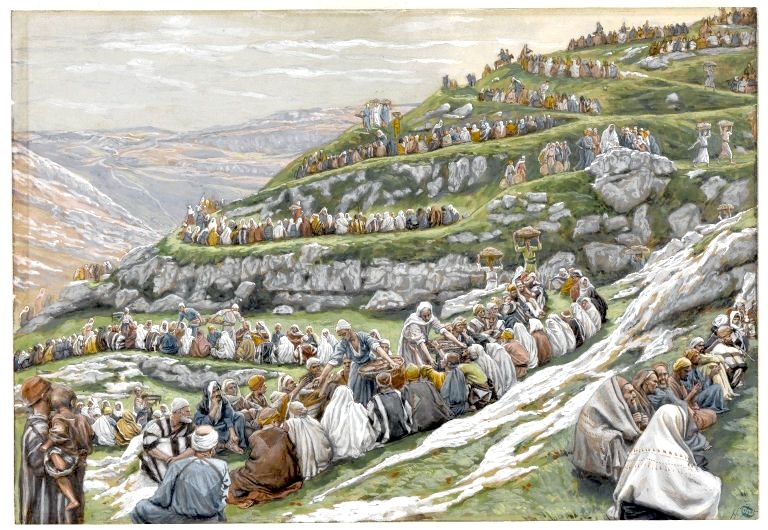
Jesus Wants to Feed You!
On the Feast of Corpus Christi, we do well to mediate on the desire of the Lord to feed His people and the shocking indifference many have to this fact. This indifference is not just on the part of those who do not come to Mass; it is also found among those in the pews, many of whom don’t seem to care that so many people no longer attend. We should recognize the passionate concern the Lord has to feed all His people—yes even your wayward spouse or child.
Let’s consider today’s Gospel in three ways.
I. Desire that is Discerned
II. Directive for the Disciples
III. Determination to Deliver
────── ⋆⋅☆⋅⋆ ──────
Society of African Missions

Body & Blood of Christ (Year C)
Sunday Homilies
As Christians – followers of Christ through our Baptism – we are called on to make Christ present in our own lives and in the lives of others. As we read the Sacred Scripture during the different seasons of the Liturgical Year may we pray in our hearts:
Come Holy Spirit, fill the hearts of your faithful and enkindle in them the fire of your love.
────── ⋆⋅☆⋅⋆ ──────
Bishop John Kobina Louis
Body & Blood of Christ (Year C)
Bread and Wine in the Hands of Our Lord
INTRODUCTION
BREAD AND WINE AS WORKS OF HUMAN HANDS
JESUS TRANSFORMS BREAD AND WINE
THE SYMBOLS OF BREAD AND WINE

Bishop John Kobina Louis, PhD, is an auxiliary bishop of the Archdiocese of Accra, Ghana. He was ordained as an auxiliary bishop on 19th April 2023.
────── ⋆⋅☆⋅⋆ ──────
Fr. Michael Chua
Body & Blood of Christ (Year C)
Homily Excerpt
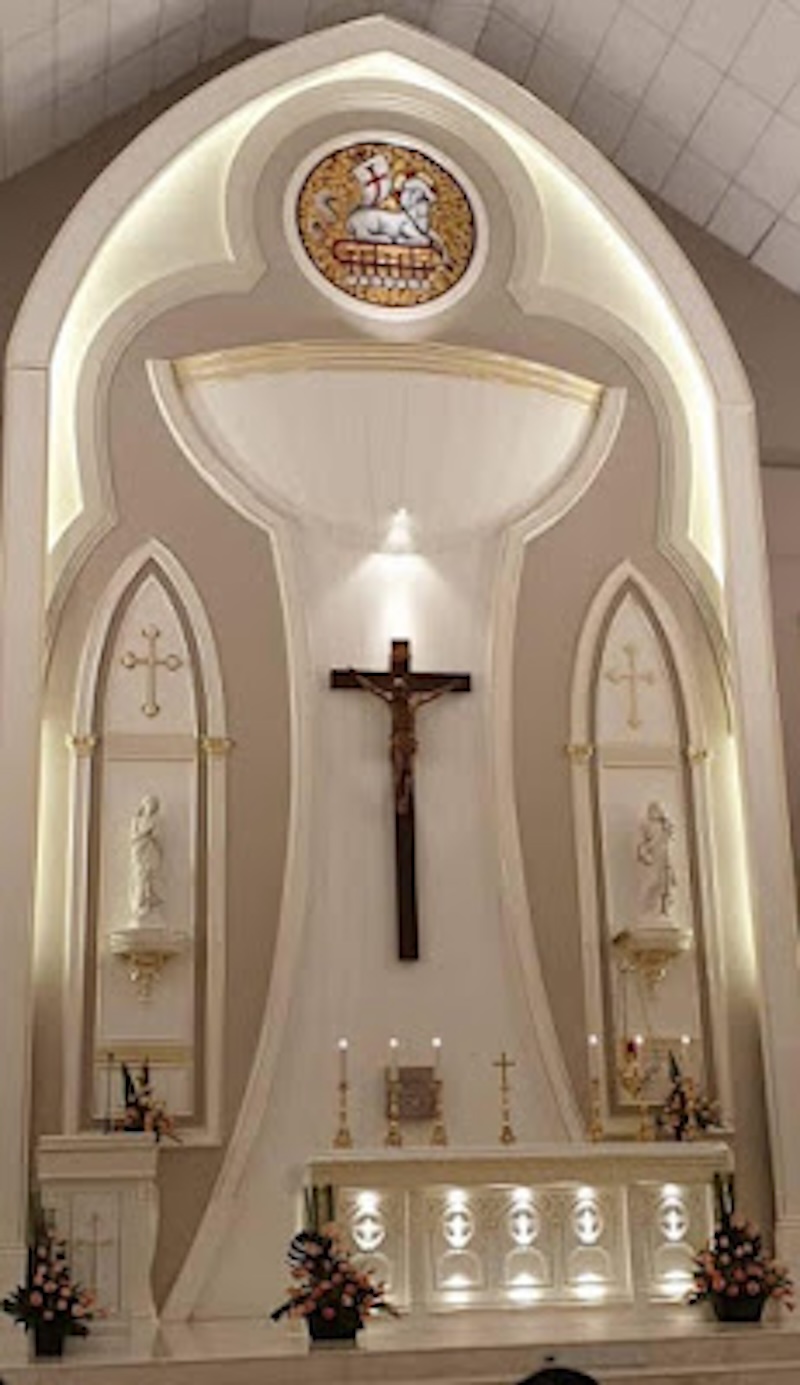
As visitors enter our Church for the first time, they would most likely be captivated or dazzled by the size and prominence given to the two geometric shapes that form the backdrop of the sanctuary – the chalice where the Precious Blood of our Lord Jesus Christ is contained, and the host-like medallion perched above it, a symbol of the Blessed Sacrament, the Precious Body of Our Lord Jesus Christ. But now with the recent renovations to our sanctuary, that very same medallion now boasts of a beautiful and colourful mosaic. Most people can discern that this is a figure of a lamb sitting on some sort of dais. Well, it isn’t a dias. It’s actually the Book (or scroll) with seven seals mentioned in Chapter 5 of the Book of the Apocalypse.

Homily Excerpt
The beauty of the miracle occurring at each Mass—that Jesus becomes really, truly and substantially present under the forms of mere bread and wine—grounds our faith and reflects the words our Lord spoke: “I am the Bread of Life. He who feeds on my Flesh and drinks my Blood has life eternal, and I will raise him up on the last day.” (Jn 6:35, 54-56) This is no small matter—what an incredible gift from God! We must, therefore, never forget that when we participate at Mass, we witness a miracle, and we participate in this very miracle through the reception of Holy Communion, we share in the Divine Life of our Saviour. Let our petition echo the words of the Sequence: “Come then, good shepherd, bread divine, still show to us thy mercy sign; Oh, feed us still, still keep us thine; So may we see thy glories shine in fields of immortality.”
Homily Excerpt
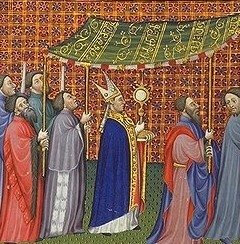
The Solemnity of Corpus Christi allows the faithful to look at Our Eucharistic Lord with a greater sense of appreciation for the Blessed Sacrament and to tell the world: “this is exactly what you are missing in your lives!” That is why this celebration is marked by Eucharistic processions. These processions specifically are a reminder that we are to share the gift of the Eucharist with the world and make a bold proclamation of our belief in the Real Presence. We cannot control how other people react to Jesus but we can control how we respond to indifference, and our response should ultimately be one of charity. Public processions provide us with an opportunity to be a faithful witness to Christ in a world that has become indifferent or in some cases hostile towards Him. We are declaring to the world: “Without Sunday, without the Eucharist, we cannot live!”
In a world so obviously confused about the nature and purpose of human life, where so many sense something deeply missing and struggle to grasp at straw to fill that empty space, the sacred liturgy rightly celebrated is a most effective tool of evangelisation. In the sacred liturgy it is our Lord Himself who speaks to us and whose grace is at work in and through us, perfecting our nature and transforming it so that it might participate in the very life of God Himself. Thus, the Mass brings our Heavenly Lord down to earth but it also takes us up to Heaven. When the Mass is celebrated with reverence, love and devotion it truly becomes the most beautiful thing this side of Heaven.
Body & Blood of Christ (Year C)

Homily Excerpt
2025 HOMILY – “Let me solemnly assure you,” Jesus said, “if you do not eat the flesh of the Son of Man and drink his blood, you have no life in you” — divine life.
Those who actually heard these words took them at face value, exclaiming, “This sort of talk is hard to endure! How can anyone take it seriously?” However, Jesus did not try to soften it, even when many refused to “remain in his company any longer.”
In this Sunday’s Second Reading, St. Paul recounts how Jesus took bread and wine, changed them into his body and blood by his words, fed them to his apostles, and said, “Do this in remembrance of me.” The Church has always understood this as a command to the apostles and their successors “to repeat his actions and words until he comes again.”


────── ⋆⋅☆⋅⋆ ──────
Fr. Tommy Lane
Body & Blood of Christ (Year C)
Is Jesus in the Eucharist the center of your life?
We divide time into BC and AD: BC, before Christ, and AD, Anno Domini (in the year of Our Lord), time since Jesus’ birth. This is our way of showing that Jesus is the center of history; Jesus is the most important event in history. Everything in history pales into insignificance compared to Jesus. It is the same in our lives; Jesus is or should be the center of our lives and our week. Because Jesus is the center of our lives, we come here to celebrate the Eucharist every Sunday and afterwards we go in peace to love and serve the Lord whom we encountered here in the Eucharist.
- The Eucharist: the greatest gift 2023
- The Real Presence of Jesus in the Eucharist and Eucharistic Miracles
- Year A: Meet Jesus in his Real Presence in the Eucharist 2008
- Year B: Hungry for Jesus 2024
- Jesus’ continuing presence with us in the Eucharist 2021
- Year C: Is Jesus in the Eucharist the center of your life? 2007
- Related Homilies: Homilies on the Eucharist
- Stories about the Eucharist
────── ⋆⋅☆⋅⋆ ──────
Body & Blood of Christ (Year C)

God willed not only to create the world, but to enter into relationship with it. God wanted the created world to be charged with personal existence. Creation would know God back. Creation would love God in return.
And so it was that we were enfranchised with intellect and will, gifts that made possible a free act of love. We were endowed with the ability to commit ourselves. We could enter covenant.
God said, “Let it be.” Even more, God said, “I enter into covenant with you.” Yet we mere humans were unequal to the task. The risk of personal relationship, of faith and hope and love, while so godly, was somehow also too frightening for us. It required that we accept our creaturely state. It meant that we would have to admit our dependence upon and our free obedience to the holy Other. This, we resisted. And the sorry tale has been told since Eden.
This discussion guide has been generated by the WORD THIS WEEK’S Catholic AI Assistant based on Fr. Kavanaugh’s homily.
1. Understanding God’s Covenant with Creation
– Discuss the concept of God desiring a relationship with the world. What does it mean for creation to know and love God in return?
– Reflect on the significance of intellect and will being given to humanity. How do these gifts enable us to love and commit freely?
2. Human Resistance to Covenant
– Explore the notion that humans were unevenly matched for the task of covenantal relationship. Why might faith, hope, and love be both godly and frightening?
– Analyze the resistance to accepting our creaturely state and dependence on God. How does this resistance play out in the story of Eden and beyond?
3. God’s Persistent Covenant Love
– Examine how God continues to seek a covenant with humanity despite our rejection. Discuss the role of promises, signs, and guidance in maintaining this relationship.
– Identify examples of covenantal signs throughout the Bible: the rainbow with Noah, Abraham’s descendants, Moses’ covenant of law, and David’s ark. What do these examples reveal about God’s commitment?
4. The New Covenant in Christ
– Discuss Melchizedek’s role and how it foreshadows the ultimate covenant in Christ. How is this demonstrated in the Eucharist?
– Reflect on the proclamation of the mystery of faith in the Eucharist: “When we eat this bread and drink this cup, we proclaim your death, Lord Jesus, until you come in glory.” What does this signify about God’s promises?
5. Eucharistic Imagery and the Undying Relationship
– Analyze Eucharistic images like the multiplication of loaves and what they say about the relationship between God and humanity.
– Reflect on the role of daily consecrations in remembering and enacting God’s covenantal love.
6. The Nature of the Relationship God Desires
– Explore Charles Péguy’s idea of God desiring not submission or automatic responses, but covenant and consent. What implications does this have for our relationship with God?
– Discuss the role of a “free yes” from humanity. How does this concept relate to the broader understanding of covenant love?
────── ⋆⋅☆⋅⋆ ──────
Body & Blood of Christ (Year C)
Homily Excerpt
What is true of our culture is true of humanity from the beginning of time in that there is a brokenness inside of us that we cannot fix. There is a violence inside of each one of us that manifests itself in some of the really poor decisions we make from time to time as individuals to how nations treat other nations. As a country, we are observing Juneteenth on Monday. It is a day we remember and celebrate the emancipation of slaves in our country. It is also as time when we call to mind all the ways we continue to marginalize people to this very day. We call this violence inside of us original sin. And as we grow older, we see the effects of it all around us and inside us, and we eventually realize the truth that we cannot save ourselves. We can’t do it. We can’t. We need a savior. We need Jesus. My friends, now more than ever, our world needs Jesus. What this means is: the world needs you…
This weekend, as Church, we celebrate Corpus Christi, the Solemnity of the Most Holy Body and Blood of Christ. It is a weekend when we celebrate the depths of how much Jesus loves us…
Body & Blood of Christ (Year C)
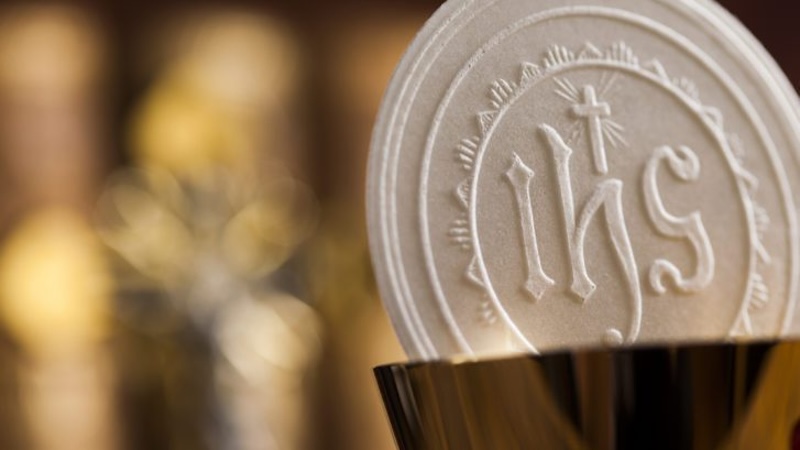

Sixteen hundred years ago a Bishop of Jerusalem addressed some converts on the Holy Communion that they were to receive for the first time. He said, “When you come up to receive, make your left hand a throne for the right, for it is about to receive a King.” Cup your palm and so receive the Body of Christ, then answer “Amen.” Take care not to lose part of it. Such a loss would be like a mutilation of your own body. Why if you had been given gold dust, would you not take the utmost care to hold it fast? Be careful not to let a grain slip through your fingers, lest you be so much the poorer.
How much more carefully then will you guard against losing so much as a crumb of that which is more precious than gold or precious stones. Sixteen centuries later, we gather here to do what the Christians of Jerusalem did and what the apostles did in the upper room three centuries before that. On this special feast called Corpus Christi, the Body of Christ. We shall do what the Lord commanded, take and eat, take and drink. Today in this church the first century, the fourth and the twentieth come together.
This discussion guide has been generated by the WORD THIS WEEK’S Catholic AI Assistant based on Fr. Warren’s homily.
Historical Context
1. Reflect on the quote from the Bishop of Jerusalem about how to receive the Holy Communion. Why is reverence emphasized in the act of receiving the Eucharist?
2. Discuss the metaphor of handling gold dust. How does this compare to receiving the Body of Christ?
The Unchanging Truth of the Eucharist
1. How does the sermon connect the first-century Christians to present-day believers in celebrating the Eucharist?
2. Discuss the idea of continuity in Christian practice and belief. What is the significance of Jesus’ words, “This is my body, this is my blood”?
The Challenge of Faith
1. Explore the difficulty some followers of Jesus faced in accepting the truth of the Eucharist. Why do you think this teaching was challenging for them?
2. According to the Bishop’s sermon, how should faith guide our understanding of the Eucharist?
Transformation Through Communion
1. Consider St. Paul’s words, “It is no longer I who live but Christ who lives in me.” How does receiving the Eucharist transform a believer’s life according to the sermon?
2. Reflect on how this transformation could affect one’s mindset and actions in daily life. Do you think recognizing Christ in oneself can change reactions to life’s challenges?
Community and the Body of Christ
1. Discuss the idea that the Eucharist forms a community rather than serving as an individualistic experience.
2. What implications does the concept of being one body in Christ have for interactions with others locally and globally?
Living Out the Presence of Christ
1. Reflect on how the presence of Christ in us should influence how we treat others. How should it shape our relationships and actions?
2. Consider specific practical actions one could take to demonstrate the presence of Christ to neighbors and the wider community.
The Promise of the Eucharistic Presence
1. How is the Eucharist described as a promise of future blessings?
2. Discuss the statement, “Taste and see the goodness of the Lord.” How does this invitation shape your understanding of the Eucharist?
Personal Reflection and Application
1. Close the discussion by encouraging participants to reflect on their personal relationship with the Eucharist. Is it something that has become commonplace, or does it hold deeper meaning?
2. Contemplate any changes that individuals may feel inspired to make in their lives after this discussion.
────── ⋆⋅☆⋅⋆ ──────
Fr. Jagodensky, S.D.S.
Body & Blood of Christ (Year C)
Homily Excerpt
June’s special Sunday is Corpus Christi, honoring the body and blood of Christ. But is receiving communion a reward or is it grace? Is it about our past behavior or about our future actions and deeds? Is communion intended to be a type of treat for those who are doing a good job or is it intended to be a source of efficacious grace. (I love the word efficacious although there are not many opportunities to use in daily conversation.) Although saying, “efficacious grace” is redundant.
Grace only produces the desired holy result that defines efficacious. Grace is the Potter’s wheel. Careful, wet hands creating a holy person and assisting those who wish to be holy. The Potter’s kiln is the spiritual heat that shapes the grace deeply inside the clay.
I offer this to you today for your personal reflection. Sinners and those slightly off the path need the Eucharist more than anyone. Instead of denying politicians communion, the bishops should be saying “You need to receive communion much more frequently than you presently are. You need the grace of the sacrament to help you in your discernment and judgments.” That’s why, in second grade, confessions precedes communion. (Seven years old is still the age of reason. I don’t know about you but I’ve never talked to a reasonable seven year old? I hold out for thirty years old.)
Please note that the provided video clips serve as additional resources to complement the homily. They may not have a direct correlation with the contributor’s original content. They aim to inspire preachers to enrich their own homilies, drawing ideas and insights from both the written material and the visual content explored.