DEC 29, 2024


Holy Family - YEAR C
TIME-STAMPED VIDEOS
Bishop Robert Barron
2021 | 2024

2021 — KEY INSIGHTS w/TIMESTAMPS
Love the Ones You’re Given — Bishop Barron’s Sunday Sermon
The enduring impact of trauma and the importance of compassion and love for the diverse and flawed individuals in our lives, as exemplified by Uncle Tommy's story.
- 00:00 Uncle Tommy's struggles after World War II highlight the lasting impact of trauma and the importance of compassion for those facing personal challenges.
- 01:26 Uncle Tommy was a beloved figure who enriched childhood memories through sports, storytelling, and laughter with his cousins.
- 02:44 Bringing Uncle Tommy to a family Christmas dinner highlights the importance of love and connection, even amidst life's challenges.
- 04:14 Conversations with Uncle Tommy highlighted his pride in family achievements while humorously questioning my priesthood status.
- 05:21 A visit to my brother's house revealed the joy and love shared through a generous gift of toys and clothes, highlighting the enduring spirit that connects generations.
- 06:05 Uncle Tommy's poignant death on his way to Mass, struck by a rabbi, highlights the beauty and irony of life's unexpected moments, reminding us of the unique individuals in our own families.
- 07:26 We are called to love the people God places in our lives, even those who may be difficult or eccentric.
- 09:27 Love the diverse and flawed people in your life as God loves His family.
- The Blessed Mother and St. Joseph had an extraordinary family, likely filled with eccentric relatives, reflecting the diverse dynamics of Jesus' extended family.
- We are called to love all the people God has given us, including those who are flawed or eccentric, just as God embraced a diverse family.
SCROLL TO VIEW MORE
Upon clicking a TIMESTAMP, a video window will appear centrally on the screen,
providing a focused and convenient viewing experience.
2021 | 2024

2024 — KEY INSIGHTS w/TIMESTAMPS
True family values involve compassion, understanding, and the willingness to let go, allowing loved ones to pursue their divine purpose in God's mission.
- 00:00 The biblical message of Holy Family Sunday highlights unexpected family values, as seen in the poignant story of Hannah, who faces the deep pain of infertility.
- 01:11 Hannah's heartfelt prayers for a child are misunderstood by Eli, highlighting the importance of compassion and understanding in spiritual support.
- 02:43 Hannah's faith leads her to dedicate her son Samuel to God after His answer to her prayer for a child.
- Hannah prays for a son, promising to dedicate him to the Lord, and God answers her prayer with the birth of Samuel.
- Hannah fulfills her promise to God by dedicating her son Samuel to the Lord, demonstrating profound faith over sentimental attachment.
- 05:09 Mary and Joseph's deep anxiety over losing Jesus highlights the profound fear parents feel when searching for a missing child.
- Mary and Joseph experience profound fear and anxiety when they realize Jesus is missing during their return from the temple in Jerusalem.
- Parents experience deep anxiety and desperation when searching for their missing child, as illustrated by the story of finding Jesus in the temple after three days.
- 07:42 Mary’s anxiety over losing Jesus highlights the deeper biblical family values that prioritize spiritual connection over mere emotional ties.
- Mary expresses deep anxiety over losing Jesus, who responds with a profound statement about his purpose, leaving them confused.
- Biblical family values emphasize a deeper connection that transcends sentimentality and emotional bonds, as illustrated by the stories of Hannah and Mary.
- 09:56 Allowing loved ones the freedom to fulfill their divine purpose is more crucial than strong emotional ties, as exemplified by Hannah's decision to let her son Samuel pursue God's mission.
- 11:34 True family values involve letting go and liberating loved ones for the sake of fulfilling God's mission.
- 12:47 Empowering children to pursue their own paths in God's purpose is essential, rather than clinging to them.
SCROLL TO VIEW MORE
Upon clicking a TIMESTAMP, a video window will appear centrally on the screen,
providing a focused and convenient viewing experience.
Holy Family - YEAR C
TIME-STAMPED VIDEOS
The Jesuit-Post

2021 — KEY INSIGHTS
The Holy Family: Finding Our True Home | One-Minute Homily
True belonging is found in God’s loving presence, as exemplified by Jesus in the Temple.
- 00:00 Jesus finds true belonging in the Temple, reminding us that our real home is in God’s loving presence.
SCROLL TO VIEW MORE
Upon clicking a TIMESTAMP, a video window will appear centrally on the screen,
providing a focused and convenient viewing experience.
Holy Family - YEAR C
TIME-STAMPED VIDEOS
Archdiocese of Brisbane

2018 — KEY INSIGHTS w/TIMESTAMPS
Feast of the Holy Family – Two-Minute Homily: Fr Stephen Bliss OFM
The Feast of the Holy Family highlights the importance of reconciliation, understanding, and genuine faith in navigating the ordinary struggles of family life, as exemplified by Jesus, Mary, and Joseph.
- 00:00 The Feast of the Holy Family reminds us that even the idealized life of Jesus, Mary, and Joseph was filled with the ordinary struggles and anxieties faced by all families.
- 01:05 Family life can be tumultuous, but reconciliation and understanding are essential after conflicts.
- 01:28 Mary and Joseph exemplify discipleship through their patience and acceptance of God’s call, foreshadowing themes of loss and redemption in Jesus’ parables.
- 02:11 Faith and love within families embrace risk and reality, inviting us to seek genuine holiness in our everyday lives.
SCROLL TO VIEW MORE
Upon clicking a TIMESTAMP, a video window will appear centrally on the screen,
providing a focused and convenient viewing experience.
Holy Family - YEAR C
TIME-STAMPED VIDEOS
Fr. Peter Hahn

2018 — KEY INSIGHTS w/TIMESTAMPS
The Holy Family of Jesus, Mary and Joseph (Year C) – Fr. Hahn
The Christmas season highlights the importance of family as a reflection of God’s love, urging us to center our lives around Him to combat cultural distortions and embrace the sacred nature of relationships.
- 00:00 The Church celebrates the Christmas season for two weeks, emphasizing the significance of God’s presence and the Feast of the Holy Family during the octave of Christmas.
- 01:04 Family embodies love and security, yet is often marred by the pain of sin and division.
- 01:26 Families reflect the divine image of God, emphasizing our identity as children of God and the importance of communion and love within our human relationships.
- 02:37 Families, while precious, should always point us back to our relationship with God, as true love flows from Him and defines our identity as His children.
- 03:22 Hannah’s dedication of her son Samuel to God highlights the profound gift of children in family life, contrasting with today’s materialistic values.
- 04:17 Children are not possessions but sacred beings created in God’s image, and the true essence of family is under threat from cultural distortions of this divine order.
- 05:11 Marriage embodies a complete and enduring love that welcomes the profound gift of children, yet many young people suffer from societal misconceptions about relationships.
- 05:44 Families should center their lives around God, embracing His wisdom to become true reflections of love, grace, and joy.
SCROLL TO VIEW MORE
Upon clicking a TIMESTAMP, a video window will appear centrally on the screen,
providing a focused and convenient viewing experience.
Holy Family - YEAR C
TIME-STAMPED VIDEOS
Fr. Jude Langeh

2018—KEY INSIGHTS w/TIMESTAMPS
Holy Family C
Family plays a crucial role in shaping identity and fostering unity, particularly during significant celebrations and challenges, as illustrated by the experiences of Marta à Gomes’ family.
SCROLL TO VIEW MORE
Upon clicking a TIMESTAMP, a video window will appear centrally on the screen,
providing a focused and convenient viewing experience.
Holy Family - YEAR C
TIME-STAMPED VIDEOS
Father Kevin Rettig

2018—KEY INSIGHTS w/TIMESTAMPS
Why Were You Looking for Me?
The search for lost connections, innocence, and meaning in life reflects a universal human experience that drives us to seek understanding, healing, and rediscovery of love and divinity within ourselves.
- 00:00 Jack Benny’s pride in his hometown school parallels the profound questions posed by the twelve-year-old Jesus, particularly the poignant inquiry to his parents, “Why were you looking for me?”
- 01:35 An elderly woman spent decades searching for her missing daughter, clinging to hope as she asked everyone she met if they had seen her.
- 02:42 A mother’s relentless search for her lost child mirrors the profound anguish felt by parents like Mary and Joseph during their desperate three-day search for Jesus.
- 03:32 Each of us searches for lost innocence and meaning in a world that often feels cynical and complex.
- 04:31 People often seek to reclaim lost beauty and faith, reflecting a deep yearning for what has been lost in themselves and the world around them.
- 05:32 Seeking lost connections and cherished memories prompts a personal journey of rediscovery for everyone.
- 06:36 Seeking answers to life’s profound questions and healing from its wounds drives the search for understanding.
- 07:29 Searching for deeper meaning reveals that love and divinity reside within us all, urging us to look inward rather than outward.
SCROLL TO VIEW MORE
Upon clicking a TIMESTAMP, a video window will appear centrally on the screen,
providing a focused and convenient viewing experience.
⬇️ Deacon Peter McCulloch

2018 | 2024
Holy Family - YEAR C

On the Holy Family
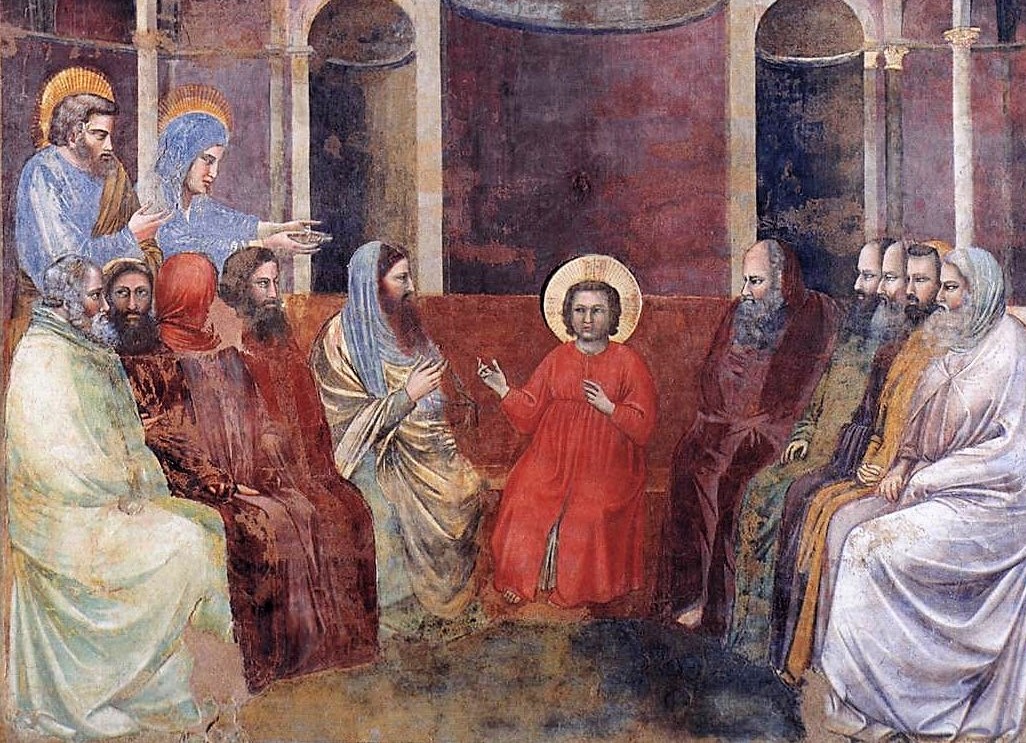
After visiting the Temple in Jerusalem for the Passover festival, Mary and Joseph join a caravan and start heading home to Nazareth. But like in a scene from the movie ‘Home Alone’, they discover that they’ve left 12-year-old Jesus behind. They rush back and find him in the Temple.
However, unlike the movie’s Kevin McAllister, Jesus wasn’t running amok and eating junk food. Rather, he was amazing everyone with his intelligence and his understanding of God and Scripture.
This story of The Finding in the Temple has something to teach us about family life...
Please note that the provided video clip serves as an additional resource to complement the homily. It might not have a direct correlation with the contributor's original content. These videos aim to inspire preachers to enrich their own homilies, drawing ideas and insights from both the written material and the visual content they've explored.
This discussion guide has been generated by the WORD THIS WEEK'S Catholic AI Assistant based on Deacon McCulloch's homily.
Introduction
- Discuss the significance of the Feast of the Holy Family and its relevance in modern times.
- Reflect on the profound gift that families represent in our lives.
Family as a Gift
- How does the speaker describe the evolving appreciation for families as they age?
- Share personal experiences where your family has been a gift to you.
Challenges and Imperfections
- What are some challenges that families face according to the sermon?
- Discuss how families can remain supportive despite imperfections.
Family in Modern Society
- According to St. John Paul II, how has family life been affected by social and cultural changes?
- Explore strategies for strengthening family bonds in contemporary society.
The Holy Family as a Model
- Why is the Holy Family of Nazareth important, as highlighted by Pope Leo XIII?
- Discuss the implications of Jesus' humble life within an ordinary family setting.
The Finding in the Temple
- What lessons can be drawn from the story of the Finding in the Temple about family life?
- Analyze the importance of faith, reflection, and personal growth in family dynamics.
Insights from Rosemary Haughton
- Discuss Rosemary Haughton’s perspective on what makes families happy.
- Reflect on the importance of focusing on something larger than individual relationships.
Living Like the Holy Family
- What practical steps can families take to emulate the Holy Family?
- Explore how prayer, worship, and community can be incorporated into daily family life.
This 300 word adaptation of Deacon McCulloch's homily was generated by our Catholic Assistant AI bot, to help preachers share key insights from the homily with children and teens.

Today, we celebrate the special gift of family by looking at the Holy Family of Nazareth. Families can be noisy and messy, but they're also where we can truly be ourselves, feel safe, and be loved.
St. John Paul II talked about how our view of families has changed over time. While some families stay strong, others struggle with understanding what being a family means. That's why looking at the Holy Family—Jesus, Mary, and Joseph—is important. God chose to be born into this ordinary yet extraordinary family. Jesus lived a simple life with them, helping his family and community.
There’s a cool story about Jesus staying behind in Jerusalem after a festival. Mary and Joseph found him in the Temple, amazing everyone with his smarts. This shows us three important things. First, the Holy Family was very committed to their faith, praying and worshiping together. Second, like Mary, we should reflect and pray instead of judging fast. Lastly, Jesus grew up loved and respected, in an environment where he could grow.
Someone named Rosemary Haughton said the happiest families connect to something bigger, just like the Holy Family, whose lives were centered on God's plans. They prayed, worshiped, and focused on important things, creating a home where everyone felt loved and could be themselves.
The Holy Family is a fantastic example for us. Let’s try to live like them, focusing on faith, love, and being there for each other!
DISCLAIMER: Adaptations (like translations), may not fully capture the nuances or precise meanings of the original text. It's essential to read the original homily which can be accessed by clicking on the title above
2018 | 2024
Holy Family - YEAR C


The Beretta Family
In today’s Gospel, Mary and Joseph are frantic because they’ve lost Jesus. But this doesn’t diminish their love for him. To their great relief, they find him after three days, and then they return to Nazareth where, as Luke tells us, he grows ‘in wisdom, stature and in favour with God and men.’
Jesus’ Holy Family is the model for our own families. They show us how we can love without fully understanding each other. And they teach us that it’s in the family that we acquire the wisdom and values we need for the future.
Today, let’s hear the story of another holy family, the family of Alberto and Maria Beretta, who married in Milan in 1908.
This discussion guide has been generated by the WORD THIS WEEK'S Catholic AI Assistant based on Deacon McCulloch's homily.
Summary
In this homily, the focus is on the importance of the family unit as a building block of society, inspired by the examples of both the Holy Family and the Beretta family. The discussions revolve around the themes of unselfish love, faith, and commitment to spiritual and moral values.
Discussion Guide
1. Introduction to the Importance of Family
- Reflect on why the family is considered a vital pillar of society.
- How does the family serve as the primary environment for learning unselfish love?
2. Unselfish Love within Families
- Discuss what unselfish love means and why it can be challenging, especially during conflicts.
- Share personal experiences of displaying or witnessing unselfish love in your family.
3. The Holy Family as a Model
- Analyze how the story of Jesus, Mary, and Joseph in the Gospel reflects unconditional love and understanding.
- How can modern families take inspiration from the Holy Family?
4. The Beretta Family’s Legacy
- Discuss the life and faith journey of Alberto and Maria Beretta, and their children.
- How did their practices (like attending Mass and praying the rosary) influence their family’s spiritual growth?
5. Influence of Faith in Daily Life
- Based on Giuseppe Beretta's reflections, discuss how the Beretta family's faith was integrated into their daily life.
- In what ways can your family incorporate faith into everyday practices?
6. Commitment to God and Family
- Reflect on the life choices of the Beretta children, particularly Enrico and Gianna, and their commitment to faith and family.
- Share how you or someone you know have chosen to align personal and professional life with faith values.
7. St. Gianna Beretta Molla’s Sacrifice
- Discuss the significance of Gianna’s decision to prioritize her unborn child’s life over her own.
- How does her story illustrate the concept of vocation and selfless love?
8. Learning from the Beretta Family
- Consider Thomas Merton’s idea that unselfish love leads to true happiness, and discuss its implication in family settings.
- Explore ways to strengthen the spirit of unselfish love in your family.
9. Concluding Reflections
- Summarize the key lessons learned from both the Holy Family and the Beretta family.
- Identify one actionable step your group members can take to foster deeper love and understanding within their families.
10. Personal Application
- Reflect on what God might be calling you to focus on within your familial relationships.
- Share commitments or goals for integrating lessons from this discussion into daily life.
Encourage participants to bring their personal insights and experiences to the discussion, as these will enrich the exploration of the sermon's themes.
This 300 word adaptation of Deacon McCulloch's homily was generated by our Catholic Assistant AI bot, to help preachers share key insights from the homily with children and teens.
Hey everyone! Today is Holy Family Sunday, a perfect time to talk about why family is super important. Families teach us to care about people without expecting anything in return. Imagine helping your brother or sister with homework even when you're tired—that’s unselfish love.
In today’s Gospel, Mary and Joseph couldn’t find Jesus and were very worried. Picture losing your little sibling at the mall! When they found him, they all went home, and Jesus continued to grow wiser and stronger. This shows us that families help us learn to love, even when things don’t make sense, and they teach us the wisdom needed to face life.
Let me tell you about the Beretta family. Alberto and Maria Beretta married in 1908 and had 13 kids. Despite tough times, like losing some children to illness, they held onto their faith, gave their kids a good education, and instilled important values. They prayed together daily, strengthening their faith.
Giuseppe became a priest, Virginia a doctor and a nun, and Enrico a missionary priest. Enrico is even on his way to becoming a saint! The most famous of them is Gianna, who became a saint. She was a doctor who loved helping people. Gianna balanced being a mom, wife, and doctor with love and dedication.
When faced with a tough decision during her last pregnancy, Gianna chose to prioritize her baby’s life and passed away soon after giving birth. Her example of love and dedication has inspired many. Gianna and her family show us that when we love without expecting anything in return, we find true happiness.
So, where’s the best place to learn this unselfish love? Right in your family. That's a lesson worth remembering!
DISCLAIMER: Adaptations (like translations), may not fully capture the nuances or precise meanings of the original text. It's essential to read the original homily which can be accessed by clicking on the title above
INTRODUCTION | ADDICTION & RECOVERY | ADOLESCENTS | AFRICAN AMERICANS | CONFLICT | JUSTICE | MARRIAGE & FAMILY | PRO-LIFE | SENIOR CITIZENS | STEWARDSHIP | TECHNOLOGY | THEOLOGY OF THE BODY | VOCATIONS | WORK
Holy Family - YEAR C
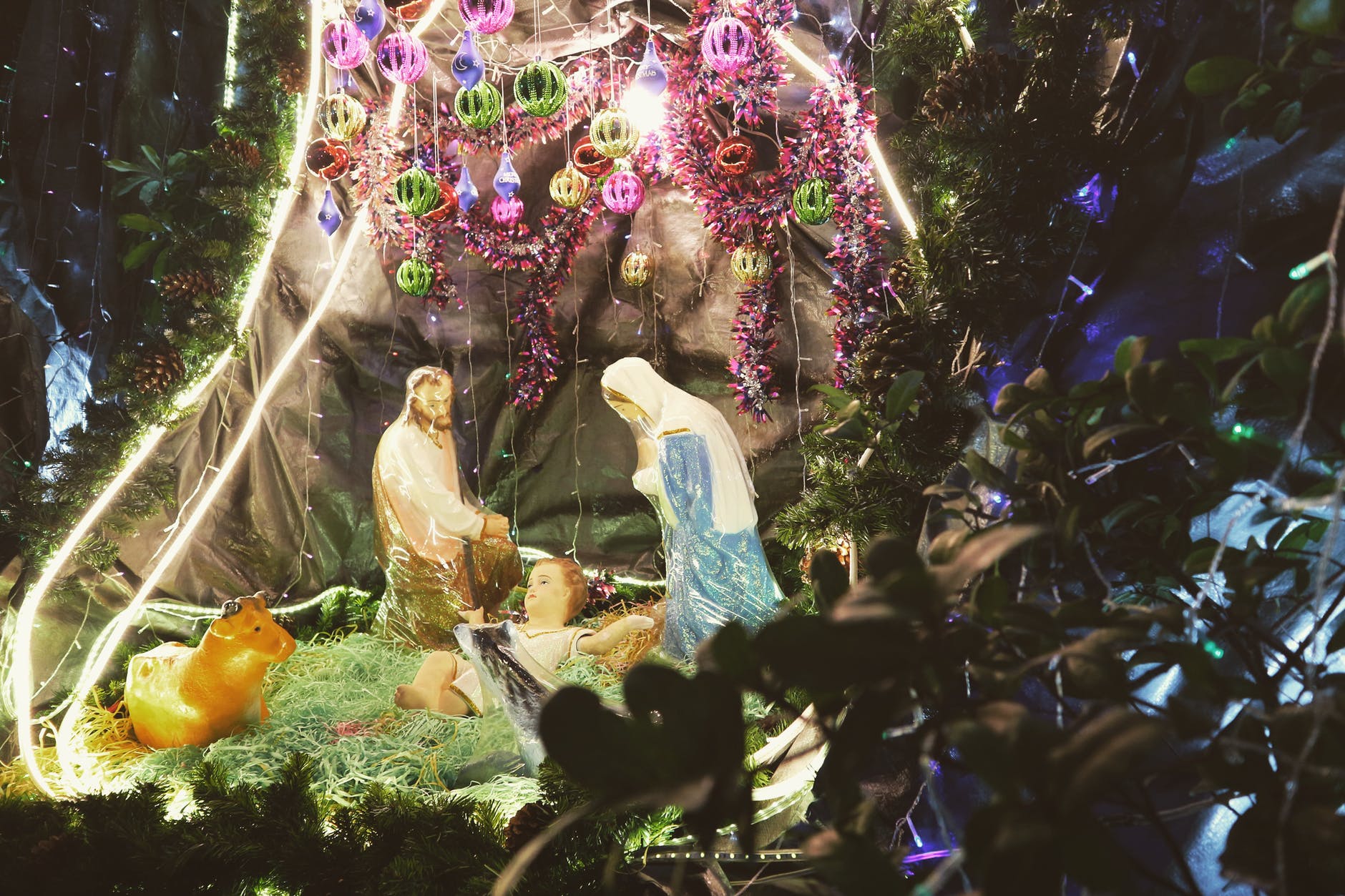
The Gospel of Luke recounts how Jesus is reunited with Mary and Joseph after they searched for three days to find him. May our families also be reunited with the Lord in “his Father’s house” as we encounter Christ in prayer and sacrament.


⬇️ Fr. Austin Fleming
Holy Family - YEAR C
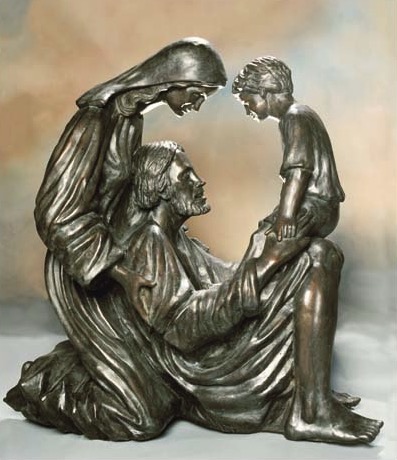
What Makes a Family Holy?
2012 – We all know that THE Holy Family consisted of Jesus, Mary and Joseph. But what about our own families, yours and mine, the ones we grew up in: did you grow up in a holy family?
Before you jump to a quick answer to that question, let’s take a moment to consider what makes a family holy. And to do that, we have to reach some agreement on what we mean by “holy.”
Many people believe that “holy” means “perfect.” Well, God is holy and God IS perfect but outside the Trinity of Father, Son and Holy Spirit, perfection is pretty hard to find.
I don’t need to be perfect to be holy. To be holy is to strive faithfully to be and to become more and more the person God made me to be. It’s not all that complicated.
Spiritual writer James Martin puts it this way: Just remember three things: You’re not God. This ain’t heaven. Don’t act like a jerk! That’s holiness!
Please note that the provided video clip serves as an additional resource to complement the homily. It might not have a direct correlation with the contributor’s original content. These videos aim to inspire preachers to enrich their own homilies, drawing ideas and insights from both the written material and the visual content they’ve explored.
This discussion guide has been generated by the WORD THIS WEEK’S Catholic AI Assistant based on Father Austin’s homily. NEED HELP? Copy and paste a question into the chat bot in the lower right corner of the screen and have our Catholic Assistant help you.
1. Introduction to Holiness and the Holy Family
– Reflect on the concept of the Holy Family: Jesus, Mary, and Joseph.
– Consider your own family background and experiences. Do they align with the idea of a “holy family”?
2. Defining Holiness
– How do you define “holy”? Discuss different interpretations with the group.
– Delve into the misconception that holiness equates to perfection. How do the qualities of God differ from what we can achieve?
3. Personal Holiness
– Reflect on the statement: “To be holy is to strive faithfully to be and to become more and more the person God made me to be.”
– Discuss James Martin’s advice: “You’re not God. This ain’t heaven. Don’t act like a jerk!” How does this perspective simplify the concept of holiness?
4. Honesty and Forgiveness in Holiness
– Explore the importance of acknowledging our imperfections as part of becoming holy.
– Discuss the role of asking for God’s forgiveness and mercy in pursuing holiness.
5. Comparisons and Judgments
– Why is it unproductive to compare one’s holiness to others, such as Mother Theresa?
– Reflect on the idea that we are called to be ourselves as God made us, not to replicate others.
6. Family Holiness
– Discuss the call for families to strive for holiness by loving and caring for one another.
– Share experiences about the challenges and blessings of fulfilling this call within your own families.
7. St. Paul’s Guidance on Holiness
– Review St. Paul’s advice on holiness: compassion, kindness, humility, gentleness, patience, forgiveness, love, and Christ’s peace.
– How can these virtues be cultivated within families?
8. Brokenness and Reconciliation
– How does God view a family’s brokenness versus their efforts to heal and reconcile?
– Share stories of families that have faced significant challenges yet have pursued holiness.
9. The Unique Path to Holiness
– Discuss the idea that holiness is a personal journey and “one size should not fit all.”
– How does your family’s unique circumstances shape its path to holiness?
10. Reflection on The Holy Family
– Examine how the Holy Family serves as a model despite not fitting the normative family pattern.
– What lessons can modern families learn from their example?
11. Community and the Sacrament
– Reflect on how participating in the sacrament can renew the commitment to walking the holy path.
– How does your parish community support the journey to holiness for individuals and families?
12. Commitments for the New Year
– Discuss personal and family resolutions to pursue holiness in the coming year.
– Share ideas for practical steps to strengthen faith and holiness in daily life.
This 300 word adaptation of Fr. Smiga’s homily was generated by our Catholic Assistant AI bot, to help preachers share key insights from the homily with children and teens.
Hey everyone! Let’s chat about families. We know the Holy Family of Jesus, Mary, and Joseph. But what about our own families? Ever wonder if yours is “holy”? Being holy isn’t about being perfect. Only God is perfect. It’s about trying your best to be who God made you to be.
Here’s a fun thought from James Martin: “You’re not God. This isn’t heaven. Don’t act like a jerk!” So, let God guide you, accept life’s challenges, and treat others with love, even when it’s tough.
Being holy means admitting when we mess up. It’s about being honest and asking for God’s help to do better. Remember, God’s mercy helps us get back on track.
Comparing your family to others is a waste of time. We all have unique paths. We’re asked to be ourselves, like God made us. Families are meant to love and support each other. No one’s perfect, not even those who seem to have it all together.
God cares about how we try to fix things and make peace. We’re all called to show compassion, kindness, and forgiveness, like St. Paul reminds us. Amazing families aren’t perfect but they try hard to be loving. They forgive, especially those who are hard to love.
Holiness isn’t about perfection but a journey towards God. We walk this path by being faithful, even if we stumble.
Each family has its own kind of holiness. The Holy Family didn’t fit the usual mold but they’re the ultimate example of holiness. They followed what God asked of them.
Today, as one big church family, let’s come together with all our strengths and weaknesses. Let the sacrament we receive remind us to walk towards holiness in the new year with hope, as our own special families.
DISCLAIMER: Adaptations (like translations), may not fully capture the nuances or precise meanings of the original text. It’s essential to read the original homily which can be accessed by clicking on the title above

Holy Family - YEAR C

The Human Family
The following adaptation of the Dominican Blackfiars' homily for this week, generated by our Catholic Assistant AI bot, is provided to help preachers share key insights from the homily with children and teens.
Hey everyone! Let's chat about Christmas and family, using the story of Joseph and Mary in a relatable way.
Think about Joseph. He’s not just a figure on a Christmas card. He’s a real guy taking on huge responsibilities. He trusts Mary, his fiancée, even when it’s tough. In a world where women face challenges, Joseph shows us what it means to be respectful and supportive. Mary trusts him too. Together, they face life's ups and downs, just like any family.
Remember that scary moment when you lose something important? Joseph and Mary went through that when they lost Jesus for three whole days! Imagine how stressed out they were. Even families that seem perfect have tough times.
Joseph and Mary trusted each other and God, which helped them through challenges. Joseph had dreams with messages from God, and he acted on them with courage. Even when things were super scary, he didn’t just sit back. He did what needed to be done.
Mary and Joseph were not just parents. They were part of something big—God’s plan. Mary shared love and support far beyond her own family. During tough times, like the recent pandemic, we learned how important it is to care for each other. Family is about love and sticking together even when things get hard.
This Christmas, let's celebrate our families and the special people in our lives. Remember, we can all be part of this big family, loved by God. Just like the angels sang on Christmas, let's bring some of that peace and goodwill into our own lives.
DISCLAIMER: Adaptations (like translations), may not fully capture the nuances or precise meanings of the original text. It's essential to read the original homily which can be accessed by clicking on the title above.
This discussion guide has been generated by the WORD THIS WEEK'S Catholic AI Assistant based on the Dominican Blackfiars' homily for this week. NEED HELP? Copy and paste a question into the chat bot in the lower right corner of the screen and have our Catholic Assistant help you.
Introduction
- Reflect on the role of Joseph in the Nativity story. How is his true character revealed beyond the surface of Christmas cards?
- Discuss the importance of trust within the Holy Family, particularly between Joseph and Mary.
Joseph's Role and Responsibilities
- How does Joseph's respect and sensitivity towards Mary resonate in today's world regarding how women are treated?
- Discuss the implications of Joseph's decision to protect Mary's dignity, considering the cultural and historical context.
The Journey of Trust and Faith
- Explore the theme of trust and its impact on the Holy Family. How does this trust manifest in dealing with uncertainties and dangers?
- In what ways do the experiences of refugees today parallel Joseph and Mary’s flight to Egypt?
Moments of Distress
- Reflect on the experience of losing Jesus in the temple. How do Joseph and Mary handle this situation as parents?
- What emotions and challenges arise during this incident and how might it relate to modern parenting struggles?
Graced Trust and Divine Providence
- Discuss the significance of Mary's fiat and Joseph's angelic dreams. How do these moments highlight their trust in divine plans?
- Consider how Joseph transitions from being a dreamer to a man of action amidst real-world threats.
The Broader Family and Mary’s Role
- How does Mary evolve from the mother of Christ to the Mother of Christians and eventually the Mother of all humanity and creation?
- Examine the concept of family within the larger Church and society, particularly during challenging times like the pandemic.
The Significance of Cherishing
- Discuss the meaning of “to love and to cherish” in the context of family, church, and society. How has the pandemic highlighted the importance of cherishing one another?
- Why is cherishing fundamental to the health and functioning of families and communities?
Application to Our Lives
- How can we emulate Joseph and Mary's fortitude, perseverance, and forgiveness within our own families and communities?
- Identify ways we can cherish and support each other, following the example of the Holy Family.
Homily Excerpt
Fr John Farrell meditates upon the trust and the care needed at the heart of every family.

Today, immediately after Christmas, we focus on the young family and the joy and the wonder of the birth of Jesus. Christmas cards portray the scene of the Holy Family as imagined by artists throughout the ages. But Jesus, Mary and Joseph do not form an exclusive family. Already God is extending the holy family as angels summon in the poor and marginalised from the sheepfolds on the hill and a star leads pagan searchers after truth and wisdom. As Jesus will later say of those who do the will of our Father in heaven: ‘Here are my brother and sister and mother’ (Mark 3:35).
Joseph is a character on the Christmas cards but does not have Christmas card character. He has taken on enormous family responsibilities, and he fulfils them. Trust is at the heart of the Holy Family: his trust in his pregnant fiancée. He protects her dignity, her good name, her life. In our world where women can face such psychological, verbal and physical violence he is a respectful and sensitive husband. And she places her trust in him. Together they will have to face uncertainties and dangers as well as the shared joys of family life with a growing child.
Holy Family - YEAR C

The Holy Kindred
The following adaptation of the Dominican Blackfiars' homily for this week, generated by our Catholic Assistant AI bot, is provided to help preachers share key insights from the homily with children and teens.
Hey everyone! Let’s talk about Jesus's family—it’s way bigger than just His mom and dad. Mary and Joseph were important, but Jesus had a broader family. John the Baptist, for instance, was like a cousin to Jesus through Mary’s connection to Elizabeth. When the Bible mentions Jesus’s 'brothers' and 'sisters,' they could actually be cousins or other close relatives, supporting Him in Nazareth.
One interesting relative was James, who wrote a letter in the Bible. James became a leader in Jerusalem and absorbed Jesus’s teachings. His letter shows how much Jesus’s teachings meant to him. At the Crucifixion, John mentions Mary’s sister, who might be the mother of James and John, the sons of Zebedee—making them Jesus’s cousins, too.
Artists loved depicting Jesus’s big family even if stories weren’t always accurate. The important lesson? Jesus was both God and human, making us all part of His extended family. Each of us is important to God, signaling that we should treat everyone with respect and love.
Mary and Joseph experienced challenges, like their trip to Egypt and losing young Jesus for a bit. Their trials show they were real people with real struggles, like us. When Joseph died, Mary and Jesus felt sadness, underscoring how relatable they were.
Mary and Joseph's role was unique—they taught Jesus about their culture and beliefs. Even though Jesus was deeply connected to God, He learned like we do. His family laid the foundation for His incredible life. Remembering Jesus’s family helps us appreciate the importance of sticking together with our own families and communities, reflecting the close-knit family God wants us to be.
DISCLAIMER: Adaptations (like translations), may not fully capture the nuances or precise meanings of the original text. It's essential to read the original homily which can be accessed by clicking on the title above.
This discussion guide has been generated by the WORD THIS WEEK'S Catholic AI Assistant based on the Dominican Blackfiars' homily for this week. NEED HELP? Copy and paste a question into the chat bot in the lower right corner of the screen and have our Catholic Assistant help you.
Discussion Guide on the Extended Family of Jesus
Introduction
- Begin with an overview of the significance of Jesus’s family in both a historical and theological context.
- Discuss the importance of recognizing not only Mary and Joseph but also the extended family of Jesus.
Jesus's Extended Family
1. Relatives and Kinship
- Discuss the role of Elizabeth, John the Baptist, and other potential relatives.
- Explore the meaning of 'brothers and sisters' in the context of Jesus's family and interpretations of familial terms in scripture.
2. The Role of James
- Explore the leadership role of James among early Christians and his connection to Jesus.
- Consider the significance of James authoring a letter in the New Testament.
Familial Dynamics and Love
1. Cousins and Apostles
- Examine the possibility of James and John, sons of Zebedee, being cousins of Jesus, and how this might have affected their relationship.
- Discuss the concept of favoritism in familial relationships and Jesus’s approach to this issue.
2. The Nature of Familial Love
- Discuss Aquinas's views on familial love and its persistence in heaven.
- Explore how grace perfects nature and the purification of natural loves by divine love.
Historical Views and Artistic Depictions
1. Devotion to the Holy Kindred in the Middle Ages
- Discuss the popularity of the extended family of Jesus in art and devotion during this period.
- Reflect on the reasons for the decline of this depiction and its legacy today.
Theological Implications
1. Jesus as True God and True Man
- Dive into the theological mystery of Jesus being both divine and human.
- Explain the concept of the Holy Kindred and the human race as a family.
2. Dignity of Every Human Being
- Discuss how God's creation of human beings in his image grants unique dignity to every person.
- Reflect on how the familial connection to Jesus enhances this dignity.
Solidarity with Human Experiences
1. The Exile to Egypt
- Reflect on the experiences of exile and displacement alongside the Holy Family’s journey to Egypt.
2. Parental Anxiety and Loss
- Discuss the shared parental concern demonstrated by Mary and Joseph when Jesus was lost.
- Consider Mary and Jesus's grief upon the loss of Joseph and their identification with all who mourn.
Jesus’s Human Development
1. Learning and Growth
- Explore how Jesus grew in wisdom and stature through his experiences with Mary and Joseph.
- Discuss Jesus's understanding of his divine mission in collaboration with Mary and in communion with God.
2. Role of Mary and Joseph
- Reflect on the significant roles that Mary and Joseph played in shaping Jesus’s human psyche and spiritual journey.
Conclusion
- Summarize key points of discussion on Jesus’s extended family and their impact on his life and ministry.
- Encourage reflection on the implications of being part of God’s family in today’s context.
Homily Excerpt
Fr Richard Conrad uncovers the profound theological meaning of today’s feast.
When we venerate Jesus’s Family, we shouldn’t confine ourselves to Mary and Joseph; he had an extended Family. Through Elizabeth, Mary’s kinswoman, John the Baptist was a relative. We hear of ‘brothers and sisters,’ who may have been children of Joseph by a previous marriage; more likely, they were cousins, since the Aramaic word we translate as ‘brother’ could equally well mean cousin. In Mark chapter 6 we learn that the women remained in Nazareth; from the end of John chapter 2 we surmise that the men relocated to Capernaum with Jesus and Mary. Scripture contains a Letter by one of them, James, which shows how deeply he assimilated Jesus’s teaching. This James led the Christians in Jerusalem after Herod killed John’s brother James, and Peter and John moved on.
INTRODUCTION | ADDICTION & RECOVERY | ADOLESCENTS | AFRICAN AMERICANS | CONFLICT | JUSTICE | MARRIAGE & FAMILY | PRO-LIFE | SENIOR CITIZENS | STEWARDSHIP | TECHNOLOGY | THEOLOGY OF THE BODY | VOCATIONS | WORK
⬇️ Fr. Charles E. Irvin
Holy Family - YEAR C
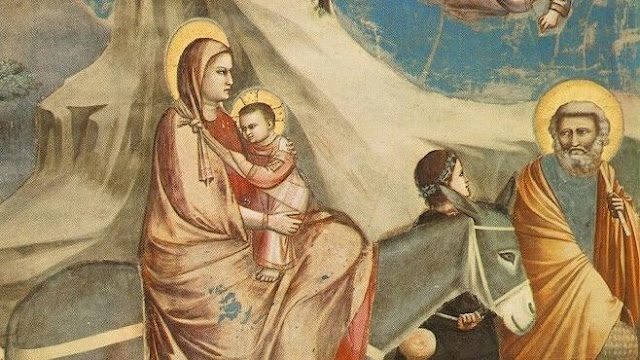
The Role of Aged Parents

Think for a moment now on the memories being carried in the minds and hearts of our aged parents and grandparents. What was life like for them in their families when they were young? What was America like for them those many decades ago? What did it mean to be “an American”, to be a Christian, to be a Catholic? What did their religious heritage mean to them and what did it give to them? How did it shape and form their characters and their souls?
There is a huge and rich mother lode of wisdom and insight contained in them, one that should be shared with us all, one that should certainly be shared with their grandchildren and even their great-grandchildren.
This discussion guide has been generated by the WORD THIS WEEK’S Catholic AI Assistant based on Fr. Irvin’s homily. NEED HELP? Copy and paste a question into the chat bot in the lower right corner of the screen and have our Catholic Assistant help you.
Redefinition of Family
1. Changing Family Structures
– Discuss the changing definitions of “family” in today’s culture.
– How do these various household arrangements impact our understanding of family?
2. Implications on Relationships
– Consider the strain on the Fourth Commandment, “Honor thy father and thy mother,” in diverse family structures.
– How can this commandment be honored in modern contexts?
Generational Dynamics
1. Multiple Generational Responsibilities
– What challenges arise for adults balancing responsibilities between their children and their aging parents?
– Explore how generational roles have shifted due to increased lifespans.
2. Shared Values Across Generations
– How do differing values between generations affect family dynamics?
– Define “shared values” and discuss their importance in familial relationships.
Role of Religion and Tradition
1. Engaging with Religious Heritage
– Why is it important to engage with religious traditions in evolving family settings?
– Discuss ways to reinterpret religious teachings to remain relevant today.
2. Perception of Tradition in Society
– Compare how different cultures honor tradition and the elderly.
– Evaluate the role of tradition in American culture today.
Influence of the Elderly
1. Wisdom of Elder Generations
– Reflect on how the life experiences of aged parents can enrich younger generations.
– Share ways to facilitate intergenerational learning within families.
2. Educational Content and Influence
– Assess the role of education in transmitting American and Judeo-Christian values.
– Debate the responsibilities of parents and teachers in offering balanced cultural perspectives.
Religion’s Role in a Secular Society
1. Religion and Family Life
– Given the separation of church and state, discuss how families can maintain their religious practices.
– Explore opportunities for integrating faith into family life.
2. Supporting the Concept of Family in Society
– What societal measures are necessary to support family structures today?
– Highlight recent movements or organizations committed to strengthening family units.
Holistic Families
1. Characteristics of a Holy Family
– List and discuss the components that make a family holistic and centered on faith.
– How do these elements help in nurturing a strong family bond?
2. Challenges and Solutions
– Identify common challenges modern families face and propose potential solutions using insights from religious traditions.
Closing Reflections
1. Future of Family
– How can families evolve while preserving core values?
– Create action plans that integrate insights from this discussion into daily family life.
2. Community Role
– Encourage sharing personal responsibilities in sustaining family values within the community.
– Strategize on community initiatives to promote healthy family dynamics.
This 300-400 word adaptation of Fr. Irvin’s homily was generated by our Catholic Assistant AI bot to help preachers share key insights from the homily for young people.
Hey everyone! Let’s talk about what being a family means today. The typical family picture—mom, dad, and kids living under one roof—has evolved. We now see single-parent families, families with parents of the same gender, or families where a parent might live with a boyfriend or girlfriend.
With these changes, kids today often have more adults in their lives they call “family”—not just moms and dads but also grandparents, aunts, uncles, and other important adults. A challenge is respecting the Fourth Commandment, “Honor thy father and thy mother,” with these diverse family structures.
Adults often balance relationships with both their own kids and aging parents, which can be tiring. It’s not always easy when the people we love have different beliefs or values, and families today often struggle with figuring out “shared values.”
The Church invites us to look at the Holy Family and consider what’s healthy in our families. We can use religious wisdom to navigate our lives. In American culture, it sometimes feels like we’re losing touch with respecting our elders due to our focus on trends. However, looking back and appreciating older generations can be beneficial.
Consider your grandparents’ stories. What does being “American” or “Christian” mean to them? There’s great wisdom in their experiences. What kids learn in school about American traditions and values is important. While learning from other cultures matters, it’s essential to pass down our values too. Our commitment to having great teachers who support these ideas is vital.
Though church and state are separate, religion can still be influential in our lives. A strong family is connected by caring for others, practicing forgiveness, and appreciating each person’s uniqueness. A good family builds each other up and remembers God’s love.
DISCLAIMER: Adaptations (like translations), may not fully capture the nuances or precise meanings of the original text. It’s essential to read the original homily which can be accessed by clicking on the title above
⬇️ Fr. George Smiga
Holy Family - YEAR C
A Teenager in the Holy Family
Each week, THE WORD THIS WEEK presents an excerpt from Fr. Smiga’s homily archive. To access all of the homilies for this Sunday, click on the title above. Then scroll down the page to find the text of this homily.

2012 HOMILY – Today’s gospel is the only place in the New Testament where we see Jesus as a teenager. It should not surprise us, then, that in this passage we find the holy family in turmoil. Now, I am not picking on teenagers. Teenagers deserve our respect. It is hard being a teenager. So many things are changing. There are new expectations, new fears, new feelings, and oh so many hormones! Many of us here wish that we were younger, but few of us wish that we were fifteen. It is hard being a teenager, and that is why the teenagers in our community deserve our support and our love. Now having said that, living in a house with a teenager can be challenging—challenging for both parent and child. On both sides it is difficult to communicate. It is difficult to understand. On both sides emotions can explode and feelings can be hurt.
- Christmas and the Cross (2003)
- Being a Holy Family (2006)
- A Place to Learn (2015)
- Holding Our Whole Story (2018)
This discussion guide has been generated by the WORD THIS WEEK’S Catholic AI Assistant based on Fr. Smiga’s homily.
Introduction
– This homily explores the story of Jesus as a teenager and the challenges faced by families, especially during adolescence.
– Reflect on the unique nature of this gospel story, as it’s the only account of Jesus in his teenage years.
Understanding Teenage Challenges
– Discuss the changes and pressures that teenagers face, including new expectations and emotional developments.
– Share personal experiences or observations about teenage years and the common struggles associated with this life stage.
Family Dynamics and Communication
– Consider the communication breakdown between Mary, Joseph, and Jesus. Why do you think these misunderstandings occurred?
– Discuss the idea that family stress should not be viewed as sinful but as a natural part of living closely with others.
Handling Family Stress
– Explore strategies for minimizing hurt within the family, drawing inspiration from the first reading from the book of Sirach.
– Share thoughts on how practicing honor and kindness, especially in difficult times, can positively impact family dynamics.
Lessons from the Babemba Tribe
– Discuss the Babemba tribe’s ritual for “correcting” someone who is out of order through affirmations and positive reinforcement.
– Share opinions on the effectiveness of this method and consider how similar principles might apply to modern family issues.
Practical Application
– Review the practical application of addressing issues with teenagers using positive reinforcement, as illustrated in the example of talking to Dominic.
– Evaluate whether this approach could work in contemporary family settings. Share potential barriers and benefits.
Building Love and Respect
– Emphasize the importance of love and respect as foundational elements that hold families together.
– Discuss strategies that families can employ to maintain and strengthen these qualities, especially during challenging times.
Personal Reflections and Commitments
– Reflect on personal experiences where communication and understanding have either succeeded or failed within your family.
– Consider making a personal or group commitment to incorporate more honor and kindness in family interactions.
This 300 word adaptation of Fr. Smiga’s homily was generated by our Catholic Assistant AI bot, to help preachers share key insights from the homily with children and teens.
Hey everyone! Let’s dive into a story from the Bible: the one time we see Jesus as a teenager. Just like many of you, Jesus was experiencing the ups and downs of being a teen. It can be tough with all the changes and emotions! Remember, you’re awesome and deserve support.
Living with teens can be challenging—for both teens and parents. It’s like speaking different languages sometimes. You say one thing, they hear another, and feelings can get hurt. In today’s story, Mary and Joseph don’t realize Jesus stayed behind in Jerusalem. Mary is upset and asks Jesus why He did this. Jesus responds, “Why were you worried? I was at my Father’s house!” It’s a classic misunderstanding.
This story shows that family disagreements are normal. Even Jesus’ family had moments of confusion. So, how can we handle these bumps? There’s a cool story about a South African tribe that uses kindness. Instead of yelling when someone messes up, they gather and say nice things about the person, focusing on their good qualities.
While we might not make a circle, we can use this idea. Imagine you’ve asked your younger brother to take out the trash five times, but he keeps playing video games. Instead of getting angry, you could say, “Hey, I know you’re a great student and friend. Remember how you supported your friend last month? You’re amazing!” Then walk away.
It might not make him take the trash out right away, but it won’t hurt. Families stick together with love and respect, even when it’s challenging. So, let’s remind each other of what’s great about us. You never know—it might even get someone to do their chores!
DISCLAIMER: Adaptations (like translations), may not fully capture the nuances or precise meanings of the original text. It’s essential to read the original homily which can be accessed by clicking on the title above
INTRODUCTION | ADDICTION & RECOVERY | ADOLESCENTS | AFRICAN AMERICANS | CONFLICT | JUSTICE | MARRIAGE & FAMILY | PRO-LIFE | SENIOR CITIZENS | STEWARDSHIP | TECHNOLOGY | THEOLOGY OF THE BODY | VOCATIONS | WORK
Holy Family - YEAR C

The Family, the Heart of the Domestic Church
Homily Excerpt

Sometimes parents get down on themselves for not being the best parents possible. Being the best parent possible is an ideal you strive for, not a reality you will
reach. Same with me, being the best priest possible is an ideal I strive for, not a reality I will ever reach. We all need to trust in God. We do our best and let Him do the rest. He fixes at night the mistakes we make during the day.
- For you parents with children still at home…
- For those of you who have grown children, or who never had children…
- A word to those of you who are young and hoping to form your own families someday…
Holy Family - YEAR C
A Homily for the Feast of the Holy Family

Here in the middle of the Christmas Octave, the Church bids us to celebrate the feast of the Holy Family. On the old calendar, the feast of the Holy Family falls on the Sunday after Epiphany, which makes some sense. It is a bit odd to read, a mere five days after celebrating Jesus’ birth, a Gospel in which He is 12 years old. And then, next week, we have the Feast of Epiphany in which Jesus is an infant again.
Nevertheless, here we are. Perhaps, it is a good time to reflect on family life, as immediate and extended family often gather together during the Christmas season. Let us consider the family and marriage along three lines:
I. Structure
II. Struggles
III. Strategy
This discussion guide has been generated by the WORD THIS WEEK’S Catholic AI Assistant based on Msgr. Pope’s homily. NEED HELP? Copy and paste a question into the chat bot in the lower right corner of the screen and have our Catholic Assistant help you.
Family Gatherings
1. How does the timing of the Feast of the Holy Family prompt us to think more deeply about familial relationships during the Christmas season?
2. In what ways can we reflect on our family dynamics during this time of togetherness?
Structure of Family
1. The Role of Each Family Member
– Discuss the biblical roles assigned to fathers, mothers, and children as highlighted in the sermon. How do these roles contribute to the family structure?
– What does it mean for husbands to love their wives and avoid bitterness?
2. Importance of Male and Female Influence
– Consider the assertion that both a father and mother offer complementary influences essential for a child’s development. Do you agree or disagree? Why?
– How can families today balance these roles amidst societal changes?
3. Biblical Foundations
– Reflect on Genesis 2:24 and Genesis 1:22. How do these scriptures shape our understanding of marriage and family?
Struggles Facing Families Today
1. Recognition of Sin and Its Impact
– What are some modern cultural practices that conflict with the biblical vision of family and marriage?
– How do these practices affect children and family stability?
2. Identifying Challenges in Marriage
– Discuss how common issues like cohabitation and divorce are addressed in the sermon.
– What impact do these issues have on families and society as a whole?
Strategies for Rebuilding Family Structure
1. Preaching the Word
– Why is it important to continually teach and proclaim God’s vision for family life?
– How can we effectively communicate these values across generations?
2. Key Elements of the Strategy
– Discuss the guidelines outlined for sexual conduct and marriage. How can these be applied in today’s context?
– What are some practical steps families can take to reinforce these values within their homes?
3. Returning to Biblical Foundations
– Reflect on the call to “Back to the Bible.” What does this mean in practice, and how can we implement it?
– How can families guard against modern experiments that lead away from biblical principles?
This 300 word adaptation of Msgr. Pope’s homily was generated by our Catholic Assistant AI bot to help preachers share key insights from the homily for young people.
Hey everyone! During Christmas, spending time with family is special. Let’s talk about family: building them, the challenges they face, and how we can make families better.
Building Families: A great family has key roles that everyone plays to support one another. Dads guide their kids, and moms have a say in their growth. Husbands support, and wives work with them to build a strong home. Kids should listen and respect their parents. Parents should encourage their children positively. These roles help in creating a loving environment for kids.
The Challenges: Today, families face tough challenges. Sometimes, they drift apart because they forget these important roles. In our modern world, it’s easy to make choices that hurt, like not keeping promises or prioritizing what feels good over what’s right. This confusion causes pressure and problems, especially when family roles are neglected.
What We Can Do: So, what’s the plan? Stick to wisdom passed down over generations. Here’s how:
– Save sex for marriage to keep it meaningful.
– Kids deserve a stable family and committed parents.
– The well-being of children should be a priority in family life.
– Work through differences so divorce isn’t an option.
Getting back to basics makes sense: there’s a structure for family that works. Though new ideas pop up, they might not always be right for the long run. Focus on building strong families for a bright future. Let’s embrace this plan to enjoy the benefits of family as it’s meant to be.
DISCLAIMER: Adaptations (like translations), may not fully capture the nuances or precise meanings of the original text. It’s essential to read the original homily which can be accessed by clicking on the title above
Holy Family - YEAR C
The Holy Family: Model for Christian Families
Homily Excerpt

The feast of the Holy Family is being celebrated at a time when some men deny responsibility for the conception of their children, other children are born out of wedlock, adults of the same gender try to raise children and some single ladies seek artificial conception through anonymous sperm donors. Therefore, before learning from the individual members of the Holy Family, it is worth emphasizing that in God’s design, a child should be born into a family. That is, barring the death of a parent, a child should be lovingly received into the world and nurtured by both his/her mother and father.
⬇️ Fr. Michael Chua
Holy Family - YEAR C
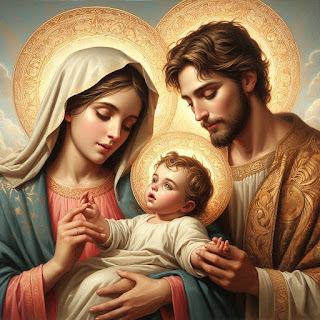
Obedience, the Antidote to Pride
Homily Excerpt

The readings for this feast provide us with a three-pronged meditation on the common theme of family. The first reading takes a hard honest look at our own respective human families. While the second reminds us that we are children of God and therefore, part of God’s great big family. Lastly, the gospel focuses on the one family which stands out today – the Holy Family of Nazareth, the Holy Family of Jesus, Mary and Joseph. Although, these are three different contexts to consider the theme of family, they are all united by something in common – the relationship of each member to God. The love of God is the glue that keeps families together and the family is the glue that holds the fabric of society together.
Holy Family - YEAR C
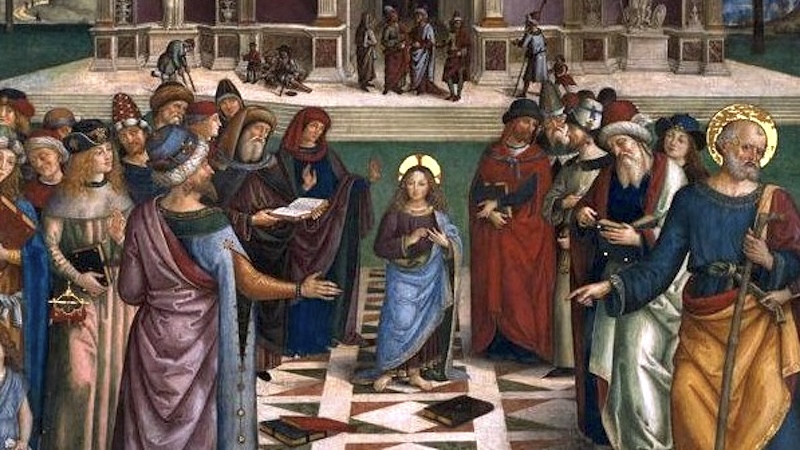
A Model of Holiness
Homily Excerpt
Whenever this feast comes around every year, I know a lot of people begin squirming in their seats. Any initial thoughts of the Holy Family hardly bring consolation. The discomfort arises from the perceived disparity between the perfection epitomised by the Holy Family and our own socially dysfunctional family units. It’s like living next door to the picture-perfect family. Close proximity is enough to make you feel ashamed of your own. In the face of such heavenly perfection, the condition of our families feels like human refuse. To even attempt to match up to their standards seems impossible. Fortunately, popular culture is less demanding.
Notice how Reality TV, movies and serials often showcase the weird and the dysfunctional. These shows have become so popular because they help us to laugh at the tragedy of dysfunctional behavioural patterns within our own homes and thus, depersonalise the experience. After watching some of the ridiculously outlandish lifestyles, we console ourselves by saying: “we’re not that bad after all.” But dysfunctional relationships are not just the subject of ridicule but have become normative.
We live in a world where we try to come to terms with and even celebrate our limitations, our brokenness, our sinfulness, the painful realities that define both our individual and social lives. It is a world where the ‘good’, ‘the perfect,’ ‘the holy’, ‘the functional’, ‘the beautiful’ are just part of an unattainable Utopian dream.
Holy Family - YEAR C

Running Away “To” God
Homily Excerpt
Have you ever felt like you were trying to run from something? When I was young, the thought did enter my mind to run away with the circus. Even if I may never be accomplished enough to swing on the trapeze or tame the lions, at least I could still muster enough courage to play the Clown. (Come to think of it, being a priest sometimes feels like playing the clown) Statistics show that the majority of missing/runaway children do so due to family conflicts and peer pressure or influence. Whatever pain or suffering a young person may have had to endure to compel him to run away from home, can never match the pain, loss and guilt of those who are left behind. One of the greatest traumas imaginable is when parents have to deal with a missing child. But running away or the temptation to run away, is not just confined to kids or adolescents. Adults do it too, or at least contemplate the possibility of being able to run away from either an unhappy marriage, from financial crisis or insurmountable debts, from responsibilities, and even from God. It is true that you can run away from almost anything. But when it comes to God, I’ll let you in on a little secret. It doesn’t work!
INTRODUCTION | ADDICTION & RECOVERY | ADOLESCENTS | AFRICAN AMERICANS | CONFLICT | JUSTICE | MARRIAGE & FAMILY | PRO-LIFE | SENIOR CITIZENS | STEWARDSHIP | TECHNOLOGY | THEOLOGY OF THE BODY | VOCATIONS | WORK
Holy Family - YEAR C
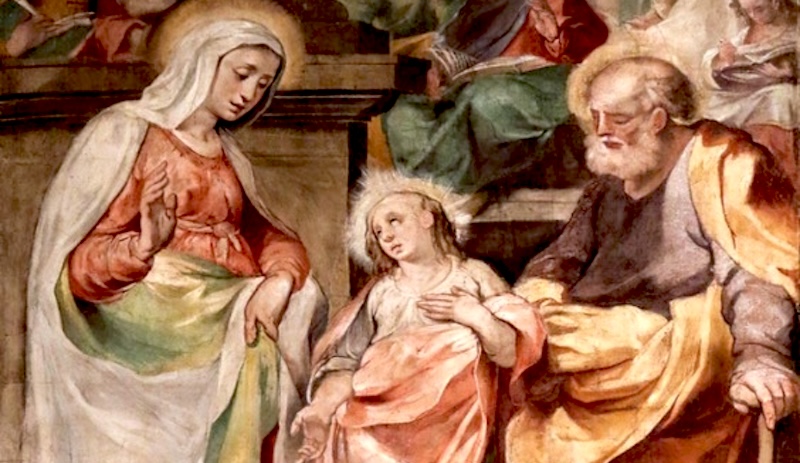
The Holy Family: A Model For Us All
Homily Excerpt

2021 HOMILY—This Sunday, the Church presents the Holy Family as a model. Unfortunately, many people cannot see it that way. They know that Mary was, and remained, a virgin, so they picture Joseph as an elderly man called by God merely to protect her reputation and her Child.
No, said Pope St. John Paul II in Redemptoris Custos (“Guardian of the Redeemer”).
While Joseph was still seeking a way out of the “difficult situation” caused by Mary’s pregnancy, an angel told him, “Do not fear to take Mary your wife, for that which is conceived in her is of the Holy Spirit; she will bear a son, and you shall name him Jesus.”
The following adaptation of Fr. Hawkswell's homily, generated by our Catholic Assistant AI bot, is provided to help preachers share key insights from the homily with children and teens.
Hey everyone! Today, we're talking about something super relatable – family. Have you ever thought about how the Holy Family – that's Mary, Joseph, and Jesus – can be a great example for us? Some people struggle to see it that way because they wonder about the relationship between Mary and Joseph since Mary was always a virgin.
But the thing is, Joseph wasn't just some random old guy chosen to keep an eye on Mary. According to Pope St. John Paul II, while Joseph was trying to figure out what to do when he found out Mary was pregnant, an angel appeared to him. The angel told Joseph not to worry and to marry Mary because her baby was a gift from the Holy Spirit.
Joseph wasn't just there; he had a real job given by God – to be a real dad to Jesus on earth. The Pope explained that when Joseph named Jesus, it showed he was taking on the role of Jesus' father, a key part of being in a family back in those days.
Mary and Joseph had an amazing and unique family, and despite what some might think, Joseph was very much involved. Their relationship wasn't just some old-fashioned marriage; it was about love and respect, and Joseph's role was important, even if it was different from what we might imagine today.
Being part of a family is not just about having kids no matter what. The Church talks about "responsible parenthood," meaning parents need to think wisely about having kids and how they can support them. It's not just about following every whim but using knowledge and good judgment.
Pope John Paul reminded couples that it's not about having as many kids as possible. It's about ensuring those kids have a loving environment that helps them grow and learn.
Father Donald Neumann, who was inspired by this teaching, often saw firsthand how happy kids are in big families because they learn to share and care for each other. Families are important, and they’re there for each other in both good times and bad.
So let's take a page from the Holy Family's book. Whether your family is big or small, it's all about loving and supporting each other through everything. That's what makes a family special!
DISCLAIMER: Adaptations (like translations), may not fully capture the nuances or precise meanings of the original text. It's essential to read the original homily which can be accessed by clicking on the title above.
This discussion guide has been generated by the WORD THIS WEEK'S Catholic AI Assistant based on Fr. Hawskwell's homily. NEED HELP? Copy and paste a question into the chat bot in the lower right corner of the screen and have our Catholic Assistant help you.
The Holy Family as a Model
- Reflect on why the Church presents the Holy Family as a model for families. How can our understanding of family dynamics benefit from this example?
- Discuss the common misconception of Joseph's role as merely a guardian, and explore the significance of his active participation as a husband and father.
Understanding Joseph's Role
- Explore the idea presented by Pope St. John Paul II that Joseph was given the responsibilities of an earthly father to Jesus. How does this redefine traditional views on fatherhood?
- Discuss the implications of Joseph naming Jesus and establishing a relationship with him. How does this act affirm Joseph’s role within the Holy Family?
The Complete Reality of the Incarnation
- Analyze Mary’s statement, “Your father and I have been searching for you,” and discuss how it illustrates the reality of the Incarnation.
- How does the relationship between Mary and Joseph exemplify the balance of mind and spirit over physical union?
Marriage, Parenthood, and the Church’s Teachings
- Discuss the “goods of marriage” as identified in the sermon: offspring, fidelity, and the Sacrament. How do Mary and Joseph embody these values?
- Reflect on the Church’s stance on responsible parenthood and the use of natural means to understand biological laws of procreation. Why does the Church oppose contraception?
Practical Application: Responsible Parenthood
- Consider Pope St. Paul VI’s emphasis on "dominion of reason and will" over "instinct or passion." How can this guide married couples in their approach to family planning?
- Discuss how parents can balance the comfort and material advantages for their children with the potential benefits of siblings and larger family dynamics.
Community Insights: Father Donald Neumann’s Experience
- Analyze Father Donald Neumann’s observations about happiness in large families and the challenges faced by parents with an only child.
- Share personal experiences or observations of family dynamics in your community that resonate with or challenge these insights.
Personal Reflection and Sharing
- Encourage group members to share personal takeaways from this discussion on the Holy Family, marriage, and parenthood.
- Invite participants to reflect on and discuss how this sermon and its teachings might influence their own views and practices within their families.
Click banners to access AI generated content.
⬇️ Fr. Denis J. Hanly

Father Denis J. Hanly (1932-2014) was a Maryknoll Missionary for over 55 years.
Holy Family - YEAR C
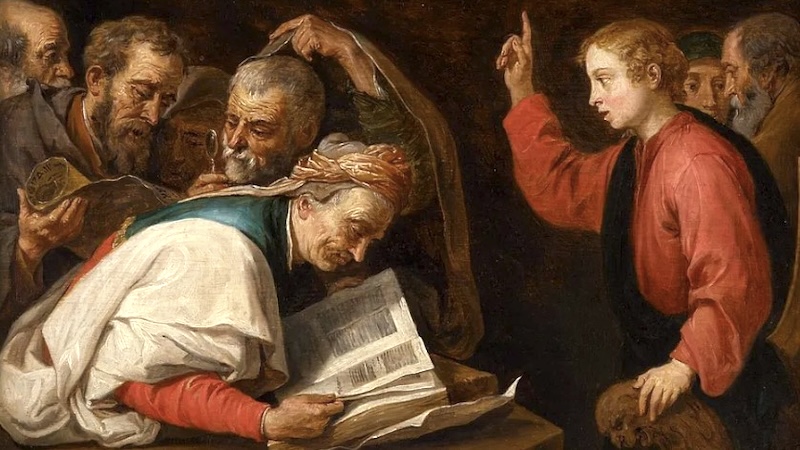
Love Begins in the Family
Homily Excerpt
I think it was Bernard Shaw, the Irish writer and playwright, who once said that youth is such a wonderful time, it’s too bad it’s wasted on young people.
Nobody’s smiling. But it’s true, we probably don’t appreciate what we have. The youth in its very fleeting days complain about it and think all kinds of things that are not always positive but negative, and yet, in it all, when we look back, we think, “It was a very good time.”
The same, I think, can be said about families. You know, when you’re in a family and you’re growing up in a family, sometimes you feel that you’d like to escape.
⬇️ Fr. Tommy Lane
Holy Family - YEAR C
The Holy Family and Our Families: Peace is the Fruit of Prayer
Homily Excerpt

As we honor the Holy Family today, we might be inclined to think that they had it easy, or life was comfortable for them. The opposite was the case. Just by reading the Gospels, I could spend five minutes listing all the problems they encountered and had to overcome. Just two examples out of a long list are enough: when the time came for Jesus’ delivery, it took place in an animals’ shelter since Bethlehem was already so crowded, and then the family had to flee to Egypt as refugees because Jesus’ life was in danger due to Herod, in much the same way as refugees from war-torn countries are crossing borders now. Just like every family, the Holy Family had what we might describe as trials and difficulties, enough to list for five minutes. But they always placed God first. Mary said “Yes” to the angel Gabriel, and Joseph immediately did everything the angel asked him (Matt 1-2).
Holy Family - YEAR C
The Holy Family

It is strange, when you think of it. We celebrate conceptions, circumcisions, and purifications; we ritualize marriage so highly that some of those who have left our communion are struck by the leanness, even barrenness, of some other marriage ceremonies. Births and deaths we linger and pray and play over. Food and blood characterize our Eucharists.
It is unsettling for many—and sometimes for us—that God would penetrate and inhabit our ordinariness. It might be more reassuring if our Baby-God had sprung fully matured from the head of Zeus, instead of appearing in the midst of such inadequacy and vulnerability. Sure, we have the angels, but they tell us merely to “fear not.” And they point, like the star, to things so utterly undramatic and common as a makeshift bed and plain people.
This discussion guide has been generated by the WORD THIS WEEK’S Catholic AI Assistant based on Fr. Kavanaugh’s homily. NEED HELP? Copy and paste a question into the chat bot in the lower right corner of the screen and have our Catholic Assistant help you.
1. The Incarnation and Human Experience
Key Points for Discussion:
– Consider how the Incarnation reflects the merging of the divine and human. How does this influence the Catholic view on the physical aspects of life?
– Discuss the significance of God ‘marrying’ human flesh and what it means for our understanding of sacredness in ordinary life.
Questions for Reflection:
– How does the concept of the Incarnation challenge your perception of the divine?
– In what ways do you see God in the particularities of daily life?
2. Physicality in Christian Practices
Key Points for Discussion:
– Explore how Christian rituals emphasize physical experiences, such as sacraments and celebrations.
– Reflect on how these practices can seem both primitive and deeply spiritual to believers and non-believers.
Questions for Reflection:
– Why might the tangible aspects of faith be essential in your spiritual journey?
– How do these physical practices affect your personal connection with God?
3. Divine Encounter in the Ordinary
Key Points for Discussion:
– God’s entry into our daily intimacies exemplifies how the divine intermingles with the mundane.
– The notion of a vulnerable, ordinary Jesus is contrasted with myths of more impressive divine appearances.
Questions for Reflection:
– What can the idea of seeing God in the ordinary teach us about recognizing holiness in everyday life?
– How does the presence of God in vulnerability reshape your understanding of divine power?
4. Holiness in Family Life
Key Points for Discussion:
– The family, in its ordinariness, is celebrated for nurturing and teaching us, which leads to spiritual growth.
– Figures like Simeon and Anna exemplify wisdom and prophetic insight found in community life.
Questions for Reflection:
– How do your family experiences contribute to your understanding of holiness?
– In what ways can the virtues within daily family life reflect aspects of divine nature?
5. Virtues of Daily Life as Divine Embodiment
Key Points for Discussion:
– Paul emphasizes virtues such as kindness, patience, and thankfulness as reflections of God’s presence in us.
– Discuss how these everyday virtues can become forms of embodying the Word in our lives.
Questions for Reflection:
– What virtues do you see as vital expressions of your faith?
– How can practicing these virtues help bring about the Incarnation in your daily actions?
This 300 word adaptation of Fr. Kavanaugh’s homily was generated by our Catholic Assistant AI bot to help preachers share key insights from the homily for young people.
In Christianity, especially in Catholicism, God becoming human is very important. This is called the Incarnation, where God came to us as Jesus. He lived like us to teach, die, and rise again to show God’s love. Because of this, Christians see God in everyday things like people, events, and places.
A woman once thought our faith seemed old-fashioned and very focused on the physical world. It’s true; our faith celebrates real-life things like births and marriages. Our ceremonies are meaningful, and we use bread and wine to remember Jesus’ sacrifice in the Eucharist. Some people find it hard to imagine God being part of ordinary life. They might picture God as far away and majestic. But at Christmas, we remember God coming as a baby—small and vulnerable. Angels told us, “Don’t be afraid,” showing simple yet profound truths.
Some stories about baby Jesus make Him seem like a superhero doing amazing things. But the real wonder is how He came as a regular baby. This teaches us to connect with life, even when we feel small or weak. Family is important, especially at Christmas. Families help us grow through love and care. God wants to be part of our lives and history. The wisdom from parents and respect from kids show how awesome life can be. In the Bible, people like Simeon and Anna show the beauty of everyday life.
Paul, a key figure in the Bible, says qualities like kindness, thankfulness, patience, and care help show God within us. When we care for each other, especially those struggling, we make God’s love real in our lives.
DISCLAIMER: Adaptations (like translations), may not fully capture the nuances or precise meanings of the original text. It’s essential to read the original homily which can be accessed by clicking on the title above
Holy Family - YEAR C
Stay Close to the Holy Family
Homily Excerpt
I love hearing confessions soon after a holiday. Wives confess all the things their husbands are doing wrong. Husbands confess all the things their wives are doing wrong. And kids come into the confessional and confess everything their siblings are doing wrong. Of course, confessing other people’s sins isn’t exactly the idea when it comes to the sacrament of reconciliation. It happens a lot though. I remember years ago after a little girl confessed that she
hit her brother, I playfully asked her, “Well, did he deserve it?” Without missing a beat, she said, “Oh yes, Father, you would not believe how much he deserved it.” That was priceless. It gets me thinking, instead of offering individual confessions, I wonder if the Church should just allow the whole family in at once…might be a lot quicker!
Holy Family - YEAR C

Feast of the Holy Family

Today is the Feast of the Holy Family. Fortunately, most of us value the gift of family. We treasure it and understand its importance for both society and Church. We live in a fast-paced world, some with more than one job in order to make ends meet. It is so easy to get lost in our day to day living, and when that happens, we may neglect the family while we worked to provide for them.
Some of us can remember a song by Harry Chapin recorded many years ago It was called The Cat’s in the Cradle. It was a ballad about the relationship between a father and son. The father spent his time and energies making a successful living. The son kept asking for his attention, to be able to share his father’s life: “When you comin’ home, Dad?” The son would repeatedly ask, only to receive the reply, “I don’t know when, but we will get together then.”
This discussion guide has been generated by the WORD THIS WEEK’S Catholic AI Assistant based on Fr. Warren’s homily. NEED HELP? Copy and paste a question into the chat bot in the lower right corner of the screen and have our Catholic Assistant help you.
1. Understanding Family Importance:
– How does the sermon describe the role of family in both society and the Church?
– Reflect on personal experiences: how has your family shaped your life and values?
2. Insights from “The Cat’s in the Cradle”:
– What lessons can be drawn from the song mentioned in the sermon about family priorities?
– Have you experienced or witnessed similar situations where work or other commitments overshadowed family relationships?
3. Real-Life Example of Family Connection:
– Discuss the story of the lawyer and her father. How does it highlight the importance of prioritizing family?
– Why do you think the father’s request was impactful, and what can we learn from his perspective?
4. St. Paul’s Blueprint for Family Life:
– What are the key virtues St. Paul suggests for family life? Why are these important for maintaining strong relationships?
– Can you think of instances where forgiveness and kindness transformed a family situation?
5. Addressing Divorce and Family Challenges:
– The sermon briefly touches on divorce. How can family and friends provide support in such situations?
– What role do forgiveness and compassion play in healing and maintaining family bonds during difficult times?
6. The Message of Christmas and Holy Families:
– Why is the birth of Jesus into a family significant for understanding the role of family in faith?
– How can we actively contribute to creating holy family communities in our own lives?
7. Case of Foster Care and Community Support:
– Discuss the example of foster care for orphan babies with HIV. What does this teach us about the importance of family and community support?
– How can this example inspire us to reach out and support others in our communities?
8. Applying the Sermon’s Message in the New Year:
– How can you incorporate Paul’s virtues of mercy, kindness, humility, meekness, and patience in your family life in the upcoming year?
– What steps can you take now to strengthen your family bonds and avoid waiting for “then” to come?
This 300 word adaptation of Fr. Warren’s homily was generated by our Catholic Assistant AI bot to help preachers share key insights from the homily for young people.
Hey everyone! Today, let’s talk about how important family is, especially during the Feast of the Holy Family. Family means a lot, but sometimes we get so busy that we forget to spend time with them. Have you heard the song “The Cat’s in the Cradle”? It’s about a dad who’s always working and never has time for his son. He keeps saying they’ll hang out “someday,” but that day never comes. It’s a reminder not to miss precious moments with family.
A real story: a friend of mine hadn’t seen his daughter, who was a lawyer, for a while. He was sick and wanted to see her, but she had lots of excuses. He asked if she’d attend his funeral, and she said yes. He replied, “Forget the funeral, come now. I need you more now.” It’s a powerful reminder to be there for our loved ones now, not later.
St. Paul tells us family life can be tough, but he advises forgiveness to keep everyone together. If we treat our family well, we’re likely to treat others well too. And about difficult topics like divorce, we should show care and help each other heal.
Christmas reminds us that Jesus, our Savior, was born into a family. Families are like little holy communities, and creating a loving family is where living like Christ begins. In the 80s, many babies born with HIV were left in hospitals, but some loving families stepped up to care for them. Those kids who were fostered thrived because they were part of a loving family.
As we begin a new year, let’s follow St. Paul’s advice: show mercy, kindness, patience, and most importantly, love. If you’ve been delaying calling or visiting someone, do it now. Don’t wait for “someday.” It might never come. Make those connections now!
DISCLAIMER: Adaptations (like translations), may not fully capture the nuances or precise meanings of the original text. It’s essential to read the original homily which can be accessed by clicking on the title above
⬇️ Fr. Joe Jagodensky, SDS
Holy Family - YEAR C

The Holy Family & Ours
Homily Excerpt

A terrible blow to families and psychology happened in the 1980’s when the word “dysfunctional” became vogue when applied to families. Lots of books sold and lots of talks, especially in our family on how we became this word. Every other family presumably was normal except the five of us kids with our two parents. I regret to this day when I smugly told my mother about all this dysfunctional language. She looked bewildered.
Television again doesn’t imitate art, but rather influences and often distorts us. We fall for it. As adults, the five of us kids realized that there was nothing dysfunctional about our family. Our lives, assembled by mom and dad, formed what our family turned out to be. Nothing wrong or good about it, it was our family with all its quirks and qualms, some unique and others not, that any family can admit. In my family, my parents were not Ward and June Cleaver. Our mom didn’t own a pair of pearls, and if she did, she wouldn’t have vacuumed wearing them.
The following adaptation of Fr. Joe's homily, generated by our Catholic Assistant AI bot, is provided to help preachers share key insights from the homily with children and teens.
In the 1980s, the word "dysfunctional" became popular when describing families. TV shows influenced our views, making us think we were the only ones who weren't "normal." We had five kids and two parents, and I once told my mom about it, confusing her. Over time, we realized our quirks were normal. Our mom didn't wear pearls while cleaning like TV moms, but that was just fine.
Each year, we hear about the "Holy Family" during Christmas, made up of some interesting people. Let's meet them: a weird cousin with a wild wardrobe, a young mom-to-be in blue, her quiet fiancé who thinks about ending things, an older pregnant woman with a lively baby, angels saying, "Don't be afraid"—which sounds frightening—an uncle with a lot to say, a mean ruler scared of the baby, an old lady hoping to meet the baby, and singing shepherds.
Even if your family feels strange, remember the Christmas story cast: John, Mary, Joseph, Elizabeth, angels, Zechariah, Herod, Anna, and shepherds. Imagine them at a festive feast, sharing stories and laughter.
After our family gatherings, we'd chat about everything. We even had debates, like the difference between atheists and agnostics. My grandmother used to compare us to the Schroeders, thinking they were more normal just because we rarely saw them.
Family makes Christmas magical because each person plays a special role. Everyone adds something unique to the story of Jesus' birth and to your life. Without them, key parts of the incredible story—God joining our world, leading to the birth of Jesus—would be missing. Embrace your family's uniqueness and enjoy the special moments.
DISCLAIMER: Adaptations (like translations), may not fully capture the nuances or precise meanings of the original text. It's essential to read the original homily which can be accessed by clicking on the title above.
This discussion guide has been generated by the WORD THIS WEEK'S Catholic AI Assistant based on Fr. Joe's homily. NEED HELP? Copy and paste a question into the chat bot in the lower right corner of the screen and have our Catholic Assistant assist you.
1. Understanding the Concept of 'Dysfunction
- How did the term "dysfunctional" impact perceptions of families in the 1980s?
- Reflect on your own experiences. Do you believe using such labels overly simplifies family dynamics?
2. The Influence of Media on Family Perceptions
- Discuss the statement, "Television influences and often distorts us."
- How does pop culture shape our expectations of family life in both positive and negative ways?
3. Personal Family Insights
- What are some unique quirks or qualms of your own family? How do they contribute to the overall family dynamic?
- In what ways have your perceptions of your family changed over time?
4. Reimagining the Holy Family
- How does the depiction of the Holy Family challenge or affirm your understanding of a "normal" family?
- Reflect on the eccentric characters surrounding Jesus' birth. How might these figures reflect the diversity in modern families?
5. Divine Roles in Family Structure
- Consider the various characters in the Nativity story. What roles do they represent, and how are they significant to the narrative?
- How can these Biblical roles mirror or inspire roles within our own families?
6. Family Discussions and Dynamics
- The sermon mentions a heated family discussion about atheism and agnosticism. How do you navigate differing opinions within your family?
- What are some strategies to ensure productive and respectful dialogues at family gatherings?
7. Comparisons and Expectations
- Reflect on the notion of comparing families, as mentioned in the sermon with the Jagodensky and Schroeder families.
- How can comparisons impact family relationships and individual self-esteem?
Reflective Activities
- Family Reflection Exercise: Share a personal story that highlights a unique or defining moment in your family. What does it reveal about your family's identity?
- The Holy Family Exercise: Choose a Biblical character from the Nativity story and discuss how their role might relate to a modern family member in your life. Consider how both contribute to their family’s story.
Click banners to access AI generated content.
Please note that some video clips on this page serveas an additional resource to complement the homilies. THey might not have a direct correlation with the contributor’s original content. These videos aim to inspire preachers to enrich their own homilies, drawing ideas and insights from both the written material and the visual content they’ve explored.
INTRODUCTION | ADDICTION & RECOVERY | ADOLESCENTS | AFRICAN AMERICANS | CONFLICT | JUSTICE | MARRIAGE & FAMILY | PRO-LIFE | SENIOR CITIZENS | STEWARDSHIP | TECHNOLOGY | THEOLOGY OF THE BODY | VOCATIONS | WORK