DEC 29, 2024


Sunday Papal Homilies
Sunday Papal Homilies
LIVE FROM
VATICAN
This livestream allows viewers to witness the Pope’s addresses during Papal Audiences, as well as other Vatican events and news. The livestream is part of the Vatican Media Center’s efforts to share the latest updates on Pope Francis, the Holy See, and the Church worldwide with a global audience.
TIP: You can rewind the livestream up to twelve hours, allowing you to catch up on any events or addresses you may have missed.


The Dicastery for the Clergy deals with everything that concerns the priests and deacons of the diocesan clergy with regard to their persons, their pastoral ministry and what is necessary for its fruitful exercise. In these matters it offers the Bishops appropriate assistance.

Family
Holy Family - YEAR C
What other concept can unite this Sunday’s texts, if not the family? Reference is made to the family of God: God the Father, the Son of God, and human beings who have become children of God through faith (second reading, Gospel). In the first reading and in the Gospel two families are mentioned, between whom there seem to be some analogies, with some similarities and many differences. They are the families of Hannah and Mary. To both women, God granted a son in a unique way: the prophet Samuel to Hannah, and Jesus of Nazareth to Mary.
P. Antonio Izqeuirdo, L.C., Copyright © Dicastery for the Clergy
Doctrinal Messages
Holy Family - YEAR C
VATICAN
DAILY
BULLETIN
The Vatican Daily Bulletin is the official news source for the Pope’s activities and statements, providing accurate and up-to-date information. Published daily, it keeps the public informed about the Church’s activities and decisions.
Pastoral Suggestions
Holy Family - YEAR C
THE HOLY
FATHER
RELATED LINKS
THIS SUNDAY’S
QUOTES
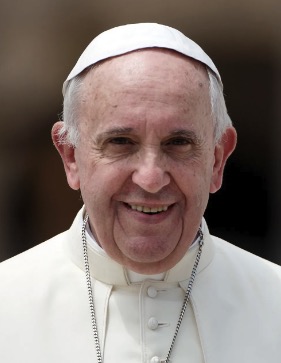
Pope Francis: “”In this season of Advent, let us go out with a trusting heart to meet the Lord who comes for our salvation, just as Mary did when she visited her cousin Elizabeth.” (2024)
Pope Francis: “Contemplating the Gospel, we see the power of Mary’s ‘yes’ to God’s plan. Let us seek to follow her example, allowing the Gospel to become ever more incarnate in our lives.” (2023)
Pope Francis: “The Immaculate Conception reminds us of Mary’s purity and harmony. Her humility and simplicity challenge us to focus on what is essential in our spiritual lives and pastoral activity.” (2024)
Pope Francis: “Mary’s visit to Elizabeth teaches us the value of solidarity and support. Let us remember that the Kingdom of God belongs to those who are poor and marginalized, and work to build a more compassionate world.” (2021)
Pope Francis: “Mary’s example of motherhood challenges us to nurture a culture of life and love. Let us pray for the strength to protect the vulnerable and defend the dignity of every human person.” (2022)
Pope Francis: “As we celebrate the feast of Our Lady of Guadalupe, let us listen to Mary’s words and follow her example of trust and obedience. May we be inspired to say ‘yes’ to God’s plan for our lives.” (2024)
Pope Francis
Holy Family - YEAR C

Astonishment & Anxiety
30 December 2018 | Saint Peter’s Square
- TEXT
- DISCUSSION GUIDE
Today we are celebrating the Feast of the Holy Family, and the liturgy invites us to reflect on the experience of Mary, Joseph and Jesus, united by an immense love and inspired by great trust in God. Today’s Gospel passage (cf. Lk 2:41-52) recounts the journey of the family of Nazareth to Jerusalem, for the celebration of Passover. But, on the return journey, the parents realize that their 12-year-old son is not in the caravan. After three days of searching and fear, they find him in the temple, sitting among the teachers, focused on a discussion with them. At the sight of the Son, Mary and Joseph “were astonished” (v. 48) and the Mother revealed their fear to him, saying: “your father and I have been looking for you anxiously” (ibid.)
Astonishment — they “were astonished” — and anxiety — “your father and I, anxious” — are the two elements to which I would like to call your attention: astonishment and anxiety.
In the family of Nazareth astonishment never waned, not even in a dramatic moment such as Jesus being lost: it is the ability to be astonished before the gradual manifestation of the Son of God. It is the same astonishment that even strikes the teachers of the temple, “amazed at his understanding and his answers” (v. 47). But what is astonishment; what is it to be astonished? Being astonished and being amazed is the opposite of taking everything for granted; it is the opposite of interpreting the reality that surrounds us and historical events according to our criteria alone. A person who does this does not know what amazement is, what astonishment is. Being astonished is being open to others, understanding others’ reasons: this attitude is important for mending compromised interpersonal relationships, and is also indispensable for healing open wounds in the familial environment. When there are problems in families, we take for granted that we are right and we close the door to others. Instead, it is important to think: ‘What is good about this person?’, and to be astonished by this ‘good’. And this helps family unity. If you have problems in the family, think about the good things in the family member with whom you have problems, and be astonished by this. This will help to heal familial wounds.
The second element that I would like to grasp from the Gospel is the anxiety that Mary and Joseph felt when they could not find Jesus. This anxiety reveals Jesus’ centrality in the Holy Family. The Virgin and her husband welcomed that Son, protected him and watched him grow in age, wisdom and grace in their midst, but above all he grew in their hearts; and, little by little, their affection for him and their understanding of him grew. This is why the family of Nazareth is holy: because it was centred on Jesus; all of Mary and Joseph’s attention and concerns were directed toward him.
That anxiety that they experienced in the three days that Jesus was missing should also be our anxiety when we are distant from him, when we are distant from Jesus. We should feel anxious when we forget Jesus for more than three days, without praying, without reading the Gospel, without feeling the need of his presence and of his comforting friendship. And many times, days pass in which I do not remember Jesus. But this is bad, this is really bad. We should feel anxious when these things happen. Mary and Joseph searched for him and found him in the temple while he was teaching: for us too, it is especially in the house of God that we are able to encounter the divine Teacher and receive his message of salvation. In the Eucharistic celebration we have a living experience of Christ; he speaks to us; he offers us his Word; he illuminates us, lights our path, gives us his Body in the Eucharist from which we draw vigour to face everyday difficulties.
And today let us go home with these two words: astonishment and anxiety. Do I know how to be astonished, when I see the good things in others, and in this way resolve family problems? Do I feel anxious when I am distant from Jesus?
Let us pray for all the families in the world, especially those in which, for various reasons, peace and harmony are lacking. And let us entrust them to the protection of the Holy Family of Nazareth.
Opening Questions
- What comes to mind when you think about the Holy Family of Nazareth?
- How do you relate to the idea of celebrating families as sacred and central to our faith?
Gospel Reflection
Review Luke 2:41-52, where the family of Nazareth travels to Jerusalem for Passover, and Jesus is found in the temple after being lost for three days.
Theme 1: Astonishment
- Discussion Point: The family of Nazareth was characterized by continued astonishment, even during stressful times.
- What does it mean to be astonished, according to the sermon?
- How can an attitude of astonishment help mend interpersonal relationships, especially within families?
- Share experiences where being open to others’ reasons helped resolve a conflict.
- Reflective Question: In what ways can you be more open to recognizing and appreciating the ‘good’ in others?
Theme 2: Anxiety
- Discussion Point: Mary and Joseph’s anxiety about losing Jesus highlights the central role he played in their family.
- Why is Jesus’ centrality crucial in the family structure of Nazareth?
- How does the Holy Family emphasize growing in love and understanding towards Jesus?
- Reflective Question: Do you feel anxious when you drift away from your spiritual practices, and how can this anxiety lead you back to a closer relationship with Jesus?
Application
- Share how the themes of astonishment and anxiety might apply to your personal or family life.
- What practical steps can you take to ensure that you remain centered on Jesus in your daily life?
Closing Prayer
Pray for families worldwide, particularly those lacking peace and harmony, entrusting them to the Holy Family’s protection.
THIS SUNDAY’S
QUOTES
Pope Benedict: “The Gospel reveals that true joy comes from encountering Christ and sharing His love with others. Let us strive to be messengers of joy, proclaiming the Good News through our words and actions.” (2006)
Pope Benedict: “”As we prepare for Christmas, let us reflect on the mystery of the Incarnation and God’s unfailing love for humanity. May our hearts be filled with wonder and gratitude for the gift of salvation.” (2007)
Pope Benedict: “”The Virgin Mary’s visit to Elizabeth reminds us of the importance of faith-filled relationships that encourage and support us on our journey towards Christ. Let us nurture friendships that inspire us to grow in holiness.” (2008)
Pope Benedict: “”The season of Advent invites us to renew our commitment to following Jesus, the true path to human fulfillment. Let us heed the call to repentance and conversion, embracing the way of love and service.” (2009)
Pope Benedict: “”Mary’s Magnificat proclaims the greatness of God’s mercy and love for the lowly and marginalized. May we work tirelessly to build a more just and compassionate world, where all may experience the joy of the Gospel.” (2010)
Pope Benedict XVI
Holy Family - YEAR C

Jesus in the Temple
30 December 2012 | Saint Peter’s Square
- TEXT
- DISCUSSION GUIDE
Today is the Feast of the Holy Family of Nazareth. In the liturgy the passage from Luke’s Gospel presents to us the Virgin Mary and St Joseph. Faithful to the tradition, they go to Jerusalem for the Passover taking the 12-year-old Jesus with them. The first time that Jesus had entered the Temple of the Lord was 40 days after his birth, when his parents had offered on his behalf “a pair of turtledoves, or two young pigeons” (Lk 2:24) on his behalf, that is, the sacrifice offered by the poor.
“Luke, whose entire Gospel is shot through with a theology of the poor and a theology of poverty, is once again making it abundantly clear that Jesus’ family belongs to the poor of Israel, and that it was among such as them that the promises would be fulfilled” (Jesus of Nazareth: The Infancy Narratives, p. 81).
Today Jesus is once again in the Temple, but this time he has a different role, which involves him in the first person. He makes the pilgrimage, with Mary and Joseph, to Jerusalem as prescribed by the Law (cf. Ex 23:17, 34:23 ff) even though he was not yet in his thirteenth year: a sign of the Holy Family’s deep devotion. Yet, when his parents set out on their return to Nazareth, something unexpected happens. Without saying a word Jesus remains in the city. Mary and Joseph search for him for three days and find him in the Temple, conversing with the teachers of the Law (Lk 2: 46, 47); and when they ask him for an explanation, Jesus answers that they should not be surprised since this is his place, the house of his Father, who is God (The Infancy Narratives, p. 123). “He”, Origen writes, “professes to be in the temple of his Father, the Father who has revealed himself to us and whose Son he says he is” (Homilies on the Gospel of Luke, 18, 5).
Mary and Joseph’s anxiety about Jesus is the same as that of every parent who educates a child, introduces him or her to life and to understanding reality. Today, therefore, it is only right to say a special prayer to the Lord for all the families of the world. Emulating the Holy Family of Nazareth, may parents be seriously concerned with the development and upbringing of their children so that they grow up to be responsible and honest citizens, never forgetting that faith is a precious gift to be nurtured in their children by their own example.
At the same time let us pray that every child be welcomed as a gift of God and be supported by the love of both parents in order to increase, like the Lord Jesus “in wisdom and in stature, and in favour with God and man” (Lk 2:52).
Introduction and Context
– What is the significance of the Holy Family of Nazareth in Christian tradition?
– Consider discussing the roles of Mary, Joseph, and Jesus.
– What does their family dynamic teach us about faith and devotion?
– What does the Passover pilgrimage to Jerusalem represent?
– Discuss the importance of maintaining religious traditions within a family setting.
Jesus in the Temple
– Discuss the importance of Jesus’ role in the Temple at the age of 12.
– Reflect on the transition from childhood to a more active role in faith and community.
– What does this say about Jesus’ understanding of his divine mission at a young age?
– Explore the symbolism of Jesus remaining in the Temple without informing Mary and Joseph.
– Why is this incident significant in understanding the Holy Family’s relationship?
– How do Mary and Joseph’s search and eventual finding of Jesus in the Temple resonate with parents today?
Theological Reflections
– Examine Luke’s theological focus on the poor and poverty.
– Why is it significant that Jesus’ family is depicted as part of the poor of Israel?
– How does this theme of poverty influence the understanding of Jesus’ mission?
– Discuss Origen’s commentary on Jesus’ declaration in the Temple.
– “Professes to be in the temple of his Father.” What implications does this have for Christians regarding Jesus’ identity?
Family and Faith
– What lessons can modern families take from the example of the Holy Family in their own lives?
– Consider discussing the concepts of devotion, responsibility, and the upbringing of children in faith.
– Why is it important to pray for families and the nurturing of children’s faith today?
– Discuss the role of parental example in fostering faith and moral growth in children.
– Reflect on what it means for a child to be welcomed as a gift of God.
– How does this perspective influence parenting and community support for families?
Practical Applications
– Brainstorm ways families can integrate faith and tradition into daily life.
– How can families emulate the devotion and responsibility exemplified by the Holy Family?
– Explore community and church actions to support families in nurturing children’s development in “wisdom and stature.”
– What roles can church communities play in supporting parents and children?