DEC 22, 2024
The World's First Eucharistic Procession: The Visitation
✨ Pope Benedict XVI stated that Mary's visit to her cousin Elizabeth, known as the Visitation, holds a deeper significance beyond a simple journey. He believes that as Mary hurried to see Elizabeth, she became the world's first Eucharistic procession, carrying Christ within her. As a result, Mary served as a living tabernacle.
Elizabeth became the first to encounter Christ's presence through Mary, thus experiencing Eucharistic adoration and participating in the first Benediction. Her threefold declaration of "Blessed" towards Mary resembles the threefold ringing of bells during Benediction, followed by the divine praises, "Blessed be God." This moment in the Visitation foreshadows the profound reverence and blessing found in the celebration of the Eucharist and the Benediction.
SCROLL TO READ MORE

PALMOITA FILMS (2:58)—Video captures the Napa Institutes 5th annual Eucharistic Procession (October 15, 2024) through NYC as it walks with Jesus through Midtown Manhattan during rush hour.


Sunday Papal Homilies
Sunday Papal Homilies
LIVE FROM
VATICAN
This livestream allows viewers to witness the Pope’s addresses during Papal Audiences, as well as other Vatican events and news. The livestream is part of the Vatican Media Center’s efforts to share the latest updates on Pope Francis, the Holy See, and the Church worldwide with a global audience.
TIP: You can rewind the livestream up to twelve hours, allowing you to catch up on any events or addresses you may have missed.


The Dicastery for the Clergy deals with everything that concerns the priests and deacons of the diocesan clergy with regard to their persons, their pastoral ministry and what is necessary for its fruitful exercise. In these matters it offers the Bishops appropriate assistance.

Right Relations
4th Sunday of Advent - YEAR C
What are the right relations between the human person and God? In today’s liturgy we find an answer to this question. The texts mainly refer to Jesus’ and Mary’s relationships with God. We read of Jesus’ relationship with his Father (second reading), with John the Baptist in his mother’s womb (Gospel), with prophecy (first reading) and with the Levitical priesthood (second reading). We also consider Mary’s relationship with the Holy Spirit, with her cousin Elizabeth (Gospel) and especially with the Word (Gospel).
P. Antonio Izqeuirdo, L.C., Copyright © Dicastery for the Clergy
Doctrinal Messages
4th Sunday of Advent - YEAR C
VATICAN
DAILY
BULLETIN
The Vatican Daily Bulletin is the official news source for the Pope’s activities and statements, providing accurate and up-to-date information. Published daily, it keeps the public informed about the Church’s activities and decisions.
Pastoral Suggestions
4th Sunday of Advent - YEAR C
THE HOLY
FATHER
RELATED LINKS
THIS SUNDAY’S
QUOTES
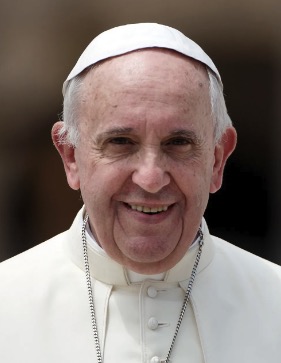
Pope Francis: “”In this season of Advent, let us go out with a trusting heart to meet the Lord who comes for our salvation, just as Mary did when she visited her cousin Elizabeth.” (2024)
Pope Francis: “Contemplating the Gospel, we see the power of Mary’s ‘yes’ to God’s plan. Let us seek to follow her example, allowing the Gospel to become ever more incarnate in our lives.” (2023)
Pope Francis: “The Immaculate Conception reminds us of Mary’s purity and harmony. Her humility and simplicity challenge us to focus on what is essential in our spiritual lives and pastoral activity.” (2024)
Pope Francis: “Mary’s visit to Elizabeth teaches us the value of solidarity and support. Let us remember that the Kingdom of God belongs to those who are poor and marginalized, and work to build a more compassionate world.” (2021)
Pope Francis: “Mary’s example of motherhood challenges us to nurture a culture of life and love. Let us pray for the strength to protect the vulnerable and defend the dignity of every human person.” (2022)
Pope Francis: “As we celebrate the feast of Our Lady of Guadalupe, let us listen to Mary’s words and follow her example of trust and obedience. May we be inspired to say ‘yes’ to God’s plan for our lives.” (2024)
Pope Francis
4th Sunday of Advent - YEAR C

Mary: Model of Faith and Charity
23 December 2018 | Saint Peter’s Square
- TEXT
- DISCUSSION GUIDE
The liturgy of this Fourth Sunday of Advent focuses on the figure of Mary, the Virgin Mother, expecting the birth of Jesus, the Saviour of the world. Let us fix our gaze upon her, a model of faith and of charity; and we can ask ourselves: what were her thoughts in the months while she was expecting? The answer comes precisely from today’s Gospel passage, the narrative of Mary’s visit to her elderly relative Elizabeth (cf. Lk 1:39-45). The Angel Gabriel had revealed that Elizabeth was expecting a son and was already in her sixth month (cf. Lk 1:26, 36). So the Virgin, who had just conceived Jesus by the power of God, set out with haste for Nazareth, in Galilee, to reach the mountains of Judea, and visit her cousin.
The Gospel states: “she entered the house of Zechariah and greeted Elizabeth” (v. 40). Surely she congratulated her on her maternity, as in turn Elizabeth congratulated Mary, saying: “Blessed are you among women, and blessed is the fruit of your womb! And why is this granted me, that the mother of my Lord should come to me?” (vv. 42-43). And she immediately lauds Mary’s faith: “And blessed is she who believed that there would be a fulfilment of what was spoken to her from the Lord” (v. 45). The contrast is obvious between Mary, who had faith, and Zechariah, Elizabeth’s husband, who doubted, and did not believe the angel’s promise and therefore is left dumb until John’s birth. It is a contrast.
This episode helps us to interpret the mystery of man’s encounter with God in a very special light. An encounter that is not characterized by astonishing miracles, but rather, is characterized by faith and charity. Indeed, Mary is blessed because she believed: the encounter with God is the fruit of faith. Zechariah, however, who doubted and did not believe, was left deaf and dumb. To grow in faith during the long silence: without faith one remains inevitably deaf to the consoling voice of God; and incapable of speaking words of consolation and hope to our brothers and sisters. We see it every day: when people who have no faith, or who have very little faith, have to approach a person who is suffering, they speak words suited to the occasion, but they do not manage to touch the heart because they have no strength. They have no strength because they have no faith, and if they have no faith they do not find the words that can touch others’ hearts. Faith, in its turn, is nourished by charity. The Evangelist recounts that “Mary arose and went with haste” (v. 39) to Elizabeth: with haste, not with distress, not anxiously, but with haste, in peace. “She arose”: a gesture full of concern. She could have stayed at home to prepare for the birth of her son, but instead she takes care of others before herself, showing through her deeds that she is already a disciple of that Lord whom she carries in her womb. The event of Jesus’ birth began in this way, with a simple gesture of charity; after all, authentic charity is always the fruit of God’s love.
The Gospel passage about Mary’s visit to Elizabeth, which we heard at Mass today, prepares us to experience Christmas properly, by communicating to us the dynamism of faith and charity. This dynamism is the work of the Holy Spirit: the Spirit of Love who made Mary’s virginal womb fruitful and who spurred her to hasten to the service of her elderly relative. A dynamism full of joy, as seen in the encounter between the two mothers, which is entirely a hymn of joyful exultation in the Lord, who does great things with the little ones who trust in him.
Discussion Guide for the Fourth Sunday of Advent Sermon
Introduction
Reflect on the Fourth Sunday of Advent, focusing on Mary, the Virgin Mother, as a model of faith and charity. Consider what insights can be gained by examining her visit to Elizabeth and the events surrounding this encounter.
Part 1: Understanding Mary’s Role
– What are the key characteristics of Mary that stand out in this sermon, especially as a model of faith and charity?
– Reflect on Mary’s response to the news of Elizabeth’s pregnancy. What does her reaction tell us about her character and faith?
Part 2: The Visit to Elizabeth
– Read Luke 1:39-45 to understand the narrative of Mary’s visit to Elizabeth. How does Elizabeth greet Mary, and what does this reveal about both women’s faith?
– Discuss the contrast between Mary’s faith and Zechariah’s doubt. Why is this contrast significant, and what lessons can we learn from it?
Part 3: Faith and Charity
– Explore how the encounter between Mary and Elizabeth exemplifies the link between faith and charity.
– How does the sermon illustrate that faith strengthens our ability to offer consolation and hope? Provide examples from the sermon and from personal experience.
Part 4: The Role of the Holy Spirit
– Analyze the role of the Holy Spirit as depicted in the sermon. How does the Spirit influence Mary’s actions and the meeting with Elizabeth?
– In what way does the Holy Spirit contribute to the dynamism of faith and charity described in the sermon?
Part 5: Preparing for Christmas
– Discuss how Mary’s actions and the visitation narrative prepare us to experience Christmas meaningfully.
– How does understanding the “dynamism of faith and charity” enhance our preparation for celebrating the birth of Jesus?
Conclusion
– Reflect on the overall message of the sermon regarding faith and charity. How can we apply these lessons in our daily lives, especially during the Advent season?
Closing Prayer
Conclude your discussion with a prayer, asking for the grace to cultivate the same faith and charity exemplified by Mary as you prepare for Christmas.
THIS SUNDAY’S
QUOTES
Pope Benedict: “The Gospel reveals that true joy comes from encountering Christ and sharing His love with others. Let us strive to be messengers of joy, proclaiming the Good News through our words and actions.” (2006)
Pope Benedict: “”As we prepare for Christmas, let us reflect on the mystery of the Incarnation and God’s unfailing love for humanity. May our hearts be filled with wonder and gratitude for the gift of salvation.” (2007)
Pope Benedict: “”The Virgin Mary’s visit to Elizabeth reminds us of the importance of faith-filled relationships that encourage and support us on our journey towards Christ. Let us nurture friendships that inspire us to grow in holiness.” (2008)
Pope Benedict: “”The season of Advent invites us to renew our commitment to following Jesus, the true path to human fulfillment. Let us heed the call to repentance and conversion, embracing the way of love and service.” (2009)
Pope Benedict: “”Mary’s Magnificat proclaims the greatness of God’s mercy and love for the lowly and marginalized. May we work tirelessly to build a more just and compassionate world, where all may experience the joy of the Gospel.” (2010)
Pope Benedict XVI
4th Sunday of Advent - YEAR C

The Visitation
16 December 2012 | Saint Peter’s Square
- TEXT
- DISCUSSION GUIDE
On this Fourth Sunday of Advent that comes just before the Nativity of the Lord, the Gospel speaks of Mary’s visit to her kinswoman Elizabeth. This event is not merely a courteous gesture but portrays with great simplicity the encounter of the Old Testament with the New. Indeed the two women, both of them then pregnant, embody expectation and the Expected One. The elderly Elizabeth symbolizes Israel which is awaiting the Messiah, whereas the young Mary bears within her the fulfilment of this expectation for the benefit of the whole of humanity.
First of all in the two women the fruit of their wombs, John and Christ, meet and recognize each other. The Christian poet Prudentius comments: “the child imprisoned in the aged womb greets by his mother’s lips his Lord, the maiden’s son” (Apotheosis, 590:pl 59, 970). John’s exultation in Elizabeth’s womb is a sign of the fulfilment of the expectation: God is about to visit his People. In the Annunciation the Archangel Gabriel spoke to Mary of Elizabeth’s pregnancy (cf. 1:36) as proof of God’s power; in spite of her old age her barren state was made fecund.
In her greeting to Mary Elizabeth recognizes that God’s promise to humanity is being fulfilled and exclaims: “Blessed are you among women, and blessed is the fruit of your womb! And why is this granted me, that the mother of my Lord should come to me?” (Lk 1:42-43). In the Old Testament, the phrase “blessed are you among women” refers both to Jael (Judg 5:24), and to Judith (Jud 13:18), two women warriors who do their utmost to save Israel.
Instead it is used here to describe Mary, a peaceful young woman who is about to bring the Saviour into the world. Thus John’s leap of joy (cf. Lk 1:44) also calls to mind King David’s dancing when he accompanied the entry of the Ark of the Covenant into Jerusalem (cf. 1 Chron 15:29. The Ark that contained the Tablets of the Law, the manna and Aaron’s rod (cf. Heb 9:4) was the sign of God’s presence among his People. The unborn John exults with joy before Mary, the Ark of the New Covenant, who in her womb is carrying Jesus, the Son of God made man.
The scene of the Visitation also expresses the beauty of the greeting. Wherever there is reciprocal acceptance, listening, making room for another, God is there, as well as the joy that comes from him. At Christmas time let us emulate Mary, visiting all those who are living in hardship, especially the sick, prisoners, the elderly and children. And let us also imitate Elizabeth who welcomes the guest as God himself: without wishing it, we shall never know the Lord, without expecting him we shall not meet him, without looking for him we shall not find him. Let us too go to meet the Lord who comes with the same joy as Mary, who went with haste to Elizabeth (Lk 1:39).
Discussion Guide on the Fourth Sunday of Advent Sermon
Introduction and Context
1. Overview of the Theme: The Encounter
– Discuss how the meeting between Mary and Elizabeth represents the connection between the Old and New Testaments. How does this interaction symbolize the fulfillment of prophecies?
2. Expectation and Fulfillment
– Explain how Elizabeth and Mary embody the theme of expectation and fulfillment. How does the presence of John and Jesus in their wombs manifest this theme?
Significant Symbols and Meanings
3. Mary and Elizabeth: Representations of Israel and the New Covenant
– Analyze how Elizabeth symbolizes Israel waiting for the Messiah. How does Mary represent the New Covenant that fulfills this expectation?
4. John and Jesus: Recognition and Joy
– Reflect on the significance of John the Baptist’s reaction in Elizabeth’s womb. How does his leap of joy foreshadow the recognition of Jesus as the Messiah?
5. Blessed Among Women: Old Testament References
– Discuss the significance of the phrase “blessed are you among women” in the context of the Old Testament. How does Mary’s role differ from that of Jael and Judith?
6. The Ark of the New Covenant
– Explore the metaphor of Mary as the Ark of the New Covenant. What are the parallels between Mary carrying Jesus and the Ark carrying sacred items?
Thematic Messages and Applications
7. The Importance of Hospitality and Welcome
– Discuss the theme of mutual acceptance and welcome in the Visitation. How can we apply this in our lives, especially during Christmas?
8. Visiting and Supporting Others
– Consider ways we can emulate Mary’s actions by reaching out to those in need. How can this be a demonstration of faith and joy?
9. Recognizing and Seeking the Lord
– How does Elizabeth’s welcome of Mary reflect the need to actively seek and recognize the Lord in our lives?
Reflection and Action Points
10. Personal Reflection
– Reflect on a time you have felt an expectation met in your spiritual journey. How did you feel a connection with the divine during that time?
11. Group Action Plan
– Develop a plan for how the group can collectively visit and support individuals or communities in need as a way to practice the lessons from the Visitation.
Conclusion
12. Summary of Learnings
– Summarize the key insights from the sermon and discuss how these can shape your personal and communal spiritual practices.
13. Prayer and Thanksgiving
– End with a group prayer, expressing gratitude for the role of expectation and fulfillment in your lives and in salvation history.
Wonderful homilies