DEC 15, 2024
Sunday Papal Homilies
Sunday Papal Homilies
LIVE FROM
VATICAN
This livestream allows viewers to witness the Pope’s addresses during Papal Audiences, as well as other Vatican events and news. The livestream is part of the Vatican Media Center’s efforts to share the latest updates on Pope Francis, the Holy See, and the Church worldwide with a global audience.
TIP: You can rewind the livestream up to twelve hours, allowing you to catch up on any events or addresses you may have missed.


The Dicastery for the Clergy deals with everything that concerns the priests and deacons of the diocesan clergy with regard to their persons, their pastoral ministry and what is necessary for its fruitful exercise. In these matters it offers the Bishops appropriate assistance.

A Hym to Joy
The liturgical texts of this Third Sunday of Advent are a hymn to joy: joy for the inhabitants of Jerusalem, who will witness the departure of Assyrian domination and idolatry and will be able to worship Yahweh freely (first reading). There is joy for the Christians, a constant and overwhelming joy because the peace of God “…which is beyond our understanding will guard your hearts and your thoughts in Christ Jesus” (second reading). There is joy for God himself, who rejoices to be in the midst of his people to protect and save them (first reading). And there is the joy John the Baptist communicates to the people by preaching the Good News of the saving Messiah, who with his coming will establish justice and peace among human beings (Gospel).
P. Antonio Izqeuirdo, L.C., Copyright © Dicastery for the Clergy
Doctrinal Messages
3rd Sunday of Advent - YEAR C

You can copy and paste any MEDITATIVE STARTER question into the chatbot at the right bottom corner of the screen and see how THEWORD THIS WEEK Catholic Assistant answers it.

VATICAN
DAILY
BULLETIN
The Vatican Daily Bulletin is the official news source for the Pope’s activities and statements, providing accurate and up-to-date information. Published daily, it keeps the public informed about the Church’s activities and decisions.
Pastoral Suggestions
3rd Sunday of Advent - YEAR C
THE HOLY
FATHER
RELATED LINKS
THIS SUNDAY’S
QUOTES
Pope Francis: “The Word of God calls us to make straight the paths of our lives, to remove the obstacles that keep us from encountering Christ.” December 6, 2015
Pope Francis: “Let us allow the Word of God to take root in our hearts, bearing fruit in the form of faith, hope, and love.” December 8, 2013
Pope Francis: “As we journey through Advent, may we be filled with the confidence that God who began a good work in us will bring it to completion.” December 9, 2018
Pope Francis: “In the wilderness of our lives, may the Word of God bring forth streams of living water, nourishing and refreshing all who seek Him.” December 5, 2021
Pope Francis: “The message of repentance and forgiveness proclaimed by John the Baptist prepares us to receive the salvation offered by Christ with open hearts.” December 6, 2020
Pope Francis: “As we prepare for the coming of Christ, let us reflect on the message of hope and redemption brought to us through the Word of God.” December 4, 2016
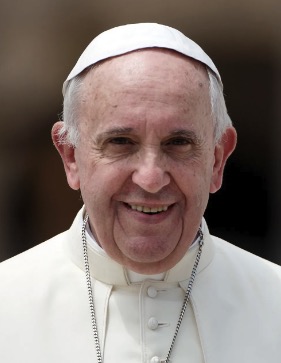
Pope Francis
3rd Sunday of Advent - YEAR C

The Liturgy Invites Us to Joy
16 December 2018 | Saint Peter’s Square
- TEXT
- DISCUSSION GUIDE
Last Sunday, the liturgy invited us to experience the Season of Advent and of anticipation of the Lord with an attitude of vigilance and also of prayer: “be mindful” and “pray”. Today, the Second Sunday of Advent, we are shown how to give substance to this anticipation: by undertaking a journey of conversion, how to make this anticipation concrete. As a guide on this journey, the Gospel presents the figure of John the Baptist who “went into all the region about the Jordan, preaching a baptism of repentance for the forgiveness of sins” (Lk 3:3). To describe the Baptist’s mission, the Evangelist Luke refers to the ancient prophecy of Isaiah which says: “The voice of one crying in the wilderness: Prepare the way of the Lord, make his paths straight. Every valley shall be filled and every mountain and hill shall be brought low” (vv. 4-5).
On this third Sunday of Advent, the liturgy invites us to joy. Listen carefully: to joy. The prophet Zephaniah addresses these words to a small group of the people of Israel: “Sing aloud, O Daughter of Zion; shout, O Israel! Rejoice and exult with all your heart, O daughter of Jerusalem!” (3:14) Shout with joy, rejoice, exult: this is this Sunday’s invitation. The inhabitants of the Holy City are called to rejoice because the Lord has taken away his judgments against them (cf v. 15). God has forgiven, he did not wish to punish! As a result the people no longer have any reason for sadness. There is no longer reason for desolation, but rather, everything leads to joyful gratitude toward God who always wishes to deliver and save those he loves. And the Lord’s love for his people is endless, tantamount to the tenderness of a father for his children, of a groom for his bride, as Zephanaiah again says: “he will rejoice over you with gladness, he will renew you in his love; he will exult over you with loud singing” (v. 17). This is — so it is called — the Sunday of joy: the third Sunday of Advent, before Christmas.
This appeal by the prophet is particularly appropriate during the Season in which we are preparing ourselves for Christmas, because it can be applied to Jesus, the Emmanuel, the God-with-us: his presence is the wellspring of joy. Indeed, Zephaniah proclaims: “The King of Israel, the Lord, is in your midst”, and a little later he repeats: “The Lord your God is in your midst, a warrior who gives victory” (vv. 15, 17). This message finds its full meaning in the moment of the Annunciation to Mary, narrated by the evangelist Luke. The words addressed to the Virgin by the Angel Gabriel are like an echo of those of the prophet. What does the Archangel Gabriel say? “Hail, full of grace, the Lord is with you! (Lk 1:28). He tells Our Lady to “Rejoice”. In an isolated hamlet of Galilee, in the heart of a young woman unknown to the world, God kindles the spark of happiness for the entire world. And today, the same announcement is addressed to the Church, called to receive the Gospel so that it may become flesh, concrete life. He says to the Church, to all of us: “Rejoice, little Christian community, poor and humble but beautiful in my eyes because you ardently desire my Kingdom, you hunger and thirst for justice, you patiently weave the fabric of peace, you do not pursue the powerful of the moment but remain faithfully beside the poor. And thus you fear nothing but your heart is in joy”. If we live like this, in the presence of the Lord, our heart will always be in joy — when there is ‘high-level’, full joy, and the humble everyday joy, which is peace. Peace is the smallest joy, but it is joy.
Saint Paul, too, exhorts us today to have no anxiety, to have no despair about anything, but rather, in every circumstance, to make our requests, our needs, our worries known to God “by prayer and supplication” (Phil 4:6). The awareness that we can always turn to the Lord in our difficulties, and that he never rejects our invocations, is a great reason for joy. No worry, no fear will ever be able to take away this serenity which comes not from human things, from human comforts, no: the serenity that comes from God, from knowing that God lovingly guides our lives, and he always does so. Even in the midst of problems and suffering, this certainty fosters hope and courage.
However, in order to receive the Lord’s invitation to joy, it is necessary to be people willing to call ourselves into question. What does this mean? Just like those who, after listening to the preaching of John the Baptist, ask him: You preach this, but we, “What then shall we do” (Lk 3:10). What should I do? This question is the first step for the conversion that we are called to carry out during this Season of Advent. Let each of us ask ourself: what should I do? A very small thing, but “what should I do?”. And may the Virgin Mary, who is our mother, help us to open our heart to the God-who-comes, so that he may shower our whole life with joy.
Discussion Guide for Pope’s Homily
Reflect on Joy: How does the concept of joy in Zephaniah’s message resonate with you personally? Consider times in your life when you felt God’s presence as a source of joy.
Forgiveness and Joy: Discuss how understanding God’s forgiveness can transform sadness into joy. How can this understanding impact our daily lives?
The Presence of God: Zephaniah describes God as being in our midst. In what ways do you feel God’s presence in your life today? How does this realization bring you joy?
Annunciation Parallel: How do the words of the angel Gabriel to Mary enhance your understanding of Zephaniah’s prophecy? Reflect on the concept of joy being kindled in unexpected places.
Role of the Church: How does the Church embody the joy and promise of the Gospel today? Discuss ways your community can reflect this joy to others.
Peace as Joy: How do you understand the relationship between peace and joy, as mentioned in the sermon? Share examples from your life where peace translated to joy.
Paul’s Exhortation: Explore how Saint Paul’s advice on dealing with anxiety aligns with the theme of joy. How can prayer and supplication be a source of joy?
Openness to Joy: The sermon suggests questioning ourselves: “What should I do?”. What personal changes or actions can you take during this Advent season to embrace joy?
Action Points
- Identify a small act of service you can perform this week as a way to spread joy to those around you.
- Spend time in reflection and prayer to open your heart more fully to the joy that comes from God’s presence in your life.
- Reach out to someone you know might be struggling and offer them support and encouragement, as a witness of Christ’s joy and love.
Conclusion
As we prepare for Christmas, let us open our hearts to the joy that comes from recognizing God’s presence among us. By embracing forgiveness, cultivating peace, and living in God’s love, we become bearers of joy in a world in need of hope and light. May we seek guidance from the Virgin Mary to fully enter into this joy.
THIS SUNDAY’S
QUOTES
Pope Francis: “True joy comes from within, from a heart filled with love and gratitude for God’s blessings.” Homily on December 16, 2017 — This quote relates to the theme of joy found in Zephaniah 3:14-18a and Philippians 4:4-7, emphasizing that authentic joy springs from a deep connection with God and a spirit of thankfulness.
Pope Francis: “Let us not be afraid to share God’s love with others, to be messengers of hope in a world longing for peace.” Homily on December 16, 2019
— This quote aligns with the call for charity and generosity discussed in Luke 3:10-18, encouraging believers to actively spread love and hope to those around them.
Pope Francis: “Conversion is a journey of transformation, a continual striving to align our hearts with God’s will.” Homily on December 16, 2015 — In this quote, Pope Francis echoes the message of repentance and renewal in Luke 3:10-18, highlighting the ongoing process of spiritual growth and the need for constant change towards God’s ways.
Pope Francis: “Rejoicing in the Lord should be our constant attitude, a testament to our faith and trust in His providence.” Homily on December 16, 2018 —
This statement connects with the exhortation to rejoice always in Philippians 4:4-7, emphasizing the importance of finding joy in God amidst life’s challenges.
Pope Francis: “Let us be instruments of peace, bringing harmony and compassion to a world marred by division and conflict.” Homily on December 16, 2020 — This quote speaks to the message of reconciliation and social justice in Luke 3:10-18, urging believers to work towards unity and reconciliation in society.
Pope Francis: “The call to rejoice and be glad is a reminder of the eternal joy that awaits us in God’s kingdom, a confidence that sustains us in our daily struggles.” Homily on December 16, 2016 — This quote reflects the theme of lasting joy and hope in Zephaniah 3:14-18a and Philippians 4:4-7, highlighting the enduring faith that sustains Christians in times of hardship.
Pope Benedict XVI
3rd Sunday of Advent - YEAR C

Gaudete
16 December 2012 | Saint Peter’s Square
- TEXT
- DISCUSSION GUIDE
The Gospel for this Sunday of Advent presents once again the figure of John the Baptist, and it depicts him while he is speaking to the people who come to him at the River Jordan to be baptized. Since John, with incisive words, urges them all to prepare themselves for the Messiah’s coming, some ask him, “What then shall we do?” (Lk 3:10, 12, 14). These exchanges are very interesting and prove to be of great timeliness.
The first answer is addressed to the crowd in general. The Baptist says, “He who has two coats, let him share with him who has none; and he who has food, let him do likewise” (v. 11). Here we can see a criterion of justice, motivated by charity. Justice requires that the imbalance between the one who has more than enough and the one who lacks the necessary be overcome; charity prompts us to be attentive to others and to meet their needs, instead of seeking justification to defend one’s own interests. Justice and charity are not in opposition, but are both necessary and complete each other. “Love — caritas — will always prove necessary, even in the most just society”, because “There will always be situations of material need where help in the form of concrete love of neighbour is indispensable” (Encyclical Deus Caritas Est, n. 28).
Then we see the second answer, which is directed at some “publicans”, that is, tax-collectors on behalf of the Romans. The publicans were already despised for this, and also because they often made the most of their position to steal. The Baptist does not ask them to change their profession, but to exact no more than what has been established (cf. v. 13). The prophet, in the name of God, does not demand exceptional acts, but first and foremost the just fulfilment of one’s duty. The first step towards eternal life is always the observance of the Commandments; in this case, the seventh one: You shall not steal (cf Ex. 20:15).
The third reply concerns the soldiers, another class that enjoyed a certain authority, and was thus tempted to abuse it. John says to the soldiers: “Rob no one by violence, and be content with your wages” (v. 14). Here too the conversation begins with honesty and with respect for others: an instruction that applies to everyone, especially for those with greater responsibility.
On considering this dialogue as a whole, we are struck by the great concreteness of John’s words: since God will judge us according to our works, it is there, in our behaviour, that we must show that we are doing his will. For this very reason, the Baptist’s instructions are ever timely: even in our very complex world, things would go much better if each person observed these rules of conduct. Therefore let us pray to the Lord, through the intercession of Mary Most Holy, that he may help us to prepare ourselves for Christmas, bearing the good fruits of repentance (cf. Lk 3:8).
1. Introduction and Context
– Understanding John the Baptist: Discuss the significance of John the Baptist in the Gospel. Why is he a central figure in the Advent readings?
– Setting of the Sermon: Where does this interaction take place? Why is the location significant (i.e., the River Jordan)?
2. Key Themes and Messages
– Preparation for the Messiah: Reflect on why John the Baptist urges the people to prepare for the Messiah’s coming. What does preparation mean in this context?
– Question of Action: Why is the question, “What then shall we do?” crucial? How does it demonstrate a willingness to change or reform one’s behavior?
3. Justice and Charity
– General Address to the Crowd: Examine the instruction to share coats and food. What does this reveal about John’s perspective on justice and charity?
– Balance of Justice and Charity: Discuss how justice and charity complement each other. How are these principles reflected in the concept of caritas (love)?
4. Specific Group Instructions
– Publicans/Tax Collectors: Explore why John did not ask tax collectors to change their profession, but rather to act justly. How does this apply to our duties in modern occupations?
– Soldiers: Analyze the instructions given to soldiers. How does this reflect on the responsibilities of those in positions of authority?
5. Practical Application
– Concreteness of John’s Words: Why is it emphasized that God judges us according to our works? How can this principle guide everyday actions?
– Timeliness of the Message: Discuss how John’s advice might be applied in today’s complex world for ethical behavior and justice.
6. Preparing for Christmas
– Fruits of Repentance: What does bearing good fruits of repentance mean during Advent? How can this reflection help in spiritual preparation for Christmas?
– Role of Mary Most Holy: Consider the invocation of Mary’s intercession. Why is this significant in the context of preparing for Christmas?
7. Group Reflection and Discussion
– Encourage participants to share personal reflections on how justice, charity, and ethical living are part of their lives.
– Invite the group to discuss practical steps they can take, inspired by John the Baptist’s message, to prepare for the Advent season.