DEC 29, 2024
DEC 29, 2024


GENERATIONAL
PREACHING
Generational preaching refers to the practice of delivering homilies that address and connect with people of various ages, life stages, and backgrounds within a congregation. Click on the following links to learn more about ways to engage these groups in your preaching.
Holy Family - YEAR C
Introduction
Addiction & Reovery
Navigating the unique challenges and opportunities of adolescence, including identity formation, peer relationships, academic pressures, and emotional development, while fostering resilience, self-esteem, and a sense of purpose.
Adolescents
Navigating the unique challenges and opportunities of adolescence, including identity formation, peer relationships, academic pressures, and emotional development, while fostering resilience, self-esteem, and a sense of purpose.
African Americans
Celebrating the rich history, cultural heritage, and contributions of African Americans while addressing issues of racial justice, equity, and inclusion, promoting solidarity and understanding across diverse communities.
Conflict Resolution
Developing effective communication, empathy, and problem-solving skills to navigate interpersonal conflicts and disagreements, fostering healthy relationships and promoting peace within families, communities, and workplaces.
Stewardship
Promoting responsible care for the Earth’s resources and ecosystems, raising awareness about environmental issues, and encouraging sustainable practices in daily life, guided by a sense of reverence for God’s creation.
Parenting & Family Life
Supporting parents and families in nurturing healthy relationships, addressing common challenges and stages of family life, and fostering a sense of connection, purpose, and faith within the home.
Theology of the Body
Strengthening romantic relationships through effective communication, conflict resolution, mutual respect, and shared faith, guiding couples in navigating the joys and challenges of partnership.
Senior Citizens
Honoring the wisdom, experiences, and contributions of senior citizens, providing support and guidance for aging-related challenges, and fostering intergenerational connections and learning within the community.
Technology
Navigating the rapidly-evolving landscape of technology and digital media, addressing issues of privacy, safety, and ethical use, and harnessing the potential of technology for education, communication, and ministry.
Vocations
Supporting individuals in exploring their unique gifts, passions, and callings, offering guidance in career and life planning, and encouraging a sense of purpose and fulfillment in one’s work and service to others.
Theology of Work
Supporting adults in balancing the demands of work, family, and personal life, offering guidance for career development and workplace challenges, and promoting a sense of purpose and fulfillment in one’s vocation.
RELATED
Holy Family - YEAR C
Addiction & Recovery
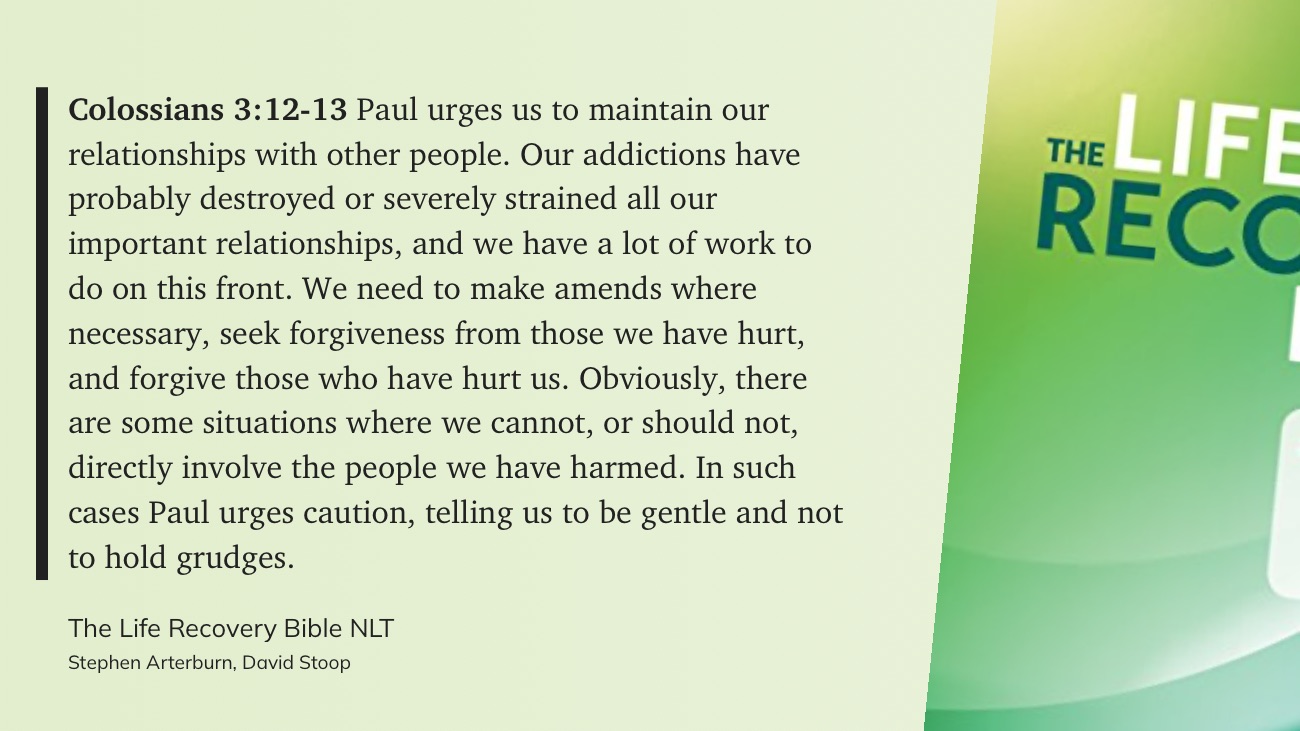
Click on iamge to view full screen
First Reading
In Sirach, we find an emphasis on humility and obedience: “The greater you are, the more you must humble yourself; so you will find favor in the sight of the Lord” (Sir 3:18, NAB). This idea rings true for adolescents as they discover their identity and navigate the complexities of social dynamics. The temptation to boast or assert one’s dominance may arise, but the wisdom in Sirach reminds us to value humility and kindness. For instance, rather than seeking personal gain or popularity, teens can strive to recognize their peers’ talents and unique qualities, fostering empathy and camaraderie.
Sirach also highlights the importance of family relationships: “For the glory of a man is from the honor of his father, and a father without honor is a disgrace to his son” (Sir 3:13, NAB). In adolescence, young people may begin to question parental authority and familial bonds. By drawing on the values of respect and mutual understanding, teens can foster healthy, lasting relationships with their parents, siblings, and extended family. In practice, adolescents might set aside quality time for family activities, engage in meaningful conversation, and seek guidance from their parents on important life decisions.
Second Reading
In Colossians, St. Paul advises, “And over all these virtues put on love, which binds them all together in perfect unity” (Col 3:14, NAB). Adolescents navigating school, friendships, and extracurricular activities can prioritize love, fostering unity and compassion. One practical example might involve standing up for a bullied peer or reaching out to a classmate who feels excluded. By putting love at the forefront, teenagers can develop a strong sense of empathy and actively work to uplift those around them.
Gospel
The passage from Luke offers a glimpse into Jesus’ early life, as he “increased in wisdom and in years, and in divine and human favor” (Lk 2:52, NAB). Much like Jesus, adolescents undergo periods of growth and learning. Intellectual development is accompanied by spiritual growth as teens grapple with moral dilemmas and deepen their understanding of their faith. Young Catholics can embrace opportunities for growth, such as joining youth groups, attending retreats, or participating in service projects, to broaden their horizons and strengthen their connection to God.
RELATED
Holy Family - YEAR C
Adolescents

LIFE TEEN(4:10)
First Reading
In Sirach, we find an emphasis on humility and obedience: “The greater you are, the more you must humble yourself; so you will find favor in the sight of the Lord” (Sir 3:18, NAB). This idea rings true for adolescents as they discover their identity and navigate the complexities of social dynamics. The temptation to boast or assert one’s dominance may arise, but the wisdom in Sirach reminds us to value humility and kindness. For instance, rather than seeking personal gain or popularity, teens can strive to recognize their peers’ talents and unique qualities, fostering empathy and camaraderie.
Sirach also highlights the importance of family relationships: “For the glory of a man is from the honor of his father, and a father without honor is a disgrace to his son” (Sir 3:13, NAB). In adolescence, young people may begin to question parental authority and familial bonds. By drawing on the values of respect and mutual understanding, teens can foster healthy, lasting relationships with their parents, siblings, and extended family. In practice, adolescents might set aside quality time for family activities, engage in meaningful conversation, and seek guidance from their parents on important life decisions.
Second Reading
In Colossians, St. Paul advises, “And over all these virtues put on love, which binds them all together in perfect unity” (Col 3:14, NAB). Adolescents navigating school, friendships, and extracurricular activities can prioritize love, fostering unity and compassion. One practical example might involve standing up for a bullied peer or reaching out to a classmate who feels excluded. By putting love at the forefront, teenagers can develop a strong sense of empathy and actively work to uplift those around them.
Gospel
The passage from Luke offers a glimpse into Jesus’ early life, as he “increased in wisdom and in years, and in divine and human favor” (Lk 2:52, NAB). Much like Jesus, adolescents undergo periods of growth and learning. Intellectual development is accompanied by spiritual growth as teens grapple with moral dilemmas and deepen their understanding of their faith. Young Catholics can embrace opportunities for growth, such as joining youth groups, attending retreats, or participating in service projects, to broaden their horizons and strengthen their connection to God.

Holy Family - YEAR C
Black Culture

Yolanda Yvette Adams (born August 27, 1961) is an American gospel singer. She is one of the best-selling gospel artists of all time, having sold over 10 million albums worldwide. In total, Adams has won four Grammy Awards, sixteen Stellar Gospel Music Awards, four of the Gospel Music Association’s Dove Awards, one American Music Award, seven NAACP Image Awards, one Soul Train Music Award, and five BET Awards. In 2022, she was inducted into the Black Music & Entertainment Walk of Fame
The Resonance of Yolanda Adams’ “What About the Children” and the Story of Jesus at the Temple
In her soul-stirring gospel song, “What About the Children,” Yolanda Adams beckons listeners to contemplate the plight of children in a world fraught with challenges. Similarly, the biblical account of Jesus being found in the temple (Luke 2:41-52) underscores the significance of nurturing young minds, highlighting the importance of spirituality and personal growth during childhood. This essay explores the connection between the powerful message of Adams’ song and the lessons gleaned from the story of the young Jesus at the temple.
Yolanda Adams’ emotive lyrics paint a vivid picture of children facing heartbreak, broken dreams, and a desperate need for guidance and support. The song serves as a call to action for adults to prioritize the needs of the younger generation and provide them with the tools necessary for a bright future. This message aligns with the biblical narrative of Jesus’ experience in the temple, as it underscores the importance of nurturing spiritual growth and fostering a sense of purpose during one’s formative years.
In the story, Jesus, at the age of twelve, accompanies his parents, Mary and Joseph, on a pilgrimage to Jerusalem for the Passover festival. On their way back home, they discover that Jesus is missing from their traveling group. After three days of searching, they find him in the temple, engaged in deep conversations with teachers and scholars about faith and spirituality. This account demonstrates Jesus’ inherent curiosity and eagerness to explore his relationship with God, emphasizing the role that spirituality can play in shaping a child’s identity.
Furthermore, the connection between “What About the Children” and the story of Jesus being found in the temple extends to the importance of fostering a supportive environment for young individuals. Adams’ lyrics remind listeners of the vulnerability of children and the crucial role that adults play in guiding them through life’s challenges. Similarly, the biblical narrative highlights the importance of parental guidance, as Mary and Joseph’s concern for Jesus’ well-being demonstrates their commitment to his safety and spiritual development.
In conclusion, the powerful message of Yolanda Adams’ “What About the Children” and the biblical account of Jesus at the temple underscore the significance of nurturing young minds and fostering their spiritual growth. By recognizing the importance of childhood experiences and providing a supportive environment, we can empower children to develop a strong sense of identity, purpose, and faith, ultimately shaping their future as compassionate and well-rounded individuals.
RELATED
Holy Family - YEAR C
Spirituality of Conflict
Click on slide to view full screen
The Power of Assumption and
the Notion of Intent
This passage orientates us around the deep home that we find in faith, and points to the truth that in the face of turmoil – such as that caused by losing sight of a child –we can nevertheless find solace in the stillness at the centre of chaos. Through the lens of conflict transformation, what does this text teach about the power of assumption, and of intent?
Reading this text, I would normally focus on themes of anxiety and loss (Mary and Joseph) followed by themes of insight and wisdom (Jesus in the Temple). In the context of the period of the nativity, I would look to the delight and joy of finding a deep home in faith.
Picking up on just one of these themes provides deep food for thought. Losing sight of a child in a large crowd, not finding them for hours, maybe days, must be one of the most gut–wrenchingly horrendous experiences as a parent. Recent news stories in the press remind us of the vulnerability of children lost to the sight of responsible adults, left to fend for themselves. These stories don’t always end well. So the ‘great anxiety’ and fear experienced by Mary and Joseph is palpable. It stands in stark contrast to the calmness with which the twelve–year–old Jesus speaks. There is much to explore here.
Reading this text through the lens of conflict transformation however, I see two additional themes: 1) the power of assumption and 2) the notion of intent.
In my work in conflict transformation with Place for Hope, I have noticed over the years the impact that assumptions can have. Arriving at a mediation with our minds already made up about the outcome, or turning up for a tricky conversation with a blind–spot about the perceived views of the ‘other’, can mean that reaching through the depth of the conflict to transformation can take a while.
SOURCE: Spirituality of Conflict (Year C)
Holy Family - YEAR C
Justice

Click on slide to view full screen
Gerald Darring

EXCERPT: “Why have you done this to us?” This is the question that must be impressed upon all those who disturb the unity of the human family, the oppressors, racists and sexists, the hoarders of wealth, the polluters of the land, the abusers of children, the neglectors of the elderly, the instigators of war, the killers and rapists, the indifferent. And of course, in our day, ISIS. “Why have you done this to us?”
SOURCE: Sunday Website
Jude Siciliano, O.P.

EXCERPT: The story tells us that Jesus is twelve years old. This is the age when Jewish boys prepare for their Bar Mitzvah, when they accept their religious responsibilities and think about their life journey. He is showing signs of the independence and the compulsion for God that will characterize his adult life. But his parents have no way of knowing what form his later call will take. All they know is that he had separated himself from them. This trip to Jerusalem prefigures much. Jesus will not follow the usual path into his father’s line of work. He will not, as would have been expected, stay in his home town among his own kinsfolk. He is already showing signs of a vision that has begun to form in his imagination. He is engaged in discussion with the teachers prefiguring his own teaching role later in his life. He is in the Temple and he himself will become the sacrifice in the new Temple built by the Spirit.
This moment in Jerusalem prefigures Jesus’ later journey there with his disciples, his new family. Then he will reveal more about himself. His parents do not understand now what he is saying to them about the priority of his relationship to God, which takes precedence even over his relationship to them. Jesus’ later life will reveal that being in his family had nothing to do with blood, but with faith in him. Mary is showing the signs of a true believer as she, “kept all these things in her heart.” When the shepherds came at the birth of Jesus and told his parents what they had heard from the angels about God’s graciousness to humanity through the newborn, Mary didn’t understand. Again Luke tells us, as he does today, she kept these things in her heart. She doesn’t understand how God’s plan will be worked out in Jesus, so she does what we disciples must also do, she ponders and waits.


Family Life and Parenting
The Domestic Church Welcoming Children Parenting Family Dynamics Caregiving

Holy Family - YEAR C
Marriage & Family
Building Families on Prayer
Summary: The Gospel from Luke today recounts how “every year the parents of Jesus went to Jerusalem for the festival of the Passover.” Mary and Joseph took their faith very seriously and sought to pass on their beliefs to their child. We can take their example to heart by striving to make our faith the highest priority in our families as well by teaching the importance of the Mass and family prayer.
The Holy Family went through many of the same experiences that all parents and children experience today. They too would have had moments of great joy and difficult trials as well as many moments of simple ordinary life. Jesus, Mary and Joseph are the perfect example of how families should live in holiness and stewardship. Let us take some time today, on this Feast of the Holy Family, to seek ways to imitate them.
The Gospel from Luke recounts how “every year the parents of Jesus went to Jerusalem for the festival of the Passover.” Mary and Joseph took their faith very seriously and sought to pass on their beliefs to their child. They realized that while there are many important things that a child needs to grow, their relationship with God should be their first priority. They would have also taken Jesus to the synagogue and taught him how to pray and read the scriptures.
We can take their example to heart by striving to make our faith the highest priority in our families as well. We can strive to be great parental stewards just like Mary and Joseph. For starters, we should make attending Sunday Mass the most important aspect of our week.
We can supplement this by regularly going as a family for times of Confession and trying to pray together at home. One beautiful practice we can try to adopt is praying the Rosary together. If an entire rosary together is too difficult due to everyone’s schedules, perhaps we can pray just one decade together. Let us commit to making our families beautiful and holy just like that blessed family from Nazareth.
SOURCE: Archdiocese of Toronto / This resource may be reproduced without permission for non-commercial purposes by dioceses/eparchies, parishes and other religious organizations such as religious orders, etc.
RELATED
Holy Family - YEAR C
Pro-Life Issues

Preaching Notes on Abortion
by Frank Pavone
The family is the “Sanctuary of Life” and the basic cell of society. The Holy Family, of course, is unique. One member is God, another is sinless, and the third is a saint. But the great lesson of today is that although God could have come into the world in any way he pleased, he chose to become a member of a family, obedient to his earthly parents, and yet totally devoted to the Heavenly Father’s will, as we all must be.
He also shared the vulnerability that comes with being a member of a human family. “Herod is going to search for the child in order to destroy him.” St. Joseph here plays the unspeakable role of protecting God. His readiness to do so, in the person of his child, speaks to every father about the role of protector, and to our whole society about the need we have for good fathers. The culture of life depends just as much on fathers making the right choices as on mothers doing so.
Strong families are an integral aspect of the Culture of Life. Today’s preaching can focus on that fact. It is precisely the breakdown of family structure that increases the temptation to abort, or to resort to euthanasia or a lack of proper care for the elderly. On the other hand, the communion of persons that comes from giving oneself away to the other in selfless love is what creates the proper context for saying a generous “yes” to life. A helpful lesson to point out from the very word “family” is that it stands for “Forget About Me; I Love You.”
SOURCE: Priests for Life
RELATED
Holy Family - YEAR C
Senior Citizens
First Reading
Sirach highlights the significance of honoring parents and caring for them in their old age: “My son, take care of your father when he is old; grieve him not as long as he lives. Even if his mind fail, be considerate of him; revile him not all the days of his life” (Sir 3:2-3, NAB). This passage encourages Catholics to prioritize the well-being and dignity of senior family members, recognizing their vulnerability and the wealth of wisdom they possess. By engaging with grandparents and elders, individuals can gain a deeper understanding of their cultural heritage, family traditions, and the valuable life lessons learned by previous generations.
Second Reading
Colossians highlights virtues essential for fostering respect and empathy for older generations, such as compassion and patience: “Put on then, as God’s chosen ones, holy and beloved, heartfelt compassion, kindness, humility, gentleness, and patience” (Col 3:12, NAB). By embracing these qualities, Catholics can create a welcoming and supportive environment for grandparents and senior citizens within their families and communities. This may include involving older individuals in family activities, seeking their perspectives on important decisions, or providing assistance with daily tasks.
Gospel
Luke’s account of Jesus’ growth in wisdom serves as a reminder of the value of continuous learning: “And Jesus increased in wisdom and in years, and in divine and human favor” (Lk 2:52, NAB). In the context of grandparenting and senior citizenship, this passage emphasizes the importance of recognizing and celebrating the lifelong journey of personal growth. Catholics can learn from the experiences of older generations, recognizing that their wisdom and insights are valuable resources for the entire community.
In practical terms, Catholics can apply these scriptural insights to various aspects of their interactions with grandparents and senior citizens. Engaging in dialogue and shared activities helps to strengthen bonds and create lasting memories. Practicing virtues of compassion and patience enables individuals to prioritize the well-being and contributions of older family members and community members. A commitment to continuous learning allows Catholics to stay informed about the evolving needs and experiences of senior citizens, ensuring they are respected and supported within our communities.
RELATED
Holy Family - YEAR C
Stewardship
Building Families on Prayer
Summary: The Gospel from Luke today recounts how “every year the parents of Jesus went to Jerusalem for the festival of the Passover.” Mary and Joseph took their faith very seriously and sought to pass on their beliefs to their child. We can take their example to heart by striving to make our faith the highest priority in our families as well by teaching the importance of the Mass and family prayer.
The Holy Family went through many of the same experiences that all parents and children experience today. They too would have had moments of great joy and difficult trials as well as many moments of simple ordinary life. Jesus, Mary and Joseph are the perfect example of how families should live in holiness and stewardship. Let us take some time today, on this Feast of the Holy Family, to seek ways to imitate them.
The Gospel from Luke recounts how “every year the parents of Jesus went to Jerusalem for the festival of the Passover.” Mary and Joseph took their faith very seriously and sought to pass on their beliefs to their child. They realized that while there are many important things that a child needs to grow, their relationship with God should be their first priority. They would have also taken Jesus to the synagogue and taught him how to pray and read the scriptures.
We can take their example to heart by striving to make our faith the highest priority in our families as well. We can strive to be great parental stewards just like Mary and Joseph. For starters, we should make attending Sunday Mass the most important aspect of our week.
We can supplement this by regularly going as a family for times of Confession and trying to pray together at home. One beautiful practice we can try to adopt is praying the Rosary together. If an entire rosary together is too difficult due to everyone’s schedules, perhaps we can pray just one decade together. Let us commit to making our families beautiful and holy just like that blessed family from Nazareth.
SOURCE: Archdiocese of Toronto / This resource may be reproduced without permission for non-commercial purposes by dioceses/eparchies, parishes and other religious organizations such as religious orders, etc.
RELATED
Holy Family - YEAR C
Technology
First Reading
“For the Lord has given the father honor over the children, and has confirmed the authority of the mother over the sons” (Sir 3:2, NAB). In the context of technology and digital management, this passage encourages Catholics to draw on the wisdom of family members and mentors when navigating the digital world. By seeking advice and sharing experiences, individuals can learn from one another and make informed decisions about their online presence.
Second Reading
Colossians emphasizes virtues essential for responsible digital engagement, such as compassion and humility: “Put on then, as God’s chosen ones, holy and beloved, heartfelt compassion, kindness, humility, gentleness, and patience” (Col 3:12, NAB). By embracing these qualities, Catholics can create a positive online environment that reflects their values and prioritizes the well-being of others. This may include actively countering cyberbullying, promoting respectful dialogue, or sharing resources that enrich the digital community.
Gospel
Luke’s account of Jesus’ growth in wisdom serves as a reminder of the value of continuous learning and adaptation: “And Jesus increased in wisdom and in years, and in divine and human favor” (Lk 2:52, NAB). In the context of technology and digital management, this passage emphasizes the importance of staying informed about emerging trends and best practices. Catholics can engage in ongoing education around digital citizenship, exploring topics such as online safety, privacy, and responsible social media use.
In practical terms, Catholics can apply these scriptural insights to various aspects of their digital lives. Seeking guidance from family members and mentors may involve discussing online safety concerns or sharing strategies for managing screen time. Practicing virtues of compassion and humility enables individuals to create a positive online presence that reflects their faith and values. A commitment to personal growth allows Catholics to stay informed about evolving technologies and use their digital platforms for the greater good.
RELATED
Holy Family - YEAR C
Theology of the Body
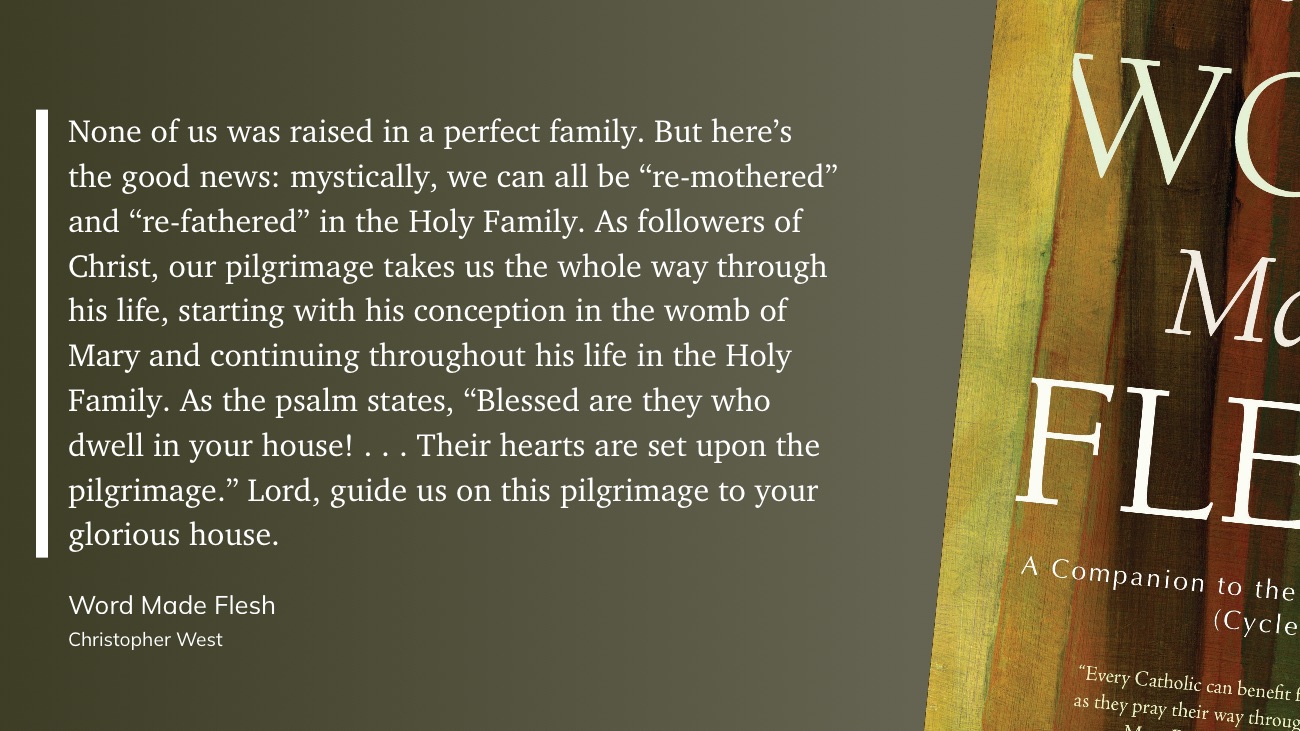
Click on slide to view full screen
Q. How does the concept of being “re-mothered” and “re-fathered” influence our understanding of spiritual growth in the Christian faith?
A. Being “re-mothered” and “re-fathered” through the Holy Family means recognizing God as the ultimate parent who nurtures, corrects, and guides us with perfect love. It helps us understand spiritual growth as a process of learning and receiving love from God, which can transform our lives regardless of our earthly family experiences.
Q. In what ways does the life of the Holy Family offer guidance for our own family relationships today?
A. The Holy Family exemplifies love, obedience, and faithfulness to God’s will. By looking to Mary, Joseph, and Jesus, we find models for patience, humility, and steadfastness in our relationships. They teach us to prioritize God’s will and to support each other in faith and love.
Q. What might the journey of being on a “pilgrimage” with Jesus through His life signify in our daily walk with Him?
A. The pilgrimage with Jesus invites us to continually align our lives with His teachings, encouraging growth and transformation. It signifies a lifelong journey of learning, repentance, and drawing closer to God, embracing both challenges and joys as opportunities to deepen our faith.
Q. Can you identify moments in your life when you felt most at home or comforted by your faith, similar to dwelling in God’s house?
A. Personal responses will vary. Participants might mention experiences of peace during prayer, support during difficult times, or being part of a faith community. Recognizing these moments helps identify how one’s relationship with God provides a sense of belonging and comfort.
Q. Reflect on the statement, “Their hearts are set upon the pilgrimage.” How do you interpret this in your spiritual life?
A. Having a heart set upon the pilgrimage means being committed to a faith journey, always seeking a closer relationship with God. It involves consciously choosing to pursue holiness, growth, and understanding, never settling for spiritual complacency.
Q. How can we cultivate a mindset of being under God’s parental guidance daily?
A. Cultivating this mindset involves regular prayer, reading Scripture, and seeking God’s presence throughout the day. It means being open to God’s correction and love, trusting in His plans, and learning to see others with God’s compassionate eyes.
Q. How does the understanding of being part of a spiritual family alter how we view our interactions with others?
A. Recognizing others as part of the spiritual family changes our perspective from seeing differences to embracing unity in Christ. It encourages love, patience, and understanding, fostering deeper, more meaningful connections and community support.
Q. What steps can we take to experience more of God’s nurturing love in our everyday lives?
A. Practical steps include spending dedicated time in prayer, engaging with Scripture, participating in community worship, seeking spiritual direction, and practicing gratitude. These actions help to open our hearts to receive and recognize God’s nurturing presence.
Q. How might acknowledging God’s role as a perfect parent help in healing wounds from imperfect earthly family relations?
A. Acknowledging God as the perfect parent provides a new foundation of love and grace. It allows individuals to forgive past hurts and look beyond human limitations, trusting in God’s unconditional love and the healing that comes from a restored identity in Him.
Q. In what ways can we support each other in seeking a deeper, more personal pilgrimage with Christ?
A. Support comes through active listening, prayer, encouragement, and accountability. By sharing experiences, studying Scripture together, and participating in community service, we strengthen each other’s faith journey, fostering a supportive and nurturing community.





Holy Family - YEAR C
Vocations

THE WORD THIS WEEK
PREACHING CONNECTION
First Reading
Sirach emphasizes seeking counsel from parents and elders: “For the Lord has given the father honor over the children, and has confirmed the authority of the mother over the sons” (Sir 3:2, NAB). In vocational discernment, this passage encourages Catholics to draw on the experiences and wisdom of family members, spiritual directors, and mentors. By engaging in dialogue and sharing experiences, individuals can gain valuable insights that inform their discernment process and foster a deeper understanding of God’s call.
Second Reading
Colossians highlights virtues essential for fostering a spirit of discernment, such as compassion and humility: “Put on then, as God’s chosen ones, holy and beloved, heartfelt compassion, kindness, humility, gentleness, and patience” (Col 3:12, NAB). Embracing these qualities enables Catholics to approach their discernment journey with an open heart and mind, allowing them to attune their desires with God’s will. This may involve participating in retreats, engaging in spiritual practices, or volunteering in ministries that expose them to different aspects of religious life.
Gospel
Luke’s account of Jesus’ growth in wisdom serves as a reminder of the value of continuous learning and self-reflection: “And Jesus increased in wisdom and in years, and in divine and human favor” (Lk 2:52, NAB). In the context of vocational discernment, this passage underscores the importance of personal development and spiritual growth. Catholics can explore various resources on vocations, attend discernment events, or engage in prayer and reflection to deepen their understanding of God’s calling in their lives.
In practical terms, Catholics can apply these scriptural insights to various aspects of their vocational discernment journey. Seeking guidance from family members and mentors may involve sharing hopes and fears, discussing potential paths, or seeking advice on navigating challenges. Practicing virtues of compassion and humility enables individuals to approach discernment with an open heart, fostering an environment that is conducive to hearing God’s voice. A commitment to personal growth allows Catholics to explore different facets of religious life, contributing to a more informed and faith-filled discernment process.
RELATED
Holy Family - YEAR C
Theology of Work
What relevance does Colossians 3:18–4:1 have for workers today?
What relevance does Colossians 3:18–4:1 have for workers today? Much as working for wages or a salary is the dominant form of labor in developed countries today, slavery was the dominant form of labor in the Roman Empire. Many slaves worked in jobs we would recognize today as occupations, receiving food, shelter, and often a modicum of comforts in return. Slaveholders’ power over their slaves was similar in some respects to, but much more extreme than, the power that employers or managers have over workers today The general principles Paul puts forward concerning slaves and masters in this letter can be applied to modern managers and employers, provided we adjust for the significant differences between our situation now and theirs then.
What are these general principles? First, and perhaps most important, Paul reminds slaves that their work is to be done in integrity in the presence of God, who is their real master. More than anything else, Paul wants to recalibrate the scales of both slaves and masters so that they weigh things with the recognition of God’s presence in their lives. Slaves are to work “fearing the Lord” (Col. 3:22) because “you serve the Lord Christ” (Col. 3:24). In sum, “Whatever your task, put yourselves into it [literally, “work from the soul”] as done for the Lord and not for your masters” (Col. 3:23). In the same way, masters [literally, “lords”] are to recognize that their authority is not absolute—they “have a Master in heaven” (Col. 4:1). Christ’s authority is not bounded by church walls. He is Lord of the workplace for both workers and bosses.
This has several practical consequences. Because God is watching workers, there is no point in being a mere “people pleaser” who gives “eye service” (literal translations of the Greek terms in Col. 3:22). In today’s world, many people try to curry favor with their bosses when they are around, and then slack off the moment they are out the door. Apparently it was no different in the ancient world. Paul reminds us that the Ultimate Boss is always watching and that reality leads us to work in “sincerity of heart,” not putting on a show for management, but genuinely working at the tasks set before us. (Some earthly bosses tend to figure out over time who is playacting, though in a fallen world slackers can sometimes get away with their act.)