Homily Starters, Fr. Tony’s Homily
Homily Starters, Fr. Tony’s Homily
December 7, 2025
December 7, 2025
2nd Sunday of Advent (A)


- ANECDOTES
- EXEGESIS
- LIFE MESSAGES
2nd Sunday of Advent (A)
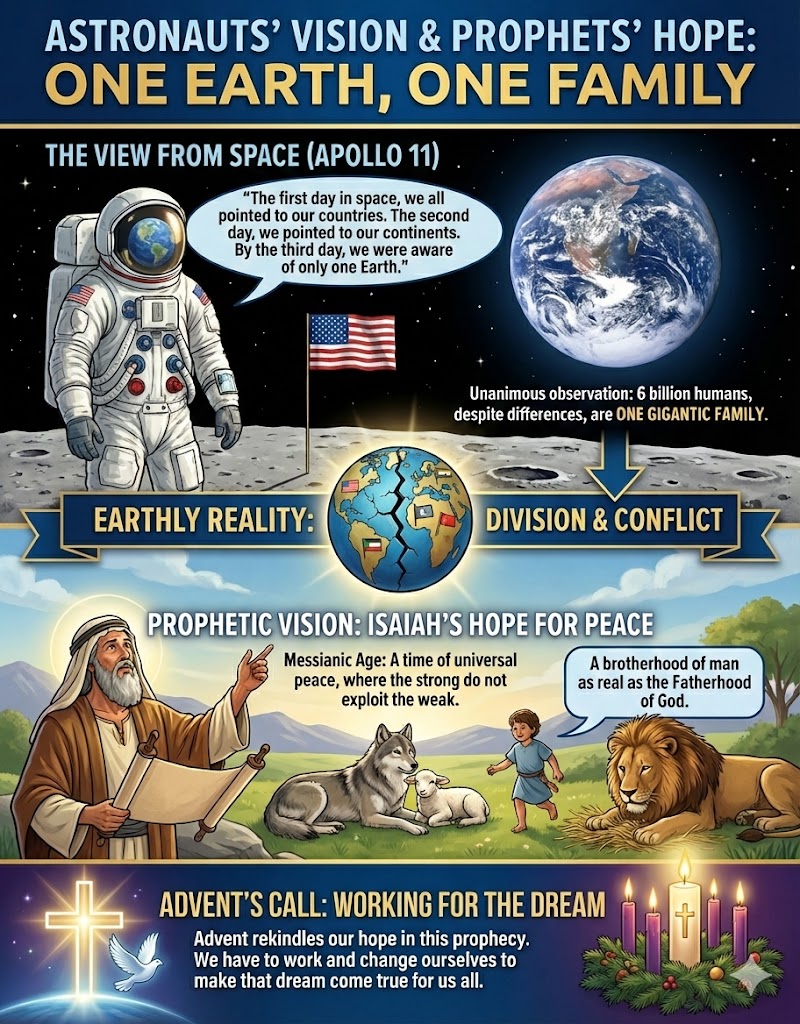
The Dream for Mankind

APOLLO 11 – THE VIEW OF EARTH (2:46) – Images taken by the Apollo 11 astronauts as their spacecraft was leaving the Earth’s orbit and heading for the Moon.
Click on banner to learn more
Click to download PDF
2nd Sunday of Advent (A)
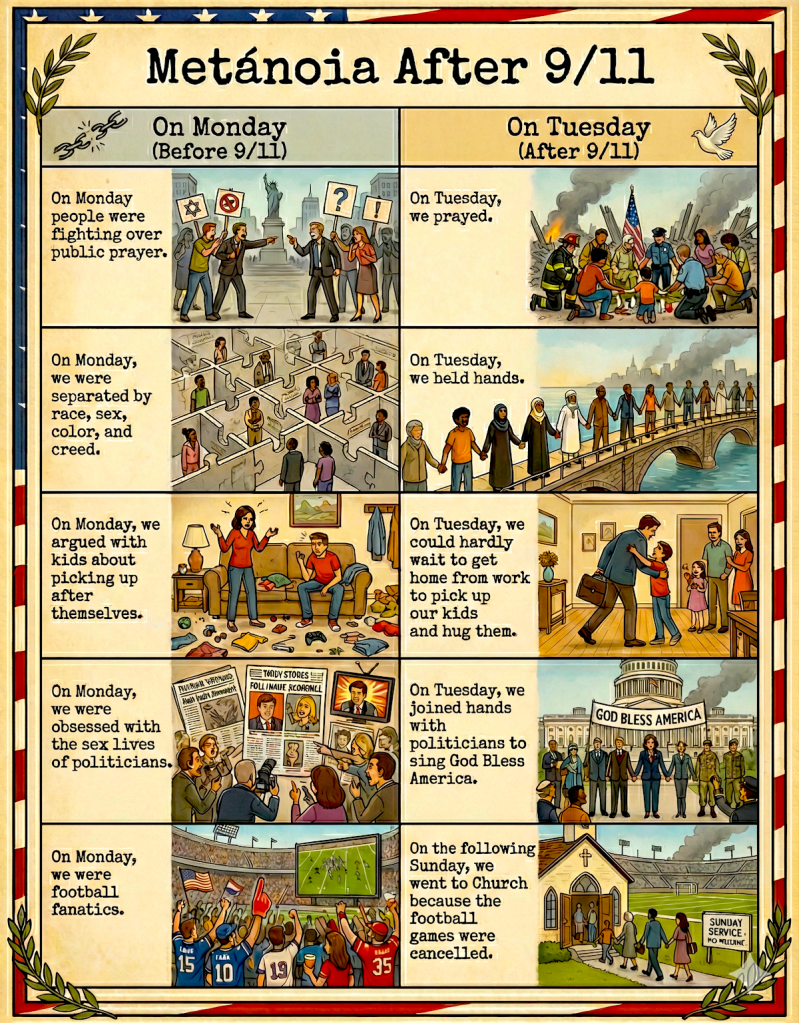
Metánoia after 9/11

Billy Graham Evangelistic Association (01:46) – Just days after the September 11 attacks, Billy Graham addressed the nation from the National Cathedral in Washington, D.C.
Click on banner to learn more
Click to download PDF
2nd Sunday of Advent (A)
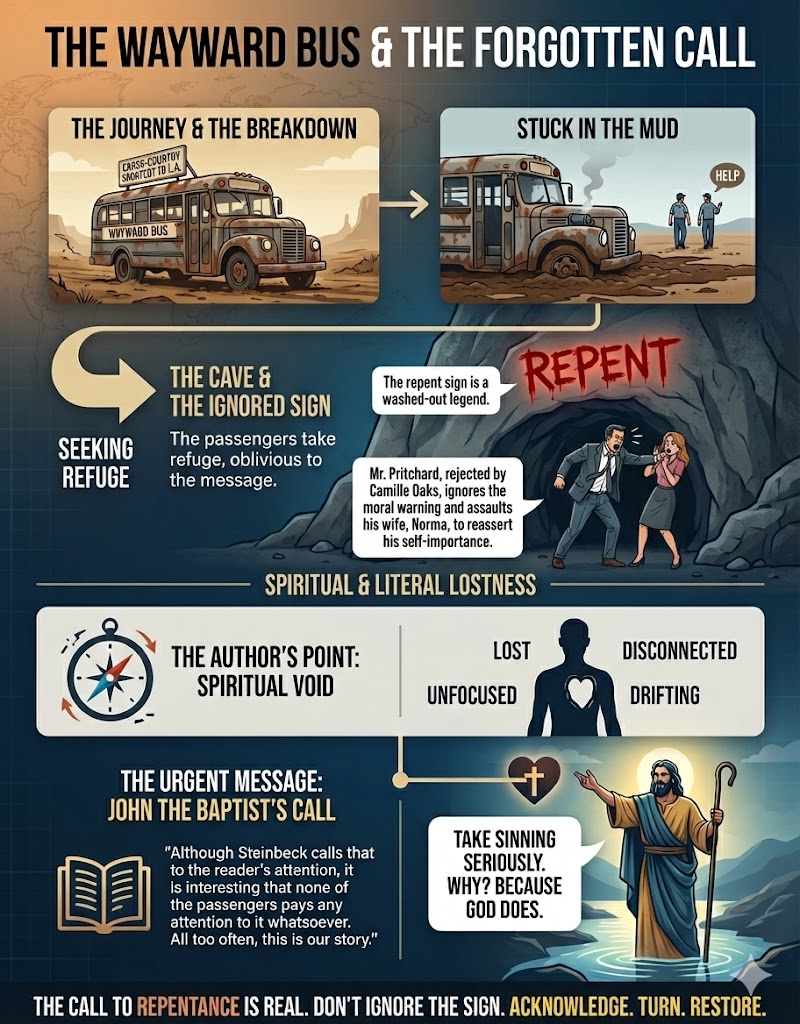
The Wayward Bus
The Wayward Bus by John Steinbeck · Audiobook preview (10:34)
Click on banner to learn more
Click to download PDF
2nd Sunday of Advent (A)
Alfred Nobel’s Metánoia

Alfred Nobel’s Epitaph with Fr. Michael Sparough, SJ (03:30)
Click on banner to learn more

Click to download PDF


2nd Sunday of Advent (A)
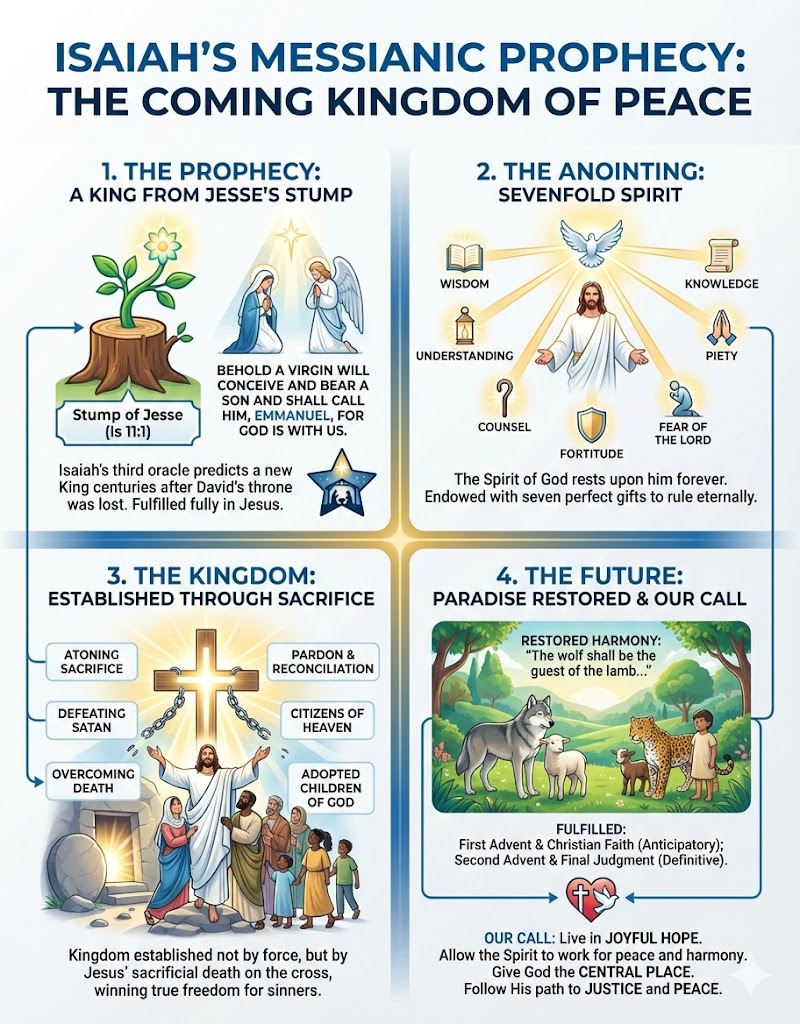
Isaiah prophesies a Messianic King rising from the “stump of Jesse,” a promise fulfilled in Jesus. Unlike earthly rulers, He governs through the Spirit, empowered by the sevenfold gifts such as wisdom and fortitude. Jesus establishes God’s Kingdom not by military force, but through His atoning sacrifice, defeating sin and death. This Kingdom envisions a return to Paradise, where “the wolf shall be the guest of the lamb.” While initiated at His first coming, we await its perfection at the Second Advent. We are called to live in joyful hope, allowing the Spirit to foster peace and put God first in our daily lives.
2nd Sunday of Advent (A)
In the Second Reading, St. Paul urges the Roman community to overcome factional differences and live in harmony. He reminds Jewish and Gentile Christians that Scripture is a source of hope and instruction, essential for patience during this season of waiting. Paul explains that Jesus came to fulfill promises to the Jews and extend mercy to the Gentiles, uniting them in God’s plan. Therefore, believers are called to “accept one another” as Christ accepted them, prioritizing mutual support over judgment. This reading guides us to wait for the Lord in a spirit of peace and unity.

2nd Sunday of Advent (A)
While only two Gospels recount the nativity, all four evangelists introduce Jesus through the ministry of John the Baptist. Emerging after four centuries of prophetic silence in Israel, John appeared as a “burning torch,” captivating the people with the authority of a man of God. His rugged appearance—garments of camel hair and a leather belt—intentionally mirrored the Old Testament prophet Elijah. Jesus later confirmed this identity, affirming that John was indeed the prophesied Elijah returned to prepare the way for the Messiah.
John’s preaching was not soothing; it was a fiery demand for righteousness. He fearlessly denounced evil, from the immorality of King Herod to the hypocrisy of the Pharisees. His central proclamation, “Repent, for the Kingdom of Heaven is near,” echoed the very words Jesus would later preach. This call to repentance (metánoia) signifies a radical “U-turn”—a complete change of mind and heart. The text emphasizes that for believers, this is not a one-time event but a daily task of renewing one’s baptism and burying the “old self” to rise in new life.
John insisted that true repentance must bear fruit. While baptism was the external expression, the internal requirement was a shift away from worldly values toward justice and generosity. He demanded specific ethical reforms from soldiers and tax collectors, proving that spiritual conversion requires social action. We must “put an ax” to the roots of resentment and “winnow out” greed. Although his criticism was scathing, Luke describes this call to reform as “Good News,” because it prepares the heart for the Kingdom of Heaven.

2nd Sunday of Advent (A)
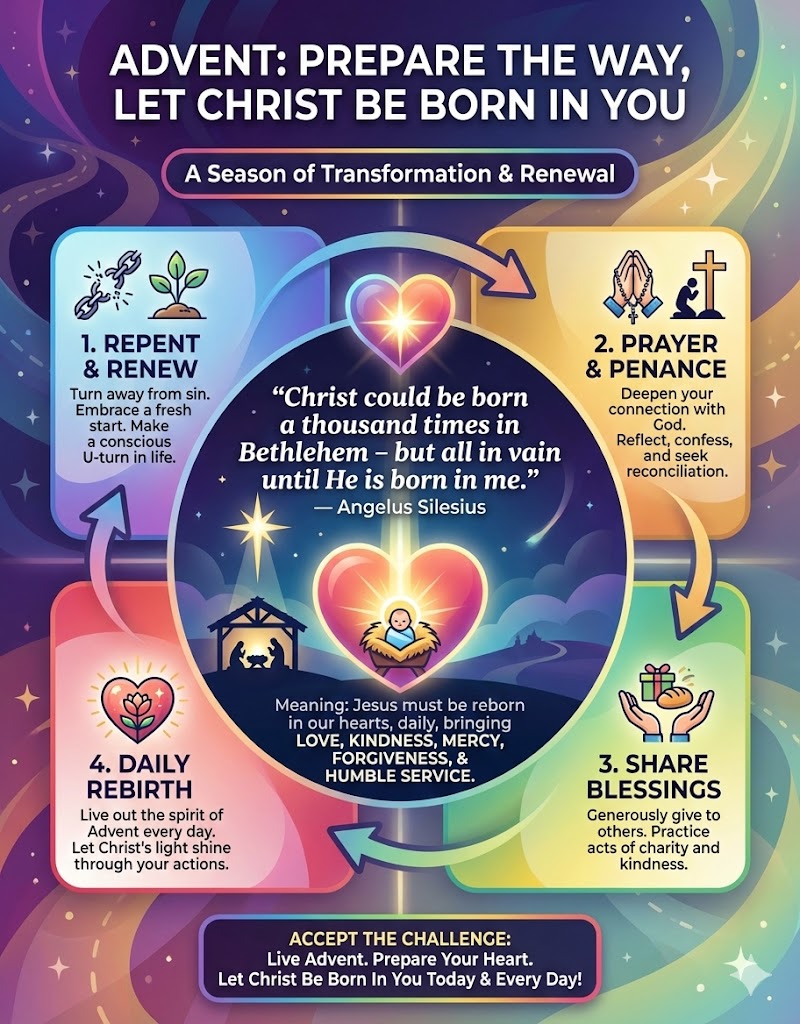
Prepare for Christ’s coming by allowing him to be reborn daily in our lives
Advent is the time for us to make this preparation by repenting of our sins, and renewing our lives through prayer, penance, and sharing our blessings with others. Let us accept the challenge of the German mystic Angelus Silesius “Christ could be born a thousand times in Bethlehem – but all in vain until He is born in me.” He means that Jesus must be reborn in our heart, during this season of Advent and every day of our lives, bringing us love, kindness, mercy, forgiveness and the spirit of humble service.
2nd Sunday of Advent (A)
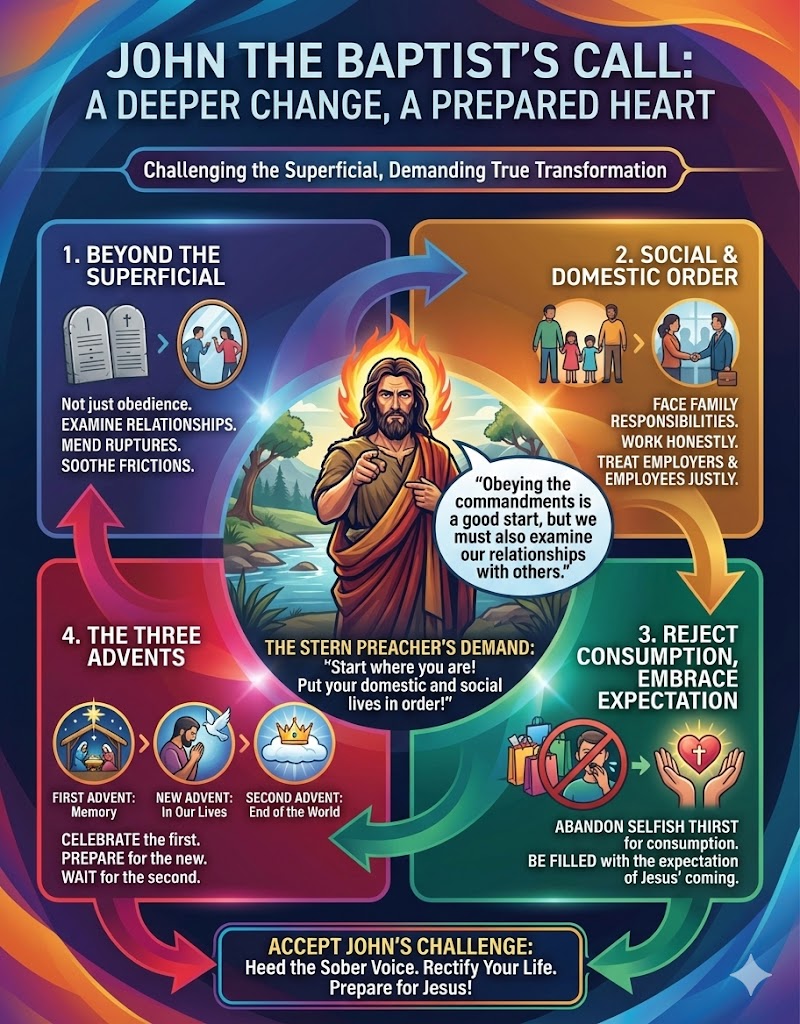
Accept John’s call for a change of life
John the Baptist, the stern and uncompromising preacher, challenges our superficial attempts at change, demanding that we take a deeper look. Obeying the commandments is a good start, but we must also examine our relationships with others. We must mend ruptures and soothe frictions, face family responsibilities, work honestly, and treat our employers and employees justly. Start where you are, John says. Our domestic and social lives must be put in order. John’s voice is sober and runs counter to the intoxicating voices around us today. He calls for rectitude and social consciousness. We must abandon our selfish thirst for consumption and, instead, be filled with the expectation of Jesus’ coming. Therefore, following John’s advice, let us celebrate the memory of this first advent, prepare for Jesus’ new advent in our lives, and wait for his second advent at the end of the world.
2nd Sunday of Advent (A)
Wait prayerfully for the second advent of Jesus
John’s answer as to how the Jews should wait for the Messiah was that they should wait for the Lord with repentant hearts and reformed lives. We can start by praying from the heart. Let us remember that the Holy Mass is the most powerful of prayers because it transforms us into Eucharistic people, providing the living presence of Jesus in our hearts and his divine life in our souls. Conversion is through Jesus whom we encounter, mainly, through the Holy Scripture and the Sacraments. The Word and the Sacraments are the principal means God uses to give life to men’s souls. Daily reconciliation with God, as we ask and receive His pardon for our daily sins and make our monthly (or more frequent) sacramental confession, makes us strong and enables us to receive more grace in the Eucharist. Let us read the Bible, pray the Rosary daily, and fast once a week all year-round, rather than just during Advent and Lent. After all, we sin all year-round, so let us fast also all year-round by controlling our senses. We could take some time before Mass to adore Jesus in the Blessed Sacrament, and we should practice forgiving those who offend us. Finally, let us share our love with others as selfless and humble service. “Do small things but with great love,” advise St. Therese of Lisieux and St. Teresa of Calcutta (Mother Teresa).

Each week in this section, The Word This Week offers infographics that have been created using Nano Banana Pro with Gemini 3.0. These infographics draw inspiration from the content found on the website “Fr. Tony’s Homilies” but are not officially associated with or endorsed by him. It may be copied for personal use or for use in any non-profit ministry. Please help promote both websites.