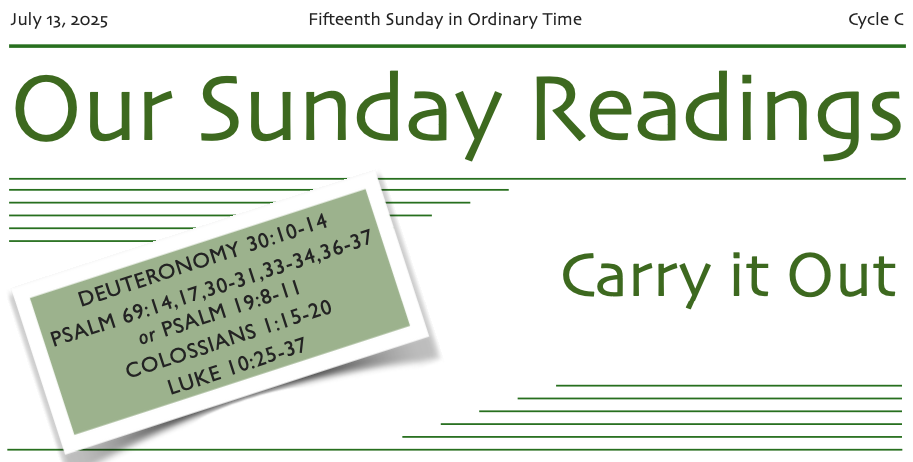
July 13, 2025
July 13, 2025


Intro to Mass Readings for Sunday
Intro to Mass Readings for Sunday


15th Sunday of Year C
Deuteronomy 30:10-14
Dt 30:10-14
POP-UP Video | NAB w/ Notes | LECTIONARY
Click graphic to view intro to reading

The Bottom-Line
Question
Outline of Word-Sunday Essay
by Larry Broding

EXCERPT: We understand what God wants, but we fail to succeed at obeying his commands. In other words, we sin. If only we would hear God’s voice, understand what he wants, and do his will.
Is it really so hard to understand what God wants from us? No, but we need help. That’s what the mission of Jesus was all about.
To help us hear the call of the Lord. Return to him. And do what he wants us to do.
Spend a few moments listening for the voice of God. What does he want you to do today?

Fr. Tim Peters
FIRST READING


Fr. Peters teaches at Saint John’s Seminary in Camarillo, CA.
Fr. Francis Martin
THE WORD PROCLAIMED

- Kieren O’Mahony OSA
- Fr. Conley Bertrand
- Fr. George Corrigan OFM
- Fr. Thibodeau
- St. Charles Borromeo
- Edriann Ezell
- Vince Contreras
- Bp. John P. Dolan
- Fr. Eamon Tobin
- Carmelite Lectio Divina
Featured Commentary

15th Sunday of Year C
Deuteronomy 30:10-14 holds a pivotal place within Roman Catholic theology, emphasizing the importance of divine law and the human response to it. In this passage, Moses reassures the Israelites that God’s commandments are not beyond their reach. Instead, they are meant to be understood, internalized, and lived out.
From a Catholic perspective, this passage reaffirms the belief that divine revelation, including the law, is not an inaccessible, mysterious entity. It is instead a concrete and living reality that can be appropriated by human beings. This notion is consistent with the Catholic view of divine grace as both transformative and accessible.

The contemporary application of this passage lies in encouraging Catholics to respond positively to God’s Word and teachings. Catholics are called to embrace Church teachings and live them out with sincerity and conviction, as they form a blueprint for a fulfilling and transformative life.
For instance, the commandment to “love your neighbor as yourself” (Deuteronomy 30:14) is as relevant now as ever. Modern-day Catholics can live out this commandment by engaging in acts of charity, fighting for social justice, and fostering genuine, compassionate relationships.
In summary, Deuteronomy 30:10-14 remains deeply relevant to Catholics today, providing a strong theological foundation for the understanding and application of divine law. Through embracing the wisdom of this passage, Catholics can internalize and practice God’s Word, transforming their lives and contributing positively to the world.
Clipart by Fr. Richard Lonsdale

15th Sunday of Year C
Colossians 1:15-20
Colossians 1:15-20
POP-UP Video | NAB w/ Notes | LECTIONARY
Click graphic to view intro to reading
Wherever God Acts,
God Is
Outline of Word-Sunday Essay
by Larry Broding
EXCERPT: “Wherever God acts, God is.” This old adage sums up the logic of this dense passage. Christ is the image of God because the Father used him to create, maintain, and save the world. He is also the divine image because he reveals the presence of God as he reconciles everything to the Father.
“Wherever God acts, God is.” We know God who created us is present when we turn to him and realize that he forgives us. We also know God is present when, as followers of his Son, we tell others about his forgiveness.
How have you been reconciled to God? How have you helped others in their reconciliation with the Lord?
Fr. Tim Peters
SECOND READING

Fr. Peters teaches at Saint John’s Seminary in Camarillo, CA.
Fr. Francis Martin
THE WORD PROCLAIMED
- Kieren O’Mahony OSA
- Fr. Conley Bertrand
- Fr. George Corrigan OFM
- Fr. Thibodeau
- St. Charles Borromeo
- Edriann Ezell
- Vince Contreras
- Bp. John P. Dolan
- Fr. Eamon Tobin
- Carmelite Lectio Divina
Featured Commentary
15th Sunday of Year C
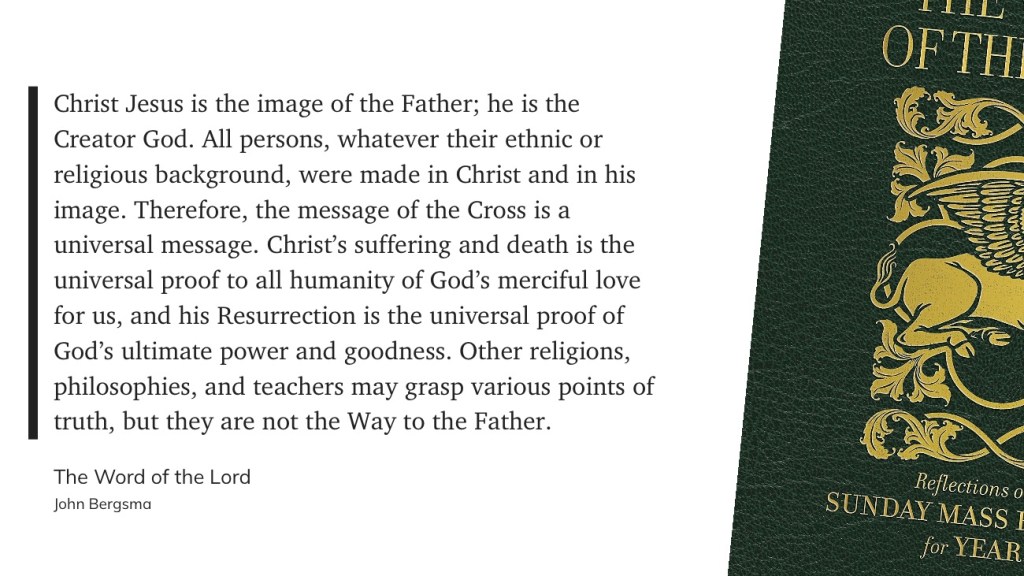
Colossians 1:15-20 is a profound Christological passage that affirms Jesus Christ’s divinity, primacy, and redemptive role in creation. Within the Roman Catholic theological context, this passage supports several key doctrines.
The verses underline the Church’s teachings about Christ’s divine nature and His role in creation. The passage proclaims Christ as “the image of the invisible God” (Colossians 1:15), echoing the Catholic belief in Christ’s consubstantiality with the Father. Furthermore, the assertion that “all things were created through Him and for Him” (Colossians 1:16) affirms Christ’s divine creative power and authority.

The modern-day application of Colossians 1:15-20 for contemporary Catholics lies in fostering a deeper devotion to Jesus Christ. Catholics are encouraged to recognize Christ’s centrality not only in their faith but also in their daily lives. This recognition leads to a profound appreciation of Christ’s loving sacrifice and a commitment to pattern one’s life according to His example.
For instance, Colossians 1:19-20 speaks of Christ’s redemptive work, which reconciles humanity with God. Contemporary Catholics can apply this truth by continually striving for reconciliation—with God and with others—and by actively participating in the sacraments, particularly the Sacrament of Reconciliation.
In summary, Colossians 1:15-20 holds rich theological implications for Roman Catholics, affirming key doctrines about Jesus Christ’s divine nature and redemptive role. By embracing the truths presented in this passage, Catholics can deepen their relationship with Christ, living lives guided by His teachings and inspired by His love.
Clipart by Fr. Richard Lonsdale

15th Sunday of Year C
Luke 10:25-37
Luke 10:25-37
POP-UP Video | NAB w/ Notes | LECTIONARY
Click graphic to view intro to reading
The Loving Neighbor
Outline of Word-Sunday Essay
by Larry Broding
EXCERPT: notice how Jesus defined the neighbor, not as the victim but as the care-giver. The neighbor was the hospitable evangelist. This image, then, became the standard by which love of others was measured. To truly love others as self meant to act as the Samaritan, the hated man who went out his way to care for the needy.
Jesus’ command summed up the moral of the parable: Go out like the hated Samaritan. Do acts of mercy for whomever you meet.
As we travel this vacation season, let us remember that, in spite of the risks, we are to care for others as much as we expect to be cared for. Acting with such mercy is the first step in sharing the Good News.
How can I be a good neighbor this summer? At home? On the road?
Fr. Tim Peters
GOSPEL
Fr. Peters teaches at Saint John’s Seminary in Camarillo, CA.
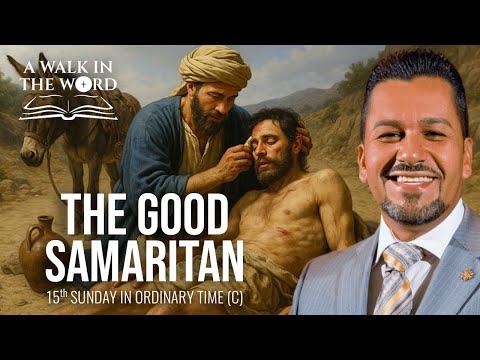
Hector Molina
Fr. Francis Martin
THE WORD PROCLAIMED
- Kieren O’Mahony OSA
- Fr. Conley Bertrand
- Fr. George Corrigan OFM
- Fr. Thibodeau
- St. Charles Borromeo
- Edriann Ezell
- Vince Contreras
- Bp. John P. Dolan
- Fr. Eamon Tobin
- Carmelite Lectio Divina
Featured Commentary
15th Sunday of Year C
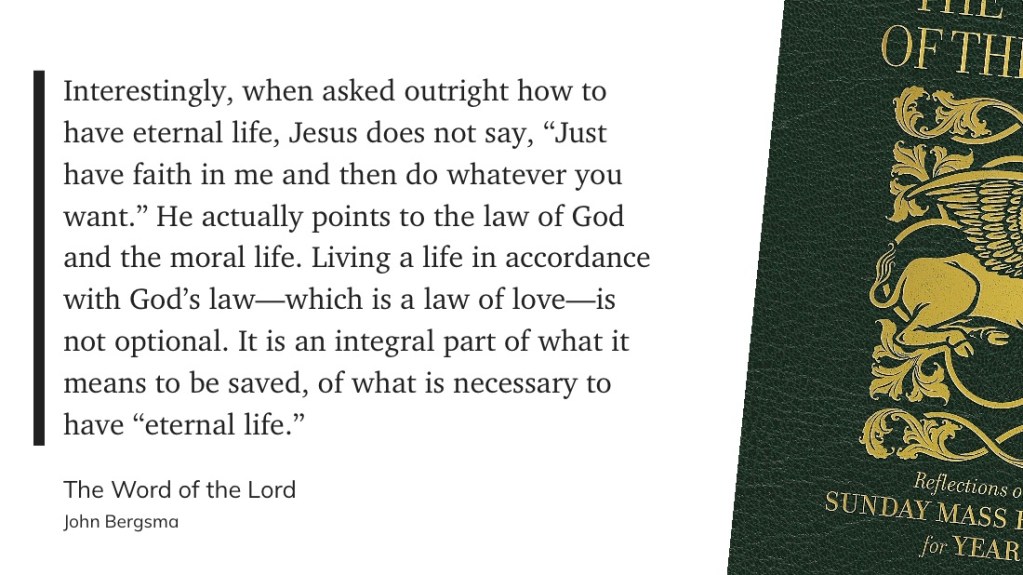
Luke 10:25-37 recounts the well-known parable of the Good Samaritan, highlighting the importance of compassion, mercy, and neighborly love. In Roman Catholic theology, this parable underlines the Catholic social teaching principles of human dignity and solidarity.
According to Catholic doctrine, every person is created in the image of God and possesses inherent dignity. The Samaritan’s compassionate response to the injured man reflects this idea, demonstrating respect for human life and the fundamental obligation to care for others, regardless of their background or status.

The modern-day application for contemporary Catholics lies in promoting and living out the virtues exemplified by the Good Samaritan. Catholics are encouraged to recognize the dignity of all people and work towards the common good, especially by aiding those in need.
For instance, Catholic charities and social services provide various forms of assistance, reflecting the Samaritan’s example of tangible help. Likewise, Catholics can respond to the parable by advocating for justice, peace, and equality, and by fostering a spirit of encounter and acceptance in their communities.
In summary, Luke 10:25-37 is a compelling call to compassionate action, which aligns with core Roman Catholic teachings on human dignity and solidarity. By emulating the Good Samaritan, contemporary Catholics can contribute positively to society, demonstrating the transformative power of love and mercy.
Clipart by Fr. Richard Lonsdale

Fr. Conley Bertrand
15th Sunday of Year C

Cycle C (PDFs)
📖 Old Testament (43 pp.)
📖 Epistles (87 pp.)
📖 Gospels (182 pp.)
📖 Daily Gospels (208 pp.)
SOURCE: Come, Lord Jesus
Fr. George Corrigan, OFM
15th Sunday of Year C

Fr. Thibodeau
Bible Study Notes
Small Group Discussion Guide


Bp. John P. Dolan
Fr. Tobin
Carmelite Reflections and Prayers
Lectio Divina

90-page PDF with reflections and prayers for each day of the month
Lectio Divina JULY 2025 (PDF)
Lectio Divina JULY 2025 [Mobi]
Lectio Divina JULY 2025 [ePub]
______________
“Lectio divina is an authentic source of Christian spirituality recommended by our Rule. We therefore practise it every day, so that we may develop a deep and genuine love for it, and so that we may grow in the surpassing knowledge of Christ. In this way we shall put into practice the Apostle Paul’s commandment, which is mentioned in our Rule: “The sword of the Spirit, too, which is the word of God, is to dwell abundantly in your mouth and in your hearts; and whatever things you have to do, let them be done in the word of the Lord.” (Carmelite Constitutions (2019), n. 85.)
Source: Carmelites
FIRST READING | SECOND READING | GOSPEL