July 20, 2025
July 20, 2025


Papal Homilies

EWTN (30:36)

This livestream allows viewers to witness the Pope’s addresses during Papal Audiences, as well as other Vatican events and news. The livestream is part of the Vatican Media Center’s efforts to share the latest updates on Pope Leo XIV, the Holy See, and the Church worldwide with a global audience.


Homiletic Suggestions (2025)
edited by Father Gaetano Piccolo (SI)


16th Sunday of Year C
Dicastery for the Clergy
Homily Notes
Hospitality

The first reading and the Gospel clearly speak about hospitality. We are told about Abraham who, during the hottest part of the day, offers wonderful hospitality to three mysterious men. We are told about Martha of Bethany who welcomes Jesus and his disciples in her home, and about Mary, her sister, who welcomes the Lord as his disciple, attentive to the Lord´s words in her heart. The text of the Letter to the Colossians presents Paul, who in his own body and soul hosts the crucified Christ to complete the hardships that still have to be undergone by Christ for the sake of his Body, the Church.
© Dicastery for the Clergy A | B | C
Doctrinal Messages
Pastoral Suggestions
Featured Homilies
Francis
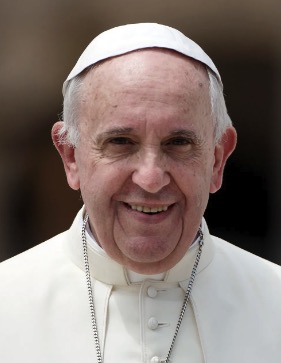
Pope Francis
16th Sunday of Year C

Martha and Mary
17 July 2022 – Saint Peter’s Square
Homily Excerpt
Mary has chosen the good portion, which will not be taken away from her” (Lk 10:41-42). This is a surprising answer. But Jesus overturns our way of thinking many times. Let us ask ourselves why the Lord, while appreciating Martha’s generous attentiveness, says that Mary’s attitude is to be preferred.
Martha’s “philosophy” seems to be this: first duty, then pleasure. In effect, hospitality is not composed of fine words, but demands that you roll up your sleeves, that everything necessary is done so the guest feels welcome. Jesus is well aware of this. And indeed, he acknowledges Martha’s effort. However, he wants to make her understand that there is a new order of priorities, different from the one she had followed until then. Mary had sensed that there is a “good portion ” that must be accorded first place. Everything else comes after, like a stream flowing from the source. And so we wonder: what is this “good portion”? It is listening to Jesus’ words. The Gospel says Mary “sat at the Lord’s feet and listened to his teaching ” (v. 39). Note: she did not listen while standing, doing other things, but she sat at Jesus’ feet. She understood that he is not like other guests. At first sight it seems that he has come to receive, because he needs food and lodging, but in reality, the Master came to give himself to us through his word.
The word of Jesus is not abstract; it is a teaching that touches and shapes our life, changes it, frees it from the opaqueness of evil, satisfies and infuses it with a joy that does not pass: Jesus’ word is the good portion, that which Mary had chosen. Therefore, she gives it first place: she stops and listens. The rest will come after. This does not detract from the value of practical effort, but it must not precede, but rather flow from listening to the word of Jesus. It must be enlivened by his Spirit. Otherwise, it is reduced to fussing and fretting over many things, it is reduced to sterile activism.
Benedict XVI
Pope Benedict XVI
16th Sunday of Year C

Listening to the Word of God
18 July 2010 | Castel Gandolfo
Homily Excerpt
Martha and Mary are two sisters; they also have a brother, Lazarus, but he does not appear on this occasion. Jesus is passing through their village and, the text says, Martha received him at her home (cf. 10: 38). This detail enables us to understand that Martha is the elder of the two, the one in charge of the house. Indeed, when Jesus has been made comfortable, Mary sits at his feet and listens to him while Martha is totally absorbed by her many tasks, certainly due to the special Guest.
We seem to see the scene: one sister bustling about busily and the other, as it were, enraptured by the presence of the Teacher and by his words. A little later Martha, who is evidently resentful, can no longer resist and complains, even feeling that she has a right to criticize Jesus: “Lord, do you not care that my sister has left me to serve alone? Tell her then to help me”. Martha would even like to teach the Teacher! Jesus on the other hand answers her very calmly: “Martha, Martha”, and the repetition of her name expresses his affection, “you are anxious and troubled about many things; only one thing is needful. Mary has chosen the good portion, which shall not be taken away from her” (10: 41-42).
Christ’s words are quite clear: there is no contempt for active life, nor even less for generous hospitality; rather, a distinct reminder of the fact that the only really necessary thing is something else: listening to the word of the Lord; and the Lord is there at that moment, present in the Person of Jesus! All the rest will pass away and will be taken from us but the word of God is eternal and gives meaning to our daily actions.

St. John Paul II
Saint Pope John Paul II
16th Sunday of Year C
Christ Speaks to Our Hearts
18 July 2004 | Castel Gandolfo
Excerpts
I returned yesterday from my short stay in the Valle d’Aosta and our gathering for the Angelus today gives me the opportunity to greet all of you who have come here straight away.
On this Sunday, the liturgy once again proposes for our meditation the Gospel episode of Jesus’ visit to the house of Martha and Mary (cf. Lk 10: 38-42). While Martha is totally taken up with household tasks, Mary is seated at the Master’s feet listening to his word. Christ affirms that Mary “has chosen the good portion, which shall not be taken away from her” (Lk 10: 42). Listening to the Word of God is the most important thing in our lives.
Christ is always in our midst and desires to speak to our hearts. We can listen to him by meditating with faith on Sacred Scripture, by recollection in private and communal prayer, by silent meditation before the Tabernacle, from which he speaks to us of his love.
Christians, especially on Sundays, are called to meet and listen to the Lord. This happens most completely through participation in Holy Mass, during which Christ prepares the banquet of the Word and of the Bread of Life for the faithful. But other moments of prayer and reflection, of rest and brotherhood, can also be profitably combined to make the Lord’s Day holy.
When, through the action of the Holy Spirit, God takes up his dwelling in the heart of the believer, it becomes easier for him/her to serve the brethren. This is what happened in a unique and perfect way in Mary Most Holy. To her we entrust this vacation period, to make the most of it as a favourable time to rediscover the primacy of the interior life.
SOURCE: The Holy See Archive at the Vatican Website © Libreria Editrice Vaticana If you are unable to access the Vatican website, click here to check if it is down.
 Highlight text or double-click a paragraph anywhere on the site to ADD TO NOTES. You can also click ASK AI to copy your selection to the clipboard with a command prompt, ready for you to paste manually into the chat above.