July 27 2025
July 27, 2025


Papal Homilies
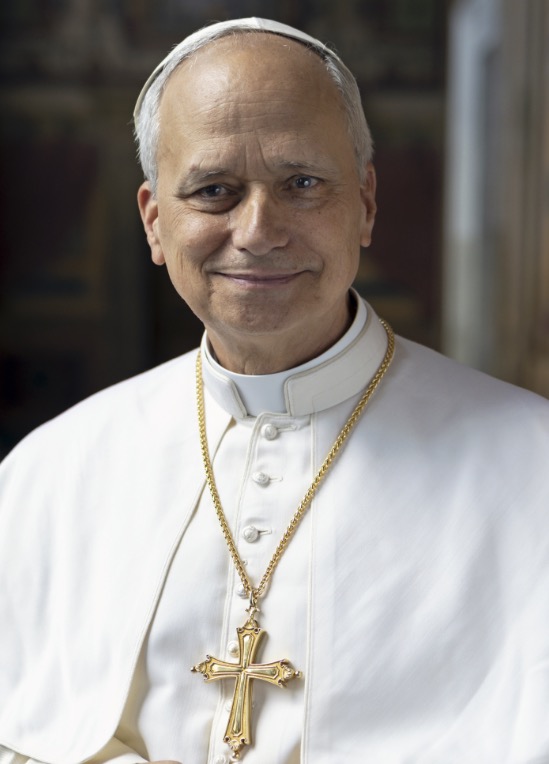

EWTN – LIVE from St. Peter Square | Angelus with Pope Leo XIV | July 27, 2025

This livestream allows viewers to witness the Pope’s addresses during Papal Audiences, as well as other Vatican events and news. The livestream is part of the Vatican Media Center’s efforts to share the latest updates on Pope Leo XIV, the Holy See, and the Church worldwide with a global audience.


Homiletic Suggestions (2025)
edited by Father Gaetano Piccolo (SI)


17th Sunday of Year C
Ways to Pray
This Sunday’s liturgical texts teach us different ways to pray. In the first reading, Abraham appears as a model of intercessory prayer for the inhabitants of Sodom. In the Gospel, with the Lord’s Prayer Jesus Christ teaches us two ways of praying: the prayer of desires in the first part, and the prayer of supplication in the second. The text of the Letter to the Colossians does not deal with prayer directly, but we could say it provides the basis for all Christian prayers, especially for liturgical prayer, which is the mystery of the Death and Resurrection of Jesus Christ. Or perhaps we could speak of the prayer that becomes life, the giving of one’s self out of love.
© Dicastery for the Clergy A | B | C
Doctrinal Messages
Pastoral Suggestions
AI Generative Recommendations
Homily Preparation: 17th Sunday in Ordinary Time, Year C
Based on the Sunday’s Dicastery Notes (above)
Featured Homilies
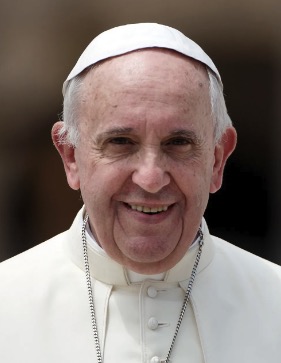
Francis
Pope Francis
17th Sunday of Year C

The Lord’s Prayer
28 July 2019 – Saint Peter’s Square
Homily Excerpt
In today’s Gospel passage (cf. Lk 11:1-13), Saint Luke narrates the circumstances in which Jesus teaches the “Lord’s Prayer”. They, the disciples, already know how to pray by reciting the formulas of the Jewish tradition, but they too wish to experience the same “quality” of Jesus’ prayer because they can confirm that prayer is an essential dimension in their Master’s life. Indeed each of his important actions is marked by long pauses in prayer. Moreover, they are fascinated because they see that he does not pray like the other teachers of the time, but rather his prayer is an intimate bond with the Father, so much so that they wish to be a part of these moments of union with God, in order to completely savour its sweetness.
Thus, one day they wait for Jesus to finish praying in a secluded place and then they ask him: “Lord, teach us to pray” (v. 1). In responding to the disciples’ explicit question, Jesus does not provide an abstract definition of prayer, nor does he teach an efficient technique to pray in order to “obtain” something. Instead, he invites his own to experience prayer, by putting them directly in communication with the Father, causing them to feel nostalgic for a personal relationship with God, with the Father. Herein lies the novelty of Christian prayer! It is a dialogue between people who love each other, a dialogue based on trust, sustained by listening and open to a commitment to solidarity. It is the dialogue of a Son with his Father, a dialogue between children and their Father. This is Christian prayer.
Benedict XVI
Pope Benedict XVI
17th Sunday of Year C

Human Material and Spiritual Needs
25 July 2010 | Castel Gandolfo
Homily Excerpt
[The Lord’s Prayer] accepts and expresses human material and spiritual needs: “Give us each day our daily bread; and forgive us our sins” (Lk 11: 3-4). It is precisely because of the needs and difficulties of every day that Jesus exhorts us forcefully: “I tell you, ask, and it will be given you; seek, and you will find; knock, and it will be opened to you. For every one who asks receives, and he who seeks finds, and to him who knocks it will be opened” (Lk 11: 9-10). It is not so much asking in order to satisfy our own desires as, rather, to keep a lively friendship with God who, the Gospel continues, “will give the Holy Spirit to those who ask him!” (Lk 11: 13).
The ancient “Desert Fathers” experienced this, as did contemplatives of all epochs who became, through prayer, friends of God, like Abraham who begged the Lord to spare the few righteous from the destruction of the city of Sodom (cf. Gen 18: 21-32).
St Teresa of Avila addressed an invitation to her sisters with the words: we must “beseech God to deliver us from these perils for ever and to keep us from all evil! And although our desire for this may not be perfect, let us strive to make the petition. What does it cost us to ask it, since we ask it of One who is so powerful?” (Cammino, 60 (34), 4, in Opere complete, Milan 1998, p. 846) [title in English: The Way of Perfection].
Every time we say the Our Father our voices mingle with the voice of the Church, for those who pray are never alone. “From the rich variety of Christian prayer as proposed by the Church, each member of the faithful should seek and find his own way, his own form of prayer… each person will, therefore, let himself be led… by the Holy Spirit, who guides him, through Christ, to the Father” (Congregation for the Doctrine of the Faith, Letter to the Bishops of the Catholic Church on some aspects of Christian meditation, 15 October 1989, n. 29; ore, 2 Jan. 1990, p. 10).

St. John Paul II
Saint Pope John Paul II
17th Sunday of Year C
“Teach Us to Pray”
14 March 1979 | General Audience
Homily Excerpt
When the disciples asked the Lord Jesus: “Teach us to pray”, he replied with the words of the prayer Our Father, thus creating a concrete model that is at the same time universal. In fact, all that can and must be said to the Father is contained in those seven requests, which we all know by heart. There is such a simplicity in them, that even a child can learn them, and also such a depth that a whole life can be spent meditating on the meaning of each of them. Is this not so? Does not each of them speak to us, one after the other, of what is essential for our existence, directed completely to God, to the Father? Does it not speak to us of our “daily bread”, of “forgiveness of our trespasses as we also forgive them”, and at the same time of “preservation from temptation” and “deliverance from evil”?
When, in answer to the request of the disciples “teach us to pray”, Christ utters the words of his prayer, he teaches not only the words, but he teaches that in our talk with the Father there must be complete sincerity and full openness. Prayer must embrace everything that is part of our life. It cannot be something additional or marginal. Everything must find in it its true voice. Even everything that burdens us; things of which we are ashamed; what by its very nature separates us from God. This above all. It is prayer that always, first of all and essentially, demolishes the barrier which sin and evil may have raised between us and God.
SOURCE: The Holy See Archive at the Vatican Website © Libreria Editrice Vaticana If you are unable to access the Vatican website, click here to check if it is down.