July 13, 2025
July 13, 2025


Papal Homilies
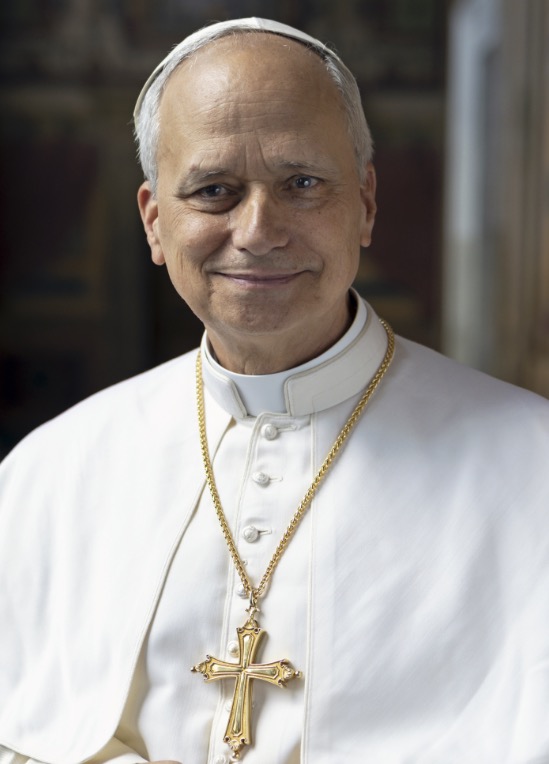

EWTN – This Sunday, July 13, Pope Leo XIV returns to Castel Gandolfo to celebrate Mass at the historic Pontifical Parish of St. Thomas of Villanova. Follow the live broadcast from the scenic hills outside Rome — a moment of prayer, closeness, and tradition as the Pope gathers with the local faithful during the heart of summer.

ROME REPORTS in English (1:20) – Pope Leo XIV’s reaction to the recent floods in Texas.

This livestream allows viewers to witness the Pope’s addresses during Papal Audiences, as well as other Vatican events and news. The livestream is part of the Vatican Media Center’s efforts to share the latest updates on Pope Leo XIV, the Holy See, and the Church worldwide with a global audience.


Homiletic Suggestions (2025)
edited by Father Gaetano Piccolo (SI)


15th Sunday of Year C
Dicastery for the Clergy
Homily Notes
The “Jesus Issue”

The “Jesus issue” could be the common denominator of this Sunday’s liturgical texts. Jesus is a great question, and the Bible offers us a great answer. In the Gospel, Jesus introduces himself as the Good Samaritan, available for any need, wherever the need may arise and for whoever may be in need. The first reading talks to us about the Word which is near, in the mouth and in the heart of the people, and this Word which is near is identified with Jesus Christ, the God-man, who speaks to us with a man’s words. In the Letter to the Colossians, in an ancient and beautiful Christological hymn, Jesus is praised as the first-born of all of creation, to whom everything refers and in whom everything achieves its fullness.
© Dicastery for the Clergy A | B | C
Doctrinal Messages
Pastoral Suggestions
Francis
Featured Homilies
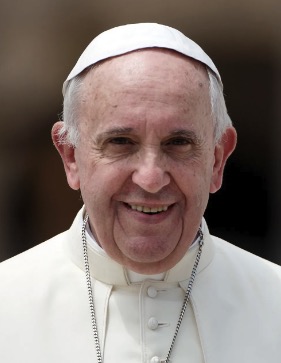
Pope Francis
15th Sunday of Year C
The Good Samaritan
10 July 2022 – Saint Peter’s Square
Homily Excerpt
Faced with this Gospel parable, it can happen that we might blame others or blame ourselves, pointing fingers at others, comparing them to the priest or the Levite — “This person, that person goes on, that one doesn’t stop…” — or even to blame ourselves, counting our own failures to pay attention to our neighbours. But I would like to suggest another type of exercise to you all, not one that finds fault, no. Certainly, we must recognise when we have been indifferent and have justified ourselves. But let us not stop there. We must acknowledge this, it is a mistake. But let us ask the Lord to help us overcome our selfish indifference and put ourselves on the Way. Let us ask him to see and to have compassion. This is a grace we need to ask of the Lord: “Lord, that I might see, that I might have compassion just like you see me and have compassion on me”. This is the prayer that I suggest to you today. “Lord, that I might see and have compassion just like you see me and have compassion on me” — that we might have compassion on those whom we encounter along the way, above all on those who suffer and are in need, to draw near to them and do what we can do to give them a hand.
Benedict XVI
Pope Benedict XVI
15th Sunday of Year C
“Go and Do Likewise”
15 July 2007 | Lorenzago di Cadore (Belluno)
Homily Excerpt
Every good Christian knows that vacations are an appropriate time for relaxation and also the nourishment of the spirit through more extended periods of prayer and meditation, in order to grow in one’s personal relationship with Christ and to conform increasingly to his teachings.
Today, for example, the liturgy invites us to reflect on the famous Parable of the Good Samaritan (cf. Lk 10: 25-37), which introduces us into the heart of the Gospel message: love for God and love for neighbour. But the person speaking to Jesus asks: who is my neighbour? And the Lord answers by reversing the question and showing through the account of the Good Samaritan that each one of us must make himself close to every person he meets: “Go and do likewise” (Lk 10: 37)


St. John Paul II
Saint Pope John Paul II
15th Sunday of Year C
The Church’s Charity
1995 | EVANGELIUM VITAE
Excerpts
Allowing herself to be guided by the example of Jesus the “Good Samaritan” (cf. Lk 10:29-37) and upheld by his strength, the Church has always been in the front line in providing charitable help: so many of her sons and daughters, especially men and women Religious, in traditional and ever new forms, have consecrated and continue to consecrate their lives to God, freely giving of themselves out of love for their neighbour, especially for the weak and needy. These deeds strengthen the bases of the “civilization of love and life”, without which the life of individuals and of society itself loses its most genuinely human quality. Even if they go unnoticed and remain hidden to most people, faith assures us that the Father “who sees in secret” (Mt 6:6) not only will reward these actions but already here and now makes them produce lasting fruit for the good of all…
A stranger is no longer a stranger for the person who must become a neighbour to someone in need, to the point of accepting responsibility for his life, as the parable of the Good Samaritan shows so clearly (cf. Lk 10:25-37). Even an enemy ceases to be an enemy for the person who is obliged to love him (cf. Mt 5:38-48; Lk 6:27-35), to “do good” to him (cf. Lk 6:27, 33, 35) and to respond to his immediate needs promptly and with no expectation of repayment (cf. Lk 6:34-35). The height of this love is to pray for one’s enemy. By so doing we achieve harmony with the providential love of God: “But I say to you, love your enemies and pray for those who persecute you, so that you may be children of your Father who is in heaven; for he makes his sun rise on the evil and on the good and sends rain on the just and on the unjust” (Mt 5:44-45; cf. Lk 6:28, 35).
SOURCE: The Holy See Archive at the Vatican Website © Libreria Editrice Vaticana If you are unable to access the Vatican website, click here to check if it is down.