Holy See ✨
DECEMBER 8, 2024
DECEMBER 8, 2024
Sunday Papal Homilies
Sunday Papal Homilies
LIVE FROM
VATICAN
TIP: You can rewind the livestream up to twelve hours, allowing you to catch up on any events or addresses you may have missed.

SOURCE: Vatican News – English
Vatican Media Live
This livestream allows viewers to witness the Pope’s addresses during Papal Audiences, as well as other Vatican events and news. The livestream is part of the Vatican Media Center’s efforts to share the latest updates on Pope Francis, the Holy See, and the Church worldwide with a global audience.

The Dicastery for the Clergy deals with everything that concerns the priests and deacons of the diocesan clergy with regard to their persons, their pastoral ministry and what is necessary for its fruitful exercise. In these matters it offers the Bishops appropriate assistance.

The Word of God
At Christmas, the Word of God will become flesh, but already in the Advent liturgy the Church wants us to meditate on the Word and to internalize it in our soul. St Luke tells us that the Word of God was addressed to John, the son of Zechariah, in the desert (Gospel). The prophet Baruch contemplates the children of Jerusalem living in exile, “see your children reassembled from west and east at the Holy One’s command, rejoicing because God has remembered” (first reading). St Paul shows his joy to the Philippians for their partnership in the Gospel, from the very first day up to the present; that is, in the Word of God which became Good News for all human beings (second reading).
P. Antonio Izqeuirdo, L.C., Copyright © Dicastery for the Clergy
Doctrinal Messages
2nd Sunday of Advent C
You can copy and paste any MEDITATIVE STARTER question into the chatbot at the right bottom corner of the screen and see how THEWORD THIS WEEK Catholic Assistant answers it.
For example, using one of the questions in the DOCTRINAL MESSAGE "The qualities of the Word."
ONLINE GUEST: What does it mean for us to see the Word of God as a seed that grows and matures within us until the day of Christ’s return?
CATHOLIC ASSISTANT: Seeing the Word of God as a seed that grows within us emphasizes the dynamic and transformative nature of faith. Like a seed, the Word is planted in our hearts, requiring nurturing through prayer, study, and the sacraments. As it grows, it transforms our thoughts, actions, and relationships, leading us to live more Christ-like lives. This growth process involves ongoing conversion and maturity in faith, preparing us for Christ’s return. It highlights the importance of patience and perseverance in our spiritual journey, trusting that God will bring His work in us to completion.
ONLINE GUEST: How can we emulate the example of John the Baptist and Jesus in fearlessly and publicly proclaiming the Word of God in our own communities and beyond?
CATHOLIC ASSISTANT: To emulate John the Baptist and Jesus in proclaiming the Word of God, we can start by deepening our own faith through prayer, scripture study, and the sacraments. This foundation strengthens our conviction and courage. Engage with your community by participating in or leading faith-based activities, such as Bible studies or outreach programs. Use your unique talents and platforms, whether in conversation, social media, or public speaking, to share the Gospel message. Always act with love, humility, and respect, reflecting Christ’s compassion and truth in all interactions.

ASK YOUR OWN QUESTIONS BY CLICKING ON THE AI CHAT ICON AT THE BOTTOM RIGHT CORNER OF THIS PAGE
VATICAN
DAILY
BULLETIN
The Vatican Daily Bulletin is the official news source for the Pope’s activities and statements, providing accurate and up-to-date information. Published daily, it keeps the public informed about the Church’s activities and decisions.
Pastoral Suggestions
2nd Sunday of Advent C
THE HOLY
FATHER
RELATED LINKS
THIS SUNDAY’S
QUOTES
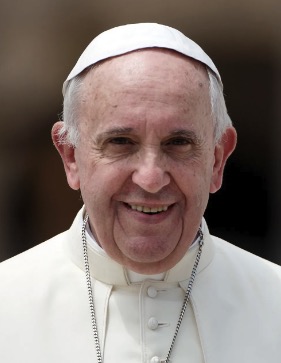
Pope Francis: “The Word of God calls us to make straight the paths of our lives, to remove the obstacles that keep us from encountering Christ.” December 6, 2015
Pope Francis: “Let us allow the Word of God to take root in our hearts, bearing fruit in the form of faith, hope, and love.” December 8, 2013
Pope Francis: “As we journey through Advent, may we be filled with the confidence that God who began a good work in us will bring it to completion.” December 9, 2018
Pope Francis: “In the wilderness of our lives, may the Word of God bring forth streams of living water, nourishing and refreshing all who seek Him.” December 5, 2021
Pope Francis: “The message of repentance and forgiveness proclaimed by John the Baptist prepares us to receive the salvation offered by Christ with open hearts.” December 6, 2020
Pope Francis: “As we prepare for the coming of Christ, let us reflect on the message of hope and redemption brought to us through the Word of God.” December 4, 2016
Pope Francis
2nd Sunday of Advent C

The Journey of Conversion
9 December 2018 | Saint Peter’s Square
- TEXT
- DISCUSSION GUIDE
Last Sunday, the liturgy invited us to experience the Season of Advent and of anticipation of the Lord with an attitude of vigilance and also of prayer: “be mindful” and “pray”. Today, the Second Sunday of Advent, we are shown how to give substance to this anticipation: by undertaking a journey of conversion, how to make this anticipation concrete. As a guide on this journey, the Gospel presents the figure of John the Baptist who “went into all the region about the Jordan, preaching a baptism of repentance for the forgiveness of sins” (Lk 3:3). To describe the Baptist’s mission, the Evangelist Luke refers to the ancient prophecy of Isaiah which says: “The voice of one crying in the wilderness: Prepare the way of the Lord, make his paths straight. Every valley shall be filled and every mountain and hill shall be brought low” (vv. 4-5).
To prepare the way of the Lord’s coming, it is necessary to take note of the requirements of conversion to which the Baptist invites us. What are these requirements for conversion? First of all we are called to fill the ‘valleys’ caused by coldness and indifference, opening ourselves to others with the same sentiments as Jesus, that is, with affection and fraternal attention which takes on the needs of our neighbours. To fill the valleys caused by coldness. One cannot have a relationship of love, charity and fraternity with one’s neighbours if there are ‘gaps’ just as one cannot travel a road with many potholes. This requires a change of attitude. And all this should also be done with special attention to the neediest. Then there is the need to curtail the indifference caused by pride and arrogance. How many people, perhaps without realizing it, are proud, are indifferent, lack that kindly relationship. It is necessary to overcome this by making concrete gestures of reconciliation with our brothers and sisters, asking for forgiveness for our faults. It is not easy to reconcile with another. One always thinks: “who will take the first step?”. The Lord helps us in this if we are of good will. Indeed, conversion is complete if it leads us to humbly recognize our errors, our infidelity and failings.
The believer is someone who, by being close to his brothers and sisters, like John the Baptist, opens pathways in the desert, that is, he indicates perspectives of hope, even in those existential contexts that are arduous, marked by failure and defeat. We cannot give up in the face of negative situations of closure and rejection: we must not allow ourselves to succumb to the mentality of the world, because the centre of our life is Jesus and his word of light, love and solace. It is He! The Baptist invited the people of his time to conversion, with force, with vigour and with firmness. Nevertheless, he knew how to listen, he knew how to perform gestures of tenderness, gestures of forgiveness toward the multitude of men and women who went to him to confess their sins and to be baptized with the baptism of repentance.
The witness of John the Baptist helps us to go forward in our witness of life. The purity of his proclamation, his courage in proclaiming the truth were able to reawaken the expectation and hope in the Messiah that had long been dormant. Today too, Jesus’ disciples are called to be his humble but courageous witnesses in order to rekindle hope, to make it understood that, despite everything, the Kingdom of God continues to be built day by day with the power of the Holy Spirit. Let each of us ask ourselves: how can I change something in my attitude, in order to prepare the way of the Lord?
Discussion Guide for Pope’s Homily
Introduction
Begin your session by setting the mood for the conversation with a brief reflection on the key themes of the sermon: anticipation during Advent, conversion, and preparation for Christ’s coming. Emphasize the importance of vigilance, prayer, and the journey of spiritual change as we follow along with the Gospel narrative.
Discussion Questions
1. Vigilance and Prayer
– How do vigilance and prayer prepare us for the coming of the Lord as emphasized in the liturgy for the First Sunday of Advent?
– In what ways can incorporating vigilance and prayer into our daily lives during Advent deepen our spiritual journey?
2. Conversion and Anticipation
– According to the sermon, how can we give substance to the anticipation of Advent?
– What are the requirements of conversion that John the Baptist calls us to, and how can these be applied to our personal lives?
3. The Role of John the Baptist
– Reflect on the description of John the Baptist as a guide for our journey of conversion. How does his mission of repentance and forgiveness relate to our Advent journey?
– Why is John the Baptist’s approach significant in preparing the way for Jesus, and how can we emulate his courage and tenderness in our interactions with others?
4. Overcoming Coldness and Indifference
– What ‘valleys’ (gaps caused by indifference or coldness) exist in your life, and how can you work to fill them?
– Discuss practical steps to overcoming pride and arrogance to foster a relationship based on love and fraternity.
5. Pathways of Hope
– How does the sermon suggest we can open pathways of hope, even in challenging or harsh circumstances?
– Share examples from personal experience or public figures who have opened such pathways in difficult times.
6. Witness and Conversion
– What aspects of John the Baptist’s witness can inspire us to live out our faith courageously and authentically today?
– Reflect personally on the question: “How can I change something in my attitude, in order to prepare the way of the Lord?”
Practical Exercise
Encourage group members to identify one specific personal action they can commit to during this Advent season to foster conversion—whether it be reconciling with someone, increasing their prayer routine, or performing an act of kindness.
THIS SUNDAY’S
QUOTES
Pope Benedict XVI: “Advent is a time of preparation for the coming of the Lord, both in remembrance of His birth and in anticipation of His second coming.” [December 9, 2007] The quote highlights the dual focus of Advent on historical preparation for the birth of Christ and spiritual readiness for His return.
Pope Benedict XVI: “In the desert of our lives, the voice of the Lord calls out, urging us to make straight the paths of our hearts and remove all obstacles to His presence.” [December 4, 2011] This quote emphasizes the call to repentance and conversion symbolized by the imagery of the wilderness in the Gospel passage.
Pope Benedict XVI: “The Word of God comes to us not as mere words, but as a living force that transforms our hearts and directs us towards the light of Christ.” [December 7, 2008] This quote underscores the transformative power of the Word of God in guiding believers towards the truth found in Jesus.
Pope Benedict XVI: “Advent invites us to cultivate a spirit of joyful expectation, eagerly awaiting the fulfillment of God’s promises in our lives.” [December 6, 2009] This quote highlights the theme of joyful anticipation that characterizes the Advent season.
Pope Benedict XVI: “The message of John the Baptist urges us to prepare a way for the Lord in our hearts, making space for His grace to transform us from within.” [December 3, 2006] This quote underscores the importance of spiritual readiness and openness to receive the saving work of Christ in our lives.
Pope Benedict XVI
2nd Sunday of Advent C

John the Baptist
9 December 2012 | Saint Peter’s Square
- TEXT
- DISCUSSION GUIDE
In the Season of Advent the liturgy highlights in a special way two figures who prepare for the coming of the Messiah: the Virgin Mary and John the Baptist. Today St Luke presents the latter to us and does so with characteristics that differ from those of the other Evangelists. “All four Gospels place the figure of John the Baptist at the beginning of Jesus’ ministry and they reveal him as the one who prepared the way for Jesus. St Luke presents the connection between the two figures and their respective missions at an earlier stage…. Even in conception and birth, Jesus and John are linked together” (Jesus of Nazareth: The Infancy Narratives, p. 14).
This setting helps us to realize that John, as the son of Zechariah and Elizabeth, both from priestly families, is not only the last of the prophets but also represents the entire priesthood of the Old Covenant and thus prepares people for the spiritual worship of the New Covenant inaugurated by Jesus (cf. ibid., pp. 18-19). In addition, Luke discredits all the mythical interpretations that are often made of the Gospels, by putting the Baptist’s life in its historical context and by writing: “In the fifteenth year of the reign of Tiberius Caesar, Pontius Pilate being governor… in the high priesthood of Annas and Caiaphas” (Lk 3:1-2). The great event, the birth of Christ, which his contemporaries did not even notice, fits into this historical framework. For God the great figures of history serve as a frame for the lowly!
John the Baptist is described as “the voice of one crying in the wilderness: Prepare the way for the Lord, make his paths straight” (Lk 3:4). The voice proclaims the word, but in this case the Word of God comes first, since the word of God came to John, the son of Zechariah, in the wilderness (cf. Lk 3:2). He therefore plays an important role but always in terms of Christ. St Augustine comments: “John is the voice, but the Lord is the Word who was in the beginning (cf. Jn 1:1). John is the voice that lasts for a time; from the beginning Christ is the Word who lives for ever. Take away the word, the meaning, and what is the voice? Where there is no understanding, there is only a meaningless sound. The voice without the word strikes the ear but does not build up the heart” (In ev. Johannis tractatus 293, 3: pl 38, 1328).
Today it is up to us to listen to that voice so as to make room for Jesus, the Word who saves us, and to welcome him into our hearts. Let us prepare ourselves in this Season of Advent to see, with the eyes of faith in the humble Grotto of Bethlehem, God’s salvation (cf. Lk 3:6). In the consumer society in which we are tempted to seek joy in things, the Baptist teaches us to live in an essential manner, so that Christmas may be lived not only as an external feast, but as the feast of the Son of God who came to bring men and women peace, life and true joy.
Section 1: Key Figures in Advent
– Discuss the prominent figures in Advent highlighted in the sermon – the Virgin Mary and John the Baptist.
– How does each of these figures prepare for the coming of the Messiah?
– Why are they significant during the Advent season?
– Reflect on the unique portrayal of John the Baptist in the Gospel of Luke.
– How does Luke’s presentation differ from the other Evangelists?
– Why might Luke have chosen to emphasize the connection between Jesus and John from an earlier stage?
Section 2: The Role of John the Baptist
– Examine the background of John the Baptist as the son of Zechariah and Elizabeth.
– How does John’s lineage connect him to the Old Covenant?
– In what ways does John prepare people for the New Covenant?
– Consider the historical context provided by Luke (Lk 3:1-2).
– Why is it important that Luke places John’s story within a specific historical framework?
– How does this context contribute to understanding the narrative as a part of God’s greater plan?
Section 3: The Symbolism of Voice and Word
– Analyze the symbolism of John the Baptist as the “voice” and Jesus as the “Word”.
– What insights does St. Augustine offer about the relationship between the voice and the Word?
– How can the concept of “voice” without “word” be understood in our current context?
– Reflect on the role of the voice crying out in the wilderness.
– What does this imagery suggest about John’s mission?
– How might this imagery affect the way we prepare for Christmas today?
Section 4: Living the Advent Message
– Discuss the call to listen to the voice and make room for Jesus, the Word who saves.
– How do we prepare ourselves spiritually during Advent?
– What might it mean to “make room” for Jesus in our lives?
– Explore the challenges and opportunities presented by the consumer-driven society.
– In what ways does the message of John the Baptist challenge contemporary attitudes towards Christmas?
– How can we shift the focus from external celebrations to the true meaning of the feast?
Conclusion
– Summarize the key takeaways from the discussion.
– How might the lessons from this sermon influence your personal Advent journey?
– What actions can you take to deepen your understanding and celebration of Advent this year?
Always find the comments of the popes helpful to prepare my homilies. Thanks for uploading this content, is it possible to add the homilies of John Paul II also to your page I think would be more complete. Anyway all good. Peace of Christ.
Yes. Adding John Paul II has been something I want to do. Expect this soon.