JAN 12, 2025


Baptism of the Lord - YEAR C
From the Depths to the Heights

“All of us know bitter waters that sometimes drown us. We call those tears.”
Water serves as a powerful symbol of both the fear and transformative potential of human experiences, illustrating the journey from darkness to light and the profound impact of embracing life’s challenges.

1. Opening Reflection:
- Share a past experience when you found yourself in a situation with nature's power – like forces of water, wind, or storms. How did it make you feel, and what did you learn?
2. Understanding Fear:
- Discuss the emotions felt by those on the boat in the story. Why were the priest and seminarian particularly fearful, and what new perspectives can this give us about fear and faith in challenging times?
3. Symbolism in Water:
- Consider the dual nature of water as described in the sermon. How have you experienced water being both life-taking and life-giving in different contexts?
- How does this dual nature relate to the broader aspects of life and spirituality?
4. Lessons from Percy Shelley's Story:
- Analyze Percy Shelley's reaction after nearly drowning. What does his perspective teach us about finding truth and understanding in adversity?
- Discuss the metaphor of finding truth at "the bottom of the well." How can this idea be applied to our own journeys?
5. The Depths and the Heights:
- Explore the concept of descending into depths to appreciate the heights. How has this manifested in your life or spiritual journey?
- How can facing 'the depths' lead to personal transformation or growth?
6. Baptism as a Symbol:
- Reflect on the biblical tradition of baptism as outlined in the sermon. How does the ritual symbolize the transition from life to death, darkness to light?
- What does baptism mean in your own spiritual or cultural context?
7. The Sea Monkeys Analogy:
- How do the sea monkeys exemplify the life-giving power of water? What does this tell us about potential and renewal?
- Compare this analogy to spiritual renewal or moments of rebirth in your life.
8. Embracing Both Sides of Life:
- Discuss the phrase 'bitter waters' and how it relates to experiences of tears and trials. How do these moments contribute to life's richness?
- How can embracing the dark aspects of life help us appreciate the light and vice versa?
9. Closing Thoughts and Prayer:
- Reflect on the whole theme of the sermon and how it calls us to embrace the full spectrum of our experiences – joy and sorrow, darkness and light, life and death.
- Conclude with a prayer or meditation focusing on embracing all facets of life and the hope of rising to life's full potential.



ADDICTION AND
RECOVERY
1—Admission of Powerlessness
2—Recognition of a Higher Power
3—Decision to Turn Life Over to a Higher Power
4—Taking a Moral Inventory
5—Admission of Wrongdoings
6—Willingness to Remove Character Defects
7—Asking for Spiritual Help
8—List of Amends
9—Compensation for Past Harms
10—Continuing Inventory and Admissions
11—Seeking Prayer and Meditation
12—Carry the Message Forward
Baptism of the Lord - YEAR C
SUNDAY‘S READINGS
The content below has been generated by THE WORD THIS WEEK Catholic Assistant, employing advanced AI technology.
Step 1: Admitting Powerlessness and Unmanageability
- Isaiah 42:6-7: This passage emphasizes that God has power over all things, and he has chosen to call his servant to bring light to the world. It relates to Step 1, as admitting one’s powerlessness is the first step in turning one’s life over to a higher power, who can bring light and healing.
Step 2: Believing in a Higher Power for Restoration
- Acts 10:38: This verse explains that Jesus was anointed by the Holy Spirit and went around doing good and healing people oppressed by the devil. Step 2 in the 12-step program emphasizes the role of a higher power in healing and restoring individuals from addiction.
Step 3: Making a Decision to Turn to a Higher Power
- Acts 10:34-35: Peter says that God shows no favoritism and accepts everyone who fears him and does what is right. Similarly, Step 3 involves the decision to submit one’s life and actions to the higher power, following the principles of righteousness.
Step 4: Taking a Moral Inventory
- Luke 3:15-16: John the Baptist calls on people to bear fruits in keeping with repentance, urging self-examination and transformation. This corresponds with Step 4, which involves taking a personal inventory to identify areas that need repentance and change.
Step 5: Admitting Wrongdoings
- Isaiah 42:1: The description of God’s servant, who “will bring justice to the nations,” highlights the importance of honesty and justice. Step 5 involves acknowledging and admitting one’s wrongdoings as part of the path to spiritual healing and growth.
Step 6: Willingness to Remove Defects of Character
- Isaiah 42:4: The description of God’s servant mentions that he “will not falter or be discouraged until he establishes justice on earth.” Step 6 entails developing the determination and faith to overcome personal shortcomings and walk the path of healing and justice.
Step 7: Asking for Spiritual Help
- Luke 3:21: At Jesus’ baptism, the Holy Spirit descends upon him, symbolizing spiritual empowerment. Step 7 entails asking for help from a higher power, as demonstrated in this moment of divine support.
Step 8: Making a List of People Harmed
- Luke 3:15: John the Baptist instructs people to demonstrate the fruits of repentance through their deeds. Step 8 involves accountability for one’s actions and addressing the harm caused to others.
Step 9: Offering Amends
- Luke 3:21-22: The voice from heaven at Jesus’ baptism states, “You are my Son, whom I love; with you I am well pleased.” In the context of Step 9, making amends can lead to a sense of being “well-pleasing” and loved by God.
Step 10: Continuing Moral Inventory and Admitting Mistakes
- Isaiah 42:6-7: As God’s servant continues to bring light to the nations, so too should individuals in recovery persist in the process of self-examination, acknowledging mistakes and persevering in the face of adversity.
Step 11: Seeking Connection with a Higher Power through Prayer and Meditation
- Acts 10:38: Jesus’ healing ministry and the power of the Holy Spirit point to the importance of seeking a spiritual connection to God through practices like prayer and meditation, as encouraged in Step 11.
Step 12: Carrying This Message to Others and Practicing These Principles
Isaiah 42:1: God’s servant is chosen to bring justice and light to the nations. Similarly, individuals in recovery are called to share the message of healing and hope with others, embodying the spiritual principles of the 12-step program.

CHRISTIAN
ART

Reflection on the Fresco Painting
The Baptism of Jesus, Fresco painting by Giotto (died 1337), Painted 1303-1305 in the Scrovegni Chapel, Padua Fresco painting © Alamy
Giotto’s Baptism of the Lord, part of his monumental fresco cycle in the Scrovegni Chapel (1300–1310), is considered one of the earliest large-scale depictions of Jesus’ baptism in the West… Jesus stands waist-deep in the Jordan, depicted as a graceful figure, with an emphasis on his physicality that moves beyond the flat, linear style of earlier artists. The stark, rocky shores symbolise both asceticism and a realistic setting, while balanced groups of three figures flank the scene—ethereal angels in white on one side and men of varied ages on the other. Above, a burst of light reveals the anthropomorphised voice of God, His hand extended to declare Jesus’ divine Sonship. Also note Jesus’ cruciform halo.
THE VISUAL COMMENTARY ON SCRIPTURE (4:34) – This film is part of a series about Christianity’s central figure: Jesus Christ. It focuses on the Baptism of Jesus, discussing Bartolomé Esteban Murillo’s The Baptism of Christ (c.1655) in the Gemäldegalerie.
Baptism of the Lord - YEAR C
Unlocking Christian Art: Jesus Christ. Baptism
The baptism of Jesus by John the Baptist serves as a pivotal moment of divine revelation and the beginning of Jesus’ public ministry, as depicted in Bartolomé Murillo’s artwork, which emphasizes John’s role in directing attention to Jesus and foreshadows the shift in prominence between the two figures.
Significance of Jesus’ Baptism
Q: What was the significance of Jesus’ baptism?
A: Jesus’ baptism marked a crucial turning point, serving as a public declaration of his identity as the Son of God and the beginning of his public ministry.
Q: How was Jesus’ divine nature emphasized during his baptism?
A: The heavens opening and God’s voice declaring Jesus his beloved son created a moment of revelation and epiphany, emphasizing Jesus’ divine nature.
John the Baptist’s Role
Q: Why is John the Baptist portrayed as the dominant figure in Murillo’s painting?
A: John the Baptist is the dominant figure in Murillo’s “The Baptism of Christ” (c.1655), emphasizing his role in preparing for Jesus’ arrival, despite Jesus’ ultimate greater importance.
Q: What did John the Baptist’s words to Jesus signify?
A: John’s words, “Behold the Lamb of God who takes away the sins of the world,” pointed to Jesus’ messianic role and directed attention away from John himself.
Symbolism and Meaning
Q: What did Jesus’ baptism symbolize?
A: Jesus’ baptism was a symbolic act of repentance and new life, participating in John’s call for a change of life through ritual washing in the Jordan River.
Q: Who witnessed Jesus’ baptism?
A: Jesus’ baptism was witnessed by both earth and heaven, marking a significant shift from his role as a private figure to a public figure with a greater ministry ahead.
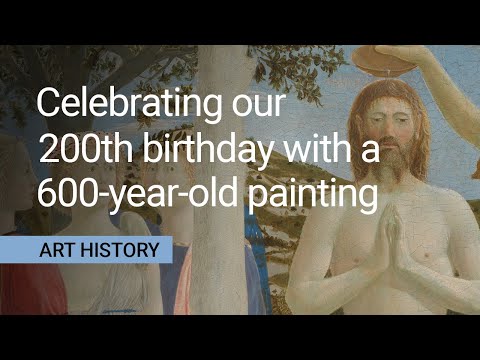
THE NATIONAL GALLERY (9:16) – Trafalgar Square art museum whose masterworks trace the development of Western European painting.
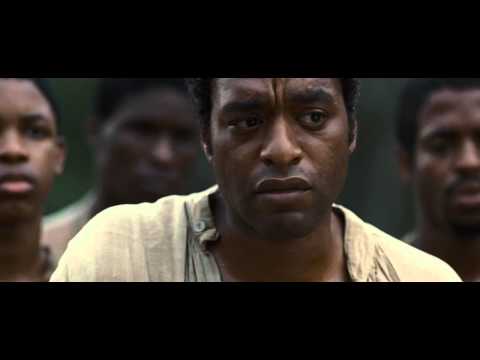
Topsy Chapman – (feat. Chiwetel Ejiofor and moviecast) “Roll Jordan Roll” From the movie “12 Years a Slave” (2013)
Baptism of the Lord - YEAR C
Roll Jordan Roll
The African American spiritual song “Roll, Jordan, Roll” holds deep spiritual significance when examined in the context of biblical passages such as Isaiah 42:1-4, 6-7, Acts 10:34-38, and Luke 3:15-16, 21-22. This essay will explore the connections between these scriptural texts and the themes of baptism, redemption, and spiritual renewal found in the song.
The song’s lyrics narrate the story of the River Jordan and the role of John the Baptist, who performed baptisms and foretold the coming of Jesus Christ. The River Jordan serves as a central symbol in both the song and the scriptures, representing the crossing point from slavery to freedom, from sin to salvation.
Isaiah 42:1-4, 6-7 describes the coming of a servant who will bring justice to the nations and establish a new covenant with God. The figure of the servant is later identified with Jesus Christ, whose baptism in the River Jordan marks the beginning of his public ministry. The lines in the song that mention John the Baptist allude to this baptism, which is further described in Luke 3:15-16, 21-22.
The lyrics “Roll, Jordan, roll / My soul arise in heaven, Lord / For the year when Jordan roll” echo the spiritual transformation that baptism signifies. This transformation is also portrayed in the scriptural accounts of Jesus’ baptism, during which the Holy Spirit descends upon him like a dove, and a voice from heaven proclaims, “You are my Son, whom I love; with you I am well pleased” (Luke 3:22).
In the context of African American struggles, the lyrics evoke a deep yearning for both personal and collective transformation. The song’s emphasis on baptism symbolizes the washing away of the sins of oppression and injustice, allowing the community to emerge renewed and strengthened in their pursuit of equality.
The spiritual transformation highlighted in “Roll, Jordan, Roll” also serves as a source of hope and inspiration for African Americans facing hardship and discrimination. Just as Jesus’ baptism in the River Jordan marked the beginning of his public ministry, the song suggests that the African American community can undergo its own spiritual rebirth, drawing on their faith to overcome the challenges they face.
The song’s focus on John the Baptist and the River Jordan highlights the importance of baptism as a sacrament of initiation and a symbol of spiritual renewal. The repeated call to “roll, Jordan, roll” expresses the longing for this spiritual transformation, urging the river to continue flowing and carrying people to the Promised Land of freedom and salvation.
In Acts 10:34-38, the Apostle Peter declares that “God does not show favoritism but accepts from every nation the one who fears him and does what is right.” This message of inclusion resonates with the themes of liberation and equality found in “Roll, Jordan, Roll.” The song’s emphasis on John the Baptist as a preacher of God reinforces the message that all people, regardless of their background, can be saved through faith and baptism.
Furthermore, the song’s refrain, “I say John was a preacher of God, and my bible says so too,” underscores the authority of scripture in affirming the role of John the Baptist and the significance of baptism. This line serves as a powerful reminder of the centrality of scripture in shaping the spiritual beliefs and practices of African American communities.
In conclusion, the African American spiritual “Roll, Jordan, Roll” carries profound spiritual significance when examined in light of the scriptural passages Isaiah 42:1-4, 6-7, Acts 10:34-38, and Luke 3:15-16, 21-22. The song’s themes of baptism, redemption, and spiritual renewal resonate with these biblical texts, highlighting the importance of the River Jordan, John the Baptist, and the sacrament of baptism in African American spiritual tradition.
SPIRITUALITY OF
CONFLICT
DOWNLOAD (PDF)
Baptism of the Lord - YEAR C
THE WORD THIS WEEK
PREACHING CONNECTION
How easy do you find it to be a peacemaker?
In this passage of the Baptism of Jesus, we wrestle with the image of Jesus separating the good from the bad: those who follow Christ and work towards peace from those who do not. We look at the symbolism of the dove– that of peace, that of atonement, and of being set–apart for the work of Christ. The imagery of unquenchable fire is used– strong language that expresses both the consequences of not following Christ in doing the work of peace and justice, and the challenge of doing just that.
The dove is not only a symbol of peace, but also of atonement
At baptism we receive the forgiveness of Christ. In ancient times, the dove was used as a sacrifice in seeking to become right with God. All of us, at times, are guilty of wrong–doing and unhealthy thoughts. Of not treating one another with respect and dignity. Of not challenging the injustice we witness around us. Of not standing up for the rights of those weaker than ourselves.
Archbishop Desmond Tutu famously said: ‘
If you are neutral in situations of injustice, you have chosen the side of the oppressor. If an elephant has its foot on the tail of a mouse, and you say that you are neutral, the mouse will not appreciate your neutrality’.
For us to move towards peace, there needs to be a process within ourselves of stepping back and examining our own lives. Of considering our inner being, before stepping towards the one with whom we are at odds, or towards the injustice that we witness around us. This stepping back gives a space for reflection and consideration as to how we approach the other. In baptism we do just this: we consider our life before, we seek atonement for our wrong, and we commit to walk in the way of Christ. Baptism is a time of self–reflection before a new life begins.

Baptism of the Lord - YEAR C
The Dove Joins Together the Themes of Justice and Peace

EXCERPT: The Spirit descends on Jesus after he was baptized. It is the Spirit that anoints Jesus to “open the eyes of the blind, to bring out prisoners from confinement, and from the dungeon, those who live in darkness, and to bring to the poor the good news of salvation.” This news is also “the good news of peace”: The Spirit comes in the form of a dove.
There is a gentleness about the dove that has earned for this bird a universal association with peace. But the dove also has a wail that reminds one of the wail of someone suffering, as in poverty or childbirth. The dove, therefore, joins together the themes of justice and peace, of compassion for the poor as well as harmony among people.
SOURCE: Sunday Website
Baptism of the Lord - YEAR C
The Role of the Holy Spirit in Jesus’ Baptism

EXCERPT: At his baptism, Jesus prayed, expressing his dependence on God and identifying fully with humanity. Like those at John’s baptism seeking renewal, we also look for a fresh start as we begin the new year. We hope for a stirring of the Spirit within us to live out our baptismal identity as disciples of Jesus, bringing good news to those in need.
The Spirit comes upon Jesus while he is praying

Prayer is a key theme throughout Luke’s gospel. Nothing important happens for Jesus in this gospel apart from prayer. Prayer must accompany the disciple’s ministry as well. Prayer opens the disciple’s eyes and ears so we can recognize Jesus when he appears disguised in the clothes of the ordinary people and events of our day.
Luke emphasizes the role of the Holy Spirit in Jesus’ baptism. While the actual baptism is briefly mentioned, Luke focuses on the Spirit’s descent and the divine voice proclaiming Jesus as the “beloved Son” in whom God is well pleased. This marks Jesus’ anointing for mission, a mission shared with us through the Spirit. As Paul reminds us, the Spirit prays within us, even when we cannot find the words ourselves. Through the Spirit, we encounter God’s presence within and around us.
The Spirit not only empowers us for prayer, but also sends us on mission. Like Jesus, we are called to heal the sick, feed the hungry, clothe the naked, and visit the imprisoned—all in his name. These acts may not make headlines, but they reflect the Gospel lived out in daily life.e places to bring our gifts, starting with the most important one: ourselves.
LIFE ISSUES — TOPICAL LIBRARIES

Editor: Jerry Novotny OMI, LifeIssues.Net
Currently, 13511 articles organized into the following Topical libraries:
Baptism of the Lord - YEAR C

SOURCE: Priests for Life
LifeIssues.Net Homilies
Editor: Jerry Novotny OMI
Why did Jesus begin his career as Savior of the world in such a humble and meek manner?
Tom Bartolomeo
Heaven is not a welfare state of being, a state where we simply consume happiness. We have to lay up a treasure of good works in heaven to draw from before He receives us. The gospel and the Bible is our play-book and our play-script to be followed which I hope we all have in our homes and consult regularly. Without reading its stage directions and performing our assigned parts we will have no place in the company. Actors call it method acting, literally living the character you have been cast for by the director.
What? A Success? (Baptism of the Lord)
Proclaim Sermons
John the Baptist’s idea of success was different from ours. So was Jesus’.
SOURCE: LifeIssues.net Homilies

STEWARDSHIP
RESOURCES
Coming Soon!
CATHOLIC SAINTS (2:46) — 18 Examples of true holiness for Catholic youth. Music: David Archuleta’s ‘Glorious’ performed by One Voice Childrens Choir
Baptism of the Lord - YEAR C
Becoming Role Models
Summary: As we celebrate the feast of the Baptism of the Lord, we should first realize that Jesus didn’t need to be baptized but rather did so in order to give us an example to imitate. Similarly, as stewards we are called to be authentic models of the faith so that others can be inspired by our witness. Moreover, it is extremely important that we avoid anything that may scandal others because this could drive them away from the Church. Let us strive to be true models of the faith.
This Sunday we celebrate the feast of the Baptism of the Lord. The Catechism says that the sacrament of “baptism is the basis of the whole Christian life, the gateway to life in the Spirit and the door which gives access to the other sacraments. Through Baptism we are freed from sin and reborn as sons of God; we become members of Christ, are incorporated into the Church and made sharers in her mission.” Let us reflect on how Jesus’ baptism can teach us more about our own baptism.
Firstly, Jesus didn’t need to get baptized because he was already without sin. However, in doing so, He became a model for how we should be baptized for the forgiveness of our sins. Similarly, as stewards we are called to be authentic models of the faith to others. When people see us, do they see what it means to be a disciple? We should be examples of how to live a holy and virtuous life so that others may be inspired by our lives of stewardship.
Moreover, not only is it important to do good, but we must also consciously try to avoid anything that may scandal others. All of the baptized, especially stewards, represent Christ and the Church. If we perform actions that are negative or hurtful, people who observe us may be turned away from the faith. Of course, we are all human and are bound to make mistakes, but we should strive to avoid anything that may significantly hinder others from accepting the faith. Let us always turn to Jesus for help, our true model of holiness and stewardship,
SOURCE: Archdiocese of Toronto / This resource may be reproduced without permission for non-commercial purposes by dioceses/eparchies, parishes and other religious organizations such as religious orders, etc.

Christopher and Wendy West answer questions about faith, life, love, and sexuality, in light of John Paul II’s Theology of the Body.
RELATED
Pope John Paul II’s
Theology of the Body
A Cliff Notes’ Version (PDF)
Baptism of the Lord - YEAR C
CONNECTION TO SUNDAY‘S READINGS
The Sacrament of Baptism and the Opening of Heaven
The content below has been generated by THE WORD THIS WEEK Catholic Assistant, employing advanced AI technology. It is important to note that it is not officially connected with Christopher West or the Theology of the Body Institute.
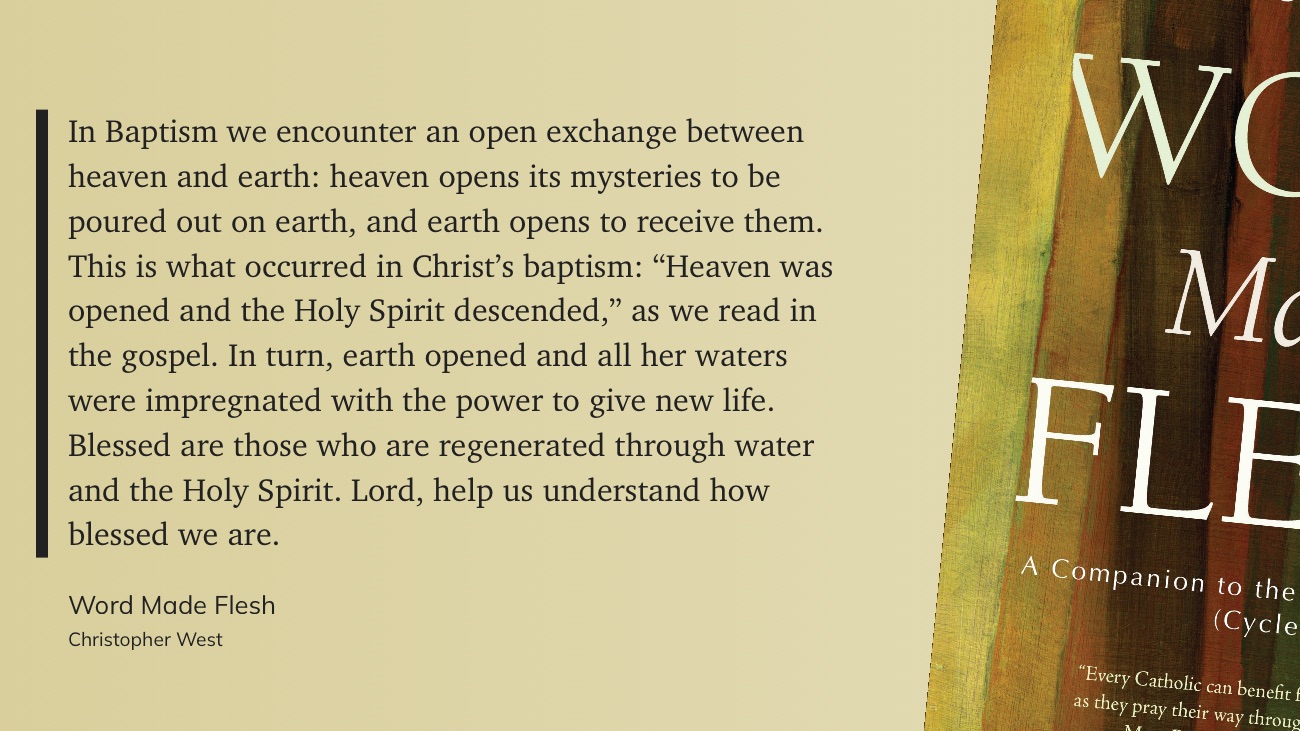
In the readings from Isaiah 42:1-4, 6-7, Acts 10:34-38, and Luke 3:15-16, 21-22, we find powerful connections to the Theology of the Body through the sacrament of baptism. Christopher West emphasizes that “Baptism we encounter an open exchange between heaven and earth,” and this idea is illustrated in these scriptural passages, particularly in the baptism of Christ as described in Luke’s Gospel.
Isaiah 42:1-4, 6-7 lays the foundation for understanding Jesus as the suffering servant of God. It establishes Jesus’ divine role as the chosen one who brings God’s justice and righteousness to the nations. This passage sets the stage for Jesus’ role in heaven’s opening during His baptism.
In Luke 3:15-16, 21-22, we witness Jesus’ baptism by John the Baptist. This event marks the start of Jesus’ public ministry and serves as an archetype for Christian baptism. During His baptism, heaven opens, and the Holy Spirit descends in the form of a dove, while God the Father’s voice confirms Jesus’ divine sonship. Here, heaven pours its mysteries upon the earth, and the power of the Holy Spirit impregnates the waters, providing new life to those who are baptized.
Acts 10:34-38 reaffirms that God shows no partiality among people and that His salvation extends to all who believe in Jesus Christ and receive baptism in His name. It highlights the universal aspect of baptism and its role in uniting believers in Christ’s body. This passage emphasizes that baptism breaks down barriers between people, enabling them to partake in the same divine mysteries and heavenly blessings.
In the Theology of the Body, baptism is significant as it signifies the person’s incorporation into Christ’s body and introduces them to the divine life of the Trinity. As Pope St. John Paul II stated, “Baptism is the sacrament of that rebirth by which man is adopted into the family of God and becomes a child of God.” Through baptism, individuals become members of Christ’s mystical body, participating in the heavenly life and receiving the power to live a new life of grace.
In conclusion, Isaiah 42, Acts 10, and Luke 3 emphasize the opening of heaven during the sacrament of baptism and its transformative power in the lives of the faithful. These passages highlight the importance of baptism in the Theology of the Body, revealing its role in uniting believers with the divine life of the Trinity and fostering their identity as children of God.

VOCATIONS




Baptism of the Lord - YEAR C

THE WORD THIS WEEK
PREACHING CONNECTION
The passages of Isaiah 42:1-4, 6-7 and Acts 10:34-38 offer profound wisdom and guidance to individuals who are discerning a vocation to religious life or priesthood. These scriptural texts shed light on the nature of true servanthood, humility, and the mission of proclaiming God’s love to all nations.
The Lord’s Chosen Servant
Isaiah 42:1-4, 6-7 speaks of the Lord’s chosen servant, who carries out God’s will with humility and gentleness. This servant is given as a “covenant to the people, a light to the nations” (Isaiah 42:6). In discerning one’s vocation, the passage encourages individuals to recognize that a call to religious life or priesthood is not about personal gain or ambition but rather a humble and faithful response to God’s will.
This message resonates with Jesus’ own example of servant leadership, as He was sent by the Father to fulfill God’s plan of salvation. Those discerning a vocation are invited to emulate Jesus’ humility and selflessness, allowing God’s will to be done in their lives and becoming instruments of divine love and reconciliation.
God’s Impartiality and the Universal Nature of His Love
Acts 10:34-38 emphasizes God’s impartiality and the universal nature of His love. It teaches that anyone who believes in Jesus Christ and lives a life of faith and charity is acceptable to Him. This passage has significant implications for those discerning a vocation to religious life or priesthood, as it underlines the importance of serving all people and transcending human divisions.
In the context of vocational discernment, Acts 10:34-38 calls individuals to embrace the universality of God’s love and be open to serving diverse communities. A call to religious life or priesthood entails a commitment to proclaim the Gospel message to all, bringing God’s love and mercy to people from all walks of life.
Baptism and Identify as God’s Beloved Child
In Luke 3:15-16, the people were speculating about John the Baptist’s identity, perceiving him as the Christ. However, John clarified that one more powerful than him was coming, who would baptize with the Holy Spirit and fire. This is a clear reference to Jesus, the true Servant of God, whose baptism inaugurates His public mission.
Luke 3:21-22 recounts Jesus’ baptism by John and the remarkable events that followed: the heavens opened, the Holy Spirit descended upon Him in the form of a dove, and a voice from heaven declared, “You are my beloved Son; with you I am well pleased.” This passage is crucial in the discernment process because it emphasizes the connection between baptism and one’s identity as God’s beloved child.
Baptism, as the gateway to Christian life, is the foundation upon which vocational discernment rests. Through baptism, the individual is initiated into the life of Christ, receiving the call to holiness and discipleship. In the context of discerning a call to religious life or priesthood, one must remember that it is through the grace of baptism that they can respond to God’s call and dedicate themselves to His service.
Luke 3:15-16, 21-22 also highlights the connection between baptism and the mission of the servant. Jesus’ baptism marks the beginning of His earthly mission as the suffering servant, who will ultimately accomplish God’s plan of salvation. Similarly, those called to religious life or priesthood receive a new mission through baptism and ordination, becoming servants of Christ’s Gospel and instruments of God’s mercy and love.
WORK
Baptism of the Lord - YEAR C
Baptism of Jesus
“Then Jesus came from Galilee to the Jordan to be baptized by John. But John tried to deter him, saying, ‘I need to be baptized by you, and do you come to me?’ Jesus replied, ‘Let it be so now; it is proper for us to do this to fulfill all righteousness.’ Then John consented. As soon as Jesus was baptized, he went up out of the water. At that moment heaven was opened, and he saw the Spirit of God descending like a dove and alighting on him. And a voice from heaven said, ‘This is my Son, whom I love; with him I am well pleased.’”
…After John consents and baptizes Jesus, the Holy Trinity appears—Father, Son, and Holy Spirit. The heavens open, revealing new access to the presence of God. The Spirit-dove descends, alighting on the Son. A voice from heaven speaks, “This is my beloved Son, with whom I am well pleased.” And John, the scruffy Baptiser, is drawn into the drama, playing a small but important part.
Giving Ourselves Away
Jesus receives the affirmation and affection of his father at his baptism and then gives it away, ultimately giving himself away on the cross. Likewise, the favor of God that is spoken over Jesus is extended to us as we are baptized in the name of the Father, Son, and Holy Spirit. The expectation is that in turn we will do the same. Give away the love we’ve been given. Give ourselves away.
There are countless ways of giving away the love of God. Nearly all of them will cost us dearly. But such is the confounding nature of love.
QUESTIONS FOR REFLECTION: Where in your life are you being asked to say “yes” to Jesus? What difference would it make if God spoke the following words to you: “This is my beloved son/daughter, with whom I am well pleased?”
PRAYER: Heavenly Father, we thank you for coming to us in the person of your son, Jesus Christ. We humbly say “yes” to your invitation to us and ask for grace and courage to serve others as we have been served. In the name of the Father, the Son, and the Holy Spirit, Amen.
SOURCE: Theology of Work Project