JAN 12, 2025


TIME-STAMPED VIDEOS
Archbishop Gomez

TIME-STAMPED VIDEOS
Bishop Robert Barron
2022 | 2025

2022 — KEY INSIGHTS w/TIMESTAMPS
Baptism empowers all Catholics to embrace their identities as priests, prophets, and kings, calling them to actively participate in worship, pray for others, share their faith, and guide themselves and their communities towards God.
- 00:00 Baptism connects us to Christ, empowering all baptized Catholics to fulfill the roles of priests, prophets, and kings.
- Baptism unites us with Christ, making us share in His relationship with the Father and anointing us as priests, prophets, and kings.
- A priest in the Bible mediates between God and people through sacrifice and prayer, and all baptized Catholics share in this priestly role.
- 02:20 Intercessory prayer is essential to the priestly identity of every baptized person, emphasizing their role in praying for others.
- Intercessory prayer for others is a vital expression of one's priesthood and identity in faith.
- Every baptized person has a priestly role to intercede in prayer for their family and others.
- 04:14 Most baptized Catholics, including many priests, are not attending Mass regularly, emphasizing the need for communal participation in worship.
- Most baptized Catholics, including a significant number of priests, are not attending Mass regularly, with only 20 to 25% participating in the central prayer of the Church.
- At Mass, everyone participates as a priest by joining their sacrifices to the priest's offering, highlighting the communal nature of worship and the importance of contributing to the collection as a priestly act.
- 06:23 Being a prophet, like those in the Bible, involves speaking God's words and facing significant challenges and dangers, as exemplified by figures like Jeremiah and Jesus.
- 07:48 Every baptized person is called to be a prophet by sharing their faith and teaching others.
- Every baptized person is called to be a prophet by publicly articulating their faith, studying Scripture, and preparing to teach others about their beliefs.
- The speaker recalls learning the sign of the cross from his mother at a young age.
- 10:15 Every baptized person is called to recognize and direct the unique gifts of others towards God, fostering a holy family where everyone discovers their purpose.
- 11:39 Mastering oneself is essential for effectively guiding others toward the kingdom of God, as every baptized person is called to exercise their kingship.
- 12:58 Embrace your identity as an anointed priest, prophet, and king through your baptism and live it out fully.
SCROLL TO VIEW MORE
Upon clicking a TIMESTAMP, a video window will appear centrally on the screen,
providing a focused and convenient viewing experience.
2022 | 2025

2025 — KEY INSIGHTS w/TIMESTAMPS
Jesus' baptism is a pivotal moment that highlights his identification with sinners and foreshadows his mission as the sacrificial Lamb of God, contrasting with the corrupt practices of the Jerusalem Temple and emphasizing the need for spiritual renewal.
- 00:00 Jesus' baptism, despite being an embarrassing act of seeking repentance alongside sinners, is crucial for understanding his identity and mission as presented in the Gospels.
- 01:11 John the Baptist, despite his priestly lineage, chooses to preach in the desert rather than the temple due to the political turmoil and corruption of King Herod's rule.
- 02:46 Jesus's actions symbolize his role as the Messiah, focusing on the restoration and purification of the Temple.
- 03:39 John the Baptist, disillusioned by Herod's corrupt legacy, establishes a new spiritual authority in the desert, offering forgiveness and a fresh start for the people.
- 04:58 John's baptism in the desert symbolizes a new temple project, offering forgiveness and preparing people for a deeper connection with God, contrasting with the corrupted Jerusalem Temple.
- 06:28 Jesus' baptism signifies his identification with sinners and his role as the Lamb of God, the ultimate sacrifice for the forgiveness of sins.
- 07:59 The ritual of sacrificing an unblemished lamb at the temple symbolized the transfer of a person's sins onto the lamb, representing a substitutionary sacrifice for atonement.
- 09:14 Jesus' baptism symbolizes his identification with sinners and foreshadows his sacrificial role as the Lamb of God for humanity's salvation.
- Jesus' baptism signifies his identification with sinners and foreshadows his ultimate sacrifice as the Lamb of God who takes on the sins of the world.
- Jesus' baptism serves as a crucial lens for understanding his sacrificial role in the Mass, where his body and blood are offered for the salvation of humanity.
SCROLL TO VIEW MORE
Upon clicking a TIMESTAMP, a video window will appear centrally on the screen,
providing a focused and convenient viewing experience.
TIME-STAMPED VIDEOS
The Jesuit-Post

2022 — KEY INSIGHTS
Every baptism symbolizes the significant moment of Jesus’ baptism, affirming our identity as beloved children of God and our unity with Christ.
- 00:00 Every baptism reflects the profound moment of Jesus’ baptism, where God declares us His beloved children, uniting us with Christ.
SCROLL TO VIEW MORE
Upon clicking a TIMESTAMP, a video window will appear centrally on the screen,
providing a focused and convenient viewing experience.
TIME-STAMPED VIDEOS
Archdiocese of Brisbane

2025 — KEY INSIGHTS w/TIMESTAMPS
Jesus’ humble baptism exemplifies the importance of righteousness, tenderness, and compassion in our relationship with God and our service to others.
- 00:00 Jesus humbly submits to baptism, demonstrating the importance of righteousness and a deep relationship with God.
- 00:44 Tenderness, as exemplified by Jesus, is a revolutionary act of love and sensitivity that calls us to be gentle and kind, focusing on the pain of others.
- 01:23 Baptism strengthens our bond with God, urging us to compassionately serve others and embody His presence in our lives.
- 01:59 Use your body, soul, and mind to express God’s tender love for all.
SCROLL TO VIEW MORE
Upon clicking a TIMESTAMP, a video window will appear centrally on the screen,
providing a focused and convenient viewing experience.
TIME-STAMPED VIDEOS
Fr. Peter Hahn
2019 — KEY INSIGHTS w/TIMESTAMPS
The Feast of the Baptism of the Lord highlights Jesus’ identity as the Son of God and the transformative power of baptism, inviting us to embrace our identity as beloved children of God and live justly in community.
- 00:00 Christmas is an ongoing celebration of God’s presence and salvation, culminating in the Feast of the Baptism of the Lord.
- 00:58 The Feast of the Baptism of the Lord reveals Jesus’ identity as the Son of God, signifying his mission to save not just the chosen people but all of humanity.
- 01:36 God’s revelation of Jesus as His beloved Son through the Holy Spirit’s descent signifies a transformative event that invites us to engage with its ongoing significance.
- 02:21 Jesus, though sinless, is baptized to fully identify with humanity, transforming the waters of baptism into a source of grace for our cleansing.
- 03:14 Baptism transforms us into children of God, uniting us with Christ and each other within the church community.
- 04:00 Embracing the transformative power of Baptism, St. Paul urges us to reject godlessness and live justly as we await the Lord’s return.
- 04:36 We are all beloved children of God, infinitely loved and promised guidance towards eternal happiness and peace.
- 05:31 Embrace our shared identity and destiny in Christ, treating each other with respect and reverence while recognizing the enduring presence of God’s love and peace.
SCROLL TO VIEW MORE
Upon clicking a TIMESTAMP, a video window will appear centrally on the screen,
providing a focused and convenient viewing experience.
TIME-STAMPED VIDEOS
Father Kevin Rettig

2019—KEY INSIGHTS w/TIMESTAMPS
The search for lost connections, innocence, and meaning in life reflects a universal human experience that drives us to seek understanding, healing, and rediscovery of love and divinity within ourselves.
- 00:00 Jack Benny’s pride in his hometown school parallels the profound questions posed by the twelve-year-old Jesus, particularly the poignant inquiry to his parents, “Why were you looking for me?”
- 01:35 An elderly woman spent decades searching for her missing daughter, clinging to hope as she asked everyone she met if they had seen her.
- 02:42 A mother’s relentless search for her lost child mirrors the profound anguish felt by parents like Mary and Joseph during their desperate three-day search for Jesus.
- 03:32 Each of us searches for lost innocence and meaning in a world that often feels cynical and complex.
- 04:31 People often seek to reclaim lost beauty and faith, reflecting a deep yearning for what has been lost in themselves and the world around them.
- 05:32 Seeking lost connections and cherished memories prompts a personal journey of rediscovery for everyone.
- 06:36 Seeking answers to life’s profound questions and healing from its wounds drives the search for understanding.
- 07:29 Searching for deeper meaning reveals that love and divinity reside within us all, urging us to look inward rather than outward.
SCROLL TO VIEW MORE
Upon clicking a TIMESTAMP, a video window will appear centrally on the screen,
providing a focused and convenient viewing experience.
⬇️ Deacon Peter McCulloch

2019 | 2025
Baptism of the Lord - YEAR C

Is.40:1-5,9-11;
Tit.2:11-14;3:4-7;
Lk.3:15-16,21-22
Today we celebrate Jesus’ Baptism. This brings our Christmas season to an end, and it marks the second epiphany, when John the Baptist reveals Jesus to be not just an ordinary man, but also the true Messiah.
Now, some people wonder why Jesus was baptised at all, since he’s the Son of God and free of sin. The answer is that he didn’t have to be baptised. He chose to.
On that day, the Jordan River at Bethany was full of people. They were all unclean sinners who came to John seeking healing and a new beginning. But their presence symbolically defiled the water.
That’s why no community leaders were present. They wouldn’t associate with unclean sinners, and they personally saw no need to repent. But Jesus was different. He cared for the people and he wanted to encourage them. So he showed his solidarity by joining them in the river.
This discussion guide has been generated by the WORD THIS WEEK'S Catholic AI Assistant based on Deacon McCulloch's homily.

Comprehensive Discussion Guide for Jesus’ Baptism Sermon
Introduction and Context
- Jesus’ Baptism marks the end of the Christmas season and the second epiphany.
- John the Baptist reveals Jesus as the true Messiah at the Jordan River in Bethany.
- Discuss why Jesus, despite being sinless, chose to be baptized.
Contextual Background
- Reflect on the setting at the Jordan River: sinners gathered seeking healing, defiling the water symbolically.
- Consider why community leaders avoided the place.
Solidarity with Humanity
- Explore Jesus' act of solidarity by joining the sinners; what does this indicate about his mission?
- Discuss the significance of Jesus bringing the Holy Trinity to John’s baptismal ritual.
The Sacrament of Baptism
- Analyze the institution of the Sacrament of Baptism and its implications for Christians.
- How does Jesus’ Baptism parallel our own baptism?
Baptismal Parallels
- Discuss the parallels between Jesus' and our baptisms:
- God the Father’s proclamation.
- Opening of the heavens and the presence of the Holy Trinity.
- The role of prayer in baptism.
Jesus’ Commission
- Examine Jesus’ instructions for his disciples to baptize all nations.
- Reflect on the importance of remembering our Baptism (refer to Nicodemus’ conversation, John 3:1-21).
The Effects of Baptism
- What does Baptism do for us? Consider the elements it provides:
- A fresh start by cleansing from sin (Acts 2:38).
- Sanctifying grace and the imprinted indelible sign.
- Reception of the seven gifts of the Holy Spirit.
Pope Francis’ Reflection
- Discuss Pope Francis’ 2018 insight that baptism is a gift, not a magical formula.
- How does this gift influence our ability to combat evil and improve the world?
Symbolism and Call to Action
- Meditate on the significance of the crucifix in the Church of Sant’Egidio and St. Teresa of Avila’s poem.
- How does the imagery of being Christ's body in the world resonate with your understanding of baptismal responsibility?
Practical Reflection
- Next time you use holy water, consider its symbolism in reminding you of Baptism.
- Reflect on how you can embody the life of Christ in your everyday actions, representing him in the world.
Concluding Thoughts
- Discuss ways to stay connected to the essence of your Baptism.
- Explore any personal experiences or insights you have regarding living out your baptismal call.
This guide can serve as a framework for small group discussions, encouraging participants to engage deeply with the sermon’s themes and apply them to their lives.
This 300 word adaptation of Deacon McCulloch's homily was generated by our Catholic Assistant AI bot, to help preachers share key insights from the homily with children and teens.

Let's talk about a special moment in Jesus' life—his Baptism! It's when Jesus showed he was our Savior, the Messiah. Jesus didn’t need to be baptized since he was God’s sinless Son. But he chose to do it, showing he cared for everyone.
At that time, many people gathered at the Jordan River wanting a new start. Some leaders stayed away, thinking others were "unclean." But not Jesus! He joined them, and something amazing happened. The Holy Spirit came down like a dove, and God said, ‘This is my beloved Son, I am so proud of him.’
This was the start of Baptism as we know it. Just like Jesus’ Baptism, ours is special too. God calls us his beloved kids, Jesus becomes like our big brother, and we receive the Holy Spirit with gifts like wisdom and courage. Jesus showed us Baptism's importance by being baptized himself. Before he returned to heaven, he told us to spread the word and baptize others.
Baptism helps us start fresh, clean from sin, and filled with grace. In 2018, Pope Francis said that even though Baptism might seem simple, it's powerful. It helps us face life's challenges and make the world better. But like any seed, it needs care and faith to grow in our lives.
In a church in Rome, there's a cross of Jesus with no arms. It reminds us of St. Teresa of Avila’s message: Jesus has no body now on Earth but ours. We are his hands, feet, and eyes. So, next time you splash holy water or make the Sign of the Cross, think of your Baptism and how it makes you part of something awesome. You have the job of representing Jesus in the world today!
DISCLAIMER: Adaptations (like translations), may not fully capture the nuances or precise meanings of the original text. It's essential to read the original homily which can be accessed by clicking on the title above
2019 | 2025
Baptism of the Lord - YEAR C


Today, as we celebrate Jesus’ baptism in the Jordan River, let’s begin with the story of St Genesius of Rome.
Genesius was an actor and comedian who entertained the emperor Diocletian in the 3rd Century. He and his theatrical troupe generated great laughs by mocking Christianity.
In his last satirical play, Genesius pretended to receive the Sacrament of Baptism. It was meant to be funny, but during his performance something changed inside him: Genesius had a profound mystical experience. As he emerged from the water, he declared himself a Christian.
At first, Diocletian thought this was a joke, but on realising that Genesius was serious, he was enraged. He had Genesius tortured, and when he refused to renounce his new faith, Diocletian had him beheaded
This discussion guide has been generated by the WORD THIS WEEK'S Catholic AI Assistant based on Deacon McCulloch's homily.
1. St. Genesius of Rome:
- Discuss the story of St. Genesius – his initial mockery of Christianity, his conversion during a satirical play, and his subsequent martyrdom.
- Question: What can we learn from the transformation of Genesius about the power of faith and moments of conversion?
2. Meaning and Impact of Baptism:
- Explore how Baptism is portrayed as a sacred rite that changes lives, using both Genesius's and Jesus' experiences as examples.
- Question: How does Jesus' baptism in the Jordan River signify a pivotal transition in His life and ministry?
3. The Concept of Baptism – Death and Resurrection:
- Reflect on the Greek meaning of ‘baptise’ and its implications of dying to one’s old self and emerging anew.
- Question: How does the idea of being ‘born again’ resonate with your understanding of personal transformation?
4. New Identity in Christ:
- Examine the new identity and familial relationships gained through Baptism, including members of the Body of Christ and 'rebirth' in God's family.
- Question: How do these new relationships shape our sense of community and responsibilities within the Church?
5. Ongoing Transformation and Challenges:
- Discuss Peter Kreeft’s analogy comparing Baptism to Pinocchio’s transformation and the ongoing struggle with sin.
- Question: Why do you think individuals often relapse into old habits despite the purifying grace of Baptism?
6. Misunderstanding Baptism:
- Consider the common misconception of Baptism as a one-time event rather than the beginning of a spiritual journey.
- Question: How can we actively engage with our baptismal grace rather than treating it as a ‘magical formula’?
7. Nurturing the Seeds of Grace:
- Discuss methods of nurturing baptismal grace through faith, closely following Jesus, and participating in the sacraments.
- Question: Share practical ways to cultivate these 'invisible seeds of grace' in daily life.
8. The Role of the Community:
- Explore how the Body of Christ supports individuals in living out their baptismal promises.
- Question: What role does the Church community play in helping each other maintain this transformation?
This 300 word adaptation of Deacon McCulloch's homily was generated by our Catholic Assistant AI bot, to help preachers share key insights from the homily with children and teens.
Hey everyone! Today, let's discover the cool story of St. Genesius of Rome. Imagine him as a fun stand-up comedian and actor in the 3rd Century who loved making everyone laugh, even the emperor Diocletian. He’d often joke about everything, even Christianity.
During one of his plays, something amazing happened. Genesius was pretending to get baptized, but it turned real for him! He felt something incredible and decided he wanted to be a Christian. At first, everyone, even the emperor, thought he was still acting. When they realized he was serious, Diocletian got mad. He tortured Genesius, but Genesius stayed true to his faith until the end.
This story shows that baptism isn’t just a routine; it’s powerful and life-changing, just like with Jesus’ baptism. After Jesus was baptized, a dove hovered over him, and God said, “You are my beloved Son.” Then, Jesus began spreading God's word. Baptism is like hitting a reset button, giving us a fresh start as part of God’s family.
Think about it like this: Baptism is like Pinocchio becoming a real boy. He becomes real but still has to deal with his issues. That’s us! Baptism cleans us but we can still mess up. It’s not a one-time thing but the start of a journey. Pope Francis says baptism is a gift from the Holy Spirit to help us stay strong, but we must keep it alive by having faith and working on it.
How? Follow Jesus, participate in church, and pray. St. Genesius is now the hero of actors, showing that baptism offers a fresh beginning for everyone, no matter where you start. Always remember, there’s hope and a chance to start fresh, even when God seems far away.
DISCLAIMER: Adaptations (like translations), may not fully capture the nuances or precise meanings of the original text. It's essential to read the original homily which can be accessed by clicking on the title above
Baptism of the Lord - YEAR C

When asked if he was the Christ, John the Baptist redirected the crowd to the coming of Jesus. His humility offers us an example about how to live our lives as we follow the Lord.


⬇️ Fr. Austin Fleming
Baptism of the Lord - YEAR C

A parent’s affirmation of love and acceptance is essential for a child’s self-worth, reflecting the unconditional love of God, which should be the central message of the gospel.
- 00:00 Parents’ affirmations of love and acceptance are vital for children, yet many may struggle to express or receive these blessings.
- 01:19 A parent’s blessing is crucial for a child’s sense of worth, and missing it can lead to lifelong uncertainty about one’s value in their eyes.
- 02:28 A parent’s blessing and love provide a deeper sense of security and joy than any material possession or achievement.
- 03:34 Jesus, like all of us, longed for love and acceptance, ultimately finding it in his relationship with God the Father at his baptism.
- 04:45 Jesus receives his Father’s unconditional love and blessing, reminding us that we are all cherished by God simply for being His creations.
- 06:01 God’s love and mercy should be the core message of the gospel, yet many preachers have instilled fear and guilt instead.
- 06:53 Each of us, despite our flaws and sins, is a beloved child of God, created in His image and worthy of His mercy.
- 07:52 God’s unwavering love for each of us invites all, saints and sinners alike, to gather at the altar as beloved children of the Father.
This discussion guide has been generated by the WORD THIS WEEK’S Catholic AI Assistant based on Father Austin’s homily. NEED HELP? Copy and paste a question into the chat bot in the lower right corner of the screen and have our Catholic Assistant help you.
1. Personal Reflections on Parental Blessing:
– How significant is it for children to receive love and affirmation from their parents? Share experiences where you felt blessed or longed for such a blessing.
– Fr. Fleming mentions reasons why some parents may not express blessings and why children might not receive them. What are your thoughts on this, and how does such a dynamic affect personal growth?
2. Exploring the Concept of Inherent Blessing:
– Fr. Fleming speaks of Jesus receiving God’s blessing during his baptism. How does this event relate to our lives today?
– Discuss how the idea that God loves us unconditionally impacts you personally. Do you find it challenging or comforting?
3. The Longing for Love:
– The sermon emphasizes a universal longing to be loved and accepted. How do you see this need manifesting in your own life or the lives of those around you?
– Discuss how understanding God’s love as perpetual and unwavering might change the way you view yourself and others.
4. Contrast Between Love and Fear in Religious Teachings:
– Fr. Fleming critiques how the Church has sometimes emphasized fear over love. Have you encountered this in your spiritual journey?
– How can communities of faith better communicate God’s unconditional love according to the sermon?
5. Embracing Our Identity as God’s Beloved:
– Reflect on the statement: “Each of us is pleasing to God in spite of our sins because each of us is a child of God made in God’s image.” How can this perspective reshape your view on forgiveness and self-acceptance?
– How can your faith journey reflect the understanding that you are loved by God, regardless of your past actions or mistakes?
Activities:
1. Write a Blessing:
– Take a moment and write a blessing or a note of affirmation for someone in your life. Reflect on how expressing this love can impact both the giver and the receiver.
2. Meditation on Belovedness:
– Spend a few minutes in silent meditation, focusing on the words, “You are my beloved, with you, I am well pleased.” Consider how these words apply to you personally.
This 300 word adaptation of Fr. Smiga’s homily was generated by our Catholic Assistant AI bot, to help preachers share key insights from the homily with children and teens.
Hey everyone! Let’s talk about something really close to our hearts today: feeling loved and accepted by the people who mean the most to us, like our parents or guardians.
Imagine this: your dad says, “I love you! I’m so proud of who you are.” Or your mom says, “You’re such an amazing person, and I love you so much.” How awesome would that feel, right? But, sometimes, for different reasons, parents might not always say it, or maybe we just don’t hear it clearly when they try to.
Growing up, I missed hearing my dad say those words to me. He was a great person and I know he wanted to, but somehow, it just didn’t happen. So, I understand how it feels to wonder if you’ve got your parents’ blessing and love. Their blessing is like the best gift they can give us.
No amount of cool stuff, like new clothes or gadgets, can compare to knowing deep down that your parents totally accept and love you. For some of us, if that blessing doesn’t come from our parents, we might find it from other important people in our lives, and that’s okay. We all long for that feeling of being loved.
Now, let’s talk about Jesus. He needed this too. Even though he grew up with Joseph, he knew he had another Father, a heavenly one. The story we heard today tells us that when Jesus was baptized, God’s voice from the sky said, “You are my beloved; I’m so pleased with you.” Wow, right? Just like Jesus, we need to know that we are loved too.
Here’s the best part: God looks at each of us and says the same thing. God doesn’t care if we’re not perfect. We were made with love, for love, so that we can feel loved. Sometimes, it feels like the message of God’s love gets mixed up with fear and guilt. But at the heart of everything, God loves us just because we are His children.
Even when we mess up, God sees us as His beloved. He knew us even before we were born and has always loved us. There’s nothing we can do to change that love. That’s why we’re invited to be part of God’s family, to gather and share in this love together.
So remember: each of us is a beloved child of God. We are loved, just as we are. You are special, and God delights in you. Isn’t that amazing to think about?
DISCLAIMER: Adaptations (like translations), may not fully capture the nuances or precise meanings of the original text. It’s essential to read the original homily which can be accessed by clicking on the title above

Baptism of the Lord - YEAR C
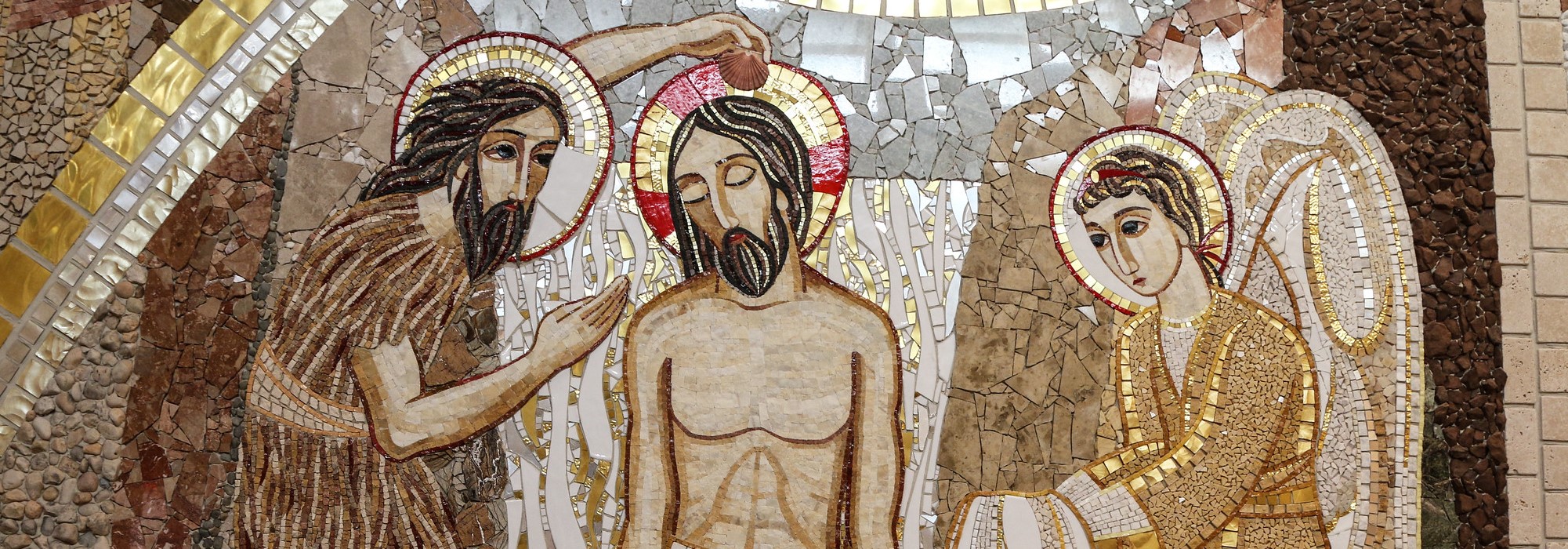
The following adaptation of the Dominican Blackfiars' homily for this week, generated by our Catholic Assistant AI bot, is provided to help preachers share key insights from the homily with children and teens.
Hey everyone, today we're diving into the story of Jesus' baptism and what it really means for us. We're checking out a passage from the Bible, specifically Luke 3:15-16,21-22. You might wonder, what about the stuff in between? No worries, I’ll fill you in.
So, in the part that's skipped, John's talking about what's gonna happen when Jesus shows up. Luke, who wrote this part of the Bible, adds a little sneak peek into the future where John ends up in jail because he was telling everyone about Jesus. It's like setting the scene to show that John's role was coming to an end so that Jesus could step into the spotlight.
Now, when Jesus gets baptized, it's a really big deal. It's the moment God the Father basically says, "This is my Son, I love him so much." This shows us who Jesus really is—God’s beloved Son. But it’s not just about who Jesus is. It's also about what he's here to do. Jesus wasn't just born to sit around; he came here to make a difference, to help us and bring us closer to God.
Think about it this way: Jesus’ whole life was about love—love from God and love for others. When he spent time with people who were left out or looked down on, he was showing us what God’s love looks like in action. And it all started with his baptism, right there in the Jordan River, symbolizing a fresh start and showing us the way to our true home with God.
For us, baptism is also the beginning of our new life as part of God’s family. At our baptism, God tells us, "I love you." It's a reminder that at our core, we are loved by God. This love is the strongest, most incredible love there is.
So, as we celebrate this day, let's remember our mission: to live out this identity by serving others, just like Jesus did. No matter how much love we've experienced in our lives, God's love for us is even greater. Let's be inspired by this love to walk in Jesus' footsteps, bringing his love to everyone we meet.
DISCLAIMER: Adaptations (like translations), may not fully capture the nuances or precise meanings of the original text. It's essential to read the original homily which can be accessed by clicking on the title above.
This discussion guide has been generated by the WORD THIS WEEK'S Catholic AI Assistant based on the Dominican Blackfiars' homily for this week. NEED HELP? Copy and paste a question into the chat bot in the lower right corner of the screen and have our Catholic Assistant help you.
Discussion Questions
Introduction
The sermon explores the significance of Jesus' baptism, emphasizing his divine identity and mission. It examines how the baptism is pivotal both in understanding Jesus' nature and the commencement of his earthly ministry.
Discussion Questions
1. Reading Comprehension
- Why are verses 17 to 20 omitted in the Gospel reading of Luke 3:15-16,21-22? How does this omission shape our understanding of the narrative?
- What is the significance of using the passive form "Jesus having been baptised" in the context of Luke's narrative?
2. Jesus’ Identity
- How does the baptism of Jesus confirm his identity as "the image of the invisible God"?
- In what ways does the Father's response to Jesus' baptism ("You are my beloved Son") reveal the nature of God's love?
3. Beginning of Ministry
- How does the baptism signify the start of Jesus' public ministry?
- Discuss Jesus' mission as one of service and sacrifice. How is it embodied in his statement about coming to serve and give his life?
4. Living Out Identity
- According to the sermon, what does it mean for us to receive adoption as God’s children through baptism?
- How can we reflect the love of God in our daily lives, following the example of Christ?
5. Jesus’ Solidarity with the Outcasts
- How does Jesus' baptism and ministry demonstrate solidarity with the outcasts and marginalized?
- Discuss the symbolism of passing through the Jordan as a re-enactment of the return from exile. How does this relate to Jesus' mission and our spiritual journey?
6. Reflection and Application
- How can this feast of the Baptism of the Lord inspire us to live a life of service and love?
- Reflect on your own baptism. How does it shape your identity and relationship with God?
Closing Reflection
Meditate on the realization that all love, joy, and delight experienced in human relationships are magnified in God's infinite love for us. Consider how this truth can transform both individual lives and community practices.
Homily Excerpt
Fr Richard Joseph Ounsworth considers how the baptism of Jesus points to his identity and his mission.

The Feast of the Baptism of the Lord. Fr Richard Joseph Ounsworth considers how the baptism of Jesus points to his identity and his mission.
When a reading at Mass, especially the Gospel, has a reference like today’s, it always raises a question in the mind. To save you going to the end of the sermon, it is Luke 3:15-16,21-22. The question is obvious: what happens in verses 17 to 20?
There is no conspiracy. The Church is not trying to conceal the content of these verses, but only I suppose to spare Mass-goers from having to listen to more of the passage than might be directly relevant. The answer to our question is that, between the verses in which St John the Baptist points towards the coming Christ and those in which Jesus is in fact baptised, St Luke gives us what we might call a ‘flash-forward’. This is quite an unusual technique, being the opposite of the more common flashback: we are told that, in response to the preaching of John, Herod had him arrested, a fact told to us in slightly different ways also in Matthew and Mark.
Baptism of the Lord - YEAR C

The following adaptation of the Dominican Blackfiars' homily for this week, generated by our Catholic Assistant AI bot, is provided to help preachers share key insights from the homily with children and teens.
One awesome moment from the Bible shows God working in three ways: God the Father speaks from the sky, Jesus stands in the water, and the Holy Spirit comes down like a dove. This happens when John baptizes Jesus in the River Jordan.
A big question is: Why did Jesus get baptized if He’s perfect? He didn’t have sins to wash away. St. Ambrose said Jesus was baptized not to clean Himself, but to make the water holy so that we could be cleansed. This act was more for our benefit than His own.
Baptism is a powerful ritual and more than just a symbol. The word "symbol" means "bringing together." Baptism connects us to something bigger and makes us part of God’s family. It’s like a spiritual life hack, changing us on the inside and bringing us from darkness to light. It’s a way to be in a relationship with Jesus.
In Acts, Peter talks about how God gave Jesus the Holy Spirit to do amazing things. Through baptism, God is also with us every day. So, are we with Him? Are you ready to follow Jesus and see where that journey takes you?
Baptism brings blessings into our lives. It shows us the path to something greater. Let’s let the Holy Spirit guide us and live in a way that pleases God. Remember your baptism and the sense of belonging it brings. That’s where you'll find true meaning and salvation.
DISCLAIMER: Adaptations (like translations), may not fully capture the nuances or precise meanings of the original text. It's essential to read the original homily which can be accessed by clicking on the title above.
This discussion guide has been generated by the WORD THIS WEEK'S Catholic AI Assistant based on the Dominican Blackfiars' homily for this week. NEED HELP? Copy and paste a question into the chat bot in the lower right corner of the screen and have our Catholic Assistant help you.
Contextual Background:
- The Gospel of Luke describes a key moment involving the Holy Trinity: God the Father, Jesus the Son, and the Holy Spirit during Jesus' baptism.
- Jesus' baptism is symbolic and significant despite his sinlessness.
Discussion Questions:
1. Understanding Jesus' Baptism
- Why might some question the need for Jesus to be baptized? How does this challenge our understanding of baptism?
- Consider St. Ambrose's statement: ‘Our Lord was baptised because He wished, not to be cleansed, but to cleanse the waters’. What does this imply about Jesus' role and intention?
2. Symbolic Meanings of Rituals
- Reflect on the idea of rituals as necessary for community unity and personal belonging. How do you perceive rituals in your spiritual life?
- Discuss the symbolism of Jesus being baptized in the River Jordan, drawing parallels to the Israelites' crossing.
3. Baptism as a Sacrament
- Explore the concept of baptism as more than a symbol. How does it become a sacramental act in the Christian faith?
- Examine how baptism signifies and effects transformation. What does this transformation entail for a believer?
4. The Holy Trinity and the Gift of Baptism
- Reflect on the statement: ‘God is with us: He is Emmanuel’. How is God's presence through baptism experienced in one’s life?
- Peter in the Acts of the Apostles highlights Jesus doing good and healing because ‘God was with him’. How can this inspire your post-baptism journey?
Personal Reflection:
1. Revisiting Baptism
- Think about your own baptism or one you have witnessed. What personal meaning and significance does it hold?
- How can revisiting the grace conferred by baptism influence your current faith journey?
2. Following Jesus
- The sermon poses the question: "Will you follow him?" Reflect on what this means for you today.
- Where might following Jesus lead you in your personal spiritual journey and community involvement?
Concluding Thoughts:
- Consider how this session's reflections might shape your understanding and appreciation of the sacrament of baptism.
- Discuss how the guidance of the Holy Spirit can impact your walk of faith, aiming for a life pleasing to God.
Encouragement:
- Engage with these themes with an open heart, allowing the mystery and beauty of the sacrament of baptism to enrich your faith and understanding of community within the Church.
Homily Excerpt
Fr Samuel Burke preaches on the human and superhuman need for baptism.
Saint Luke’s Gospel describes a remarkable scene in which all three persons of the Holy Trinity act explicitly in concert: the voice of God the Father from heaven; Jesus, God the Son, in the water; and the Holy Spirit descending as a dove. John’s baptism in the River Jordan is nothing short of another epiphany but one that may prompt various questions.
One such question was asked of me the other day by someone whom I was instructing for baptism. He asked why, since Jesus was God, he needed to be baptised. It’s a reasonable and fairly common question, and with which early Christians wrestled, in fact. After all, why would the Immaculate Lamb, the holy one, need to submit to an act of ritual purification?
Of course, Jesus didn’t need to be baptised since he’s not a sinner in need of purification, like you and me. Rather, as St. Ambrose put it, ‘Our Lord was baptised because He wished, not to be cleansed, but to cleanse the waters’. Ambrose is not here referring to some sort of clean river campaign. Jesus wants to cleanse the waters so as to cleanse us, to sanctify the water which can then purify us. This comes as welcome icing on the theological cake because Jesus had already taken on the sin of the human race at his incarnation, when he became a man ‘for our salvation,’ as we say in the Creed. And we have just celebrated all of that at Christmas over the past couple of weeks. So Christ was baptised not because he needed to be, but because we need to be. This need can be understood on at least two levels, I think.
⬇️ Fr. Charles E. Irvin
Baptism of the Lord - YEAR C
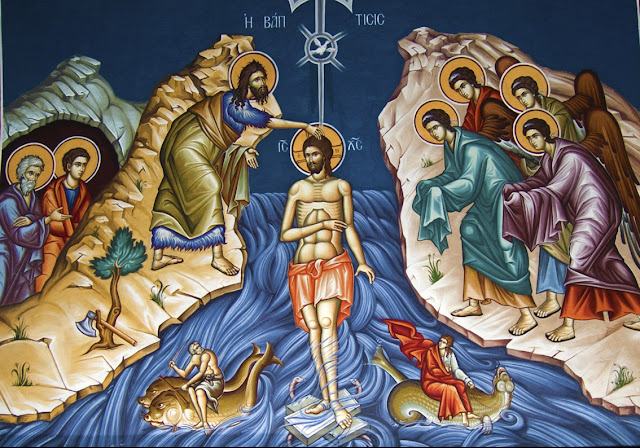

Making a commitment is the most important part of any great task that we undertake. But it’s not the only thing. We need to acquire education and knowledge. We need to practice and develop our skills. The highly challenging task of being a mother or a father draws up from deep within us everything we have. We don’t enter parenthood with an Operators Manual given us when a child is born. We get an Operators Manual when we buy a VCR but we certainly don’t get one with the birth of a child. And getting married and having a family is an adventure in which we are trained on the job. We can never adequately know ahead of time all what we’ll need to know in order to be good husbands and wives, fathers and mothers. Certainly in the seminary I didn’t receive all that I needed in order to develop into being a reasonably decent priest. I’ve had to learn that while on the job (something that many people had to suffer!).
But in spite of all that we may have or not have, the one thing that is absolutely essential is commitment. Nothing at all of lasting value happens without commitment. It may not be everything that’s needed, but it is the key element. Nothing else will work without it. And there’s nothing easy about commitment. The culture that surrounds us sends us many messages that work against the keeping of our commitments. I’m not saying that all movies and all TV shows are bad. There are really good movies about commitment and keeping one’s promises. But clearly our surrounding culture promotes self-interest, not self-sacrifice.
This discussion guide has been generated by the WORD THIS WEEK’S Catholic AI Assistant based on Fr. Irvin’s homily. NEED HELP? Copy and paste a question into the chat bot in the lower right corner of the screen and have our Catholic Assistant help you.
Discussion Guide:
1. Jesus’ Realization of Identity:
– Reflect on what it might have been like for Jesus to come to the realization of His unique relationship with God. How does this relate to your own journey of self-discovery and faith?
– Discuss the significance of Jesus’ baptism in His awareness of His mission. How does this event symbolize commitment in your life?
2. The Role of Commitment in Life:
– Consider the necessity of commitment in tasks like parenthood, marriage, and religious vocation. How does the sermon view the process of learning and growing into these roles?
– Share personal experiences where commitment played a vital role. What did you learn from these experiences?
3. Societal Challenges to Commitment:
– Explore how modern culture might challenge the concept of commitment. What influences do media and society have on our understanding of commitment and self-sacrifice?
– Discuss examples of stories or individuals who exemplify heroic commitment. What lessons can we learn from them?
4. Genuine vs. Casual Relationships:
– Analyze the impacts of casual, superficial relationships versus committed, genuine friendships. How do these different types of relationships affect individuals emotionally and spiritually?
– How can commitment and faith strengthen each other according to the sermon’s perspective?
5. Personal Reflections and Aspirations:
– Are you or someone you know considering marriage, parenthood, or a religious calling? How can the idea of commitment guide this decision?
– Reflect on your own baptism or other sacraments of commitment you have participated in. How can you use these experiences to foster committed love for others?
6. God’s Commitment to Us:
– How does recognizing God’s unwavering commitment to us empower us to commit to others?
– Share thoughts or experiences where you felt assured of God’s love and favor in difficult times.
Conclusion: Encourage group members to continue reflecting on the role of commitment in their personal faith journey and relationships. Invite them to think about how their commitments can emulate the commitment of Jesus, Mary, and St. Joseph.
This 300-400 word adaptation of Fr. Irvin’s homily was generated by our Catholic Assistant AI bot to help preachers share key insights from the homily for young people.
Have you ever wondered when Jesus really knew who He was? Imagine being a kid and realizing there’s something special about you. As a young boy, Jesus started to understand He had a unique relationship with God. We might not know exactly when Jesus fully realized His purpose, but it was clear during His baptism by John in the Jordan River. Then, a voice from heaven said, “You are my beloved Son. On you, my favor rests.” Jesus knew God had amazing plans for Him, even if He didn’t know every detail.
Let’s talk about commitment. Taking on something big, like school or sports? Commitment is key. It’s not everything, but without it, nothing works. When learning a new skill, you need practice and commitment to improve. The same goes for being a good friend or family member.
Our culture often tells us to put ourselves first, but great things happen when we commit. Think of stories about people staying by loved ones in tough times. Those show what true commitment looks like.
Jesus started with commitment, as did Mary and Joseph. In relationships, whether with friends, family, or God, those with commitment bring true joy. Casual friendships may seem fun but can leave you feeling empty. True friendships built on commitment are full of trust and happiness.
People often share stories about deep, loving commitment, even when facing misunderstandings or tough situations. They stay committed because of love, which is powerful.
Thinking about the future, like marriage or a career? Start with commitment. It’s the foundation. That’s why we have sacraments like Baptism and Matrimony. They’re not just ceremonies; they’re promises of commitment and remind us of God’s love.
Think about your own baptism. Remember, God says to you, “You are my beloved son or daughter, and I will love you no matter what.” God’s commitment helps us share love with others.
DISCLAIMER: Adaptations (like translations), may not fully capture the nuances or precise meanings of the original text. It’s essential to read the original homily which can be accessed by clicking on the title above
⬇️ Fr. George Smiga
Baptism of the Lord - YEAR C
Each week, THE WORD THIS WEEK presents an excerpt from Fr. Smiga’s homily archive. To access all of the homilies for this Sunday, click on the title above. Then scroll down the page to find the text of this homily.

2004 HOMILY – Today our society is radically redefining the meaning of retirement. That’s right. This homily addresses retirement from the perspective of faith. And before all of you in your teens and 20’s and 40’s tune me out, I want to promise that what I say applies to everyone in this church today. Because the development of retirement is changing the shape of all our lives. Today because of better nutrition and medicine Americans are living longer and better than any other people in the history of the world. Over the last fifty years the average American has gained ten years of productive life. That is an unheard of advancement in the length and quality of living. It changes the shape of what all of us are moving towards and how we need to prepare for it. The old pattern used to be this: You grew up; you raised a family; you worked hard; you retired; you played a little golf and perhaps moved to Florida; and it was over. Today, people retiring in their 60’s are facing 20 to 30 years of productive life. Now that is too long simply to play golf. (For some people! I don’t want any emails on this!)
So what are we to do with all that time? How can it be made productive? Much research is being done on this new retirement. Already a few conclusions are coming into focus. I would like to highlight three qualities that research has shown typify people who are satisfied and happy in the new retirement. Those three qualities are: expansion, service and relationships.
- The New Retirement (2004)
- Waiting for the Final Gift (2013)
- Signs of Life (2016)
- Jesus Always Understands (2019)
This discussion guide has been generated by the WORD THIS WEEK’S Catholic AI Assistant based on Fr. Smiga’s homily.
Discussion Guide: Embracing the New Retirement
Introduction
– Reflect on the story of Jesus’ baptism. How does the clear declaration of purpose at Jesus’ baptism resonate with your own life experiences?
Understanding God’s Direction
– Discuss the idea of divine guidance and how you perceive God’s direction in your life.
– How do societal patterns reveal God’s guidance to us?
The Redefinition of Retirement
– How is the concept of retirement changing in modern society?
– What are the implications of living longer, healthier lives on our understanding of retirement?
Expanding in Retirement
– What does “expansion” mean in the context of retirement?
– Share some interests or hobbies you might explore post-retirement.
– Discuss the potential benefits of pursuing new experiences or skills after retiring.
Embracing Service During Retirement
– Why is service considered important for a fulfilling retirement?
– Explore possible ways to engage in service activities and their impact on personal satisfaction.
The Role of Relationships in Retirement
– Discuss why developing a network of friends and relationships is crucial for a happy retirement.
– Reflect on how you can nurture these relationships throughout life.
Preparing for Retirement Now
– Consider ways to incorporate expansion, service, and relationship-building into your life, irrespective of age.
– Share strategies for investing in new skills and interests, engaging in service, and developing a strong social network.
Community as a Resource
– Discuss how a parish or community can aid in personal growth, service, and relationship building.
– Share how you can utilize community resources to support your journey toward a fulfilling retirement.
Reflection and Application
– Recognize the shifting societal patterns as a form of divine guidance. How does this perspective encourage you to live out your retirement purposefully?
– Reflect on practical steps you can take now to prepare for the future.
Conclusion
– Recognize retirement as a phase filled with opportunities for growth and service.
– Discuss how you can actively shape your future to ensure retirement is a blessing, not a burden.
This 300 word adaptation of Fr. Smiga’s homily was generated by our Catholic Assistant AI bot, to help preachers share key insights from the homily with children and teens.
Let’s think about Jesus’ baptism. When God said, “You are my beloved son,” it was a big moment. It was clear what Jesus’ purpose was. Imagine if we heard such guidance! But we often have to find our path by watching what’s around us, like trends in society. One important trend today is how people look at retirement.
Thanks to healthy living, people are enjoying longer lives. If you retire in your 60s, you could have 20 to 30 more years! It’s not just about relaxing; it’s about living meaningfully. The best retirements focus on learning, helping others, and staying connected.
Learning means growing as a person. After stopping work, you have time to explore new hobbies like music, stargazing, or starting a new project. Keep challenging yourself!
Helping others brings happiness. Whether you’re teaching kids or volunteering, giving back makes a difference in the lives of others and your own.
Friendships are crucial. As you grow older, it’s important to have a network of friends to share moments with. But why wait for retirement? Start now! What new skills can you learn? How can you help others even when you’re busy? How can you make more friends?
Your church can help with this. Join groups to discover new interests. Volunteer to see what makes you feel good. Plus, it’s a perfect place to form friendships beyond your usual circles.
We may not get a loud message from God, but by observing our world, we find His guidance. By growing, serving, and connecting now, the future will be bright and joyful.
DISCLAIMER: Adaptations (like translations), may not fully capture the nuances or precise meanings of the original text. It’s essential to read the original homily which can be accessed by clicking on the title above

Baptism of the Lord - YEAR C
Life-Issue Homilies for Sunday
Lifeissues.net is mainly concerned with publishing articles directly related to issues raised in Evangelium Vitae, but also offers weekly pro-life homilies.
RELATED PAGE:
Frank Pavone Video/Notes on Abortion
Baptism of the Lord - YEAR C

Homily Excerpt

The sincere Christian must be thoroughly committed to the Kingdom of God. This means that we must grow in our faith life through prayer and study. Prayer time is not something that we just add on to our day. It has to be fundamental to our day. When we think about what we are going to do tomorrow or any day of the week, we have to first consider making the time we need to be united with Christ in prayer. For some families that might mean fifteen to thirty minutes before the kids get up or after the children go to sleep. For all of us that means making a prayer schedule and keeping it.
The sincere Christian must be so thoroughly committed to the Kingdom of God that he or she is capable of defending the faith when challenged by those who would destroy the body of Christ. This challenge is most often issued by the hedonists mentality which domineers so many aspects of our society. Hedonism destroys the Body of Christ because its main focus is selfishness. It proposes that we do what is most pleasing for our bodies here and now without considering our responsibility to others or even to ourselves. It’s a rather immature mentality, one that is only interested in immediate pleasure. The committed Christian ascertains the effects of an action upon his or her sharing in the Life of Christ. He or she is not concerned with what a majority of people say. He or she is concerned with the effects of an action upon the spread of the Kingdom.
Baptism of the Lord - YEAR C
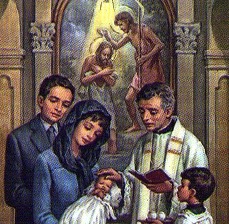
Today’s Feast of the Baptism of the Lord is a moment to reflect not only on the Lord’s Baptism but on our own. In an extended sense, when Christ is baptized, so are we, for we are members of His Body. As Christ enters the water, He makes holy the water that will baptize us. He enters the water, and we who are members of His Body go with Him. In these waters He acquires gifts to give us.
Let’s examine today’s Gospel in three stages:
I. The Fraternity of Baptism
II. The Fulfillment of Baptism
III. The Four Gifts of Baptism
This discussion guide has been generated by the WORD THIS WEEK’S Catholic AI Assistant based on Msgr. Pope’s homily. NEED HELP? Copy and paste a question into the chat bot in the lower right corner of the screen and have our Catholic Assistant help you.
Introduction to the Baptism of the Lord
The Feast of the Baptism of the Lord provides a profound opportunity to reflect on both the baptism of Jesus and the significance of our own baptism. In this moment, Christ makes the waters holy, acquiring gifts that would be bestowed upon all believers. Through this discussion, we will explore key themes of fraternity, fulfillment, and gifts associated with baptism.
The Fraternity of Baptism
Discussion Points:
1. Jesus’ Humility and Identification with Sinners:
– Why is it significant that Jesus, who was sinless, chose to be baptized by John, whose baptism was for repentance?
– Discuss the idea of Jesus not being concerned with how He is perceived by others when associating with sinners. What does this teach us about humility and acceptance?
2. Scriptural References:
– Reflect on Hebrews 2:11: “He is not ashamed to call us his Brethren.” How does this understanding impact your relationship with Jesus?
Reflection Activity:
– Share a personal experience where you or someone you know embraced humility or solidarity in an unexpected way. How did it resonate with you?
The Fulfillment of Baptism
Discussion Points:
1. Understanding Christ’s Fulfillment of Righteousness:
– How do the interpretations of Church Fathers like Chromatius, Chrysostom, and Theodore help us understand what it means for Jesus to “fulfill all righteousness”?
– Consider the metaphor of the column of fire from St. Maximus of Turin. How does prefigurement in the Old Testament enhance our understanding of baptism?
2. The Righteousness of God’s Promises:
– Discuss how Jesus’ baptism signified the fulfillment of God’s promises, particularly in relation to the Red Sea event. What does this reveal about God’s faithfulness?
Reflection Activity:
– Reflect on a time when a promise was kept to you. How did it change your understanding of trust and faithfulness?
The Four Gifts of Baptism
Discussion Points:
1. Access, Anointing, Acknowledgment, and Approval:
– How do the heavens opening, the descent of the Spirit, the acknowledgment as God’s beloved, and the Father’s pleasure at Jesus’ baptism symbolize the gifts we receive in our own baptism?
– Discuss the significance of each gift and how it affects your life as a baptized member of the Church.
2. Scriptural Insight:
– Examine Ephesians 5:30 and Romans 5:1. How do these verses elucidate the transformation that occurs at baptism?
Reflection Activity:
– Share the date of your baptism if you know it, and discuss how you celebrate or remember this day. Consider ways to commemorate this significant event in the future.
Conclusion: Celebrating the Gift of Baptism
Reflect on how the baptism of Christ and the gifts He acquired for us should be celebrated and remembered. Encourage a spirit of gratitude and celebration for the profound significance of your baptism, inviting group members to share personal insights and commitments on integrating these reflections into their daily lives.
This 300 word adaptation of Msgr. Pope’s homily was generated by our Catholic Assistant AI bot to help preachers share key insights from the homily for young people.
Hey everyone! Today, we’re talking about Jesus’ baptism and what it means for us. When Jesus got baptized, something amazing happened that makes our own baptism special.
The Connection of Baptism: Jesus went to the Jordan River to be baptized by John. John was confused because Jesus was perfect and didn’t need a baptism for sins. But Jesus was showing that He’s with us, even when we mess up. He loves us so much that He joins us in our imperfect lives.
The Promise of Baptism: Jesus said to John, “Allow it now, for this is how we fulfill what God wants.” This means God’s promises are coming true. Jesus’ baptism shows that God keeps His promises, like the amazing things He did in the past, such as when people crossed the Red Sea.
The Cool Stuff We Get from Baptism: After Jesus’ baptism, the sky opened, and God said, “This is my beloved Son, and I’m super pleased with Him.” Our own baptism is special because:
– Access: Baptism opens the door to heaven for us. We become part of God’s family.
– Anointing: The Holy Spirit comes into our lives, like having a superhero inside us!
– Acknowledgment: We are recognized as God’s beloved children, just like Jesus.
– Approval: God is happy with us! Through baptism, we receive grace and love from God.
So, remember your baptism is like your own “Yay!” day. Jesus did this not because He needed it, but for us, to give us these awesome gifts. Don’t forget to shout, “Hallelujah!” when you think about it.
DISCLAIMER: Adaptations (like translations), may not fully capture the nuances or precise meanings of the original text. It’s essential to read the original homily which can be accessed by clicking on the title above

Baptism of the Lord - YEAR C
Justice Homilies for Sunday
Fr. Jude Siciliano, O.P. was ordained in 1969. For fourteen years he taught homiletics at the Graduate Theological Union in Berkeley, CA, and is a past president of the Catholic Association of Teachers of Homiletics. He was a volunteer chaplain at San Quentin Prison and was actively involved with “People of Faith Against the Death Penalty,” in North Carolina. He preaches parish retreats and also travels throughout the country giving preaching workshops.
⬇️ Bishop John Louis
Baptism of the Lord - YEAR C
Baptism of the Lord
Homily Excerpt

We sometimes wonder why Jesus Christ (divine and sinless) had to go in for the baptism (by John the Baptist) which was meant for repentance. In fact, John himself initially resisted baptizing Jesus (Matt. 3:14). With the assistance of some of the [Saints,] St. Ambrose and St. Chrysostom, let us reflect on why our Lord was baptized.
St. Ambrose says, Jesus, being a wise Master does not teach only by words but also by practice:
- To teach humility and service, he washed the feet of his apostles;
- To teach the greatest act of love; he died on the cross.
- And so, to teach his apostles to go out and baptize, he accepted to be baptized.
So, beloved may our actions preach the Gospel louder than our words!
⬇️ Fr. Michael Chua
Baptism of the Lord - YEAR C

Homily Excerpt

The story of the baptism of the Lord is found in all four gospels with tiny but significant differences. In the Fourth Gospel, the account is reported speech or a hear say account by St John the Baptist, whereas Matthew, Mark and Luke record this event directly as if they had witnessed it or received the testimony of other witnesses. But in all three Synoptic gospels, we see both similarities and differences in the basic order. Matthew, Mark, and Luke all follow the same basic order of events: the appearance of St John the Baptist and an introduction to his ministry followed by the Baptism of the Lord.
Although both Matthew and Mark record that the Lord is baptised by John, Luke remains silent on this. We can only assume as the reader and from comparing this text with the other parallel texts, that our Lord was baptised by John. But this omission may in fact be deliberate. In fact, Luke may have wanted to emphasise that Jesus baptised Himself since no one was worthy to do so: “Jesus after his own baptism.” Unlike us who are adopted children of God through baptism, that is being baptised by another person, Jesus who is already the Son of God by nature had no need of such elevation or coronation. In Matthew and Mark, immediately after hearing the voice of the Father, Jesus is led by the Spirit into the wilderness to be tempted.
Baptism of the Lord - YEAR C

Homily Excerpt
The muddy yet calm waters of the river Jordan would have posed little threat to the crowds which gathered there to listen to this prophetic figure, with some acceding to be baptised by him after listening to his message of repentance. The contrast of this rustic scene dominated by water, with what many experienced a few weeks ago is stark. A week before Christmas, torrential downpours resulted in unprecedented floods leaving a massive trail of destruction, over 70 thousand persons displaced and casualties. The floods did not just destroy the personal belongings of the victims and deprived them of their homes and livelihood, but also cut them off from basic necessities like food and electricity, and ironically, a clean supply of water.
Water is arguably the most important natural resource in the entire world. All life depends on it. On the other hand, water may be a terrifying life changing force when it comes in the form of hurricanes, floods or tsunamis. Because of its universal nature, it is not surprising that water plays a central role in the Bible as well.
Baptism of the Lord - YEAR C

Homily Excerpt
With the renewal of the Liturgical Calendar after the Second Vatican Council, there are some strange and mysterious anomalies that have given rise to debates and controversies. Today’s feast is one of those “things.” Some commentators insist that today, the Solemnity of the Baptism of the Lord, is the end of the season of Christmas, since this event marked the end of Jesus’ early life and the beginning of His public ministry, and since the Church recalls Our Lord’s second manifestation or epiphany which occurred on the occasion of His baptism in the Jordan (tied to the first epiphany to the Magi which we celebrated last week during the Solemnity of the Epiphany of the Lord). And yet, there are many who insist that today is the beginning of Ordinary Time, since next week is already the Second Sunday in Ordinary Time, thus suggesting that this week, should be the First Sunday. Whichever position you may be partial to support, the ambivalence of situating this feast in either Christmastide or in Ordinary Time reflects the mystery of endings and beginnings. In a way, an ending can be a beginning.
Baptism of the Lord - YEAR C

Homily Excerpt

2025 HOMILY—God had baptism in mind when he created water and used it throughout salvation history, Pope Francis said in his Apostolic Letter Desiderio Desideravi. It was as if he wanted “to perfect” water by eventually making it “the water of baptism”—as if “he wanted to fill it with the movement of his Spirit hovering over the face of the waters” so that it would have within it “the power to sanctify”: to regenerate humanity through the Flood, open the way to freedom for the Israelites through the Red Sea, plunge into it “the flesh of the Word soaked in the Spirit” at Jesus’ baptism, blend it with the Blood of his Son on the cross, and pour it out from his pierced side.
Baptism, the Pope said, is not an act of “mental adhesion” to Christ’s thought, nor agreement with His “code of conduct.” Rather, it is “being plunged into His passion, death, Resurrection, and Ascension”; being “inserted into the Body of Christ” and thus given “the possibility of dying and rising” in him.
The following adaptation of Fr. Hawkswell's homily, generated by our Catholic Assistant AI bot, is provided to help preachers share key insights from the homily with children and teens.
Hey everyone! Let's dive into a cool story about Jesus' baptism. This moment is super important in his life, and here's why: Jesus didn't need baptism to wash away sins because he was perfect. But when he got baptized, he was showing us that he was joining us in our struggles.
Jesus was called the Lamb of God, ready to fix what we mess up. He told Nicodemus that to be part of God’s family, you must be "begotten from above" with water and the Spirit. Before going back to heaven, Jesus told his friends that anyone who believes in him and gets baptized is ready for a life with God.
Baptism is like the starting point for anyone who wants to follow Jesus. It's like the front door to an amazing adventure! Usually, a priest or deacon baptizes people, but in emergencies, anyone can do it. For example, a man wanted to be Catholic but got sick. In China, his Buddhist monk dad baptized him in the hospital. With help over the phone, he used water and said, "I baptize you in the name of the Father, and of the Son, and of the Holy Spirit." Just like that, a huge spiritual thing happened!
Water is great for baptism because it reminds us of cleaning, refreshing ourselves, and staying alive. God has used water in amazing ways, like in Noah's Ark and Moses parting the Red Sea.
Baptism is about starting an incredible journey with Jesus. It's not just about following rules, but experiencing his love and power. If you want to know more, check out a course called "The Catholic Faith in Plain English" by Father Hawkswell. It's a great way to learn more about your faith!
That's it for now. Remember, baptism is our entrance into an epic journey with Jesus!
DISCLAIMER: Adaptations (like translations), may not fully capture the nuances or precise meanings of the original text. It's essential to read the original homily which can be accessed by clicking on the title above.
This discussion guide has been generated by the WORD THIS WEEK'S Catholic AI Assistant based on Fr. Hawskwell's homily. NEED HELP? Copy and paste a question into the chat bot in the lower right corner of the screen and have our Catholic Assistant help you.
Introduction
1. Historical Context
- Discuss the changes made by Pope Pius XII, Pope St. Paul VI, and Pope St. John Paul II regarding the Feast of the Lord’s baptism and its significance within the Catholic Church.
- Reflect on the inclusion of Christ’s baptism as one of the Luminous Mysteries of the Rosary.
2. Theological Significance of Jesus' Baptism
- Explore why Jesus, though sinless, received baptism from John, who preached a baptism of repentance.
- Analyze the concept of Jesus taking on the sin of humanity and how his baptism marks the beginning of his public mission as the suffering Servant.
Discussion Questions
1. Understanding Jesus’ Baptism
- How does Jesus’ baptism align with his role as “the Lamb of God, who takes away the sins of the world”?
- What does Jesus’ baptism reveal about his mission and identity?
2. Baptism and Salvation
- Examine the conversation between Jesus and Nicodemus about being “begotten from above” with “water and Spirit.”
- Discuss the importance and implications of baptism as a “gateway” to the Christian life and access to other sacraments.
3. Administration and Accessibility
- Reflect on who can administer baptism and under what circumstances, drawing on the story of the young man in China.
- Explore the significance of the act of baptism and the use of specific words and water in the sacrament.
Symbolism of Water
1. Water in Baptism
- Discuss how water symbolizes different aspects of baptism, such as cleansing, rebirth, and life.
- Examine the idea of water as both a "grave and a mother" within the context of baptism.
2. Salvation History and Water
- Identify instances in salvation history where water played a crucial role, such as the Flood and the Red Sea.
- Analyze Pope Francis’ explanation of God’s intention to eventually use water as a means of sanctification through baptism.
Application and Reflection
1. Integration into the Body of Christ
- Discuss Pope Francis’s view of baptism not just as a mental agreement with Christ but as being “plunged into His passion, death, Resurrection, and Ascension.”
- Reflect on how baptism integrates believers into the Body of Christ and facilitates their spiritual growth.
2. Course Opportunities
- Consider the benefits of further education in the faith, referencing Father Hawkswell’s course “The Catholic Faith in Plain English.”
- Encourage participation in local or online resources for deeper understanding and connection with the teachings discussed.
This guide is meant to help small groups delve deeper into the themes and implications of baptism as presented in the sermon. Encourage participants to bring their insights, questions, and reflections for a rich and engaging discussion.
Click banners to access AI generated content.
⬇️ Fr. Denis J. Hanly

Father Denis J. Hanly (1932-2014) was a Maryknoll Missionary for over 55 years.
Baptism of the Lord - YEAR C

Homily Excerpt
This very short passage that Luke gives us, shows us that God has anointed the Messiah, has anointed His Son, Jesus, to go out and heal and save the world.
Roughly, if you look at what actually happened on that day when Jesus was baptised…
You remember he’s a grown man now and John is baptising in the River Jordan, which is a sacred river because it was in the crossing of the River Jordan that the people came in to the land of promise, the land of milk and honey, and so an appropriate place for John’s baptism.
Now you remember John’s baptism is a baptism that is basically understood as coming back to God. When people kind of begin to wander away from, not God, because you can’t wander away God…
You know the old saying that no matter how high you jump, you can’t jump out of the hand of the Buddha. Well, the same is true of God. No matter how far you run, He’s going to be there, maybe before you get there, to welcome you to your new place and new hideout.
⬇️ Fr. Tommy Lane
Baptism of the Lord - YEAR C
Jesus With Us
Homily Excerpt
Jesus, who was sinless and didn’t need to repent, didn’t need John’s baptism but as a sign of his solidarity with us, received baptism from John. Three years later, we see another act of humility and sign of Jesus’ union with us as he died on the cross but especially in his cry on the cross, “My God, my God, why have you forsaken me?” At Jesus’ baptism, the heavens opened, the Holy Spirit descended in the form of a dove and the Father said, “You are my beloved Son; with you I am well pleased.” Three years later, on Calvary, Jesus cried out, “My God, my God, why have you forsaken me?” (Mark 15:34) What is going on? The Catechism of the Catholic Church (§603) tells us that when Jesus uttered that cry on the cross, it was not a cry of punishment or separation from the Father because Jesus was always united with the Father. Instead, Jesus was assuming our sin on himself on the cross and, on our behalf, as he took our sin on himself, he cried out, “My God, my God, why have you forsaken me?” Pope Benedict XVI, in a Wednesday audience (February 8, 2012), said that as Jesus cried out, “My God, my God, why have you forsaken me?” he was certain that his cry would be heard in his resurrection and was looking forward to our redemption. Jesus was not separated from his Father. So as Jesus was about to begin his public ministry, he underwent baptism from John even though he did not need it, and three years later as his life finished on the cross, he cried out in his suffering for us as he took our sins on himself. This is Jesus’ solidarity with us.
Baptism of the Lord - YEAR C

Why was Jesus baptized? Even for the early church, as the canon of scripture itself was being formed, it seems to have been a controversial question. If Jesus goes before John for the “baptism of repentance,” it seems that Jesus himself is a sinner. The account from the Gospel of Matthew suggests as much when giving voice to John’s reluctance: “It is I who need baptism from you, and yet you come to me!”
Mark’s Gospel begins with John’s proclamation, “for the forgiveness of sins,” and the promise that “someone mightier than I is coming.” The next moment, we see the “someone,” whose sandal straps John is not worthy to untie, receiving the sign of repentance from John, not giving it.
This discussion guide has been generated by the WORD THIS WEEK’S Catholic AI Assistant based on Fr. Kavanaugh’s homily. NEED HELP? Copy and paste a question into the chat bot in the lower right corner of the screen and have our Catholic Assistant help you.
Introduction
– Begin with an opening prayer or reflection time.
– Briefly introduce the topic: the baptism of Jesus and its significance.
2. Understanding the Context
– Discuss the perplexity and controversy in the early church regarding Jesus’ baptism.
– Reflect on why it was unusual for Jesus, who was sinless, to undergo a “baptism of repentance.”
3. Scriptural Insights
– Matthew’s Account: Explore John the Baptist’s reaction and Jesus’ insistence on being baptized despite being sinless.
– Mark’s Account: Consider John’s acknowledgment of Jesus’ superiority and the symbolic nature of Jesus receiving baptism.
4. The Irony and the Mystery
– What is the significance of Jesus, the “one mightier,” taking a position of humility and weakness?
– Explore the idea of Jesus’ baptism as a redemptive mystery and a new beginning for human fate.
5. Jesus’ Solidarity with Humanity
– Discuss the author’s point about Jesus entering into solidarity with sinners and the implications this has for understanding Jesus’ mission.
– Consider how Jesus’ sinlessness yet full humanity reveals true human nature.
6. Revealing Humanity to Ourselves
– Discuss how Jesus comes to both reveal divinity and to reveal humanity back to itself.
– Delve into what it means that all sin is a rejection of true humanity.
7. Implications of Jesus’ Baptism
– How does Jesus’ acceptance of baptism signify the beginning of his mission to heal humanity?
– What transformations of the human condition does his baptism forecast?
8. Reflection on Personal Application
– Invite personal reflections on what Jesus’ baptism means for individual faith journeys.
– Encourage group members to share how understanding Jesus’ baptism might impact their perception of their own baptisms and lives.
9. Concluding Thoughts
– Summarize the main points discussed.
– Close with a group prayer, focusing on aligning oneself with the mission and purpose revealed in Jesus’ baptism.
10. Activities for Deeper Engagement
– Suggest reading further scripture passages about baptism and the life of Jesus (e.g., Romans 6:3-5, John 1:29-34).
– Encourage journaling or group discussions on how Jesus’ baptism models humility and acceptance of God’s mission.
This guide aims to facilitate discussion, personal reflection, and deeper understanding of the theological and spiritual significance of Jesus’ baptism.
This 300 word adaptation of Fr. Kavanaugh’s homily was generated by our Catholic Assistant AI bot to help preachers share key insights from the homily for young people.
Let’s explore why Jesus decided to be baptized. It’s a question that puzzled people because baptism was for repentance, or saying sorry for sins. But Jesus was perfect and had no sins! Even John the Baptist was surprised when Jesus came to him for baptism. John said, “I need to be baptized by you, and you come to me?”
So, why would Jesus be baptized? Think of baptism like a special ceremony to mark a new beginning or big change. Just like you might celebrate starting a new school year, Jesus’ baptism marked a new start for everyone. It was his way of showing he stands with us in life’s journey, even when things are hard.
Jesus wanted to show that being human isn’t about never making mistakes. It’s about growing and becoming better despite our mistakes. By choosing baptism, Jesus was saying he was ready to journey through life’s ups and downs just like we do.
His baptism was the beginning of an amazing story. Jesus stood against temptations, healed people, taught wonderful ways to live, and even faced betrayal and death. Through all of this, God said, “This is my beloved Son, and I’m really proud of him.” It’s like God says that to us, too when we act with love and courage, following Jesus’ example.
So, remember that whenever you’re thinking about who you are or what challenges you’re facing, Jesus is right there with you, cheering you on!
DISCLAIMER: Adaptations (like translations), may not fully capture the nuances or precise meanings of the original text. It’s essential to read the original homily which can be accessed by clicking on the title above
Baptism of the Lord - YEAR C
Homily Excerpt
The celebration of Christian funerals makes no sense without the sacrament of baptism. Perhaps the best catechesis on Baptism can be found in Paul’s letter to the Romans. St. Paul encourages us to remember that we who are baptized into Christ Jesus are also baptized into his death. If we die with Christ, we will also rise with him on the last day. That’s our perspective. When I am at a grave side, I sometimes make a comment that another word for burying a body into the earth could be the word “gardening”. Like Jesus tells us, unless a grain of wheat falls to the ground and dies, it remains a grain of wheat, but if it dies, it will yield a great harvest. And so, this is what we do when we bury someone into the ground. Because we believe in the resurrection of the body, we believe we are planting a seed that will bear fruit into everlasting life.
I love connecting the dots between baptismal liturgies and funeral liturgies because I believe, in many respects, they are intrinsically connected. On the day of our baptism, we are baptized by water and the Holy Spirit. During the celebration of Christian funerals, the first thing we do at the beginning of the liturgy is sprinkle the casket with Holy Water. On the day of our baptism, we are given a white garment. At a funeral celebration, usually a large white cloth, called a pall, is placed on the casket reminding us of this baptismal garment. On the day of our baptism, we were given a baptismal candle, lit from the paschal candle. At funeral celebrations, the paschal candle is lit reminding us of our baptismal candle. We are given the choice of white, 2 purple, or black for the liturgical color of a funeral celebration. It is understandable at times to wear a purple or black vestment, depending on the circumstance. Whenever possible, however, white is the preferred color of most priests, including this one, because that is the liturgical color of the celebration of Easter and therefore baptism. It is the color of the robes of the messengers at Jesus’ tomb after the resurrection. Their message to us was, why look for the living one among the dead. He is not here. He has risen!

Baptism of the Lord - YEAR C

We read about Peter in our second reading. Word comes to him that a Centurion of the Roman guard named Cornelius, a Gentile and therefore in the eyes of the Jews an unclean man, wished to be baptized.
Peter hesitated at first. After all, this man was defective in so many ways. He was a foreigner, a Gentile, a soldier of the occupying force, there was no way God could be calling him. Peter has a change of heart and says, I truly understand now that God shows no partiality. And so he takes this unclean Gentile, this sinner, into the faith community through baptism.
Many of us at times can identify with Cornelius. There are times we feel like unclean sinners, defective in one way or another, and unlikely candidates for holiness. A pagan once asked the rabbi, why did God choose the humble thorbush as the place to speak to Moses? Could He not have chosen a grander tree, or a mighty mountain? The rabbi said, God chose the humble thorbush to teach us that there is not place on earth bereft of the divine presence. Not even a thorbush.
That little parable tells us that we are all candidates for holiness. The divine presence wants to settle in our sometimes miserable thorbush lives. As Jesus himself said, I come to call the sick, not the well. We are all candidates for holiness, no matter who or what we are. Who else but Jesus would have called Peter, the one who denied Him, and made Him the head of the Apostles? Who else but Jesus would have called St. Paul, the persecutor of the Church, to spread the Gospel? Or St. Augustine, the Libertine, to teach the masses? Or Thomas Merton, the playboy, to popularize the contemplative life? And Dorothy Day, the Communist, to care for Christ’s poor?
This discussion guide has been generated by the WORD THIS WEEK’S Catholic AI Assistant based on Fr. Warren’s homily. NEED HELP? Copy and paste a question into the chat bot in the lower right corner of the screen and have our Catholic Assistant help you.
Discussion Guide
Introduction
– Begin with a brief reflection on the importance of baptism as highlighted in the sermon. Consider what baptism symbolizes and the commitments it entails.
Key Themes for Discussion
1. God’s Impartiality
– Discuss Peter’s initial hesitation and transformation regarding Cornelius. What does Peter’s change of heart signify about God’s view of inclusivity?
– Reflect on personal experiences where you have felt like an outsider or witnessed inclusivity in action.
2. Personal Holiness and Potential
– Explore the parable of the thornbush and its meaning in the context of divine presence in every person’s life.
– Consider how one’s imperfections can coexist with the call to holiness.
3. Historical Examples of Transformation
– Discuss the transformations of figures like Peter, St. Paul, St. Augustine, Thomas Merton, and Dorothy Day. What do these stories tell us about potential and redemption?
– How do these examples motivate us to answer God’s call despite our flaws?
4. Privileges and Responsibilities of Baptism
– Reflect on the comparison of baptism to membership, emphasizing both privileges and obligations.
– What expectations do you think are inherent to being part of the Christian community?
5. Acting Christ-like in Modern Times
– Delve into the story of Fr. Brennan Manning and the blind boy. What lesson does it impart about everyday acts of kindness?
– Share recent experiences where you or someone you know acted in a Christ-like manner.
6. Community of Contradictions
– Address the idea of the Christian community as one of contradictions, characterized by sinfulness but striving for love and compassion.
– How can we better support each other in our mission to embody Christ’s teachings?
7. Identity Through Baptism
– Discuss how baptism defines and reveals our identity in Christ.
– Ponder St. Paul’s message of unity in Christ and reflect on the implications of this teaching in today’s divided world.
Application
– Each participant can share a practical step they will take this week to live out their baptismal promise to be more Christ-like in their daily actions.
Conclusion
– Sum up the discussion by reiterating the sermon’s core message: We are all candidates for holiness through baptism, and despite our imperfections, we are called to be more like Christ in love, compassion, and unity.
This 300 word adaptation of Fr. Warren’s homily was generated by our Catholic Assistant AI bot to help preachers share key insights from the homily for young people.
Hey everyone! There’s a cool story about Peter and Cornelius. Cornelius, a Roman centurion, wanted to be baptized, but back then, people thought someone like him wasn’t right for this because he wasn’t Jewish. At first, Peter wasn’t sure, but then he realized something important: God doesn’t play favorites. So, Peter welcomed Cornelius into the faith community through baptism.
Ever felt like Cornelius? Like you’re not good enough for something great? Well, there’s a reason God spoke to Moses through a simple bush instead of something fancy. It shows us that God can be anywhere, even in places we might overlook.
Holiness isn’t just for “perfect” people. People like Peter, Paul, Augustine, and others all had flaws, yet did amazing things. We shouldn’t let mistakes stop us from doing great things, either. Baptism isn’t just a tradition; it’s like a starting line! It prompts us to embrace our community—imperfect but striving for love and kindness.
Here’s a true story: During the Great Depression, some salesmen rushing for a train knocked over a blind boy selling apples. Most kept running, but one stopped to help and made things right. The boy asked him, “Sir, are you Jesus?” That’s special kindness!
When was the last time you did something like that? Made someone feel loved? We’re part of a community that embraces flaws but seeks to get better. St. Paul said that in Christ, we’re all one big family.
So, baptism helps us remember who we truly are and encourages us to be more like Jesus. And when we do that, it’s as if God is saying, “You’re amazing, and I’m proud of you.” Let’s keep this in mind and spread kindness, because every little bit counts!
DISCLAIMER: Adaptations (like translations), may not fully capture the nuances or precise meanings of the original text. It’s essential to read the original homily which can be accessed by clicking on the title above
⬇️ Fr. Joe Jagodensky, SDS
Baptism of the Lord - YEAR C
Homily Excerpt

This is a good news and bad news sermon, and I’m not asking you which you’d like to hear first. I’ll give you the bad news first. Many, many years ago, the Sacrament of Baptism was all about the past…Original Sin as though there’s something original about it which we’ve been inflicted with it since dawn’s time.
“Get the kid baptized,” was the only anthem heard. If there were a delay between the hospital stay and the Church, then the Catholic nurse would secretly drop a few droplets on the infant’s head, thinking to herself, ”Just in case.” They must have been genuinely scared people back then. Scared of an early death or even scarier about the infant’s salvation. And it all focused (please note) on the past. The kid did nothing wrong, except she was born! It’s the Adam and Eve syndrome that brought the past to the present. From the hospital to the parish rectory or as soon as possible into the church. (Too bad they didn’t have Uber back then.)
Born into sin? Yes and no. The “yes” is that our religious history continues but the “no” is the good news that I offer to you today. Baptism is now all about the child’s future.
The following adaptation of Fr. Joe's homily, generated by our Catholic Assistant AI bot, is provided to help preachers share key insights from the homily with children and teens.
Hey everyone! Let's chat about the journey of Baptism—a mix of past worries and a bright future.
First, some older beliefs: Baptism used to be viewed with fear. People worried about Original Sin, which is a concept from Adam and Eve’s time. Babies were even secretly baptized by nurses if there were any delays. Scary, right?
But here's the good news! Today, Baptism isn’t about past shadows; it’s about a sparkling future. When I baptize a baby, I say, "I claim you for Christ," focusing on upcoming adventures. Parents and godparents are asked if they’re ready to guide the child into an exciting faith journey.
Remember John the Baptist? He baptized Jesus, who had no sins to wash away. This shows that Baptism aims to prepare us for the journey ahead. We hope each baptized person grows into their Christian dignity despite life’s ups and downs.
Baptism includes powerful symbols:
- Water: It gives life and refreshment.
- White garment: It might get dirty but can always be cleaned.
- Light: It symbolizes hope that never fades.
- Oil: It empowers us to live faith-filled lives.
Parents, too, have a special role. We hope they become the best teachers of faith for their child—a big job, but rewarding!
In the end, Baptism is all about looking forward, whether you’re eight or eighty. It's about new beginnings and a hopeful future, bringing together the good news and the past lessons in a wonderful way.
DISCLAIMER: Adaptations (like translations), may not fully capture the nuances or precise meanings of the original text. It's essential to read the original homily which can be accessed by clicking on the title above.
This discussion guide has been generated by the WORD THIS WEEK'S Catholic AI Assistant based on Fr. Joe's homily. NEED HELP? Copy and paste a question into the chat bot in the lower right corner of the screen and have our Catholic Assistant assist you.
Introduction
- Begin by introducing the dual nature of the message: the transformation from the traditional understanding of baptism (focused on the past) to the present perspective (focused on the future).
- Encourage participants to reflect on their preconceptions about baptism and what it signifies.
Section 1: Historical Context of Baptism
Discussion Points:
- Discuss the traditional view of baptism as a remedy for Original Sin. How did this focus on the past create an urgency for the sacrament?
- Explore the societal and religious fears surrounding early baptism and salvation. Why were these fears prevalent?
Questions for Reflection:
- How do you interpret the concept of being "born into sin"?
- What might have motivated practices like the secret baptism by a nurse? How do cultural fears shape religious practices?
Section 2: The Shift in Understanding
Discussion Points:
- Examine how baptism is now described as being about the child's future rather than the past.
- Consider the implications of baptism being a commissioning for a future life of faith.
Questions for Reflection:
- What does it mean to be "claimed for Christ"? How is this a preparation for the future?
- In what ways can baptism influence a person’s future path according to the sermon?
Section 3: The Role of Parents and Godparents
Discussion Points:
- Discuss the responsibilities given to parents and godparents during the baptism ceremony.
- Highlight the significance of choosing godparents based on faith, not just familial roles.
Questions for Reflection:
- What are the challenges of being a "first and best teacher" of faith?
- How might baptism affect the dynamic between godparents and the baptized child?
Section 4: Symbols of Baptism
Discussion Points:
- Explore the significance of the symbols used in baptism: water, white garment, light, and oil.
- Discuss the metaphorical meanings of these symbols in a Christian's life.
Questions for Reflection:
- How do the symbols of baptism serve as reminders of faith and its responsibilities?
- How can these symbols help guide a person when facing challenges or doubts?
Section 5: Baptism and the Future
Discussion Points:
- Discuss the sermon’s closing message that baptism points to the future for all ages.
- Explore the interaction between the good news and bad news as presented in the sermon.
Questions for Reflection:
- How does baptism prepare individuals for both the present and the future?
- In what ways can the teachings of baptism influence your daily life and long-term goals?
Conclusion
- Summarize the key transformations in the understanding of baptism from the sermon.
- Encourage participants to share personal insights or experiences related to baptism and reflect on how it shapes their journey of faith.
Application Activity
- Encourage participants to identify one symbolic aspect of baptism that resonates most with them and create a personal reminder (such as a journal entry or artwork) about its significance in their life.
Click banners to access AI generated content.
Please note that some video clips on this page serveas an additional resource to complement the homilies. THey might not have a direct correlation with the contributor’s original content. These videos aim to inspire preachers to enrich their own homilies, drawing ideas and insights from both the written material and the visual content they’ve explored.