August 24, 2025
August 24, 2025
Sacraments
Sacraments Baptism Eucharist Confirmation Confession Anointing of the Sick Marriage Holy Orders


Everyday Life Applications
- BAPTISM
- EUCHARIST
- CONFIRMATION
- CONFESSION
- ANOINTING OF SICK
- MARRIAGE
- HOLY ORDERS
BAPTISM
The Call to be a Priestly People
The prophet Isaiah’s vision of God gathering all nations to make them a “priestly people” is fulfilled in our Baptism. The homilist can emphasize that Baptism is not simply an individual experience, but a universal commission. The grace we receive at the font unites us with believers across time and space, commissioning us to be a holy nation and a sign of God’s love to the world. Our daily lives, offered in love and service, are part of this worldwide mission to gather all people into the family of God.
God’s Discipline as a Sign of His Love
The Letter to the Hebrews reminds us that God disciplines those whom he loves. This is not punishment, but the tender, firm guidance of a parent who wants the best for their child. The homilist can highlight that the grace of Baptism gives us the strength to accept this discipline and endure life’s trials with perseverance. This grace transforms our suffering, enabling it to “yield the peaceful fruit of righteousness.” When we are tempted to grow weary, our baptismal anointing reminds us that God is with us, purifying us for our journey.
Striving to Enter the Narrow Door
In the Gospel of Luke, Jesus tells us to “strive to enter through the narrow door.” This isn’t a call to self-reliance, but a call to active cooperation with God’s grace. The homilist can explain that Baptism is that narrow door, the very beginning of a life of intentional discipleship that requires continual effort. The grace we receive at the font gives us the strength to live as a true disciple, constantly turning toward Christ. Our baptismal covenant is not a passive assurance of salvation, but the strength to actively run the race and find our place at the banquet table.

21st Sunday of Year C

Reflection Questions
1. On Our Priestly Identity
- What does it mean for us to be a “priestly people”?
- How can we consciously offer our daily tasks, like work or caring for our family, as a spiritual sacrifice to God?
2. On God’s Discipline
- The author of Hebrews says God disciplines those whom he loves. What does this mean to you? How is God’s discipline different from punishment?
- Can you recall a time when a difficult trial or challenge ultimately helped you grow in faith?
3. On the Narrow Door
- Jesus urges us to “strive” to enter the narrow door. What does this active “striving” look like in your daily life?
- How does the grace of Baptism help you in moments when you feel like giving up or are tempted to take an easier path?

EUCHARIST
The Eucharist as the Gathering of All Nations
Isaiah’s vision of God gathering people from all nations is fulfilled in the Eucharist. The Eucharistic celebration is a foretaste of the heavenly Jerusalem, where people from every corner of the earth gather as a “priestly people.” The grace of the Eucharist unites us, forming us into one Body of Christ, called to offer our lives in union with Christ.
The Eucharist as Strength for Perseverance
The Letter to the Hebrews reminds us that God disciplines those he loves. The Eucharist is the true source of strength that enables us to endure this discipline and grow from it. Receiving the Body and Blood of Christ gives us the grace to persevere through trials and to accept God’s sanctifying love, which purifies us for the race set before us.
The Eucharist as the Heavenly Banquet
In the Gospel of Luke, Jesus speaks of the narrow door and the great banquet table. The Eucharist is both the narrow door—the active commitment to living as a disciple—and the foretaste of the heavenly banquet. The grace of the Eucharist strengthens us to enter this door and prepares us for the final feast in the Kingdom of God.

21st Sunday of Year C
- How can we make our parish community more reflective of the universal gathering of nations described by Isaiah?
- What does it mean for the Eucharist to be a foretaste of the heavenly banquet, even in our present life?
- How can the Eucharist be a source of strength when you are facing difficult trials or challenges?
- What does it mean to you to accept God’s discipline, and how does the Eucharist help you in that process?

- How can receiving the Eucharist help you “strive” to live a more intentional, disciplined Christian life?
- How does the Eucharist transform your understanding of the “narrow door” from a difficult path to an invitation to a great feast?

CONFIRMATION
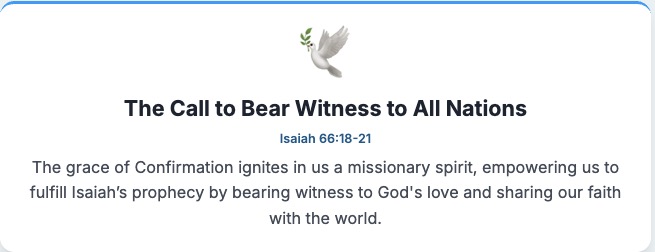
The Call to Bear Witness to All Nations
Isaiah’s prophecy of God gathering all nations to share in his glory is fulfilled in the sacrament of Confirmation. The Holy Spirit, received at Confirmation, empowers us to go out to the world and bear witness to God’s love. This grace ignites in us a missionary spirit, compelling us to share our faith with a world that is longing for hope.
God’s Discipline and the Courage to Stand Firm
The Letter to the Hebrews reminds us that God disciplines those he loves, and that we must not grow weary or lose heart. The grace of Confirmation provides the fortitude and courage to endure trials and accept God’s loving correction. This strength allows us to stand firm in our faith and to not be intimidated by the world, transforming our challenges into opportunities for growth.
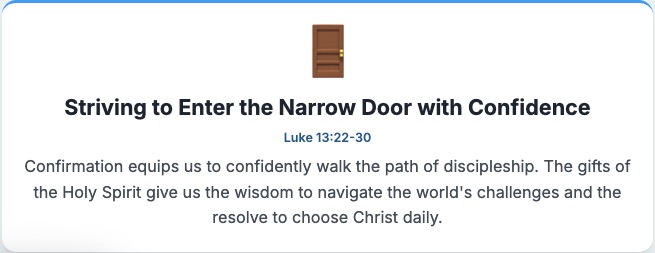
Striving to Enter the Narrow Door with Confidence
Jesus’s call to “strive to enter through the narrow door” is a call to a committed Christian life. Confirmation is the completion of our Baptism, equipping us with the gifts of the Holy Spirit to confidently walk that path. The grace of this sacrament strengthens our resolve to choose Christ daily, giving us the wisdom to navigate the world’s challenges and the knowledge to understand God’s will for our lives.
21st Sunday of Year C
Reflection Questions
- How does the grace of Confirmation empower you to share your faith in your daily life, in a way that is meaningful and authentic?
- What are some practical ways our parish community can live out Isaiah’s vision of a universal mission?

- How can you lean on the grace of Confirmation when you are facing a difficult trial or feel tempted to grow weary in your faith?
- The Letter to the Hebrews warns against losing heart. What does this mean to you, and how does the Holy Spirit help you in those moments.
- The gifts of the Holy Spirit received at Confirmation are meant to help us. Which of these gifts do you feel you need most right now to “strive” and live out your faith more fully?
- How does the sacrament of Confirmation transform your understanding of the “narrow door” from something scary to a path of strength and confidence?

CONFESSION
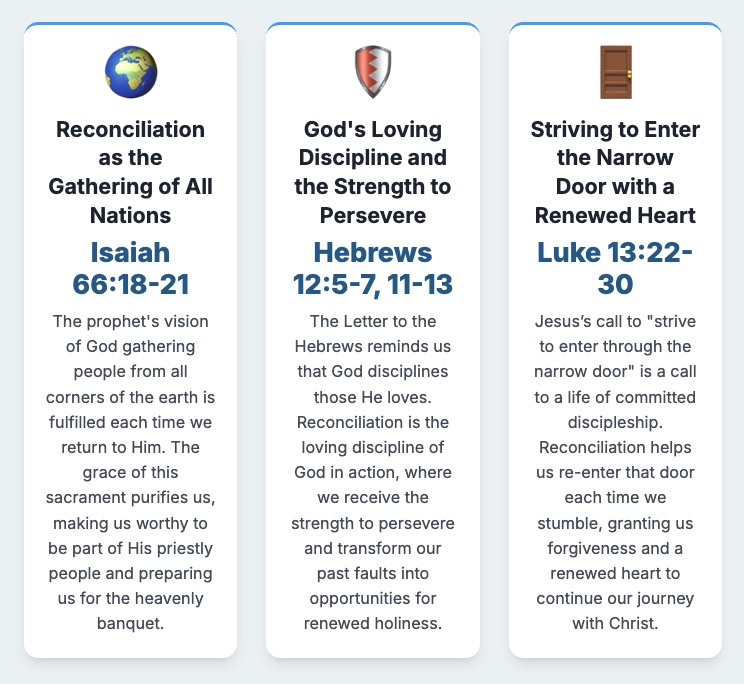
Reconciliation as the Gathering of All Nations
Isaiah’s prophecy speaks of God gathering people from every corner of the earth to be his “priestly people.” The sacrament of Reconciliation is the means by which God gathers each of us back into the community of the Church after sin has separated us. The homilist can emphasize that the grace of this sacrament purifies us, making us worthy to be part of this new people and preparing us for the heavenly banquet where all nations will be gathered.
God’s Loving Discipline and the Strength to Persevere
The Letter to the Hebrews reminds us that God disciplines those he loves. The grace of Reconciliation is the loving discipline of God in action. It is in this sacrament that we humbly accept God’s correction and receive the strength to persevere through our struggles. This grace transforms our past faults into opportunities for renewed holiness, allowing us to find peace and not lose heart in the face of our imperfections.
Striving to Enter the Narrow Door with a Renewed Heart
In the Gospel of Luke, Jesus’s call to “strive to enter through the narrow door” is a call to a life of committed discipleship. Reconciliation is the sacrament that helps us re-enter that narrow door each time we stumble. The grace we receive is not only forgiveness but a renewal of our resolve, equipping us with a clean heart and a renewed strength to continue the journey of following Christ.
21st Sunday of Year C
Reflection Questions
On the Gathering of All Nations (Isaiah 66:18-21)
- How does the act of seeking Reconciliation change your relationship with the wider Church community?
- What does it mean for the sacrament of Reconciliation to be a “gathering” of the individual back into the universal Church?
On God’s Loving Discipline (Hebrews 12:5-7, 11-13)
- The Letter to the Hebrews says discipline yields the “peaceful fruit of righteousness.” How have you experienced this in your own life?
- How does the vulnerability of confessing your sins in Reconciliation help you to accept God’s discipline?
On the Narrow Door (Luke 13:22-30)
- How does the grace of Reconciliation help you to “strive” to live a better life, especially after a moment of failure?
- How does this sacrament help you turn toward Christ with confidence, rather than fear, when you think about the challenge of the “narrow door”?

ANOINTING OF
THE SICK
God’s Healing Power and the Gathering of All Nations
Isaiah’s prophecy of God gathering all nations to share in his glory is fulfilled in a special way in the sacrament of Anointing of the Sick. Often, illness and suffering can be an isolating experience, but this sacrament gathers the sick person back into the heart of the community and the universal Church. The homilist can emphasize that through Anointing of the Sick, the sick person’s suffering is united to Christ’s own Passion, becoming a powerful offering for the salvation of the world, making them a true member of the “priestly people” Isaiah foretold.
God’s Loving Discipline and the Grace to Endure
The Letter to the Hebrews reminds us that God disciplines those he loves, and this discipline produces the “peaceful fruit of righteousness.” When we face grave illness or the infirmities of old age, it can be a source of profound suffering. The grace of Anointing of the Sick provides the strength to see this suffering not as a punishment, but as God’s loving discipline, which purifies and draws us closer to him. The homilist can encourage the faithful to seek this sacrament as a source of peace and fortitude, enabling them to persevere through their trials with a renewed sense of God’s presence.
The Narrow Door and Our Final Journey
In the Gospel of Luke, Jesus’s call to “strive to enter through the narrow door” is a call to a life of active discipleship. For those facing death, this becomes the ultimate narrow door. The sacrament of Anointing of the Sick is the grace that prepares the soul for this final journey, equipping the faithful with peace, forgiveness, and strength to face the end of their lives with confidence. This sacrament is a powerful reminder that our striving does not end in failure, but in the welcoming embrace of the master at the heavenly banquet.
21st Sunday of Year C

Reflection Questions
1. On God’s Healing Power
- How have you or someone you know experienced the healing grace of the Anointing of the Sick, either physically or spiritually?
- How can a sick or elderly person’s suffering, when united to Christ’s, become a powerful offering for the Church?
2. On God’s Loving Discipline
- The Letter to the Hebrews says that discipline yields “the peaceful fruit of righteousness.” How have you seen this to be true in your own life or in the lives of others who have faced suffering?
- How does the grace of the Anointing of the Sick help a person find peace and not lose heart in the face of grave illness?
3. On the Narrow Door
- The Anointing of the Sick is often seen as a sacrament for those nearing death. How does this sacrament help a person prepare for their final journey with peace and confidence?
- The readings speak of the “narrow door” and the “heavenly banquet.” How does this sacrament transform the fear of death into a confident anticipation of eternal life?

MARRIAGE
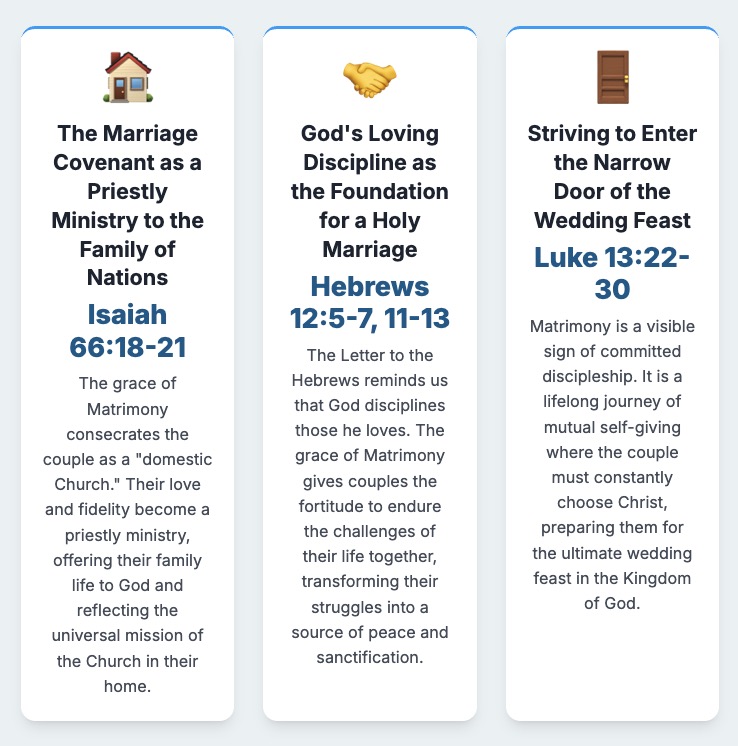
The Marriage Covenant as a Priestly Ministry to the Family of Nations
Isaiah’s prophecy of God gathering people from all nations to make them a “priestly people” finds a unique expression in the sacrament of Matrimony. The homilist can emphasize that the grace of this sacrament consecrates the couple as a priestly people in miniature, a “domestic Church.” Their love, fidelity, and family life become an active offering to God for the salvation of the world, making their home a place where the universal Church is reflected and grown.
God’s Loving Discipline as the Foundation for a Holy Marriage
The Letter to the Hebrews reminds us that God disciplines those he loves, and that this discipline yields the “peaceful fruit of righteousness.” In the context of marriage, this discipline is not punishment but a constant, gentle purification that strengthens the couple’s bond. The homilist can explain that the grace of Matrimony gives couples the fortitude to accept and endure the challenges of their life together, transforming their struggles into a source of peace and sanctification.
Striving to Enter the Narrow Door of the Wedding Feast
In the Gospel of Luke, Jesus’s call to “strive to enter through the narrow door” is a call to a life of committed discipleship. The sacrament of Matrimony is a visible sign of this striving. It is the beginning of a lifelong journey of mutual self-giving, where the couple must constantly choose Christ in their relationship. The grace of this sacrament strengthens them to live out this radical commitment, preparing them for the ultimate wedding feast in the Kingdom of God.
21st Sunday of Year C
Reflection Questions
On the Priestly Ministry of Marriage (Isaiah 66:18-21)
- In what ways can a married couple’s home be considered a “domestic Church”?
- How does the commitment of a couple to each other contribute to the universal mission of the Church?
On God’s Loving Discipline (Hebrews 12:5-7, 11-13)
- The readings say God’s discipline yields the “peaceful fruit of righteousness.” What does this mean for the day-to-day struggles of married life?
- How can a married couple support each other in accepting and enduring God’s loving correction in their lives?
On the Narrow Door (Luke 13:22-30)
- How does the sacrament of Matrimony challenge a couple to “strive” to enter the narrow door, rather than taking the easy path?
- How does the grace of Matrimony prepare a couple for the heavenly banquet?

HOLY ORDERS
Holy Orders and the Gathering of All Nations
Isaiah’s prophecy of God gathering people from all nations to make them a “priestly people” is fulfilled in a special way in the sacrament of Holy Orders. The grace of this sacrament consecrates priests and deacons to be Christ’s hands and voice in the world, serving all people regardless of their background. A homilist can emphasize that through Holy Orders, a priest or deacon’s ministry becomes a sign of this universal call, reflecting the breadth of God’s love and actively working to gather all into the Church.
God’s Loving Discipline as a Call to Servant Leadership
The Letter to the Hebrews reminds us that God disciplines those he loves. For a priest or deacon, this discipline is a constant, gentle purification that strengthens them for their ministry. The grace of Holy Orders gives them the fortitude to endure the challenges of ministry, from demanding schedules to spiritual dryness. A homilist can explain that this discipline is not punishment, but a sign of God’s love for his chosen servants, transforming their struggles into a source of peace and sanctification that makes them more effective shepherds of God’s people.
Striving to Enter the Narrow Door as a Shepherd
In the Gospel of Luke, Jesus’s call to “strive to enter through the narrow door” is a call to a life of committed discipleship. For priests and deacons, their ministry is an ongoing striving to enter that door by constantly choosing Christ in their daily work. The grace of Holy Orders strengthens them to live out this radical commitment, giving them the courage to embrace the burdens of their flock and to lead them by their own example toward the eternal wedding feast in the Kingdom of God.
21st Sunday of Year C

Reflection Questions
- On the Gathering of All Nations:
- How does the ministry of a priest or deacon help to fulfill Isaiah’s prophecy of gathering all nations?
- How can a parish community support its clergy in serving a universal mission that extends beyond the parish itself?
- On God’s Loving Discipline:
- What are some of the challenges in ministry that could be seen as God’s loving discipline?
- How does the grace of Holy Orders help priests and deacons transform these struggles into a source of peace and holiness?
- On the Narrow Door:
- How does a priest or deacon’s personal striving to enter the narrow door serve as a model for their parishioners?
- The sacrament of Holy Orders gives priests and deacons the grace to embrace the burdens of their flock. What are some of these burdens, and how can the community help carry them?


Text and Infographics on this page were created by THE WORD THIS WEEK using AI generative tools (i.e. Chart.js and Tailwind CSS). They may be copied for personal use or for any non-profit ministry.
 Highlight text or double-click a paragraph anywhere on the site to ADD TO NOTES. You can also click ASK AI to copy your selection to the clipboard with a command prompt, ready for you to paste manually into the chat above.