August 17, 2025
August 17, 2025


Everyday Life Applications
- BAPTISM
- EUCHARIST
- CONFIRMATION
- CONFESSION
- ANOINTING OF SICK
- MARRIAGE
- HOLY ORDERS
BAPTISM
Baptism: Our Rescue from the Cistern
In our first reading, Jeremiah is sinking in a muddy cistern, a place of filth and death from which he cannot save himself. This is a perfect image of the human condition before Baptism. We are born into a world marked by sin, stuck in a spiritual mud that we are powerless to escape on our own. Baptism is God’s personal rescue mission for each of us. In those waters, God reaches down, pulls us out of the mire of Original Sin, cleanses us, and places us on the solid ground of grace, claiming us as His beloved children.
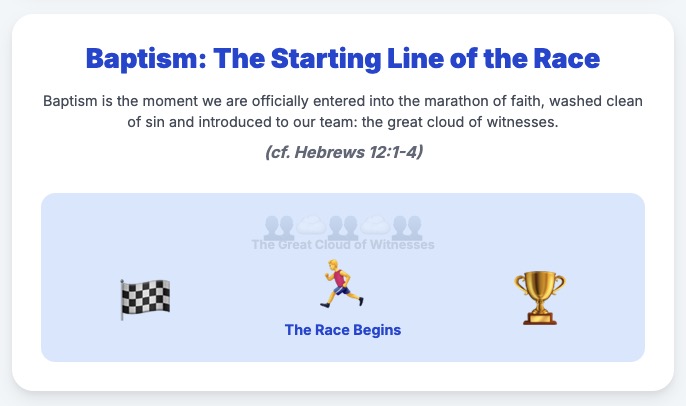
Baptism: The Starting Line of the Race
The Letter to the Hebrews tells us that the Christian life is a marathon, a race we must run with perseverance. Baptism is the starting line of that race. It is the moment we are officially entered into the competition, washed clean of the sins that would weigh us down, and given the “uniform” of a Christian—the indelible mark of Christ on our soul. It is at the starting line of Baptism that we are also introduced to our team: the “great cloud of witnesses,” all the saints who have run the race before us and now cheer us on from the heavenly stands.
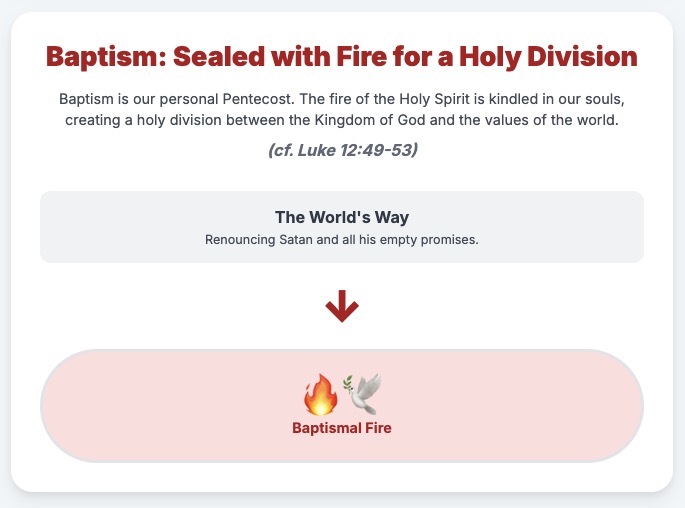
Baptism: Sealed with Fire for a Holy Division
Jesus’ words in the Gospel are jarring: “I have come to set the earth on fire… I have come to bring division.” This holy fire is the fire of the Holy Spirit, and the division is the clear line drawn between the Kingdom of God and the values of the world. Baptism is our personal Pentecost, the moment that divine fire is first kindled in our souls. In the baptismal promises, we make a choice, creating a “holy division” in our own lives by renouncing Satan and choosing to live for Christ. We are sealed with that fire, commissioned to be a light that stands in opposition to the darkness of the world.

20th Sunday of Year C

EUCHARIST
The Eucharist as Our Rescue and Sustenance
In our first reading, the prophet Jeremiah is pulled from a muddy cistern, rescued from a place of death and despair. This is a powerful image of our own lives. Through Baptism, we are first rescued from the cistern of sin, but how often do we find ourselves slipping back into the mud of our own weakness, our own fear, our own compromises? Jeremiah needed someone to pull him out. We, too, need a rescuer. The Eucharist is that rescue made present for us, week after week. When we receive the Body and Blood of Christ, we are being pulled out of the mud. We are being given the spiritual food needed not just to survive, but to walk away from the cistern for good.
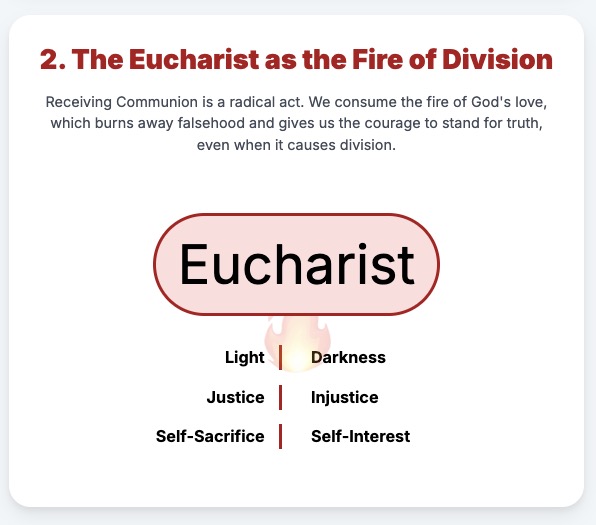
The Eucharist as the Fire of Division
Jesus says in the Gospel, “I have come to set the earth on fire.” This isn’t a comfortable image. This fire is the fire of absolute truth and uncompromising love, and it inevitably causes division. It divides light from darkness, justice from injustice, and self-sacrifice from self-interest. Where do we get the strength to live by this fire? We receive it in the Eucharist. Receiving Communion is not a passive, peaceful act; it is a radical statement of allegiance. We are consuming the very fire of God’s love. It should burn away our desire for a false peace and give us the courage to stand for the truth of the Gospel, even if it means standing divided from the world.
The Eucharist as Food for the Race
The Letter to the Hebrews tells us we are running a race, surrounded by a “great cloud of witnesses.” This is not a short sprint; it’s a marathon of faith that requires endurance. Every athlete knows they cannot finish a race without proper nourishment. The Eucharist is our spiritual food for this race. It is the bread from heaven that strengthens us to “rid ourselves of every burden and sin that clings to us.” When we feel weary, when the race seems too long and the opposition too great, we come to this altar. Here, Christ himself becomes our strength, nourishing us so we can keep our eyes fixed on him and persevere to the finish line. ahead.
20th Sunday of Year C


CONFIRMATION
Confirmation: Commissioned for “Good Trouble”
In our first reading, Jeremiah gets into serious trouble for speaking God’s truth to power. In the Gospel, Jesus himself says he came not for an easy peace, but for division. This is the reality of a faith-filled life. In the sacrament of Confirmation, we are sealed with the Holy Spirit and fully initiated into the Church, not to keep our heads down and stay out of trouble, but to be commissioned as public witnesses for Christ. Confirmation gives us the spiritual courage—the fortitude—to speak the truth in love, even when it’s inconvenient, unpopular, or causes the “good trouble” that comes from challenging injustice. It anoints us to be like Jeremiah, choosing God’s side even at a personal cost.
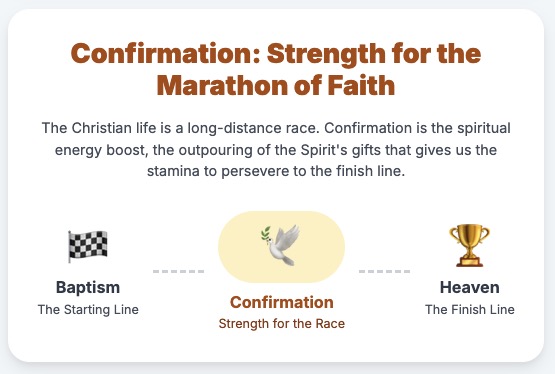
Confirmation: Strength for the Marathon of Faith
The Letter to the Hebrews presents the Christian life as a long-distance race, not a short sprint. It requires endurance, discipline, and the will to persevere when we grow weary. Where do we get this spiritual stamina? While Baptism is the start of the race, Confirmation is the spiritual energy boost given to us for the long haul. The gifts of the Holy Spirit we receive are not just for a single moment but are the ongoing source of strength that helps us “rid ourselves of every burden and sin.” Confirmation is the grace that fuels our perseverance, allowing us to run with our eyes fixed on Jesus, inspired by the “great cloud of witnesses” who were strengthened by the very same Spirit.
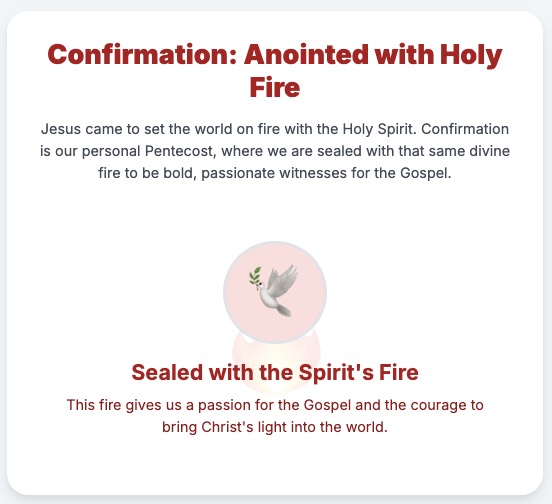
Confirmation: Anointed with Holy Fire
Jesus declares, “I have come to set the earth on fire.” This isn’t a fire of destruction, but the purifying, energizing fire of the Holy Spirit. It’s the same fire that descended as tongues on the Apostles at Pentecost, transforming them from fearful followers into bold evangelists. Confirmation is our personal Pentecost. In this sacrament, we are anointed and sealed with that same Holy Spirit. We are literally marked with the fire of God’s love. This spiritual fire is meant to burn within us, giving us a passion for the Gospel and the courage to bring Christ’s light into a world that often prefers the darkness, creating the “holy division” between the kingdom of God and the values of the world.
20th Sunday of Year C

CONFESSION
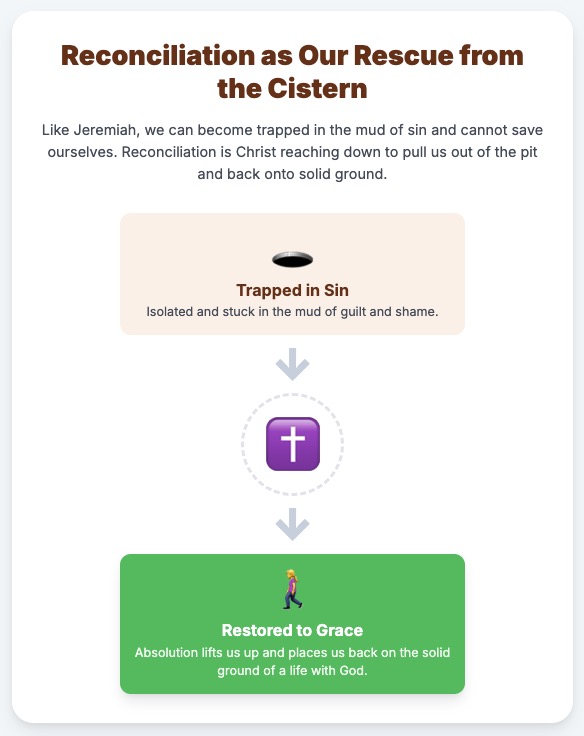
Reconciliation as Our Rescue from the Cistern
Jeremiah was thrown into a muddy cistern, a place of filth and slow death, from which he could not save himself. This is a powerful image of mortal sin. It traps us, isolates us, and slowly suffocates our spiritual life. Like Jeremiah, we cannot get out on our own. The sacrament of Reconciliation is Christ, through the ministry of the priest, reaching down to pull us out of that pit. Absolution is the rope that lifts us from the mud of our guilt and shame, placing us back on the solid ground of grace.
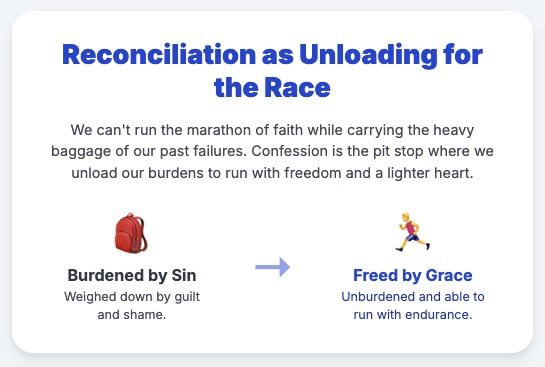
Reconciliation as Unloading for the Race
The Letter to the Hebrews describes the Christian life as a marathon that requires us to “rid ourselves of every burden and sin that clings to us.” We cannot run effectively if we are carrying the heavy weight of our past failures. Reconciliation is the spiritual ‘pit stop’ where we unload that baggage. It is the specific means Christ gave us to shed the burdens that slow us down, so we can run the race of faith with freedom, endurance, and a lighter heart, with our eyes fixed on the prize.
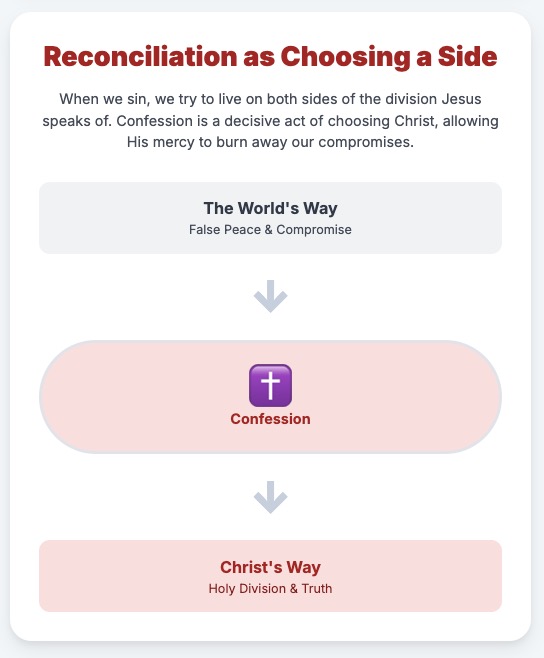
Reconciliation as Choosing a Side in the Division
In the Gospel, Jesus says he came to bring fire and division—a clear choice between His way and the way of the world. When we sin, we blur that line and try to live on both sides. The sacrament of Reconciliation is a decisive act of choosing Christ’s side. By confessing our sins, we are actively rejecting the “false peace” of compromise and allowing the purifying fire of God’s mercy to burn away our attachments to sin. It is a powerful moment of re-establishing our allegiance to Christ, accepting the “holy division” from our old selves and recommitting to the life of the Gospel.
20th Sunday of Year C
ANOINTING OF
THE SICK
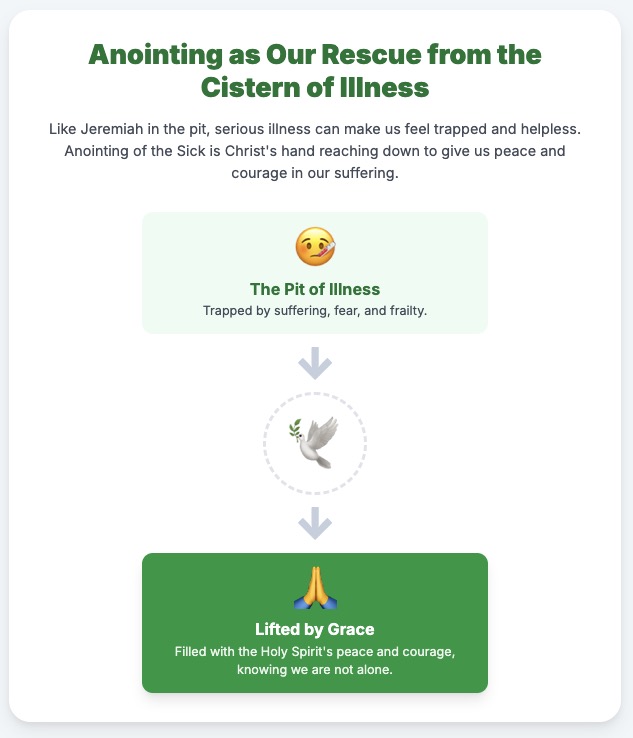
Anointing as Our Rescue from the Cistern of Illness
In the first reading, Jeremiah is helpless in a muddy cistern, facing death and unable to save himself. This is a powerful image of what it can feel like to be trapped by serious illness or the frailty of old age. It is a pit of suffering and fear. The sacrament of Anointing of the Sick is Christ’s rescue mission. It is the grace-filled hand reaching down into the cistern, not always to remove the illness, but to give us the peace and courage of the Holy Spirit so we are no longer alone in the mud. It assures us that even in our weakest state, God is with us, lifting our spirits and uniting our suffering to the Cross.
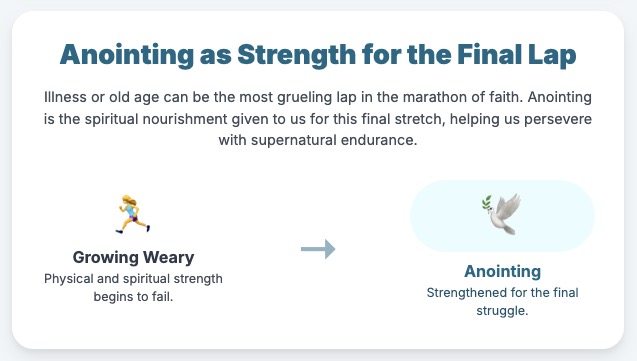
Anointing as Strength for the Final Lap
The Letter to the Hebrews speaks of the Christian life as a marathon. For many, the struggle with illness or old age is the final, most grueling lap of that race. Our strength fails, our resolve weakens, and we are tempted to despair. Anointing of the Sick is the spiritual nourishment specifically for this part of the journey. It is the grace that strengthens us to “persevere in running the race,” giving us the supernatural endurance to face our trials with faith. It helps us unite our suffering with Christ’s, transforming this final struggle into a powerful witness of faith.
Anointing as True Peace Amidst the Fire
In the Gospel, Jesus says he came to bring a “fire” that causes division, not a false peace. Serious illness can also bring a kind of fire and division—it creates anxiety, strains families, and forces difficult choices. In the midst of this turmoil, the sacrament of Anointing of the Sick brings the true peace of Christ. It is a peace not based on the absence of problems, but on the presence of God. The grace of this sacrament settles the soul, replacing the fire of fear with the gentle, warming fire of the Holy Spirit, bringing a holy peace not only to the one who is sick but also to all who love and care for them.
20th Sunday of Year C

MARRIAGE
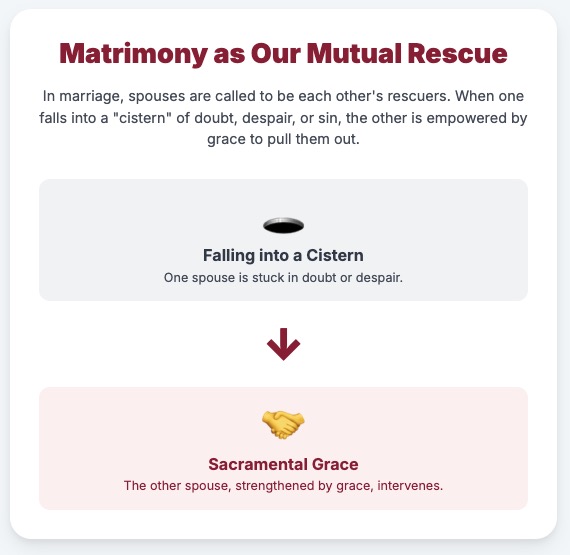
Matrimony as Our Mutual Rescue
In our first reading, Jeremiah is helpless in a cistern, unable to save himself. He needs someone to intervene. This is a powerful image for marriage. In the sacrament of Matrimony, spouses are called to be each other’s rescuers. When one spouse falls into a “cistern” of doubt, despair, sickness, or sin, the other is empowered by grace to be the one who pulls them out. The sacrament provides the supernatural strength for a husband and wife to be a constant source of mutual support, lifting each other up and never letting the other remain stuck in the mud.
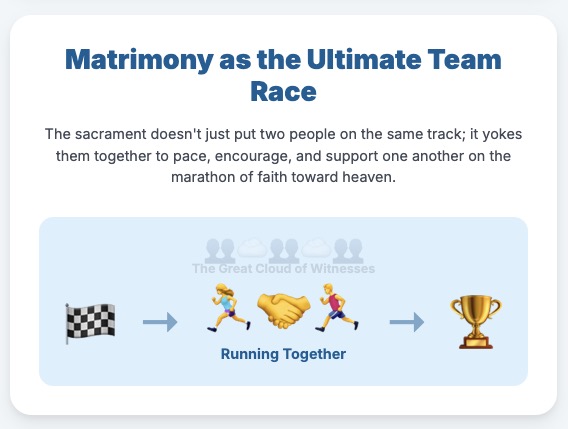
Matrimony as the Ultimate Team Race
The Letter to the Hebrews tells us we are running a marathon of faith. No one runs a marathon well without a team and a partner. Matrimony is the ultimate team sport for the race to heaven. The grace of this sacrament doesn’t just put two people on the same track; it yokes them together. Spouses are given the grace to pace one another, to offer encouragement when one grows weary, and to help each other shed the “burdens and sin” that slow them down. They become each other’s most immediate “cloud of witnesses,” cheering one another on toward the finish line.
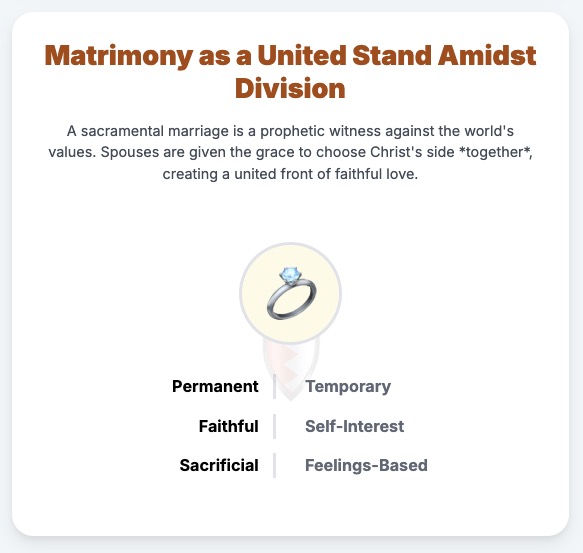
Matrimony as a United Stand Amidst Division
Jesus says in the Gospel that his truth will cause division, even in families. A sacramental marriage is meant to be a powerful, united front in the midst of this division. The world offers a vision of love based on temporary feelings and self-interest. A Christian marriage, strengthened by the grace of Matrimony, is a prophetic witness to a different kind of love—one that is permanent, faithful, and sacrificial. A husband and wife are given the grace to choose Christ’s side together, creating a “holy household” that, by its very nature, stands divided from the values of the world.
20th Sunday of Year C
HOLY ORDERS
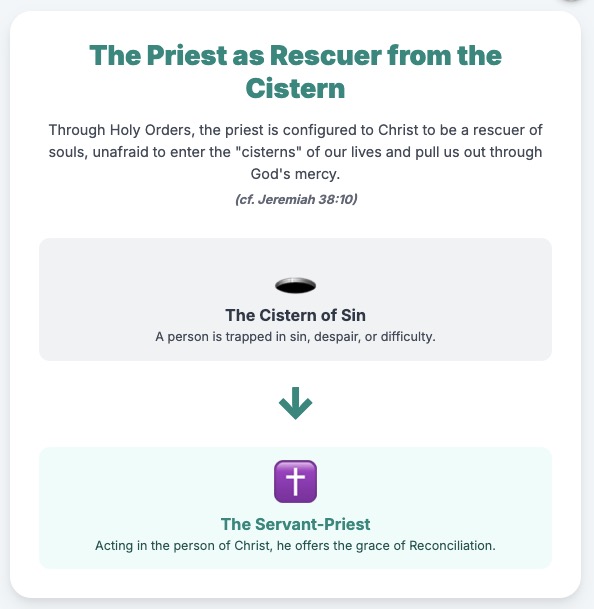
The Priest as Rescuer from the Cistern
In the first reading, it is the court official, Ebed-melech, who speaks truth to power and initiates the rescue of Jeremiah from the muddy cistern. In the Church, the priest, through his ordination, is configured to Christ to be a rescuer of souls. His primary role as a servant leader is to descend into the messy, difficult “cisterns” of people’s lives—through the Sacrament of Reconciliation, in counseling, and in caring for the spiritually destitute. He is called to be the one who is unafraid of the mud, who speaks the truth of God’s mercy, and who, acting in the person of Christ, pulls souls out of the pit of sin and despair.
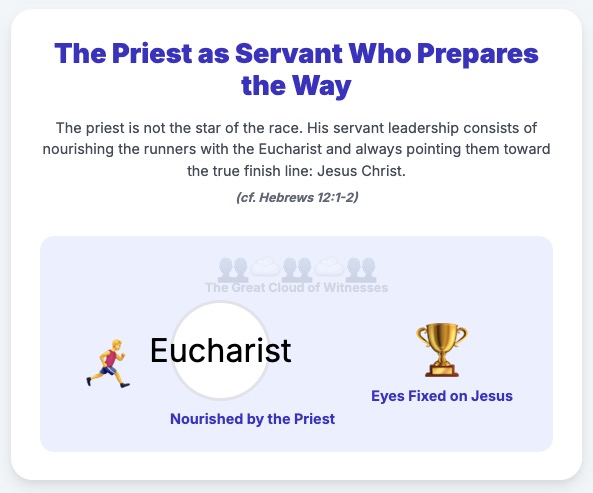
The Priest as Servant Who Prepares the Way
The Letter to the Hebrews urges us to run the race with our eyes fixed on Jesus. The priest, as a servant leader, is not the star of the race. His role is to prepare the way, to nourish the runners, and to keep pointing them toward the finish line, which is Christ. He does this by faithfully providing the Eucharist, the spiritual food for the marathon of faith. A true servant leader in the Church decreases so that Christ may increase. He spends his life clearing the path, teaching the faith, and encouraging the “cloud of witnesses” in his care, always directing their gaze not to himself, but to Jesus, the “leader and perfecter of faith.”
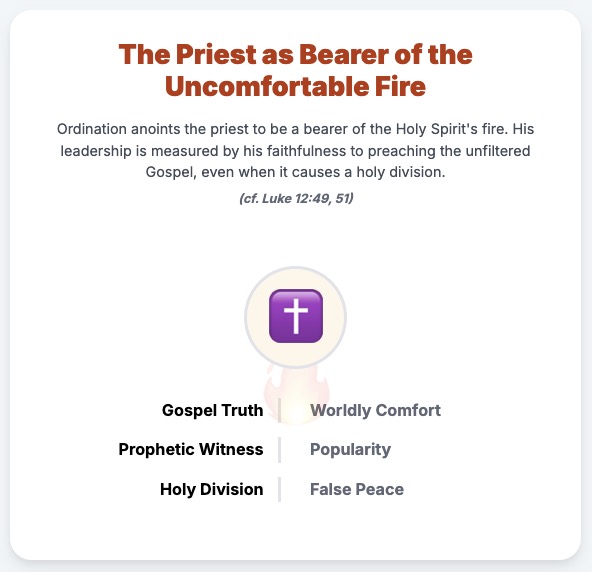
The Priest as Bearer of the Uncomfortable Fire
Jesus says he came to bring fire and division, not a comfortable, easy peace. A priest, through Holy Orders, is ordained to be a bearer of this same holy fire. His call to servant leadership is not to be a manager of a comfortable institution, but to be a prophet who preaches the unfiltered Gospel, which will inevitably divide truth from falsehood and justice from complacency. Like Jeremiah, the servant-priest must have the courage to speak God’s word even when it is unpopular or causes “division” in a world that prefers the status quo. His leadership is measured by his faithfulness to the fire of the Gospel, not by his popularity.
20th Sunday of Year C

Text and Infographics on this page were created by THE WORD THIS WEEK using AI generative tools (i.e. Chart.js and Tailwind CSS). They may be copied for personal use or for any non-profit ministry.