August 17, 2025
August 17, 2025


Intro to Mass Readings for Sunday
Intro to Mass Readings for Sunday
Scroll down the page to view Catholic Infographics and Deep Dive Podcast

20th Sunday of Year C
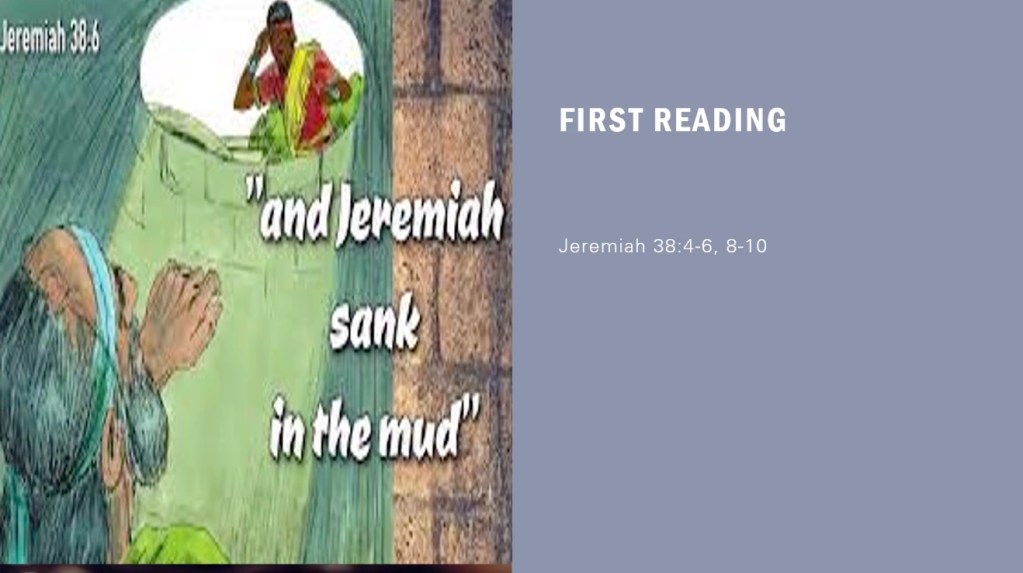
Jeremiah 38:4-6, 8-10
Jeremiah 38:4-6, 8-10
POP-UP Video | NAB w/ Notes | LECTIONARY
Click graphic to view intro to reading

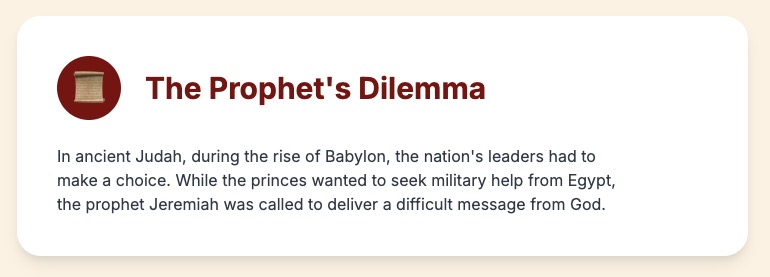
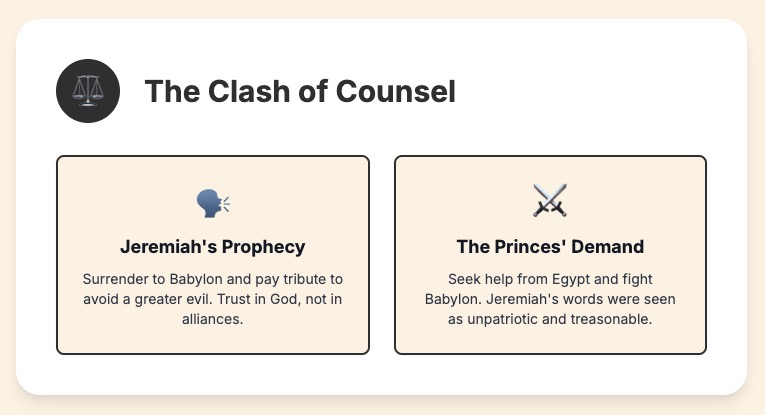
In the video, Fr. Paul explains that this Sunday’s First Reading takes place just before the fall of Jerusalem to the Babylonians. He notes that King Zedekiah had betrayed Nebuchadnezzar. [01:47] Jeremiah urged the people to repent for their sins, but they were afraid. The princes wanted to fight the Babylonians, seeing Jeremiah as demoralizing the troops. [02:42] They recognized that Jeremiah was speaking the truth about their sinfulness and its consequences.
Clipart by Fr. Richard Lonsdale

Rescue from the Well
by Larry Broding

Engaging with the difficult and often unpopular truths of faith is a core challenge for any preacher. The political and social climate surrounding Jeremiah in 588-587 B.C. was no different from today’s. During the Babylonian siege of Jerusalem, Jeremiah dared to speak the truth to power, a truth that King Zedekiah’s princes found so infuriating they sought to silence him by leaving him to die in a muddy cistern. Yet, it was an unlikely ally—a foreign court official—who intervened, demonstrating that even in the darkest moments, courage can prevail over political jealousy.
In his reflection, Larry Broding draws powerful parallels between Jeremiah and Jesus, both of whom “laced their preaching with the threat of God’s wrath” and suffered for their message. This deep dive into the historical context and theological implications of Jeremiah’s ordeal offers a compelling way to frame a homily. It prompts us to consider the timeless questions that both prophets laid before their audiences: “When can we put aside our own petty rage to see the greater good? When do we stop our selfish behavior to work for the just treatment of others?”
Explore Broding’s full reflection to uncover how this ancient story of a prophet’s persecution can illuminate our own contemporary struggles with truth, justice, and the courage required to preach an unpopular gospel.hallenges and triumphs of a modern faith journey.
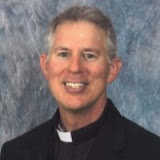
Fr. Tim Peters
FIRST READING

Fr. Peters teaches at Saint John’s Seminary in Camarillo, CA.
A Quiz on the First Reading from Jeremiah
1. According to Fr. Tim Peters, what is the historical context of the events in Jeremiah 38?
- a) The time of King Solomon’s reign.
- b) Shortly after the Babylonian Empire became the dominant power.
- c) During the return of the exiles from Babylon.
- d) Before the Assyrian Empire was defeated.
Answer: b) Shortly after the Babylonian Empire became the dominant power.
Catholic Infographics
20th Sunday of Year C

TWTW Deep Dive (1st Reading)
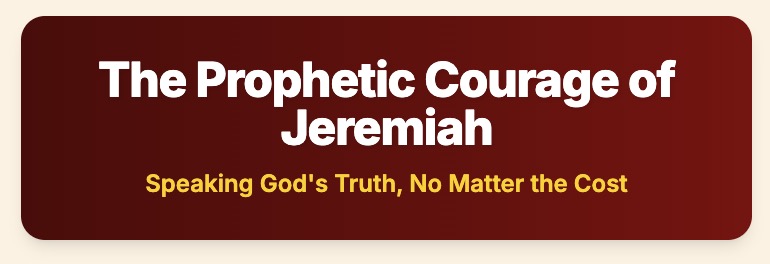
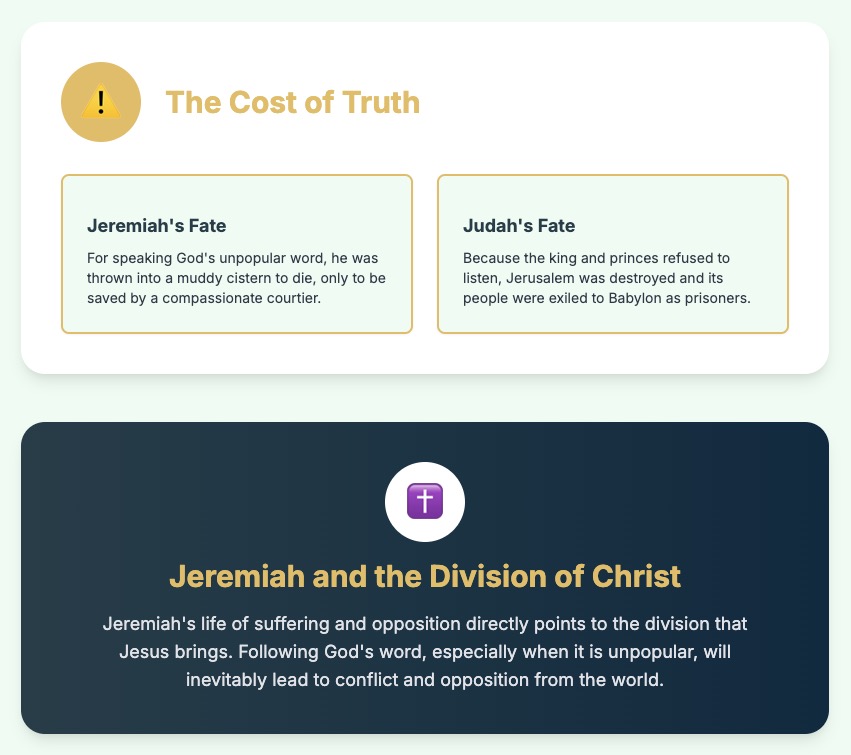
The prophet Jeremiah, in Jeremiah 38:4-6, 8-10, exemplifies courageous prophetic witness, a theme deeply resonant within Roman Catholic theology. Jeremiah’s willingness to speak God’s unpopular truth to power, even facing imprisonment in a cistern for his fidelity, highlights the Church’s understanding of its own prophetic mission.
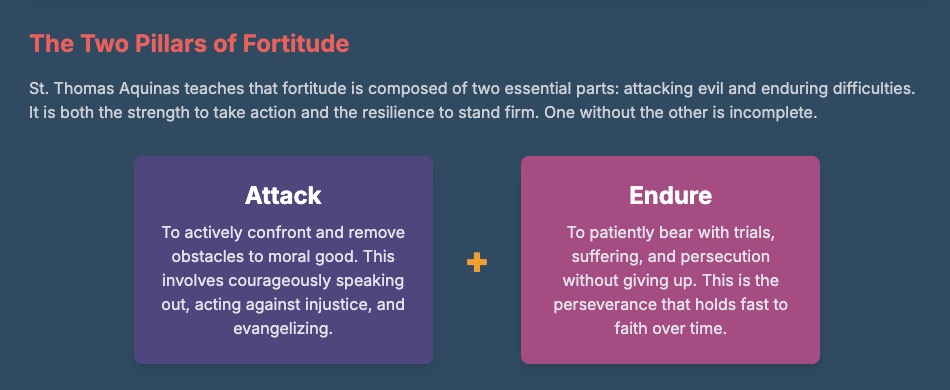
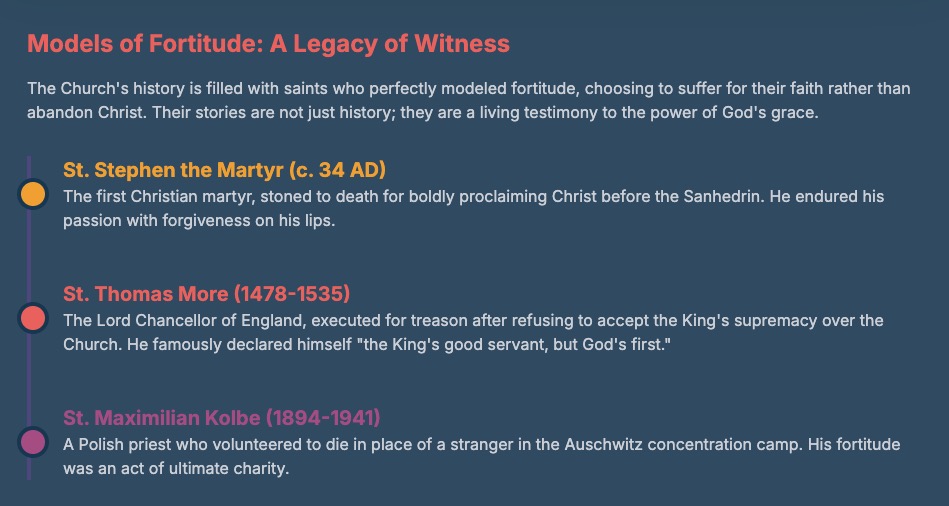
The Catholic tradition reveres those who, like Jeremiah, suffer for upholding divine truth and justice, seeing them as models of faith. This passage underscores the virtue of fortitude, a cardinal virtue essential for discipleship, enabling believers to persevere in difficult circumstances for the sake of Christ and His Church.

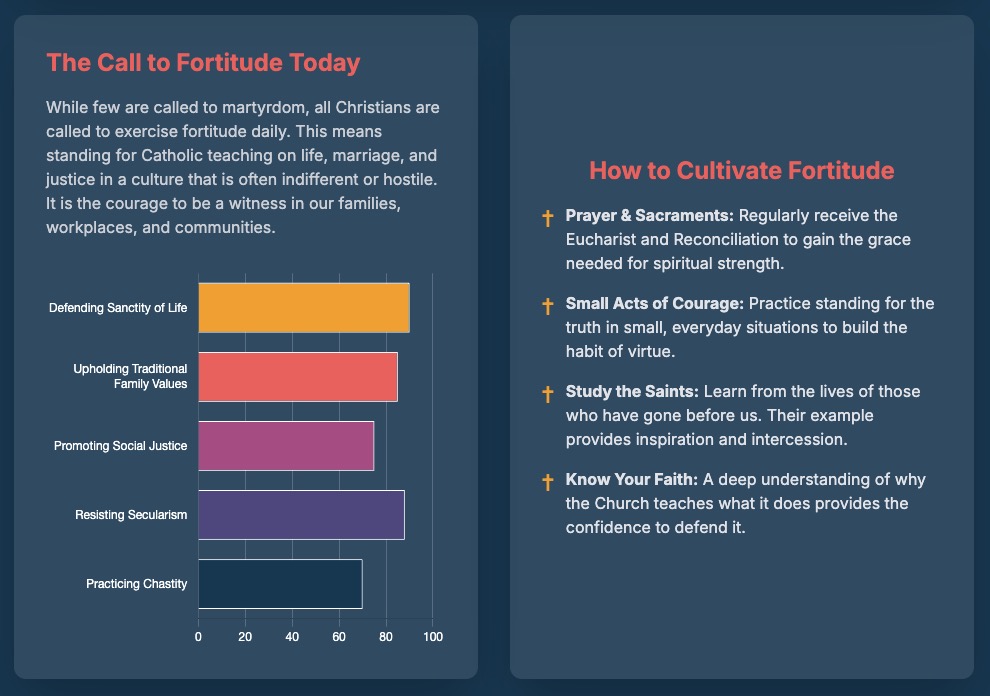
For contemporary Catholics, Jeremiah’s ordeal offers a powerful call to action. In a world often hostile to Christian values, the passage encourages Catholics to speak truth with charity and conviction, even when it is costly. This might manifest as advocating for the sanctity of life, defending religious freedom, or promoting Catholic social teaching on justice and peace in public discourse. For example, a Catholic might courageously speak out against systemic injustice in their community or defend traditional family values in the workplace, mirroring Jeremiah’s unwavering commitment to God’s message. The narrative also reminds us of the importance of solidarity, as Ebed-melech intervenes to save Jeremiah, demonstrating the communal responsibility to support those who suffer for righteousness.
Ultimately, Jeremiah’s story is a timeless reminder for Catholics to embrace their prophetic identity, trusting in God’s providence even amidst persecution and finding strength in community.
THE WORD THIS WEEK’S Catholic Infographics were created using AI generative tools (i.e. Chart.js and Tailwind CSS. Content may be copied for personal use or for use in any non-profit ministry.
Scroll down the page to view Catholic Infographics and Deep Dive Podcast
20th Sunday of Year C
Hebrews 12:1-4
Hebrews 12:1-4
POP-UP Video | NAB w/ Notes | LECTIONARY
Click graphic to view intro to reading
In the video, Fr. Paul explains that the author of the letter uses the metaphor of a race and subtly references the persecutions that Christians faced. [03:52] The author encourages perseverance and endurance in the face of persecution, and the “great crowd of witnesses” refers to martyrs who have gone before, like spectators in a stadium. [04:59] The message is to run the race unencumbered by sin, keeping our eyes fixed on Christ. [05:15]
Clipart by Fr. Richard Lonsdale
Hang Tough
by Larry Broding
What does it truly mean to “hang tough” in the face of life’s struggles? The author of Hebrews challenges us to re-examine our complaints by looking at a far greater example of endurance. We may feel our burdens are heavy, but how do they compare to the ultimate sacrifice?
Larry Broding’s reflection on the Second Reading delves into this powerful question, offering a compelling perspective for anyone preparing a homily. He confronts the “universal hobby” of complaining and asks a simple, yet profound question: Why should Christians complain? By contrasting our daily struggles with the immense suffering of Christ, the reflection encourages us to find a new source of inspiration. Broding points out that the Christian “will never be asked to shed his blood, like the Savior. So, why complain?” This powerful comparison serves as a reminder to fix our gaze on Jesus, who endured the cross with joy.
Dive into this reflection to discover how you can encourage your congregation to “hang tough” and run the race with perseverance, keeping their eyes on the ultimate example of faith and endurance.t force that anchors us in God’s present and future promises.
Fr. Tim Peters
SECOND READING

Fr. Peters teaches at Saint John’s Seminary in Camarillo, CA.
Catholic Infographics



TWTW Deep Dive (2nd Reading)
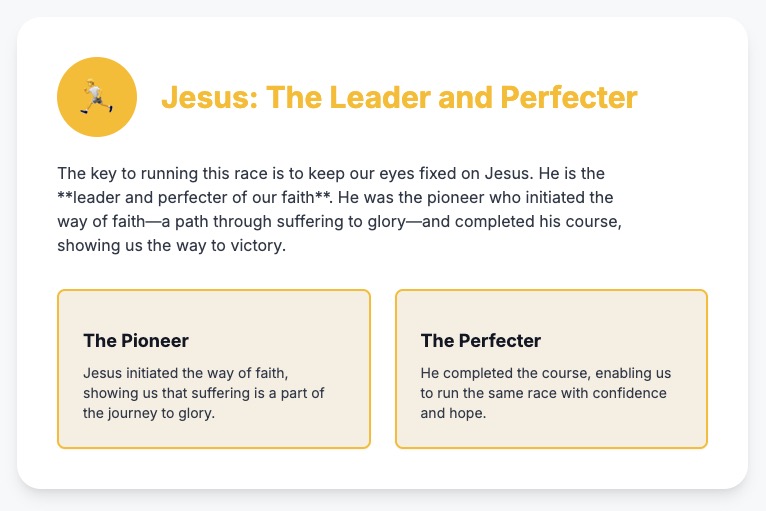
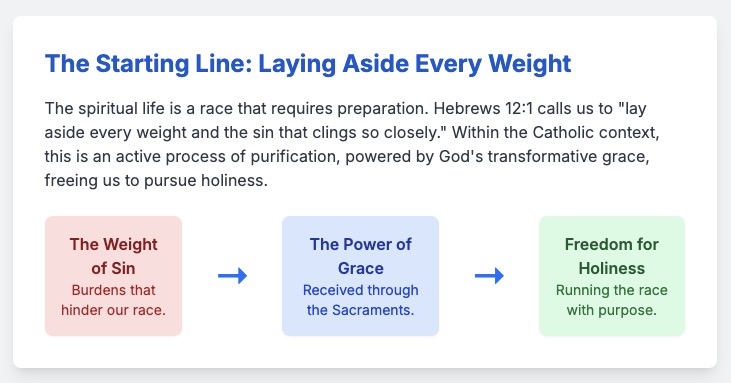
The opening verses of Hebrews 12 call believers to a profound journey of faith, urging them to “run with perseverance the race that is set before us, looking to Jesus the pioneer and perfecter of our faith” (Hebrews 12:1-2).
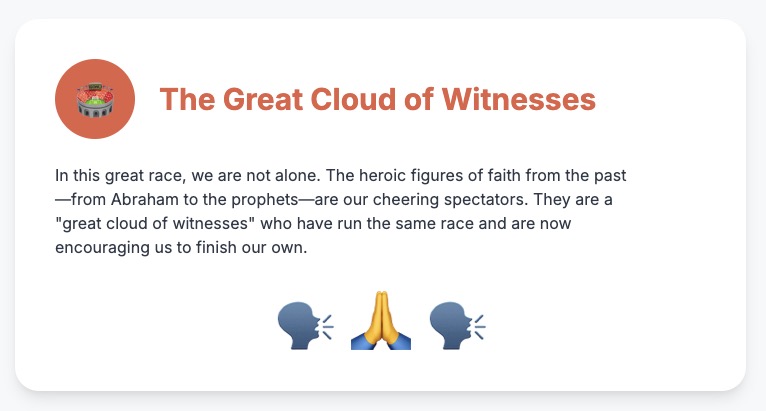
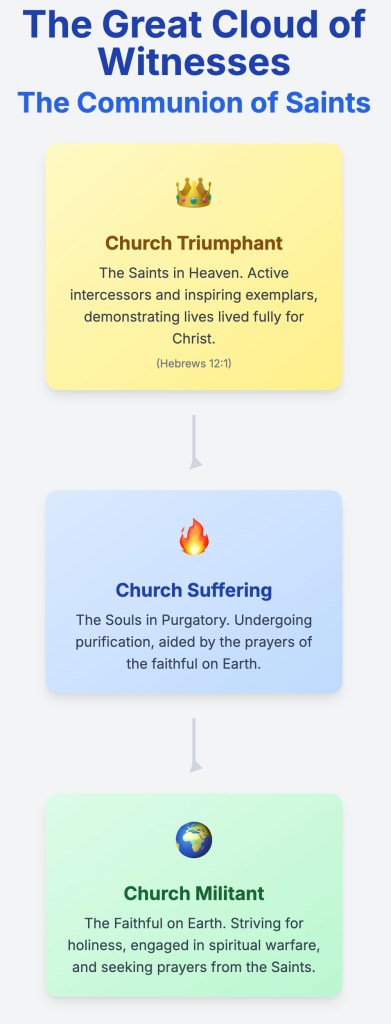
The concept of the “great cloud of witnesses” in Hebrews 12:1 holds profound significance within the Roman Catholic tradition, underscoring the importance of sacramental grace, communal support, and Christocentric living. This imagery is closely linked to the Catholic belief in the Communion of Saints, encompassing the Church Triumphant (saints in heaven), the Church Suffering (souls in purgatory), and the Church Militant (faithful on earth).
Saints are not merely revered for their historical significance but are also considered active intercessors who offer prayers on behalf of those still on their earthly journey. Catholics are encouraged to seek the intercession of these holy men and women, fostering a deep connection with their spiritual forebears.
Moreover, the saints serve as exemplary role models whose virtues and commitment to Christ inspire Catholics to lead lives dedicated to faith and service. In emulating their lives, the faithful are constantly reminded of their shared spiritual heritage, a rich tapestry woven through generations of believers.
This connection between the heavenly, earthly, and purgatorial realms highlights the importance of prayer for the souls in purgatory and the role of the living in assisting them through prayer and good works. It also underscores the continuity and unity of the Church across time and space, binding believers in a shared mission to follow Christ and carry forward the faith to future generations.

Within the Catholic context, “laying aside every weight and the sin that clings so closely” (Hebrews 12:1) points to the transformative power of grace, particularly through the sacraments. The Sacrament of Reconciliation (Confession) provides a means to shed the burden of sin, while the Eucharist offers spiritual nourishment and strength to overcome temptations. Regular participation in the Mass, prayer, fasting, and acts of charity are vital disciplines that help Catholics detach from worldly distractions and cultivate virtues. This spiritual stripping away allows for greater freedom to pursue holiness, aligning one’s will more closely with God’s.
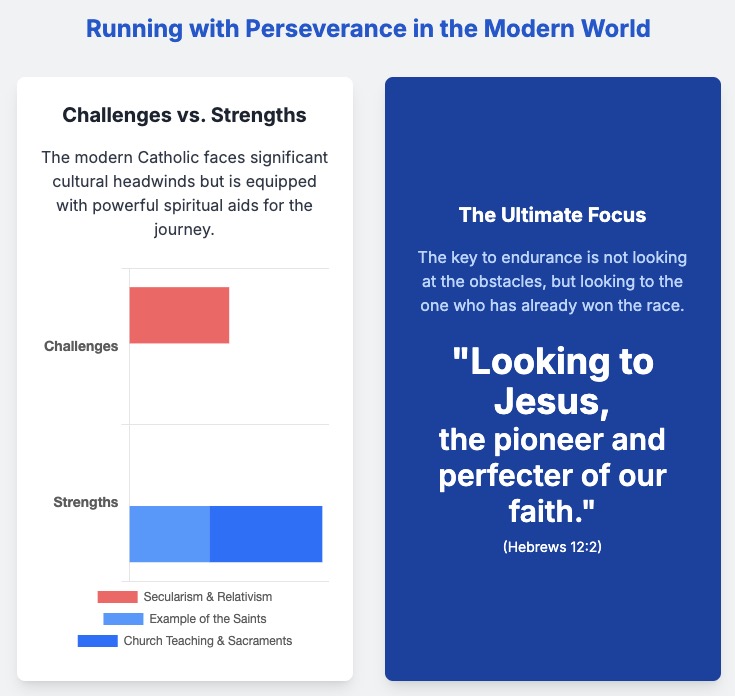
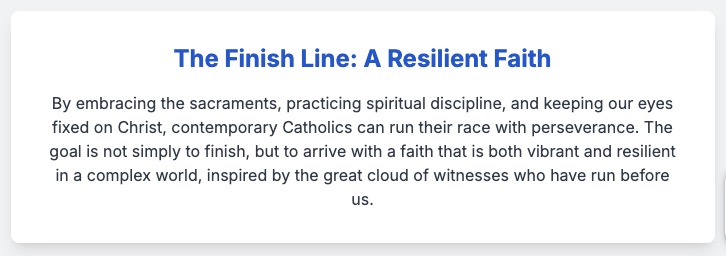
For contemporary Catholics, Hebrews 12:1-4 offers powerful guidance for navigating modern life. The call to perseverance is particularly relevant in a world often characterized by secularism and moral relativism. Modern Catholics are encouraged to draw strength from the examples of recent saints, such as Saint Teresa of Calcutta or Saint John Paul II, whose lives demonstrated radical commitment to the Gospel amidst contemporary challenges. Furthermore, the passage reminds them to actively engage with the Church’s teachings and sacraments, which provide the necessary grace and structure for their spiritual race. Fixing one’s eyes on Jesus, as the “pioneer and perfecter,” means prioritizing personal prayer, Eucharistic adoration, and a deep relationship with Christ as the ultimate source of hope and direction, ensuring that their faith remains vibrant and resilient in a complex world.
THE WORD THIS WEEK’S Catholic Infographics were created using AI generative tools (i.e. Chart.js and Tailwind CSS. Content may be copied for personal use or for use in any non-profit ministry.
Scroll down the page to view Catholic Infographics and Deep Dive Podcast
20th Sunday of Year C
Luke 12:49-53
Luke 12:49-53
POP-UP Video | NAB w/ Notes | LECTIONARY
Click graphic to view intro to reading

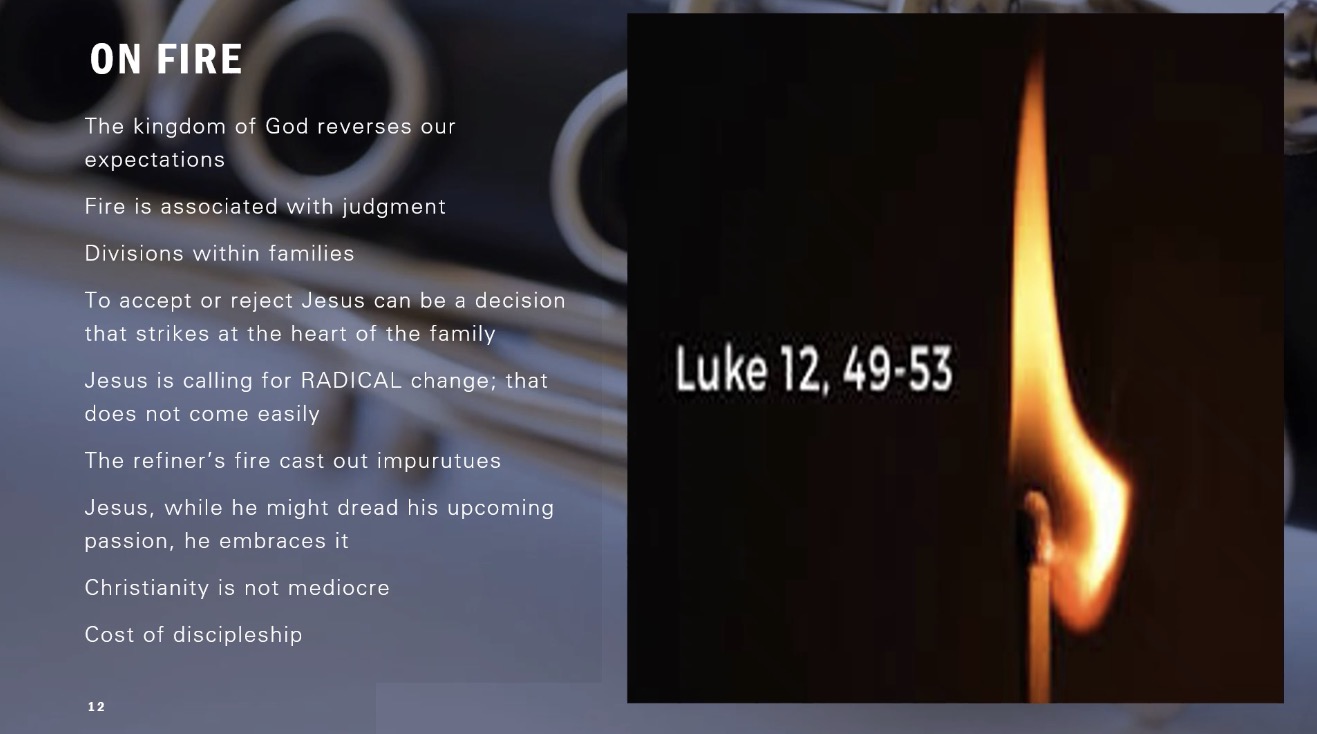
Fr. Paul states that the words in this passage are “truly difficult.” [06:07] He explains that the Kingdom of God often reverses our expectations and that Christianity isn’t always about “hugs and kisses and love” but also involves speaking “difficult words.” [06:19] He associates fire with judgment. [06:26] He clarifies that the divisions within families Jesus refers to were a reality at the time, as younger people were moving away from pagan practices to Christianity. [06:50] The decision to accept or reject Jesus could deeply impact family relationships, which is the context for this passage. [06:57]
Clipart by Fr. Richard Lonsdale
A Family Divided
by Larry Broding
Could the “peace and love” of Christianity truly be a source of division and conflict? In this challenging Gospel passage, Jesus speaks of bringing not peace but a sword, and setting families against each other. How can we make sense of these difficult words for our congregations today?
In his reflection, Larry Broding dives into the unsettling message of Luke 12:49-53, explaining how the turmoil of a family breaking up served as a potent parable for the end of the world. Broding reminds us that the Kingdom of God, while ultimately leading to a deep and abiding peace, is first rooted in justice—a justice that can disrupt and challenge the existing social order. He highlights how the power of God, revealed through Jesus, could—and did—create a chain reaction that split families, pitting unbelievers against believers. This reflection will equip preachers to confront this passage with honesty and nuance, exploring how faith in Jesus can be a powerful “lightening rod of God,” challenging us to ask, “Are we on the same page? Or, are we to oppose each other to our own demise?”
Read this reflection to prepare a homily that acknowledges the pain of divided families while celebrating the transformative, and sometimes disruptive, power of God’s justice.of the End Times a source of hope and active preparation rather than fear.
Fr. Tim Peters
GOSPEL

Fr. Peters teaches at Saint John’s Seminary in Camarillo, CA.
A Quiz on the Gospel of Luke 12:49-53
1. According to the video, what does Jesus’s statement about coming to “cast fire upon the earth” refer to?
- a) A literal fire that will burn the earth.
- b) The day of Pentecost and the descent of the Holy Spirit.
- c) The destruction of Jerusalem.
- d) A metaphor for a new world order.
Answer: b) The day of Pentecost and the descent of the Holy Spirit.

Catholic Infographics


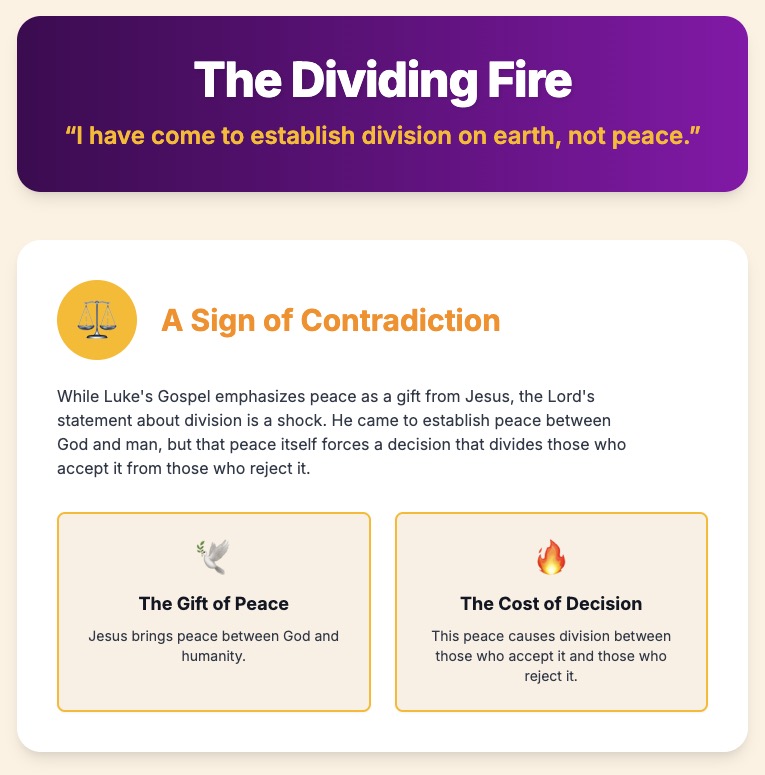
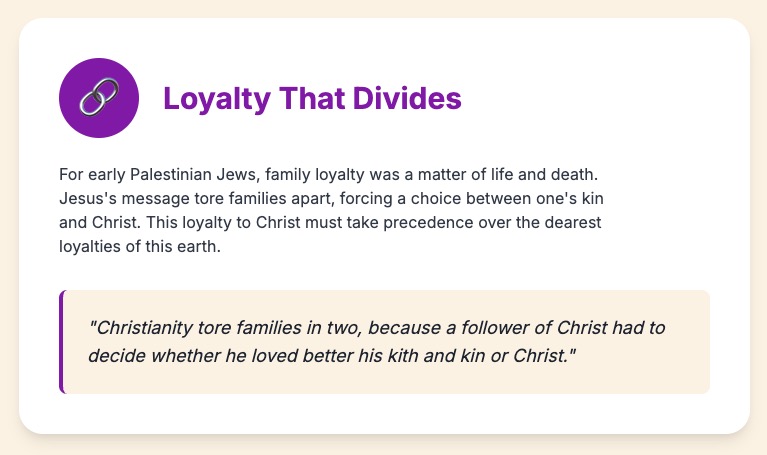


TWTW Deep Dive (Gospel)
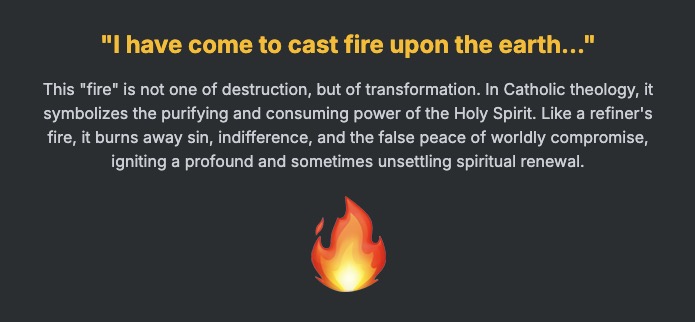
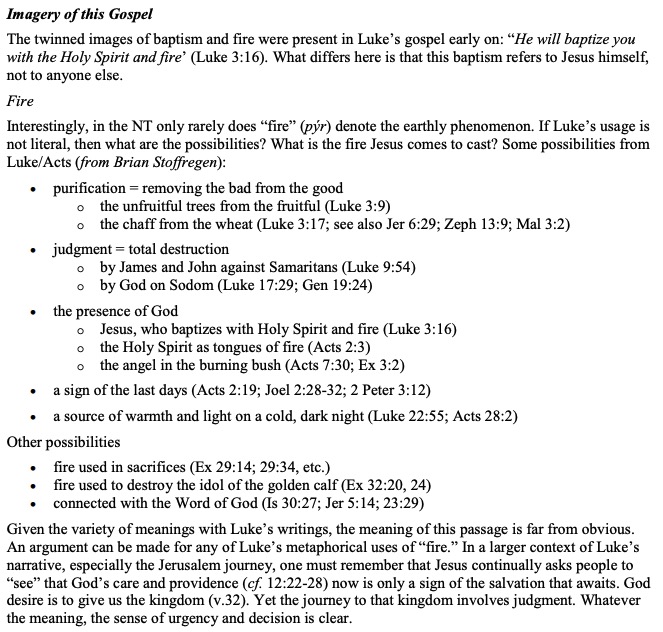
Luke 12:49-53 presents a challenging and often misunderstood aspect of Christ’s mission, where Jesus declares, “I have come to cast fire upon the earth; and would that it were already kindled! Do you think that I have come to give peace on earth? No, I tell you, but rather division.”
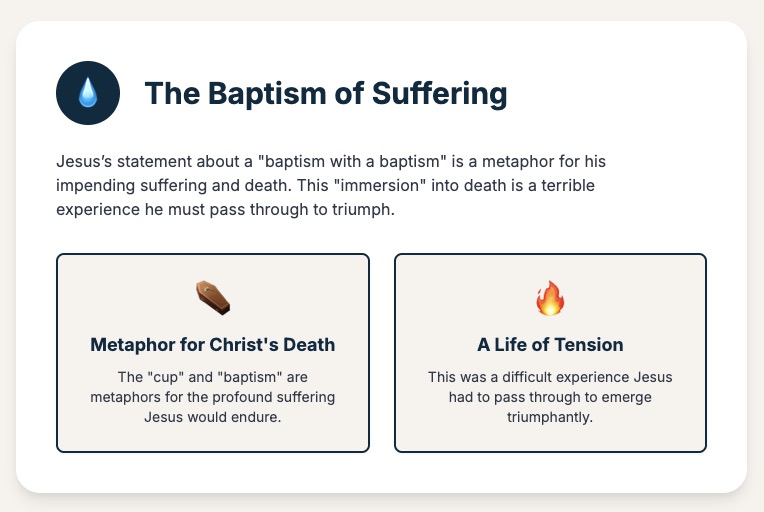
Within Roman Catholic theology, this passage is understood not as an endorsement of discord or violence for its own sake, but as a stark revelation of the radical, transformative demands of authentic discipleship. The “fire” symbolizes the purifying and consuming power of the Holy Spirit and the Gospel message itself. This divine fire inevitably exposes and challenges sin, indifference, and the false peace that can arise from worldly compromise, leading to a profound spiritual renewal that can be unsettling.
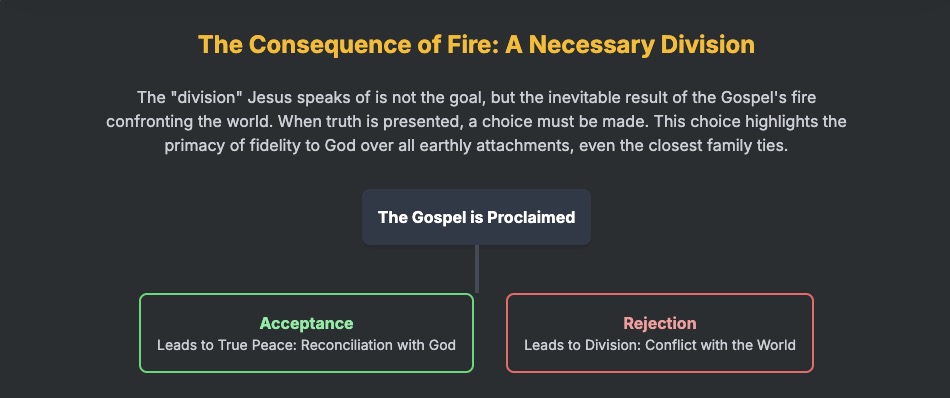
The “division” Jesus speaks of is a direct consequence of this transformative fire. It signifies the necessary and often painful choice one must make for Christ, a choice that can indeed separate individuals from those who reject His truth, even within the closest familial bonds. This highlights the absolute primacy of fidelity to God over all earthly attachments and comforts. The Catholic Church teaches that while Christ is the Prince of Peace, the peace He offers is not a superficial absence of conflict, but the profound peace of conscience and reconciliation with God that comes from embracing truth and righteousness. This true peace can, paradoxically, lead to external conflict when confronted by those unwilling to accept the Gospel’s demands.
For contemporary Catholics, this passage serves as a potent and often uncomfortable reminder that living out the faith authentically can be profoundly counter-cultural and may lead to significant friction. This might manifest as a Catholic choosing to uphold Church teaching on moral issues, such as the sanctity of life from conception to natural death, the sacredness of marriage, or the principles of social justice, in conversations with friends, family, or colleagues who hold opposing views. Such fidelity may involve facing social ostracization, professional setbacks, or even ridicule for refusing to compromise on deeply held Catholic principles in secular environments. For instance, a Catholic professional might decline to participate in a company initiative that conflicts with their conscience, or a young person might stand firm on chastity in a peer group that promotes promiscuity.
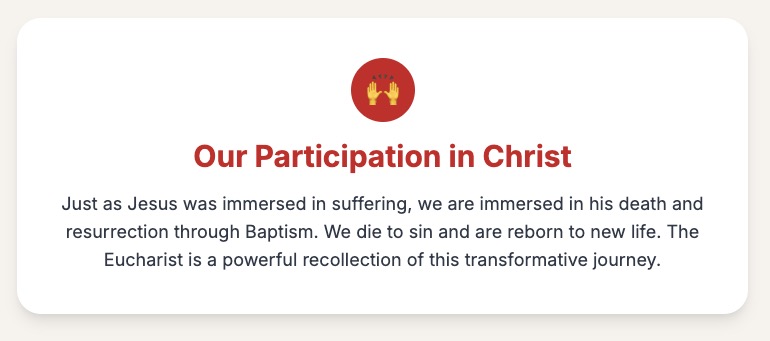
The “division” Jesus speaks of is therefore often the painful, yet necessary, consequence of choosing Christ’s truth over worldly conformity or superficial harmony. It calls Catholics to courageous conviction, a profound interior freedom, and an unwavering commitment to the Gospel, even when such commitment is costly and leads to personal sacrifice. It is a call to radical discipleship, trusting that the fire of the Holy Spirit will purify and strengthen them through any trials that arise from their faithfulness.
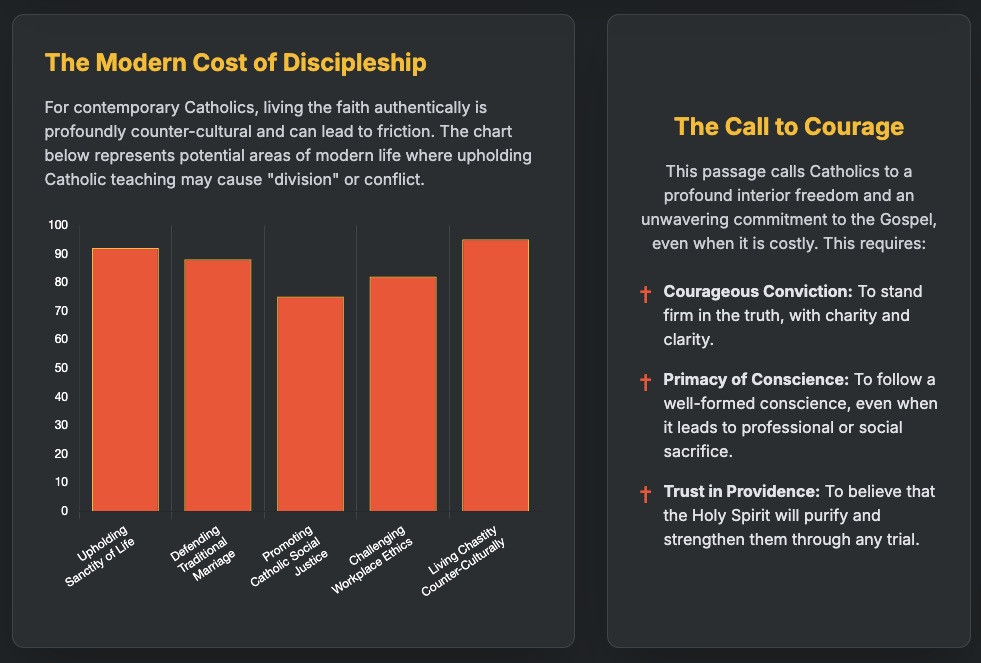
THE WORD THIS WEEK’S Catholic Infographics were created using AI generative tools (i.e. Chart.js and Tailwind CSS. Content may be copied for personal use or for use in any non-profit ministry.
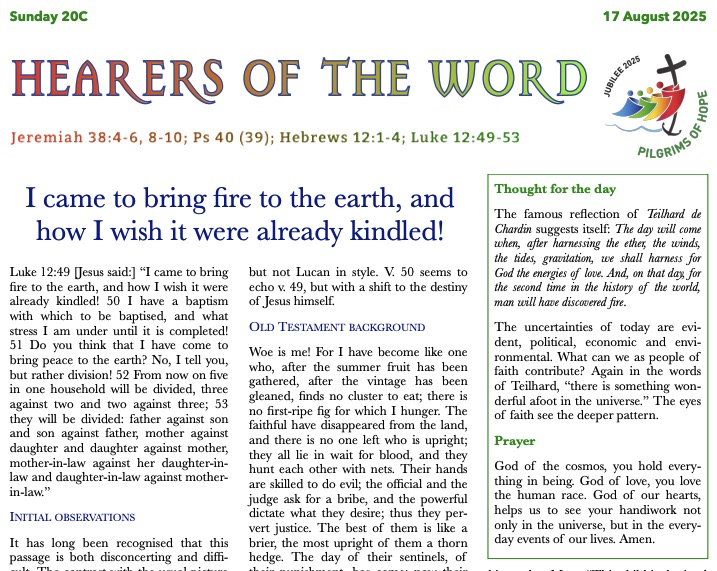

Fr. Conley Bertrand
20th Sunday of Year C
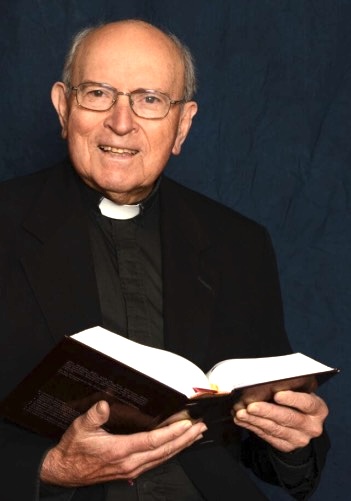
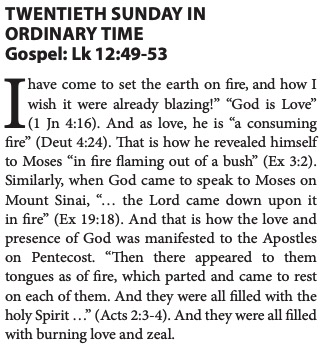
Cycle C (PDFs)
📖 Old Testament (43 pp.)
📖 Epistles (87 pp.)
📖 Gospels (182 pp.)
📖 Daily Gospels (208 pp.)
SOURCE: Come, Lord Jesus
Fr. George Corrigan, OFM
20th Sunday of Year C
Fr. Thibodeau
Bible Study Notes
Small Group Discussion Guide


Bp. John P. Dolan
Fr. Tobin
Carmelite Reflections and Prayers
Lectio Divina
90-page PDF with reflections and prayers for each day of the month
Lectio Divina AUGUST 2025 (PDF)
Lectio Divina AUGUST 2025 [Mobi]
Lectio Divina AUGUST 2025 [ePub]
______________
“Lectio divina is an authentic source of Christian spirituality recommended by our Rule. We therefore practise it every day, so that we may develop a deep and genuine love for it, and so that we may grow in the surpassing knowledge of Christ. In this way we shall put into practice the Apostle Paul’s commandment, which is mentioned in our Rule: “The sword of the Spirit, too, which is the word of God, is to dwell abundantly in your mouth and in your hearts; and whatever things you have to do, let them be done in the word of the Lord.” (Carmelite Constitutions (2019), n. 85.)
Source: Carmelites
FIRST READING | SECOND READING | GOSPEL