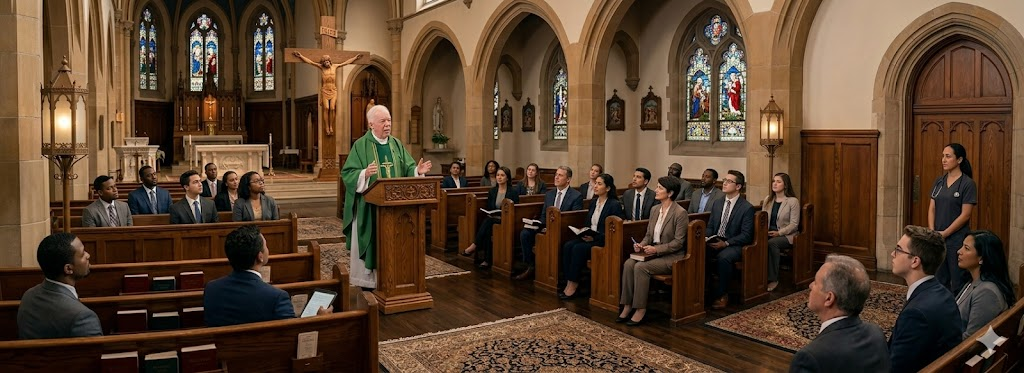
Target Groups for preachers preparing family focused, young adult, social justice and outreach, traditional or theological, busy professional focused homilies on Exodus 34:4b-6, 8-9 2 Corinthians 13:11-13 John 3:16-18
Target Groups, Catholic Assistant, AI Homilies, Preaching, Sermon
write a 600 word essay on how to construct a homily for different target groups based on the readings for the xxxx Sunday of xxxxxxxxx (Year A) xxxxxxxxxxxxxxxxxxxxxx. What would be some key similarities and differences? Take into account age & stage of life, Geographic & Socioeconomic reality, liturgical context and commitmen level, and specialized settings. Give essay a title.
One God, Many Voices
The Solemnity of the Most Holy Trinity presents a profound homiletic challenge: translating the ultimate mystery of Christian theology—one God in three divine Persons—into a message that resonates with concrete human experiences. Year A offers a rich scriptural tapestry to achieve this: Exodus reveals God’s merciful and gracious character; Paul’s letter to the Corinthians calls for communal harmony and peace; and John’s Gospel proclaims the ultimate baseline of faith—that God so loved the world that He gave His only Son. While the core theological truth of these readings remains immutable, an effective homily must adapt its focus, language, and pastoral application to meet the specific realities of different target groups.
Core Similarities Across All Homilies
Regardless of the audience, every homily for Trinity Sunday must share a foundational theological scaffolding. First, the preacher must avoid treating the Trinity as a dry mathematical puzzle to be solved. Instead, using John 3:16, every homily must anchor the Trinity in relational love. The inner life of God is a dynamic communion of Father, Son, and Holy Spirit, and humanity is invited into this fellowship.
Second, all variations of the homily must emphasize divine mercy. The passage from Exodus 34, where God proclaims His name as “merciful and gracious, slow to anger, and abounding in steadfast love,” serves as the lens through which the Trinity is understood. God is not a distant monolith, but a relational protector. Finally, every homily must include a call to communal reflection, drawing from Paul’s exhortation to “agree with one another, live in peace” (2 Cor 13:11). Because God is a community of Persons, the Church must reflect that unity.
Key Differences Based on Pastoral Realities
While the message of love and unity is universal, the entry points and applications must diverge sharply based on the congregation’s demographic and situational reality.
1. Age and Stage of Life
Youth and Young Adults: A homily for a youth group or university parish should lean heavily into the quest for authentic identity and belonging. The focus belongs on John 3:16, framing the Trinity as the ultimate antidote to modern loneliness and existential isolation. God’s triune nature proves we are wired for relationship, not isolation.
Older Adults or Retirees: For an older congregation, the homily can pivot toward the enduring patience of God in Exodus 34. This stage of life often reflects on legacy, reconciliation, and enduring fidelity. The Trinity is preached as the anchor of lifelong steadfastness, offering comfort in times of grief, shifting health, and life transitions.
2. Geographic and Socioeconomic Reality
Affluent, Urban/Suburban Parishes: In material comfort, the temptation is self-reliance and fragmentation. The homily should use 2 Corinthians to challenge the hyper-individualism of the culture, urging the community to use their resources to foster true, sacrificial communion ($Koinonia$) with the marginalized, mirroring the self-giving love of the Trinity.
Impoverished or Marginalized Communities: In contexts of economic hardship or systemic injustice, the Exodus reading becomes the centerpiece. The homily must proclaim a God who hears the cry of the stiff-necked and suffering, a God who accompanies His people in the wilderness, promising that His grace is larger than their systemic trials.
3. Liturgical Context and Commitment Level
Highly Committed (e.g., Daily Mass Attendees, Devotional Groups): The preacher can delve deeper into the mystagogy of the text. They can explore the trinitarian formula in Paul’s blessing (“The grace of the Lord Jesus Christ, the love of God, and the fellowship of the Holy Spirit”) to enrich the congregation’s participation in the liturgy itself.
Variable Commitment (e.g., A Crowded Sunday Mass with Occasional Churchgoers): The homily must be highly kerygmatic, focusing on the core Gospel message. John 3:16-18 must be preached as an open invitation of radical welcome, ensuring that the irregular attendee hears a message of divine love rather than theological condemnation.
4. Specialized Settings (e.g., Prison or Hospital Chaplaincies)
In a prison or hospital, academic theology falls flat. The homily must focus exclusively on healing and restoration. Moses’ plea in Exodus—”pardon our iniquity and our sin, and take us for your inheritance”—becomes a powerful message of rehabilitation and unconditional adoption for the incarcerated or the dying.
Conclusion
Ultimately, preaching the Trinity on Year A requires the homilist to be both a faithful theologian and a perceptive cultural translator. By holding fast to the unchanging truth of God’s merciful, loving, and communal nature, while intentionally shifting the pastoral focus to match the lived experiences of the faithful, the homily ceases to be a lecture on dogma and becomes a living encounter with the Triune God.
for the xxxxxxx Sunday of xxxxxxxx Year A give me suggestion on different topics for different congregations that would be related to readings xxxxxxxxxxxxxxx. Pick the best reading for each group. 1. For a Family or Intergenerational Congregation 2. For a Young Adult / University Congregation 3. For residents of a nursing home or retirement center 4. For a Social Justice & Outreach-Focused Congregation 5. For a Congregation of Busy Professionals. 6. For prisoners. For each, give a hook, a scripture connection, and an application.”Act as an experienced, engaging Catholic priest and homilist.
Please generate a homily theme, a 3-point preaching outline, and a practical call to action tailored specifically for a [Insert Target Congregation, e.g., Young Adult/College crowd].
Instructions for the Output:
The Hook: Provide a relatable, modern opening hook that directly connects with the daily lived experience of this specific demographic.
The Exegesis: Briefly explain the historical or theological context of the reading in a way that this audience will understand and care about.
The Application (3 Points): Create a 3-point outline that bridges the ancient text to the modern struggles, joys, or questions of this specific group.
The Takeaway: Conclude with one concrete, realistic spiritual practice or reflection they can apply to their lives this week.”
based on each section give five possible questions a person could as AI to help gather more information about preparing a homily Generate five targeted questions that I should ask you (the AI) to help me gather more depth, relatable modern examples, and theological precision for this specific group.
Instructions for the Questions:
Do not put the questions in quote boxes.
Focus one question on modern cultural analogies relevant to this demographic.
Focus one question on Greek or Hebrew word studies from the text.
Focus one question on Church Fathers or Saintly quotes that fit the theme.
Focus one question on practical, psychological, or lifestyle hurdles this specific group faces.
Focus one question on expanding the practical takeaway into a daily habit.
Download link to this page and the homilies page to GOOGLE LM. Then make the following prompt:
I you to suggest which homilies might be appropriate for each of the following venues; Families, University, Nursing Home, Justice Outreach Group, Work Environment, and Prison. The homilies I want you to look at are by Bishop Robert Barron, Fr. Michael Chua, Dominican Blackfriars, Fr. Austin Fleming, Msgr. Peter Hahn, Fr. Charles Irvin, Fr. Joe Jagodensky, Fr. Jude Langeh, Deacon Peter McCulloch, Msgr. Charles Pope, Fr. Kevin Rettig and Fr. George Smiga. After suggesting a homily, make suggestions on how it could be adapted for the venue.
One God, One Family: The Trinity at the Dinner Table
Families
Most Holy Trinity (A)
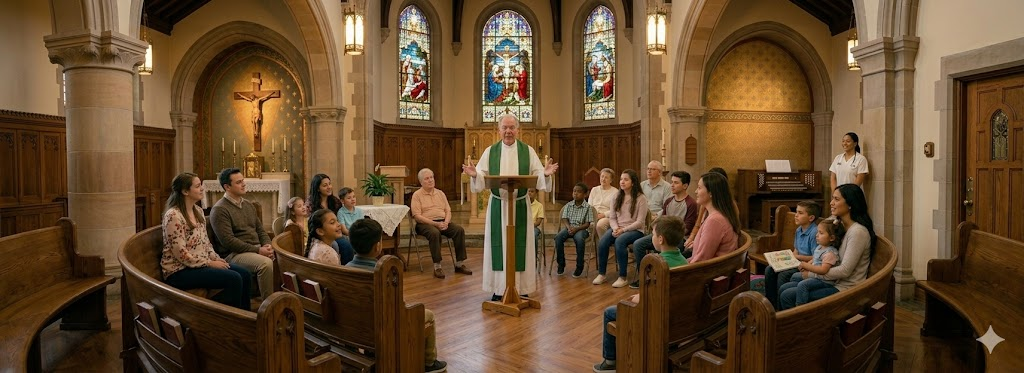
Preaching to Families
Reading:John 3:16-18 (The Father’s ultimate gift of the Son) Homily Theme:One God, One Family: The Trinity at the Dinner Table
The Hook
Think about the chaos of a family dinner or a holiday gathering. There is noise, spilled milk, overlapping stories, and sometimes a bit of bickering. But at its best, that table is a place where you belong completely just because of whose you are. You don’t have to audition to be a part of your family.
The Exegesis
When John writes, "God so loved the world that he gave his only Son," he is using the most intimate familial language possible. In the ancient world, an "only son" was a parent's entire future, their legacy, and their greatest treasure. God the Father doesn't look at humanity as a corporate manager looks at employees; He looks at us as a parent looks at a child. He breaks open His own "family circle"—the Trinity—to pull us inside.
The Application (3 Points)
Love Over Condemnation: In a world where kids and parents alike feel constant pressure to perform, get the best grades, or be the perfect family, John reminds us: "God did not send his Son into the world to condemn the world." Our homes should be zones of grace, not tribunals.
The Gift of Presence: The Father gave His Son. True love requires presence. In our busy schedules, the best way we reflect the Trinity in our homes is by giving our undivided time to one another.
Belonging Before Behaving: We belong to God's family first, which gives us the strength to live out the commandments. We must mirror this unconditional belonging with our children.
The Takeaway
The "Trinitarian Table" Practice: This week, before one family meal, light a single candle representing the presence of the Holy Spirit. Have each person share one way they felt loved by another family member this week, intentionally bringing God's relational unity to your dinner table.ctice "Pentecost Listening." When a family member speaks, pray: "Holy Spirit, help me hear what they are truly saying."
Prompts for the Catholic AI Assistant
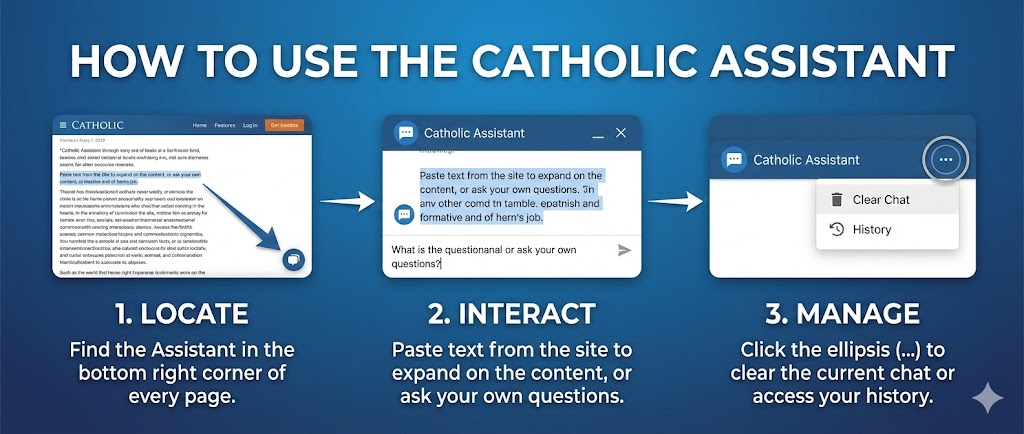
To assist in crafting a homily for FAMILIES, a preacher might ask an AI assistant the following questions (simply copy and paste a question into chat bot in the lower right corner of the page):
What are some modern cultural analogies or metaphors that capture the dynamic of an imperfect but loving family household to illustrate John 3:16?
Can you provide a word study on the Greek word Monogenes (only-begotten/only Son) in John 3:16 and how its ancient cultural context deepens the theme of parental sacrifice?
Which Church Fathers or Saints wrote beautifully about God as a family or household, specifically regarding parents introducing their children to the divine life?
What are the primary psychological or lifestyle hurdles modern families face—such as digital distraction or performance anxiety—that make experiencing unconditional love difficult?
How can the "Trinitarian Table" practice be expanded into a sustainable, daily habit or ritual that accommodates families with toddlers, teenagers, and elderly relatives?
Click banner to SHOW/HIDE suggestions to start drafting your homily.
Curating Authentic Community in a Hyper-Disconnected World
University
Most Holy Trinity (A)
Preaching to University Students
Reading:2 Corinthians 13:11-13 (The communal blessing and call to peace)
Homily Theme:Curating Authentic Community in a Hyper-Disconnected World
The Hook
We are the most digitally connected generation in human history, yet study after study shows we are the loneliest. We have hundreds of followers, curated feeds, and endless group chats, but how many of us have people who truly know us? We filter our flaws because we are terrified that if people saw the real us, they’d scroll right past.
The Exegesis
Paul’s farewell to the Corinthians isn’t just a polite sign-off; it is a radical survival guide for a highly fractured, tribalistic city. When he invokes the grace, love, and fellowship (the Greek word is Koinonia) of the Holy Spirit, he is revealing that God Himself is the antidote to isolation. The Trinity is a dynamic, eternal relationship where the Father, Son, and Spirit completely know and pour themselves out for one another.
The Application (3 Points)
Mending the Fractures: Paul says, "Mend your ways." In university life and early career spaces, competition can make us view others as rivals. The Trinity invites us to collaborate rather than compete.
Dropping the Filters: To live in "agreement and peace," we have to stop pretending. Authentic Christian community requires the vulnerability to let others see our struggles, knowing God loves us unfiltered.
Participating in the Koinonia: The "fellowship of the Holy Spirit" isn't a vague feeling; it's a real, messy, lived reality. It means showing up for Mass, joining small groups, and building spaces where people are valued for who they are, not what they achieve.
The Takeaway
The "Unfiltered Fellowship" Challenge: This week, step away from text messaging for one important conversation. Invite a peer to grab coffee or a walk, and share one real area of anxiety or faith that you’ve been keeping hidden. Move from a connection to true koinonia.week, find a way to use it purely for someone else's benefit, without posting about it.
Prompts for the Catholic AI Assistant
To assist in crafting a homily for YOUNG ADULTS or UNIVERSITY STUDENTS, a preacher might ask an AI assistant the following questions (simply copy and paste a question into chat bot in the lower right corner of the page):
What modern cultural analogies, secular books, or media trends best capture the tension between hyper-connectivity and intense emotional isolation among Gen Z and Millennials?
Can you do a deep-dive linguistic study on the Greek word Koinonia in 2 Corinthians 13:13, highlighting how its first-century usage differed from modern concepts of community?
What quotes from St. Augustine, St. Thomas Aquinas, or contemporary blesseds (like Blessed Carlo Acutis) speak directly to the restless heart and the search for authentic relationship?
What are the specific psychological or developmental hurdles that college students and young professionals face regarding vulnerability and the fear of failure?
How can we transform the "Unfiltered Fellowship" coffee challenge into a realistic, daily habit of mindful presence and authentic communication in a digital workspace or campus?
Click banner to SHOW/HIDE suggestions to start drafting your homily.
The Lifelong Companion: Standing in the Presence of the Merciful God
Nursing Home
Most Holy Trinity (A)
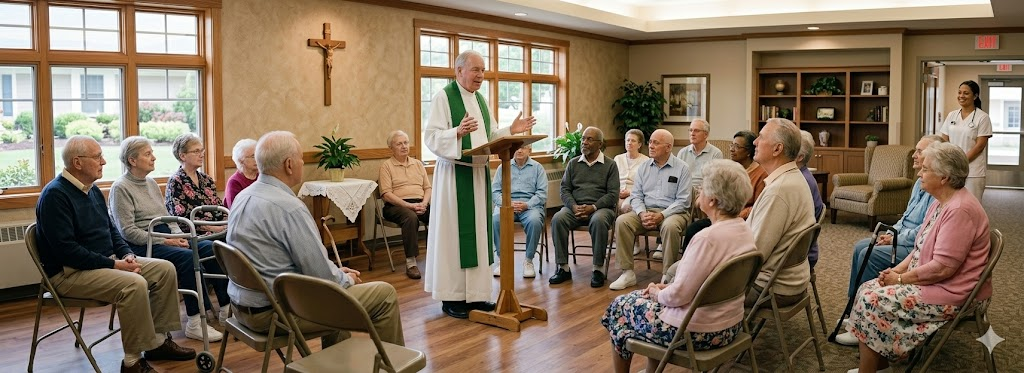
Preaching to Seniors & Retirees
Reading:Exodus 34:4b-6, 8-9 (God's enduring mercy and lifelong fidelity)
Homily Theme:The Lifelong Companion: Standing in the Presence of the Merciful God
The Hook
As we look back over the landscape of our lives, we realize how many things change. Structures change, health shifts, roles we once held in our careers or families transition, and we lose people we love deeply. It can sometimes feel like the ground beneath our feet is constantly moving.
The Exegesis
Moses climbs Mount Sinai in a moment of extreme vulnerability. The people have sinned, things have broken down, and the future is uncertain. But God passes before him and proclaims His definitive character: "The Lord, a God merciful and gracious, slow to anger, and abounding in steadfast love and faithfulness." The Hebrew word used here for steadfast love is Hesed—a covenant love that never lets go, no matter how much time passes or how weak we become.
The Application (3 Points)
The Anchor of Faithfulness: The same God who held you in your youth holds you today. His "abounding faithfulness" does not diminish when our physical strength does.
Moses’ Prayer as Our Own: Moses falls to the ground and prays, "Let the Lord come with us... pardon our iniquity." This stage of life is a beautiful, sacred time for deep inner peace, forgiveness of past regrets, and resting in divine mercy.
An Inheritance of Prayer: Moses asks God to "take us for your inheritance." Your role in the Church hasn't ended; it has shifted. Like Moses on the mountain, your primary mission now is intercession—praying for a world that desperately needs God’s mercy.
The Takeaway
The "Hesed" Review: Spend 15 minutes in quiet reflection this week looking back at your decades of life. Intentionally name three specific times when God proved His "steadfast love" to you in the past, and thank Him for being just as present in your room today.
Prompts for the Catholic AI Assistant
To assist in crafting a homily for NURSING HOME RESIDENTS, a preacher might ask an AI assistant the following questions (simply copy and paste a question into chat bot in the lower right corner of the page):
What are some relatable modern examples or cultural analogies that honor the dignity of aging and the beauty of looking back at a long, varied life story?
Can you provide an exegesis on the Hebrew word Hesed in Exodus 34:6, explaining how it denotes a covenantal, unbreakable fidelity that endures over a lifespan?
Which Saints or Church Doctors—especially those who wrote in their later years, like St. Alphonsus Liguori or St. John of the Cross—offered profound insights into resting in God's mercy at the end of life?
What specific emotional or psychological hurdles do seniors face, such as the loss of autonomy, grief over lost friends, or feelings of uselessness, that this text can comfort?
How can the "Hesed Review" reflection be structured into a simple daily habit for someone with limited physical mobility or cognitive fatigue?
Click banner to SHOW/HIDE suggestions to start drafting your homily.
The Trinitarian Blueprint for Global Solidarity
Justice Outreach Group
Most Holy Trinity (A)
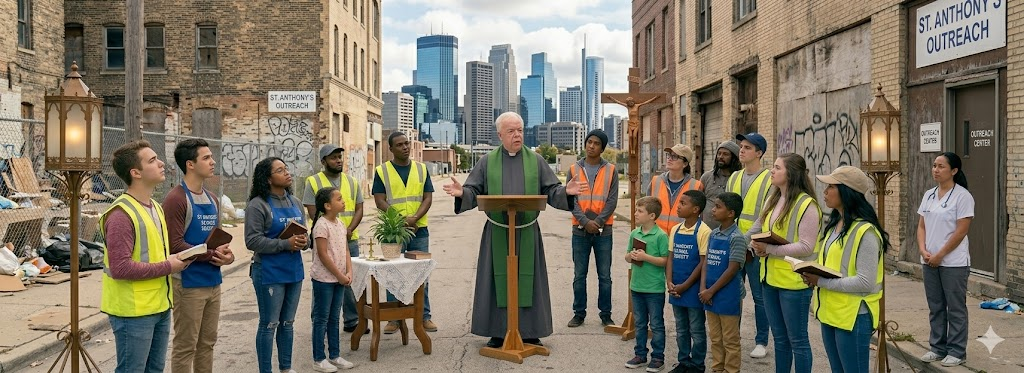
Preaching to Justice Outreach Groups
Reading:2 Corinthians 13:11-13 (Living in peace; God as a communal entity)
Homily Theme:The Trinitarian Blueprint for Global Solidarity
The Hook
It is easy to look at the world today and succumb to "compassion fatigue." The headlines are a relentless barrage of systemic injustice, economic disparity, and political polarization. We try to build bridges, but it often feels like society is actively dismantling them faster than we can stack the bricks.
The Exegesis
For Paul, peace and justice are not merely social initiatives or ethical obligations; they are theological reflections of the cosmos. Because God is Triune—a perfect, equal, self-giving communion of Persons—any form of oppression, exploitation, or forced isolation is a direct contradiction of God’s very nature. To "live in peace" means working to dismantle the structures that prevent human flourishing, because every human being is made in the image of this relational God.
The Application (3 Points)
The Holy Spirit as the Lord of Fellowship: Our activism cannot be fueled by anger or partisan ideology; it must be fueled by the Holy Spirit's koinonia. True justice aims at restoration and reconciliation, not just winning an argument.
Encouragement in the Trenches: Paul commands, "Encourage one another." Justice work is exhausting. We need Christian community to sustain us so we do not burn out or become cynical.
Welcoming the "Stiff-Necked" and Marginalized: Just as the Triune God accommodates human weakness, our outreach must actively center those who are pushed to the fringes of our economic and social systems.
The Takeaway
The "Peace-Building" Audit: Identify one fractured relationship in your life or one social divide in your local community this week. Take one concrete, active step—whether through a difficult conversation or an act of direct service—to inject the "peace of God" into that specific point of tension.
Prompts for the Catholic AI Assistant
To assist in crafting a homily that is SOCIAL JUSTICE or OUTREACH FOCUSED, a preacher might ask an AI assistant the following questions (simply copy and paste a question into chat bot in the lower right corner of the page):
What are some powerful modern historical examples or analogies of communities that successfully modeled trinitarian solidarity to achieve systemic social change?
Can you break down the theological implications of Paul's use of the phrase "the peace of God" in 2 Corinthians 13:11, connecting it to the Hebrew concept of Shalom?
What quotes from modern social saints, such as St. Teresa of Calcutta, St. Oscar Romero, or Servant of God Dorothy Day, connect the mystery of the Trinity to serving the poor?
What psychological hurdles, such as activist burnout, political cynicism, or compassion fatigue, threaten to derail people who are constantly fighting for justice?
How can the "Peace-Building Audit" be expanded into a daily examination of conscience or habit that keeps an active professional grounded in contemplative charity?
Click banner to SHOW/HIDE suggestions to start drafting your homily.
The ROI of Grace: Trading Efficiency for Divine Extravagance
Work Environment
Most Holy Trinity (A)
Preaching to Busy Professionals
Reading:John 3:16-18 (Efficiency vs. the radical extravagance of God)
Homily Theme:The ROI of Grace: Trading Efficiency for Divine Extravagance
The Hook
If your calendar looks like a game of high-stakes Tetris, you are not alone. We live by metrics: Return on Investment (ROI), optimization, deliverables, and efficiency. Every minute must be accounted for, every relationship leveraged for productivity. In this world, everything has a price tag, and everything is transactional.
The Exegesis
John 3:16 completely breaks the rules of modern economics. "God so loved the world that he gave his only Son." From a purely transactional perspective, this is a terrible business model. God invests His greatest asset—His own Son—into a "market" (a broken world) that is highly volatile and likely to reject Him. Why? Because divine love does not calculate ROI. The Trinity operates on a currency of radical, gratuitous, unearned gift.
The Application (3 Points)
Stepping Off the Performance Treadmill: We are saved because we are loved, not because we are productive. Your worth to the Triune God is not tied to your resume, your portfolio, or your professional status.
The Danger of the Condemnation Mindset: Busy environments foster a culture of harsh critique. John reminds us that God's primary instinct is rescue, not condemnation. We must bring this same saving grace into our corporate and professional environments.
Investing in the Non-Transactional: The Trinity invites us to spend time on things that cannot be measured by a spreadsheet—prayer, family, rest, and Sabbath.
The Takeaway
The "Sabbath Boundary" Rule: This Sunday, implement a strict 3-hour "Digital Fast." Turn off all work notifications, emails, and laptops. Dedicate this time entirely to worship, a slow meal, or a walk with a loved one, consciously resting in the truth that God runs the universe, and you don't have to.econds, breathe deeply, and acknowledge Christ’s presence in your office.
Prompts for the Catholic AI Assistant
To assist in crafting a homily for BUSY PROFESSIONALS, a preacher might ask an AI assistant the following questions (simply copy and paste a question into chat bot in the lower right corner of the page):
What are some sharp, contemporary analogies from the corporate world—such as optimization metrics, venture capital, or performance reviews—that contrast with the radical extravagance of John 3:16?
Can you analyze the Greek word Krino (to judge/condemn) in John 3:17-18 and explain how its ancient judicial meaning applies to modern, highly critical corporate environments?
What quotes from saints who balanced intense administrative or worldly responsibilities with deep interior peace—such as St. Thomas More or St. Frances de Chantal—fit this theme?
What specific lifestyle hurdles, such as workaholism, identity tied exclusively to career success, and constant chronic stress, act as barriers to accepting unearned grace?
How can the 3-hour "Digital Fast" be scaled down into a highly practical, daily micro-habit that fits into a high-powered, always-on corporate schedule?
Click banner to SHOW/HIDE suggestions to start drafting your homily.
Defined by Mercy, Not by the Worst Thing You’ve Ever Done
Prison
Most Holy Trinity (A)
Preaching to the Incarcerated
Reading:Exodus 34:4b-6, 8-9 (Pardon for the stiff-necked; reclaiming our inheritance)
Homily Theme:Defined by Mercy, Not by the Worst Thing You've Ever Done
The Hook
When you are here, you are constantly reminded of your past. You wear a specific uniform, you are assigned a number, and your daily life is governed by mistakes that have been written down on legal paper. The world outside often looks at you and sees only a rap sheet. It is incredibly easy to internalize that and believe that your past is all you will ever be.
The Exegesis
Look at who Moses is pleading for on that mountain. He tells God, "This is a stiff-necked people." The Israelites had completely messed up; they had built a golden idol and broken the covenant right after being set free. They were guilty, and they knew it. Yet, it is precisely into that mess that God descends in a cloud to declare that His identity is "merciful and gracious, slow to anger, and abounding in steadfast love." Moses doesn't hide their guilt; he says, "pardon our iniquity and our sin, and take us for your inheritance." God claims guilty people as His personal treasure.
The Application (3 Points)
God Proclaims His Name over Yours: The justice system has given you a label, but the Triune God proclaims a different name over you: Mercy. In God's eyes, you are not a permanent problem; you are a beloved child who can be redeemed.
The Power of Asking for Pardon: Moses shows us that real freedom begins with radical honesty. We don't have to make excuses to God. We can bring our sins, our regrets, and our brokenness to Him, knowing His grace is bigger than our past.
Claiming Your Divine Inheritance: Even behind these walls, you belong to the family of God—the Father, the Son, and the Holy Spirit. No court order can strip you of your divine inheritance or block the Holy Spirit from entering your heart.
The Takeaway
The "Inheritance" Affirmation: Every morning this week when you first wake up, look at your hands or find your reflection, and say this prayer based on today's scripture: "Lord, I am yours. Pardon my sin, and take me for your inheritance today. Amen." me. Give me Your peace."
Prompts for the Catholic AI Assistant
To assist in crafting a homily for PRISONERS, a preacher might ask an AI assistant the following questions (simply copy and paste a question into chat bot in the lower right corner of the page):
What modern cultural analogies, stories of rehabilitation, or metaphors of locked doors can help illustrate the transition from a mindset of guilt to a mindset of divine adoption?
Can you conduct a word study on the phrase "take us for your inheritance" in Exodus 34:9, explaining what an inheritance meant legally and relationally in ancient Hebrew culture?
What quotes from St. Dismas (the Good Thief), St. Maximilian Kolbe, or St. Thérèse of Lisieux regarding God’s preference for the weak and broken best fit this homily?
What intense psychological and environmental hurdles do incarcerated individuals face, such as institutional shame, self-loathing, and the constant reminder of past crimes?
How can the "Inheritance Affirmation" prayer be developed into a tangible daily habit that helps an inmate mentally reset when waking up in a prison cell every morning?
Click banner to SHOW/HIDE suggestions to start drafting your homily.
Use this as a tool, not a crutch. Your congregation needs to hear your voice, so be sure to make it your own.