Homilies
Homilies
November 1, 2026
⭐⭐⭐ TBD


Solemnity of All Saints

Looking for the perfect homily opener? Each week, TWTW features standout anecdotes from Fr. Tony.

What it’s Like to be A Saint
“It is like being a Halloween pumpkin. God picks you from the field, brings you in, and washes all the dirt off you. Then he cuts off the top and scoops out the yucky stuff. He removes the pulp of impurity and injustice and seeds of doubt, hate, and greed. Then He carves you a new smiling face and puts His light of holiness inside you to shine for the entire world to see.” This is the Christian idea behind the carved pumpkins during the Halloween season.
Papal Homilies / Catechism
Solemnity of All Saints


Featured Homilies
Deacon Peter McCulloch
Solemnity of All Saints
✍️ On a Sweeping Challenge
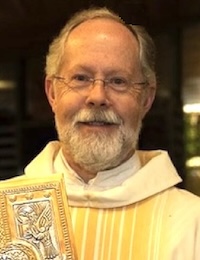
SUMMARY (2020): All Saints’ Day reminds us that heaven requires sainthood, yet holiness is not reserved for the canonized few. Rooted in baptism, becoming a saint does not demand extraordinary feats or isolation; rather, it requires doing ordinary, daily duties with extraordinary love. Drawing on the Beatitudes, St. John Henry Newman, and St. Thérèse of Lisieux’s “Little Way,” spiritual perfection is found in humble, routine fidelity—from daily prayer to washing dishes. As Martin Luther King Jr. challenged, doing our very best in every task elevates daily work into holiness. The world urgently needs saints: the call begins in ordinary life.
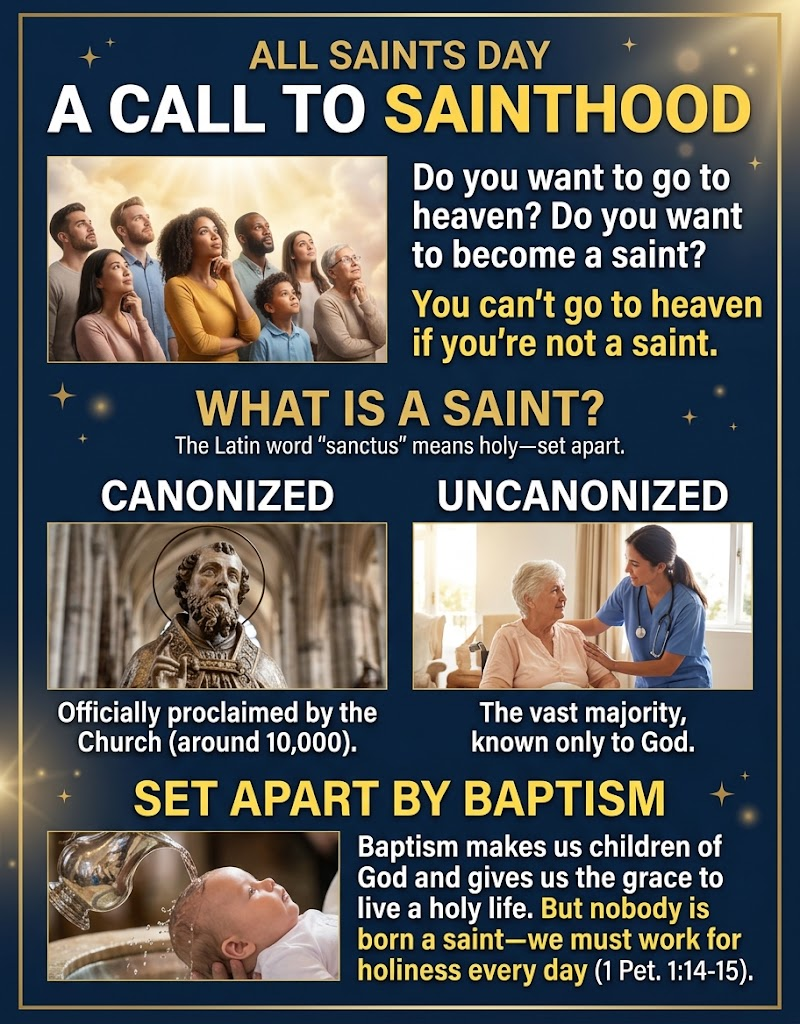
Click to Enlarge
Bishop Robert Barron
Solemnity of All Saints
▶️ Be a Saint!
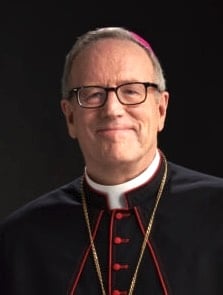
Friends, we have the privilege of continuing to read from the Sermon on the Mount, where Jesus himself lays out his basic teaching. What we find today is Jesus as the new Moses. Like Moses, he goes up on a mountain, and he receives and then gives a new Law. But Jesus intensifies the Law of Moses; he wants its corrective power to go beyond merely the behavioral level and to get down to the level of the heart. We are not called to spiritual mediocrity; we are called to be saints!
Watch the video, then dive deeper with TWTW study materials below:
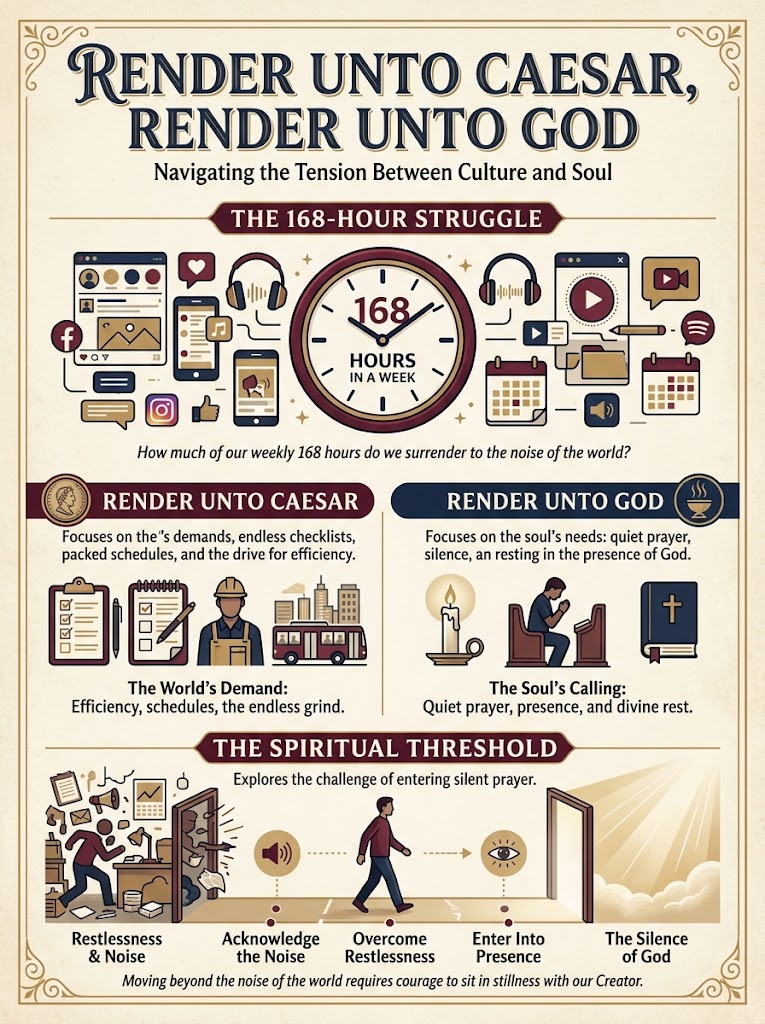
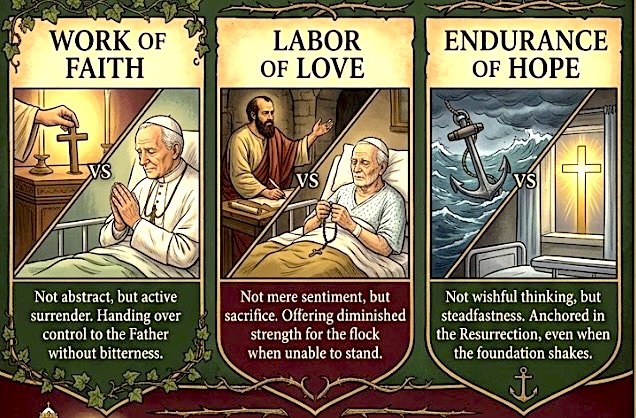
- Visuals: 5 companion infographics to follow along with the message
- Transcript: Full sermon text for reading and reference
- Discussion Guide: 25 questions tailored for small groups and classrooms


Fr. Mike Schmitz
Solemnity of All Saints

SUNDAYS WITH ASCENSION: Fr. Mike Schmitz is the chaplain for the Newman Center at the University of Minnesota Duluth (UMD) and serves as the Director of Youth and Young Adult Ministry for the Diocese of Duluth.
▶️ This Could Be Your Feast Day
SUMMARY (2023) – Saints are not defined by moral perfection or flawless lives, but by total surrender to God as His beloved children. Our sins and weaknesses do not disqualify us; surrendering them allows divine grace to work. Through baptism, we belong to the Lord and are invited to offer Him everything—our strengths, failures, and mistakes alike. We do not run this earthly race alone. Like spectators rallying an exhausted marathoner across the finish line, the communion of saints—both famous and unknown—cheers us on and intercedes for us, until their feast day ultimately becomes our own eternal celebration. Would you like this structured into a specific outline or adapted for a homily bulletin note?
Fr. Michael Chua
Solemnity of All Saints
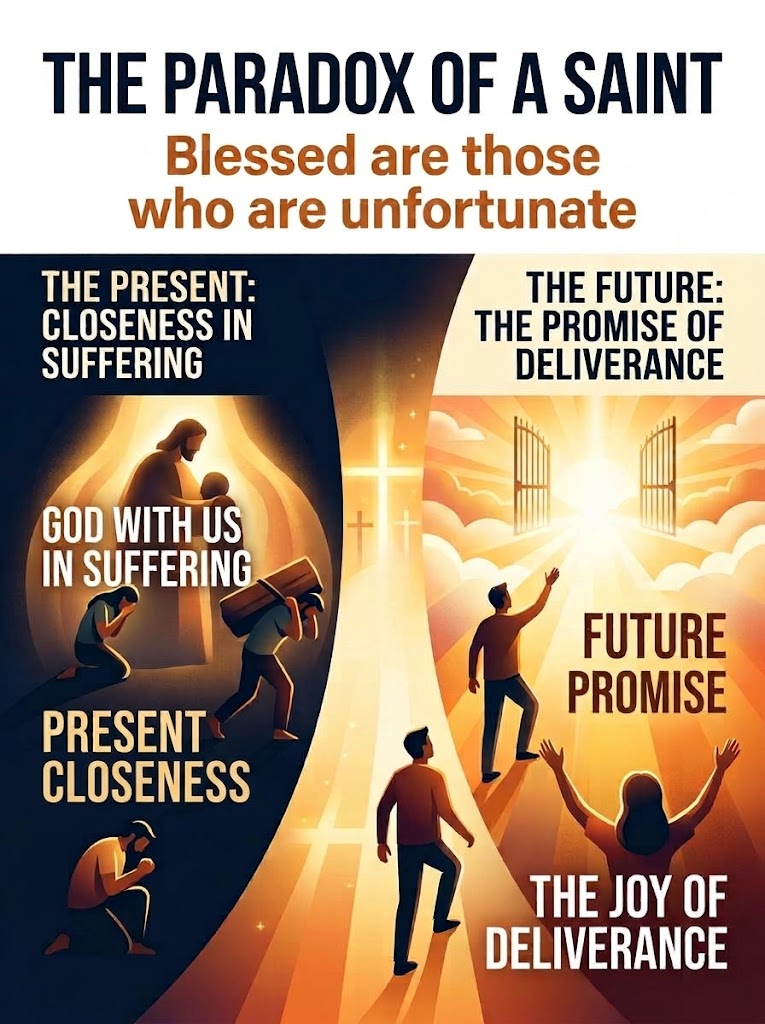
✍️ Blessed are the Unfortunate

EXCERPT (2023): One could paraphrase the Beatitudes in this way, “Blessed or Happy are those who are unfortunate.” One who mourns, for example, would never imagine himself as being happy. But our Lord declares this to him, “Happy are those who are not happy.”
But what strange kind of good fortune is it that is suggested by the words “blessed” or “happy”? The word has two temporal dimensions: it embraces both the present and the future, and each in a different way.
Dominican Blackfriars
Solemnity of All Saints
✍️ The Face of Christ
SUMMARY (2022): In this All Saints’ Day reflection, Fr. Benedict Jonak O.P. emphasizes that true happiness cannot be manufactured through techniques or purchased with wealth. Instead, genuine joy is discovered solely through friendship with Jesus and gazing upon the face of Christ. When Jesus delivers the Beatitudes to his disciples, he is not presenting a checklist for achieving happiness through poverty or hunger. Rather, he is acknowledging their present struggles and revealing that following him is the ultimate source of their blessedness. The saints attained the ultimate beatific vision not by formulas, but through faithful, enduring discipleship in Christ.

Fr. Austin Fleming
Solemnity of All Saints
✍️ All Saints!
Fr. Austin Fleming
EXCERPT (2014): Being a saint means paying attention to God in my life, day by day.
• You’re a saint when you pay attention to God’s presence in your own heart and in the lives of others…
• You’re a saint when you pay attention to your own faults and forgive those who’ve hurt you…
• You’re a saint when you pay attention with all you have: with all your heart, your mind and your soul…

Monsignor Peter Hahn
Solemnity of All Saints

▶️ Relationships Rooted in Eternity
Msgr. Peter Hahn
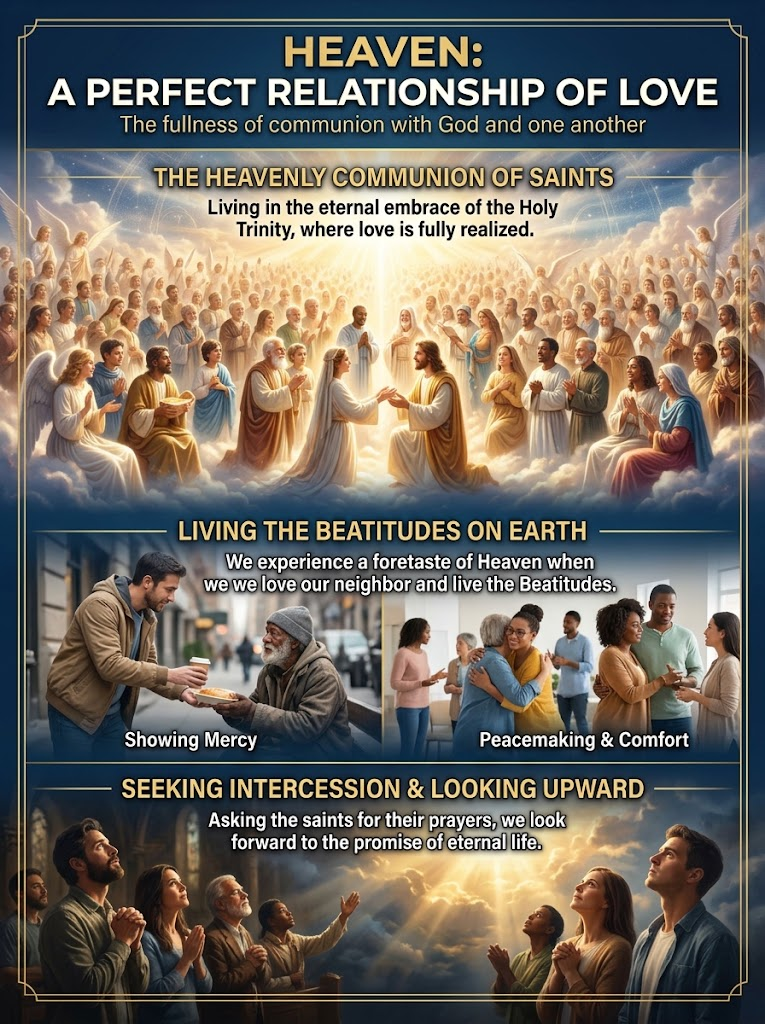
SUMMARY (2017): All relationships are meant to reflect the Trinity. On the Feast of All Saints, we celebrate our enduring spiritual bonds with the faithful in heaven. The Beatitudes offer a counter-cultural guide for our earthly relationships, urging us to practice meekness, mercy, and peacemaking rather than worldly materialism. Ultimately, our daily encounters share one profound purpose: to help one another achieve holiness. As we honor the great multitude in heaven and pray for the souls in Purgatory, we are reminded that our true destiny is the beatific vision. Living in love today prepares us for eternal communion.
Fr. Charles E. Irvin
Solemnity of All Saints
✍️ The Great Multitude in Heaven

Fr. Charles E. Irvin
SUMMARY: In his All Saints homily, Fr. Ignatius Manfredonia reflects on the great multitude in heaven who died in sanctifying grace. Having reached their eternal reward, these souls no longer need faith or hope; instead, they possess perfect peace, exhilarating joy, and the ultimate vision of seeing God face to face. Surrounded by divine love, they enjoy intimate friendship with God, Mary, and fellow saints. They achieved this glory solely through Jesus Christ, washed clean by the Blood of the Lamb. Fr. Manfredonia encourages us to persevere, reminding us that these triumphant brothers and sisters are joyfully praying for our arrival.
Fr. Tommy Lane
Solemnity of All Saints
✍️ All Saints Day

Fr. Tommy Lane
The Saints: our older brothers and sisters in the family of God 2024
The saints: our intercessors 2021
The saints: friends in heaven interceding for us 2020
The saints, transformed in heaven, see God 2018
United with the saints in heaven during this Mass 2006
The saints remind us who we are
The saints have reproduced in their lives Jesus’ victory over evil
The communion of saints and our glorious future
Gospel: Homilies on the Beatitudes
Second Reading related: Love of God for us
tories about saints and Halloween
Fr. Langeh, CMF
Solemnity of All Saints

▶️ Universal Call to Sainthood
EXCERPT (2018): There is a popular idea that a saint is someone who never does anything wrong, is good and pure to the core and lives a perfect life of holiness. On this note we put them in stained glass windows, carve statues of them and erect churches in their names. We have pushed them so far from us as we can place them. On this note we hear people say that they can never be as holy as them. We wonder if the saints ever lived to experience the stresses of everyday life.
Who can be a saint? Although the exact number of saints is unknown, we know of course, that the greater majority have been members of religious orders. We love them and we admire them; we wish to imitate them. But how can a mother with small children, a wife with a difficult husband, a young bride with in-law problems, can they too become saints?
Msgr. Charles Pope
Solemnity of All Saints
✍️ Ninety-Nine and a Half Won’t Do
Msgr. Charles Pope
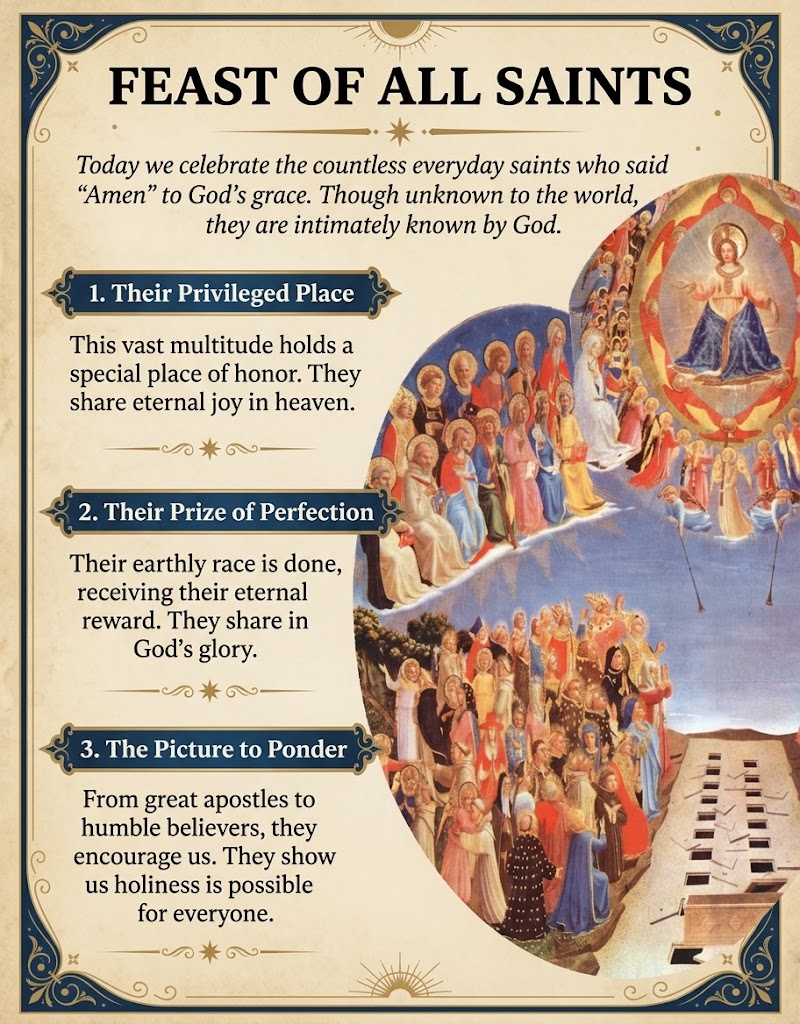
EXCERPT (2020): Today is the Feast of All Saints. Some saints of the Church have a particular day on the calendar associated with them and are commonly recognized by name. Many more, though not as familiar to us, are still known by God and have been caught up with Him to glory. Today is their day, the day of the countless multitude who have made it home to glory by God’s grace and by their “Amen” to the gracious call of God. Let’s consider these saints under three headings, based on today’s readings.
- Their Privileged Place
- Their Prize of Perfection
- The Picture to Ponder
Father Kevin Rettig
Solemnity of All Saints

▶️ The Land of the Living – All Saints
ABSTRACT (2020): Fr. Kevin explores the profound theological concept of the Communion of Saints, illustrating how love transcends the perceived barriers of time, space, and death. It begins with a poignant anecdote about Bishop Phillips Brooks prioritizing a final visit with an agnostic friend over his family, highlighting the profound pain of earthly separation. However, the speaker argues that physical death is merely a transition from the “land of the dying” to the true “land of the living.” Just as modern technology bridges vast physical distances, the eternal power of love securely binds us with those who have passed, ensuring we are never truly separated.

Fr. George Smiga
Solemnity of All Saints
✍️ The Saintly Chorus

EXCERPT (2002): the great mystery of the Communion of Saints. What truths for our own lives can we discover within it? I suggest that we use an image, the image of a musical chorus, billions of voices in heaven and earth lifting up praise to God. When use this image, three truths for our own lives emerge.
- The first is this. No one sings alone…
- The second truth is that every voice is necessary….
- The third truth is no one sings all the time…
So, on this Feast of All Saints we celebrate the beauty of our communion. A beauty that reminds us that no one sings alone, that every voice is necessary, and in those times when we are unable to sing, there are others who will sing for us.

Religious Orders
Solemnity of All Saints

Featured Priests
SCROLL FOR MORE
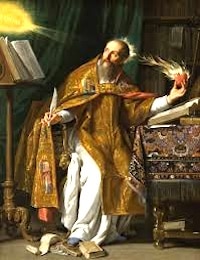
The Grace of Becoming
Reading: 1 John 3:1-3
Augustinian Theme: The Primacy of Grace
In his first letter, St. John invites us to marvel at a profound mystery: “See what love the Father has bestowed on us that we may be called the children of God.” Notice the direction of this extraordinary love. It is bestowed. It descends from heaven. It is a pure gift, entirely unearned.
As we celebrate the great feast of all the saints who have gone before us, it is easy to fall into a spiritual trap. We often view holiness as an elite athletic event—a state of moral perfectionism achieved only through sheer willpower and flawless behavior. But St. Augustine, our great Doctor of Grace, reminds us of a deeply liberating truth: we cannot save ourselves. Human willpower is fragile, prone to wandering, and easily exhausted by the trials of life.
If we look closely at the saints, their secret was never self-reliance; it was a radical, humble surrender to the primacy of grace. They understood that transformation is always initiated by God. When John writes that we are God’s children now, and that “what we shall be has not yet been revealed,” he speaks the essential language of grace. We are works in progress, safely held in the hands of a God who gently does the heavy lifting.
Grace heals us when we are broken. It lifts us when our strength falters, and it enables us to love when our own hearts feel empty. To become a saint is not to present God with an unblemished resume. It is to recognize our deep spiritual poverty and to continually grasp the outstretched hand of Christ.
Today, lay down the heavy burden of trying to earn God’s favor. Let us rest entirely in the breathtaking grace the Father has bestowed upon us, trusting that His love is more than enough to lead us all the way home.
Featured Friars & Monks
SCROLL FOR MORE
The Ladder of the Beatitudes
Reading: Matthew 5:1-12a
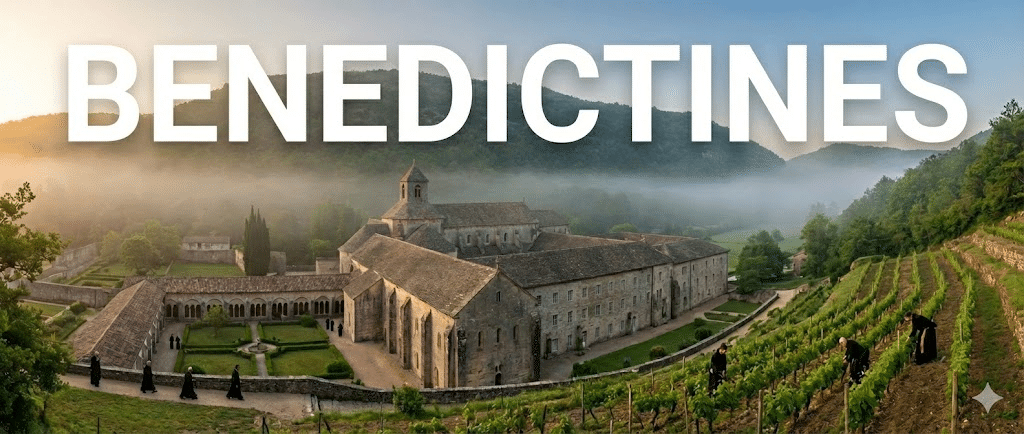
Benedictine Theme: Prayer and Work (Ora et Labora)
In today’s Gospel, Jesus climbs a mountain, sits down with His disciples, and proceeds to turn the world’s value system completely upside down. “Blessed are the poor in spirit. Blessed are the meek.” To the modern ear, driven by ambition and self-promotion, this can sound like a recipe for defeat. But to Saint Benedict, these words form the ultimate blueprint for spiritual freedom.
In his holy Rule, Saint Benedict dedicates his longest and most profound chapter to what he calls the “Ladder of Humility.” He presents us with a beautiful paradox: to ascend toward God, we must first descend. We must willingly step down from the exhausting pedestals of our pride, our need to be right, and our obsession with control. The Beatitudes are precisely this gentle descent. They are the very rungs on Benedict’s ladder.
When Jesus blesses the merciful, the pure in heart, and the peacemakers, He is inviting us into the heart of Benedictine humility. This humility is never about self-hatred or making ourselves falsely small. Rather, it is the quiet courage to unmask our pride and recognize our true, beloved place before God. It means living with authentic modesty, deeply aware that we are not the center of the universe, and that everything we have is a gift.
The saints we honor today were not superheroes who muscled their way into heaven. They were men and women who mastered the art of stepping down. They allowed themselves to be poor in spirit, to mourn, and to hunger for righteousness. This week, let us stop exhausting ourselves by climbing the worldly ladders of ego and recognition. Instead, let us embrace the humble descent of the Beatitudes, finding our true peace at the feet of Christ.


White Robes and Everyday Love
Reading: Revelation 7:2-4, 9-14
Carmelite Theme: The “Little Way” of Confidence and Love
In today’s profound reading from the Book of Revelation, Saint John lifts the veil on heaven and beholds a breathtaking sight: a great multitude, impossible to count, from every nation, race, people, and tongue. They stand before the throne wearing white robes, holding palm branches, having survived the “time of great distress.”
When we hear this epic imagery, it is easy to imagine that heaven is reserved strictly for spiritual titans—heroes who performed earth-shattering miracles, endured dramatic martyrdoms, or founded global movements. But the Carmelite tradition, particularly through the gentle, powerful wisdom of Saint Thérèse of Lisieux, offers us a profoundly different lens. Saint Thérèse gave the Church her “Little Way” of confidence and love, teaching us that you do not need to do grand, heroic deeds to become a saint; you only need to do small things with great love.
For most of us, the “great distress” mentioned in Revelation isn’t a fiery trial on a world stage. It is the quiet, daily grind of human life. It is the exhaustion of caring for a sick child, the patience required to bear with a difficult neighbor, or the silent grace of offering our daily anxieties to Christ. The countless souls in John’s vision—that magnificent, unnumbered crowd of everyday saints—are mostly ordinary people who lived out their own “Little Ways.” They washed their robes in the blood of the Lamb by trusting fiercely in God’s mercy amidst the mundane realities of their lives.
Today, as we honor All Saints, do not be discouraged by your ordinariness. Heaven is populated by hidden saints who simply chose to love God in the quiet, unfolding moments of everyday life. Embrace your own little way today, confident that every small, unseen act of love echoes eternally before the throne of God.

Featured Friars & Websites
SCROLL FOR MORE
Seeing Him as He Is
Reading: 1 John 3:1-3
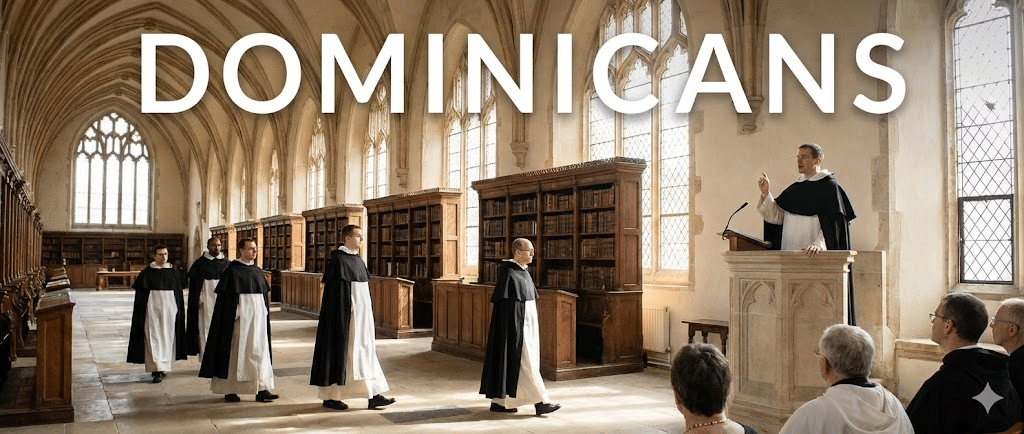
Dominican Theme: Veritas (The Pursuit of Truth)
Since the thirteenth century, the Dominican Order has been driven by a singular, consuming passion: Veritas, or Truth. Whether pouring over sacred scripture, studying the sciences, or engaging with human culture, the Dominican heart operates on a profound confidence that all genuine truth ultimately leads back to God. We study, we preach, and we contemplate to clear away the darkness of error and illuminate the mind with the light of Christ.
In today’s reading from the first letter of St. John, we encounter the glorious summit of this lifelong pursuit. John writes, “Beloved, we are God’s children now; what we shall be has not yet been revealed. We do know that when it is revealed we shall be like him, for we shall see him as he is.”
For the seeker of truth, these words are a breathtaking promise. Throughout our earthly lives, we seek God through fragmented mirrors. We study theology, we ponder the mysteries of the rosary, and we search for justice in our communities just to catch fleeting glimpses of His face. The human intellect aches to know God fully, yet in this life, our understanding is always incomplete.
But St. John assures us that a day is coming when the veil will be entirely lifted. Heaven is the final, transformative encounter with Truth Himself. We will no longer need to study Him in books or deduce Him through philosophy, because “we shall see him as he is.” And in seeing Him, the ultimate Truth will perfectly conform us to His image.
Until that day of total revelation, let us be relentless lovers of truth. Let us seek Christ honestly in our daily lives, trusting that the relentless pursuit of the mind and the deep hunger of the heart will one day be entirely satisfied in the light of His face.

Featured Websites
SCROLL FOR MORE
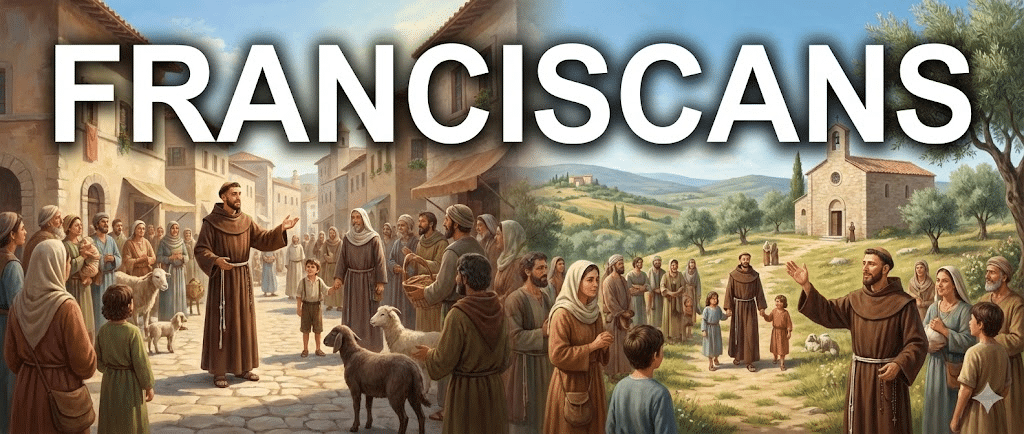
The Blessing of the Lowest Place
Reading: Matthew 5:1-12a
Franciscan Theme: Minoritas (Lesser-ness and Humility)
In today’s Gospel, Jesus gives us the Beatitudes—a spiritual map to the Kingdom of Heaven that looks completely backward to the eyes of the world. He blesses the poor in spirit, the meek, the sorrowing, and the persecuted. Though Jesus is teaching from a high mountain, He is pointing straight down to the lowest places of human experience as the exact locations where grace is found.
Saint Francis of Assisi understood this radical, upside-down map perfectly. When he gathered his early companions, he didn’t want them to be known as masters, leaders, or elites. He called them the Fratres Minores—the Lesser Brothers. This charism of minoritas is the active, joyful choice to reject the world’s exhausting scramble for power, prestige, and status. It is the desire to walk the earth in genuine equality, claiming no privilege other than the privilege of serving.
Why would anyone willingly choose to be “lesser”? Because that is exactly where God chose to be. The Beatitudes are not just a list of moral suggestions; they are a self-portrait of Jesus Christ. He is the ultimate poor in spirit. He is the meek one. Francis realized that when we deliberately step off our pedestals of pride and self-importance, we land right next to the humble, incarnate Christ.
Our society constantly pressures us to climb higher, to build our personal brands, and to demand recognition. Yet, the saints we honor today tell a different story. They found their freedom by stepping down. This week, let us embrace the gentle Franciscan grace of being “lesser.” By letting go of our need to be important, we make room in our hearts for the joy and peace of the Kingdom.

Featured Websites
SCROLL FOR MORE
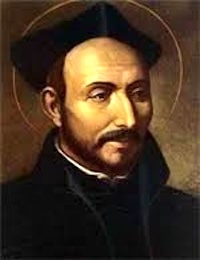
The Freedom of the Mountaintop
Reading: Matthew 5:1-12a
Jesuit Theme: Holy Freedom and Indifference (Tanto Quanto)
When Jesus sits down on the mountaintop to deliver the Beatitudes, He offers a vision of human flourishing that completely contradicts the world’s wisdom. He tells us that the poor in spirit, the mourning, the meek, and the persecuted are the ones who are truly blessed. To modern ears, this sounds baffling. Why would Jesus celebrate loss, vulnerability, and rejection?
Through the lens of Ignatian spirituality, Jesus is giving us the ultimate masterclass in what Saint Ignatius of Loyola called “holy indifference.”
In his Spiritual Exercises, Ignatius taught that to find true peace, we must cultivate a radical spiritual freedom. We must become indifferent—not apathetic or uncaring, but lovingly unattached—to wealth or poverty, health or sickness, honor or dishonor. We are called to use the things of this world only insofar as they lead us to God, and let them go when they do not.
The Beatitudes are the lived reality of this profound freedom. The “poor in spirit” are those who have detached their self-worth from their possessions. The “meek” are wonderfully free from the exhausting need to control, win, and dominate others. Those who endure persecution for the sake of righteousness are no longer held hostage by the desperate need for society’s approval.
The saints we honor today were not spiritual superheroes who lived easy, pain-free lives. They were men and women of dangerous, beautiful freedom. Because they were not chained to the passing illusions of power, success, or comfort, their hands and hearts were entirely open to receive the grace of the Kingdom.
Today, Jesus invites us up the mountain to examine our own attachments. What are you clinging to that is robbing you of your peace? Let us ask God for the grace of holy freedom, that we might step into the joyful, unburdened life of the Beatitudes.
Featured Websites
SCROLL FOR MORE
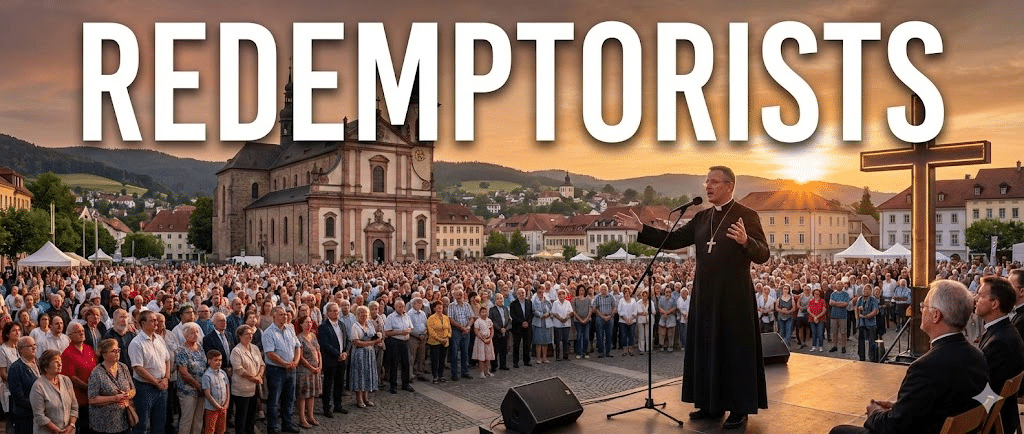
The Vastness of Heaven
Reading: Revelation 7:2-4, 9-14
Redemptorist Theme: Copiosa Apud Eum Redemptio (Plentiful Redemption)
In the Book of Revelation, Saint John lifts his eyes and beholds a vision that should permanently shatter our narrow concepts of God’s grace. He sees a great multitude, which no one could count, from every nation, race, people, and tongue. Heaven is not a small, exclusive club reserved for the flawless elite. It is a vast, overflowing sea of humanity.
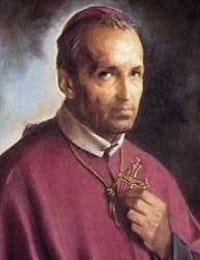
When Saint Alphonsus Liguori founded the Redemptorists, he anchored the community in a single, life-changing truth found in Psalm 130: Copiosa Apud Eum Redemptio—”With Him there is plentiful redemption.” During his time, many preachers terrified people with an image of a harsh, accounting God who strictly rationed out mercy only to the morally perfect. But Alphonsus knew differently. Looking at the poor, the abandoned, and the broken laborers of his day, he preached that God’s saving love is an ocean. It is boundless, free, and overwhelmingly abundant.
Notice what the elder tells John about this great, heavenly multitude: “These are the ones who have survived the time of great distress; they have washed their robes and made them white in the blood of the Lamb.” The saints did not arrive in heaven because they never stumbled, doubted, or sinned. They arrived because, when their garments were stained by the grime and exhaustion of human failure, they brought them to the cross. They trusted utterly in the plentiful redemption of Jesus Christ.
Today, as we celebrate All Saints, let go of the paralyzing fear that you are too broken or too ordinary to be holy. Do not listen to the voices of harsh judgment. Instead, look to the unnumbered multitude, turn to Christ as you would a trusted friend, and rest confidently in His plentiful redemption.
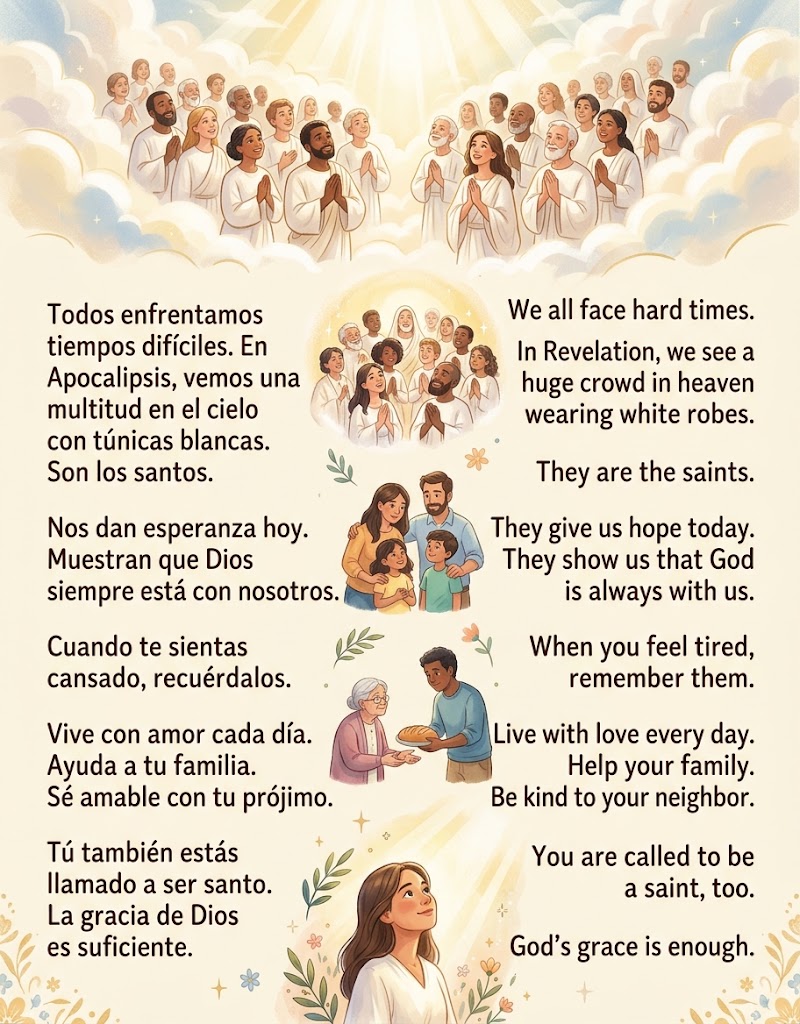
Bilingual Homily
Solemnity of All Saints
A brief homily for those who are learning Spanish or English. The grammar is kept uncomplicated and uses present-tense vocabulary to ensure it is easy to deliver. The homily focuses on the practical, everyday meaning of Sunday’s Gospel.
Additional Homilies
Solemnity of All Saints
Father Vincent Hawkswell
All Saints: A True Family Celebration
Fr. George
Corrigan, OFM
saints and Saints
The Parade
Saints, Known and Unknown
Msgr. Joseph Pellegrino
Solemnity of All Saints: Heroes (2020)
All Saints: Witneses Par Excellence (2012)
All Saints: Thomas More, A Saint for All Seasons (2006)
Archive
Fr. Michael
Fallon, MSC
All Saints Day (PDF)
Archive
MORE
Homiletic & Pastoral Review
Fr. Jude Siciliano, O.P.
Fr. Carmen Melle, O.P.
Msgr. Terra’s Homilies (PDF)
Bishop Frank Schuster (PDF)
Catholic Ireland
Words of Spirit & Life
Fr. Mike Schmitz
Fr. Joe Jagodensky, SDS
Fr. Bob Warren
Catholic Doors
Doctrinal Homily Outlines
 Highlight text or double-click a paragraph anywhere on the site to ADD TO NOTES. You can also click ASK AI to copy your selection to the clipboard with a command prompt, ready for you to paste manually into the chat above.