
Bible Study
Bible Study

Matt Zemanek

Fr. Geoffrey Plant

Fr. Bryan Kulawa
Word
Sunday

Word-Sunday
by Larry Broding
1st Reading: Lament Song
2nd Reading: The Power of God’s Gift
Gospel: Be Prepared!

We all have good times. And we all have bad times. 2001 was my bad time. Between the shooting at Santana High School (Santee, CA) my son witnessed, to the funerals my wife and I attended, to 9/11, the year seemed to be one long grieving period. A year with death in the air. A time to be endured.
Bad times like that give us a hint at the despair and desperation found in this reading. Several generations had passed from the return of the exiles in Babylon. Jerusalem and its Temple were being rebuild. A sense of normal living had returned. Yet, the people were forlorn. Life was hard. And God seemed to be far away.
The author of these passages (the so-called “Third Isaiah”) spoke the prayer of the people. How long before the people returned to glory? How long before God’s presence shone before the nations? Note the prayer for divine intervention was mixed with self-examination. The loss of stature was not necessarily God’s fault [64:5b-7]. Yet, also note the sense of hope. The petitioner called upon God as Father and asked for his return [63:16-17].
Like those who lamented in Jerusalem, we, too, may have times we feel cut off from God and his blessing. Yet, there is always hope. For the Lord is coming. Soon!
SOURCE: Word-Sunday Permission for use. All materials are the property of Larry Broding (Copyright 1999-2022). Viewers may copy any material for use in any non-profit ministry. Materials may not be sold or used for personal financial gain.
Paul’s First Letter to the Corinthians addressed the controversies that tore the community apart. As explained in last week’s reflection, Corinth was a cosmopolitan port city. Not only was the city known for its multi-cultural mix, it was also known for its cult to Aphrodite and its fertility rites. The title of “Sin City” for Corinth would not be too far off the mark. St. Paul wrote the letter with an eye toward the city’s nature, as much as the infighting among the cliques in the community.
St. Paul began all his letters with a standard greeting. While the salutation (“to” and “from”) is not present in this reading (1:1-2), the greeting of God’s “grace” (a reference of God’ presence for the Greek Christians in his audience) and “peace” (a reference for the Jewish Christians) is listed.
Then, Paul reminded his readers of their privileged position before God. God’s grace created a reciprocal relationship among the believers; it “enriched” the knowledge and speech of the followers as it caused a “confirmation” of faith. In other words, grace causes people to believe and it deepens their faith commitment. In fact, the deepening of faith in some of the community causes more faith among others. This was all a gift from God.
SOURCE: Word-Sunday Permission for use. All materials are the property of Larry Broding (Copyright 1999-2022). Viewers may copy any material for use in any non-profit ministry. Materials may not be sold or used for personal financial gain.
Bible Study
Videos


Fr. Bryan Kujawa
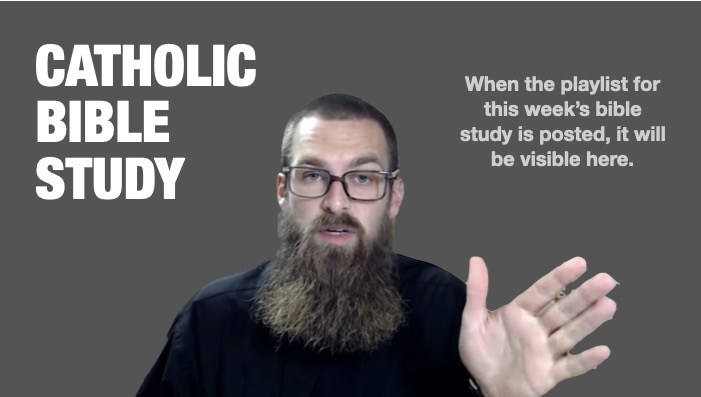


Click on image to view Fr. Bryan’s playlist. Each week he posts three videos. You can switch between them by clicking on the upper right hand corner once video starts playing.
SOURCE: Fr. Bryan Kujawa’s Archives


Gospel
Key Points

Explanation
Illustration
Application
Point 1: Being Alert
Explanation: Jesus starts by commanding us to be watchful and alert. He compares it to a master who leaves his house in the care of his servants, instructing them to be on the watch for his return. This analogy reminds us that our Lord is the master, and we are his servants. Just as the servants were expected to be vigilant and attentive, we, too, are called to be the same. Being alert means being aware of our surroundings and the signs of the times.
Illustration: Imagine you are driving on a long road trip. You know your destination, but you are not sure about the exact time of arrival. You constantly check the road signs and your GPS to make sure you are on the right track. You are alert and attentive because you do not want to miss your exit or take a wrong turn. In the same way, we must be constantly checking for the signs of the times and following the teachings of Christ to stay on the right path.
Application: Let us be intentional in staying alert and vigilant in our faith. We must not let complacency or distractions lead us astray. Instead, we should constantly examine our hearts, thoughts, and actions, and make sure they align with God’s will and teachings. We must also be attentive to the signs of the times, both in the world and in our personal lives, and prepare ourselves for the second coming of Christ.
Point 2: Being Ready
Explanation: Jesus continues by urging us to be ready at all times, as we do not know when the Lord will return. He illustrates this point by saying that the master can come back at any time of the day and find his servants sleeping. This statement highlights the need for us to always be prepared for Christ’s return, as it can happen unexpectedly.
Illustration: We all have experienced rushing to get ready for unexpected guests or a surprise event. We hurriedly put away the clutter, tidy up the house, and make sure everything is presentable. In the same way, we must always be prepared for the coming of Christ. We must continuously work on our spiritual lives and be ready to meet the Lord at any moment.
Application: Let us not wait until the last minute to get our spiritual lives in order. The time of the Lord’s return is uncertain, and we must be ready at any moment. This means actively seeking and deepening our relationship with God, through prayer, reading the scriptures, participating in the sacraments, and living a life of love and service to others.
Point 3: The Urgency of Our Responsibility
Explanation: Jesus concludes by reminding us that these instructions to be alert and ready are for all of us. Whether we are spiritual leaders, servants, or gatekeepers, we are all called to watch and be ready for the Lord’s coming. This responsibility is not something to be taken lightly, as our eternal salvation depends on it.
Illustration: Imagine a supervisor giving instructions to a team of workers. He reminds them that even though each has a specific task, they are all responsible for the success of the project. In the same way, as Christians, we have a shared responsibility to be alert and ready for Christ’s return.
Application: Let us embrace our responsibility as Christians to be alert and ready for Christ’s second coming. We must support and encourage one another in our faith journey and be a shining example to those around us. Let us not become complacent or discouraged, but instead, let us remain steadfast in our faith until the very end.
Bulletin
Study Guide



Questions for
Small Groups
Vince Contreras

1. In the 1st Reading, what situation does Isaiah find God’s people in? How does that compare to the God’s people today? What is he calling on God to do? For what should we be asking God to do in our day? In the world? In the Church? In our own lives?
2. In the 2nd Reading, what kinds of gifts has God given to all believers by his grace? To what end are we given these gifts? How are you using the gifts God has given you?
3. In the Gospel reading, what are the three levels of Jesus’ command to be watchful?
4. What is the most exciting thing to you about the Second Coming? The most distressing? Whatquestions would you like to ask Jesus about it?
5. Why do you think the Lord keeps secret the exact time of his Second Coming? What would bethe advantages of knowing? The disadvantages?
6. How has the social or religious environment worsened in ways that you may have not noticed?How have you been affected by the changes? What need of watchfulness to you see?
7. Specifically, how can you fulfill verses 35-37: “Be watchful! Be alert…Watch!”?
SOURCE: SundayScriptureStudy.com / used with permission
Fr. Frank Bird, SM

1. The Isaiah passage today is a prayer of Lament. The purpose of this type of prayer was to remember how things ‘were’ and then contrast them with things ‘now’ – with the large ‘gap’ causing a psychological crisis. It aimed at giving both sides (God and People) a ‘kick start’ into action. The large ‘job’ God’s people needed to do was to rebuild the Temple in Jerusalem. What do you need to do to get ‘started’ on your journey closer to God this Advent? What image speaks to you: come down from the heavens, polluted rags, withered leaves, the potter and the clay? Share with God…
2. Paul’s letters always start with a warm greeting. Later in his letter to the Corinthians he will warn them that although they are ‘not lacking in any spiritual gift’ (many were celebrating and boasting of gifts of tongues, healing, prophecy etc) it had turned into a competition. Pride had turned them away from Purpose. ‘You were called to fellowship with Jesus’. What change do you desire this Advent?
3. Instead of starting at the beginning of the Gospel of Mark, we begin at the end: The Parable of the Doorkeeper. It is Jesus’ final words to the disciples. He is the ‘man travelling abroad’ and his disciples are ‘servants in charge’, gatekeepers told to be ‘on watch’. The Master expects to return and find his ‘house’ in proper order. What would Jesus find if he returned now to the home of your ‘heart’? Your family / home? Your Parish Community? Do you feel a ‘servant responsibility’ to make the Master’s home ‘ready’?
4. The Advent challenge of being watchful and alert in ‘waiting’ is problematic. Watching and waiting can be boring. The command to ‘watch!’ could also be understood to watch out for opportunities to live as Jesus commanded us (remember last week: feeding the hungry, hospitality to the stranger….) so as to be found ‘ready’. Examine the past week and explore what you have ‘seen’. How could you be more watchful and alert to seeing Jesus hidden in daily events of your life this week?
SOURCE: Living the Word resources are created by Fr Frank Bird a Marist priest and Mrs Bev McDonald, ACSD, distributed by Marist Laity Auckland, NZ
Anne Osdieck

1. “Oh, that you would rend the heavens and come down. … No ear has ever heard, no eye ever seen any God but you doing such deeds for those who wait for him.” Does this sound like a cry for closeness to God? Is Advent a time for becoming more aware of how close God is to us?
2. St. Paul’s concern here is to make sure you are ready for life with God after death. Is there life with God before your death? If you feel sometimes that, indeed, “you are … lacking in… spiritual gifts,” what could you do during Advent to restart, to recover the goals of your existence?
3. “He leaves home and places his servants in charge.” Are we the “servants” in charge of the preservation of the earth? Do we have any responsibility regarding the climate crisis? What can you do, along with a group? Individually?
SOURCE: Sunday Web Site at Saint Louis University
Fr. Clement
Thibodeau

1. What evidence do you see in the way the Church conducts itself that it truly believes
that the second coming of Christ is to be taken seriously? Do you really see a Church that stands in constant expectation of his return? Other than what we proclaim in the liturgy, do you think we are serious about the day of judgment? Why do you think we do no better than the original group of disciples in this matter?
2. Discuss the reactions of the members of your group to the message of watchfulness and the expected return of the Lord. Do any of you take it seriously? Do you have a sense of moral urgency as you engage in daily life? Are you truly aware that one must live as if the Lord were coming today? Have you come to a point in your spiritual development where you look forward with joy to the return of the Lord in glory?
3. Some say that the passage deals more with the present than with the future: that it really is a matter of daily accountability rather than one of final judgment. What does that mean? Do you suppose that there is some truth in that view? If we become accountable to Christ on a daily basis, what do we have to fear of the final judgment? Can we honestly say that we have become accountable to Christ in our daily living?
Christian Action
As a group, assess the benefits there are in not knowing exactly when the end will come. Decide on some group action this week that will give testimony to your faith that Christ is coming to claim the kingdom for his Father.
SOURCE: Portland Diocese
Fr. Eamon Tobin

1. Have you experienced beauty’s power to slow you down or even stop you? If so, when and how?
2. Have you experienced beauty’s power to lift your spirits, ease your stress, or be a pathway to God? If so, when and how?
3. If beauty is so important for physical and spiritual well-being, how can you inject regular doses of beau- ty into your everyday life?
DOWNLOAD PDF – Commentary Not Available
SOURCE: Ascension Catholic Parish, Melbourne, FL
Word of
The Week

1st Sunday of Advent - Year B
Kay
Murdy

Kay Murdy
Together with God’s Word
Together with God’s Word
1st Sunday of Advent - Year B
TO KNOW: Mark wrote his gospel to encourage Christians who were suffering persecution for their faith. In chapter 13, Mark used an “apocalyptic” form of writing that was popular during times of crisis. This style borrowed images from the Hebrew Scriptures that depicted a time of turmoil and tribulation before the great “Day of the Lord.” The author’s purpose was not to instill fear, but to inspire hope in God’s ultimate triumph over evil forces. While no one knows for certain the exact “day or hour” (Mk 13:32) of Christ’s return, God’s servants must be vigilant for his inevitable coming. As we begin this Advent time, God invites all of us to reflect on our readiness to bring the Christ, Son of God and Son of Mary, to our world today. We are invited to “wait in joyful hope” for the Lord’s coming in each and every day of our lives.
TO LOVE: Do my actions help bring about the arrival of God’s kingdom of peace and justice?
TO SERVE: Lord Jesus, help me to use this Advent to prepare my heart for your coming.