





PDF DOWNLOADS – save them on your desktop, iPad, tablet, or E-ink device.
- Faith & Spirituality
(10 pages) - Virtue & Daily Life
(10 pages) - Family & Life Stages
(9 pages) - Healing & Pastoral Care
(7 pages) - Parish & Mission
(5 pages) - Justice & Peace
(9 pages) - Culture, Tech & Creation
(6 pages)
TIP: Links will open PDF’s in a popup window, where you can click download button. Chrome browser also has an AI button, that can generate 1-2 sentence summaries for every insert in the PDF, if you want something shorter for your bulletin.
Lectionary Based
Our Sunday Readings
Edrianne Ezell
Catholic Scripture Study
Vince Contreras
Stewardship
The Diocese of Youngstown and the Diocese of Camden publish quarterly batches of dated, one-paragraph stewardship reflections tied directly to each Sunday’s scripture readings in both English and Spanish (sourced from the Archdiocese of St. Louis).
The Diocese of Dodge City provides unbranded, copy-and-paste Word documents, PDFs, and social-media-friendly infographics in both English and Spanish.
The International Catholic Stewardship Council offers copy-and-paste parish resources, short prayers, and practical stewardship blurbs.
Liturgical Year Columns
The Archdiocese of Detroit provides Stewardship Thoughts for Parish Bulletins, a downloadable collection of short weekly reflections on the Sunday Liturgy of the Word.
Catechesis & Faith Formation.
The Diocese of La Crosse offers 16 free printable PDF and JPG handouts covering foundational topics like the Our Father, God’s Love, and Encountering Jesus.
The USCCB regularly share short promotional blurbs and prayer intentions for vocations, respect life, and liturgical seasons.
BulletinInserts.org offers short, printable essays on Christian living, theology, and family life.
BibleParent provides free printable coloring pages and scripture activities designed for kids to complete during services.
Sunday’s Word—Ready to Print
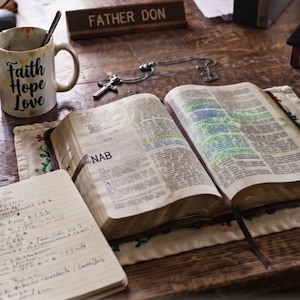
The Pastor’s Desk provides 150 bulletin inserts each related to a verse or verses from the Sunday readings. They are organized under seven categories.
7 Categories
What Each of the 50 Topics Includes
- Three standalone inserts: One rooted in the First Reading, one in the Second Reading, and one in the Gospel—giving you options throughout the week such as bulletin columns, social media posts, or personal daily meditation. Each reflection concludes with a bold takeaway alternating between a one-sentence prayer, a reflection question, or a practical action for the week.
How to Use These Inserts
- Use As Written: Copy any complete insert and drop it directly into your parish bulletin or weekly email.
- Collect Snippets for Homilies: Browse across topics for fresh angles or Scripture connections. Select text to bring up the ADD TO NOTE popup button on the website and save snippets directly into the NOTES side panel. (Button on bottom right)
- Mix and Write Your Own: Combine passages from different topics, adapt wording for your parish, or use a snippet as a starting point to write your own reflection.
1. Faith & Spirituality
Adoration & Prayer
Leveling the Interior Landscape (Isaiah 40:3–4)
Authentic prayer rarely begins in a tidy soul; it begins in the untamed terrain of our daily distractions. Isaiah’s herald commands us to “prepare the way of the LORD” and make straight a highway in the wasteland, promising that “every valley shall be lifted up, every mountain and hill made low.” In Advent, this civil engineering project happens inside the chapel of the heart. Our mountains are pride, self-reliance, and frantic scheduling; our valleys are spiritual laziness, discouragement, and hidden despair. Adoration invites us to bring this uneven topography before the Blessed Sacrament without pretending it is already smooth. When we sit in silence before the tabernacle, God himself does the heavy excavation. We offer our attention; he reshapes the ground so his grace can travel unimpeded into our lives.
Lord, flatten my pride and lift my weary spirit so you may enter freely.
Stepping Into God’s Clock (2 Peter 3:8–9)
Impatience is the quiet enemy of contemplative prayer. We kneel down expecting immediate clarity, emotional warmth, or swift answers, and grow restless when heaven seems silent. Saint Peter shatters our hurried timelines by reminding us that “with the Lord one day is like a thousand years and a thousand years like one day.” God’s seeming delay is never indifference; “he is patient with you,” giving the human heart room to turn back to him. Entering Eucharistic adoration or morning prayer means stepping off the conveyor belt of productivity and inhabiting eternity for a few minutes. Prayer does not bend God to our urgent schedule. Instead, it stretches our narrow perspective until our desires align with his patient mercy. Advent trains us to wait with open hands rather than checking our watches.
Where in your prayer life are you mistaking God’s patient timing for divine silence?
Leaving the City for the Desert (Mark 1:3, 5)
Notice the direction of foot traffic in Mark’s opening scene. John does not set up a booth in the bustling temple courts; he remains “a voice of one crying out in the desert,” and people from “the whole Judean countryside and all the inhabitants of Jerusalem were going out to him.” Encountering God still requires an intentional exodus from our noise. In Catholic spirituality, the desert is not necessarily a geographical place—it is any protected pocket of quiet where we unplug from notifications, chatter, and constant stimulation. Without stepping outside the figurative city walls, the subtle whisper of the Holy Spirit gets drowned out by lesser voices. Advent invites you to walk deliberately toward silence, trusting that the wilderness is precisely where Christ meets his people and restores their hearing.
Schedule fifteen uninterrupted, phone-free minutes in a quiet church or room three times this week.
Church Doctrine
Proclaiming Without Fear (Isaiah 40:5, 9)
Doctrine is often caricatured as a dusty rulebook, yet Isaiah reveals its true character as joyful proclamation. The prophet urges Zion, “herald of good news,” to climb a high mountain and “cry out, do not fear! Say to the cities of Judah: Here is your God!” Authentic Catholic teaching is never an arbitrary list of restrictions; it is the Church standing on the summit of Sacred Scripture and Tradition to point directly at the living God. Because “the mouth of the LORD has spoken,” doctrine possesses an objective beauty and stability that shifting cultural trends cannot erode. We study the Catechism not to win online arguments, but to know the One we love accurately. Clear teaching guards the mystery of Christ so that “all flesh shall see it together” without distortion.
Which teaching of the Church do you need to study more deeply rather than dismiss?
Anchoring in What Endures (2 Peter 3:10, 13)
Every generation is tempted to treat its latest philosophies as permanent truth, yet Saint Peter offers a sobering corrective: “the heavens will pass away with a mighty roar and the elements will be dissolved by fire.” Empires, ideologies, and intellectual fashions are temporary scaffolding. Against this backdrop of transience, the Apostle directs our gaze to the unshakable promise of “new heavens and a new earth in which righteousness dwells.” The deposit of faith handed down from the Apostles is our anchor in a dissolving world. When the Magisterium articulates dogma, it is not clinging to the past out of nostalgia; it is preserving the eternal truth that will outlast the cosmos itself. Grounding our minds in apostolic doctrine frees us from the exhaustion of chasing every passing cultural wind.
Read five consecutive paragraphs of the Catechism on Christ’s return and note one fresh insight.
Rooted in Prophetic Continuity (Mark 1:1–2)
Mark opens his Gospel with a thunderous dogmatic declaration: “The beginning of the gospel of Jesus Christ the Son of God.” Immediately, however, he anchors this startling newness in ancient revelation: “As it is written in Isaiah the prophet.” Catholic doctrine always holds these two realities together—the startling freshness of the Incarnation and its unbroken continuity with salvation history. Jesus did not invent a religion detached from Israel’s covenant, nor does the Church invent new truths to suit each century. Instead, the Holy Spirit deepens our understanding of the faith once delivered to the saints. Confessing Jesus as the Son of God is not merely a private feeling; it is entering a living, historic symphony of truth that stretches from the prophets through the Apostles to our own pews today.
Lord Jesus, keep my mind faithful to the unchanging truth handed down by your Apostles.
Communion of Saints
Carried Together in the Flock (Isaiah 40:1, 11)
Christianity is never a solo expedition. When God commands, “Comfort, give comfort to my people,” he speaks in the plural to a covenanted community. Isaiah completes this image with breathtaking tenderness: “Like a shepherd he feeds his flock; in his arms he gathers the lambs, carrying them in his bosom.” That flock is the Mystical Body of Christ, uniting believers on earth, the souls being purified in purgatory, and the saints triumphant in heaven. No one walks through Advent alone. The saints who have gone before us are not distant statues; they are older brothers and sisters within the same fold who intercede tirelessly for us. When our own strength falters, we rest in the knowledge that the whole Church—visible and invisible—is gathered together against the Good Shepherd’s warm heart.
Choose one saint this week and ask their intercession for a struggling family member daily.
Hastening the Day Together (2 Peter 3:11–12)
Saint Peter asks a probing question that reverberates across the centuries: “what sort of persons ought you to be, conducting yourselves in holiness and devotion, waiting for and hastening the coming of the day of God?” Notice that extraordinary verb—hastening. Through the Communion of Saints, our prayers, sacrifices, and hidden acts of charity genuinely cooperate with God’s redemptive plan. We are not passive spectators waiting for a cosmic clock to run out. Every time a cloistered nun prays Matins, a parent offers up a sleepless night, or a saint in heaven pleads before the throne of grace, the entire Body of Christ is strengthened and purified. In Advent, we join this vast, unseen choir of intercessors, whose combined devotion draws the Kingdom of God closer to our wounded world.
Holy saints in heaven, unite your prayers with ours to hasten Christ’s coming in glory.
The Humility of True Witnesses (Mark 1:7)
Every authentic saint shares the posture of John the Baptist, who deflects the spotlight from himself with fierce clarity: “One mightier than I is coming after me. I am not worthy to stoop and loosen the thongs of his sandals.” Critics sometimes worry that honoring the saints distracts from Jesus, yet the exact opposite is true. Like John, the saints exist solely as signposts pointing beyond themselves to the Bridegroom. Their lives are stained-glass windows—colored by their unique personalities, yet radiant only because the light of Christ shines through them. When we venerate Francis, Thérèse, or Augustine, we are not dividing our worship; we are marveling at what grace accomplishes in surrendered human clay. True holiness always shrinks the ego so that Christ alone stands unmistakably at the center.
Which saint’s humility most clearly directs your gaze toward Jesus during this Advent season?
Heaven & Eternity
The Reward He Brings Himself (Isaiah 40:10)
We often picture heaven as a vague cloudscape or an endless vacation, reducing eternity to an upgraded version of earthly comfort. Isaiah gives us something infinitely richer: “Here comes with power the Lord GOD, who rules by his strong arm; Here is his reward with him, his recompense before him.” In Catholic theology, the ultimate reward of heaven is not merely a place or a collection of perks—it is God himself. The Beatific Vision means seeing the Triune God face to face, knowing him fully and being known in love without shadow or end. Every earthly beauty, every honest friendship, and every quiet Advent joy is merely a faint trailer for this eternal homecoming. When the Lord comes, he does not simply hand us a prize; he gives us himself.
If heaven is primarily union with God, what earthly attachments still compete for your heart?
Citizens of the New Creation (2 Peter 3:12–13)
Advent is not solely about remembering Bethlehem; it is equally about leaning forward toward the Second Coming. Saint Peter writes with bracing realism that “the heavens will be dissolved in flames and the elements melted by fire,” yet this refining blaze is not the final word. It clears the stage for God’s ultimate promise: “we await new heavens and a new earth in which righteousness dwells.” Christian hope is not escapism that despises the physical universe. Rather, it trusts that God will purify, renew, and transfigure all creation, reuniting our glorified bodies and souls in a cosmos healed of sin and death. Living with eternity in view does not make us indifferent to today; it fills our ordinary Tuesday with transcendent purpose because love alone survives the fire.
Offer one concrete act of hidden charity today explicitly as treasure stored for eternal life.
A Foretaste of Eternal Glory (Mark 1:1, 8)
Eternity does not wait until our funeral to begin. Mark introduces “the beginning of the gospel of Jesus Christ” and quotes John’s climactic promise: “he will baptize you with the Holy Spirit.” When the Spirit was poured into our souls at Baptism, a seed of eternal life was planted within us. The Catechism teaches that grace is already the beginning of glory. Every time we receive the Eucharist, forgive an enemy, or whisper a sincere prayer, we are tasting the atmosphere of heaven in advance. The veil between this passing world and the age to come is thinner than we imagine. Advent awakens our homesickness for paradise, reminding us that the Spirit dwelling in us right now is the very pledge of our eternal inheritance.
Come, Holy Spirit, deepen my longing for heaven and let your grace shine in me.
Holiness
The Slow Craft of Conversion (Isaiah 40:3–4)
Holiness is rarely achieved in a single dramatic burst; it is the patient work of straightening crooked habits. Isaiah’s call to “make straight in the wasteland a highway for our God” turns “the rugged land” into a plain and “the rough country” into a broad valley. Every soul has rough edges—sharp words spoken when tired, quiet resentments nursed over months, compromises we excuse because everyone else makes them. The Second Vatican Council reminded every baptized Catholic of the universal call to holiness: sanctity is not reserved for clergy or mystics, but belongs in kitchens, offices, and commuter trains. Advent gives us four focused weeks to examine our rugged terrain honestly and cooperate with grace, smoothing out one stubborn vice at a time so Christ can walk freely through our daily choices.
Identify one recurring rough habit this week and practice its opposite virtue intentionally every day.
Eager to Be Found at Peace (2 Peter 3:14)
Many Catholics mistakenly equate holiness with anxious perfectionism—a tense, white-knuckled effort to avoid mistakes. Saint Peter’s exhortation corrects that distortion immediately: “be eager to be found without spot or blemish before him, at peace.” Notice how purity and peace belong together. Authentic sanctity flows from confidence in God’s mercy, not from neurotic fear of his judgment. Being “without spot or blemish” does not mean we have never stumbled; it means we run swiftly to the Sacrament of Reconciliation whenever we fall, letting the Lamb’s blood wash us clean. A soul striving for holiness is vigilant yet serene, eager to meet Christ the way a beloved, joyful friend awaits an arrival at the airport rather than the way a delinquent student dreads a sudden inspection.
Merciful Father, purify my heart from sin and clothe my soul in your quiet peace.
Detachment That Makes Room for God (Mark 1:6)
Mark’s brief fashion report on John the Baptist is intentionally startling: “John was clothed in camel’s hair, with a leather belt around his waist. He fed on locusts and wild honey.” In a December saturated with luxury catalogs and upgraded gadgets, John’s radical simplicity feels almost offensive. Yet his asceticism was never self-hatred; it was strategic freedom. By stripping away unnecessary comforts, John refused to let lesser appetites dull his hunger for the Messiah. Most of us are not called to wear camel’s hair, but every Christian is called to evangelical detachment. Holiness requires asking what clutters our schedules, closets, and screens so thoroughly that God barely fits in the margins. When we voluntarily fast from small indulgences, our spiritual senses sharpen and our love grows less selfish.
What unnecessary comfort could you voluntarily set aside this Advent to sharpen your hunger for Christ?
Marian Devotion
Daughter Zion’s Comforted Heart (Isaiah 40:1–2)
When Isaiah commands, “Speak to the heart of Jerusalem, and proclaim to her that her service has ended,” the Church Fathers recognized a luminous foreshadowing of Mary. She is Daughter Zion personified—the faithful remnant of Israel whose heart remained completely open to God’s word. Preserved from original sin from the first moment of her conception, Mary never carried the burden of personal guilt, yet she bore the sorrow of her exiled people with deep maternal compassion. In Advent, Mary stands as the bridge between the Old Covenant’s longing and the New Covenant’s fulfillment. When we turn to her in the Rosary or the Angelus, she speaks comfort to our anxious hearts, assuring us that the long night of separation from God has ended because the Savior she carried is near.
Mary, Daughter of Zion, teach my heart to receive your Son with quiet, trusting joy.
The Immaculate Model of Advent (2 Peter 3:14)
Every December, right in the middle of the Second Week of Advent, the Church celebrates the Solemnity of the Immaculate Conception. Saint Peter’s plea that we “be eager to be found without spot or blemish before him, at peace” finds its supreme human fulfillment in the Blessed Virgin Mary. By a singular grace granted in anticipation of Christ’s saving cross, Mary was kept completely spotless so she could become a fitting dwelling place for the Word made flesh. Far from placing her out of reach, her sinlessness shows us our own destiny in Christ. She is the Church as the Church is meant to be—radiant, surrendered, and wholly at peace in God’s will. Looking at Mary during Advent encourages us to pursue purity with hope rather than discouragement.
How can imitating Mary’s peaceful surrender transform the way you wait on God this season?
The First Way-Maker for Christ (Mark 1:2–3)
Mark quotes the ancient promise, “Behold, I am sending my messenger ahead of you; he will prepare your way.” While John the Baptist prepared the public path to the Jordan River, Mary prepared the most intimate way of all—giving the eternal Son of God his human flesh and blood in her womb. Like John, Mary never draws attention away from Jesus; her entire mission is to clear the road between our souls and her Son. In the quiet months before Bethlehem, she pondered the prophecies and carried the Lord through the hill country of Judea to Elizabeth. Authentic Marian devotion always has this Advent rhythm: Mary leads us straight to Jesus, helps us straighten the tangled paths of our lives, and whispers at every turn, “Do whatever he tells you.”
Pray one decade of the Joyful Mysteries slowly today, meditating on Mary carrying Christ.
Sacraments
Absolved and Nourished by Grace (Isaiah 40:2, 11)
Isaiah’s oracle captures the twin movements of Catholic sacramental life: healing and nourishment. First comes the liberating announcement “that her guilt is expiated”—the very mercy we encounter in the confessional, where Christ speaks through the priest to lift the crushing weight of our sins. Yet forgiveness is only the beginning. The prophet immediately shows us the Lord who, “like a shepherd he feeds his flock; in his arms he gathers the lambs.” Having absolved us, Jesus feeds us with his own Body and Blood in the Holy Eucharist. The sacraments are not hollow rituals or nostalgic symbols; they are tangible encounters where the Good Shepherd touches our senses with water, oil, bread, wine, and spoken absolution. Advent is the premier season to step back into these channels of living grace.
What fear or excuse has kept you from experiencing God’s mercy in Confession this Advent?
The Patience Found in the Confessional (2 Peter 3:9, 14)
Many people avoid the Sacrament of Penance because they picture God as an exasperated judge tallying their repeated failures. Saint Peter dismantles that caricature completely: God “is patient with you, not wishing that any should perish but that all should come to repentance.” Every time you kneel behind the screen or sit face to face with a confessor, you are stepping directly into that divine patience. Confession is the concrete workshop where we become “without spot or blemish before him, at peace.” Sacramental grace does not merely erase past mistakes; it infuses fresh strength into our weakened wills so we can resist future temptation. Do not let shame keep you waiting outside the door when Christ himself is eagerly waiting inside to restore your dignity and peace.
Check your parish bulletin today and put an Advent Confession time firmly on your calendar.
From Water to the Spirit’s Fire (Mark 1:4, 8)
John the Baptist understood the limits of his own ministry with crystal clarity. Though he proclaimed “a baptism of repentance for the forgiveness of sins,” he explicitly distinguished his ritual from the sacrament Jesus would institute: “I have baptized you with water; he will baptize you with the Holy Spirit.” John’s washing expressed human sorrow and readiness, but it could not impart divine life. Christian Baptism, by contrast, is a supernatural rebirth. Through ordinary water and the Trinitarian formula, Christ plunges us into his death and resurrection, washes away original sin, and seals us as adopted children of the Father. Every time we dip our fingers in the holy water font upon entering church, we renew that Spirit-filled identity and remember whose beloved children we are.
Lord Jesus, stir into flame the grace of the Holy Spirit given at my Baptism.
Spiritual Warfare
The Warrior Shepherd Who Defends Us (Isaiah 40:10)
Spiritual combat can feel overwhelming when we measure our frail willpower against ancient temptations and subtle lies. Isaiah shifts our eyes away from our own inadequacy toward our invincible Commander: “Here comes with power the Lord GOD, who rules by his strong arm.” In the unseen battle for our souls, the enemy’s favorite tactic is convincing us that we are fighting alone or that defeat is inevitable. Yet Christ has already shattered the devil’s dominion on the cross. Advent reminds us that we do not fight for victory; we fight from the victory Jesus has already secured. When temptation surges or discouragement whispers that holiness is impossible, we invoke the strong arm of the Lord, standing firm behind the One whom no spiritual darkness can ever withstand.
Pray the Saint Michael the Archangel prayer aloud each morning this week before checking news.
Vigilance Against the Sudden Thief (2 Peter 3:10–11)
Complacency is the devil’s quietest weapon. He rarely demands dramatic betrayal; he prefers lulling us into spiritual drowsiness until our prayer life withers and small compromises become routine. Saint Peter sounds an urgent alarm: “the day of the Lord will come like a thief,” and everything done on earth “will be found out.” In light of that searching gaze, he urges us to live “conducting yourselves in holiness and devotion.” Spiritual warfare is mostly won in ordinary vigilance—guarding what enters our eyes, rejecting gossip before it leaves our lips, and refusing to entertain cynical thoughts. Staying spiritually awake does not mean living in paranoia; it means keeping our armor buckled and our lamps trimmed so neither sudden temptation nor the Lord’s return catches us off guard.
Lord, keep my soul vigilant and sober so the enemy finds no foothold in me.
Confronting the Desert’s Temptations (Mark 1:3–4)
In biblical geography, the desert is never neutral territory; it is the classic battleground where Israel was tested and where Satan would soon confront Jesus himself. Yet Mark tells us that John appeared precisely “in the desert proclaiming a baptism of repentance for the forgiveness of sins.” Notice the strategic brilliance of repentance in spiritual warfare. The enemy’s greatest leverage over us is hidden sin—shame kept in the dark where it festers and multiplies. When we step into the light, name our sins honestly, and “make straight his paths,” we strip the devil of his ammunition. A humble, repentant Christian is terrifying to the powers of darkness because he has nothing left to hide in darkness and everything anchored in the mercy of Christ.
What hidden compromise are you keeping in the dark that needs to be brought into light?
Theology of the Body
Flesh Made to Behold Glory (Isaiah 40:5)
Modern culture swings wildly between worshipping the human body as a commodity and treating it as a disposable shell disconnected from the real self. Isaiah announces a radically higher destiny: “Then the glory of the LORD shall be revealed, and all flesh shall see it together.” Through the Incarnation, the eternal Word took on real human flesh, forever elevating the body into a visible sign of invisible grace. As Saint John Paul II’s Theology of the Body teaches, we do not merely inhabit bodies; we are embodied persons whose physical gestures—an embrace, a kneeling posture, a marital covenant—reveal our deepest spiritual truth. Because our flesh is destined to behold God’s glory, how we care for, respect, and offer our bodies matters profoundly to our Creator.
How do your daily habits honor your body as a temple meant to reflect God?
Reverencing the Temple of Righteousness (2 Peter 3:13–14)
If our bodies were meant to be discarded forever at death, physical purity would scarcely matter. Yet Saint Peter points us toward “new heavens and a new earth in which righteousness dwells,” urging us to “be eager to be found without spot or blemish before him.” Catholic faith professes the resurrection of the body: the very flesh we inhabit today is meant to be transfigured and raised in glory. Chastity, therefore, is not a prudish rejection of sexuality or physical pleasure; it is the joyful integration of body and soul so that we can give ourselves in authentic, selfless love rather than using others or being used. Treating our bodies and the bodies of others with reverence prepares us right now for the redeemed creation to come.
Practice custody of the eyes today, consciously honoring every person you meet as God’s image.
The Humility of Embodied Worship (Mark 1:5, 7)
Notice how thoroughly physical Mark’s Gospel is from its very first lines. Crowds physically walk out to the Jordan River, wade into cold water, and are “baptized by him” while confessing their sins aloud. Even John’s famous declaration of humility uses a concrete bodily gesture: “I am not worthy to stoop and loosen the thongs of his sandals.” Because we are body-and-soul unities, our interior dispositions naturally seek physical expression. In Catholic liturgy, we do not worship merely as floating minds; we genuflect, strike our breasts, make the Sign of the Cross, kneel, and stand. These bodily postures are not empty choreography—they train the soul in reverence and humility. When we stoop before Christ in body, our stubborn hearts gradually learn to bow alongside our knees.
Lord, let every posture of my body this Advent express genuine humility and love for you.
2. Virtue & Daily Life
Accountability
Owning the Road We Build (Isaiah 40:3–4)
Personal responsibility begins when we stop blaming our circumstances for the state of our souls. Isaiah’s voice in the wilderness does not tell us to wait passively for someone else to fix the terrain; it issues a direct personal summons to “prepare the way of the LORD” and “make straight in the wasteland a highway for our God.” When we neglect our duties, make excuses for broken promises, or shrug off recurring faults, we leave spiritual potholes and boulders along the road. Authentic Catholic accountability is never about harsh self-condemnation. Rather, it is the mature courage to look honestly at our own “rugged land” and “rough country” and take ownership of our choices. God supplies the grace, yet he respects our freedom too much to bulldoze our habits without our willing cooperation.
What recurring excuse have you used lately to avoid taking responsibility for a needed change?
Living Ready for the Light (2 Peter 3:10–11)
We behave differently when we remember that nothing stays hidden forever. Saint Peter cuts through human evasion with a bracing reminder: “the earth and everything done on it will be found out.” In a culture where people curate polished public images while cutting corners in private, this verse is a call to radical integrity. Accountability before God means living as one unified person whether anyone is watching or not. Knowing that our choices will stand in the blinding light of truth should not paralyze us with dread; it should elevate our daily conduct. Peter immediately pivots to the practical question: “what sort of persons ought you to be, conducting yourselves in holiness and devotion?” Every hidden decision—how we spend money, keep promises, or treat subordinates—quietly shapes the character we will present to Christ.
Perform a five-minute evening examination of conscience each night this week without making excuses.
Naming Our Sins Out Loud (Mark 1:4–5)
Real accountability requires more than a vague interior sigh that we could do better. Mark notes that the crowds flocking to the Jordan “were being baptized by him in the Jordan River as they acknowledged their sins.” Notice that concrete action: they did not merely feel vaguely sorry; they stepped forward and named their failures openly. Human nature excels at hiding behind generalizations like “nobody is perfect.” Naming our specific faults—whether in the Sacrament of Reconciliation or in a candid apology to someone we hurt—breaks the power of denial. When we own our mistakes without shifting blame, we clear the debris blocking God’s mercy. Advent invites us to trade defensiveness for humble honesty, discovering that confessing the truth never diminishes our dignity; it restores it.
Lord, give me the courage to name my faults honestly and amend my ways.
Charitable Speech
Words That Reach the Heart (Isaiah 40:1–2)
Our tongues carry astonishing power to either bruise a weary neighbor or revive a flagging spirit. God instructs the prophet, “Comfort, give comfort to my people… Speak to the heart of Jerusalem.” Notice the precision of that phrase—speaking to the heart. Much of our daily conversation stays on the surface, drifting easily into complaints, sarcasm, or careless criticism that leaves others feeling smaller. Charitable speech is not empty flattery that ignores truth; it is the deliberate practice of using our words to lift burdens, affirm dignity, and announce hope. Before speaking about a coworker, relative, or public figure, Advent asks us to weigh whether our words heal or wound. When we echo God’s tender cadence, even an ordinary phone call or hallway greeting becomes a quiet instrument of divine comfort.
Send one genuine, specific note of encouragement today to someone carrying a heavy burden.
Building Up a Righteous World (2 Peter 3:13–14)
Cynicism and gossip spread effortlessly because they require no virtue, yet they poison the communities we inhabit. Saint Peter lifts our sights higher, reminding us that “we await new heavens and a new earth in which righteousness dwells,” and urging us to “be eager to be found without spot or blemish before him, at peace.” If heaven is a realm of perfected truth and charity, our speech right now should sound like an early rehearsal for that kingdom. Detraction, rash judgment, and sharp online replies leave real blemishes on our souls and shatter peace in our parishes and homes. Choosing charitable speech means refusing to pass along unverified rumors, defending the absent when gossip starts, and speaking hard truths with gentleness rather than venom.
Lord, set a guard over my lips so my words build peace rather than division.
A Voice That Points Away From Self (Mark 1:3, 7)
John the Baptist describes himself simply as “a voice of one crying out in the desert,” and he uses that voice entirely to exalt someone else: “One mightier than I is coming after me.” Contrast John’s vocal humility with how easily our own conversations revolve around self-promotion, winning arguments, or subtle bragging. Charitable speech listens generously and celebrates the goodness in others without feeling threatened. When we speak like John, we stop competing for the spotlight and start using our influence to highlight what is noble, true, and praiseworthy in the people around us. In a noisy December filled with irritable debates and stressed-out chatter, a calm, humble voice that directs attention toward Christ and honors the neighbor stands out like a clear bell in the wilderness.
Where in your daily conversations do you need to speak less about yourself and listen more?
Forgiveness
When the Debt Is Paid in Full (Isaiah 40:2)
Grudges thrive on the belief that someone still owes us a pound of flesh. Into that bitter ledger, Isaiah proclaims astonishing relief: “her service is at an end, her guilt is expiated; indeed, she has received from the hand of the LORD double for all her sins.” God does not keep a petty tally of past offenses once repentance occurs; he declares the sentence finished and wipes the slate clean. Forgiving someone who has wounded us does not mean pretending the injury never happened or excusing ongoing abuse. It means releasing our claim to vengeance and handing the unpaid debt over to God’s justice and mercy. Advent reminds us that we who have been forgiven so lavishly cannot cling to old resentments without locking ourselves in a prison of our own making.
Merciful Father, soften my resentment and give me the grace to release old debts.
Extending the Patience We Receive (2 Peter 3:9)
We almost always demand instant justice for others while quietly hoping for endless patience for ourselves. Saint Peter confronts this double standard by revealing God’s own disposition: “he is patient with you, not wishing that any should perish but that all should come to repentance.” Every single day, we live off the surplus of God’s patience. When a spouse repeats an annoying habit, a friend lets us down, or a family member speaks thoughtlessly during the holidays, we have a choice: snap in irritation or mirror the patient mercy God constantly extends to us. Forgiveness is rarely a one-time emotional surge; it is a steady, patient decision to keep wishing the other person’s ultimate good even while they are still a work in progress.
Who in your life most needs you to mirror God’s patient mercy rather than keeping score?
Clearing the Path for Mercy (Mark 1:4–5)
Mark’s Gospel opens not with a list of rules, but with a river of mercy: John appears “proclaiming a baptism of repentance for the forgiveness of sins.” Notice that the forgiveness of sins is the very first requirement for preparing the Lord’s highway. Unforgiveness—whether refusing to forgive others or refusing to accept God’s forgiveness for ourselves—acts like a fallen tree across the road, blocking Christ’s peace from entering our hearts. Holding onto bitterness convinces us we are protecting ourselves, yet it actually exhausts our energy and hardens our capacity to love. This Advent, stepping into the stream of mercy means both receiving absolution humbly and extending pardon generously, clearing away the debris of past wounds so Christmas joy can genuinely take root.
Pray by name each day this week for one person you have struggled to forgive.
Gratitude & Joy
Climbing the Mountain With Good News (Isaiah 40:9)
Joy in the Catholic tradition is not forced cheerfulness that ignores hardship; it is the deep, resilient gladness that rises from knowing God is near. Isaiah urges us to “go up onto a high mountain, Zion, herald of good news! Cry out at the top of your voice… Here is your God!” Notice the posture: gratitude lifts us above the fog of daily complaints so we can see the wider horizon of God’s faithfulness. When we fixate solely on what is missing, broken, or delayed, our spirits shrink. When we intentionally count God’s mercies—breath in our lungs, people who love us, the gift of the Eucharist—our perspective shifts from scarcity to abundance. Advent joy is quiet yet irrepressible because it rests on God’s presence, not on flawless circumstances.
Write down three specific, overlooked blessings from today before going to sleep tonight.
Waiting With Joyful Anticipation (2 Peter 3:12–13)
There is a vast difference between anxious waiting and joyful expectation. Saint Peter captures the Christian spirit when he describes believers “waiting for and hastening the coming of the day of God” because “we await new heavens and a new earth in which righteousness dwells.” Gratitude fuels that hopeful posture. Remembering how faithfully God has carried us through past trials gives us confidence that he will not abandon us in the future. Instead of trudging through December weighed down by holiday stress, shopping deadlines, and winter gloom, we can practice deliberate thanksgiving for small daily graces. A grateful heart is naturally joyful because it recognizes every good thing—a warm cup of coffee, a kind word, a quiet evening—as a personal gift from a generous Father.
What small, ordinary blessing from this past week have you taken for granted?
The Wonder of the Gospel’s Beginning (Mark 1:1)
Mark wastes no time with gloomy preambles; his very first words burst with quiet triumph: “The beginning of the gospel of Jesus Christ the Son of God.” In the ancient world, the word “gospel” announced a royal victory or the birth of an emperor—news that changed everything for the people who heard it. Yet familiarity can dull our wonder. We hear the Christmas story every year and risk treating the Incarnation like background music. Authentic gratitude reawakens our awe that the eternal Son of God stepped into our messy history to save us. Even in seasons of weariness or grief, that central fact remains unshakably good news. Letting wonder return to our faith turns routine religious duty back into genuine, heartfelt joy.
Lord Jesus, reawaken my wonder at your coming and fill my heart with grateful joy.
Moral Decisions
Straightening the Crooked Compromises (Isaiah 40:3–4)
Most moral failures do not begin with a dramatic leap into evil; they begin with tiny, crooked shortcuts we rationalize as harmless. Isaiah’s call to “make straight in the wasteland a highway for our God” challenges the winding detours we construct to avoid inconvenient truths. Whether it is shading the truth on a form, cutting a corner when nobody will notice, or staying silent when principle demands we speak, small compromises gradually warp our moral compass. Catholic moral theology teaches that every free choice does not just change the world around us—it shapes who we become. Straightening our paths during Advent means examining the gray areas we have grown comfortable with and choosing the clear, honest road even when the detour looks easier.
Where have you been tempted to take a small moral shortcut that needs straightening today?
Choosing What Survives the Fire (2 Peter 3:10–11)
Every moral choice is ultimately a bet on what lasts. Saint Peter strips away the illusion that earthly status, wealth, or applause are permanent: “the elements will be dissolved by fire, and the earth and everything done on it will be found out.” Against that eternal backdrop, he asks, “what sort of persons ought you to be, conducting yourselves in holiness and devotion?” When we face a difficult ethical decision—at work, in our finances, or in our relationships—this eternal lens brings instant clarity. Will this choice endure in the presence of God, or is it merely serving my ego, convenience, or fear of human disapproval? Grounding our conscience in eternal truth frees us from short-sighted compromises and gives us the backbone to do what is right.
Before making a difficult decision this week, pause for sixty seconds to pray for clarity.
Guided by the Spirit Within (Mark 1:7–8)
Righteousness is not a solo feat of human willpower; it is a life empowered from within. John the Baptist reminds us that while he offered water, Christ “will baptize you with the Holy Spirit.” When facing complex moral dilemmas, Catholics do not rely solely on dry rulebooks or shifting social consensus. We rely on a well-formed conscience illuminated by the Holy Spirit, who grants the gifts of counsel, fortitude, and wisdom. Often we already know the right thing to do, yet we lack the courage to follow through because it will cost us money, comfort, or popularity. Invoking the Holy Spirit before we act aligns our desires with Christ’s own heart, turning moral decision-making from a burdensome checklist into a faithful response to love.
Come, Holy Spirit, enlighten my conscience and strengthen my will to choose the good.
Peacemaking
Speaking Calm Into the Storm (Isaiah 40:1, 11)
Peacemaking begins with the tone we carry into tense rooms. Isaiah opens with God’s tender mandate, “Comfort, give comfort to my people,” and closes with the Good Shepherd “leading the ewes with care.” Notice how God refuses to drive his people with harshness or panic; he leads gently, matching his pace to the vulnerable. In our families, neighborhoods, and parishes, conflict escalates rapidly when everyone insists on having the loudest voice or the final word. Becoming a Catholic peacemaker means deliberately lowering the temperature of an argument. It means refusing to repay sarcasm with sharper sarcasm, listening until the other person feels genuinely heard, and seeking reconciliation rather than total victory. Gentle strength diffuses hostility far more effectively than righteous anger ever could.
In your next tense conversation, pause and respond with a calm, gentle tone instead of reacting.
Striving to Be Found at Peace (2 Peter 3:14)
Peace is not merely the absence of noise; it is the fruit of a rightly ordered soul. Saint Peter’s closing exhortation links purity and serenity directly: “be eager to be found without spot or blemish before him, at peace.” We cannot export a peace we do not possess inside. When our own hearts are churned up by envy, unconfessed sin, or relentless comparison, we inevitably spill that agitation onto everyone around us. True peacemaking starts by making peace with God through prayer and Reconciliation, then letting that interior stillness flow outward into our strained relationships. Advent calls us to be active agents of shalom—mending frayed family ties, welcoming the estranged, and refusing to let petty grievances harden into permanent walls.
Lord, make my own heart serene so I can bring your peace into divided spaces.
The Humility That Ends Rivalry (Mark 1:7)
Beneath almost every stubborn conflict lies a bruised ego insisting on its own importance. John the Baptist models the exact antidote to rivalry: “One mightier than I is coming after me. I am not worthy to stoop and loosen the thongs of his sandals.” John had every opportunity to feel threatened by Jesus’ growing popularity, yet he stepped aside gladly because he knew his true place. Imagine how many family feuds, workplace power struggles, and parish disagreements would evaporate overnight if we practiced that same humility. Peacemakers are willing to let someone else receive the credit, take the first step toward apologizing, and value the relationship more than winning a petty debate. Humility clears the ground where lasting peace can grow.
What current disagreement in your life could be healed if you humbly took the first step?
Sabbath & Leisure
Resting in the Shepherd’s Arms (Isaiah 40:11)
Modern life treats exhaustion as a badge of honor, convincing us that our worth depends entirely on our productivity. Isaiah offers a disarmingly tender counter-image: “Like a shepherd he feeds his flock; in his arms he gathers the lambs, carrying them in his bosom.” A lamb carried in the shepherd’s arms is not earning its keep or checking off tasks; it is simply resting in love. Observing Sunday as the Lord’s Day is a radical act of trust. When we lay down unnecessary work, attend Mass, and share unhurried meals with family or friends, we declare that the universe does not collapse if we stop running for twenty-four hours. True Christian leisure is not numb scrolling; it is receptive rest that lets the Shepherd restore our souls.
Lord, teach me to lay down my frantic striving and rest in your provident care.
Stepping Outside the Rush of Time (2 Peter 3:8)
Our calendars are tightly packed, especially in December, leaving us feeling perpetually behind schedule. Saint Peter interrupts our breathless pace with a breathtaking perspective shift: “with the Lord one day is like a thousand years and a thousand years like one day.” God is never hurried, never stressed, and never racing a clock. Sabbath leisure invites us to taste that divine unhurriedness once a week. When we set aside Sunday for worship, conversation, reading, or a quiet walk, we step out of the tyrannical rhythm of “never enough time” and remember that we were created for eternity, not for endless errands. Protecting genuine rest is not laziness; it is essential spiritual hygiene that keeps our hearts human and open to grace.
What single chore or errand can you intentionally leave undone this Sunday to protect real rest?
Retreating to the Quiet Wilderness (Mark 1:3, 5)
Notice that people had to physically leave the busyness of Jerusalem and travel out into “the desert” to hear John’s message clearly. Even in the first century, the constant hum of commerce and daily obligations made it hard to hear God’s voice. Today, our noise travels in our pockets, following us into every quiet corner. Authentic leisure requires creating a small wilderness in our week—time deliberately unplugged from work emails, shopping lists, and endless news feeds. Whether it is an hour of quiet reading, a walk without headphones, or unhurried conversation over dinner, stepping back from constant input restores our capacity for wonder. Advent reminds us that we cannot hear the quiet approach of Christ if we never turn down the volume.
Block off two screen-free hours this Sunday afternoon dedicated solely to worship, family, or quiet restoration.
Stewardship
Recognizing Whose Reward We Carry (Isaiah 40:10)
Stewardship begins with a simple, liberating truth: we are managers, not owners. Isaiah reminds us that “the Lord GOD… rules by his strong arm; Here is his reward with him, his recompense before him.” Everything we possess—our income, talents, health, and time—belongs ultimately to the Creator who entrusted it to our care. In a consumer-driven December that constantly whispers “buy more for yourself,” Christian stewardship asks a sharper question: how is God asking me to invest what he has placed in my hands? Generosity is not reserved for the wealthy; it is a posture of the heart that holds earthly goods loosely. When we give our first fruits to the Church and the poor, we align our wallets with the Kingdom of God.
How does your current budget reflect your belief that everything you have belongs to God?
Investing in What Cannot Burn (2 Peter 3:10, 12)
Saint Peter delivers the ultimate financial reality check: “the heavens will be dissolved in flames and the elements melted by fire.” Every house, car, investment portfolio, and holiday gadget we accumulate is temporary. While prudent planning is wise, hoarding wealth as our ultimate security is building a fortress out of dry kindling. True stewardship shifts our priorities toward what survives the fire—acts of mercy, supporting the mission of the Church, educating children in the faith, and lifting up the vulnerable. When we use our time, talent, and treasure to serve others, we convert passing earthly currency into eternal value. Advent invites us to audit not just our bank accounts, but our calendars, ensuring our best energy goes toward what truly lasts.
Choose one concrete financial gift or volunteer commitment this week to support your parish or local poor.
Radical Simplicity for the Sake of Mission (Mark 1:6)
John the Baptist’s austere lifestyle—”clothed in camel’s hair, with a leather belt around his waist,” eating “locusts and wild honey”—challenges our quiet assumption that we need endless upgrades to be happy. John lived simply so that nothing could buy him off, slow him down, or distract him from his mission. Good stewardship does not demand that every Catholic live in the wilderness, yet it does call us to resist wasteful excess. When we simplify our desires, repair what we own, and stop impulse-buying things we barely use, we free up both money and mental space for generosity. Living with less clutter allows us to give with greater joy, proving that our security rests in Christ rather than in our possessions.
Generous Father, free my heart from greed so I may steward your gifts wisely.
Workplace Ethics
Bringing Integrity Into Rough Terrain (Isaiah 40:4–5)
Few environments test our Christian principles more consistently than the daily workplace. Tight deadlines, office politics, and pressure to boost margins can quickly turn a job into “rugged land” and “rough country.” Yet Isaiah promises that when we straighten the crooked places, “the glory of the LORD shall be revealed, and all flesh shall see it together.” Your desk, job site, or clinic is not a spiritually neutral zone where faith stays parked in the car; it is the primary mission field where coworkers observe what Christianity looks like in practice. Honoring your commitments, refusing to cut ethical corners, giving an honest day’s work, and treating every colleague with dignity turns ordinary labor into a quiet, unmistakable witness to God’s glory.
Lord, let my honesty and diligence at work today quietly reflect your presence to others.
Working as Citizens of Righteousness (2 Peter 3:11, 13)
It is tempting to separate Sunday worship from Monday’s spreadsheet, yet Saint Peter insists that our faith must shape every sphere of life, “conducting yourselves in holiness and devotion” as people who “await new heavens and a new earth in which righteousness dwells.” Catholic social teaching affirms that work is meant to serve the human person, not crush them. Whether you are a manager setting fair wages and reasonable hours, or an employee refusing to participate in workplace gossip and corner-cutting, your daily ethics matter deeply to God. Choosing righteousness over easy profit or office popularity may occasionally cost you a short-term advantage, yet it preserves your integrity and builds a workplace where human dignity is genuinely respected.
Where in your workplace are you called to uphold fairness or honesty even when it is inconvenient?
Leading and Serving With Humility (Mark 1:7)
Ambition in the modern workplace often encourages elbowing past colleagues to claim credit and climb the ladder. John the Baptist turns that cutthroat script upside down: “One mightier than I is coming after me. I am not worthy to stoop and loosen the thongs of his sandals.” True professional excellence never requires arrogance. Whether you hold a corner office or an entry-level role, practicing servant leadership means mentoring newer coworkers, sharing credit generously when a team succeeds, and taking quiet responsibility when a project falters. Treating janitors, clients, and executives with the exact same respect reflects the humility of Christ. When we work with competence and selfless grace, we prepare the Lord’s highway right in the middle of the marketplace.
Publicly credit or thank one coworker this week whose quiet effort often goes unnoticed.
3. Family & Life Stages
Aging & Seniors
Carried Gently in Every Season (Isaiah 40:11)
Growing older often brings unwelcome limits—slower steps, quiet afternoons, and the ache of watching familiar routines slip away. Yet Isaiah offers a deeply reassuring picture of how God relates to you in this chapter of life: “Like a shepherd he feeds his flock; in his arms he gathers the lambs, carrying them in his bosom, and leading the ewes with care.” Notice that the Good Shepherd never rushes the vulnerable or discards those who can no longer sprint ahead. In Catholic tradition, your dignity is never measured by physical stamina or economic output. Even when your body tires, your soul remains vibrantly alive and deeply cherished. Advent invites you to lean back into the Shepherd’s strong embrace, trusting that he adjusts his pace to yours and carries you faithfully through every changing year.
Good Shepherd, hold me close in my later years and renew my strength in your love.
Seeing Time Through Eternal Eyes (2 Peter 3:8–9)
With decades behind you, you already know how strangely time behaves—years that once crawled now seem to vanish in a blink. Saint Peter invites you to view your accumulated years through heaven’s lens: “with the Lord one day is like a thousand years and a thousand years like one day.” God is never behind schedule, and “he is patient with you,” using every season of life to ripen your soul for eternity. Your later years are not a waiting room where nothing meaningful happens; they are a privileged season of wisdom, intercession, and quiet ripening. The patience you have learned through decades of joys and disappointments is a priceless gift to an impatient, hurried world. By anchoring your days in prayer, you remind younger generations that life’s true meaning is measured by love, not speed.
What hard-earned lesson about God’s patience could you share with someone younger this week?
Blazing the Trail for Those Behind You (Mark 1:2–3)
Mark quotes the ancient promise, “Behold, I am sending my messenger ahead of you; he will prepare your way.” As a senior in the parish, you are still called to be that messenger. Even if you no longer haul chairs for parish festivals or chase toddlers down the aisle, your faithful presence in the pews, your hidden rosaries, and your steady kindness pave the highway of faith for your children, grandchildren, and younger parishioners. The Church desperately needs elders who model how to age with grace, humor, and unshakable hope in Christ. You have walked through enough winters to know that darkness never wins. By speaking warmly of God’s faithfulness and praying steadily for the next generation, you prepare the Lord’s path in ways that will echo long after you.
Write a short letter or voice note to a younger relative sharing one memory of God’s faithfulness.
College Life
Clearing Space Amid Campus Chaos (Isaiah 40:3–4)
Between final exams, late-night conversations, and the constant pressure to figure out your entire future, campus life can feel like a noisy wasteland. Isaiah’s Advent command cuts straight through the clutter: “Prepare the way of the LORD! Make straight in the wasteland a highway for our God.” College is one of the most formative seasons of your life, yet it is also full of “rugged land”—peer pressure, comparison, and the temptation to put your faith on pause until graduation. Preparing the Lord’s way does not require dropping out of student life; it means carving out non-negotiable space for Sunday Mass, quiet prayer, and honest friendships that pull you upward. When you let God level the mountains of anxiety and lift the valleys of self-doubt, you discover a steady peace no GPA can ever give.
What single campus habit or distraction is currently crowding out your relationship with God?
Deciding Who You Are Becoming (2 Peter 3:11, 14)
College constantly asks what you want to do for a living, yet Saint Peter asks a far more decisive question: “what sort of persons ought you to be, conducting yourselves in holiness and devotion?” Every late-night choice, every friendship you invest in, and every way you treat your body and mind is quietly sculpting the adult you will become. Peter urges us to “be eager to be found without spot or blemish before him, at peace.” That peace is impossible to find in hookup culture, endless scrolling, or chasing approval from people who barely know you. Choosing Catholic integrity on campus takes genuine grit, yet it builds a character you will actually respect ten years from now. You are not just earning a degree; you are becoming a saint in training.
Visit your campus Newman Center or a local parish this week for thirty minutes of quiet prayer.
Unapologetically Counter-Cultural (Mark 1:6)
John the Baptist would have turned heads on any modern quad: “clothed in camel’s hair, with a leather belt around his waist. He fed on locusts and wild honey.” John never tried to blend into the crowd to win popularity; his radical simplicity made people stop and ask what he was living for. On a college campus where conformity often disguises itself as freedom, living as an authentic Catholic makes you stand out just as clearly. Refusing to join in crude gossip, honoring your Sunday obligation even when you are tired, and treating others with real reverence will inevitably raise eyebrows. Do not apologize for being different. Like John, your joyful, grounded counter-cultural life might be the very signpost that leads a searching roommate or classmate straight to Jesus Christ.
Lord, give me the courage to live my faith openly and joyfully on campus without fear.
Families
Making Home a Place of Comfort (Isaiah 40:1, 11)
December can easily turn family life into a pressure cooker of jammed calendars, financial stress, and short tempers. Into the middle of that household commotion, God speaks a tender directive: “Comfort, give comfort to my people.” Isaiah pictures the Lord who “in his arms he gathers the lambs, carrying them in his bosom.” Your home is the domestic church—the very first place where your family members learn what God’s love feels like. Comforting one another does not require a spotless living room or a magazine-worthy holiday dinner. It happens when we lower our voices, apologize quickly when we snap, and protect unhurried time around the kitchen table. When home feels like a warm refuge rather than a performance stage, every member of the household experiences a genuine foretaste of the Good Shepherd’s care.
Turn off all screens during one family meal this week and ask everyone to share one blessing.
Choosing Peace Over Holiday Perfection (2 Peter 3:14)
So much family friction in Advent comes from chasing an impossible standard of perfection while neglecting the people standing right in front of us. Saint Peter gently resets our priorities: “be eager to be found without spot or blemish before him, at peace.” Notice that God does not ask for flawless decorations or color-coordinated family photos; he asks for homes marked by grace and peace. Every family carries quirks, old misunderstandings, and clashing personalities. Cultivating peace means letting small irritations go, refusing to reopen settled arguments, and praying together even when the kids are fidgeting or everyone is exhausted. When Christ’s peace anchors your household, your family becomes a quiet witness to neighbors and relatives that Christmas is about the Prince of Peace, not holiday performance.
Lord Jesus, bless our home with patience, laughter, and a peace that outlasts holiday stress.
Walking Toward the Desert Together (Mark 1:3, 5)
In Mark’s Gospel, people did not trickle out to John in isolation; “the whole Judean countryside and all the inhabitants of Jerusalem were going out to him.” Faith is meant to be walked together as a household. Yet in modern life, family members often scatter into separate rooms with separate screens, rarely sharing spiritual stillness. Advent offers a wonderful invitation to step into the quiet desert together. Lighting the Advent wreath candles before dinner, reading a few verses of Scripture aloud, or going to Confession as a family turns faith from a solo chore into a shared adventure. When children and adults alike see one another actively preparing the Lord’s path, Christ stops being a Sunday-only topic and becomes the living center of your family’s daily story.
What simple five-minute Advent tradition could your family start tonight to pray together?
Marriage
Speaking Tenderly to Your Spouse’s Heart (Isaiah 40:2)
Over years of shared bills, errands, and logistics, married couples can accidentally slip into communicating like tired business partners. Isaiah recalls us to the deeper language of covenant love: “Speak to the heart of Jerusalem.” Speaking to your spouse’s heart means looking past the daily to-do list to see the beloved person God entrusted to you. It means offering words of genuine affirmation, remembering what makes them feel cherished, and softening your tone when exhaustion tempts you to be sharp. In Catholic marriage, spouses are the primary ministers of God’s comfort to one another. This Advent, let your conversations move beyond schedules and chores. A single unhurried evening of listening with full attention can heal weeks of quiet distance and rekindle the warmth that first brought you to the altar.
Lord, teach me to speak tenderly to my spouse’s heart and cherish our covenant anew.
Practicing God’s Patient Love (2 Peter 3:9)
No one sees our flaws, blind spots, and stubborn habits more clearly than the person we married. That closeness can either breed quiet cynicism or become the very workshop of sanctity. Saint Peter reveals the secret to enduring love: God “is patient with you, not wishing that any should perish but that all should come to repentance.” Marriage thrives when spouses extend that same patient mercy to one another. Your husband or wife is not a finished masterpiece yet—and neither are you. Instead of keeping a mental ledger of recurring annoyances, Advent invites you to view your spouse with hope, trusting that God is still gently shaping both of you. Patient love does not ignore real problems, yet it refuses to give up on the person you vowed to love for life.
Where in your marriage is God asking you to trade quiet frustration for patient mercy?
Stooping Low to Serve One Another (Mark 1:7–8)
John the Baptist models the exact posture that keeps a marriage joyful: “I am not worthy to stoop and loosen the thongs of his sandals.” While the world tells couples to guard their rights and keep everything strictly fifty-fifty, Christian marriage flourishes through mutual, cheerful humility. When you quietly handle the chore your spouse dreads, admit you were wrong without adding a “but,” or put their needs ahead of your own convenience, you imitate Christ himself. You cannot sustain that kind of selfless love on sheer grit alone; you need the grace promised by John: “he will baptize you with the Holy Spirit.” Leaning daily on the sacramental grace of Matrimony turns ordinary domestic service into a radiant sign of Christ’s love for his Church.
Do one quiet, unannounced act of service for your spouse today without seeking credit.
Parenting
Leading Your Flock With Gentle Care (Isaiah 40:11)
Parenting requires a daily balance of firm boundaries and deep tenderness—a balance that feels impossible when everyone is overtired. Isaiah hands weary mothers and fathers a luminous model in God himself: “Like a shepherd he feeds his flock; in his arms he gathers the lambs, carrying them in his bosom, and leading the ewes with care.” Notice how the Shepherd adapts to each member of the flock—carrying the smallest ones close while guiding the older ones patiently at their own pace. Every child in your home has a different temperament, different fears, and different needs. God does not expect you to be a flawless parent; he asks you to be a present, attentive shepherd. When you correct with calm consistency and comfort with open arms, your children learn to trust the heavenly Father you reflect.
Which of your children most needs your unhurried, undivided attention and gentle encouragement this week?
Modeling Holiness in Ordinary Moments (2 Peter 3:11–12)
Children rarely absorb our lectures as deeply as they absorb our daily example. Saint Peter’s question lands squarely in the middle of family life: “what sort of persons ought you to be, conducting yourselves in holiness and devotion?” Your kids are watching how you handle traffic jams, how you speak about neighbors, how you treat your spouse, and whether Sunday Mass is a joy or a resented chore. Passing on the Catholic faith is less about having every theological answer memorized and more about letting your children see genuine, imperfect devotion up close. When they witness you praying in the morning, asking their forgiveness when you lose your temper, and giving generously to the poor, they catch a faith that is real, resilient, and worth keeping for life.
Ask your children’s forgiveness promptly the next time you lose your patience, modeling humble repentance.
Preparing the Way, Not Controlling the Outcome (Mark 1:2–3)
Every devoted parent eventually discovers a humbling truth: you cannot force your child’s heart to love God. Like John the Baptist, your vocation is to be the messenger who goes ahead to “prepare your way” and “make straight his paths.” You clear the brush by teaching them to pray, bringing them to the sacraments, guarding what enters their eyes and ears, and surrounding them with a joyful Catholic community. Yet the actual conversion of their hearts belongs to Christ and the Holy Spirit. Releasing anxious control does not mean giving up; it means trading fear for fervent intercession. Do your part faithfully, love them fiercely, and entrust their future to the Savior who loves your children even more deeply than you ever could.
Lord, bless my children, guard their hearts, and lead them straight into your loving arms.
Single & Widowed Life
Resting in the Reward He Brings (Isaiah 40:1, 10)
The holidays can amplify the quiet ache of an empty chair or the subtle feeling of being overlooked in a couple-centered world. God speaks directly into that tender space today: “Comfort, give comfort to my people… Here is his reward with him, his recompense before him.” Whether you are single by vocation, still waiting for a spouse, or walking through the deep valley of widowhood, your life is neither incomplete nor on hold. In Catholic theology, your ultimate fulfillment does not come from a wedding ring—it comes from union with the living God who knows your name and walks beside you every morning. You are wholly seen, deeply valued, and uniquely positioned to pour love into a lonely world that desperately needs your undivided heart and presence.
Invite another single, widowed, or lonely parishioner for coffee or a simple meal this week.
Anchored in Hope That Never Fades (2 Peter 3:12–13)
Waiting can feel heavy when your days look different from what you once pictured. Saint Peter lifts our gaze beyond temporary circumstances to our true home: “waiting for and hastening the coming of the day of God… we await new heavens and a new earth in which righteousness dwells.” Every earthly relationship—even the happiest marriage—is a temporary signpost pointing toward our eternal communion with God and the saints. For those grieving a beloved spouse, this promise assures you that death is not the final chapter. For those navigating single life, it reminds you that your present season is rich with eternal purpose. Living with your heart fixed on heaven frees you from bitterness and fills your ordinary days with quiet, radiant hope.
Lord, fill the quiet spaces of my life with your presence and anchor my heart in hope.
A Clear Voice in the Wilderness (Mark 1:3–4)
John the Baptist lived a single, focused life “in the desert proclaiming a baptism of repentance,” and his undivided availability changed history. Because you are not managing the constant daily demands of a spouse or young children, you possess a distinct spiritual freedom to serve the Church, cultivate deep friendships, and intercede powerfully for others. Yet solitude can easily drift into isolation if we withdraw from community. Advent invites you to bring your gifts boldly into the life of the parish rather than waiting on the sidelines. Your voice, your hospitality, and your steady witness are essential to the Body of Christ. You are not an extra in someone else’s story—you are a vital herald preparing the Lord’s way right where you stand.
How can you use the unique freedom of your current season to bless someone in your parish?
Teenagers
Courage to Stand on the Mountain (Isaiah 40:9)
High school can feel like an endless popularity contest where standing out for your faith feels terrifying. Isaiah speaks straight to that fear with bold encouragement: “Go up onto a high mountain, Zion, herald of good news! Cry out at the top of your voice, do not fear!” God is not asking you to be loud or awkward in the cafeteria; he is asking you to refuse to hide who you are. You were not created to blend into the background or shrink your convictions just to survive a group chat. When you treat the overlooked kid with kindness, refuse to join in cruel jokes, or openly wear your faith without shame, you step onto that high mountain. Real courage is staying loyal to Jesus when everyone else is just following the crowd.
Lord Jesus, take away my fear of fitting in and make me brave enough to follow you.
Living Real When Everything Is Seen (2 Peter 3:10–11)
Social media trains us to curate fake highlights while hiding who we really are behind a screen. Saint Peter cuts right through the filters: “everything done on it will be found out,” asking us, “what sort of persons ought you to be, conducting yourselves in holiness and devotion?” That isn’t meant to scare you—it’s meant to free you from the exhausting pressure of living a double life. Being the same person in your bedroom, in your text messages, and at Sunday Mass gives you an unshakable confidence that likes and followers can never buy. God sees every hidden struggle you carry, and he also sees every quiet time you choose what is right when nobody else is watching. Build a life of real integrity that you will be proud to own.
Where is there a gap between the person you show online and the person God knows you to be?
Pointing Beyond Yourself (Mark 1:6–7)
John the Baptist wore “camel’s hair” and ate “locusts and wild honey,” yet massive crowds walked miles just to listen to him. Why? Because he was completely authentic and pointed relentlessly to someone greater: “One mightier than I is coming after me.” Teenagers have an incredible radar for fakeness, and your friends are quietly starving for something real. You don’t need a theology degree to be a witness at school or on your team. Simply being genuinely joyful, honest, and grounded in Christ makes people curious. When someone compliments your character or asks why you handle stress differently, you have a natural opening to point them toward Jesus. You have far more influence than you realize—use it to lead your friends toward the One who truly satisfies.
Encourage one classmate or teammate this week who seems stressed, left out, or discouraged.
Vocations
Hearing the Call Without Fear (Isaiah 40:3, 9)
Discerning your vocation—whether to priesthood, consecrated religious life, or holy marriage—often gets stalled by the fear of making the wrong choice. Isaiah’s Advent message replaces paralysis with bold trust: “Prepare the way of the LORD… Cry out, do not fear! Say to the cities of Judah: Here is your God!” A vocation is never a trap God sets to make you miserable; it is the unique path through which your deepest gifts meet the world’s deepest hunger. You do not need the entire fifty-year blueprint before taking the first honest step. Preparing the Lord’s highway simply means staying close to the sacraments, seeking a wise spiritual director, and giving God a genuine “yes” in advance. Where God calls, he always supplies the joy and strength to thrive.
What fear is currently keeping you from asking God honestly where he is calling you?
Trusting God’s Unhurried Timing (2 Peter 3:8–9)
When you are praying for clarity about your future, silence from heaven can feel deeply frustrating. Saint Peter reminds us that “with the Lord one day is like a thousand years and a thousand years like one day,” and that “he is patient with you.” Vocational discernment rarely happens in a single lightning-bolt moment; it unfolds gradually as we grow in maturity, prayer, and self-knowledge. God is not hiding his will from you out of cruelty—he is patiently preparing your heart so you will be ready when the door opens. Instead of panicking because your friends seem further along, focus on being deeply faithful right where you are today. God steers a moving ship far more easily than a parked one.
Schedule a conversation this month with a priest, religious sister, or happily married couple about their vocation.
Empowered by the Spirit for Mission (Mark 1:7–8)
Every authentic vocation begins with the humble awe of John the Baptist: “I am not worthy to stoop and loosen the thongs of his sandals.” If you feel completely inadequate to be a priest, a religious sister, or a faithful spouse and parent, take heart—you are in the exact right posture. Nobody is naturally worthy or strong enough to live out a Christian vocation on their own horsepower. That is why John immediately points to the source of our strength: “he will baptize you with the Holy Spirit.” God does not call the already-qualified; he qualifies those who surrender their lives to him. When you offer your small loaves and fishes to Christ, the Holy Spirit transforms your ordinary life into a powerful instrument of grace for the whole Church.
Lord, open my ears to your call and give me the Spirit’s courage to answer generously.
4. Healing & Pastoral Care
Addiction & Recovery
Breaking the Sentence of Shame (Isaiah 40:1–2)
If you are wrestling with addiction—whether to a substance, a screen, or a compulsive habit—you probably know the crushing voice of shame that whispers you are beyond repair. Into that dark spiral, God speaks a radically different word: “Comfort, give comfort to my people… Speak to the heart of Jerusalem, and proclaim to her that her service is at an end, her guilt is expiated.” Addiction thrives on self-hatred, convincing you that one more relapse proves you are hopeless. Yet the Lord does not speak to your failures; he speaks to your heart. In Christ, your past does not hold a permanent mortgage on your future. Recovery is not about white-knuckling your way into worthiness. It begins the moment you believe that God’s mercy is stronger than your compulsion and that freedom is genuinely possible for you.
Lord, silence the voice of shame in my heart and lead me into lasting freedom.
Grace for the Slow Road Back (2 Peter 3:9)
Recovery rarely moves in a straight, tidy line, and nothing tempts us to give up faster than stumbling after a stretch of hard-won sobriety. When you feel disgusted with yourself, remember how Saint Peter describes God’s heart toward you: “he is patient with you, not wishing that any should perish but that all should come to repentance.” God is not tapping his foot in exasperation every time you fall. His patience outlasts every setback, inviting you to get back up, dust off your knees, and begin again today. True repentance is not a single heroic leap; it is the stubborn, humble willingness to keep turning back toward the light one day—and sometimes one hour—at a time. Do not let a bad day convince you to abandon a good fight.
What single trigger or exhausting habit do you need to surrender to God’s patient help today?
Stepping Out of Secrecy Into Light (Mark 1:4–5)
Addiction grows strongest in the dark, fed by secrecy, denial, and the exhausting effort of pretending everything is fine. Notice how healing begins in Mark’s Gospel: people came out to John in the desert and “were being baptized by him in the Jordan River as they acknowledged their sins.” Naming your struggle out loud—before a priest in Confession, a trusted sponsor, a counselor, or an honest friend—breaks the spell of isolation. You cannot heal what you insist on hiding. Stepping into the light feels terrifying at first, yet it is the exact doorway where grace rushes in to meet you. You were never meant to fight a powerful compulsion in total solitude. Bring your struggle into the open this Advent, and let Christ and his Church walk beside you.
Reach out today to one trusted person—a priest, sponsor, or counselor—and be completely honest.
Grief & Loss
Carried When You Cannot Walk (Isaiah 40:11)
The holidays can feel almost unbearably loud when you are carrying the quiet ache of losing someone you love. While everyone else rushes around hanging lights and playing cheerful music, you may feel like you barely have the energy to get through the afternoon. Listen to how Isaiah describes God’s posture toward you right now: “Like a shepherd he feeds his flock; in his arms he gathers the lambs, carrying them in his bosom.” You do not have to put on a brave smile or force yourself to feel festive. When your own legs give out under the weight of sorrow, the Good Shepherd does not scold you for falling behind; he bends down, lifts you up, and carries you close to his heart. Let yourself be held by him in this tender season.
Good Shepherd, carry me close to your heart today when the weight of grief feels too heavy.
Hope Beyond the Final Goodbye (2 Peter 3:13)
Grief can make the world feel permanently hollow, as though the best chapters of your life are locked behind a door that will never reopen. Saint Peter does not offer shallow clichés to erase your tears; instead, he anchors your aching heart in God’s unbreakable promise: “we await new heavens and a new earth in which righteousness dwells.” In Catholic faith, death is a real wound, yet it is never the final word. Because Christ rose from the dead, the love you shared with your departed loved one has not vanished into nothingness. You are not mourning as someone without hope. Every tear you shed this Advent is seen by a Savior who wept at the tomb of his own friend and who promises a day when every separation will be healed forever.
What cherished memory of your loved one can you offer to God in gratitude today?
Meeting Christ in the Wilderness (Mark 1:3)
Loss has a way of turning a familiar life into an unrecognizable desert. Routines feel empty, and even prayer can feel dry and distant. Yet remember where the Gospel begins: “A voice of one crying out in the desert: Prepare the way of the LORD.” God does not wait for you to tidy up your sorrow or “get over” your grief before he draws near. He comes directly into the wilderness of your pain. You do not need eloquent prayers right now; simply sitting honestly before the Lord with your empty hands and your unanswered questions is enough. Even in the starkest winter of grief, Christ is quietly making a path through your desert, bringing a gentle comfort that the world can neither give nor take away.
Light a candle at church or home this week to pray for your loved one’s eternal rest.
Loneliness
You Are Seen and Never Forgotten (Isaiah 40:1, 9)
Loneliness is not merely being alone in a room; it is the quiet, stinging ache of feeling unseen, unmissed, or overlooked—even in a crowded parish or a busy December. God breaks straight through that isolation with a personal message: “Comfort, give comfort to my people… Cry out at the top of your voice, do not fear! Say to the cities of Judah: Here is your God!” You are not invisible to the Creator of the universe. He knows the exact weight of your quiet evenings, the phone calls that did not come, and the longing in your chest for deeper connection. Advent is the season of Emmanuel—God with us. Before you look to anyone else to fill the silence, let the living God step into the room with you and remind you that you are deeply cherished.
Lord, step into the quiet ache of my loneliness and remind me that I am yours.
Finding Peace in His Presence (2 Peter 3:14)
When loneliness lingers, it is dangerously easy to numb the ache with endless scrolling, television noise, or quiet bitterness toward people who seem to have full calendars. Saint Peter gently calls us to a healthier anchor: “be eager to be found without spot or blemish before him, at peace.” Notice those two words—before him. Even when no one else knocks on your door, you live every moment in the warm, attentive gaze of God. Cultivating peace in his presence does not mean pretending you don’t need human friendship; it means refusing to let loneliness harden your heart. When you rest in God’s steady love first, you gain the quiet confidence to reach outward to others without fear of rejection, discovering that many people around you are quietly hungry for the exact same connection.
Who else in your neighborhood or parish might be feeling just as lonely as you today?
Stepping Out Toward Community (Mark 1:5)
Notice that in Mark’s Gospel, people did not stay locked behind closed doors waiting for John to visit them; “the whole Judean countryside and all the inhabitants of Jerusalem were going out to him.” Isolation naturally makes us want to pull the blinds and retreat further inward, yet healing almost always requires one small, courageous step outward. The Catholic parish is meant to be a spiritual family where no one walks alone, even if it sometimes takes effort to break the ice. This Advent, resist the urge to slip out the back door of church the second Mass ends. Stay for coffee, join a parish study group, or simply introduce yourself to the person sitting in the pew ahead of you. One small gesture of openness can begin to build the community your heart longs for.
Call or text one friend or parishioner this week simply to check in and share a chat.
Mental Health
God Knows the Valleys and Mountains (Isaiah 40:3–4)
If you live with anxiety, depression, or overwhelming stress, you know how exhausting it is when your own mind feels like hostile terrain. Isaiah’s imagery speaks with striking tenderness to the inner life: “Every valley shall be lifted up, every mountain and hill made low; the rugged land shall be made a plain.” Anxiety towers like an impassable mountain; depression drops you into a heavy, shadowed valley. Please hear this clearly: struggling with your mental health is not a sign of weak faith or moral failure. Catholic tradition honors the unity of body, mind, and soul. God works through prayer and the sacraments, and he also works powerfully through skilled counselors, physicians, and honest rest. Let the Lord meet you in your rugged terrain and guide you toward every healthy tool of healing he provides.
Lord, steady my racing mind, lift my heavy spirit, and guide me toward true healing.
Patience With Your Own Healing (2 Peter 3:8–9)
One of the heaviest burdens of mental health struggles is the pressure to “just snap out of it” or match everyone else’s cheerful holiday energy. Saint Peter offers a deeply liberating truth: “with the Lord one day is like a thousand years and a thousand years like one day… he is patient with you.” God never rushes your recovery or measures your worth by how productive or upbeat you feel today. Just as a broken bone requires time, support, and gentle care to mend, a weary mind heals gradually. Give yourself the same patient mercy that God freely extends to you. Celebrate small victories—getting out of bed, taking a short walk, praying a single honest sentence—and trust that God is quietly at work beneath the surface even on your slowest days.
Where are you demanding instant perfection from yourself instead of extending God’s patient gentleness?
Held by the Spirit of Peace (Mark 1:8)
When intrusive thoughts or dark moods press in, it can feel like you are drowning in your own head with no way out. John the Baptist points us to the divine Helper who enters our deepest interior spaces: “I have baptized you with water; he will baptize you with the Holy Spirit.” Through Baptism, the Holy Spirit—whom Jesus calls the Paraclete, the Comforter—dwells within you. You do not have to wrestle your fears in total isolation. When panic rises or despair whispers lies about your worth, breathe slowly and invoke the Spirit who lives inside you. Pair that prayer with practical care—stepping outside into daylight, talking to a trusted friend, or reaching out to a professional—trusting that Christ’s Spirit is gently anchoring your soul.
Take one concrete step for your mental well-being today—a walk, early sleep, or calling a counselor.
Sick & Homebound
The Shepherd Who Comes to You (Isaiah 40:10–11)
When chronic illness, mobility limits, or recovery keeps you confined to your home or a hospital bed, it is easy to feel disconnected from the vibrant life of the parish. Isaiah brings you a deeply personal promise today: “Here comes with power the Lord GOD… Like a shepherd he feeds his flock; in his arms he gathers the lambs, carrying them in his bosom, and leading the ewes with care.” Because you cannot easily walk to church right now, Christ comes directly to you. He enters your room through quiet prayer, through the visits of loved ones, and most powerfully when an extraordinary minister or priest brings you the Holy Eucharist. You have not been pushed to the margins of God’s flock; you are being carried right against the Good Shepherd’s chest.
Lord Jesus, visit my room today with your healing presence and wrap me in your peace.
Your Hidden Power in the Church (2 Peter 3:11–12)
Illness often strips away the roles and tasks that used to make us feel useful, leaving behind a quiet temptation to think our lives no longer matter. Saint Peter turns that worldly mindset upside down, reminding us that we live “conducting yourselves in holiness and devotion, waiting for and hastening the coming of the day of God.” In the Mystical Body of Christ, you are never sidelined. When you unite your physical pain, your sleepless nights, and your quiet hours of prayer with Jesus on the cross, your armchair or sickbed becomes a spiritual powerhouse. Popes and saints have long taught that the hidden intercession of the sick and homebound sustains the entire Church. Your faithful devotion today is quietly hastening God’s Kingdom in ways you will only fully see in heaven.
Who in your family or parish can you intentionally offer up your prayers and discomfort for today?
Every Day a Fresh Beginning (Mark 1:1)
Long stretches of illness can make every day blur into the next, tempting you to feel as though your story is simply winding down. Yet Mark opens his Gospel with words of startling vitality: “The beginning of the gospel of Jesus Christ the Son of God.” With Jesus, grace never grows stale, and no chapter of life is ever wasted. Even when your physical world has grown smaller, your interior life with Christ can grow deeper, freer, and more radiant than ever before. Every morning you wake up is a fresh beginning of the Gospel in your room—a new opportunity to receive God’s love, bless those who care for you, and rest in the unshakable joy of being a beloved child of the Father.
Call your parish office this week to arrange a visit from a priest or Eucharistic minister.
Suffering & Patience
No Night Lasts Forever (Isaiah 40:2, 5)
When you are walking through a prolonged trial—financial strain, a painful diagnosis, or a family heartbreak—the hardest part is often not the pain itself, but wondering if it will ever end. Isaiah speaks into that exhaustion with sturdy hope: “her service is at an end… Then the glory of the LORD shall be revealed, and all flesh shall see it together.” God does not dismiss your suffering or pretend it doesn’t hurt. Instead, he assures you that your trial has an expiration date, while his glory does not. Advent teaches us how to wait in the dark without surrendering to despair. Even when you cannot see the sunrise yet, the Lord is already on the move, preparing to bring light and redemption out of the very ground that currently feels broken.
Lord, strengthen my endurance in this trial and keep my eyes fixed on your coming light.
Trusting God’s Wider Horizon (2 Peter 3:8–9)
Suffering shrinks our vision until pain fills the entire frame, making every unanswered prayer feel like an eternity. Saint Peter gently widens our lens: “do not ignore this one fact, beloved, that with the Lord one day is like a thousand years and a thousand years like one day… he is patient with you.” Christian patience is not passive resignation or pretending everything is fine; it is the active, courageous choice to trust God’s goodness when his timing makes no sense to us. God sees the entire tapestry from above while we can only see the tangled knots underneath. By holding onto him in the middle of the waiting, our faith is purified like gold, growing deeper roots that no future storm can easily uproot.
What part of your current trial is hardest to entrust to God’s timing rather than your own?
Strength Greater Than Our Pain (Mark 1:6–7)
John the Baptist lived a rugged, stripped-down life in the wilderness—”clothed in camel’s hair, with a leather belt around his waist”—yet his eyes never stayed fixed on his own hardship. He pointed relentlessly forward: “One mightier than I is coming after me.” Suffering has a way of stripping away our illusions of total control and self-sufficiency. When our own strength runs dry, we are forced to lean entirely on the One who is mightier than our pain, our fear, and our weakness. Christ did not stay safely above human suffering; he entered it completely on the cross so that we would never have to carry our crosses alone. Lean your full weight on him this Advent, and let his strength carry what yours cannot.
Spend five quiet minutes today placing your heaviest burden into Jesus’ hands without trying to fix it.
5. Parish & Mission
Church Unity
One Flock Under One Shepherd (Isaiah 40:5, 11)
Polarization does not stop at the church parking lot; it easily creeps into parish councils, liturgical preferences, and online Catholic commentary. Isaiah’s Advent vision pulls our gaze back to what actually holds us together: “Then the glory of the LORD shall be revealed, and all flesh shall see it together.” He immediately grounds that unity in the tender image of Christ himself: “Like a shepherd he feeds his flock; in his arms he gathers the lambs, carrying them in his bosom.” We are not united because every parishioner shares the exact same personality, background, or political instinct. We are united because one Good Shepherd feeds us from the same altar and carries us against the same heart. When we treat fellow Catholics as rivals rather than siblings in one fold, we obscure the very glory the world needs to see.
Lord Jesus, heal the divisions in your Church and unite us closely around your altar.
Guarding the Bond of Peace (2 Peter 3:14)
Nothing undermines the credibility of the Gospel faster than Christians who tear one another apart over secondary opinions. Saint Peter’s closing plea carries urgent weight for parish life today: “be eager to be found without spot or blemish before him, at peace.” Notice that unity requires active eagerness, not passive wishful thinking. Preserving peace in the Body of Christ means refusing to indulge in parish gossip, assuming the best intentions of our pastors and fellow volunteers, and addressing disagreements directly with charity rather than venting behind closed doors. Authentic Catholic unity never ignores truth, yet it always speaks truth in love. When we guard the peace of our local parish with humility and patience, we reflect the harmony of the Trinity to a fractured, cynical neighborhood.
Where in your parish or Catholic circle are you called to build bridges rather than nurse grievances?
United in One Spirit (Mark 1:5, 8)
Look closely at who showed up at the Jordan River in Mark’s opening scene: “the whole Judean countryside and all the inhabitants of Jerusalem were going out to him.” Rural farmers and urban elites stood shoulder to shoulder in the same muddy river, united by their shared need for mercy. John pointed them to an even deeper bond: “he will baptize you with the Holy Spirit.” That same Spirit makes every Catholic parish a miracle of unity across generations, languages, and income brackets. We do not form a club of the like-minded; we are a supernatural family reborn in one Baptism. This Advent, stepping outside our familiar pew or social clique to embrace the full diversity of our parish honors the Spirit who binds us into one living Body.
Pray by name this week for your bishop, your parish priests, and unity across all Christian churches.
Discipleship & Evangelization
Heralds on the High Mountain (Isaiah 40:9)
Many Catholics assume evangelization is a job best left to priests, missionaries, or extroverts with microphones. Isaiah hands the megaphone to the entire people of God: “Go up onto a high mountain, Zion, herald of good news! Cry out at the top of your voice, do not fear! Say to the cities of Judah: Here is your God!” Notice the message is not a lecture or a debate strategy—it is a joyful announcement of a Person. Evangelization begins the moment we stop keeping our faith locked inside a private vault. Most people around you are not hostile to Jesus; they are simply exhausted and waiting for someone they trust to point toward hope. When you speak naturally about your parish, offer to pray for a coworker, or invite a neighbor to Mass, you step onto that mountain.
Who in your daily life is quietly waiting for a simple, fearless invitation to encounter Christ?
Sharing God’s Patient Heart (2 Peter 3:9)
Effective evangelization is never pushy, frantic, or condescending. Saint Peter reveals the exact missionary disposition of God himself: “he is patient with you, not wishing that any should perish but that all should come to repentance.” If the Almighty refuses to bully anyone into faith, his disciples must never try to argue people into the pews. Authentic Catholic witness walks alongside searching friends, fallen-away relatives, and skeptical coworkers with unhurried love. We plant seeds through genuine friendship, honest listening, and quiet integrity, trusting God to bring the harvest in his own season. Advent reminds us that people rarely remember a clever theological point, yet they almost never forget the patient, steady warmth of a Christian who truly cared about their soul.
Invite one friend, neighbor, or inactive Catholic relative to join you for Advent Mass or dinner.
Living as a Clear Signpost (Mark 1:1, 3)
Mark opens with “The beginning of the gospel of Jesus Christ the Son of God” and immediately introduces John as “a voice of one crying out in the desert: Prepare the way of the LORD.” A true disciple is never the destination; we are signposts pointing directly toward Jesus. In a December cluttered with commercial noise, your daily life is the clearest Gospel many people will ever read. When you handle holiday stress with calm joy, forgive quickly, and give generously to the poor, people notice something unmistakably different. Discipleship means aligning our actions with our words so seamlessly that our lives naturally raise questions only Christ can answer. We do not need to be famous or eloquent—we simply need to be faithful voices clearing the path for the Lord.
Lord, make my daily words and actions a clear, joyful signpost pointing others straight to you.
Faith Formation
Clearing the Ground for Truth (Isaiah 40:3–4)
Many adult Catholics are trying to navigate complex modern questions with a third-grade understanding of their faith. Isaiah’s call to “prepare the way of the LORD” and turn “the rugged land” into a plain applies directly to our minds. Ignorance, half-remembered catechism lessons, and cultural myths create rough terrain that makes it hard for grace to take deep root. Lifelong faith formation is not an optional hobby for theology buffs; it is essential maintenance for every serious disciple. Taking time to read Scripture, study the Catechism, or join a parish Bible study clears away misconceptions and reveals the breathtaking coherence of Catholic belief. When we invest in knowing what the Church teaches and why, our faith stops feeling fragile and becomes a sturdy highway able to carry us through any storm.
Commit to reading one chapter of Mark’s Gospel or fifteen minutes of spiritual reading this week.
Growing Deep in Devotion (2 Peter 3:8, 11)
Information alone never makes a saint; real faith formation unites the mind and the heart. Saint Peter challenges us to consider “what sort of persons ought you to be, conducting yourselves in holiness and devotion,” reminding us that “with the Lord one day is like a thousand years.” Maturing in the Catholic faith is a lifelong apprenticeship, not a weekend crash course. Whether you are a parent passing the faith to young children, a sponsor walking with an OCIA candidate, or a lifelong parishioner, there is always deeper water to explore. True formation moves from the head to the knees—turning what we learn about God into deeper prayer, richer participation at Mass, and more courageous charity. Advent invites us to stay humble, curious students in the school of Christ.
Holy Spirit, deepen my understanding of the faith so my knowledge always blossoms into love.
Rooted in the Living Word (Mark 1:2, 4)
Mark anchors John’s entire mission in Sacred Scripture: “As it is written in Isaiah the prophet… John the Baptist appeared in the desert proclaiming a baptism of repentance.” Notice that authentic spiritual renewal is always rooted in God’s Word and the living Tradition of the Church. When we neglect Scripture, we easily drift into inventing a comfortable, watered-down version of Jesus who never challenges our habits. Regular engagement with the Sunday readings—reading them ahead of Mass, pondering them during the week, and discussing them with family or friends—keeps our hearts attuned to God’s real voice. Faith formation trains our ears to recognize Christ when he speaks in the liturgy, helping us move from passive spectators in the pew to active, well-grounded disciples.
What concrete step will you take this Advent to move your faith beyond Sunday-only familiarity?
Parish Hospitality
Making Room in the Fold (Isaiah 40:1, 11)
Walking into a Catholic church for the first time—or returning after years away—can feel intimidating. Will anyone notice me? Will I do the wrong thing? God gives every parish its marching orders through Isaiah: “Comfort, give comfort to my people… in his arms he gathers the lambs, carrying them in his bosom.” Parish hospitality is not merely about having good coffee and donuts after Mass; it is about embodying the warmth of the Good Shepherd from the parking lot to the pew. A genuine smile, sliding over to make room in a crowded row, or helping a young family find a hymnal sends an unmistakable message: you belong here. When our parishes radiate genuine comfort and welcome, visitors feel the embrace of Christ before the opening hymn even begins.
How can you make a newcomer or returning Catholic feel genuinely welcomed at Mass this Sunday?
A Foretaste of Heaven’s Welcome (2 Peter 3:13–14)
Saint Peter reminds us that “we await new heavens and a new earth in which righteousness dwells,” urging us to be found “at peace.” Every Sunday liturgy is meant to be an earthly preview of that heavenly banquet where every tribe and nation is welcomed home. Yet cliques, cold stares at crying babies, and rushing silently to our cars after the final blessing turn that preview into a closed club. Radical hospitality requires noticing the person sitting alone, greeting faces we do not recognize, and refusing to let our parish feel like an insider’s fortress. When we treat every visitor as an honored guest rather than an interruption to our routine, our church becomes a living sign of the Kingdom of God—a place where weary hearts immediately sense peace.
Greet at least two people you do not recognize after Mass this weekend and learn their names.
Greeting Christ in Every Stranger (Mark 1:5, 7)
As massive crowds poured out to the Jordan—”the whole Judean countryside and all the inhabitants of Jerusalem”—John greeted them not with arrogance, but with profound humility: “One mightier than I is coming after me.” True parish hospitality springs from that exact same humility. We welcome strangers warmly because we recognize Christ himself arriving in our midst—in the nervous first-time visitor, the elderly widower, the frazzled parent, and the quiet teenager. Hospitality is never beneath us; it is one of the highest ministries in the Church. This Advent, as extra guests and Christmas visitors begin stepping through our parish doors, let us meet every single one with open hands and joyful hearts, preparing the Lord’s highway right in the vestibule.
Lord, open my eyes to recognize your presence in every guest and stranger who enters our parish.
6. Justice & Peace
Civil Unrest
Lowering the Mountains of Hostility (Isaiah 40:3–4)
When civic anger boils over into fractured neighborhoods, bitter protests, and mutual distrust, it is tempting to retreat behind locked doors or add fuel to the outrage. Isaiah’s Advent herald calls us to a far harder task: “Prepare the way of the LORD! Make straight in the wasteland a highway for our God! Every valley shall be lifted up, every mountain and hill made low.” Civil unrest almost always grows where real grievances go unheard and where pride refuses to listen. Catholic social teaching insists that true public order is never built on intimidation or apathy; it is built on justice, truth, and dialogue. Preparing the Lord’s highway in a polarized society means refusing to dehumanize our political opponents, listening patiently to wounded communities, and becoming calm, steady builders of the common good right where we live.
Lord, calm the anger in our streets and make me an instrument of patient civic healing.
Choosing Peace Over Outrage (2 Peter 3:13–14)
Cable news and social feeds profit from keeping citizens permanently agitated, convincing us that fury is the only way to show we care. Saint Peter offers a sturdier anchor for Christians navigating turbulent times: “we await new heavens and a new earth in which righteousness dwells. Therefore, beloved, since you await these things, be eager to be found without spot or blemish before him, at peace.” Notice that righteousness and peace are never enemies. We can advocate passionately for fair laws, safe streets, and accountable leadership without surrendering our souls to hatred or revenge. When our communities tremble with tension, Catholics are called to be non-anxious presences—people whose peace cannot be hijacked by panic because our ultimate citizenship belongs to a Kingdom that no earthly crisis can shake.
Where are you letting partisan outrage rob you of the peace Christ calls you to carry?
A Voice of Repentance, Not Revenge (Mark 1:3–4)
John the Baptist stood in a politically explosive Judea chafing under Roman occupation, yet he did not recruit an armed militia or preach hatred of outsiders. Instead, he appeared “in the desert proclaiming a baptism of repentance for the forgiveness of sins.” Notice how radical that strategy was: John insisted that national renewal begins with personal conversion. It is easy to blame every social ill on corrupt leaders or the other political party while ignoring our own dishonesty, prejudice, and indifference. Real civic healing starts when ordinary citizens examine their own hearts, reject tribalism, and practice integrity in daily life. Advent reminds us that we cannot build a just society with unchanged hearts; straightening the public square begins with straightening our own paths before God.
Pray one Hail Mary today specifically for wisdom and restraint among local civic leaders and citizens.
Human Trafficking
Proclaiming Freedom to the Captive (Isaiah 40:1–2)
Human trafficking is not a distant headline from another continent; it hides in plain sight in our cities, hotels, supply chains, and online spaces, reducing image-bearers of God into commodities. Into this hidden nightmare, God’s word thunders with liberating urgency: “Comfort, give comfort to my people… proclaim to her that her service is at an end.” Forced servitude and exploitation are profound offenses against the Creator who made every human person for freedom and love. As Catholics, we cannot look away simply because the reality feels uncomfortable. Comforting God’s people means educating ourselves to recognize the warning signs of exploitation, supporting survivor shelters, and demanding accountability from businesses and platforms that profit from human misery. Christ comes to shatter every chain, and he calls his Church to stand boldly beside the enslaved.
Learn the red flags of human trafficking this week and save the national hotline number in your phone.
Nothing Hidden Remains Unseen (2 Peter 3:10–11)
Traffickers rely entirely on shadows—secret rooms, anonymous screens, and a culture that prefers not to ask where cheap goods or online entertainment come from. Saint Peter strips away that false cover: “the earth and everything done on it will be found out.” In light of God’s searching justice, he asks, “what sort of persons ought you to be, conducting yourselves in holiness and devotion?” Ethical awareness is part of modern holiness. Every time we reject pornography—which directly fuels sexual exploitation—or choose ethically sourced products over suspiciously cheap bargains, we refuse to subsidize darkness. God sees every hidden victim and every complicit consumer. Living in the light means aligning our daily habits, clicks, and purchases with the unshakable dignity of every human person.
Lord, expose every hidden network of exploitation and bring swift rescue and healing to survivors.
Preparing a Safe Path Home (Mark 1:2–3)
Mark quotes the ancient promise, “Behold, I am sending my messenger ahead of you; he will prepare your way.” For survivors of human trafficking, the road back to safety, trust, and dignity is long and steep. They need far more than our sympathy; they need concrete messengers who clear away legal, financial, and emotional obstacles. Across the globe, Catholic religious sisters, parish ministries, and lay advocates are quietly doing this exact work—running safe houses, offering trauma counseling, and helping survivors rebuild independent lives. Even if you never work on the front lines, your prayers, financial support, and vigilance help pave that road home. This Advent, let us be vigilant watchmen who refuse to let the vulnerable disappear into the wilderness unnoticed.
How can your spending habits or parish involvement better protect the vulnerable from modern exploitation?
Immigrants & Refugees
Gathering the Scattered With Care (Isaiah 40:11)
Millions of families today are uprooted by war, persecution, and crushing poverty, carrying little more than their children and a fragile hope for safety. Isaiah reveals God’s own instinct toward the displaced and weary: “Like a shepherd he feeds his flock; in his arms he gathers the lambs, carrying them in his bosom, and leading the ewes with care.” While nations have a legitimate right and duty to maintain orderly, just borders, Catholic teaching insists that politics must never eclipse the human face of the migrant. Behind every statistic is a mother, father, or child created in God’s image. Advent—the season leading straight toward the Holy Family’s own flight into Egypt—reminds us to view newcomers not as threats or abstractions, but as vulnerable neighbors deserving compassion, fairness, and respect.
Good Shepherd, protect displaced families tonight and guide nations toward both wisdom and generous mercy.
Citizens of One Eternal Home (2 Peter 3:13)
Fear often hardens our hearts when communities change, tempting us to guard what we have and treat outsiders with suspicion. Saint Peter gently reminds every believer of our own true status on earth: “we await new heavens and a new earth in which righteousness dwells.” In the eyes of faith, every Christian is a pilgrim and a resident alien passing through this world toward our eternal homeland. Remembering that we ourselves depend entirely on God’s hospitality softens our posture toward strangers knocking at our door. Supporting local refugee resettlement programs, donating winter coats, or simply offering a warm greeting to an immigrant family at Mass reflects the righteousness of heaven—a Kingdom where every language and nation gathers at one table without fear.
Donate warm winter clothing or household essentials this week to a local Catholic Charities refugee program.
Encountering Christ in the Journey (Mark 1:3, 5)
Notice how Mark’s Gospel begins not in a comfortable palace, but on the road: people leaving behind familiar territory to walk through “the desert” toward a fresh start. Migration is almost always a desert journey marked by uncertainty, sacrifice, and deep longing for a better life. When immigrants and refugees arrive in our parishes and neighborhoods, we have a sacred opportunity to “make straight his paths” by offering practical friendship—helping someone navigate local schools, practicing English over coffee, or welcoming them into parish ministries. Hospitality does not require solving every complex policy debate overnight; it simply requires treating the person standing in front of you with the same tenderness you would offer Mary and Joseph searching for a room in Bethlehem.
What fears or assumptions about immigrants do you need to bring honestly to Christ in prayer?
Marginalized
Lifting Up Every Forgotten Valley (Isaiah 40:4–5)
Every society quietly draws a circle of who counts—and leaves the elderly, the disabled, the unhoused, and the socially awkward standing outside it. Isaiah announces that God’s arrival completely rearranges that map: “Every valley shall be lifted up, every mountain and hill made low… Then the glory of the LORD shall be revealed, and all flesh shall see it together.” Notice that God’s glory is not fully visible until those pushed down into the valleys are lifted up beside everyone else. In Catholic life, the marginalized are never mere “projects” for our charity; they are essential members of the Body of Christ whose presence reveals our own blind spots. Advent calls us to widen our circle deliberately, noticing who sits alone at work, in our neighborhood, and in our pews.
Who in your daily routine is consistently overlooked, and how can you honor their dignity today?
Reflecting God’s Patient Love for All (2 Peter 3:9)
The world measures human worth by productivity, polish, and social connections, casually sidelining anyone who slows down the pace. Saint Peter shatters that cold calculus by reminding us of God’s universal love: “he is patient with you, not wishing that any should perish.” Not a single soul is disposable to the Father. Whether someone struggles with chronic mental illness, lives with a developmental disability, or carries the stigma of past mistakes, Christ shed his blood for them just as freely as for anyone else. Practicing Advent holiness means adopting God’s gaze—slowing down long enough to make eye contact, learn a name, and listen without rushing. When we treat the overlooked as cherished equals, we live out the radical patience of the Gospel.
Lord, open my eyes to see and honor those whom the world easily overlooks or pushes aside.
Meeting God Outside the City Gates (Mark 1:3, 6)
John the Baptist did not minister from the prestigious marble courts of Jerusalem; he stood out in “the desert,” dressed in rough “camel’s hair” among the ordinary and the outcast. Throughout the Gospels, Jesus follows that exact same trajectory—consistently stepping outside polite society to dine with sinners, touch lepers, and heal beggars by the roadside. If we only associate with people who look, earn, and vote like us, we risk missing Christ altogether. Preparing the Lord’s highway means stepping outside our comfortable social gates to build genuine friendships with people on the margins. You do not need to rescue the entire world this week; simply sitting beside someone who feels invisible can be the exact moment they feel God’s nearness.
Spend five unhurried minutes this week in genuine conversation with someone on the margins of your community.
Poverty & Almsgiving
Sharing the Shepherd’s Provision (Isaiah 40:10–11)
December spotlights the stark contrast between overflowing shopping carts and neighbors quietly wondering how to pay the heating bill. Isaiah places power and tenderness side by side: “Here comes with power the Lord GOD… Like a shepherd he feeds his flock.” God’s strength is never used to hoard; it is used to feed and protect. In Catholic tradition, almsgiving is not optional spare-change charity—it is a core pillar of justice and love. Saint John Chrysostom famously warned that failing to share our surplus with the poor is stealing what belongs to them. When we give generously to food pantries, Saint Vincent de Paul societies, or struggling families in our parish, we become the very hands through which the Good Shepherd feeds his hungry flock.
Give a sacrificial gift of food or funds to your parish Saint Vincent de Paul society this week.
Trading Temporary Goods for Eternal Treasure (2 Peter 3:10, 12)
Consumer culture convinces us that security comes from accumulating more—bigger closets, newer gadgets, thicker financial cushions. Saint Peter cuts straight through that illusion: “the elements will be dissolved by fire,” urging us to live “conducting yourselves in holiness and devotion.” Nothing we stockpile on earth survives the final fire except the love we gave away. Almsgiving loosens the grip of greed on our hearts and reminds us that money is a tool for mercy, not an idol to worship. Giving until we actually feel it—skipping an unnecessary purchase so a struggling family can have groceries or Christmas gifts for their children—converts passing material wealth into eternal treasure that can never burn away.
What single luxury or impulse purchase can you skip this Advent to give directly to the poor?
Simplicity That Frees Us to Give (Mark 1:6)
John the Baptist’s stripped-down diet of “locusts and wild honey” and his rough garment of “camel’s hair” stand in jarring contrast to our holiday excess. John was not miserable; he was completely free from the tyranny of needing more. Most of us cannot give generously to the poor simply because our own lifestyle consumes every spare dollar we earn. Embracing evangelical simplicity during Advent—trimming back excessive gift lists, cooking simpler meals, and resisting constant upgrades—creates immediate margin for almsgiving. When we choose to live with less clutter, our hearts grow lighter and our hands open wider. Simplicity is never about deprivation for its own sake; it is about clearing space so our brothers and sisters in poverty can have enough to thrive.
Generous Lord, detach my heart from excess so my hands remain wide open to the poor.
Prison Ministry
Proclaiming Mercy Beyond the Bars (Isaiah 40:1–2)
Few people are more easily forgotten by society than men and women behind prison walls, yet God’s Advent message reaches straight through steel doors: “Comfort, give comfort to my people… Speak to the heart of Jerusalem, and proclaim to her that her service is at an end, her guilt is expiated.” While justice rightly requires accountability for crimes committed, Catholic teaching insists that no human being is ever reducible to their worst mistake. Every inmate remains a child of God capable of genuine conversion and redemption. Prison ministry—whether through visiting correctional facilities, writing letters, or supporting families left behind on the outside—speaks directly to the heart of people who rarely hear a word of hope. Christ himself promised that whenever we visit the imprisoned, we visit him.
Lord, bring your comfort to the imprisoned, heal their victims, and restore broken lives in mercy.
The Patience That Believes in Redemption (2 Peter 3:9)
Our culture is quick to write off anyone with a criminal record, treating them as permanently defined by their past even after they have served their sentence. Saint Peter reveals a vastly larger heart in God: “he is patient with you, not wishing that any should perish but that all should come to repentance.” True criminal justice must always hold two truths together—protecting the innocent and offering a genuine path toward rehabilitation and reintegration. When formerly incarcerated men and women return to our neighborhoods, they face towering barriers to housing, employment, and community. Extending Christ’s patient mercy means supporting reentry programs, advocating for fair second chances, and welcoming the repentant back into the life of the parish without cold suspicion.
How does your attitude toward people with criminal records reflect—or resist—God’s patient desire for redemption?
A Fresh Start in the Waters of Grace (Mark 1:4–5)
Notice who flocked to John at the Jordan River: people openly confessing their failures, “proclaiming a baptism of repentance for the forgiveness of sins.” The Gospel is not a reward for people with spotless records; it is a lifeline for people who know they need a second chance. Inside correctional facilities across the country, some of the most profound conversions in the Church happen when inmates encounter Christ’s unconditional forgiveness for the first time. Even if you cannot physically enter a prison, you can participate in this ministry by praying for inmates, correctional officers, and crime victims, or by donating Catholic books and rosaries to prison chaplains. No wall is thick enough to keep the grace of Advent out.
Check if your diocese has a prison ministry and donate a Catholic Bible or spiritual book.
Sanctity of Life
Every Flesh Destined for Glory (Isaiah 40:5, 11)
From the tiniest unborn child in the womb to the frail elder nearing natural death, human life is never an accident or a burden to be managed away. Isaiah proclaims a breathtaking destiny for every human being: “Then the glory of the LORD shall be revealed, and all flesh shall see it together,” and he shows us the Shepherd who “in his arms he gathers the lambs, carrying them in his bosom.” Through the Incarnation—which we prepare to celebrate in a helpless infant laid in a manger—God forever stamped every stage of human flesh with sacred, inviolable dignity. Defending the sanctity of life means standing firmly against abortion, euthanasia, and every form of violence, while wrapping mothers, fathers, and fragile elders in tangible, judgment-free love and practical support.
Creator of all life, protect the unborn, strengthen anxious parents, and guard the frail in your arms.
Building a Culture Where Righteousness Dwells (2 Peter 3:13–14)
Protecting human life requires more than winning arguments; it requires building communities where every mother and family feels supported enough to choose life with confidence. Saint Peter reminds us that “we await new heavens and a new earth in which righteousness dwells,” calling us to live “without spot or blemish before him, at peace.” A consistent Catholic ethic of life pairs unwavering moral clarity with lavish, practical generosity. When a pregnant woman feels terrified, isolated, or financially cornered, she needs the Church to show up with diapers, rent assistance, childcare, and warm friendship—not cold condemnation. By investing our time and resources in pregnancy resource centers, foster families, and hospice care, we help build a culture where every human life is cherished as a gift.
Support a local pregnancy resource center or family-assistance charity this week with a donation or supplies.
The Voice for Those Who Cannot Speak (Mark 1:3)
John the Baptist embraced his calling as “a voice of one crying out in the desert: Prepare the way of the LORD.” In a culture that often treats vulnerable human lives as inconvenient or expendable, Catholics are called to be that clear, compassionate voice for those who have no voice of their own—the unborn, the severely disabled, and the lonely dying. Speaking up for life in the desert of modern indifference requires both courage and deep tenderness. We speak without bitterness, modeling the very love we defend. When we pray outside clinics, advocate for pro-family policies, or sit quietly beside a dying neighbor so they do not feel like a burden, we prepare the Lord’s highway by declaring that every single life is priceless.
What concrete step can you take this Advent to support a struggling mother or vulnerable elder?
Social Justice
Leveling Unjust Terrain (Isaiah 40:3–4)
Social justice is not a modern political slogan grafted onto Christianity; it is woven straight into the prophets. Isaiah’s Advent cry—”Every valley shall be lifted up, every mountain and hill made low; the rugged land shall be made a plain”—exposes the stark inequalities that crush human flourishing. When hard-working families cannot afford basic housing or healthcare while excess goes untouched, the social terrain is dangerously uneven. Catholic social teaching grounds our response in four enduring pillars: human dignity, the common good, subsidiarity, and solidarity. Preparing the Lord’s highway means working patiently to mend broken systems—whether in local schools, fair wages, or community housing—so that every neighbor has a genuine opportunity to thrive and raise their family in dignity.
Where in your own city or neighborhood does unjust terrain most urgently need Christian solidarity?
Working Today for Tomorrow’s Kingdom (2 Peter 3:12–13)
Some believers mistakenly think that because this world is passing away, working for social justice doesn’t matter. Saint Peter’s vision says the exact opposite: “waiting for and hastening the coming of the day of God… we await new heavens and a new earth in which righteousness dwells.” Waiting for Christ’s return is never an excuse for passivity; it is the fuel for active engagement. Every time we defend fair working conditions, oppose racial prejudice, or advocate for clean water and safe neighborhoods, we are planting real signposts of the righteous Kingdom to come. God does not ask us to build utopia on our own, yet he does ask us to be faithful stewards of justice right here, right now, until he returns to make all things new.
Lord, give me the wisdom and courage to work patiently for justice and the common good.
Conversion That Reaches the Public Square (Mark 1:4, 8)
In Mark’s Gospel, John’s call to “repentance for the forgiveness of sins” prepares the way for Christ, who “will baptize you with the Holy Spirit.” Authentic Catholic social justice always flows from interior conversion and the fire of the Holy Spirit—never from mere ideology or resentment. When we allow the Spirit to purify our own hearts from greed, bias, and apathy, our passion for justice becomes genuinely Christlike: firm against evil, yet brimming with mercy and hope. Social justice is not just about signing petitions; it begins in how we treat service workers, how we invest our savings, and how we advocate for the voiceless in our local communities. Empowered by the Spirit, ordinary Catholics can quietly transform the neighborhoods they inhabit.
Research one local Catholic social justice initiative this week and find one way to get involved.
World Peace
Announcing the Prince of Peace Without Fear (Isaiah 40:1, 9)
Watching relentless reports of global wars, missile strikes, and displaced civilians can leave us feeling helpless and cynical. Into a world exhausted by bloodshed, Isaiah refuses to surrender to despair: “Comfort, give comfort to my people… Cry out at the top of your voice, do not fear! Say to the cities of Judah: Here is your God!” True world peace is not merely a temporary ceasefire between exhausted armies; it is the fruit of justice, forgiveness, and recognizing the image of God in every nation. As Catholics, we never place our ultimate hope in diplomatic treaties or military might alone. We lift our voices in stubborn hope, announcing that the Prince of Peace is stronger than every tyrant and that violence will never have the final word over human history.
Prince of Peace, silence the weapons of war and pour your healing mercy over every torn nation.
Hastening the Day of Lasting Peace (2 Peter 3:12, 14)
When global conflicts rage thousands of miles away, it is easy to wonder whether our small, ordinary lives make any difference at all. Saint Peter assures us that they do: we are “waiting for and hastening the coming of the day of God,” striving “to be found without spot or blemish before him, at peace.” World peace is not built only in international summits; it is built from the ground up in millions of human hearts. Every time you refuse to pass along hatred toward another nationality, pray the Rosary for war-torn regions, or practice forgiveness in your own home, you add real spiritual weight to the scale of peace. We cannot disarm distant armies today, yet we can disarm our own hearts right now.
Offer one decade of the Rosary today specifically for peace in the Middle East, Ukraine, and Sudan.
The Humility That Disarms Nations (Mark 1:7–8)
Wars almost always begin with towering pride—nations and leaders insisting on domination, revenge, and absolute control. John the Baptist models the exact opposite spirit: “One mightier than I is coming after me. I am not worthy to stoop and loosen the thongs of his sandals.” Lasting peace between peoples becomes possible only when pride bows down before truth, justice, and the shared dignity of all humanity. And because human diplomacy repeatedly falls short, we rely on John’s greater promise: Christ “will baptize you with the Holy Spirit.” Only the Spirit of God can soften hardened enemies and inspire leaders to choose dialogue over destruction. This Advent, let us pray earnestly for that Spirit to sweep across our divided world and make straight the paths of peace.
How can you practice peacemaking in your own small corner of the world this week?
7. Culture, Tech & Creation
Artificial Intelligence
Tools That Must Serve Human Glory (Isaiah 40:5, 10)
Artificial intelligence can draft emails, diagnose scans, and generate artwork in seconds, leaving many people quietly wondering what remains uniquely human. Isaiah anchors our identity far above any algorithm: “Then the glory of the LORD shall be revealed, and all flesh shall see it together,” for “Here comes with power the Lord GOD, who rules by his strong arm.” Software can mimic language and crunch data, yet it has no soul, no conscience, and no capacity to love or behold God’s glory. Catholic teaching welcomes genuine technological progress when it serves the common good, yet warns against treating machines as replacements for human judgment, creativity, or relationship. As AI reshapes our workplaces and schools, Advent reminds us that true wisdom is never generated by a prompt—it is received from a living God who took on real human flesh.
Lord, grant us wisdom to use emerging technology ethically without ever surrendering our human dignity.
Accountable for What We Build (2 Peter 3:10–11)
Rapid technological leaps often arrive with breathless promises that algorithms will solve every human problem, yet Saint Peter offers a sobering reality check: “the elements will be dissolved by fire, and the earth and everything done on it will be found out.” Every line of code, every automated decision, and every digital shortcut carries real moral weight. Peter’s question applies directly to engineers, executives, and everyday users alike: “what sort of persons ought you to be, conducting yourselves in holiness and devotion?” Using AI honestly means refusing to pass off machine-generated work as our own effort, checking facts rather than spreading synthetic misinformation, and insisting that efficiency never tramples human workers. Technology is never morally neutral—it reflects the integrity or carelessness of the people who build and deploy it.
Where are you tempted to let convenient technology replace genuine human thought, honesty, or effort?
Knowing What Is Mightier Than Our Tools (Mark 1:7–8)
John the Baptist stood with crystal-clear humility before a greater reality: “One mightier than I is coming after me… he will baptize you with the Holy Spirit.” When we marvel at the sheer speed and polish of artificial intelligence, it is subtly tempting to treat human invention as the ultimate power in our lives. Yet even the most advanced neural network cannot forgive a single sin, comfort a grieving parent, or pour the Holy Spirit into a weary soul. Only Christ can do that. Keeping AI in its proper place means using it as a helpful assistant while guarding the irreplaceable core of our humanity—our prayer, our friendships, our moral responsibility, and our capacity for sacrificial love. No machine can prepare the Lord’s highway in your heart; that sacred work belongs to you.
Choose one personal note, holiday card, or reflection this week to write completely by hand.
Care of Creation
Tending the Landscape God Loves (Isaiah 40:4–5)
Isaiah paints a vivid portrait of the physical world responding to its Creator’s approach: “Every valley shall be lifted up, every mountain and hill made low; the rugged land shall be made a plain… Then the glory of the LORD shall be revealed.” In Catholic theology, the earth is not a disposable warehouse of raw materials to be exploited without thought; it is our common home, saturated with the beauty and fingerprints of God. Care of creation is never about worshipping nature—it is about honoring the Creator by stewarding his handiwork responsibly. During a December notorious for mountains of packaging waste and excess energy use, small choices matter. Reducing food waste, recycling thoughtfully, and pausing to admire winter’s quiet beauty honor the God who still delights in the world he made.
Reduce household waste this week by repurposing gift wrap, minimizing food scraps, or conserving energy.
Stewards of a Renewed Earth (2 Peter 3:12–13)
Some Christians mistakenly read Saint Peter’s words—”the elements will be dissolved by fire”—as permission to neglect the environment because the planet is temporary. Yet notice where Peter immediately directs our hope: “we await new heavens and a new earth in which righteousness dwells.” God does not despise the material universe; he intends to purify and renew it. Treating rivers, forests, and air carelessly contradicts the very righteousness we are waiting for, especially because environmental harm almost always strikes the poorest communities first. Caring for creation is an act of love toward both God and our neighbors—including generations not yet born. When we live lightly on the earth, we practice the responsible stewardship of citizens preparing for a renewed creation.
Creator God, teach me to cherish and protect the earth as a gift entrusted to our care.
Finding God in the Wild Places (Mark 1:3, 6)
Notice where Mark’s Gospel begins: not inside a climate-controlled room, but out in “the desert” beside the flowing waters of the Jordan, where John lived simply off “locusts and wild honey.” Throughout Scripture, stepping into the natural world strips away our illusions of total control and restores our sense of awe. Modern life keeps most of us insulated behind glass, concrete, and glowing screens, making it easy to forget our deep dependence on soil, water, and sunlight. Taking time this Advent to step outside—feeling the crisp winter air, watching bare branches against a December sky, and thanking God for his providence—reconnects us to the rhythm of creation. The wilderness still preaches a quiet sermon about our smallness and God’s vast, faithful care.
How can you step outside this week to encounter God’s beauty in the natural world?
Consumerism
Seeking What Money Cannot Buy (Isaiah 40:1–2, 10)
Every billboard, inbox, and television break in December insists that your happiness is just one more delivery box away. Isaiah interrupts the holiday sales pitch with a far deeper comfort: “Comfort, give comfort to my people… Here is his reward with him, his recompense before him.” Consumerism is a spiritual trap because it trains us to treat shopping as therapy—trying to fill an infinite, God-shaped longing with finite plastic and fabric. The rush of a new purchase fades within days, leaving the heart quietly emptier than before. Advent invites us to step off the treadmill of endless acquisition and remember that our true reward is not sitting in an online cart. Christ himself is coming, and he offers a joy no clearance sale can ever imitate.
Before buying any non-essential item this week, wait twenty-four hours and pray about whether you need it.
Measuring Worth Beyond the Price Tag (2 Peter 3:10, 14)
Saint Peter delivers a bracing antidote to holiday materialism: “the elements will be dissolved by fire,” urging us instead to “be eager to be found without spot or blemish before him, at peace.” Think of how much December anxiety comes directly from overspending, chasing status, or trying to prove our love through expensive gifts we can barely afford. Every gadget eventually breaks, every trend goes out of style, and none of it follows us into eternity. Choosing peace over consumerism means defining Christmas by presence rather than presents. When we simplify our gift lists, refuse to go into debt for appearances, and focus on unhurried time with the people we love, we reclaim the quiet, spacious joy Advent was actually designed to give us.
What emotional emptiness or holiday pressure are you currently tempted to soothe by shopping?
The Freedom of Wanting Less (Mark 1:6)
John the Baptist would have been a nightmare for modern advertisers: “clothed in camel’s hair, with a leather belt around his waist. He fed on locusts and wild honey.” John’s simplicity was not dreary poverty—it was fierce, joyful freedom. Because he wanted almost nothing from the world, the world had zero leverage over him. Consumerism works by manufacturing artificial discontent, constantly whispering that what you already own is outdated and inadequate. Practicing a small Advent fast from impulse buying—or donating one gently used item from your closet for every new thing that enters your home—breaks that spell. When we intentionally want less, we discover how much we already have, and our hearts open wide to receive the humble Child of Bethlehem.
Lord Jesus, free my heart from the restless hunger for more and make me content in you.
Digital Wellness
Clearing a Highway Through the Noise (Isaiah 40:3–4)
Our smartphones promise instant connection, yet they frequently leave our minds scattered, anxious, and too exhausted to pray. Isaiah’s Advent command speaks directly to our notification-drenched days: “Prepare the way of the LORD! Make straight in the wasteland a highway for our God.” Endless scrolling turns the interior life into a noisy wasteland where silence feels uncomfortable and attention spans shrink to seconds. Digital wellness is not about hating technology; it is about reclaiming sovereignty over your own mind and soul. Creating clear boundaries—keeping phones out of the bedroom, silencing non-essential alerts, and protecting screen-free mornings—levels the mountains of distraction so God’s quiet voice can finally reach your heart unimpeded.
Keep your phone plugged in outside your bedroom tonight and begin tomorrow with prayer before scrolling.
Guarding Your Peace in a Hurried Feed (2 Peter 3:8, 14)
Algorithms are engineered to keep us agitated, envious, and perpetually hurried—the exact opposite of the spiritual posture Saint Peter commends: “with the Lord one day is like a thousand years… be eager to be found without spot or blemish before him, at peace.” Notice how quickly twenty minutes of mindless scrolling can drain your peace, leaving you irritated at strangers, dissatisfied with your home, or anxious about headlines you cannot control. Treating our attention as a sacred gift from God means curating what enters our eyes and ears with real discipline. You do not owe every breaking alert or viral debate your immediate reaction. Stepping back from the glowing screen restores your capacity for unhurried presence with God and the flesh-and-blood people sitting right beside you.
Which app or digital habit most consistently drains your interior peace and crowds out prayer?
Stepping Out of the City Into Silence (Mark 1:3, 5)
In Mark’s Gospel, people had to physically walk away from the clamor of Jerusalem into “the desert” to hear John’s message clearly. Today, the noise of the entire world lives in our pockets, following us into waiting rooms, kitchens, and even church pews before Mass. If we never intentionally step into a digital desert, our spiritual hearing gradually goes dull. Practicing digital wellness during Advent means reclaiming small pockets of genuine stillness—driving without a podcast, waiting in line without reaching for your phone, or taking a Sunday afternoon break from social media. In that quiet wilderness, the restlessness fades, your nervous system settles, and you rediscover the gentle, unmistakable nearness of Christ.
Lord, quiet the digital noise around me so I may hear your voice and stay present.
Pop Culture
Discerning Beauty Amid the Clutter (Isaiah 40:5, 9)
Movies, music, streaming series, and sports are not trivial fluff—they quietly shape our imaginations, our humor, and what we consider a good life. Isaiah reminds us of our ultimate standard: “Then the glory of the LORD shall be revealed, and all flesh shall see it together… Here is your God!” Authentic Catholic engagement with pop culture avoids two extremes: passively absorbing everything the screen serves up, or retreating into grumpy cynicism that sees no goodness anywhere. God’s beauty still shines through great storytelling, honest art, and redemptive drama—even in secular spaces. At the same time, entertainment that glorifies cruelty, cynicism, or impurity slowly numbs our spiritual taste buds. Advent invites us to choose stories and music that elevate the soul rather than dulling our hunger for glory.
What show, song, or book have you consumed lately that quietly shaped your mood or outlook?
Choosing Stories That Honor Righteousness (2 Peter 3:11, 13)
We often excuse questionable entertainment by saying, “It’s just a show,” yet Saint Peter reminds us that our daily habits form our character: “what sort of persons ought you to be, conducting yourselves in holiness and devotion,” as people who “await new heavens and a new earth in which righteousness dwells.” What we laugh at, binge-watch, and replay in our minds eventually becomes the furniture of our interior life. Practicing Christian discernment in pop culture means asking simple, honest questions: Does this leave me more compassionate or more cynical? Does it honor human dignity or cheapen it? When we intentionally feed our imaginations with noble, truthful, and genuinely joyful art, our leisure refreshes our spirits instead of quietly eroding our peace.
Swap one hour of mindless streaming this week for a classic Advent hymn, great novel, or uplifting film.
Engaging Culture Without Being Absorbed (Mark 1:6–7)
John the Baptist stood completely immersed in his generation’s real struggles, yet he never let the prevailing culture dictate his values: “clothed in camel’s hair… One mightier than I is coming after me.” Catholics are called to live right in the middle of modern culture—enjoying good films, cheering on local teams, and sharing conversations with neighbors—without ever mistaking celebrities, trends, or box-office hits for our guiding stars. Pop culture can actually become a wonderful bridge for evangelization when we engage it thoughtfully, discussing the deeper themes of redemption, longing, and justice woven into the stories our friends already love. Staying anchored in Christ lets us appreciate the best of human creativity while pointing gracefully toward the One who is mightier than every trend.
[/su_spoiler]Lord, sharpen my discernment so everything I watch and listen to draws me closer to truth.
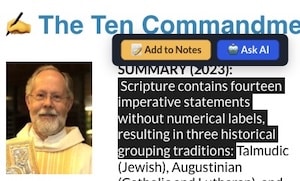 Highlight text or double-click a paragraph anywhere on the site to ADD TO NOTES. You can also click ASK AI to copy your selection to the clipboard with a command prompt, ready for you to paste manually into the chat above.