
Michal Hunt

Brant Pitre
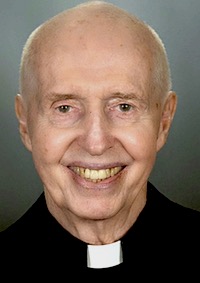
Fr. Francis Martin
Brant
Pitre

Mass Readings Explained
3rd Sunday of Advent B

Michal E.
Hunt

Agape Bible Commentary
3rd Sunday of Advent B
INTRODUCTION

The First Reading announces God's divine messenger, the "anointed one," in Hebrew mashiach (translated "messiah" in English and christos in Greek). A "Messiah" is a consecrated agent and messenger of God. Isaiah proclaims that God will anoint His future Messiah to fulfill a dual mission as both a messenger and a comforter. As God's divine messenger, he brings "glad tidings" like a king's ambassador in announcing victory in a time of war and the redemption and release of prisoners. The prophecy foretells a Messiah who will proclaim a new age for the people of God. He will establish a new world order where oppression no longer reigns and where accord and well-being will prevail for people of all nations. Jesus announced that this prophecy was fulfilled in Him to His Synagogue congregation at Nazareth (Lk 4:17-21).
Michal E Hunt, Copyright © 2014; revised 2023 Agape Bible Study; used with permission
The Second Reading is from St. Paul's letter to the Thessalonians in which he tells us why those who belong to the divine Messiah, Jesus Christ, should rejoice, giving thanks and praise to God for our deliverance. Paul writes about the promise of Isaiah's oracle in the First Reading. Through the sacrifice of Jesus Christ, He delivered us from bondage and captivity: bondage to sin and captivity from the darkness of the grave.
Michal E Hunt, Copyright © 2014; revised 2023 Agape Bible Study; used with permission
St. John the Baptist announced the coming of Isaiah's promised Messiah (Mt 3:1-3; Mk 1:1-8; Lk 3:1-5), and for the past two weeks, our Gospel readings have focused on the mission of St. John the Baptist. In this week's Gospel Reading, we learn more about his mission. The Gospels of Matthew, Mark, and Luke identify him as the prophetic voice crying out in the wilderness prophesied in Isaiah 40:3-4 (last Sunday's First Reading and Gospel Reading). His mission was preparing the covenant people for the coming of the promised Redeemer-Messiah through a baptism of repentance (Mk 1:4).
St. John's mission should remind us that Advent is a season of preparation. We need to prepare ourselves for the possibility of the coming of God the Son in His Second Advent, knowing that His return can happen at any moment. If we prepare by cleansing our souls in the Sacrament of Reconciliation, we will be ready, and we can rejoice because, as this Sunday's antiphon announces, "The Lord is near!" (Phil 4:5).
Michal E Hunt, Copyright © 2014; revised 2023 Agape Bible Study; used with permission
IN DEPTH ANALYSIS
21 So they asked him [literal Greek = so they questioned him further], "What are you then? Are you Elijah?" And he said, "I am not." "Are you the Prophet?" He answered, "No."
The more literal translation is: They questioned him further (look for a repeat of this phrase). They asked John if he was the 8th century BC prophet Elijah because everything about John fit the prophecies about the return of Elijah:
- John was ministering at the location where witnesses saw Elijah assumed into heaven on the left side of the Jordan River (Jn 1:28; 2 Kng 2:4, 8, 11, 14).
- He dressed in the same attire as the prophet Elijah (Mt 3:4; 2 Kng 1:8).
- Malachi prophesied Elijah's return before the coming of the Messiah, who would bring a "New Covenant" (Mal 3:1, 23; Jer 31:31).
- John located his ministry at the site of the Jordan River crossing by Joshua and the children of Israel into the Promised Land (Jn 1:28; Josh 3:1, 14-17; see CCC# 718.
For some scholars, it is a problem that John the Baptist does not seem to identify himself as Elijah when this connection seems clear in other passages of the Gospels:
- Mark 1:2 applies the Malachi 3:1 passage to John the Baptist, identifying him as the one with Elijah's spirit and power.
- Matthew 11:14 reports Jesus's statement concerning John the Baptist: If you are willing to accept it, he is Elijah who is to come.
- Mark 9:13 and Matthew 16:12 record Jesus declaring that Elijah had already come, presumably in John the Baptist.
There is no single answer as to why John denies that he is the prophet Elijah, but given the evidence, we can speculate. The angel Gabriel's prophecy to John's father, Zechariah, was that his son would come in Elijah's "spirit and power" (Lk 1:17) and not as Elijah himself.
Some possible answers to the dilemma:
#1: Perhaps sensing the delegation's hostility, John didn't want to "play his hand" quite yet by claiming he has come in fulfillment of the prophecy concerning Elijah. They could charge him with blasphemy or inciting a riot against the Romans who held political control of Judea.
#2: Perhaps John is denying that he is Elijah because he is discerning that they are asking if he is the reincarnation of Elijah. Reincarnation was not consistent with Old Covenant beliefs, nor is it acceptable in the Christian faith; divine judgment follows physical death (Heb 9:27). The claim of reincarnation would be considered blasphemy. John was not the reincarnation of Elijah any more than Elijah's successor, Elisha, was the reincarnation of his master. Elisha received the fullness of the spirit of prophecy that God placed on His servant Elijah. John received this same anointing of the spirit; therefore, in that sense, he is Elijah's successor. Pope Gregory the Great reconciles this apparent discrepancy by teaching that John was not Elijah, but he exercised toward Jesus the function of Elijah by preparing his way (Patrologia Latina 76:1100).
#3 Some Bible scholars suggest that perhaps John did not fully realize his prophetic role. Those who believe this is the cause for John's denial point out that in Matthew chapter 11, when John is imprisoned and awaiting his execution, he sent his disciples to ask Jesus: "Are you the one who is to come or are we to expect someone else?" Their point is that this passage indicates John does not completely understand God's plan. But other scholars suggest John's disciples and not John were the ones confused, and he sent them to Jesus to confirm His identity.
Michal E Hunt, Copyright © 2014; revised 2023 Agape Bible Study; used with permission
Fr. George
Corrigan
OFM


Fr. Kieran
O’Mahony
OSA


Fr. Francis
Martin

Navarre Bible Commentary

St. Charles Borromeo (PDF)
3rd Sunday of Advent B

The Navarre Bible,
The Jerome Biblical Commentary,
The New Jerome Biblical Commentary, and
Church History by Laux (TAN Books),
AND MORE
Michal E.
Hunt
Sermon
Writer