

Theology of the Body
Life Recovery Notes
Vocations
CATHOLIC THEOLOGY
Catholic Culture | Moral Theology | Stewardship | Theology of the Body

the BodyChristologyEcclesiologySacramental TheologyTheodicy
Addiction | Catholic Culture | Environment | Justice | Family | Pro-Life | Stewardship | Teens | Theology | Vocations | Work
Theology of the Body

Christian Joy
Christian joy comes to us as we learn to let go of all of our God substitutes (our idols) and direct our deep desire for love and happiness toward the one who alone can fulfill it: “In my God is the joy of my soul,” says Isaiah. It is in God that our soul rejoices. This is what it means to be made “perfectly holy” and blameless in “spirit, soul, and body.” This is what it means to desire nothing but “the coming of our Lord Jesus Christ.” At his coming, Isaiah teaches, he will be clothed “like a bridegroom,” we will be clothed “like a bride,” and we will “rejoice heartily in the Lord.”
SOURCE: West, Christopher. Word Made Flesh: A Companion to the Sunday Readings (Cycle B) . Ave Maria Press. Kindle Edition.
Addiction | Catholic Culture | Environment | Justice | Family | Pro-Life | Stewardship | Teens | Theology | Vocations | Work
Christology
Jesus, the son of Mary, and also called the son of Joseph, lived a quiet, normal life. He lived and worked and rested and celebrated with the normal people of Nazareth and Galilee, his home region, following the normal rites and observances of the Pharisees. No one noticed him, and he did not catch anyone’s attention until he was baptized by his cousin John in the Jordan River.
These were apparently very different men. John was a clearly prophetic and ascetic figure; Jesus was not at all ascetic, as his critics would later bring forth, but he was full of wonders and healings and deliverances.
Which kind of life are Christians supposed to follow? Are we supposed to be austere, fasting, abstaining from drink, living apart? Or are we supposed to be socially normal, affable, eating and drinking like everyone else?
SOURCE: Catholic Answers
Addiction | Catholic Culture | Environment | Justice | Family | Pro-Life | Stewardship | Teens | Theology | Vocations | Work
Ecclesiology
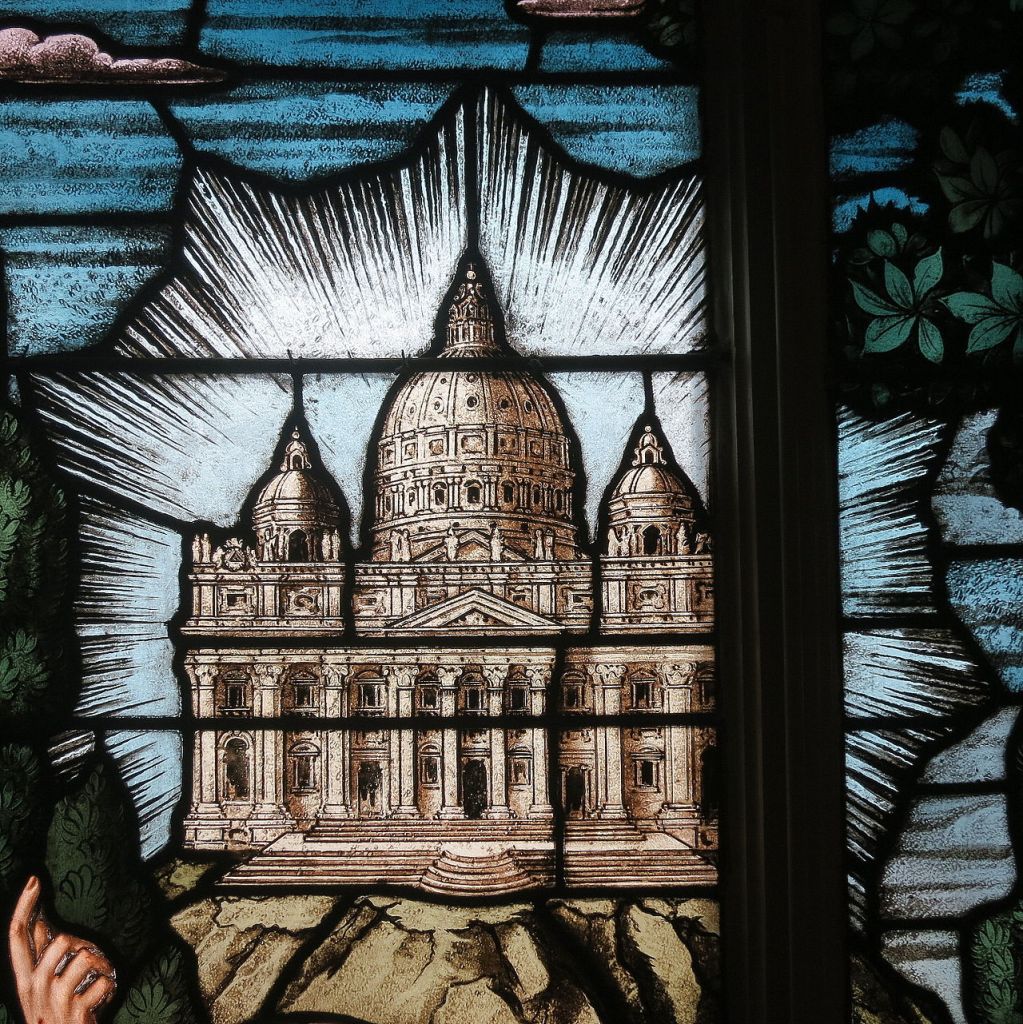
SOURCE: Wikipedia
Addiction | Catholic Culture | Environment | Justice | Family | Pro-Life | Stewardship | Teens | Theology | Vocations | Work
Sacramental Theology
Pope St. John Paul II explained. To sin against the Holy Spirit, he said, is to refuse to accept the salvation he offers, which “presupposes the genuine conversion which he brings about in the conscience.” The “non – forgiveness” of this sin is caused by our “non – repentance.”
This is the sin committed by a person “who claims to have a right to persist in evil, in any sin at all, and who thus rejects redemption,” the Pope said. “One closes oneself up in sin, thus making impossible one’s conversion, and consequently the remission of sins, which one considers not essential or not important for one’s life.”
SOURCE: B.C. Catholic
Addiction | Catholic Culture | Environment | Justice | Family | Pro-Life | Stewardship | Teens | Theology | Vocations | Work
Theodicy
The drunk rejoices at the sight of a drink, the unchaste at the sight of impure actions, the envious at the misfortune of the one he envies, and so on. When we love created goods, but not in the way that God wants us to love them, then we may rejoice on seeing them, but we do not rejoice in seeing him, who gave them to us to use rightly and gratefully. This is true of all sin, whether grave or lesser, but it is especially true of grave sin, which truly deprives us of our love of God.
That’s a pretty grim picture to be sure, but wait and see: there is a lot of hope in it. Why is the Lord coming at all? We hear from the beloved apostle, “Christ Jesus came into the world to save sinners,” and “If anyone sin he has an advocate with the Father, Jesus Christ the righteous, and he is the propitiation for our sins, and not for ours only, but for those of the whole world.” We hear from St. Paul, “While we were yet sinners, Christ died for us.”
SOURCE: Catholic Answers Magazine
IMPORTANT ISSUES
Addiction | Catholic Culture | Environment | Justice | Family | Pro-Life | Stewardship | Teens | Theology | Vocations | Work
Catholic Culture

Journey through Advent – Third Sunday of Advent 2023
The Canadian Conference of Catholic Bishops presents Journey through Advent with the Most Rev. Bishop Jon Hansen, CSsR, Bishop of Mackenzie-Fort Smith. Join us as we reflect on the Scriptures for the Sundays of Advent 2023.
SOURCE: CCCB_CECC
Addiction | Catholic Culture | Environment | Justice | Family | Pro-Life | Stewardship | Teens | Theology | Vocations | Work
Climate & Environment

When We Become Our Own Worst Enemies
How tragic it is that we have inverted the image and have instead created god in our own image! As Francis alerts us in his new exhortation, Laudate Deum, “When human beings claim to take God’s place, they become their own worst enemies.” (73) We succumb to the temptation of believing that the world that surrounds us is merely an object for our exploitation, fueled by unbridled consumption and unlimited ambition.
We have the opportunity during this season of Advent to once again recognize our call to grow in the image and likeness of our bountiful Creator; to foster a culture and spirituality genuinely capable of setting limits, and teaching clear-minded self-restraint. We are invited to recognize that we are a part of nature, called to foster a healthy interaction between humanity and the environment that we all share, reshaping it without destroying or endangering it.
How much easier it is for us to spend time setting up an attractive but inanimate manger scene, than to focus our attention on God’s presence among us in those who live on the margin, left out of what society can offer? Our society lulls us into thinking that we can and need to “earn” God’s love, while the Advent season flies in the face of this way of reasoning. This time allows God to present himself as a helpless infant, placed in a trough for want of a bed. God is trying to tell us how much he needs us, our cooperation, and our dedication to build a better world for all.
SOURCE: Catholic Climate Covenant
Addiction | Catholic Culture | Environment | Justice | Family | Pro-Life | Stewardship | Teens | Theology | Vocations | Work
Justice

Rejoice in the Lord, Always!
The message of today’s liturgy is clear. The salvation we await with joy will liberate both the individual and the community, and its special focus will be the poor and lowly, not the rich and powerful.
“As the earth brings forth its plants … so will the Lord God make justice.”
Jesus comes so that our community might no longer bear the scars of poverty and oppression but might instead “be preserved whole and entire, spirit, soul, and body.”
As a leaven in the world, the Church is called to participate in human affairs and to recognize in the poor, the afflicted, and the oppressed the presence of the Lord summoning the Christian community to action.
SOURCE: Gerald Daring, The Sunday Website at Saint Louis University
Addiction | Catholic Culture | Environment | Justice | Family | Pro-Life | Stewardship | Teens | Theology | Vocations | Work
Pro-Life

Rejoice Always
The command to “rejoice always” may seem like a demanding requirement, given the fact that things do not always go our way, because of circumstances beyond our control. Yet this rejoicing is always possible, because it is based on the salvation which Christ has come to bring. “I rejoice heartily in the Lord,” Isaiah writes, “for he has clothed me with a robe of salvation and wrapped me in a mantle of justice.”
This “justice,” manifested when God rescues his people (for example, from slavery in Egypt) has come to us in the Divine Child whose birth we are preparing to celebrate. He wrapped us in a mantle of justice when, by his death and resurrection, he rescued us from the power of death. “To proclaim liberty to captives” is his mission, as the First Reading indicates in a passage that would later be quoted by Christ himself in reference to his own ministry. The Christmas song “O Holy Night” reflects this theme when it says, “Chains shall he break, for the slave is our brother, and in his name all oppression shall cease.”
We who are rescued must rescue the poor and weak among us, including the poorest and weakest, the unborn children. To celebrate the God who comes to free the oppressed, and has freed us, means to commit ourselves to ending oppression in our culture.
SOURCE: Priests for Life
Addiction | Catholic Culture | Environment | Justice | Family | Pro-Life | Stewardship | Teens | Theology | Vocations | Work
Stewardship
We can become like John the Baptist, in today’s Gospel passage from the Book of John. We read this description of the prophet: “A man named John was sent from God. He came for testimony, to testify to the light… He was not the light, but came to testify to the light.” This is our calling, too, to testify to the Light, our wonderful Savior by the way we make use of the time, talent, and treasure He has entrusted to our care. Our actions and our priorities themselves give testimony to all that God has done in our lives. What a privilege!
SOURCE: CatholicSteward.com
LIFE APPLICATION
Addiction & Recovery | Marriage & Family | Teens | Vocations | Theology of Work

Addiction | Catholic Culture | Environment | Justice | Family | Pro-Life | Stewardship | Teens | Theology | Vocations | Work
Addiction & Recovery

Be faithful to God’s calling, not to measure up to the world’s standards
Isa 6:9-13 Being fruitful does not necessarily mean we have to be a great success in human terms. We need not feel compelled to achieve or look good to others; Isaiah certainly did not. His goal was to fulfill God’s will. Our aim, like Isaiah’s, should be to be faithful to God’s calling, not to measure up to the world’s standards.
1 Thes 5:14-28 Paul leaves us with his final good advice. If we follow these instructions with God’s help, we will be well on our way in the recovery process. We are called to minister to others, a part of recovery that gives hope to others and reinforces our own success. Paul tells us to rebuild our relationships by repaying the wrongs of others with kindness. We are called to live joyful lives, always prayerful, continually seeking God’s will. We are reminded of the gift of the Holy Spirit, God’s continual helping presence with us. God gives us what we need to succeed in recovery. Our part is to participate in the good plan he has set out.
John 1:19-28 John the Baptist was an original messenger of repentance and recovery. He was not the true light or source of recovery; he merely pointed to the one who was. Likewise, those of us in recovery reflect God’s light and merely point the way to recovery. We should not draw followers to ourselves any more than John. We are mere beggars telling other beggars where to find food. When we lay aside pride in our achievements and abilities as John the Baptist did, we are better able to serve Christ by showing fellow strugglers the way to recovery.
SOURCE: The Life Recovery Bible, Stephen Arterburn, David Stoop
Addiction | Catholic Culture | Environment | Justice | Family | Pro-Life | Stewardship | Teens | Theology | Vocations | Work
Marriage & Family
Today is the third Sunday of Advent. Did you notice that the color of the third candle of the Advent wreath lit today was rose? The rose candle is a combination of the purple of the liturgical season mixed with white, which symbolizes joy. At the midpoint of the season of Advent, the Church pauses to celebrate and rejoice with joy at the coming of Christ.
Joy? JOY?! How can we have joy? Our life is a whirlwind of activity: the bills are past due, there are presents still to buy, we are behind on making costumes and set scenery for the kid’s Christmas pageant, the house still needs to be decorated, there are cookies to be baked…and Christmas is right around the corner! We are so glad that Christmas only comes once a year!
SOURCE: Calling Couples to Christ RELATED: Catholic Mom; For Your Marriage; Fierce Marriage; Focus on the Family;
Addiction | Catholic Culture | Environment | Justice | Family | Pro-Life | Stewardship | Teens | Theology | Vocations | Work
Teens
“A voice proclaims:
In the wilderness prepare the way of the Lord!
Make straight in the wasteland a highway for our God!
Every valley shall be lifted up,
every mountain and hill made low;
The rugged land shall be a plain,
the rough country, a broad valley.
Then the glory of the Lord shall be revealed,
and all flesh shall see it together;
for the mouth of the Lord has spoken.” – Isaiah 40:3-5
SOURCE: LifeTeen.com RELATED: Coming Soon.
Addiction | Catholic Culture | Environment | Justice | Family | Pro-Life | Stewardship | Teens | Theology | Vocations | Work
Vocations

Priests as Icons of Joy
What an icon of joy our priestly commitment makes us! I know it is becoming a cliché, but think of how “countercultural” our promises make us:
- To a world that believes you cannot be happy without immediate sexual gratification, with whomever, wherever, whenever you want — we pledge lifelong celibate chastity!
- To a society which holds that, without the license to do what you want, when you want, where you want, you can’t be fulfilled — we promise lifelong obedience to one man!
- To a culture that thinks fulfillment comes in constant buying, hoarding, shopping, accumulating — we commit to a simplicity of life on around a thousand dollars a month!
- To a world that is pragmatic and utilitarian, judging worth by what is produced — we vow to waste time daily praying with and for the Church!
- To a society which holds that we take care of ourselves first and never compromise our comfort and convenience — we pledge to serve others in sacrificial love in union with the crucified one!
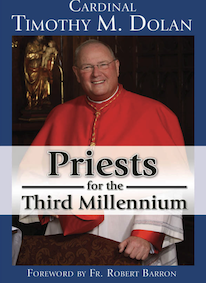
SOURCE: Dolan, Timothy M., Cardinal. Priests for the Third Millennium (pp. 209). Our Sunday Visitor.
Addiction | Catholic Culture | Environment | Justice | Family | Pro-Life | Stewardship | Teens | Theology | Vocations | Work
Work
Work’s Ultimate Meaning
Throughout the book, Isaiah encourages Israel with the hope that God will eventually put to right the wrongs the people are suffering in the present. Work, and the fruits of work, are included in this hope. By chapter 40, as the book moves from telling the truth about the present to telling the truth about the future, the sense of hope increases. The material about the suffering servant in chapters 40-59 can hardly be understood except as God’s gift of hope in the future fulfillment of God’s kingdom.
In chapters 60-66, this hope is finally expressed in full. God will gather his people together again (Is. 60:4), vanquish the oppressors (Is. 60:12-17), redeem the rebellious who repent (Is. 64:5-65:10), and establish his just kingdom (Is. 60:3-12). In place of Israel’s faithless leaders, God himself will rule: “You shall know that I, the Lord, am your Savior and your Redeemer, the Mighty One of Jacob” (Is. 60:16). The change is so radical that it amounts to a new creation, of parallel power and majesty to God’s first creation of the world. “I am about to create new heavens and a new earth; the former things shall not be remembered or come to mind” (Is. 65:17).
Chapters 60-66 are rich with vivid portraits of the perfect kingdom of God. In fact, a large fraction of New Testament imagery and theology are drawn from these chapters in Isaiah. The final chapters of the New Testament (Revelation 21 and 22) are, in essence, a recapitulation of Isaiah 65-66 in Christian terms.
SOURCE: Theology of Work Project
Commentary on this page was written by artificial intelligence before being reviewed, edited, adapted, and formatted by humans for accuracy. Use your own judgment before preaching. If you find any errors please contact us. Excerpts from the Lectionary for Mass for Use in the Dioceses of the United States of America, second typical edition © 2001, 1998, 1997, 1986, 1970 Confraternity of Christian Doctrine, Inc., Washington, DC. Used with permission.