Homily Starters, Fr. Tony’s Homily
Homily Starters, Fr. Tony’s Homily
April 26, 2026
4th Sunday of Easter (A)


- ANECDOTES
- WIT AND WISDOM
- LIFE MESSAGES
Click to Enlarge
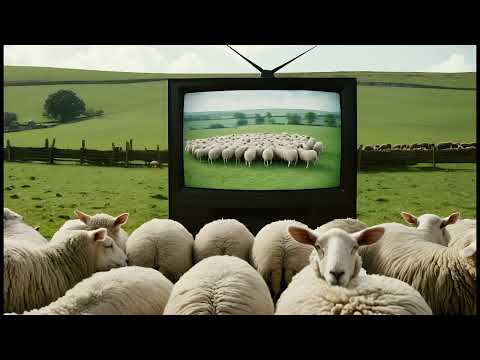
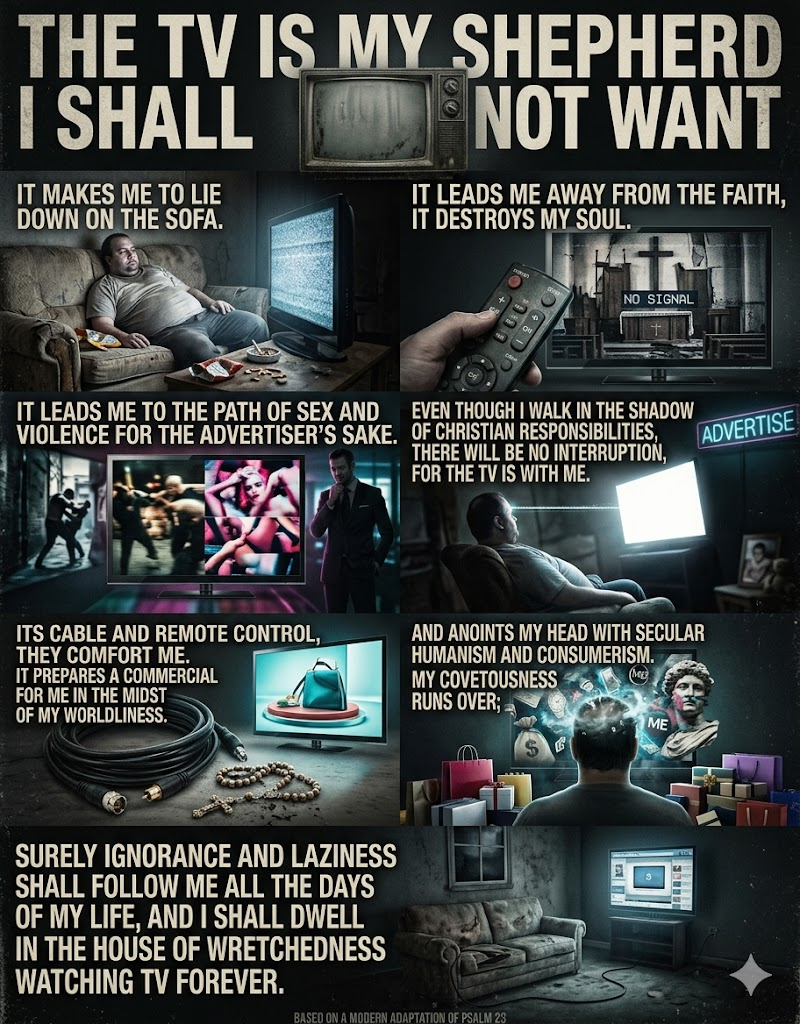
The TV is My Shepherd
The TV is my shepherd
I shall not want,
It makes me to lie down on the sofa.
It leads me away from the Faith,
It destroys my soul.
It leads me to the path of sex and violence for the advertiser’s sake.
Even though I walk in the shadow of Christian responsibilities,
There will be no interruption, for the TV is with me.
Its cable and remote control, they comfort me
It prepares a commercial for me in the midst of my worldliness
And anoints my head with secular humanism and consumerism.
My covetousness runs over;
Surely ignorance and laziness shall follow me all the days of my life,
And I shall dwell in the house of wretchedness watching TV forever.
A parody on Psalm 23 in a homily broadcast on EWTN on March 18 2002.

Click to Enlarge
Moral Evil and Its Consequences
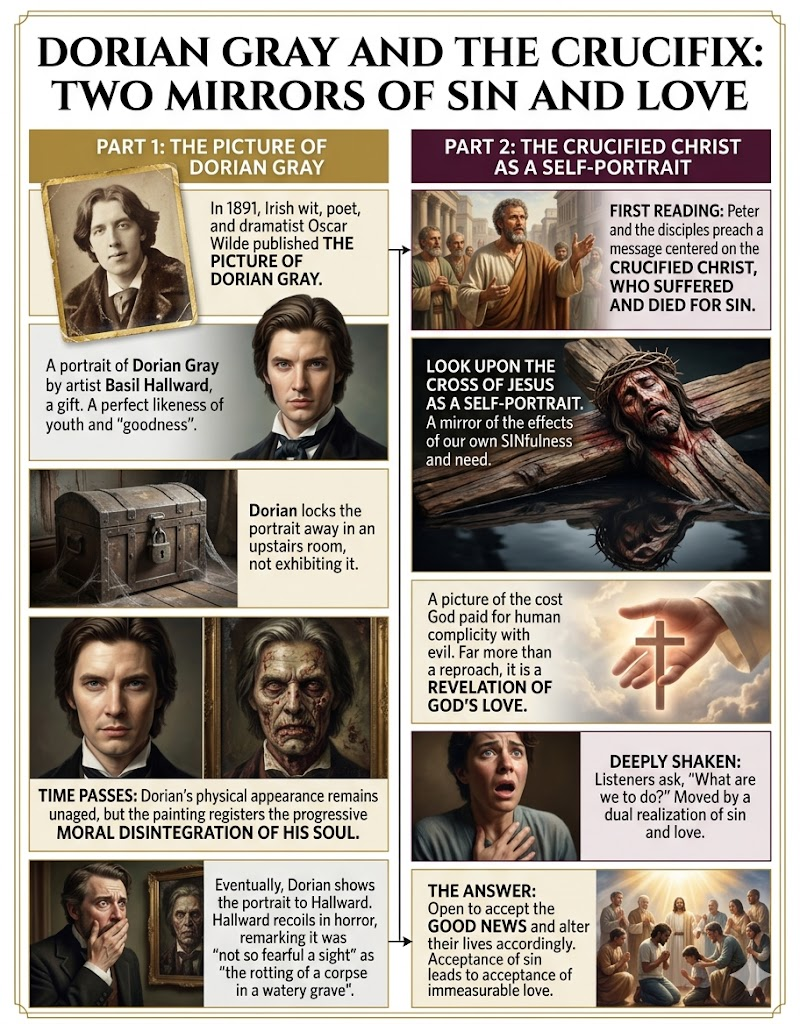
In 1891 the Irish wit, poet and dramatist, Oscar Wilde published The Picture of Dorian Gray, an intriguing fable about moral evil and its consequences. According to the story, an artist named Basil Hallward painted a portrait of the central character, Dorian Gray, and gave it to the young man as a gift. An excellent likeness, the painting captured the handsome youth and goodness of Gray, who did not exhibit the painting but locked it away in an upstairs room of his home. As time passed, it became clear that the painting was more than a work of art. Although Gray’s physical appearance did not age or change in any way with the passing years, the painting became a mirror, as it were, registering the progressive moral disintegration of his soul. Gray, who had squandered his life in unrepented evil, eventually showed the incredibly altered portrait to Hallward who recoiled in horror, remarking that “the rotting of a corpse in a watery grave” was “not so fearful a sight.” 95), p. 133.]
In the First Reading when Peter stsood up with the other disciples their message centered on the figure of the crucified Christ, who suffered, died for the sins of humankind, and then was raised to glory. Like Dorian Gray, sinners are called to look upon the cross of Jesus as a self-portrait, to see therein a mirror of the effects of their own sinfulness and need, and a picture of the cost God paid for human complicity with evil. But the visage of the crucified Jesus is far more than a reproach; it is also a revelation of the love of God for us sinful people. It was this dual realization that caused Peter’s listeners to be “deeply shaken,” and moved to ask, “What are we to do?” (vs. 37). Duly convinced of their own sin and of God’s immeasurable love, they were open to accept the good news and to alter their lives accordingly.

Click to Enlarge
Sinking of the Bismark (1941)
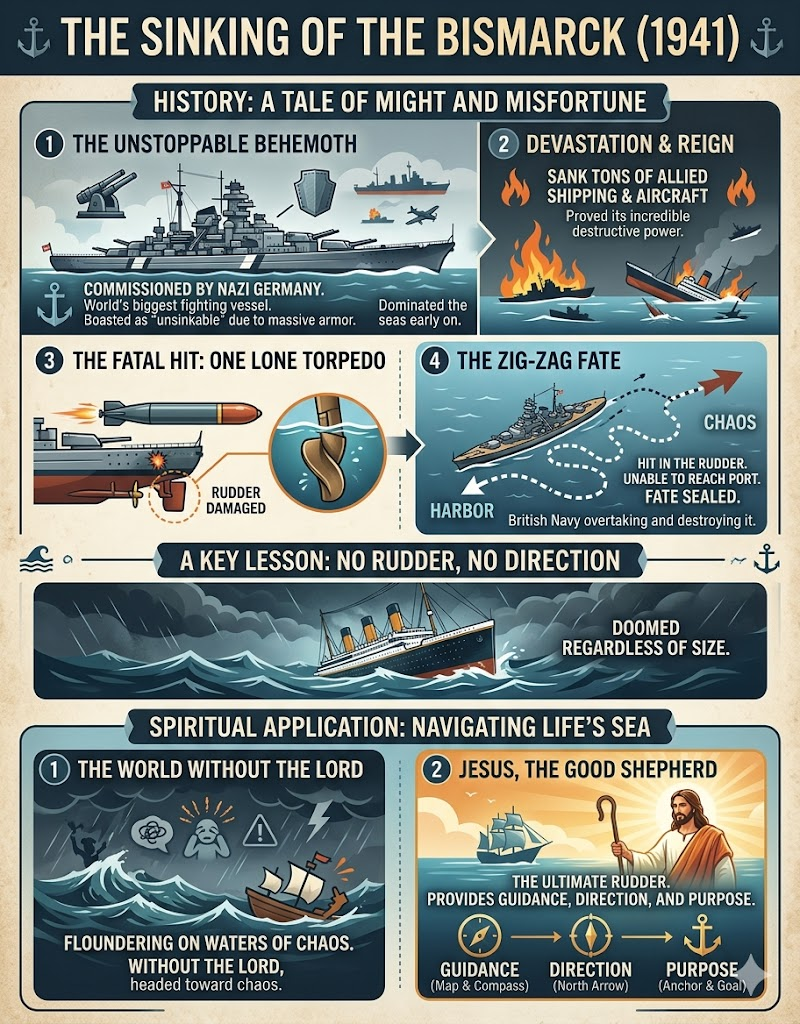
In the beginning of World War II, the Nazis commissioned a massive battleship named the Bismarck. It was the biggest fighting vessel the world had seen up to that time. With the Bismarck the Germans had the opportunity to dominate the seas. Very soon after it was commissioned, the Bismarck sank tons of Allied shipping and allied aircraft. Its massive armor plating resulted in the boast that the Bismarck was unsinkable. But the Bismarck was sunk. And it was sunk due to one lone torpedo. A torpedo hit the Bismarck in the rudder. As a result, the battleship zig-zagged through the sea, unable to reach harbor. It was only a short while before the British navy was able to overtake and destroy it. No matter how large the battleship may be, it is doomed without a rudder to direct it.
Floundering on the waters of chaos without a rudder, the Bismarck is a modern-day image of a world without the direction of Jesus, the Good Shepherd. Without the Lord, the world is headed toward chaos. But with the Lord there is guidance, direction and purpose in life.
Pope St. John Paul II,
the Good Shepherd
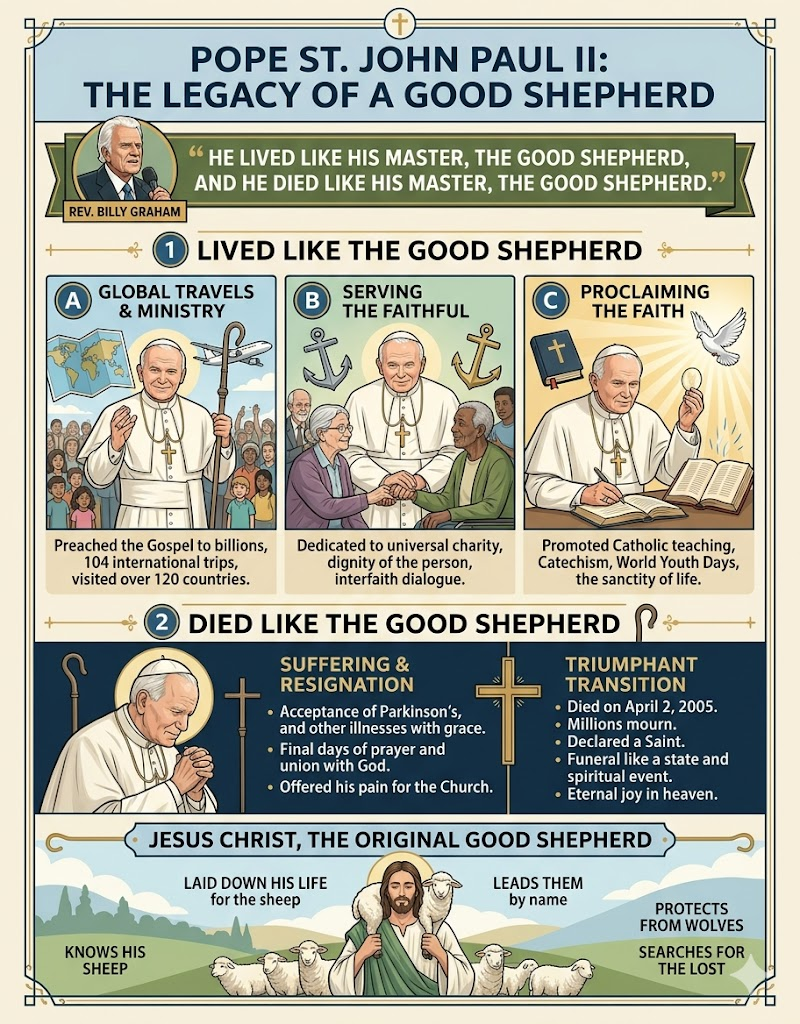
In a moving reflection on the life of Pope St. John Paul II, the renowned evangelist Billy Graham offered a description that stands as a profound summary of the late Pope’s legacy. Graham observed, “He lived like his Master, the Good Shepherd, and he died like his Master, the Good Shepherd.” This description not only honors the Pope’s tireless ministry and deep faith but also provides a powerful connection to the Gospel where Jesus proclaims himself as the Good Shepherd, demonstrating a lifetime dedicated to the selfless service and unconditional love characteristic of this sacred role.
Click to Enlarge
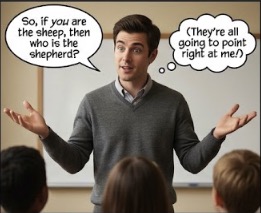
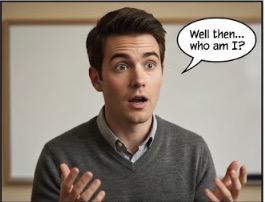
Joke of the
Week



World Day of Prayer for Vocations
by Fr. Tony Kadavil
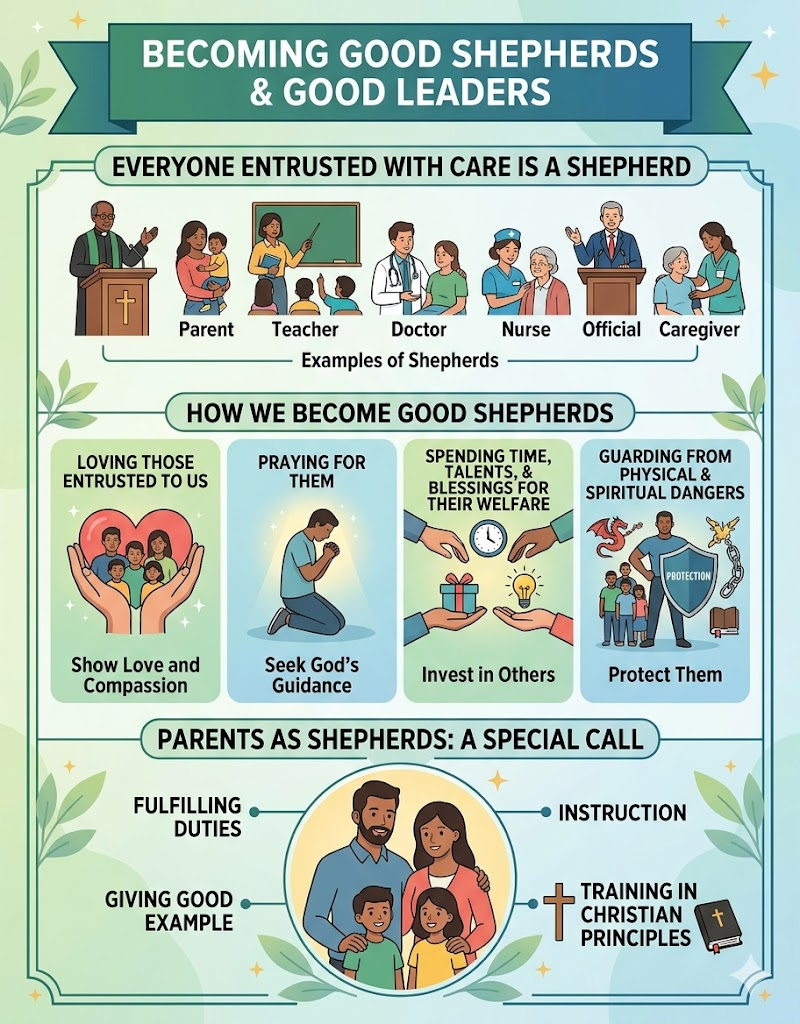
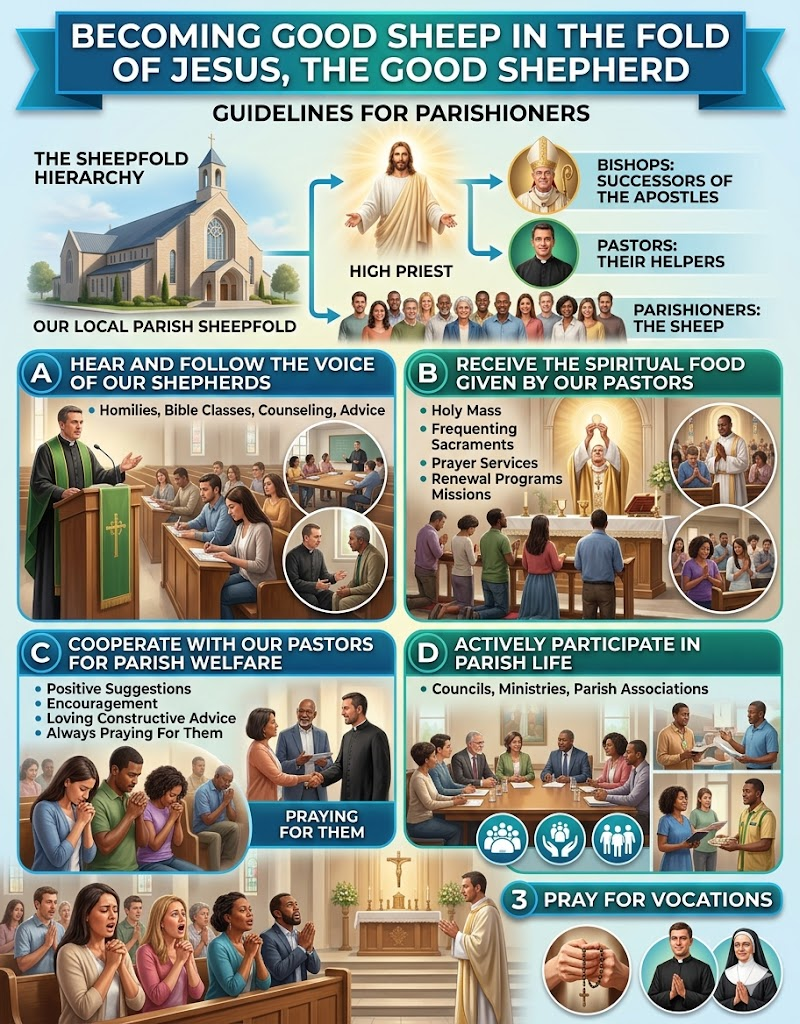
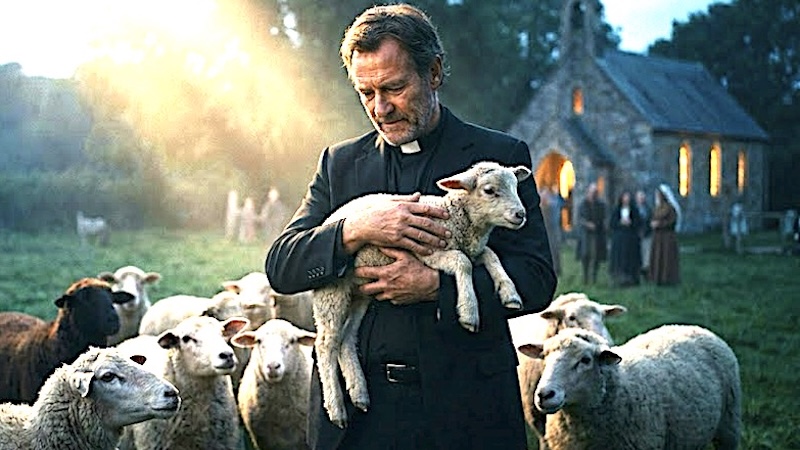
On this Good Shepherd Sundayand the World Day of Prayer for Vocations, the Church reminds us of our call to become good shepherds of God’s flock and good sheep of His parishes and invites us to pray for vocations to the priesthood, the diaconate, and the consecrated life.
Scripture Readings Summarized
by Fr. Tony Kadavil
Both the Old and New Testaments use the image of a Shepherd and His flock to describe the unique relationship of God with Israel and of the Christ with Christians.
The first reading is taken from St. Peter’s first sermon, given on the day of Pentecost. He reminds his Jewish listeners that they have crucified their true Shepherd. Hence, they need to receive forgiveness for their sin by receiving Baptism in the name of Jesus and acknowledging the risen Jesus as their Lord and Savior, as Jesus had commanded.
The Responsorial Psalm (Ps 23), introduces Yahweh as the Good Shepherd of Israel Who cares for us, His sheep, providing for our needs.
In the second reading, Peter encourages the suffering Christians to follow in the footsteps of their Good Shepherd, Jesus, the “suffering servant,” realizing the truth that Jesus’ suffering and death have enabled them to become more fully the children of God.
In today’s Gospel, two brief parables show us Jesus, the first, as a selfless, caring “shepherd” who provides for his sheep protection and life itself, and the second, as our unique gateway (“sheep gate”), to eternal salvation. That is, besides guiding his flock to Eternal Life as the Good Shepherd, Jesus is himself the gateway to Eternal Life.