
Study | Preach | Teach


11th Sunday of Year B
On Slow-Motion Miracles

One of the wonders of our world surely must be the humble seed. With enough soil, sunlight, rain and time, tiny seeds can not only feed whole families; they can also split rocks, destroy buildings and even move mountains. It’s really quite miraculous.
When we think of miracles, we usually expect instant action. But most of the time that’s not what happens. Most miracles – like seeds – actually occur quite slowly.
Consider the story of Sally Wagter. In her book, Miracle in Slow Motion, she recounts her journey from despair to joy as she raised her severely autistic son, Tim. She refused to accept the bleak future his specialists had forecast for him. Instead, she decided to help him discover his potential.
That decision was a seed that took years to grow, but what she achieved was beyond her wildest dreams. Tim grew into a musically gifted, socially confident and academically capable young man. [i]
FOOTNOTES:
[i] Releasing My Child’s Potential
[ii] Eucharist: The Basic Spirituality – Fr. FrankO’Dea SSS
[iii] CS Lewis, Miracles. Centenary Press, London. 1947:178.
Fr. Andrew Ricci
11th Sunday of Year B
We are Seen, Summoned and Sent by the Lord
Seeing the crowds, the Lord shows compassion and pity for their needs. Summoning the Twelve, he gives them authority and sends them on mission. The point? These words apply to us as well!
Fr. Austin Fleming
11th Sunday of Year B


Teaching to the Test
When I was younger, much, much younger, I was taught to live according to the Ten Commandments, the words of Jesus and the teachings of the Church- LEST I sin and end up in hell.
Are you familiar with the concept of “teaching to the test?” It’s a term for any method of education whose curriculum is heavily focused on preparing students to pass a standardized test.
Analogous to “teaching to the test” is an approach to faith that might be called “living to the test,” the test being God’s judgment of me at the end of my life. Or, as Saint Paul put it in his letter to the Corinthians and to us: Therefore, we aspire to please the LORD… for we must all appear before the judgment seat of Christ so that each of us might receive recompense, according to what we did in the body, whether good or evil.
Homiletic Pastoral Review
11th Sunday of Year B
Insights from the Prophet Ezekiel and the Teachings of St. Paul
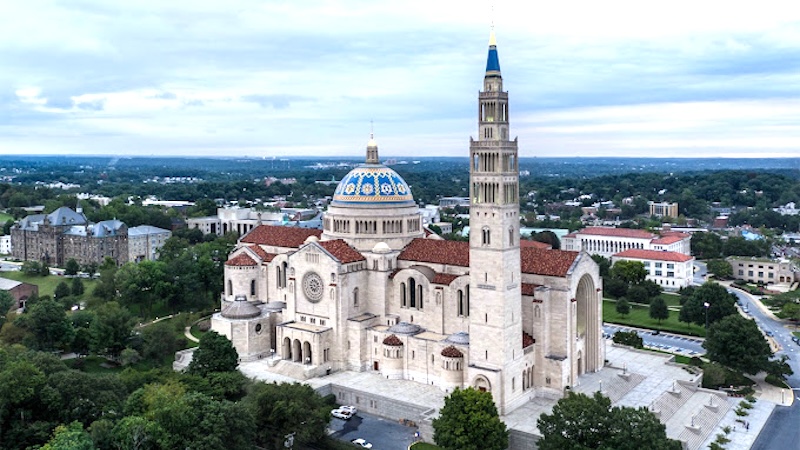
We take to heart the message of hope and resilience that today’s readings offer us. Like the tender shoot planted by the Lord, may we grow and flourish in our faith, nurtured by the knowledge of God’s active presence and faithfulness. Remember, no matter where we find ourselves, to give thanks to the Lord, to proclaim His kindness and faithfulness. For in His love and power we find our true home and the promise of eternal life.
Basilica of the National Shrine
11th Sunday of Year B

Dominican Blackfriars
11th Sunday of Year B

The parable of the mustard seed teaches us also both encouragement and ambition. On the one hand, encouragement, because it tells us that the work of God, the presence of God’s kingdom, is real, even if the change it makes may be very small, even if we might fail to notice it. The mustard seed is indeed tiny, but it is very real and packs a punch whether eaten while still a seed or left to grow into a shrub. And so, we should be encouraged to have confidence in the presence and power God’s grace, even if we find our lives are still ones of struggle with sin, temptation and weakness, all the things that seem to deny the reality of the kingdom of God within us.
Does an overview of history help us live well? In today’s Gospel parables, Jesus outlines his teaching on history, and how the Kingdom of God, and therefore the Church, fits into it to help us live well.
The Parable of the Developing Seed has three phases. In Phase One the seed is sown. The second phase is one of growth. The final phase is the action of harvesting. How would the Jews have heard and understood this?
Bishop Robert Barron
11th Sunday of Year B



People of faith see the world differently, with a vision of God’s purpose that can make them seem peculiar to others, and they are called to walk by faith, not by sight, in order to see the unfolding of the kingdom of God in the world around them.
Featured Podcasts


11th Sunday of Year B

Despite Our Struggles with Sin and Routine We Grow Each Day
We are called to grow in a deeper understanding of God’s love and rely on His power and grace to make advancements in our spiritual life despite our struggles with sin and routine.
Fr. Charles E. Irvin
11th Sunday of Year B

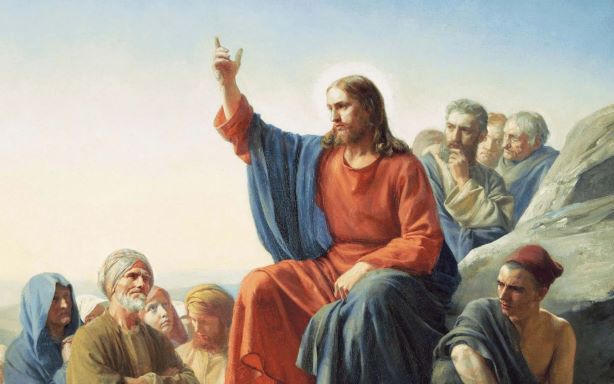
Jumboitis
Our society, someone has declared, is suffering from “jumboitis”. We need the biggest military, the biggest car, the biggest guns, the biggest house, the biggest business, and so forth. We’ve got bigger and bigger buildings, cities, and even churches. “The bigger, the better” and “the more, the merrier” seem to be the adages that govern us. But are they really true?
Many don’t think so. Including Jesus. In the Gospels we find Jesus giving high praise for just a cup of water, two copper coins, five measly old barley loves and two dried up fish, little children, crowds of only two or three being gathered together, and services rendered for even the least of our brothers and sisters.
Fr. Joe Jagodensky, SDS
11th Sunday of Year B

11th Sunday of Year B


Being the Soil Ready to Receive the Seed
God has wants his kingdom in us to grow into the biggest shrub and biggest branches so that birds of the air can find shelter in its shade. The poor, homeless, sick, marginalized, etc around us are in need of our shelter. We must not think we are too small to do this task. Who will do it if you don’t? At our baptism God sowed this seed of the kingdom into us. We must be the good soil in which the seed of the kingdom will grow.
Fr. George Smiga
11th Sunday of Year B

Small Things Matter
In today’s Gospel, Jesus is again speaking in parables. Parables were Jesus’ favorite way of teaching. He used parables, because parables force you to think. You have to pause and use your imagination to consider how the kingdom of God is like two sons, or ten virgins, or a treasure found in a field. Today Jesus tells us that the kingdom of God is like a mustard seed. Now what is he trying to say? Parables always have multiple meanings. Today I want to suggest to you one possible meaning of the parable of the mustard seed: Jesus is telling us that small things matter.
RELATED HOMILY:
God is Still Working (2015)
Fr. Anthony Ekpunobi, C.M.
11th Sunday of Year B

Msgr. Joseph Pellegrino
11th Sunday of Year B

God Gives the Growth

Many people are upset by the recent survey that showed a decline in the number of Catholics in the United States. W ell, first of all, the report fails to consider the continual impact of migrants to our country from the Catholic countries of Latin America. That mistake aside, we should be concerned, but our concern should be tempered by the large number of young Catholics devoted to the faith.
Msgr. Charles Pope
11th Sunday of Year B
If You Can Use Anything Lord, You Can Use Me
For us who are disciples, there are three related teachings given to us that speak of how God will make use of us and others. It is also good to link these teaching to Father’s Day, which occurs this weekend here in the U.S. These three teachings can be described as
I. ADAPTABILITY
II. “AWE-ABILITY”
III. ACCOUNTABILITY
Bishop John Louis
11th Sunday of Year B

Fr. Michael Chua
11th Sunday of Year B

Life Issues
11th Sunday of Year B

I Will Life High the Lowly Tree
Douglas McManaman
The only way to reach the lofty heights of infused mystical contemplation is to become a tender shoot. Most people aspire to be the towering cedar tree, and so they are never planted by the Lord on the high and lofty mountain of infused contemplation.
Walking Without a Flashlight
Proclaim Sermons
Faith invites us to trust God even if we cannot yet view the evidence or the outcome. Nowhere is this invitation more important than when we look ahead to our own deaths.
SOURCE: LifeIssues.net Homily Archive
Fr. Phil Bloom
11th Sunday of Year B

Gratitute Week 1: Start Small
Bottom line: Today we begin with small things like a tender shoot or a tiny seed. Or things that we take for granted like hands and eyes and feet.
RELATED HOMILIES:
2018: We are Always Courageous
2015: Through Him Week 2: How it is with the Kingdom
2012: Meaning of the Mustard Seed
11th Sunday of Year B

Jesus yearns to have everyone in his Kingdom of Love
God will go gardening! That is what God says through the prophet Ezekiel in our first reading today (Ezek 17:22-24) God will take a twig from the top of a cedar tree and plant it on a high mountain where it will become a tall tree, and all kinds of animals will live under it, and all kinds of birds will nest in it. Of course, God is talking in a parable through the prophet Ezekiel. There will be a tree that will give shelter to all. What might that be? We find the answer in the second parable in the Gospel today (Mark 4:30-32).
Fr. John Kavanaugh, S.J.
11th Sunday of Year B

Imperceptible Life
We ask ourselves: have we made progress? We are almost never aware of it. Only with effort and discipline do we become fully conscious. If we keep a journal, now and then we are startled when we peruse past entries. Worries, fears, preoccupations of the previous year seem to have evanesced. The greatest terrors and strongest urgencies of five years ago now surprise, embarrass, or encourage us. Was this me? Why was it that I could not gauge it as it was lived?
Life, like faith and love, resists most measurement. As it develops, it is rarely noticed. We seem not to do these things by sight. Our changings are unmarked as they happen.
Fr. Leon Ngandu, SVD
11th Sunday of Year B
Homily Unavailable
Coming Soon.
Bishop Frank Schuster
11th Sunday of Year B
Forward in Faith
My friends, always remember that it was during a time of doubt and fear when Ezekiel showed us a cedar shoot that became the largest of trees. It was during times like that when Jesus showed us a mustard seed that can become a majestic bush. It is during times like these that the Church will show you the cross and an empty tomb that foreshadows our salvation. The big picture is this, the hope Christ offers us for the future will never disappoint. We know this. We know this. Why? Because the history of our parish and history of the Church demonstrates that no matter what challenges we are confronted with in life, how blessed and better off we always are if we just simply trust Jesus, set our sight on him and move forward in faith
11th Sunday of Year B

