
Study | Preach | Teach
Bible Study
Bible Study


The Bible Timeline®: The Story of Salvation
God can work with small beginnings and turn them into something great in the kingdom of God.
- 00:00 God can work with the smallest of things to build them into the biggest in the kingdom of God.
- 01:16 The kingdom of heaven is like a mustard seed, starting small but growing into something great.
- 01:54 God can do great things with even the smallest of beginnings, including the growth and development of children in school.
- 02:27 God provided a way for a family to send their kids on mission trips, resulting in great fruit.
- 02:37 Don't be afraid of small beginnings, God can turn them into something wonderful.

SOURCE: A Word Proclaimed
The kingdom of God is a mysterious and transformative force that works through us to bring about change and peace in people’s lives.
- 00:00 The kingdom of God is like a man planting seeds and not knowing how they grow, showing that God works through us to bring about change and peace in people's lives.
- 02:32 God provides for us by allowing seeds to grow into food, showing that growth is a mystery of the kingdom of God.
- 04:16 Show children love and positivity, not violence, and be open-minded about who ends up in heaven.
- 05:07 The process of growing and harvesting grain and grapes is a metaphor for the transformation of bread and wine into the body of Christ.
- 06:20 The Jews demythologized the idea of fertility gods and sex as divine power, emphasizing that they are gifts from God like any other.
- 08:15 The kingdom of God may seem small and unimpressive, but it has the potential to grow into something majestic and provide for many.
- 09:55 The kingdom of God is fulfilled through Jesus, who embodies the love and mercy of God.
- 11:09 The parables in the Gospel illustrate the challenges of life and the growth of the kingdom of God.
- The parables in the Gospel are meant to drive home a point about the kingdom of God and the challenges of life.
- The kingdom of God is like a seed that grows into a great bush, providing a home for those who will be with God forever.
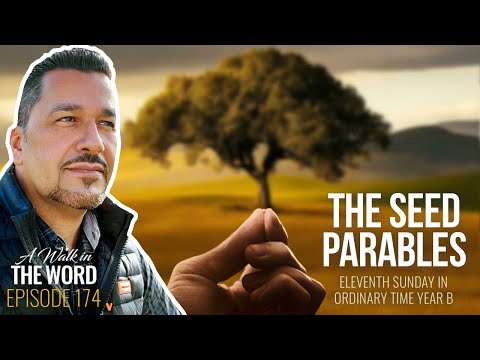
SOURCE: A Walk in the Word
The Kingdom of God grows mysteriously and miraculously, symbolized by the parables of the seed and mustard seed, emphasizing the importance of receiving Jesus’s word and becoming his disciple.
- 00:00 🌱 Jesus teaches the crowd about the mysterious growth of the kingdom of God through parables, following tense events with religious authorities.
- Jesus uses parables to explain that the kingdom of God grows mysteriously and starts small but becomes great.
- Jesus continues to teach in parables, following tense events where he was accused and condemned by religious authorities.
- Jesus travels a short distance to the shore of the Sea of Galilee and begins to teach a large crowd using parables.
- Peter uses the natural amphitheater created by the sloped shoreline to address thousands of people gathered to listen to Jesus' preaching.
- Jesus' parable discourse in Matthew's gospel is linked to the events of the day when he was confronted by religious authorities.
- Jesus teaches the crowd using parables while sitting in a boat, taking the posture of a rabbi.
- 10:31 🌱 Parables are simple stories used to teach spiritual lessons, revealing the secrets of the Kingdom of God to insiders while concealing it from outsiders.
- A parable is a short story based on familiar life experiences used to teach a spiritual lesson, conveying an ideal or spiritual meaning through real or earthly incidents.
- Parables are simple images or comparisons that confront the reader with a radical choice to enter the kingdom of God, requiring deeds and a disciple of Christ to know the secrets of the Kingdom of Heaven.
- Those who have made a decision for Christ and are following after him are insiders to whom the secrets of the Kingdom have been revealed, while the kingdom of God remains enigmatic to outsiders.
- The Parables of Jesus are meant to both reveal and conceal, and not everyone has the ability to understand them.
- Jesus speaks in parables to reveal the secret of the kingdom of God to his disciples, while concealing it from those outside.
- Jesus delivers parables so that people may see but not perceive and hear but not understand, quoting from the book of Isaiah to explain his purpose.
- 20:44 🌱 Jesus uses parables to reveal and conceal truths of the Gospel based on people's disposition, highlighting the mysterious nature of the kingdom of God.
- Isaiah volunteers to deliver God's message, but God knows the people will not repent, so he uses language that indicates their rejection.
- Jesus uses parables to reveal the secrets of the Kingdom to those who diligently seek after him, but for those who are obstinate or not properly disposed, the mysteries of the Kingdom will remain enigmatic.
- Jesus faced opposition and rejection from religious authorities and towns, leading to the realization that people's hearts are hardened and they are refusing to accept the good news.
- Jesus begins teaching using Parables in response to the rejection and hardness of heart, using them to reveal and conceal truths of the Gospel based on the disposition of people's hearts.
- Jesus uses parables as a form of judgment to confront those who are obstinate in their sin, and in today's Gospel, he delivers two seed-related parables.
- The parable of the seed growing in secret highlights the mysterious nature of the kingdom of God, emphasizing that it is the power of God that enables the seed to germinate and grow.
- 35:12 🌱 The parables of the seed and mustard seed illustrate the mysterious and miraculous nature of the Kingdom of God, emphasizing its growth within God's Providence and timing.
- Nature produces automatically, beyond human comprehension, and within God's Providence and timing, as seen in the germination of seeds.
- The parable of the seed describes the mysterious and miraculous nature of the kingdom of God, emphasizing that its growth and evolution are ultimately within the Providence of God and will culminate in a future Harvest and day of judgment.
- The parable of the mustard seed illustrates the miraculous growth of the Kingdom of God, emphasizing its significance and impact.
- The Mustard Seed, though not the smallest seed, was proverbially the tiniest and when sewn, grows into a large garden plant, not a tree.
- Jesus shocks his audience by describing the kingdom as a shrub instead of the majestic Cedar of Lebanon, as commonly depicted in the Old Testament scriptures.
- The prophet Ezekiel uses the image of the cedar tree to describe the future restoration of the kingdom of God, as the cedar tree was commonly associated with kingdoms and empires in biblical passages.
- 46:56 🌱 The parables of the seed symbolize the humble beginnings and rapid growth of the Kingdom of God and the Catholic Church.
- A tall tree grew with abundant water, providing shelter for birds and beasts, but its pride led to its downfall.
- God describes the Egyptian Empire using the metaphor of the Cedars of Lebanon, indicting the Empire for its pride and pronouncing judgment on it, and the sprig from the lofty top of the Cedar symbolizes the coming of a new ruler.
- The promise of the Messiah coming from the line of David to reestablish the kingdom, despite the destruction of the davidic kingdom, is symbolized by a shoot coming from a stump.
- The Messiah is likened to a branch that comes from the line of David, symbolizing the long-awaited Messiah and Son of David.
- The tender one represents the cross, which is planted on a high and lofty mountain, symbolizing the birth of the church from the side of Jesus.
- The parable of the mustard seed and the cedar tree symbolize the humble beginnings and rapid growth of the Kingdom of God and the Catholic Church.
- 01:01:22 🌱 Despite the church's faults, it grows through God's power, seen in the humble beginnings of the disciples and the spread after Pentecost.
- Despite the faults and failings of the church, it is through the power of God that it expands and grows, as seen in the humble beginnings of the 12 disciples and the spread of the church after Pentecost.
- The growth of the church from a small seed to billions of followers is a testament to the power of God, despite its current imperfections.
- The church, founded by Christ, has endured throughout history due to the power of God, despite attempts to destroy it.
- St. Paul emphasizes that while he and Apollos played a role in planting and watering, it is ultimately God who gives the growth.
- God is the grower and it is through his grace and power that the gospel germinates in the hearts and lives of people.
- The parable of the seed highlights the unexpected growth and expansion of the church, challenging listeners to ponder and seek the truth with open hearts.
- 01:08:23 🌱 The Parables emphasize the importance of receiving Jesus's word and becoming his disciple, with the Kingdom of God compared to a mustard seed symbolizing Christ's power and authority.
- The Parables are powerful and profound, and the responsorial Psalm emphasizes the importance of giving thanks to the Lord.
- The righteous flourish and grow like a cedar, planted in the house of the Lord, yielding fruit at an advanced age, declaring the Lord's justice and lack of malice.
- The Kingdom of God is welcomed by receiving Jesus's word, which is like a seed that germinates in our souls, and to enter it, one must accept Jesus's word and become his disciple.
- To become a disciple of Christ, one must be receptive and attentive to the word of God, allowing it to germinate in our souls and become the foundation of our lives.
- St. Peter Chrysologus delivers a profound reflection on the parable of the Mustard Seed, offering a beautiful meditation for nourishment.
- The Kingdom of Heaven is compared to a mustard seed, symbolizing Christ's power and authority, and the church as his garden.
- 01:17:05 🌱 Reflect deeply and find spiritual inspiration in the Seed Parables, and support the YouTube channel for more content.
- Find security and shelter in profound reflection and meditation, and may this podcast series be a source of spiritual inspiration and encouragement for you.
- Support the YouTube channel by liking, commenting, and subscribing, and consider becoming a supporter through Patreon or Buy Me a Coffee to help cover production costs.

SOURCE: Hearers of the Word
The Roman Catholic Church in Ireland is rediscovering common worship and addressing its decline through reflections on the parables in Mark 4, with a focus on creating welcoming communities of faith and recognizing the energy of the gospel.
- 00:00 Rediscovering common worship and addressing the decline of the Roman Catholic Church in Ireland, with a focus on the parables in Mark 4 and reflections on project hope and synod 2023.
- The speaker discusses the gospel of Mark for the 11th Sunday in Year B, focusing on the parables in chapter 4 and ending with reflections and a prayer.
- Rediscovering common worship after the critical year of covet 19, addressing the decline of the roman catholic church in Ireland, and looking forward to project hope and synod 2023.
- 02:39 Jesus compares the kingdom of God to a seed that grows into a large plant, and to a mustard seed that grows into the greatest of all shrubs.
- 03:39 Jesus speaks in parables to the crowds and explains them to his disciples, emphasizing the allegorical explanation of non-allegorical parables in Mark 4.
- Jesus spoke in parables to the crowds but explained everything to his disciples in private, and the end of Mark 4 signals the closing of something important.
- Mark uses a concentric structure in his writing to emphasize the allegorical explanation of non-allegorical parables.
- 06:19 Mark's understanding of the parables in his theory reflects his attitude towards them, addressing issues at the time of writing rather than when the parables were spoken by Jesus.
- The structure of the gospel writer's parables comes from Eugene Boring's layout, which helps us understand how Mark understood the parables.
- Mark's reception of the parables in his theory indicates his attitude towards them, addressing issues at the time of writing rather than when the parables were spoken by Jesus, and it is fairly certain that Jesus did not speak the parables in order not to be understood.
- 08:38 Jesus used parables to reveal and conceal his message, causing confusion about his identity as the Messiah.
- The parables in Mark 4 serve the purpose of secrecy and disclosure, with the message becoming public and the idea of giving and receiving.
- Jesus spoke in parables to his contemporaries, but explained everything in private to his disciples, leading to confusion about his identity as the Messiah.
- 11:08 The passage from Isaiah is used to discuss why most of Jesus' contemporaries did not recognize him as the messiah, and the blindness and hardness of heart of the Jews was according to God's purpose so that the offer of grace and salvation could extend beyond Judaism to all humankind.
- The passage from Isaiah is meant to be sarcastic, as if a preacher got up on Sunday and said they do not want the audience to listen.
- The quotation from Isaiah about God giving people a sluggish spirit and eyes that would not see and ears that would not hear is used by Mark, Paul in Romans, Matthew, and John to discuss why most of Jesus' contemporaries did not recognize him as the messiah.
- The blindness and hardness of heart of the Jews was according to God's purpose so that the offer of grace and salvation could extend beyond Judaism to all humankind.
- 14:45 The kingdom of God grows mysteriously and becomes a place of hospitality, Jesus used parables to differentiate between insiders and outsiders.
- The kingdom of God is like a seed that grows mysteriously and eventually becomes a place of hospitality for all, with its own energy for growth.
- Jesus spoke in parables to differentiate between insiders who understood and outsiders who did not, and Mark emphasizes this idea in his own interpretation.
- 17:50 Trust in God's grace, recognize the energy of the gospel, and create welcoming communities of faith as the seed sprouts and grows towards full stature.
- The message is an invitation to trust in God's grace and recognize the energy of the gospel, while also acknowledging the need for decisive action and creating welcoming communities of faith.
- The seed will sprout and grow towards full stature, making us trust in God's hidden ways and pray with confidence for his kingdom.

SOURCE: The Mass Readings Explained
The kingdom of God grows and spreads mysteriously, similar to the way nature flourishes through the power of God.
- 00:00 🌱 The kingdom of God is like a seed that grows secretly and becomes great.
- 01:11 🌱 Jesus taught in parables, which were difficult to understand and required explanation, and he only explained them privately to his disciples.
- 02:25 🌱 The parables are meant to reveal and conceal the mystery of the Kingdom.
- 03:20 🌱 The parable of the seed growing secretly highlights the mysterious spread of the kingdom.
- 04:24 🌱 Plant growth is mysterious and beyond our complete ability to explain, just like the spreading of the kingdom.
- 05:23 🌱 The growth of the Catholic church from 12 Apostles to over 1 billion members is a mysterious and spiritual power that goes beyond our ability to explain.
- 05:52 🌱 Patience is necessary for the growth of the kingdom, as emphasized in the parable of the seed growing secretly.
- 06:44 🌱 The kingdom of God grows and spreads mysteriously, similar to the way nature flourishes through the power of God.
- The kingdom of God grows and spreads through the power of God, similar to the way that nature flourishes through the power of God, and ultimately, the process of growth and development is mysterious and not fully understood.
- The mysteries of the Kingdom are incomprehensible, just like the way the kingdom spreads.

Fr. Corrigan, OFM
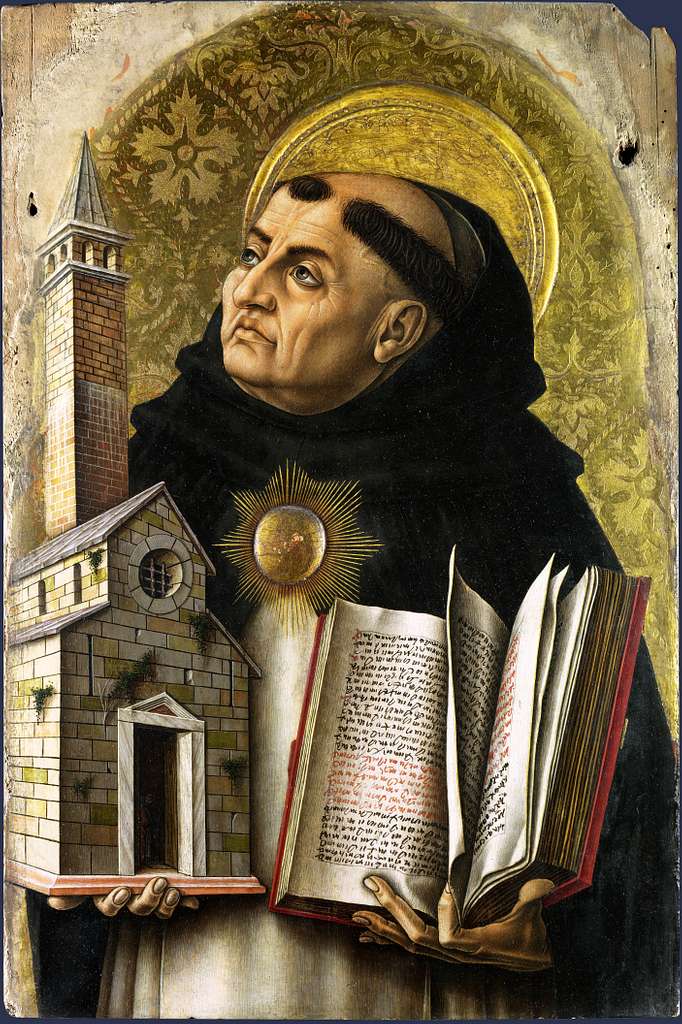
Catena Aurea
St. Thomas
Aquinas
Opus compiled from sermons and commentaries on the Gospels written by the early Church Fathers. Aquinas arranging their thoughts in such a way that they form a continuous commentary on each Gospel.
SECTION ONE
Modern Adaptation
Jesus presents a parable focusing on those who attain salvation. In the previous parable, three seeds perish while one survives, symbolizing varying degrees of faith and practice. Here, the emphasis is on the thriving seed.
SOURCE: AI Generated
1841 Oxford Edition
PSEUDO-CHRYSOSTOM. (Vict. Ant. e Cat. in Marc.) A parable occurred, a little above, about the three seeds which perished in various ways, and the one which was saved; in which last He also shews three differences, according to the proportion of faith and practice. Here, however, He puts forth a parable concerning those only who are saved. Wherefore it is said, And he said, So is the kingdom of God, as if a man should cast seed into the ground, &c.
SOURCE: e-Catholic 2000
The kingdom of God represents the Church, guided by God and exercising authority over humanity. It overcomes opposing powers and wickedness.
PSEUDO-JEROME. The kingdom of God is the Church, which is ruled by God, and herself rules over men, and treads down the powers which are contrary to her, and all wickedness.
Alternatively, the kingdom of God refers to faith in Christ and the divine plan of the Incarnation. Jesus, as both God and Son of God, became man without change, spreading divine knowledge to the world.
PSEUDO-CHRYSOSTOM. (Vict. Ant. e Cat. in Marc.) Or else He calls by the name of kingdom of God, faith in Him, and in the economy of His Incarnation; which kingdom indeed is as if a man should throw seed. For He Himself being God and the Son of God, having without change been made man, has cast seed upon the earth, that is, He has enlightened the whole world by the word of divine knowledge.
The seed signifies the word of life, the ground symbolizes the human heart, and the man's sleep corresponds to Christ's death. Despite challenges, the number of Christians continues to grow in faith and deeds.
PSEUDO-JEROME. For the seed is the word of life, the ground is the human heart, and the sleep of the man means the death of the Saviour. The seed springs up night and day, because after the sleep of Christ, the number of Christians, through calamity and prosperity, continued to flourish more and more in faith, and to wax greater in deed.
Christ Himself is the man who rises, patiently nurturing those who embrace the seed to bear fruit. Through trials and prayers, He facilitates growth, representing day and night, ensuring that the seed flourishes without withering.
PSEUDO-CHRYSOSTOM. (Vict. Ant. e Cat. in Marc.) Or Christ Himself is the man who rises, for He sat waiting with patience, that they who received seed should bear fruit. He rises, that is, by the word of His love, He makes us grow to the bringing forth fruit, by the armour of righteousness on the right hand, by which is meant the day, and on the left, by which is meant the night of persecution; for by these the seed springs up, and does not wither. (2 Cor. 6:7)
Christ's sleep signifies His ascension to heaven. Despite appearing dormant, He actively guides us through trials, revealing Himself and securing our salvation in response to prayers.
THEOPHYLACT. Or else Christ sleeps, that is, ascends into heaven, where, though He seem to sleep, yet He rises by night, when through temptations He raises us up to the knowledge of Himself; and in the day time, when on account of our prayers, He sets in order our salvation.
Saying "He knoweth not" is figurative, as He doesn't reveal who will persevere in faith.
PSEUDO-JEROME. But when He says, He knoweth not how, He is speaking in a figure; that is, He does not make known to us, who amongst us will produce fruit unto the end.
"He knoweth not" underscores human free will. God assigns us a role without executing it independently to avoid making goodness appear involuntary. The earth yields fruit voluntarily, without coercion.
PSEUDO-CHRYSOSTOM. (Vict. Ant. e Cat. in Marc.) Or else He says, He knoweth not, that He may shew the free-will of those who receive the word, for He commits a work to our will, and does not work the whole Himself alone, lest the good should seem involuntary. For the earth brings forth fruits of its own accord, that is, she is brought to bear fruit without being compelled by a necessity contrary to her will. First the blade.
The blade signifies fear, as fear is the foundation of wisdom. The full corn symbolizes charity, which fulfills the Law.
PSEUDO-JEROME. That is, fear. For the fear of God is the beginning of wisdom. Then the full corn in the ear; (Ps. 111:10. Rom. 13:8) that is, charity, for charity is the fulfilling of the Law.
Firstly, the blade emerges in accordance with natural law, progressively advancing. Next, the ears form and are bundled for offering, representing the law of Moses. Finally, full-fruit appears in the Gospel. These stages also indicate growth in obedience, prudence, resilience, and virtue.
PSEUDO-CHRYSOSTOM. (Vict. Ant. e Cat. in Marc.) Or, first it produces the blade, in the law of nature, by degrees growing up to advancement; afterwards it brings forth the ears, which are to be collected into a bundle, and to be offered on an altar to the Lord, that is, in the law of Moses; afterwards the full-fruit, in the Gospel. Or because we must not only put forth leaves by obedience, but also learn prudence, and, like the stalk of corn, remain upright without minding the winds which blow us about. We must also take heed to our soul by a diligent recollection, that, like the ears, we may bear fruit, that is, shew forth the perfect operation of virtue.
The blade emerges when we display a good principle, followed by the ear when we resist temptations, and finally, the fruit when we achieve perfect works.
THEOPHYLACT. For we put forth the blade, when we shew a principle of good; then the ear, when we can resist temptations; then comes the fruit, when a man works something perfect. It goes on: and when it has brought forth the fruit, immediately he sendeth the sickle, because the harvest is come.
The sickle symbolizes death or judgment, which affects all things. The harvest signifies the end of the world.
PSEUDO-JEROME. The sickle is death or the judgment, which cuts down all things; the harvest is the end of the world.
When a person cultivates good intentions in their heart, they sow a seed. They sleep when resting in the hope accompanying good work. Rising night and day signifies progress amidst prosperity and adversity, even if unaware of their growth. Once conceived, virtue naturally develops. Conceiving good desires, progressing in good works, reaching perfection, and establishing oneself in it represent the stages of planting, emerging as a blade, becoming an ear, and yielding full corn.
GREGORY. (in Ezech. 2. Hom. 3) Or else; Man casts seed into the ground, when he places a good intention in his heart; and he sleeps, when he already rests in the hope which attends on a good work. But he rises night and day, because he advances amidst prosperity and adversity, though he knows it not, for he is as yet unable to measure his increase, and yet virtue, once conceived, goes on increasing. When therefore we conceive good desires, we put seed into the ground; when we begin to work rightly, we are the blade. When we increase to the perfection of good works, we arrive at the ear; when we are firmly fixed in the perfection of the same working, we already put forth the full corn in the ear.
ORIGINAL: e-Catholic 2000
SECTION TWO
Modern Adaptation
Following the parable of the Gospel's growth, another parable highlights the Gospel's superiority over other teachings. This is conveyed by asking, "Whereunto shall we liken the kingdom of God?"
SOURCE: AI Generated
1841 Oxford Edition
GLOSS. (non occ.) After having narrated the parable concerning the coming forth of the fruit from the seed of the Gospel, he here subjoins another parable, to shew the excellence of the doctrine of the Gospel before all other doctrines. Wherefore it is said, And he said, Whereunto shall we liken the kingdom of God
SOURCE: e-Catholic 2000
The message of faith is simple: "Believe in God, and you will be saved." Yet, its reach has expanded, attracting wise individuals who find solace in the Gospel's teaching. The Gospel's influence surpasses all other doctrines.
THEOPHYLACT. Most brief indeed is the word of faith; Believe in God, and thou shalt be saved. But the preaching of it has been spread far and wide over the earth, and increased so, that the birds of heaven, that is, contemplative men, sublime in understanding and knowledge, dwell under it. For how many wise men among the Gentiles, quitting their wisdom, have found rest in the preaching of the Gospel! Its preaching then is greater than all.
Wisdom shared among the spiritually mature expands beyond other teachings. Even concise discourses impart profound truths, proving nothing is greater than this wisdom.
CHRYSOSTOM. (non occ. leg. ap. Possin. Cyril.) And also because the wisdom spoken amongst the perfect expands, to an extent greater than all other sayings, that which was told to men in short discourses, for there is nothing greater than this truth.
The Gospel also produced great branches, as the Apostles ventured out to Rome, India, and other parts of the world to spread the message.
THEOPHYLACT. Again, it put forth great boughs, for the Apostles were divided off as the boughs of a tree, some to Rome, some to India, some to other parts of the world.
The small seed of fear grows into love, the greatest virtue. The branches of mercy and compassion create a refuge for those seeking wisdom in the Gospel.
PSEUDO-JEROME. Or else, that seed is very small in fear, but great when it has grown into charity, which is greater than all herbs; for God is love, (1 John 4:16) whilst all flesh is grass. (Isa. 40:6 But the boughs which it puts forth are those of mercy and compassion, since under its shade the poor of Christ, who are meant by the living creatures of the heavens, delight to dwell.
The sower in the parable can represent either the Savior or an individual cultivating faith within their heart.
BEDE. (ubi sup.) Again, the man who sows is by many taken to mean the Saviour Himself, by others, man himself sowing in his own heart.(ubi sup.) Again, the man who sows is by many taken to mean the Saviour Himself, by others, man himself sowing in his own heart.
Mark, valuing brevity, employs parables to clarify their nature and aid understanding for the unlearned. He notes that Jesus consistently used parables when addressing the crowds.
CHRYSOSTOM. (non occ. sed v. Cat. in Marc.) Then after this, Mark, who delights in brevity, to shew the nature of the parables, subjoins, And with many such parables spake he the word unto them as they could hear him.
Since the crowd was not well-educated, Jesus taught them using familiar concepts and objects. This approach made the Gospel more accessible and encouraged people to seek further understanding.
THEOPHYLACT. For since the multitude was unlearned, he instructs them from objects of food and familiar names, and for this reason he adds, But without a parable spake he not unto them, that is, in order that they might be induced to approach and to ask Him. It goes on; And when they were alone, he expounded all things to his disciples, that is, all things about which they were ignorant and asked Him, not simply all, whether obscure or not.
The disciples, isolated from distractions, were deserving of receiving deeper wisdom. As they pursued virtue and solitude, they were better prepared to receive divine knowledge.
PSEUDO-JEROME. For they were worthy to hear mysteries apart, in the most secret haunt of wisdom, for they were men, who, removed from the crowds of evil thoughts, remained in the solitude of virtue; and wisdom is received in a time of quiet.
SOURCE: e-Catholic 2000




Gospel Exegesis
“The Kingdom of God…is like a grain of mustard seed” (v. 31a). As is so often true, the Gospel begins differently than we would expect. We would expect Christ to come as a mighty warrior, but he comes instead as an infant. We would expect him to select the brightest and best to be his disciples, but instead he chooses ordinary people—fishermen—even a tax collector. We would expect him to compare the kingdom of God to an oak tree or a cedar, but he compares it instead to a mustard seed—the smallest of all seeds.
God often chooses to work through unlikely candidates: Jacob, the schemer—Moses, the murderer and stutterer—David, the boy whose father almost forgot to mention him when Samuel came looking for a king—Gideon, the commander of a little army of only three hundred men.
“though it is less than all the seeds that are on the earth” (v. 31b). The mustard seed, while tiny, is not the smallest of all seeds. However, in Jesus’ day it had proverbial status as the smallest seed—and it is, indeed, very small. The point here is that the kingdom of God has its beginnings in small, barely visible, seemingly inconsequential phenomena.
RICHARD NIELL DONOVAN was a Disciples of Christ clergyman who published SermonWriter, for a paid subscription, from 1997-2020. After he died, his family has generously provided his resources without subscription.