Homilies
Homilies
November 16, 2025
November 16, 2025
33rd Sunday in Ordinary Time (C)


Bishop Robert Barron


33rd Sunday of Year C

2007 ၊၊||၊ Podcast
The Birth Pangs of the Messiah
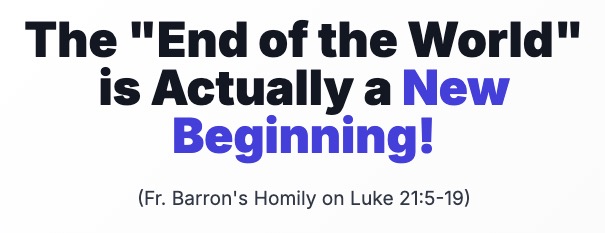
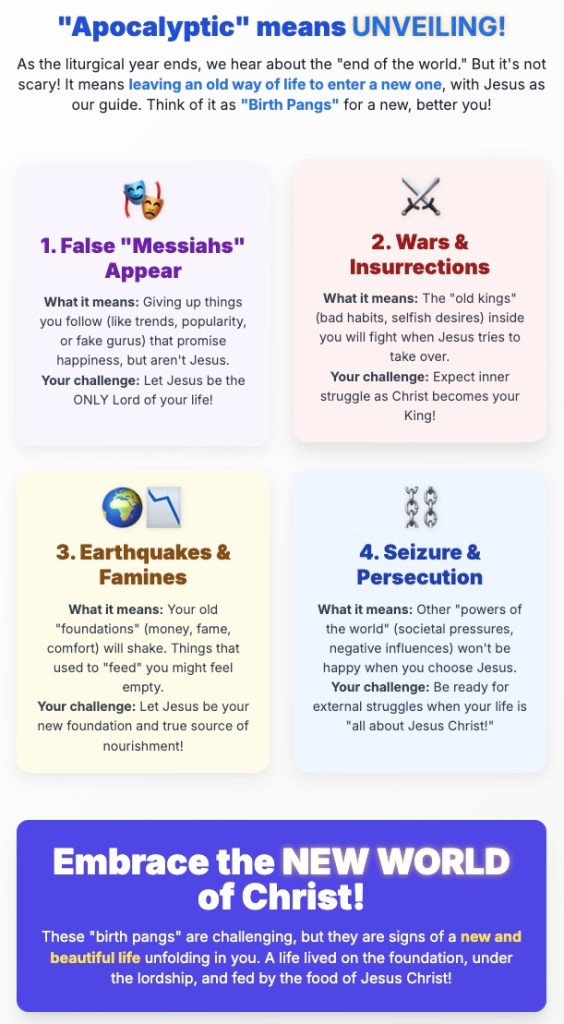
Our readings for today are apocalyptic, which means that they describe the end of an old world and the beginning of a new one. The new world in question is the world of Christ’s lordship. To enter into that spiritual space, we have to go through earthquake, famine, and war. But this is, finally good news!

2010 ၊၊||၊ Podcast
What Remains
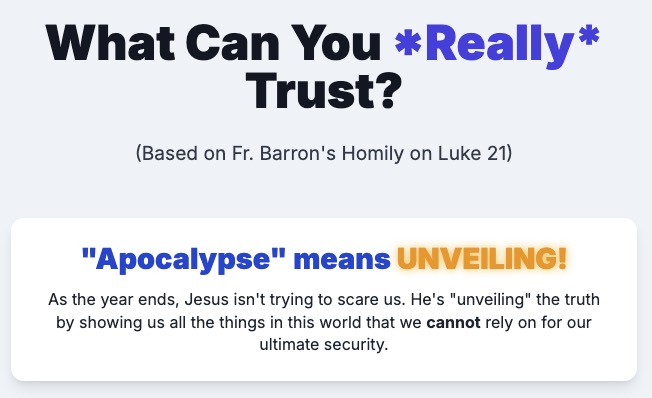
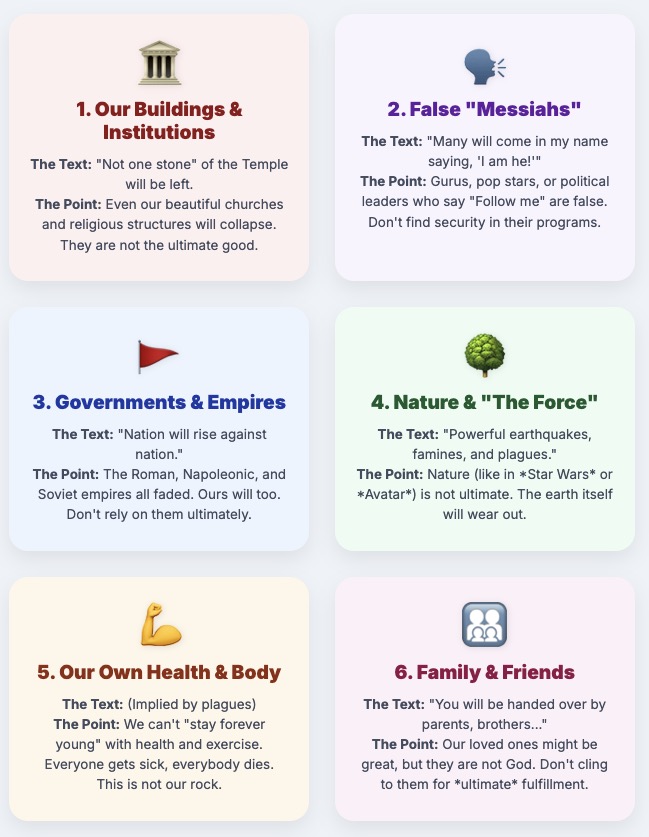
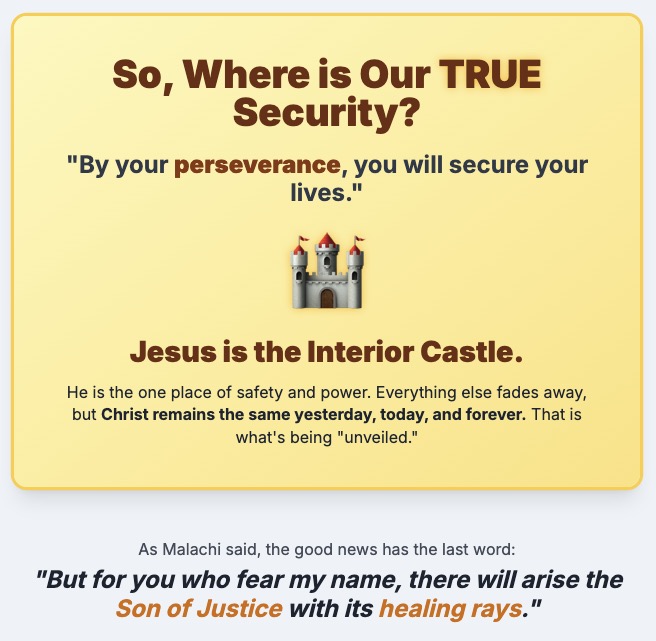
All things pass away. Political and religious institutions, the family, bodily health; nothing lasts. Everything dies. So often we seek our fulfillment and salvation in these things. But Christ is telling us not to. He is telling us to seek the one thing that will last: Himself. So long as we cling to Him will our lives be secure. He is the rock of our salvation.

2019 ၊၊||၊ Podcast
A Theology of Work
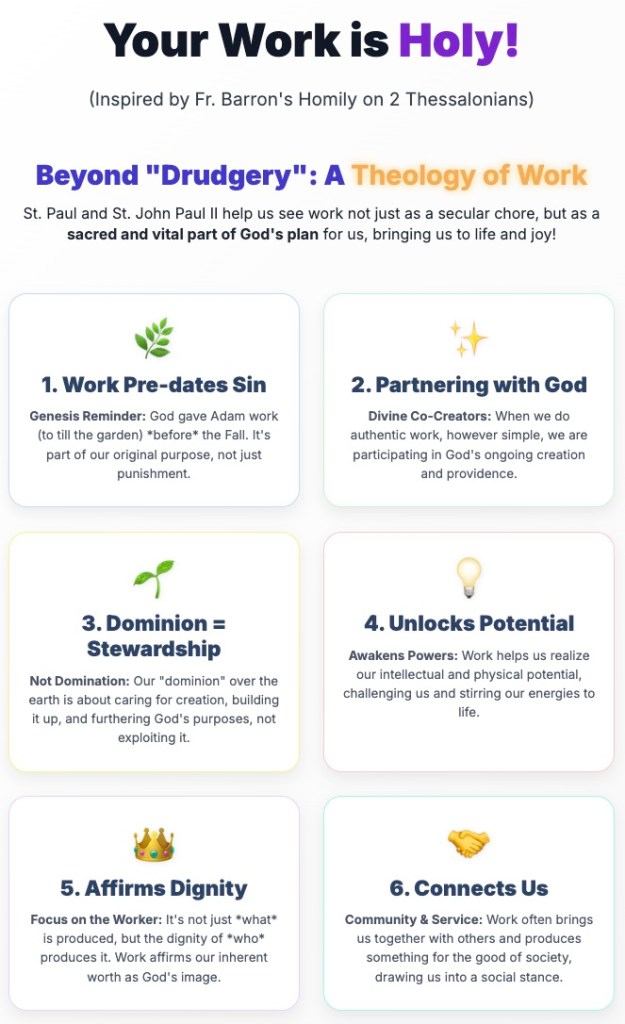
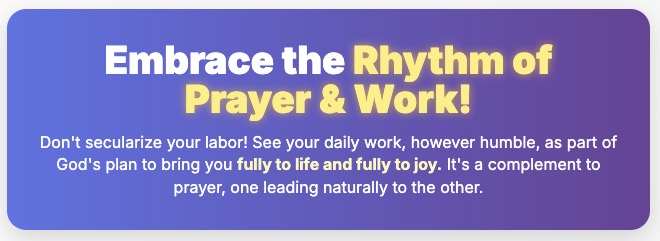
I’m pretty sure that in thirty years of priesthood, I’ve never preached on this Sunday’s short second reading from Paul’s second letter to the Thessalonians. And what a little gem it is! Isn’t it fascinating that St. Paul, precisely in the context of a letter to his church on spiritual matters, endeavors to speak of work? When we do authentic work—of whatever kind—we participate in God’s ongoing creation and providence. Don’t follow the instinct to secularize work; rather, see your daily labor, however humble, as part of God’s plan to bring you to joy.


The Shaking of Three Worlds
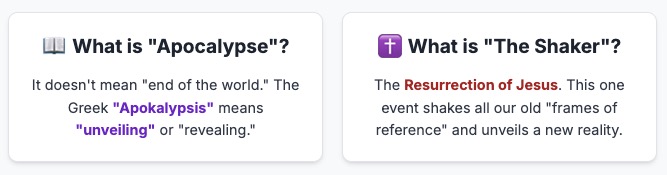
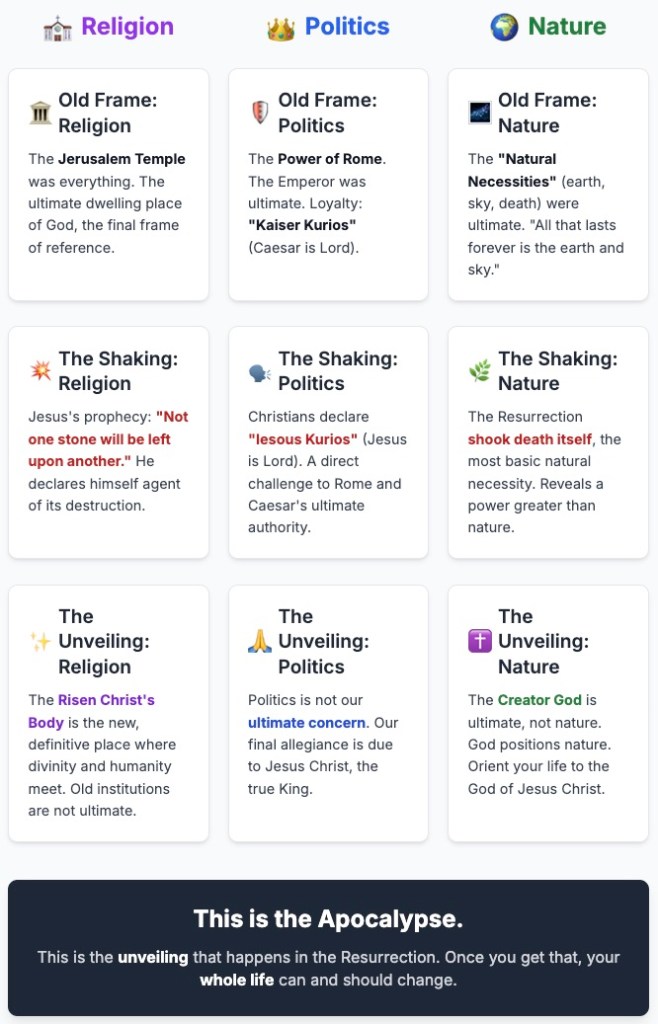
Bishop Robert Barron explains the true significance of “apocalypse” for the 33rd Sunday in Ordinary Time Year C, highlighting that its meaning refers to an unveiling rather than the end of the world. Through the Resurrection of Jesus, the established religious, political, and natural orders are disrupted, challenging our understanding of these realms.

The Old World Has Been Shaken
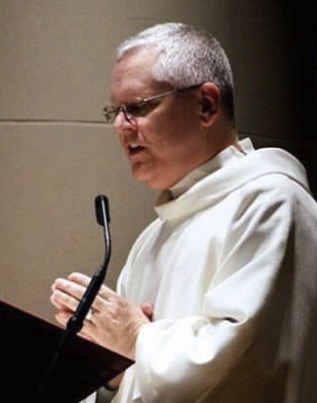
Deacon Greg’s blog has garnered some 20 million readers from around the world since its inception in 2007.
33rd Sunday of Year C

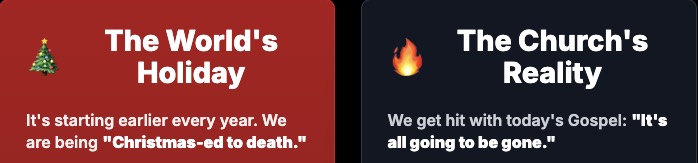
Christmas Creep vs. The Apocalypse
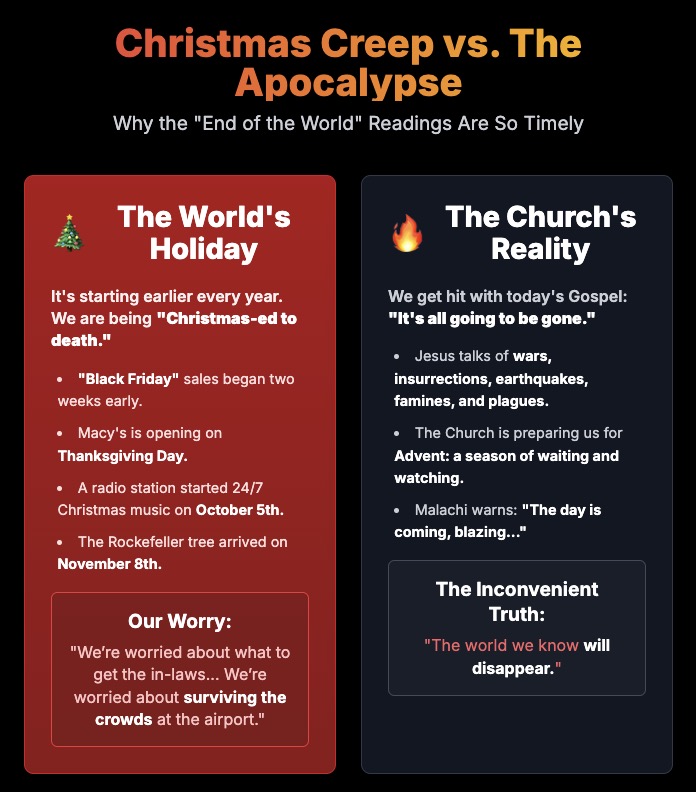
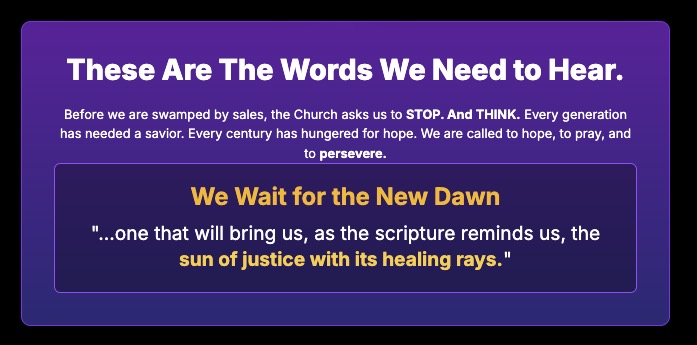
Click on infographics to enlarge them
We hear once again Paul’s advice to the Thessalonians. He encourages them to imitate their teachers, and continue to work quietly and prayerfully.
Indeed, Paul’s message echoes Christ’s. The last words Jesus speaks in the gospel should ring in our ears and our hearts over the next few weeks:
“By your perseverance, you will secure your lives.”
— originally preached in 2013
────── ⋆⋅☆⋅⋆ ──────
Deacon Peter McCulloch
33rd Sunday of Year C

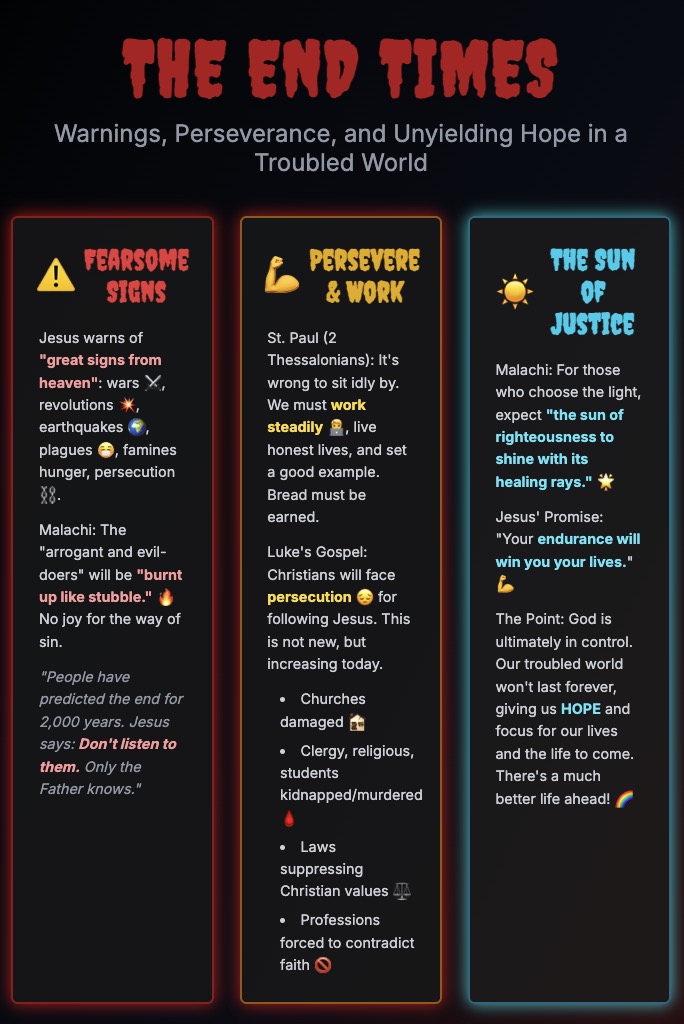
Click on infographic to enlarge it
Infographics on this page have been created using AI generative tools (i.e. GOOGLE'S AI Gemini 2.5 Flash LLM, Chart.js and Tailwind CSS). They are free to use for any non-profit ministry. THE WORD THIS WEEK kindly requests that you show your appreciation by sharing a link to the website.
In all three synoptic Gospels, Jesus warns us that the world will end one day. ‘There will be great signs from heaven,’ he says. There will be fearful sights including wars and revolutions, earthquakes, plagues and famines. If all these things are happening right now, might we be living in the end times?…
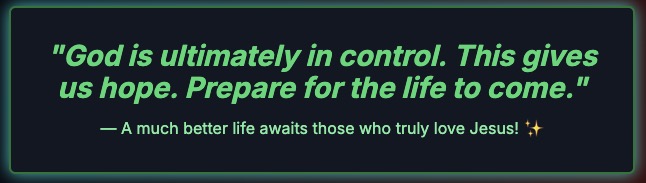
Knowing that our troubled world won’t last forever actually gives us hope. It gives focus to our labours, and it encourages us to prepare for the life to come.

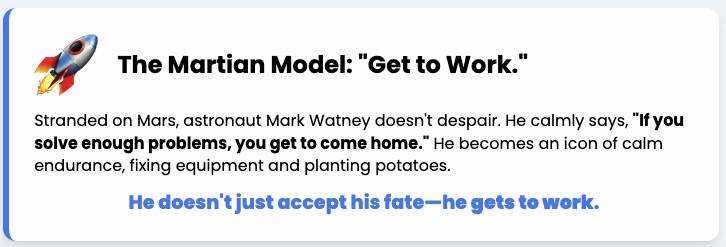

THE MARTIAN (0:27) - "At some point, everything's gonna go south on you and you're going to say, this is it. This is how I end. Now you can either accept that, or you can get to work. That's all it is. You just begin. You do the math. You solve one problem and you solve the next one, and then the next. And If you solve enough problems, you get to come home."
Click on infographic to enlarge it
Infographics on this page have been created using AI generative tools (i.e. GOOGLE'S AI Gemini 2.5 Flash LLM, Chart.js and Tailwind CSS). They are free to use for any non-profit ministry. THE WORD THIS WEEK kindly requests that you show your appreciation by sharing a link to the website.
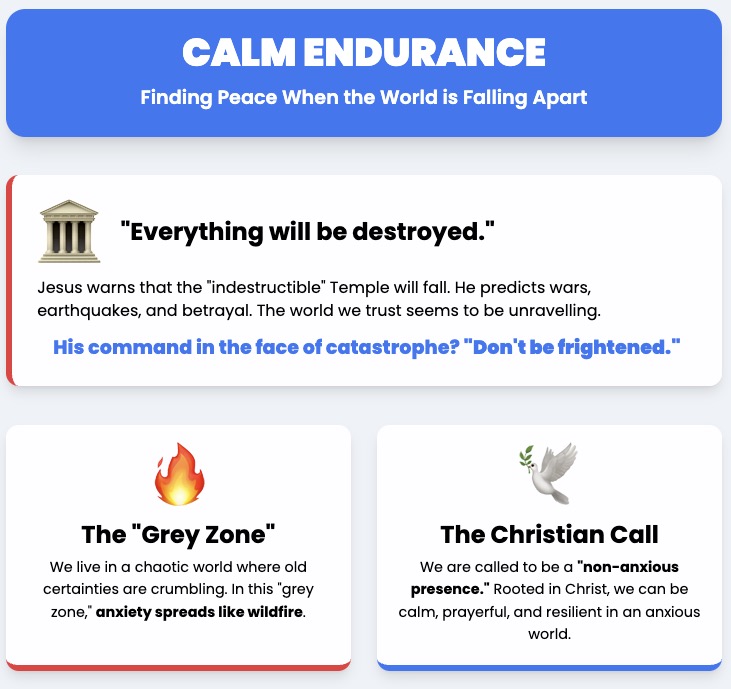
Jesus says: there will be wars, earthquakes, famine, persecution and betrayal – all the signs of collapse. His disciples must have looked shocked, for then he says, ‘Don’t be frightened. Your endurance will win you your lives.’

There’s a similar sense of desperation in Ridley Scott’s film The Martian (2015). Astronaut Mark Watney (played by Matt Damon) is abandoned on Mars after an accident. His crew think he’s dead and they return to Earth without him.
On the red planet, the air is poisonous, there’s no food and no-one to help. You’d expect this man to panic and despair, and yet he doesn’t. With a cool head he says, ‘If you solve enough problems, you get to come home.’
Using his great technical skills and lots of duct tape, he starts planting potatoes, rationing his supplies and fixing his equipment.
────── ⋆⋅☆⋅⋆ ──────

33rd Sunday of Year C
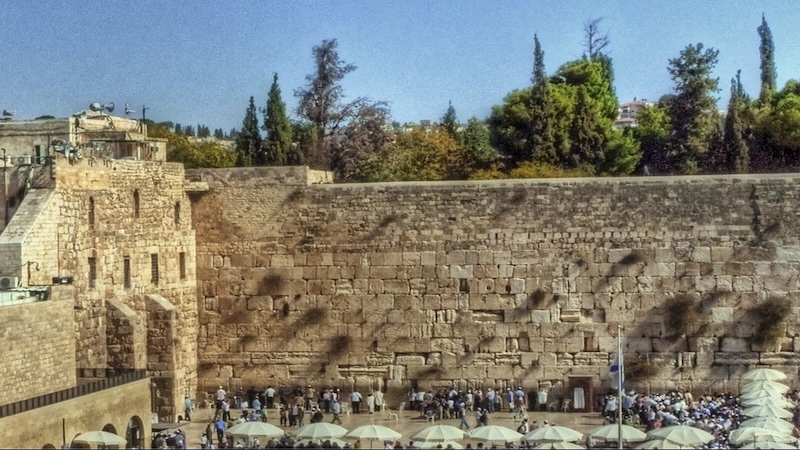
Ready or Not
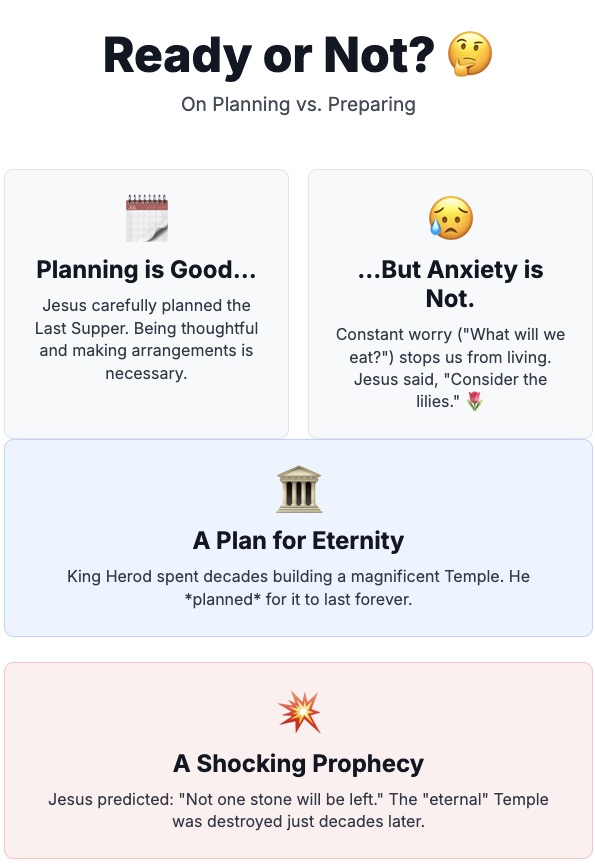
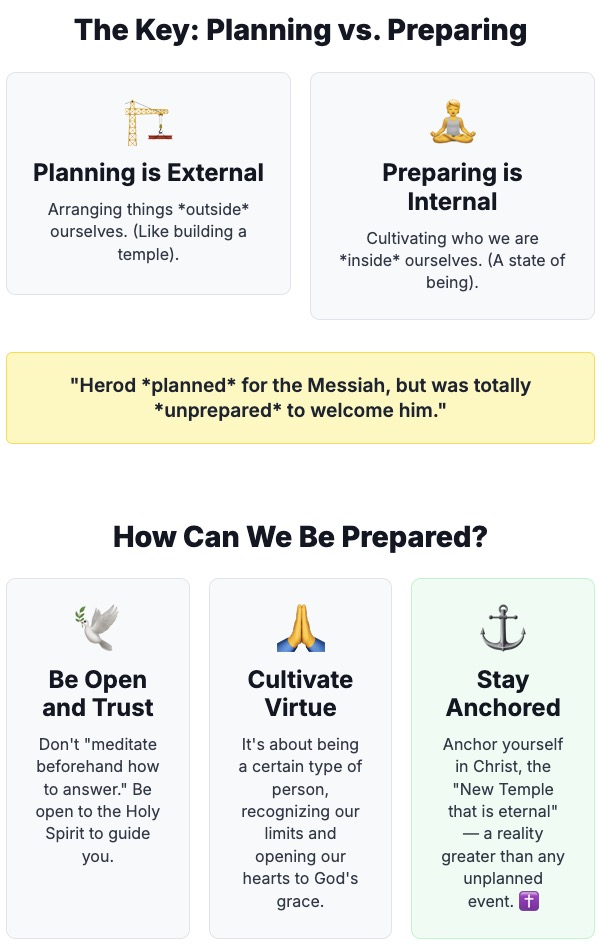
Click to enlarge

Thirty-third Sunday of the Year. Fr John O’Connor preaches on being prepared to be unprepared.
One could interpret what Jesus is saying in today’s Gospel as Jesus helping the people to plan for future events that he foresaw but they did not: the impending catastrophe about to descend on the Jewish People and the persecution of the early Church. But Jesus also has a perennial message, a simple but important message: we can plan as much as we like – it can be good to plan – but we also need to be prepared for whatever life might throw at us in the future, including what is wholly unexpected and unplanned.

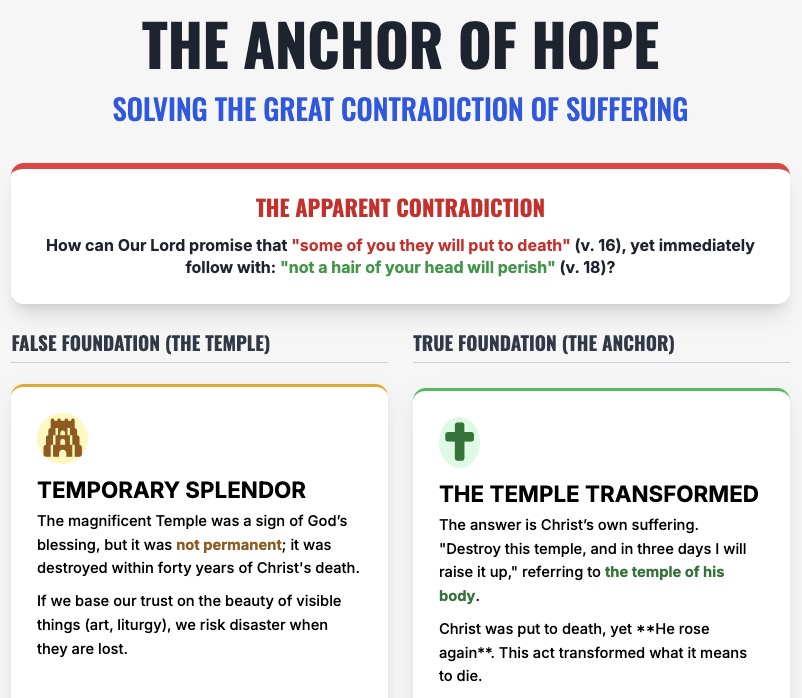
Thirty-third Sunday of the Year. Fr Gregory Pearson asks where we find hope in the face of destruction and persecution.
As we approach the end of the Church’s year and the readings at Mass call to mind the end times and God’s impending judgement of the world, it can perhaps be harder than at some other times to identify the good news that the Gospel offers us. More fundamentally challenging even than that, though, is the apparent contradiction in the prophecy Our Lord offers in today’s Gospel reading. Having spoken of all the trials to be faced by his hearers, culminating in the statement that ‘some of you they will put to death’ (v. 16), he then goes on to conclude by saying that ‘not a hair of your head will perish’ (v. 18). To put it bluntly, how can someone be put to death yet not a hair of their head perish?
────── ⋆⋅☆⋅⋆ ──────
Dicastery for the Clergy
33rd Sunday of Year C

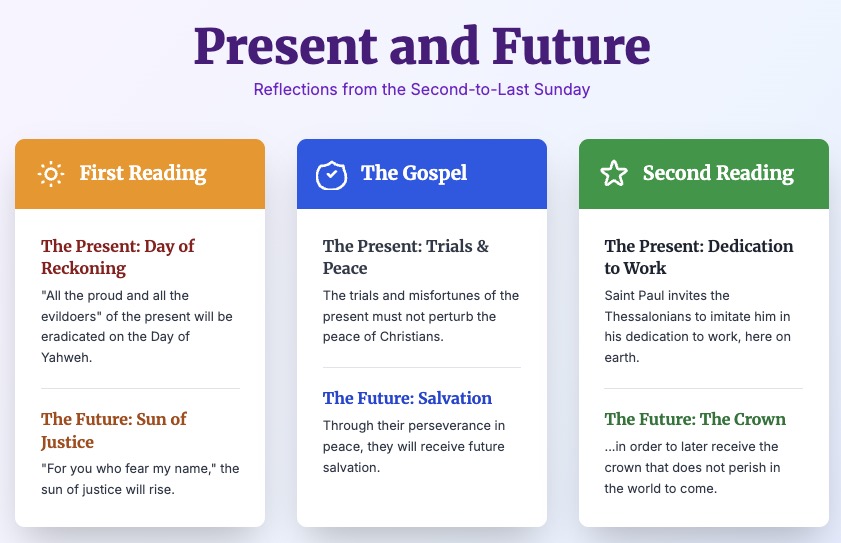

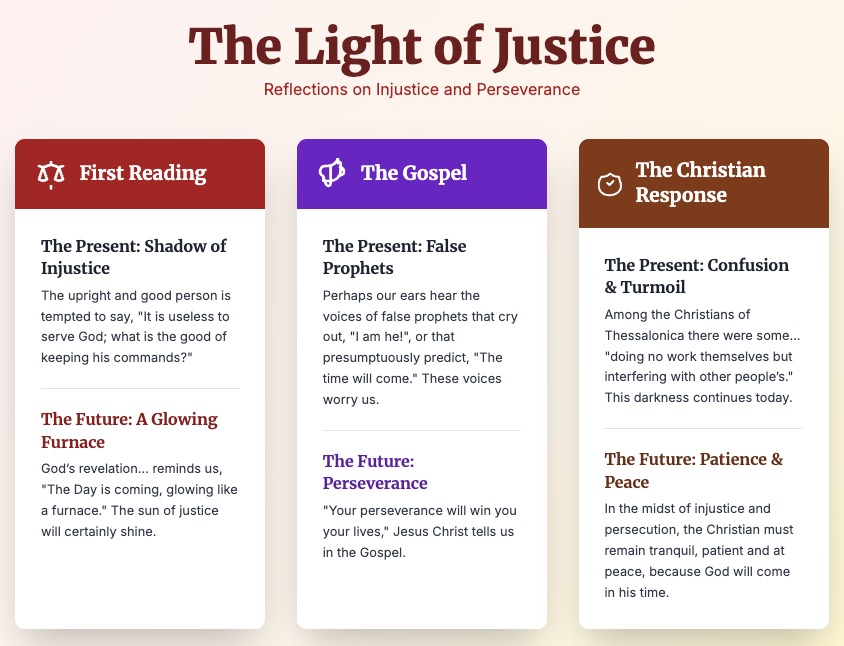
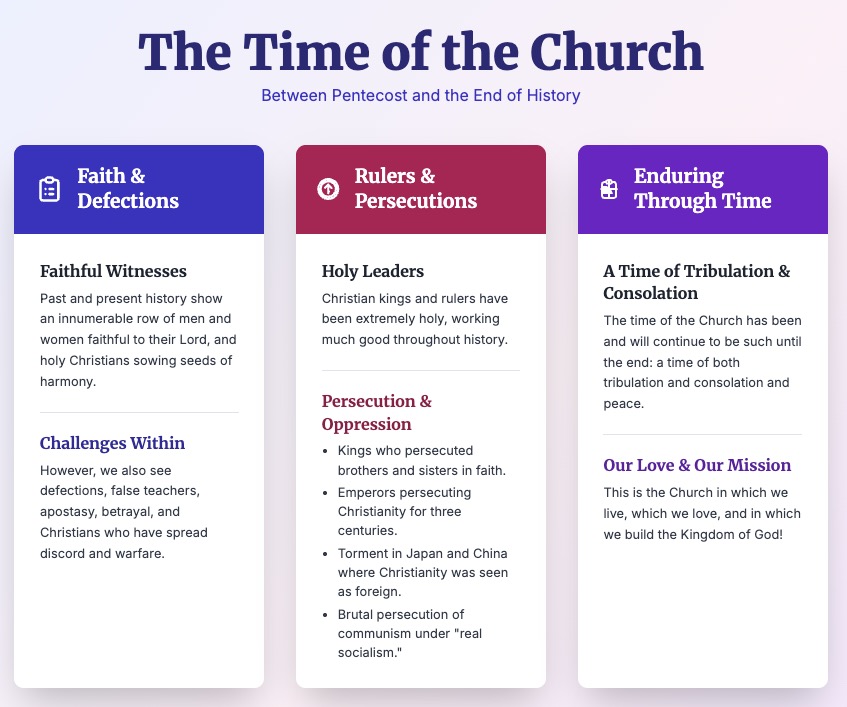
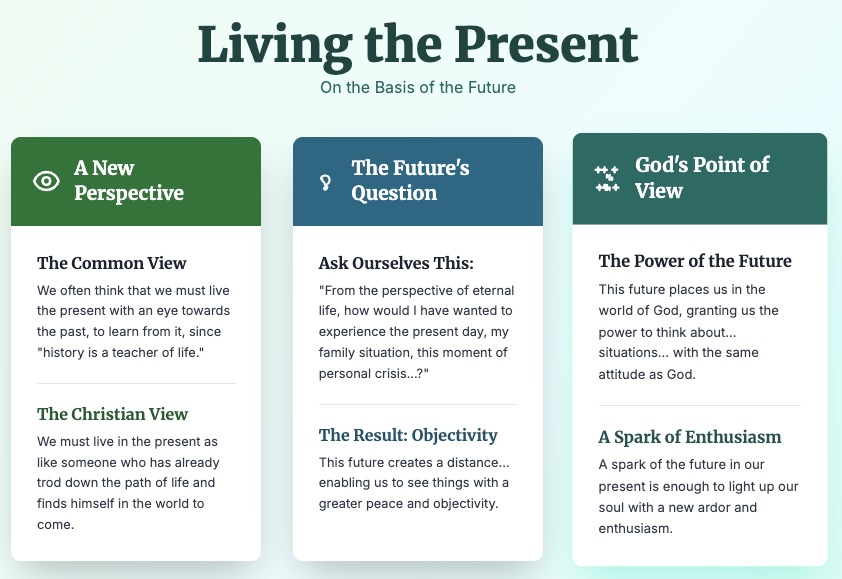

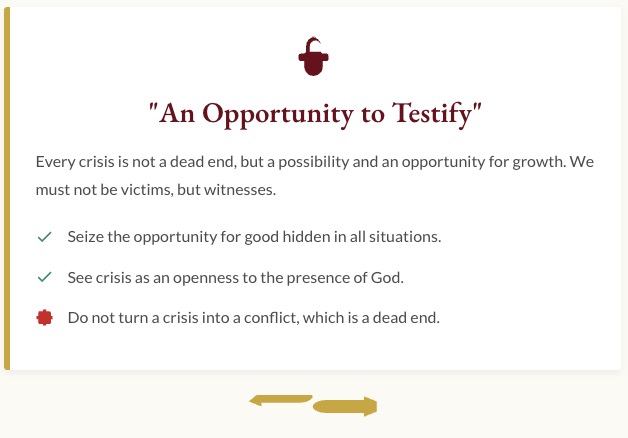
While some were speaking of the outward beauty of the Temple and admiring its stones, Jesus draws attention to the troubled and dramatic events that mark human history. The Temple built by human hands will pass away, like everything else in this world, but it is important to be able to discern the times in which we live, in order to remain disciples of the Gospel even amid the upheavals of history.
To show us the path to such discernment, the Lord offers us two exhortations: beware that you are not led astray and bear witness.
────── ⋆⋅☆⋅⋆ ──────
Fr. Joe Jagodensky, SDS
Fr. Joe Jagodensky, SDS
Priest of the
MIlwaukee Archdiocese
A Roman Catholic priest since 1980 and a member of the Society of the Divine Savior (Salvatorians). His six books on the Catholic church and U.S. culture are available on Amazon.com.
33rd Sunday of Year C
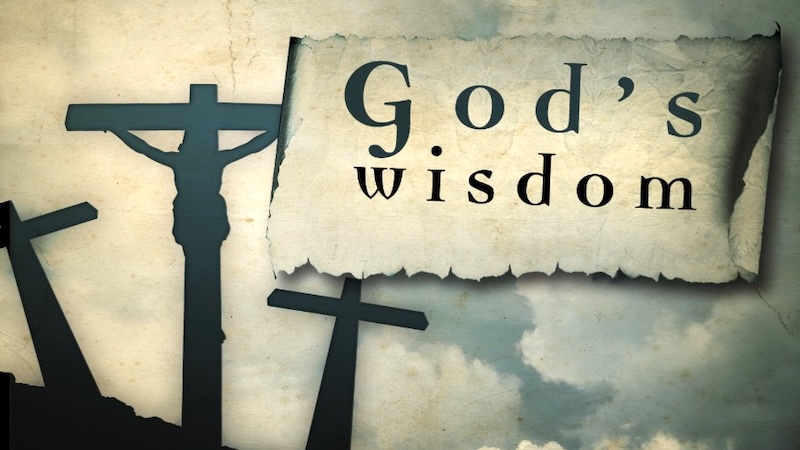
God’s Wisdom or Our Perseverance?
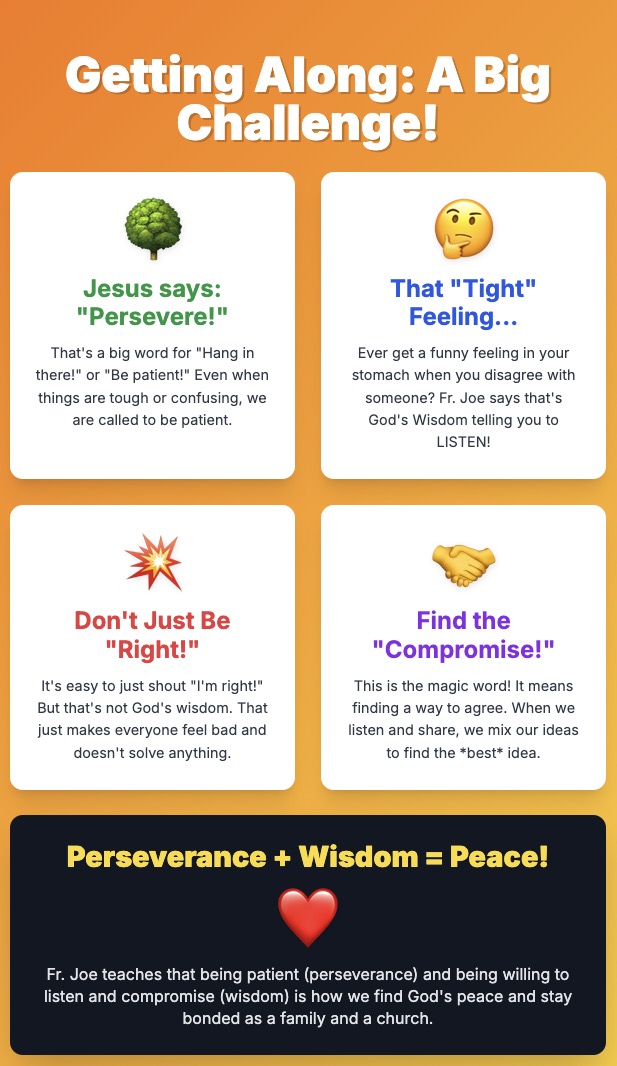
The Gospel today dates itself in its punishments. None of us are likely to appear before a king or governor and imprisoned for our beliefs – my family may try to hand me over but that of works both ways. The punishment for today’s views is simply between us, “you and me.” You tell me something I don’t agree with and we both react without either of us digesting what the other is saying. (Sounds like “talk radio” or “cable news?”) Many sentences from both of us are wasted on both of us and what remains is a growing tightening in our stomachs, a troubling unrest registered first in our minds and then responded to by our bodies.
────── ⋆⋅☆⋅⋆ ──────
Fr. Austin Fleming
33rd Sunday of Year C

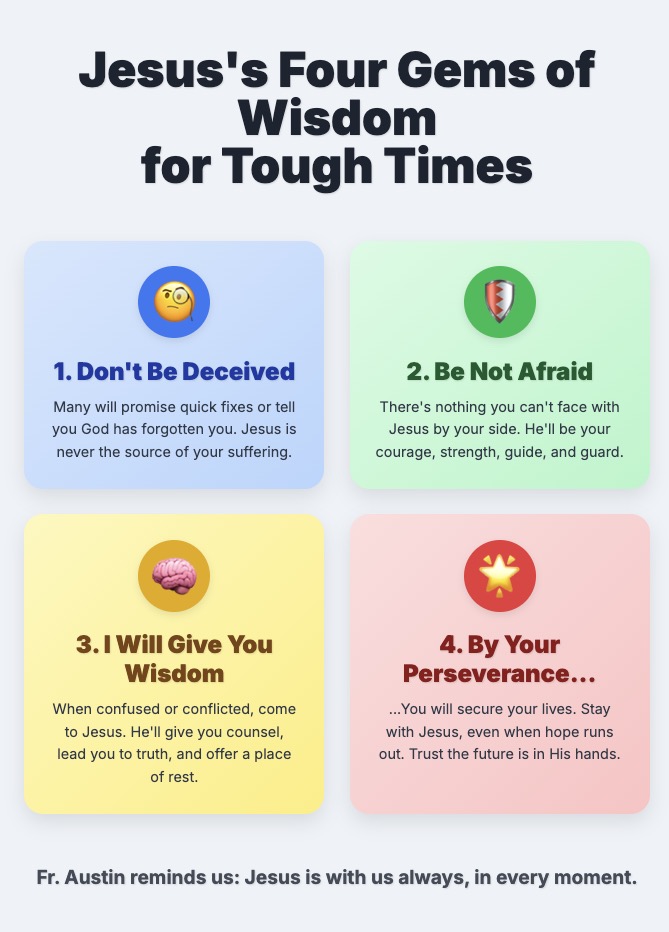
In his homily, Fr. Austin explains that Jesus’s prophecies of destruction and persecution are not just a “crystal ball” for the future but a “magnifying lens” for our present-day troubles. We still face wars, plagues, and personal calamities.
In response to our fears, Jesus offers four “precious jewels” of advice: “Don’t be deceived,” “Be not afraid,” “I will give you wisdom,” and “By your perseverance, you will secure your lives.” The homily urges us to bring our burdens to the altar, where Christ gives us the courage, wisdom, and hope to live one day at a time.
────── ⋆⋅☆⋅⋆ ──────
Fr. Carmen Mele, O.P.
33rd Sunday of Year C

Click to enlarge
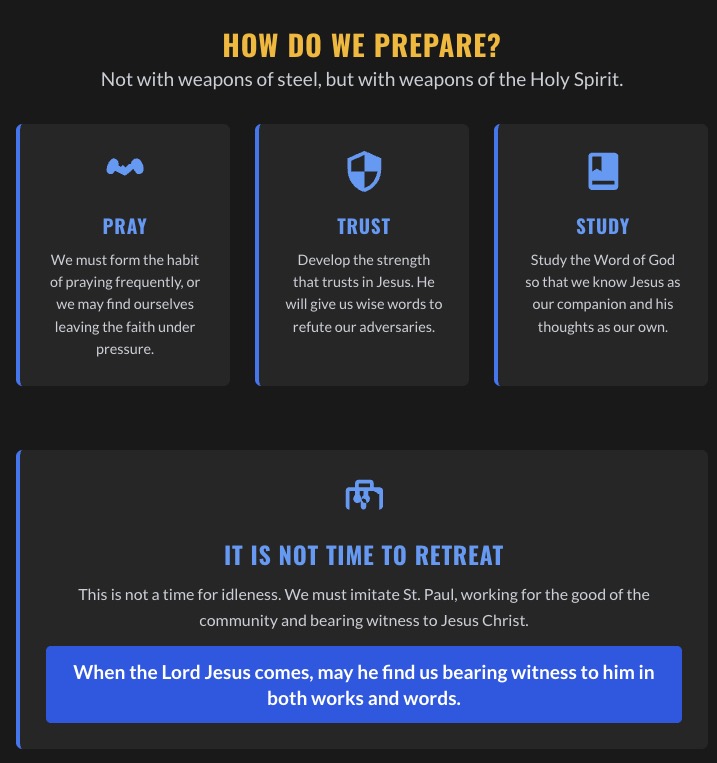
Sixty-five years ago, atomic scientists contrived the Doomsday Clock in an attempt to avert a nuclear catastrophe. The concept of the Clock is simple. When in the judgment of scientists there is more likelihood of nuclear war, they advance the clock closer to midnight. Midnight, of course, is a symbol for the end of the world. During the Cold War the clock was close to the dire hour. But, according to this clock, the end has never been closer than now. Surely it is reasonable. Russia has said that it may use nuclear bombs in Ukraine. China is threatening Taiwan, a close ally of the United States. North Korea also has nuclear bombs, and Iran may have them soon.
────── ⋆⋅☆⋅⋆ ──────
Fr. Charles E. Irvin
33rd Sunday of Year C

Who is Your Judge?

Click to enlarge

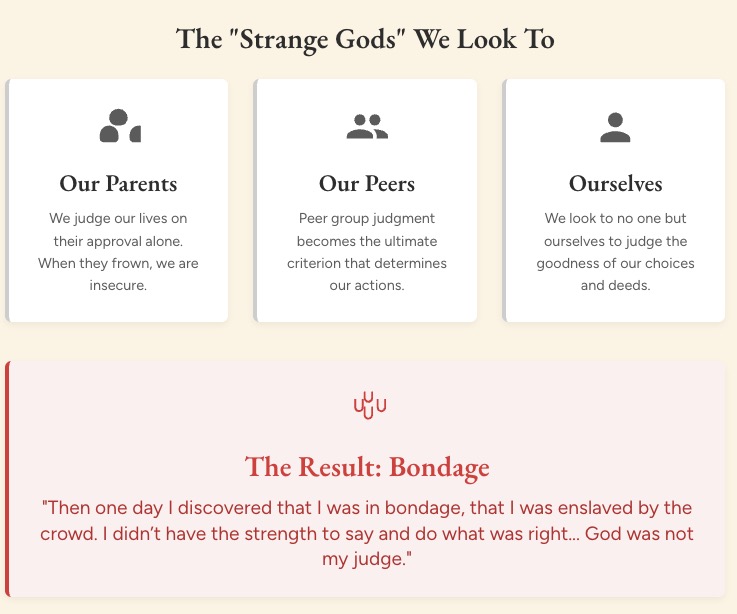
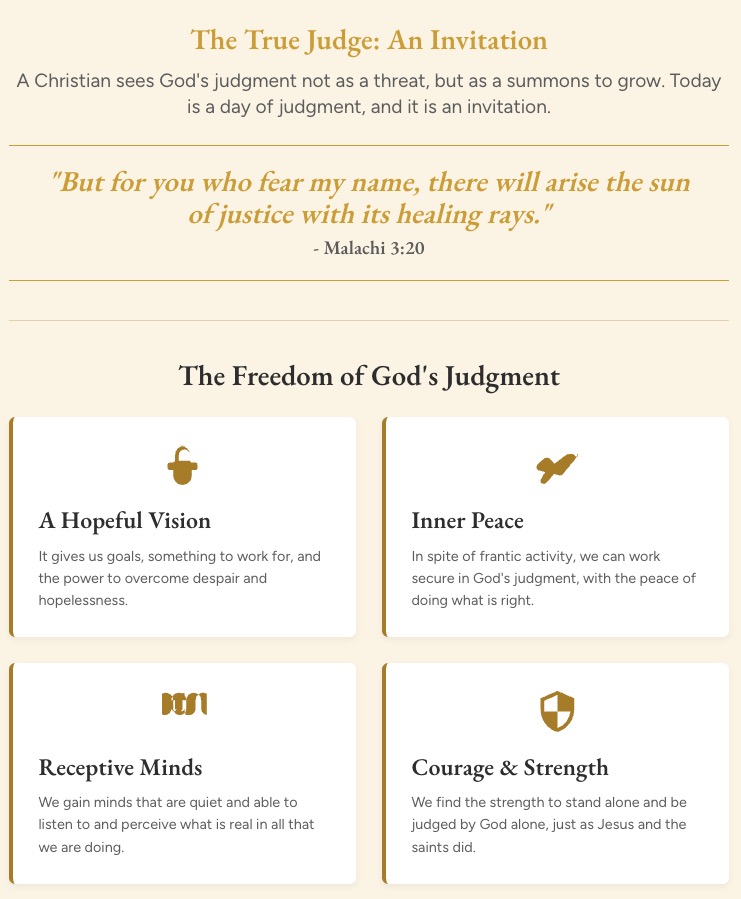
Who is your judge? I mean in the ultimate sense who do you look to as the judge of the true worth of your actions and your worth as a person? Some of us turn to our parents and judge our actions and our lives on their approval alone. Some of us look to peers – it is peer group judgment that is the ultimate criterion that determines our actions in life. Still others look to no one but themselves to judge the relative goodness, or lack thereof, in their choices and deeds.
Fr. George Smiga
33rd Sunday of Year C

Click to enlarge

2022 HOMILY – Is the world getting better or getting worse? Are we overall making progress in human rights and equality or are we all going to hell in a handbasket? You and I certainly have moments when we become discouraged at how many wars are present in our world and how extensive corruption is on every level of society. Yet there is a credible case to be made that the human race is getting better, that our civilization is more enlightened and more just than any that have come before it.

Father Kevin Rettig
33rd Sunday of Year C

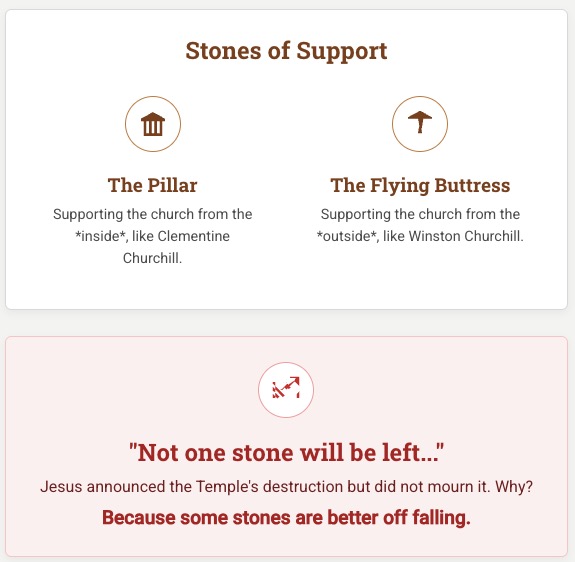
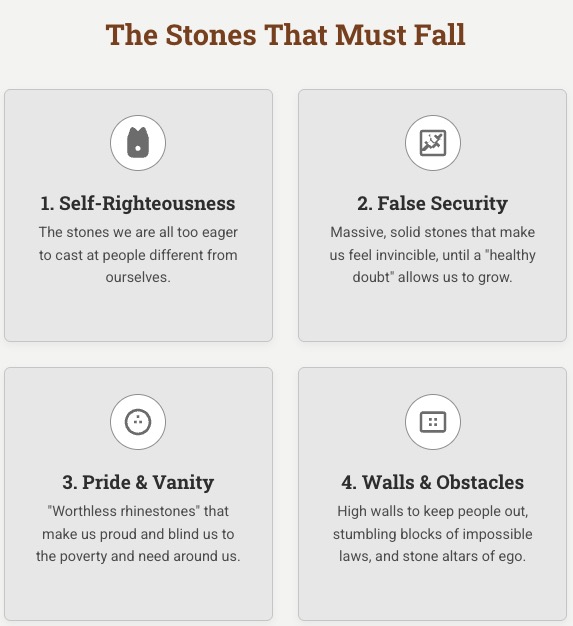

Fr. Kevin’s homily uses the metaphor of “stones” to explore personal and institutional faults. While we see ourselves as “pillars” supporting the church, Jesus’s prophecy that the Temple’s stones would fall suggests some stones should fall. The “stones” in our own souls—such as self-righteousness, false security, pride, and walls that exclude others—must be destroyed. It is well that these “altars of ego” fall. By letting them crumble, we can transform these fallen stones. Stumbling blocks can become stepping stones and fallen walls can become bridges, allowing us to rebuild ourselves from our brokenness into true temples of God’s love.

Kristallnacht
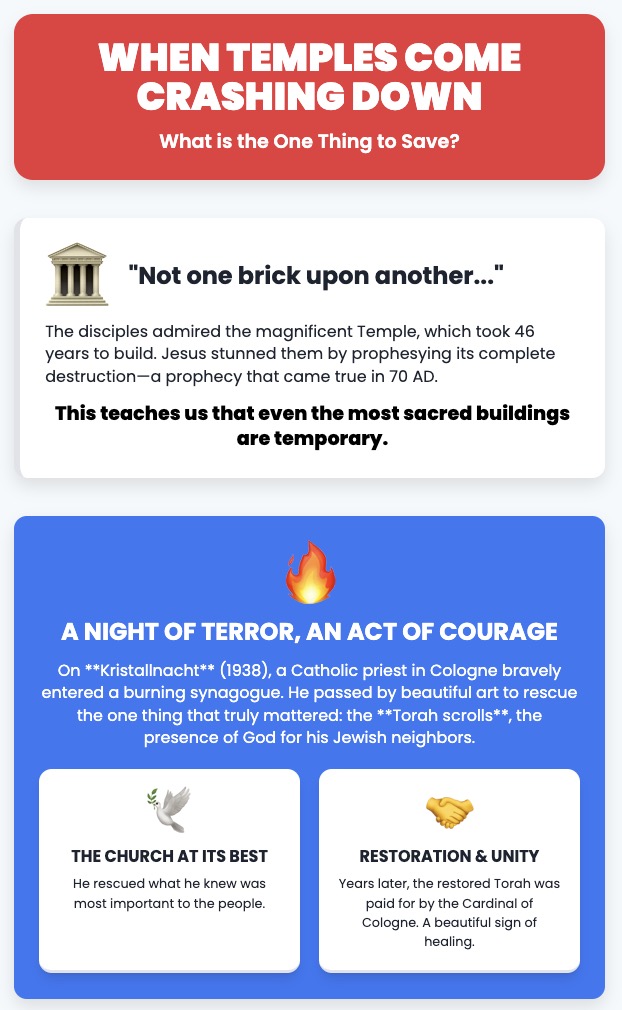
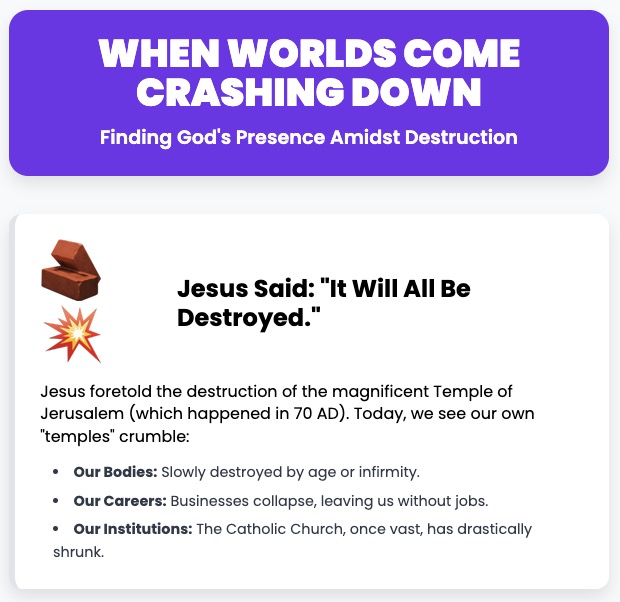
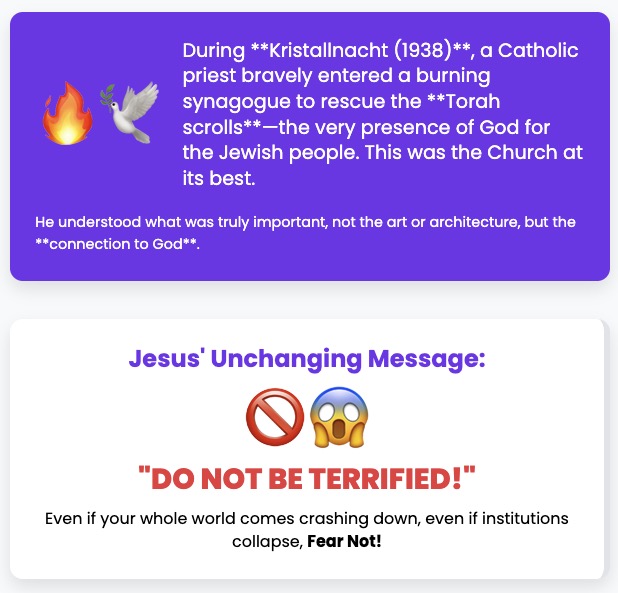
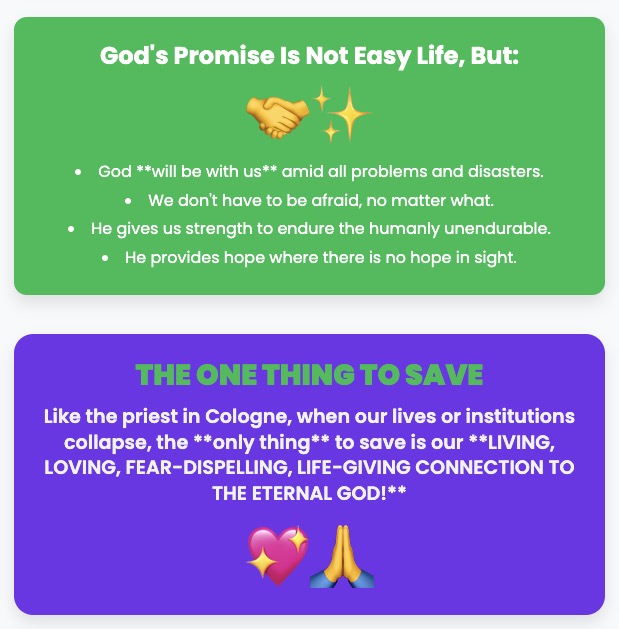

When we see things come crashing down, as we do, remember the words of Jesus. There is no reason to fear, no matter what is taken from us. Even in the midst of turmoil, disasters, and collapse, Jesus’ message is to “fear not” and find strength in God to endure suffering, emphasizing the importance of maintaining a connection to God in times of crisis.
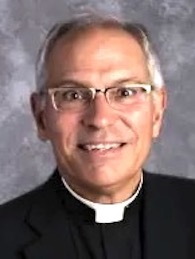
Monsignor Peter Hahn
33rd Sunday of Year C

The Day of the Lord
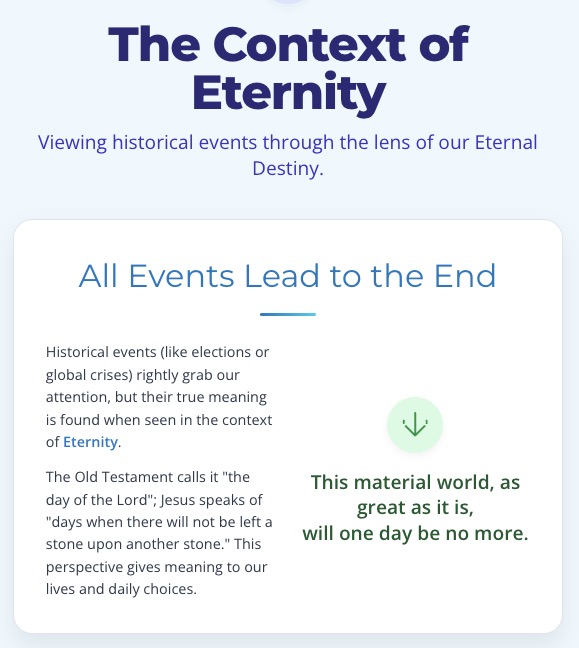
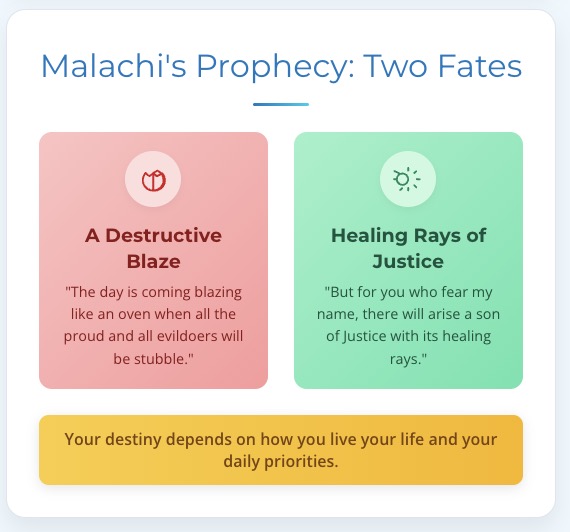
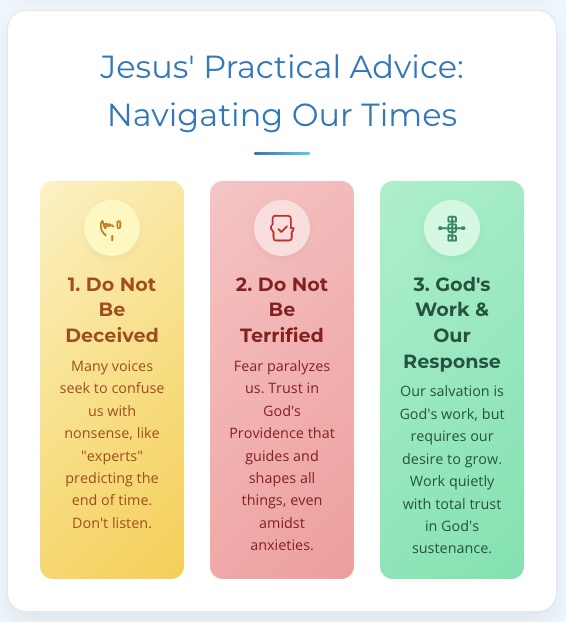

Msgr. Hahn urges us to view all historical events, like the 2016 Presidential Election, in the “context of eternity.” He explains that the coming “Day of the Lord” will be a “destructive blaze” for the proud but “healing rays” for the faithful. Our destiny depends on our daily priorities. Jesus gives practical advice for this: First, “Do not be deceived” by confusing voices. Second, “Do not be terrified” by anxiety; instead, trust in God’s Providence. Finally, trust that our salvation is God’s work, not just our own. Our role is to do our daily tasks with total trust, allowing events to sanctify us for a joyful end.

Keeping Eternity in Perspective when Time Flies

Msgr. Hahn’s homily reflects on the rapid passage of time, urging us to keep eternity in perspective as the “Day of the Lord” approaches. This day is a “destructive blaze” for the proud but a healing “Sun of Justice” for the faithful. To prepare, Jesus offers three tips: “Do not be deceived” by godless voices, “Do not be terrified” by paralyzing fear, and “Relax and trust” in God, who provides wisdom and salvation. Our role is to respond now—not with fear, but with the peace and confidence that comes from persevering in faith.

────── ⋆⋅☆⋅⋆ ──────
Msgr. Joseph Pellegrino
33rd Sunday of Year C

Click to enlarge


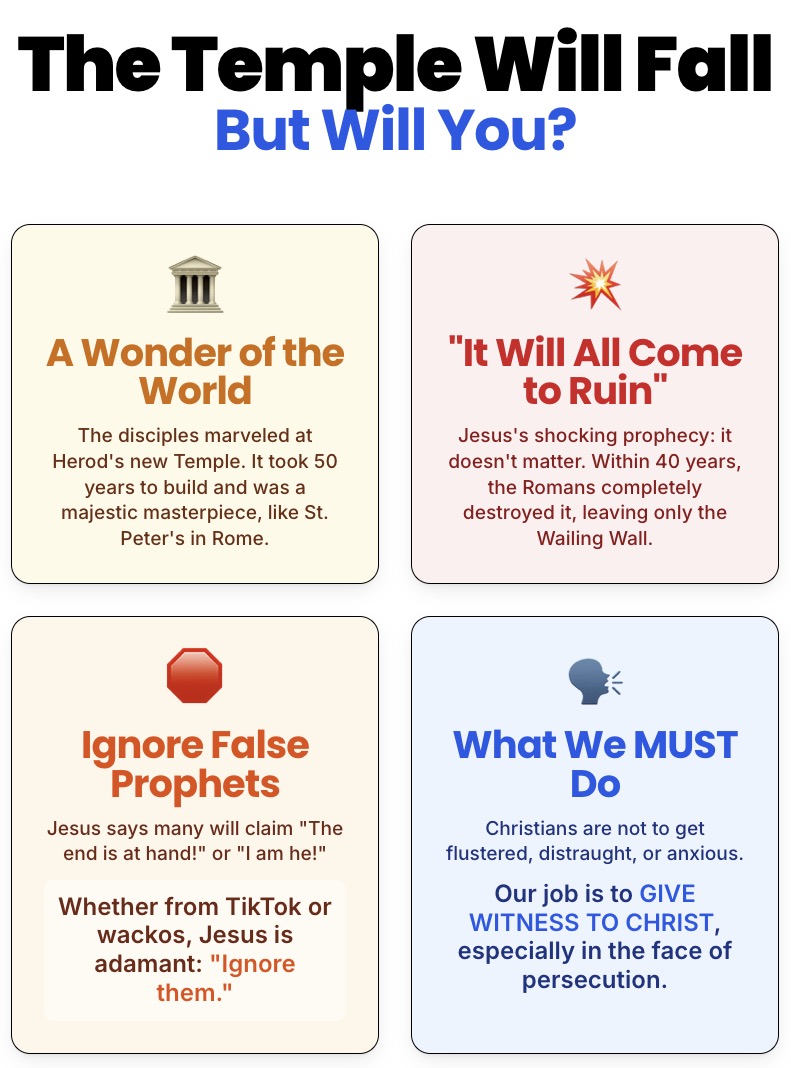
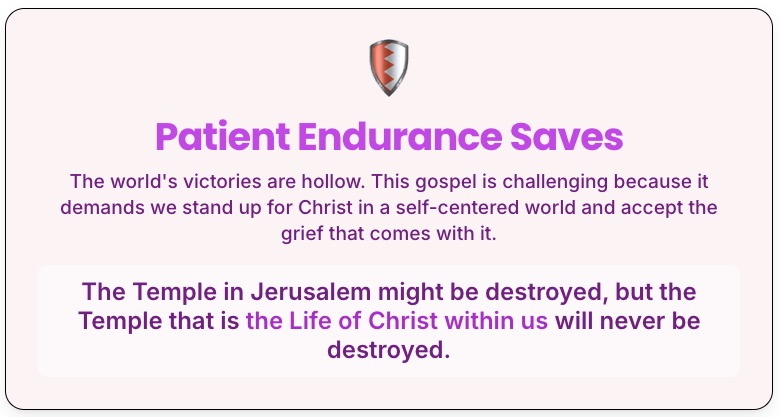
Msgr. Pellegrino’s homily contrasts the magnificent-but-temporary Temple with the eternal. Jesus prophesied the Temple’s destruction, warning us not to be distracted by false prophets or end-times anxiety. Instead of being flustered, our true calling is to “give witness to Christ,” even in the face of persecution. This “patient endurance” is martyrdom—the “witness” we are all called to. This may mean facing scorn for upholding family values or choosing Christ over financial or personal convenience. While the world’s victories are hollow, our patient endurance, our witness, builds the indestructible temple of Christ within us.
────── ⋆⋅☆⋅⋆ ──────
33rd Sunday of Year C
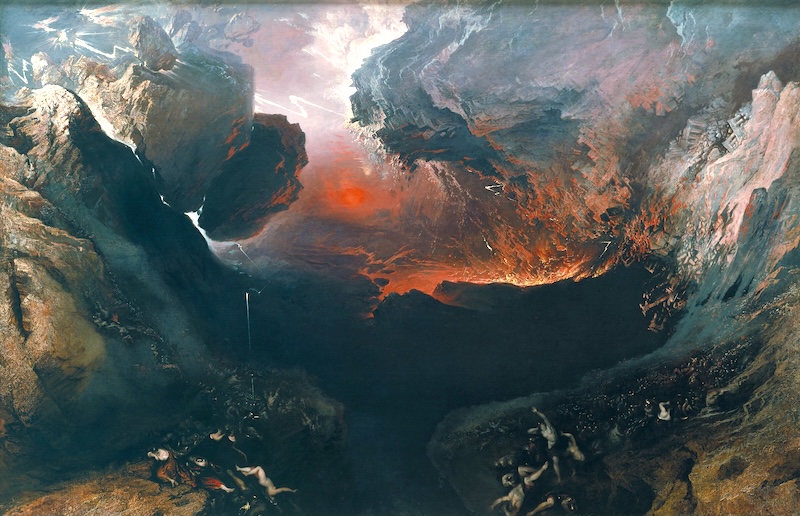
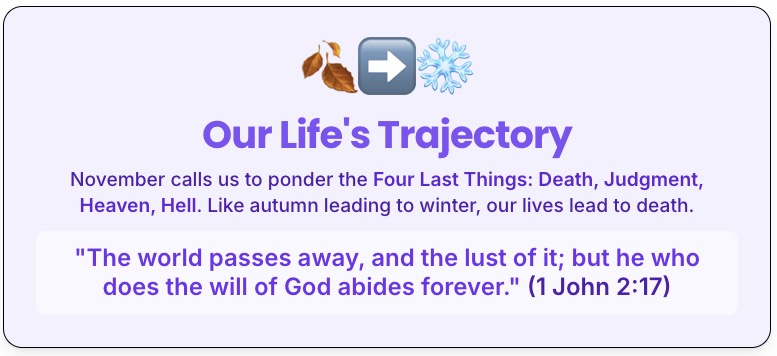
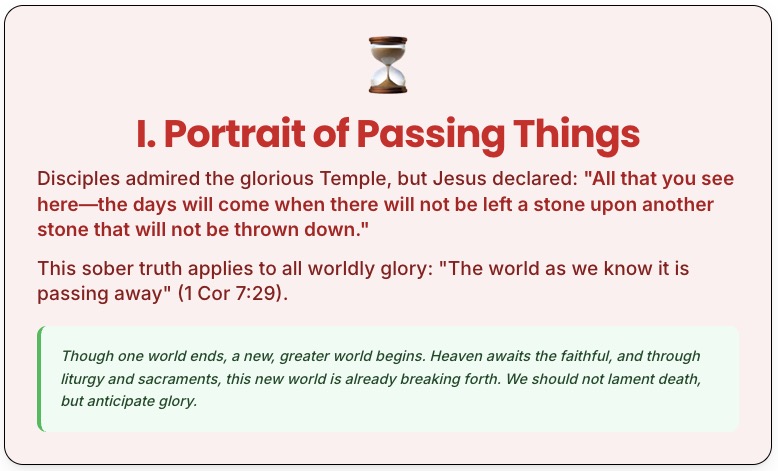
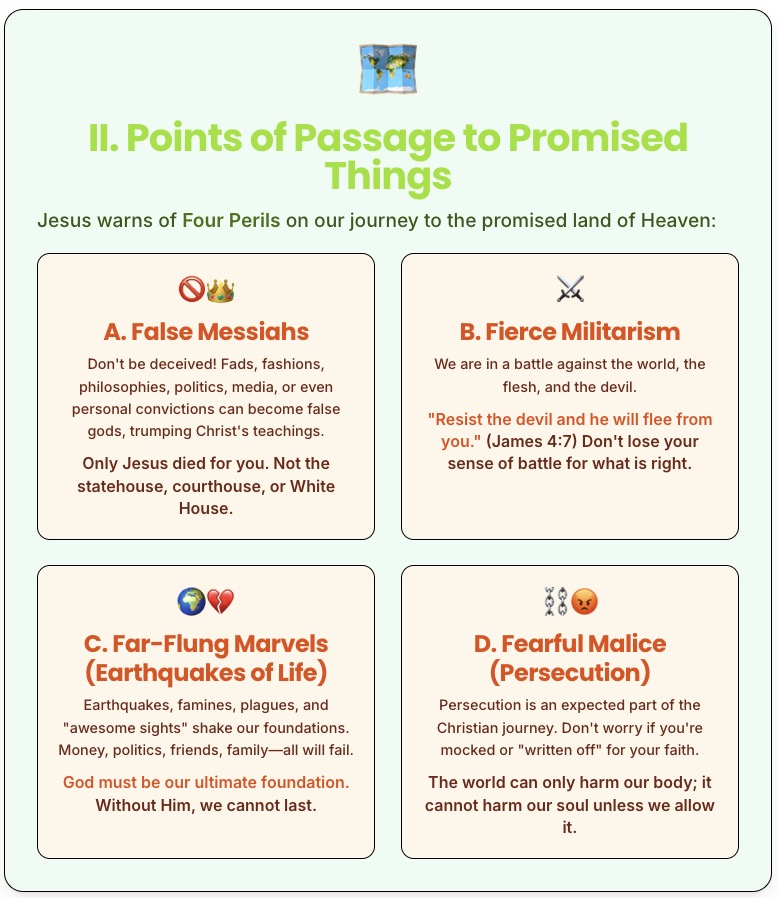
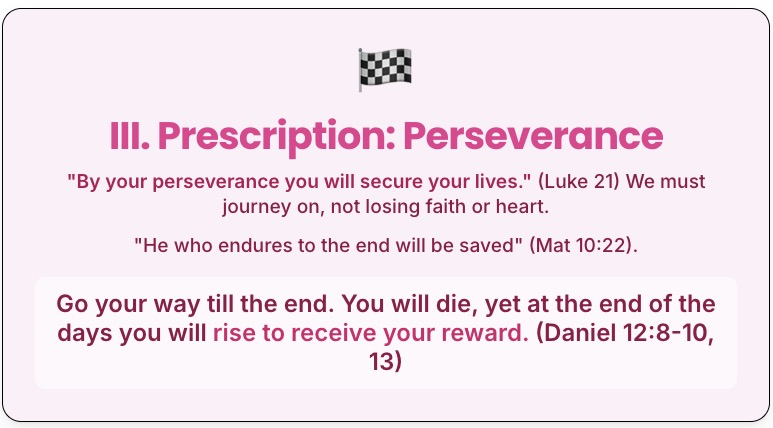
During the month of November, the Church has us ponder the Four Last Things: death, judgment, Heaven, and Hell… In today’s Gospel, the Lord Jesus gives us a kind of road map of life and calls us to be sober about the passing and perilous nature of this world.
I. Portrait of Passing Things
II. Points of Passage to Promised Things
III. Prescription for the Passage to Promised Things
────── ⋆⋅☆⋅⋆ ──────
Fr. Michael Chua
33rd Sunday of Year C

I know that this will sound like a rant but I’m going to start off with a rant. So bear with me. I know that many of you can connect with my frustration if you’ve experienced something similar. You go out on a limb, beyond the call of duty, you sincerely wish to help the other, and instead of gratitude, you get flak. You look around for some support and understanding, and you find yourself all alone. You begin to wonder, “Is it worthwhile being good? “Does it pay to do good?” Well, St Paul gives us the answer: “My brothers and sisters, never grow tired of doing what is right.” (2 Thess. 3:13).

“Snowflake,” according to the ever-reliable Wikipedia, is a “derogatory slang term for a person, implying that they have an inflated sense of uniqueness, an unwarranted sense of entitlement, or are overly-emotional, easily offended, and unable to deal with opposing opinions.” A snowflake listening to today’s ominous warnings and prophecies in the gospel will have a royal meltdown. To a snowflake the slightest perceived offence would sound like a cataclysmic end of the world scenario, an Armageddon of disproportionate size.

Christ will return in glory at the end of time to judge the living and the dead. There will be a resurrection of the body, and God’s justice and mercy will be fully revealed. This is the true meaning of the end of the world—not fear of cosmic disaster but confident hope in the ultimate triumph of our Lord Jesus Christ. Rather than becoming preoccupied with signs and speculations, Catholics are called to live in a state of grace, anchored in the sacraments, guided by Sacred Scripture, and sustained by the theological virtues of faith, hope, and love. We do not need to fear the end. We belong to a Church that already knows how the story ends: Christ is victorious as He was “in the beginning, is now and ever shall be, world without end. Amen.”
────── ⋆⋅☆⋅⋆ ──────
Fr. Jude Langeh, CMF

33rd Sunday of Year C

Father Geoffrey Plant
33rd Sunday of Year C


Not a Hair of Your Head
will be Lost
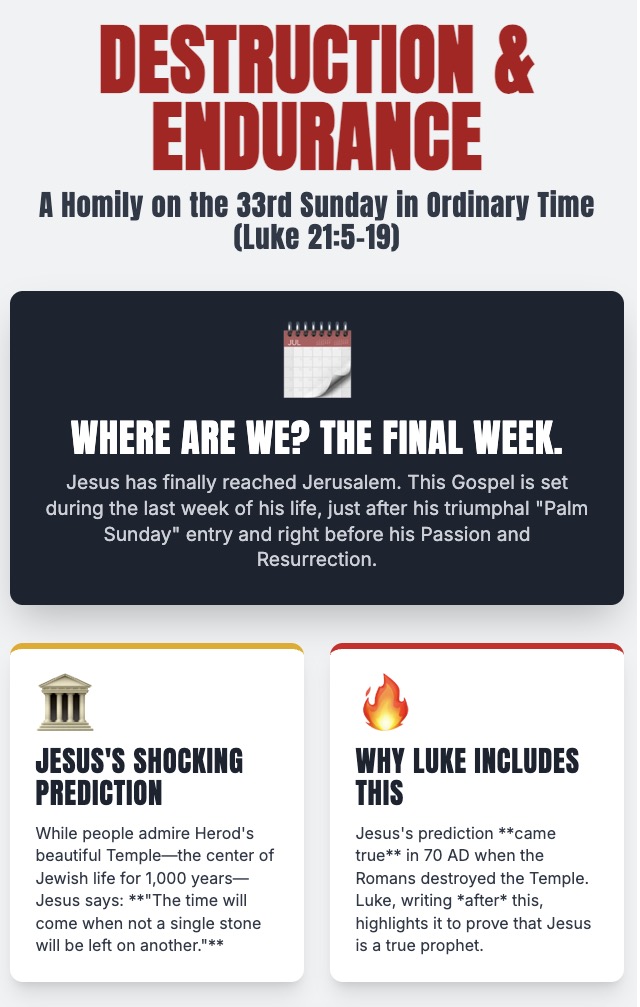
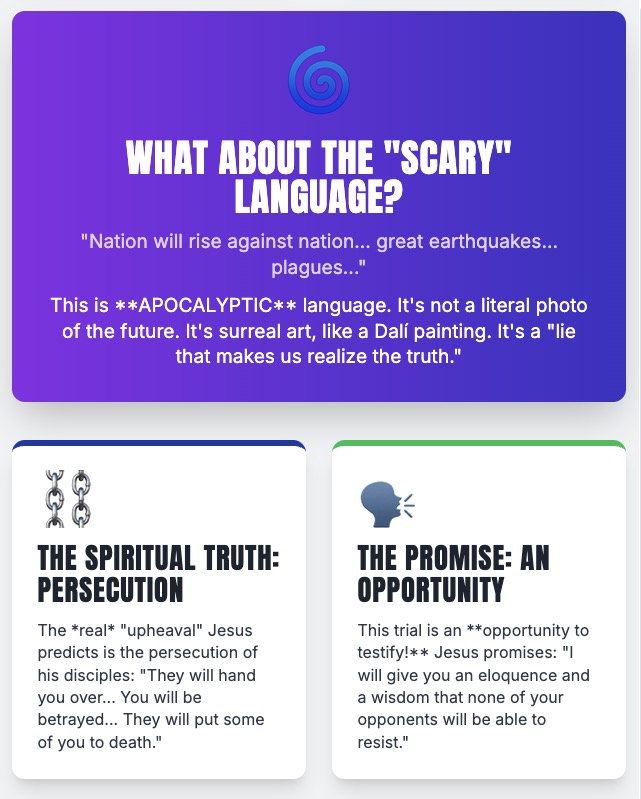
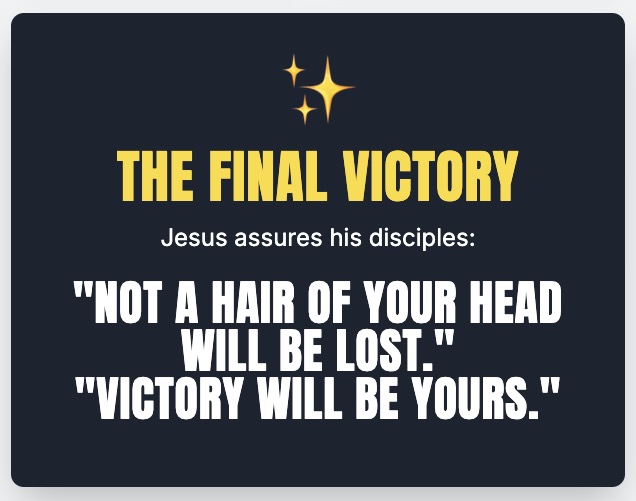
For almost a thousand years the Temple had been the centre of Jewish life. It was the central symbol and institution of Judaism. The disciples must have been utterly bewildered when Jesus foretold its destruction. And, indeed, what Jesus foretold came to pass some forty years later, in 70 AD. Keep in mind that by the time that Luke wrote his Gospel the Temple had already been destroyed. The evangelist is therefore telling his readers that just as the prophecy of Jesus about the destruction of the Temple had come to pass, so also will his words of assurance to the disciples: not a hair of your head will be lost.
Additional Sunday Homilies & Resources


The reflection questions and infographics featured in this section have been created with the help of Google Gemini 2.5 AI tools, using Chart.js and Tailwind CSS. THE WORD THIS WEEK is happy to offer these resources to any non-profit ministry for use, and kindly request that you provide credit to the website and the respective contributors whose content is illustrated.