DEC 22, 2024
The Latin Titles Spell "ERO CRAS"
✨ The seven Latin titles for the O Atihpons are as follows
Sapientia (Wisdom)
Adonai (Lord)
Radix Jesse (Root of Jesse)
Clavis David (Key of David)
Oriens (Dayspring)
Rex Gentium (King of the Nations)
Emmanuel (God With Us),
Each is drawn from Isaiah’s prophecies about the coming Messiah. When reversed, the first letters of the Latin titles spell “ERO CRAS,” meaning “tomorrow, I will come,” serving as a fitting reminder of the Lord’s imminent arrival at Christmas.Each of the seven titles is based on the prophecies of Isaiah about the coming of the Messiah, providing a direct link between Old Testament prophecies and their New Testament fulfillment in Jesus.
SCROLL TO READ MORE
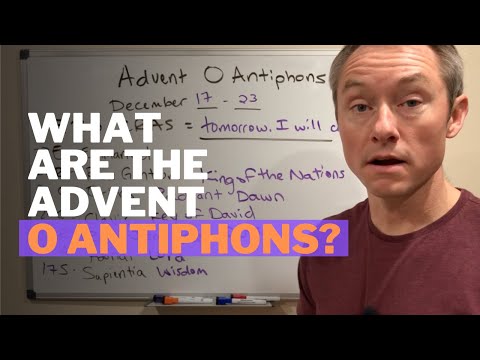
THE RELIGION TEACHER (3:59)—At the end of the Advent season (December 17-23) we have the opportunity to pray in a special way using the "O Antiphons." The O Antiphons are a series of prayers from the evening prayers (Vespers) of the Liturgy of the Hours.


- PLANNING GUIDE
- Liturgical Environment
- MUSIC
- BULLETIN INSERTS


4th Sunday of Advent - YEAR C

SOURCE: Basilica of the The National Shrine. Crypt Church (TV Mass)
Celebrant & Homilist: Msgr Kevin Hart
Choir: Basilica of the National Shrine of the Immaculate Conception Choir Cantor & Organist, Washington, D.C.
⬇️ Planning Notes
4th Sunday of Advent - YEAR C
Fr. Lawrence Mick
What can you do to help those who show up for the Christmas Masses to appreciate at least a little more of the wonder of God’s continuing presence among us and within us? Can you craft prayer texts that pray for the grace to remember Christ’s presence with us every day? Can preachers find ways to lead the assembly into some deeper insight and awareness?
Some of that could be offered to worshipers this Sunday. Think of the psalm refrain: “Lord, make us turn to you; let us see your face and we shall be saved.” Can Sunday’s preaching and petitions lead people to look for the face of Christ every day in every person they meet? That is a key part of the message of Christmas — that God — the Divine — is to be found in the human. — READ MORE
SOURCE: CELEBRATION
RESOURCES

WEEK 4: Peace (PDF-Catholic Apostolate Center)
⬇️ Greeting
4th Sunday of Advent - YEAR C
⬇️ Kyrie
4th Sunday of Advent - YEAR C
- Lord Jesus, your coming was the fulfillment of great expectation: Lord, have mercy.
- Christ Jesus, your mother Mary and Elizabeth were open to God’s promises: Christ, have mercy.
- Lord Jesus, you call us to be open to promises that are yet to be fulfilled: Lord, have mercy.
SOURCE: CELEBRATION
⬇️ Collect
4th Sunday of Advent - YEAR C

SOURCE: Julie Storr
Fourth Sunday of Advent: Pour forth, we beseech you, O Lord, your grace into our hearts, that we, to whom the Incarnation of Christ your Son was made known by the message of an Angel, may by his Passion and Cross be brought to the glory of his Resurrection. Who lives and reigns with you in the unity of the Holy Spirit, God, for ever and ever.
⬇️ Lectionary Readings
4th Sunday of Advent - YEAR C
COMMENTARY | BIBLE STUDY | HOLY SEE
Weekly Series Videos
Fr. Andrew Ricci’s Podcast
Lector Prep
History / Society / Theology
Outlines w/ Clipart from Fr. Richard Lonsdale
Agape Bible Study
Lector Preparation Notes

To effectively read this passage from Micah, focus on these key points:
- Emphasize "Bethlehem Ephrathah" to highlight its significance, despite being considered small and insignificant.
- Pause after "until the time" to build anticipation for the coming of the Messiah.
- Use a strong and confident tone when describing the ruler who will come from Bethlehem, conveying God's recognition of its worthiness.
- Demonstrate the idea of waiting and anticipation by emphasizing "has borne" and "now."
- Emphasize the attributes of the ruler (standing firm, shepherding, strength, and peace) to convey his greatness and divine connection.
- Pause before "He shall be peace" to allow the listener to reflect on the unique and powerful role of the Messiah.
- Use a warm and inviting tone when saying "God bless you" at the end to encourage and uplift the listeners.
By focusing on these key points, lectors can deliver the passage in a meaningful and engaging manner that helps the congregation understand and appreciate its significance during Advent.

To effectively deliver the second reading for the 4th Sunday of Advent from Hebrews, lectors should focus on these key points:
- Begin with an inclusive greeting, addressing the congregation as "brothers and sisters," to connect with them and establish a sense of community.
- Emphasize the quoted words of Christ and God to distinguish their voices from that of the writer of Hebrews.
- Use clear pauses and intonation to clarify the shift between Jesus quoting scripture and the writer of Hebrews explaining the meaning of those words.
- Accentuate the contrast between "the law" and "the will of God" to emphasize the shift in focus brought about by Jesus' sacrifice.
- Pause before "By this will" to emphasize its significance and the role of Jesus in fulfilling God's will.
- Convey the good news of being consecrated through Jesus with a warm and uplifting tone, bringing a sense of hope and joy to the congregation.
- End with a smile and a genuine "God bless" to leave the congregation with a sense of encouragement and faith.
By focusing on these key points, lectors can effectively deliver this complex passage and help the congregation understand its significance during the Advent season.
⬇️ Homily
4th Sunday of Advent - YEAR C
POPE FRANCIS | POPE BENEDICT XVI
Discuss the connections between Micah’s prophecy, the promise of salvation in Hebrews, and the story of Mary and Elizabeth. Encourage the congregation to embrace the themes of hope, joy, and preparation as they await Christmas.
⬇️ Prayers of the Faithful
4th Sunday of Advent - YEAR C
Discover a vast collection of over 100 petitions that are thoughtfully updated each week, ensuring a strong connection to the Sunday Readings. These petitions, designed for the Prayers of the Faithful during Mass, provide a relevant and meaningful way for your parish community to unite in prayer and intercession.
CHURCH | WORLD | SPECIAL NEEDS | COMMUNITY
Minister For the church that we may show the world what it means to be an expectant, yearning people, we pray:
- For all those whose yearning for something more is shattered by war, violence, racism or poverty and for the will and wisdom to cooperate with others to address these pervasive issues, we pray:
- For those whose expectations are focused on wealth or status, materials things or power, and for the ability to remain hopeful despite life’s limitations or setbacks, we pray:
- For those who do not have the means to celebrate this holiday and for all who support those in need during this season, we pray:
- For the ability, like Elizabeth, to recognize Jesus in unexpected people and circumstances, especially those where we would least expect to find God, we pray:
- For the generosity to attend to those among us who yearn for healing, companionship or meaning as we enter into the heart of this holiday season, we pray:
Presider God, for whom no one is too insignificant or too unworthy, we are bold enough to assume that your promises of salvation, peace and blessing are meant for us and for all yearning people. Keep our hope alive and show us how to share that hope with those who doubt you. We pray in the name of Jesus, whose coming is imminent. Amen.
SOURCE: CELEBRATION
⬇️ Preface
4th Sunday of Advent - YEAR C
It is truly right and just, our duty and our salvation, always and everywhere to give you thanks, Lord, holy Father, almighty and eternal God, through Christ our Lord.
For all the oracles of the prophets foretold him, the Virgin Mother longed for him with love beyond all telling, John the Baptist sang of his coming and proclaimed his presence when he came.
It is by his gift that already we rejoice at the mystery of his Nativity, so that he may find us watchful in prayer and exultant in his praise.
And so, with Angels and Archangels, with Thrones and Dominions, and with all the hosts and Powers of heaven, we sing the hymn of your glory, as without end we acclaim:
⬇️ Prayer After Communion
4th Sunday of Advent - YEAR C

SOURCE: Julie Storr
Recessional Hymn: Choose a joyful hymn, such as “O Come, O Come, Emmanuel,” to conclude the Mass on a note of anticipation and celebration.

RESOURCES
General Instruction of the Roman Missal
How to Create the Liturgical Environment for Advent and Christmas – by Rev. Philip Horrigan
A Simple Guide to Liturgical Enviornment (DIocese of New Ulm PDF)
Common Questions on Liturgical Norms – by Father Edward McNamara, rofessor of liturgy at the Regina Apostolorum Pontifical Athenaeum
DIRECTORY OF
POPULAR PIETY
AND THE LITURGY
Directory (Vatican)
Advent (PDF)
Christmastide (PDF)
Lent (PDF)
Holy Week (PDF)
Eastertide (PDF)
GUIDELINES AND RESOURCES
4th Sunday of Advent - YEAR C

SOURCE: St. Bernard Catholic Church, Los Angeles
Liturgical Environment:
- Adorn the sanctuary with traditional Advent purple, symbolizing the anticipation of Christ’s coming.
- To visually represent the weeks of preparation leading up to Christmas, the Advent wreath with four lit candles can serve as a poignant reminder of the journey towards the birth of our Savior.
- Create a visual focal point by displaying a large painting, icon, or banner depicting the Visitation scene. This can serve as a reminder of the joy and anticipation surrounding the coming of Christ and the faithfulness of Mary and Elizabeth.
Christmas Trees in the Sanctuary:
Traditionally, Catholics and most other Christians did not put up their Christmas trees until afternoon on Christmas Eve. Since the Christmas season begins with the Vigil Mass on Christmas Eve and ends with the baptism of the Lord, the placement and removal of Christmas decorations should coincide with these times.
Placing a Christmas tree in the church before that may depend on the tradition of the church. While it is common for many churches to wait until after the Fourth Sunday of Advent to fully decorate the tree with lights and ornaments as a way to symbolize the anticipation and preparation for the coming of Christ, some churches may choose to have the tree up earlier. It can serve as a visual reminder of the upcoming celebration of Christmas and the birth of Jesus Christ.
General Instruction of the Roman Missal
35. “Moderation should be observed in the decoration of the altar. During Advent the floral decoration of the altar should be marked by a moderation suited to the character of this season, without expressing prematurely the full joy of the Nativity of the Lord. During Lent it is forbidden for the altar to be decorated with flowers. Laetare Sunday (Fourth Sunday of Lent), Solemnities, and Feasts are exceptions.
“Built of Living Stones” (U.S. Bishops)
123. The tradition of decorating or not decorating the church for liturgical seasons and feasts heightens the awareness of the festive, solemn, or penitential nature of these seasons. Human minds and hearts are stimulated by the sounds, sights, and fragrances of liturgical seasons, which combine to create powerful, lasting impressions of the rich and abundant graces unique to each of the seasons.
124. Plans for seasonal decorations should include other areas besides the sanctuary. Decorations are intended to draw people to the true nature of the mystery being celebrated rather than being ends in themselves. Natural flowers, plants, wreaths and fabric hangings, and other seasonal objects can be arranged to enhance the primary liturgical points of focus. The altar should remain clear and free-standing, not walled in by massive floral displays or the Christmas crib, and pathways in the narthex, nave, and sanctuary should remain clear.
125. These seasonal decorations are maintained throughout the entire liturgical season. Since the Christmas season begins with the Vigil Mass on Christmas Eve and ends with the baptism of the Lord, the placement and removal of Christmas decorations should coincide with these times. Since the Easter season lasts fifty days, planning will encompass ways to sustain the decor until the fiftieth day of Pentecost.
126. In the course of the liturgical year, the feasts and memorials of Our Lady and of saints with special significance for the parish afford opportunities to show devotion by adorning their images with tasteful floral arrangements or plants.
127. Fabric art in the form of processional banners and hangings can be an effective way to convey the spirit of liturgical seasons, especially through the use of color, shape, texture, and symbolic form. The use of images rather than words is more in keeping with this medium.
128. Objects such as the Advent wreath, the Christmas crib, and other traditional seasonal appointments proportioned to the size of the space and to the other furnishings can enhance the prayer and understanding of the parish community.”
4th Sunday of Advent - YEAR C

SOURCE: OCP Liturgy Podcasts
“Blessed are you among women, and blessed is the fruit of your womb.”
Mary’s tender and trusting faith inspires us as we journey from Advent to Christmas

⬇️ Entrance
Emmanuel
Steve Angrisano
Vibrant Advent hymn “Emmanuel” intertwines classic “O Come, O Come Emmanuel” verses with an innovative tune and memorable refrain. Boasting adaptable two- or four-part mixed vocal harmony and guitar accompaniment, it cultivates a joyful expectation of Christ’s arrival and the redemption he offers.
4th Sunday of Advent - YEAR C

Spirit & Song #140;
Never Too Young #148;
Breaking Bread 2025 #58
⬇️ Responsorial
Lord, Make Us Turn to You
Chris Muglia
Intimate and contemplative, “Lord, Make Us Turn to You” draws inspiration from Psalm 80, beckoning listeners to seek God’s face for salvation. IT has simple yet profound lyrics, coupled with a prayerful melody. The song motivates believers to embrace the life-changing force of God’s love and presence by opening their hearts and lives.
4th Sunday of Advent - YEAR C

Spirit & Psalm 2025: page 32
⬇️ Presentation
Hail Mary: Gentle Woman
Carey Landry;
arr. by Sarah Hart
Serene and contemplative, “Hail Mary: Gentle Woman” artfully melds the time-honored Hail Mary prayer with supplementary reflections on Mary’s role as derived from scripture and tradition, emphasizing Luke 1:28. The hymn is characterized by an irregular meter, a delicate tune, and a reverent appeal to Mary as a symbol of peace and grace.
4th Sunday of Advent - YEAR C
Spirit & Song #305;
Never Too Young #202
⬇️ Communion
My Soul Rejoices
Jackie Francois
Inspired by Mary’s Magnificat (Luke 1:46-47), “My Soul Rejoices” amalgamates joy and devotion in its tune and lyrics. The song rejoices in the overwhelming elation and thankfulness that consumes Mary’s heart upon receiving the divine gift of carrying the Messiah.
4th Sunday of Advent - YEAR C

Spirit & Song #109
⬇️ Sending Forth
Ready the Way
Curtis Stephan
Thoughtful in its lyrics and melody, “Ready the Way” encourages listeners to prepare their hearts and souls for the coming of the Lord. Drawing from the Gospel passage where John the Baptist exhorts the people to “make straight the way of the Lord,” the song’s lyrics resonate deeply during Advent, reminding believers to ready themselves for Christ’s arrival.
4th Sunday of Advent - YEAR C

Spirit & Song #142;
Never Too Young #147;
Breaking Bread 2025 #53
SOURCE: Edrianne Ezell
Bulletin Inserts and Study Guides

Our Sunday Readings
by Edrianne Ezell*
Scripture Study
by Vince Contreras*
Lectionary Commentary
by Fr. Tobin*
Echoing God’s Word
by Fr. Thibodeau*
Weekday Readings
by Kieran J. O’Mahony*
Handouts for Children

SDC Worksheet
Societas Doctrina Christiana
Catholic Kids Bulletin
Canadian Mother
Catholic Mom Resources
Holy Cross Family Ministries
Carmelite Lectio Divina Year C – I
Reflections and Prayers
74 page PDF with refections and prayers for each day of the month.
Lectio Divina December 2024 (PDF)
Lectio Divina December 2024 [Mobi]
Lectio Divina December 2024 [ePub]
“Lectio divina is an authentic source of Christian spirituality recommended by our Rule. We therefore practise it every day, so that we may develop a deep and genuine love for it, and so that we may grow in the surpassing knowledge of Christ. In this way we shall put into practice the Apostle Paul’s commandment, which is mentioned in our Rule: “The sword of the Spirit, too, which is the word of God, is to dwell abundantly in your mouth and in your hearts; and whatever things you have to do, let them be done in the word of the Lord.” (Carmelite Constitutions (2019), n. 85.)
Source: Carmelites
More Resources
ADVENT E-BOOK 2024
