September 14, 2025
September 14, 2025


Commentary on the Mass Readings for Sunday
Commentary on the Mass Readings for Sunday


Exaltation of the Holy Cross
Numbers 21:4b-9
Numbers 21:4b-9
POP-UP Video | NAB w/ Notes | LECTIONARY
Click graphic above to view intro to reading
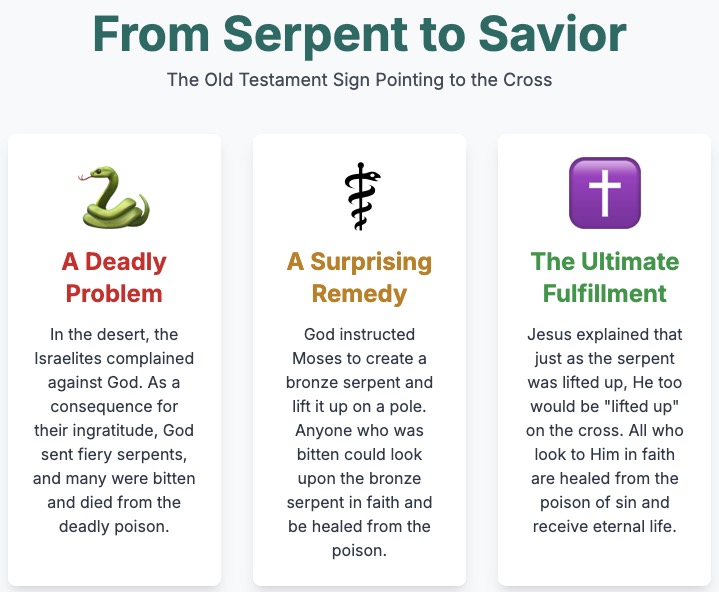
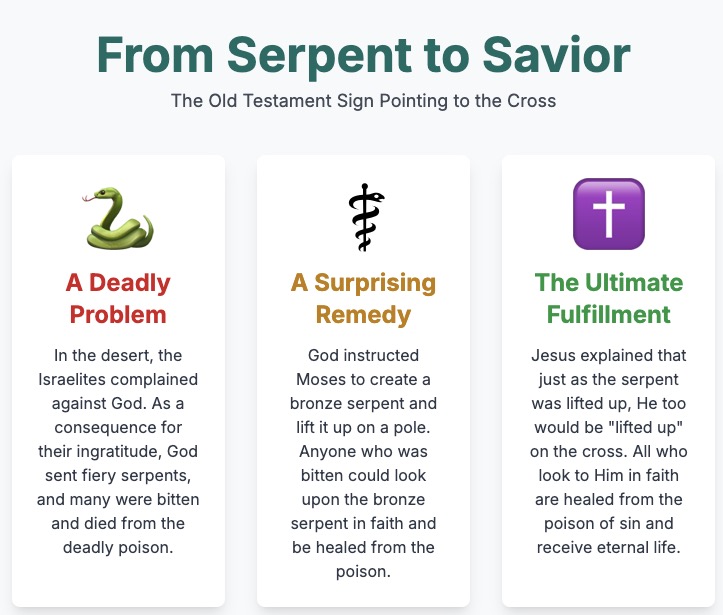
The reading recounts an episode during the Israelites’ journey in the desert where the people grew impatient and complained against God and Moses. As a consequence of their sin, God sent venomous serpents among them, and many who were bitten died. The people repented and asked Moses to intercede. God then instructed Moses to create a bronze serpent and mount it on a pole, so that anyone who had been bitten could look upon it and be healed.

Larry Broding Commentary
Exaltation of the Holy Cross

Meaning of the Snake
by Larry Broding
How can a preacher make sense of one of the Old Testament’s most unusual and challenging images—a bronze serpent on a pole—for a modern congregation? Larry Broding’s reflection on the First Reading provides a fascinating and deeply insightful path by exploring the profound difference between signs and symbols.
Broding moves beyond a simple narrative summary to unpack the rich, dual meaning of the serpent in the ancient world: a symbol of both poisonous death and regenerative life. He masterfully shows how God harnesses this complex symbolism, first as an instrument of judgment and then, when lifted up, as a powerful instrument of salvation. This reflection equips preachers to connect this strange event to the powerful, natural symbols at the very heart of our Catholic faith—water, oil, bread, and wine. As Broding explains:
“God uses the snake as an instrument of death and life. The power of the snake punishes and saves.”
For any homilist looking to unlock the rich theological layers of this passage and demonstrate the enduring power of sacred symbols, this reflection is an indispensable resource. It offers a fresh perspective that is both intellectually stimulating and pastorally relevant.

Fr. Tim Peters Commentary
Exaltation of the Holy Cross

Catholic Bible Study Video Series


Exaltation of the Holy Cross
Phil 2:6-11
Phil 2:6-11
POP-UP Video | NAB w/ Notes | LECTIONARY
Click graphic above to view intro to reading
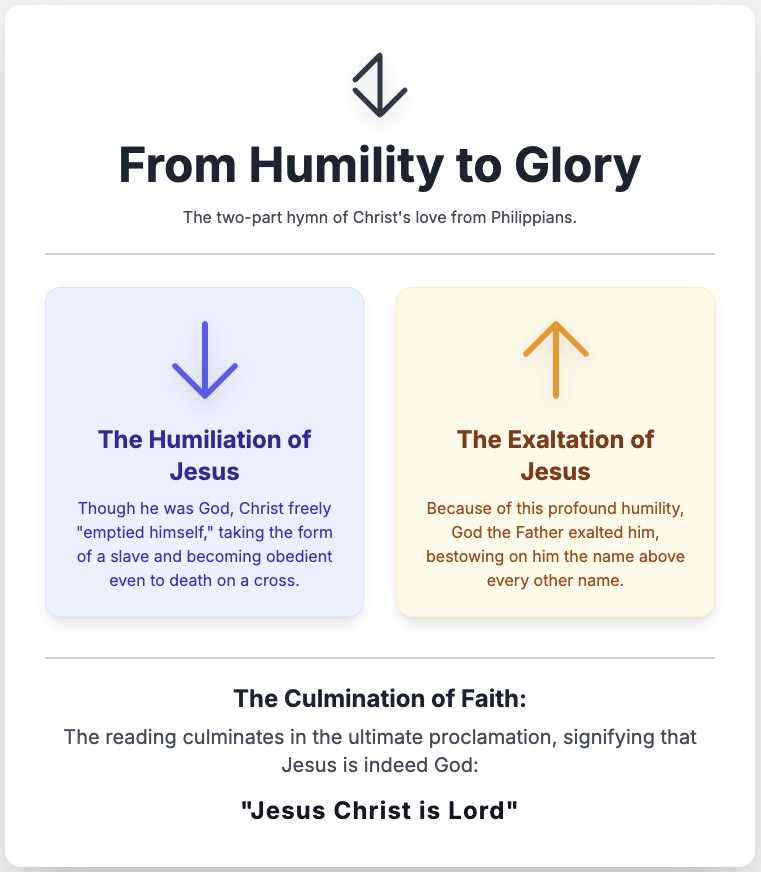
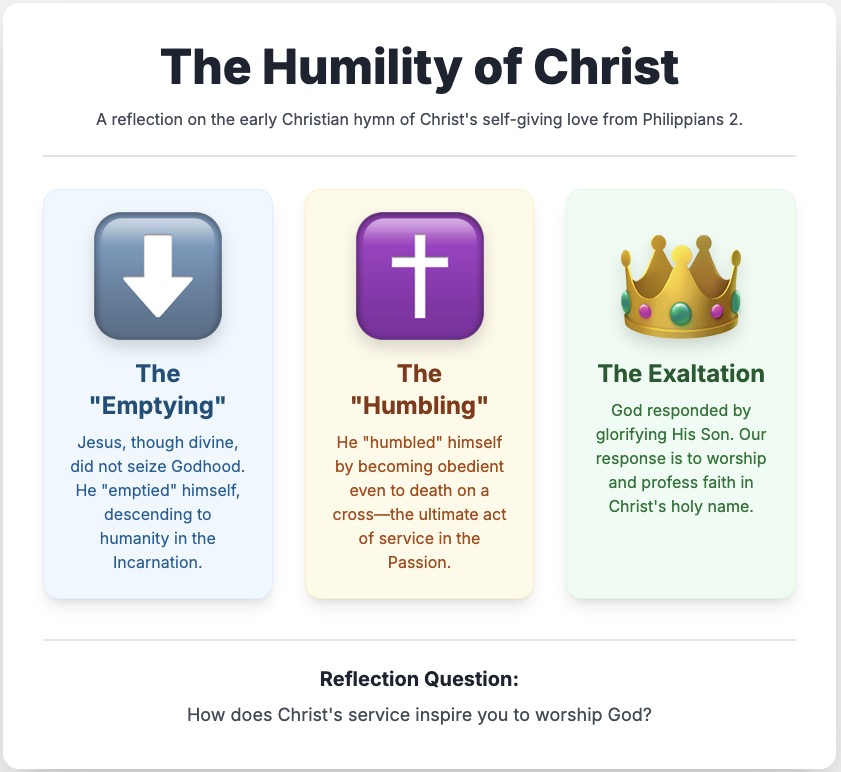
In his reflection, Fr. Paul Galetto explains that the second reading, from St. Paul’s letter to the Philippians, contains two main parts:
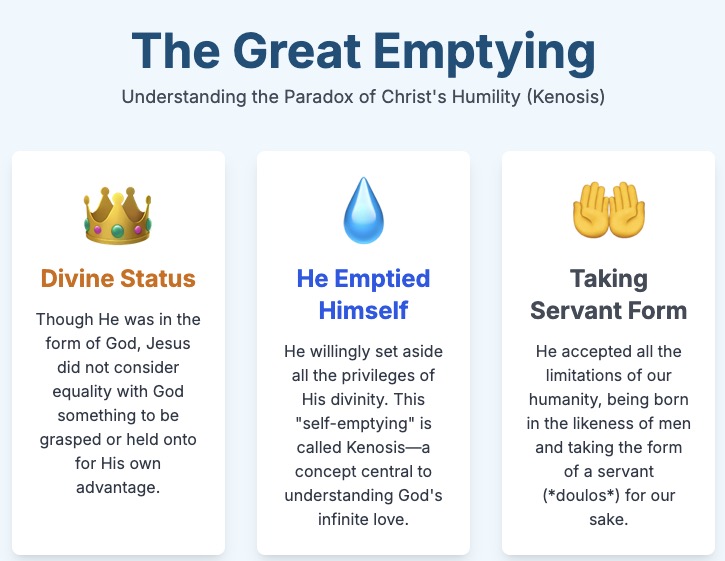
- The Humiliation of Jesus: It describes how Christ, though he was in the form of God, freely “emptied himself” and took on the lowly form of a slave. He was obedient to God the Father’s will, even to the point of accepting death.down social barriers.
- The Exaltation of Jesus: Because of this profound act of humility and obedience, God the Father exalted him. The reading culminates in the proclamation that “Jesus Christ is Lord,” a key phrase signifying that Jesus is indeed God.
Larry Broding Commentary
Exaltation of the Holy Cross
The Name Above All Others
by Larry Broding
How can a familiar passage like the hymn in Philippians become a fresh and powerful source for a homily? Larry Broding’s reflection on the Second Reading delves into the scholarly understanding of these verses as an early Christian song, offering preachers a rich theological framework to inspire their message.
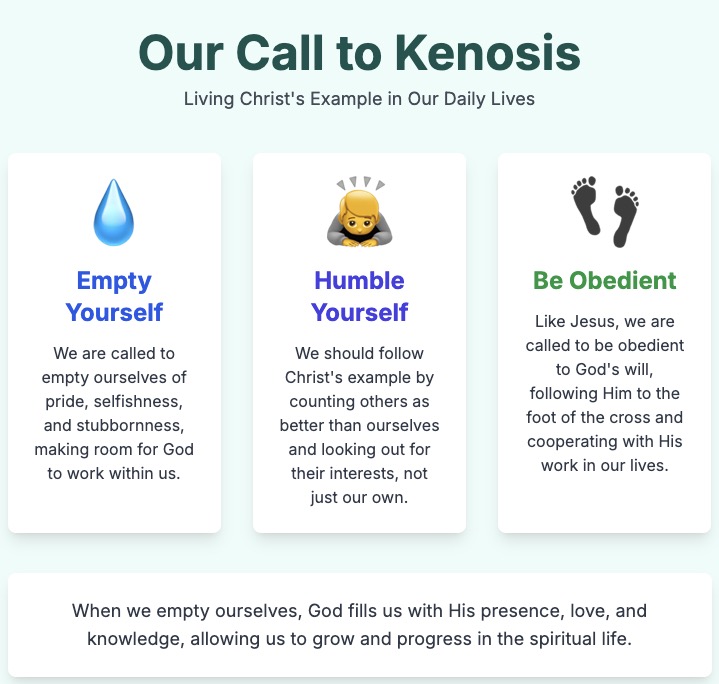
Broding moves beyond a surface reading to explore the deep structure of the hymn, focusing on Christ’s profound journey from divinity to humanity and back to glory. He illuminates how the core of our faith is captured in two pivotal actions: the “emptying” of the Incarnation and the “humbling” of the Passion. This analysis provides a clear and compelling way to explain the very essence of Christ’s self-giving love and God’s faithful response. As Broding insightfully explains:
“The core of the hymn used ’emptying’ for the Incarnation and ‘humbling’ for the Passion, the two pillars of our faith in Christ.”
For any preacher looking to connect the sublime theology of Christ’s humility with the congregation’s call to worship, this reflection is an invaluable tool. It not only breaks down the hymn’s meaning but also challenges us with essential questions about how Christ’s ultimate act of service should inspire our own faith and devotion.
Fr. Tim Peters Commentary
Exaltation of the Holy Cross
Catholic Bible Study Video Series

Exaltation of the Holy Cross
John 3:13-17
John 3:13-17
POP-UP Video | NAB w/ Notes | LECTIONARY
Click graphic above to view intro to reading
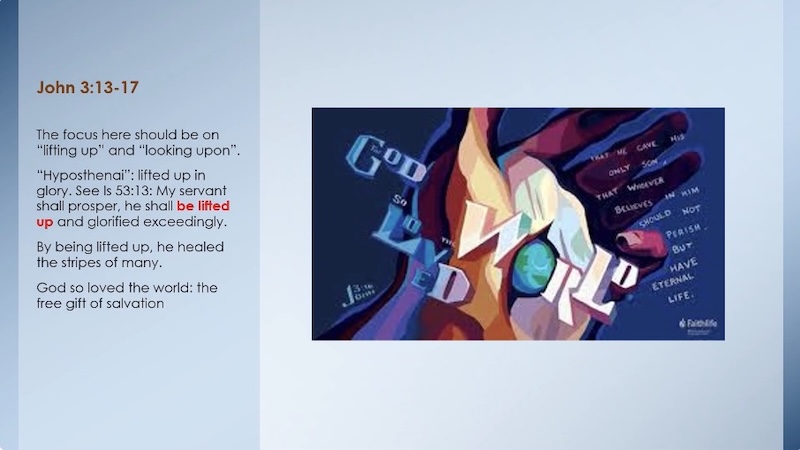
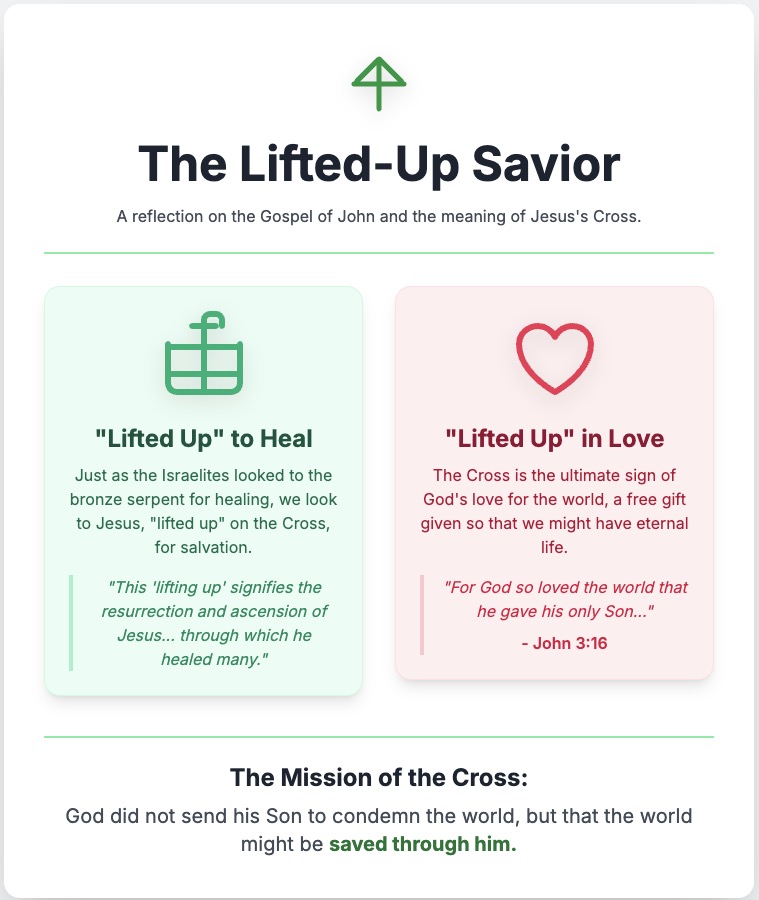
In his reflection, Fr. Paul Galetto, OSA explains that the Gospel from John connects directly to the first reading from the Book of Numbers.
The central theme is the idea of being “lifted up.” Just as the Israelites were healed by looking at the bronze serpent lifted on a pole, we find healing and eternal life by looking to Jesus “lifted up” on the Cross.
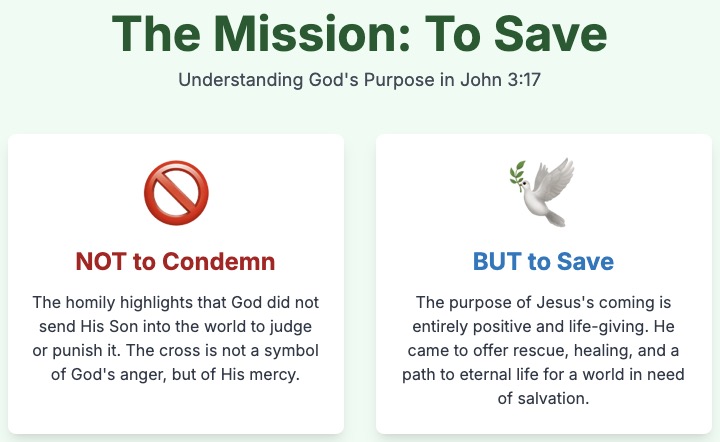
Fr. Galetto points out that the Greek word used for “lifted up” also means to be raised into glory, connecting the crucifixion to the resurrection and ascension. This act of being lifted up is the ultimate expression of God’s love, highlighted by the famous verse, “For God so loved the world that he gave his only Son, that those who believe in him might have eternal life.” The reading emphasizes that eternal life is a free gift, and Jesus was sent not to condemn, but to save the world.
Larry Broding Commentary
Exaltation of the Holy Cross
The Meaning of the Cross
by Larry Broding
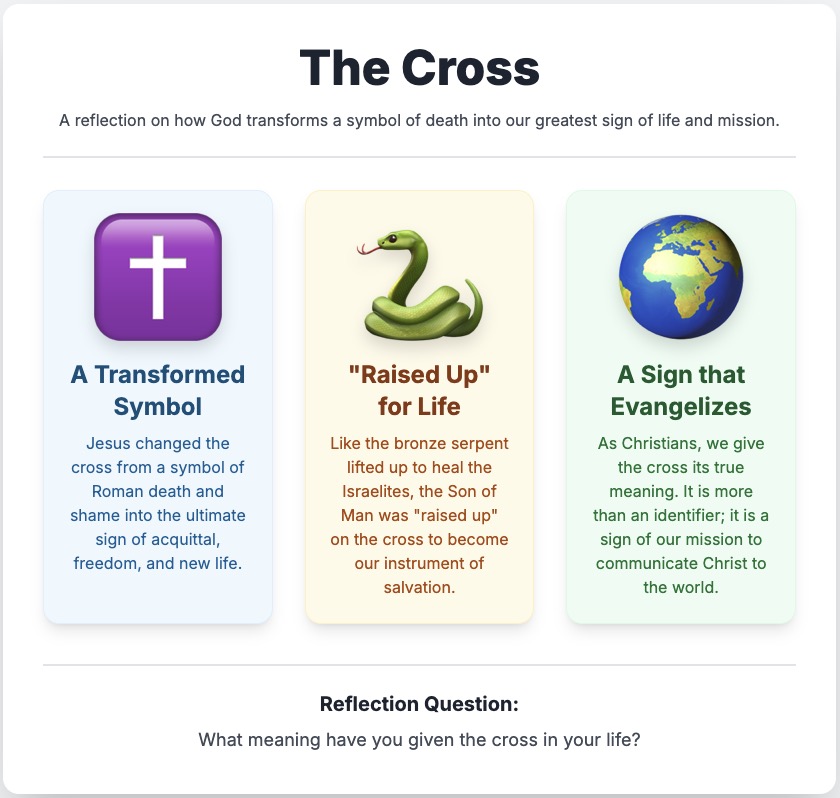
True In a world where the cross is often seen on everything from jewelry to business logos, how do we, as Christians, reclaim its profound and transformative meaning? Larry Broding’s reflection on the Gospel for the Feast of the Exaltation of the Holy Cross offers a compelling look at this very question, providing rich material for any preacher seeking to prepare a powerful homily.
Broding masterfully explores the dramatic shift in the cross’s symbolism, moving from an instrument of Roman shame to the ultimate sign of divine life. He draws a fascinating parallel between the “raised up” bronze serpent that brought healing in the desert and the “raised up” Son of Man, revealing how God consistently transforms symbols of death into instruments of salvation. This reflection pushes past a surface-level understanding and delves into the radical nature of God’s love. As Broding writes:
“How can the image of the cross change into a sign of salvation? It was because God himself gave his Son over to the evil of men. In other words, the betrayal of Jesus by Judas, his subsequent trial, passion, and death, were caused by the love of God.”
This reflection challenges us to consider how the cross has personally freed us and how we, in turn, are called to give it meaning in the world. It is an excellent resource for crafting a homily that invites the faithful to see the cross not merely as a symbol we wear, but as the source of our evangelizing mission and the very core of our faith.ires a radical renunciation of both earthly possessions and relational attachments, placing God as the absolute center of one’s life.
Fr. George Corrigan, OFM Commentary
Exaltation of the Holy Cross


Musings of a Franciscan Friar
Exaltation of the Holy Cross
John 3:1-21 comprises a single, cohesive scene within the Johannine narrative and should be studied as a single narrative – but this day we glance at a small portion that forms a capstone like statement of the role of Jesus in our salvation. We looked at the larger narrative (John 3:1-21) earlier in June as part of the celebration of Holy Trinity Sunday. If you would like to read anew the larger narrative as a pdf file, it can be found on-line here. If you would like to read the longer narrative online it is available in six installments:
Fr. Tim Peters Commentary
Exaltation of the Holy Cross
Catholic Bible Study Video Series


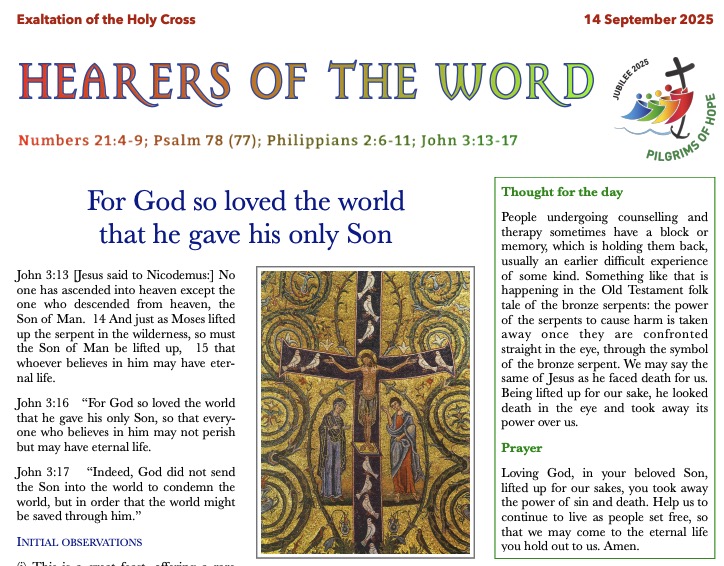
PORTABLE VERSION | YOUTUBE | HOME
Small Group Discussion Guides


Fr. Thibodeau
Bible Study Notes
Bp. John P. Dolan
Fr. Tobin

Fr. Conley Bertrand
Exaltation of the Holy Cross
Cycle C (PDFs)
📖 Old Testament (43 pp.)
📖 Epistles (87 pp.)
📖 Gospels (182 pp.)
📖 Daily Gospels (208 pp.)
SOURCE: Come, Lord Jesus
Carmelite Reflections and Prayers
Lectio Divina

78-page PDF with reflections and prayers for each day of the month
Lectio Divina SEPTEMBER 2025 (PDF)
Lectio Divina SEPTEMBER 2025 [Mobi]
Lectio Divina SEPTEMBER 2025 [ePub]
______________
“Lectio divina is an authentic source of Christian spirituality recommended by our Rule. We therefore practise it every day, so that we may develop a deep and genuine love for it, and so that we may grow in the surpassing knowledge of Christ. In this way we shall put into practice the Apostle Paul’s commandment, which is mentioned in our Rule: “The sword of the Spirit, too, which is the word of God, is to dwell abundantly in your mouth and in your hearts; and whatever things you have to do, let them be done in the word of the Lord.” (Carmelite Constitutions (2019), n. 85.)
Source: Carmelites
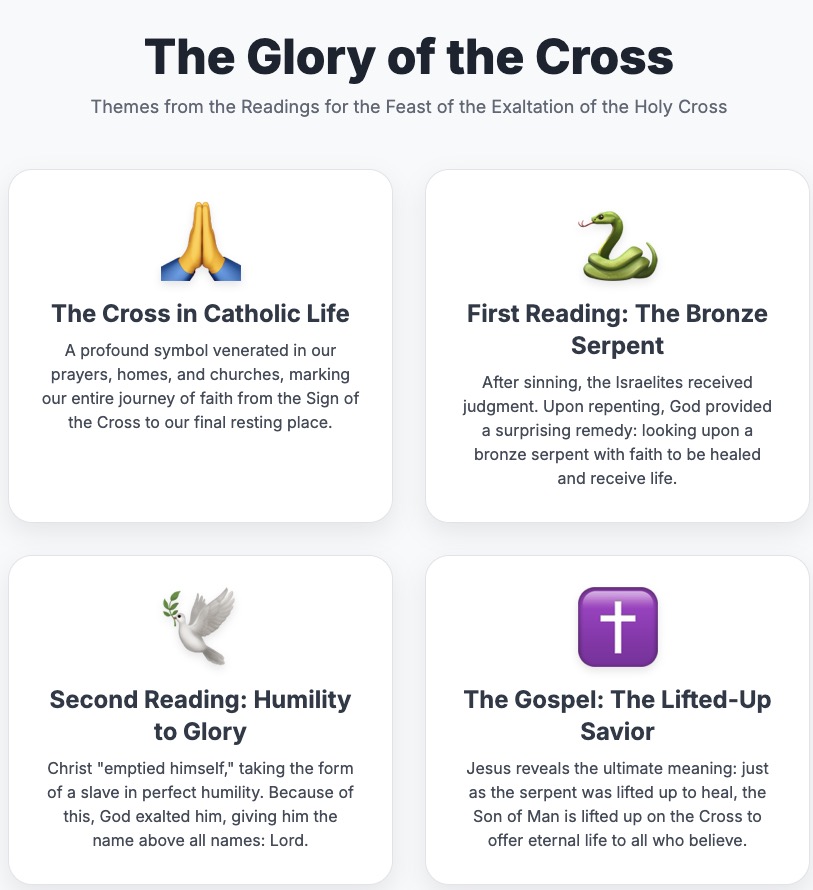
FIRST READING | SECOND READING | GOSPEL