MAR 30, 2025


Papal Homilies
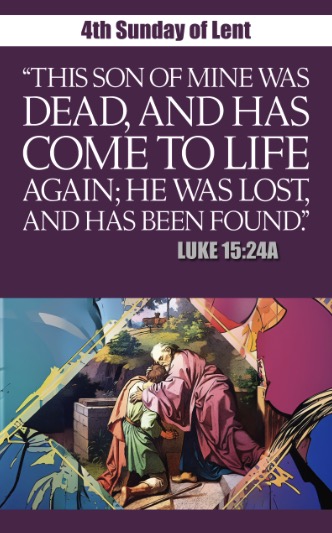
TIP: You can rewind the livestream up to twelve hours, allowing you to catch up on any events or addresses you may have missed.

SOURCE: Vatican News – English
This livestream allows viewers to witness the Pope’s addresses during Papal Audiences, as well as other Vatican events and news. The livestream is part of the Vatican Media Center’s efforts to share the latest updates on Pope Francis, the Holy See, and the Church worldwide with a global audience.

Fr. Gaetano Piccolo (SI)
The Dicastery for the Clergy deals with everything that concerns the priests and deacons of the diocesan clergy with regard to their persons, their pastoral ministry and what is necessary for its fruitful exercise. In these matters it offers the Bishops appropriate assistance.

Reconciliation
4th Sunday of Lent C
“Let yourselves be reconciled with God.” This is one of the perspectives according to which we can interpret the liturgical texts of this fourth Sunday of Lent. In the first reading, God is reconciled with his people, granting them the possibility to enter the Promised Land, after forty years of wandering aimlessly through the desert. In the parable of the Gospel, the father is reconciled with the younger son, and though not so clearly, with the elder son. Finally, in the second reading Saint Paul shows us that God has reconciled us to him by means of Christ, and has bestowed upon us the ministry of reconciliation.
P. Antonio Izqeuirdo, L.C., © Dicastery for the Clergy A | B | C
Doctrinal Messages
4th Sunday of Lent C
VATICAN
DAILY
BULLETIN
The Vatican Daily Bulletin is the official news source for the Pope’s activities and statements, providing accurate and up-to-date information. Published daily, it keeps the public informed about the Church’s activities and decisions.
Pastoral Suggestions
4th Sunday of Lent C
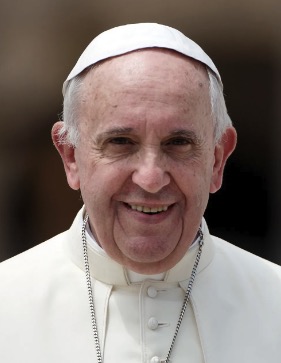
Pope Francis
4th Sunday of Lent C

The Heart of God
27 March 2022 | Saint Peter’s Square
- TEXT
- DISCUSSION GUIDE
The Gospel for this Sunday’s Liturgy recounts the so-called Parable of the Prodigal Son (cf. Lk 15:11-32). It leads us to the heart of God, who always forgives compassionately and tenderly. Always, God always forgives. We are the ones who tire of asking for forgiveness, but he always forgives. It [the parable] tells us that God is a Father who not only welcomes us back, but rejoices and throws a feast for his son who has returned home after squandering all his possessions. We are that son, and it is moving to think about how much the Father always loves us and waits for us.
But there is also the elder son in the same parable who manifested his resentment in front of this Father. It can put us into crisis as well. In fact, this elder son is also within us and we are tempted to take his side, at least in part: he had always done his duty, he had not left home, and so he becomes indignant on seeing the Father embracing his [other] son again after having behaved so badly. He protests and says: “I have served you for so many years and never disobeyed your command”. Instead, for “this son of yours”, you go so far as to celebrate! (cf. vv. 29-30) “I don’t understand you!” This is the indignation of the elder son.
These words illustrate the elder son’s problem. He bases his relationship with his Father solely on pure observance of commands , on a sense of duty. This could also be our problem, the problem among ourselves and with God: losing sight that he is a Father, and living a distant religion, made of prohibitions and duties. And the consequence of this distance is rigidity towards our neighbour whom we no longer see as a brother or sister. In fact, in the parable, the elder son does not say my brother to the Father. No, he says that son of yours , as if to say: he is not my brother. In the end, he risks remaining outside of the house. In fact, the text says: “he refused to go in” (v. 28), because the other one was there.
Seeing this, the Father goes out to plead with him: “Son, you are always with me, and all that is mine is yours” (v. 31). He tries to make him understand that for him, every child is all of his life. Parents know this well and are very close to feeling like God does. Something a father says in a novel is very beautiful: “When I became a father, I understood God” (H. de Balzac, Le Père Goriot). At this point in the parable, the Father opens his heart to his elder son and expresses two needs, which are not commands, but essentials for his heart: “It was fitting to make merry and be glad, for this your brother was dead, and is alive” (v. 32). Let us see if we too have in our hearts these two things the Father needs: to make merry and rejoice .
First of all, to make merry , that is, to demonstrate our closeness to those who repent or who are on the way, to those who are in crisis or who are far away. Why should we do this? Because this helps to overcome the fear and discouragement that can come from remembering one’s sins. Those who have made mistakes often feel reproached in their own hearts. Distance, indifference and harsh words do not help. Therefore, according to the Father, we have to offer them a warm welcome that encourages them to go ahead. “But father, he did so many things”: a warm welcome. And we, do we do this? Do we look for those who are far away? Do we want to celebrate with them? How much good an open heart, true listening and a transparent smile can do; to celebrate, not to make them feel uncomfortable! The Father could have said: “Okay, son, come back home, come back to work, go to your room, establish yourself and your work! And this would have been a good way to forgive. But no! God does not know how to forgive without celebrating! And the Father celebrates because of the joy he has because his son has returned.
And then, like the Father, we have to rejoice . When someone whose heart is synchronized with God’s sees the repentance of a person, they rejoice, no matter how serious their mistakes may have been. They do not stay focused on errors, they do not point fingers at what they have done wrong, but rejoice over the good because another person’s good is mine as well! And we, do we know how to look at others like this?
I would like to recount a fictional story, but one that helps illustrate the heart of the father. There was a pop theatre production, three or four years ago, about the prodigal son, with the entire story. And at the end, when that son decides to return to his father, he talks about it with a friend and says: “I’m afraid my father will reject me, that he won’t forgive me”. And the friend advises him: “Send a letter to your father and tell him, ‘Father, I have repented, I want to come back home, but I’m not sure that you will be happy. If you want to welcome me, please put a white handkerchief in the window’”. And then he began his journey. And when he was near home, at the last bend in the road, he had the house in view. And what did he see? Not one handkerchief: it was full of white handkerchiefs, the windows, everywhere! The Father welcomes us like this, completely, joyfully. This is our Father!
Do we know how to rejoice for others? May the Virgin Mary teach us how to receive God’s mercy so that it might become the light by which we see our neighbours.
Introduction
Reflect on the central message of the sermon based on the Parable of the Prodigal Son (Luke 15:11-32). Discuss how the parable portrays the nature of God’s forgiveness and our relationship with Him.
1. Understanding Forgiveness
– Discuss the statement: “God always forgives compassionately and tenderly.”
– Have there been times when you felt tired of asking for forgiveness? How does this parable challenge that feeling?
– Reflect on the significance of the father celebrating the return of his son. What does this indicate about God’s attitude toward repentance?
2. The Younger Son
– How does the younger son represent us in our relationship with God?
– Discuss the feelings you might experience when realizing that God waits for you with open arms, despite your past mistakes.
3. The Elder Son’s Perspective
– Reflect on the elder son’s reaction to his brother’s return. Why do you think he felt resentful?
– Discuss how we may embody the attitude of the elder son in our spiritual lives. How can this affect our relationship with God and others?
– Why does the elder son refuse to acknowledge his brother, and how does this reflect in our lives?
4. God’s Heart and Our Response
– What does the father’s reaction to his sons teach us about God’s love and mercy?
– Discuss the quote from H. de Balzac about understanding God’s feelings as a parent: “When I became a father, I understood God.”
– How can we adopt the father’s perspective of rejoicing over others’ repentance?
5. Making Merry and Rejoicing
– Explore the two essentials the father mentions: to make merry and rejoice over others’ return. Why are these significant?
– How can we offer a warm, encouraging welcome to those who have strayed or are in crisis?
– Discuss practical ways to celebrate and support repentance and transformation in our communities.
6. Rejoicing in Others’ Good
– What does it mean to have a heart synchronized with God’s in the context of this parable?
– How can we cultivate a mindset that seeks and rejoices in the good of others, seeing their successes as our own?
7. A Fictional Story Reinforced
– Discuss the story of the white handkerchiefs. How does it capture the essence of God’s forgiveness and welcome?
– Share personal experiences or analogies that resonate with the theme of overwhelming forgiveness and acceptance.
Conclusion
Reflect on how the Virgin Mary can be a model for receiving God’s mercy and letting it guide how we view and treat others. Emphasize the call to embody a joyful and accepting attitude in our spiritual lives and communities. Encourage participants to consider tangible actions they can take to mirror the father’s example in the parable.
Benedict XVI
4th Sunday of Lent C

Conversion
14 March 2010 | Saint Peter’s Square
- TEXT
- DISCUSSION GUIDE
On this Fourth Sunday of Lent, the Gospel of the father and the two sons better known as the Parable of the “Prodigal Son” (Lk 15:11-32) is proclaimed. This passage of St Luke constitutes one of the peaks of spirituality and literature of all time. Indeed, what would our culture, art and more generally our civilization be without this revelation of a God the Father so full of mercy? It never fails to move us and every time we hear or read it, it can suggest to us ever new meanings. Above all, this Gospel text has the power of speaking to us of God, of enabling us to know his Face and, better still, his Heart. After Jesus has told us of the merciful Father, things are no longer as they were before. We now know God; he is our Father who out of love created us to be free and endowed us with a conscience, who suffers when we get lost and rejoices when we return. For this reason, our relationship with him is built up through events, just as it happens for every child with his parents: at first he depends on them, then he asserts his autonomy; and, in the end if he develops well he reaches a mature relationship based on gratitude and authentic love.
In these stages we can also identify moments along man’s journey in his relationship with God. There can be a phase that resembles childhood: religion prompted by need, by dependence. As man grows up and becomes emancipated, he wants to liberate himself from this submission and become free and adult, able to organize himself and make his own decisions, even thinking he can do without God. Precisely this stage is delicate and can lead to atheism, yet even this frequently conceals the need to discover God’s true Face. Fortunately for us, God never fails in his faithfulness and even if we distance ourselves and get lost he continues to follow us with his love, forgiving our errors and speaking to our conscience from within in order to call us back to him. In this parable the sons behave in opposite ways: the younger son leaves home and sinks ever lower whereas the elder son stays at home, but he too has an immature relationship with the Father. In fact, when his brother comes back, the elder brother does not rejoice like the Father; on the contrary he becomes angry and refuses to enter the house. The two sons represent two immature ways of relating to God: rebellion and childish obedience. Both these forms are surmounted through the experience of mercy. Only by experiencing forgiveness, by recognizing one is loved with a freely given love a love greater than our wretchedness but also than our own merit do we at last enter into a truly filial and free relationship with God.
Dear friends, let us meditate on this parable. Let us compare ourselves to the two sons and, especially, contemplate the Heart of the Father. Let us throw ourselves into his arms and be regenerated by his merciful love. May the Virgin Mary, Mater Misericordiae, help us to do this.
Introduction
– Discuss the cultural and literary impact of the Parable of the Prodigal Son. How has it influenced our understanding of God and spirituality?
– Consider how this parable is one of the “peaks of spirituality and literature.” Why do you think it holds such significance?
2. Understanding God’s Image
– Reflect on how the parable reveals a merciful God. How does knowing God as a merciful Father change our perception of Him?
– Discuss the role of God as a creator who endows us with freedom and a conscience. How is this reflected in the parable?
3. Stages of Spiritual Maturity
– Identify the three stages of spiritual maturity mentioned in the sermon: dependence, autonomy, and mature relationship. Where do you see yourself in this journey?
– Discuss the challenges and dangers of the autonomy stage, specifically the temptation to believe one can do without God.
4. The Two Sons
– Compare and contrast the behavior of the younger and the elder sons. What do they reveal about different ways of relating to God?
– Discuss how rebellion and childish obedience are both immature relationships with God. How can experiencing mercy transform these relationships?
5. Experiencing Mercy
– Examine the role of forgiveness and love in building a mature, filial relationship with God.
– Reflect on a time when you have experienced mercy or forgiveness. How did it affect your relationship with God and others?
6. Personal Reflection and Application
– In what ways does the parable speak directly to you and your current spiritual life?
– How can you apply the lessons of the parable in your relationship with God and others?
7. Role of the Virgin Mary
– Discuss the invocation of Mary as “Mater Misericordiae.” How can her example and intercession assist us in drawing closer to God’s mercy?
8. Closing Thoughts
– Spend a few moments in silent reflection or prayer, asking for the grace to view others through a lens of mercy and to deepen your relationship with God.
Encourage sharing of personal insights and thoughts freely within the group, fostering an open and supportive environment for spiritual growth.