MAR 23, 2025


ROME REPORTS IN ENGLISH (3:04) - From economic reforms to his impressive travel history; a summary of the12 years of Pope Francis' pontificate (March 13, 2025)


Papal Homilies
TIP: You can rewind the livestream up to twelve hours, allowing you to catch up on any events or addresses you may have missed.

SOURCE: Vatican News – English
This livestream allows viewers to witness the Pope’s addresses during Papal Audiences, as well as other Vatican events and news. The livestream is part of the Vatican Media Center’s efforts to share the latest updates on Pope Francis, the Holy See, and the Church worldwide with a global audience.

Fr. Gaetano Piccolo (SI)
The Dicastery for the Clergy deals with everything that concerns the priests and deacons of the diocesan clergy with regard to their persons, their pastoral ministry and what is necessary for its fruitful exercise. In these matters it offers the Bishops appropriate assistance.

The Christian God
3rd Sunday of Lent C
Today’s readings describe to us some traits of the Christian God. In the first reading, God appears like fire that does not burn up and defines himself in the following way, “I am he who is.” The Gospel, in turn, presents us with a merciful God who ardently wishes that the sinner be converted, who knows how to wait before intervening with his justice. The Christian God is also a provident God, who places the history of Israel before our eyes so that we may be careful and not fall, no matter how firmly we think we are standing (second reading).
P. Antonio Izqeuirdo, L.C., © Dicastery for the Clergy A | B | C
Doctrinal Messages
3rd Sunday of Lent C
VATICAN
DAILY
BULLETIN
The Vatican Daily Bulletin is the official news source for the Pope’s activities and statements, providing accurate and up-to-date information. Published daily, it keeps the public informed about the Church’s activities and decisions.
Pastoral Suggestions
3rd Sunday of Lent C
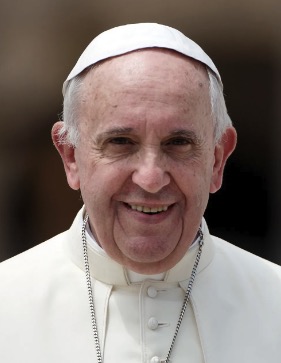
Pope Francis
3rd Sunday of Lent C

God is Not the Blame
20 March 2022 | Saint Peter’s Square
- TEXT
- DISCUSSION GUIDE
We are at the heart of our Lenten journey, and today the Gospel begins by presenting Jesus who comments on some news of the day. While people still remember the 18 who died when a tower collapsed on them, they tell him about some Galileans whom Pilot had killed (cf. Lk 13:1). And there is a question that seems to accompany these tragic affairs: who is to blame for these terrible events? Perhaps those people were guiltier than others and God punished them? These are questions that also come up today. When crime news weighs on us and we feel powerless before evil, we often ask ourselves: is it perhaps a punishment from God? Did he bring about a war or a pandemic to punish us for our sins? And why does the Lord not intervene?
We must be careful: when evil oppresses us, we run the risk of losing our clarity and, in order to find an easy answer to what we are unable to explain, we end up putting the blame on God. And very often the bad habit of using profanities comes from this. How often do we attribute to him our woes and misfortunes in the world, to he who instead leaves us always free and hence never intervenes by imposing himself, but only by proposing himself; He who never uses violence and indeed suffers for us and with us! In fact, Jesus rejects and strongly contests the idea of blaming God for our evils: those persons who were killed by Pilate and those who died beneath the tower were not any more at fault than others, and they were not victims of a ruthless and vindictive God, which does not exist! Evil can never come from God because “He does not deal with us according to our sins” (Ps 103:10), but according to his mercy. This is God’s style. He cannot treat us otherwise. He always treats us with mercy.
But rather than blaming God, Jesus says we need to look within ourselves: it is sin that produces death; it is our selfishness that tears apart relationships; it is our wrong and violent choices that unleash evil. At this point the Lord offers the true solution. What is it? Conversion: He says, “unless you repent you will all likewise perish” (Lk 13:5). It is an urgent call, especially during this time of Lent. Let us welcome it with an open heart. Let us convert from evil, let us renounce the sin that seduces us, let us be open to the logic of the Gospel because where love and fraternity reign, evil no longer has power!
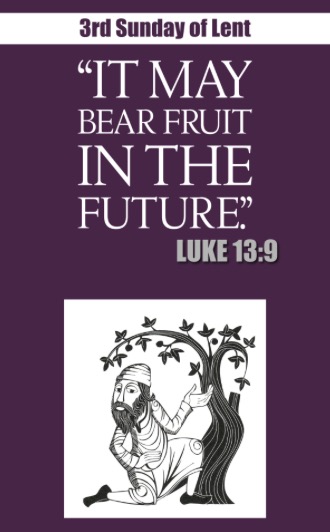
But Jesus knows that conversion is not easy, and he wants to help us here. He knows that we often repeat the same mistakes and the same sins; that we become discouraged, and perhaps it may seem that our commitment to do good is useless in a world where evil appears to rule. Thus, after his appeal, he encourages us with a parable that tells of the patience of God. We must keep in mind God’s patience, the patience he has for us. He offers the comforting image of a fig tree that does not bear fruit during the accorded season, but is not cut down. More time is given to it, another possibility. I like to think that a nice name for God could be “the God of another possibility”: God always gives us another opportunity, always, always. That is what his mercy is like. This is how the Lord is with us. He does not cut us out of his love. He does not lose heart or tire of offering us his trust again, with tenderness. Brothers and sisters, God believes in us! God trusts us and accompanies us with patience, the patience of God with us. He does not become discouraged, but always instils his hope in us. God is Father and looks after you like a father. As the best of fathers, he does not look at the achievements you have not yet reached, but the fruits you can still bear. He does not keep track of your shortcomings but encourages your potential. He does not dwell on your past, but confidently bets on your future. This is because God is close to us, he is close to us. Let us not forget that the style of God is closeness. He is close with mercy and tenderness. In this way, God accompanies us: with closeness, mercy, and tenderness.
Introduction
Begin your session by reflecting on our personal understanding of tragedy and evil in the world. Consider how perceptions of divine involvement shape our responses to challenging events.
Exploring the Gospel’s Context
1. According to the Gospel of Luke (Lk 13:1), Jesus is confronted with news about tragic events. What were these events?
2. Discuss the question raised by Jesus’ audience: Who is to blame for these tragic events? Is this a common question we ask today when faced with disaster or misfortune?
Attributing Blame
1. Examine the tendency to blame God for natural disasters and societal issues. Why might individuals or societies fall into this habit?
2. Consider the statement, “Evil can never come from God.” What does this mean in the context of our understanding of justice and mercy?
Focus on Sin and Conversion
1. Jesus directs attention away from blaming God and towards personal reflection. Why is self-examination important in the face of adversity?
2. Analyze Jesus’ statement: “unless you repent you will all likewise perish” (Lk 13:5). How does this relate to the theme of conversion during Lent?
Parable of the Fig Tree
1. Discuss the parable of the fig tree. How does it illustrate God’s patience and mercy?
2. Reflect on the idea of God as the “God of another possibility.” How does this concept shape our understanding of divine forgiveness and hope?
Understanding God’s Patience and Closeness
1. What attributes does the sermon assign to God (e.g., patience, trust, mercy)? How do these influence our relationship with Him?
2. Consider God as a Father who sees potential rather than shortcomings. How does this perspective affect our personal spiritual journey?
Personal Reflection and Group Sharing
1. Reflect on any personal experiences where you felt divine patience or a renewed opportunity to grow.
2. How can you apply the lessons from this sermon in your own life? Share insights or intentions for personal conversion during Lent.
Concluding Thoughts
Summarize insights gained from the discussion and encourage group members to embrace the call to conversion with hope and trust in God’s enduring mercy and patience.

Benedict XVI
3rd Sunday of Lent C

Conversion
7 March 2010 | Saint Peter’s Square
- TEXT
- DISCUSSION GUIDE
The Liturgy of this Third Sunday of Lent presents to us the topic of conversion. In the First Reading from the Book of Exodus, Moses, while tending his flock, sees a burning bush that is not consumed by the flames. He goes closer to look at this miracle when a voice calls him by name and, reminding him of his unworthiness, orders him to take off his sandals because that place is holy. The voice says to him, “I am the God of your father, the God of Abraham, the God of Isaac, the God of Jacob”. And he adds, “I am who am” (Ex 3: 6a, 14). God likewise shows himself in various ways in each of our lives. To be able to recognize his presence, however, we must approach him with an awareness of our wretchedness and with deep respect. Otherwise we would make ourselves incapable of encountering him and entering into communion with him. As the Apostle Paul writes, this event is also recounted as a warning to us: it reminds us that God does not reveal himself to those in whom are entrenched self-sufficiency and frivolity but rather to those who are poor and humble before him.
In today’s Gospel passage, Jesus is questioned on certain distressing events: the killing of several Galileans in the temple, on the orders of Pontius Pilate, and the collapse of a tower on some passers by (cf. Lk 13: 1-5). In the face of the easy conclusion of considering evil as an effect of divine punishment, Jesus restores the true image of God who is good and cannot desire evil. And guarding us against believing that misfortunes are the immediate effect of the personal sins of those whom they afflict, says: “Do you think that these Galileans were worse sinners than all the other Galileans, because they suffered thus? I tell you, No; but unless you repent you will all likewise perish” (Lk 13: 2-3). Jesus asks us interpret these events differently, putting them in the perspective of conversion: misfortunes, sorrowful events must not awaken curiosity in us or the quest for presumed sins; instead they must be opportunities for reflection, in order to overcome the illusion of being able to live without God and to reinforce, with the Lord’s help, the commitment to change our way of life. With regard to sin, God shows himself to be full of mercy and never fails to remind sinners to avoid evil, to grow in love for him and to offer practical help to our neighbour in need, to live the joy of grace and not to go towards eternal death. However, the possibility of conversion demands that we learn to read the events of life in the perspective of faith, animated, that is, by holy fear of God. In the presence of suffering and bereavement, the true wisdom is to let ourselves be called into question by the precarious state of existence and to see human history with the eyes of God who, desiring always and only the good of his children, through an inscrutable design of his love sometimes permits us to be tried by suffering in order to lead us to a greater good.
Opening Reflection:
Reflect on the theme of conversion. How does it resonate with your current life or spiritual practice?
Reading and Interpretation:
1. Bible Passage Analysis:
– Discuss the First Reading from Exodus: Moses and the burning bush.
– What does Moses’ encounter with God teach us about recognizing divine presence?
– How is God’s introduction as “I am who am” significant to your understanding of faith?
2. Gospel Passage Analysis:
– Review the events Jesus mentions in Luke 13: the killing of Galileans and the collapse of the tower.
– How does Jesus’ response to these events shed light on the nature of God and suffering?
– Why does Jesus call for repentance in light of these tragedies?
Key Themes for Discussion:
1. Approach with Humility:
– How can a sense of our own “wretchedness” or humility help us in encountering God?
– What obstacles do self-sufficiency and frivolity present in recognizing God’s presence?
2. Interpretation of Misfortunes:
– Discuss the difference between viewing misfortunes as divine punishment versus opportunities for conversion.
– In what ways can we shift our perspective to see life events through a lens of faith?
3. Repentance and Conversion:
– Explore the relationship between repentance and conversion.
– How can we practically integrate these concepts into everyday life?
4. God’s Mercy and Love:
– Consider the role of divine mercy in the context of human sinfulness and conversion.
– How does understanding God’s love influence our actions towards our neighbors and ourselves?
Application to Life:
1. Personal Reflection:
– Share any personal experiences of conversion or repentance. How did they impact your spiritual journey?
2. Group Reflection:
– In light of suffering or challenges, discuss ways the group can support each other’s paths towards conversion and deeper faith.
Closing Thought:
Reflect on the wisdom of seeing human history through God’s eyes. How can this perspective shape your future actions and spiritual practices?
Prayer/Contemplation:
Conclude with a moment of silent prayer or contemplation, focusing on areas in life needing conversion and openness to God’s presence.