JAN 12, 2025


Sunday Papal Homilies
Sunday Papal Homilies
LIVE FROM
VATICAN
This livestream allows viewers to witness the Pope’s addresses during Papal Audiences, as well as other Vatican events and news. The livestream is part of the Vatican Media Center’s efforts to share the latest updates on Pope Francis, the Holy See, and the Church worldwide with a global audience.
TIP: You can rewind the livestream up to twelve hours, allowing you to catch up on any events or addresses you may have missed.


The Dicastery for the Clergy deals with everything that concerns the priests and deacons of the diocesan clergy with regard to their persons, their pastoral ministry and what is necessary for its fruitful exercise. In these matters it offers the Bishops appropriate assistance.

Novelty of God’s Action
Baptism of the Lord - YEAR C
Although the words novelty or new do not actually appear in the texts of today’s liturgy, all of the texts refer, in a certain way, to the novelty of God’s action in history. God’s language in Isaiah is new, “Her period of service is ended…, let every valley be filled in, every mountain and hill be leveled, every cliff become a plateau, every escarpment a plain… here is Lord Yahweh coming with power, his arm maintains his authority.” It is absolutely novel for Jesus to be baptized by John, for heaven to open, for the Holy Spirit to descend in the form of a dove, for a voice to come from heaven, “You are my Son; today have I fathered you.” The reality of people who have received baptism is a new one, “by means of the cleansing water of rebirth and renewal in the Holy Spirit which he has so generously poured over us through Jesus Christ our Savior.”
P. Antonio Izqeuirdo, L.C., Copyright © Dicastery for the Clergy
Doctrinal Messages
Baptism of the Lord - YEAR C
VATICAN
DAILY
BULLETIN
The Vatican Daily Bulletin is the official news source for the Pope’s activities and statements, providing accurate and up-to-date information. Published daily, it keeps the public informed about the Church’s activities and decisions.
Pastoral Suggestions
Baptism of the Lord - YEAR C
THE HOLY
FATHER
RELATED LINKS
THIS SUNDAY’S
QUOTES
Baptism as a Lifelong Journey of Conversion
“Baptism is not a one-time event, but a lifelong journey of conversion and growth in faith.” (January 11, 2015) [This quote emphasizes that Baptism is not just a single moment in time but an ongoing process of spiritual growth.]
Manifestation of the Trinity in Jesus’ Baptism
“In the baptism of Jesus, we see the manifestation of the Trinity: the Father’s voice, the Son’s obedience, and the Holy Spirit’s descent as a dove.” (January 10, 2016) [This quote highlights the connection between the Baptism of the Lord and the revelation of the Holy Trinity.]
Called to Serve Through the Gospel
“The Baptism of Jesus is a reminder that we are all called to be servants of the Gospel, to bring God’s love and mercy to the world.” (January 8, 2017) [This quote encourages us to follow Jesus’ example of humble service and spread God’s message through our actions.]
Baptism: Gift and Responsibility
“Baptism is a gift of God’s love, but it also carries a responsibility to live according to the Gospel and to be a witness of Christ in the world.” (January 13, 2019) [This quote speaks about the blessings and responsibilities that come with being baptized and living as a follower of Christ.]
Finding Our Identity in Baptism
“The Baptism of the Lord reminds us that we are beloved children of God, and that our true identity is found in our relationship with Him.” (January 12, 2020) [This quote affirms our divine inheritance through Baptism and the importance of our connection with God in shaping our identity.]
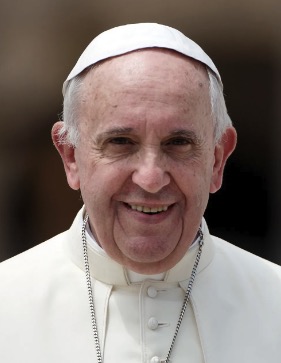
Pope Francis
Baptism of the Lord - YEAR C

Jesus’ Relationships
13 January 2019 | Saint Peter’s Square
- TEXT
- DISCUSSION GUIDE
Today, at the conclusion of the Liturgical Season of Christmas, we celebrate the Feast of the Baptism of the Lord. The liturgy calls us to more fully get to know Jesus, whose birth we have just celebrated; and for this reason the Gospel (cf. Lk 3:15-16, 21-22) illustrates two important elements: Jesus’ relationship with the people and Jesus’ relationship with the Father.
Jesus’ Relationship with the People
In the narrative of the Baptism, administered to Jesus by John the Baptist in the waters of the Jordan, we see first and foremost the role of the people. Jesus is in the midst of the people. This is not just background scenery, but is an essential component of the event. Before immersing himself in the water, Jesus ‘immerses’ himself in the crowd; he joins it, fully taking on the human condition, sharing everything, except sin. In his divine holiness, full of grace and mercy, the Son of God became flesh precisely to take upon himself and take away the sin of the world: taking on our miseries, our human condition. Thus today’s event is also an epiphany, because by going to have himself baptized by John, in the midst of the repentant people, Jesus manifests the logic and meaning of his mission.
By joining the people who ask John for the Baptism of conversion, Jesus shares with them the deep desire for inner renewal. And the Holy Spirit, who descends upon him “in bodily form, as a dove” (v. 22), is a sign that with Jesus a new world is being initiated, a ‘new creation’ in which all those who welcome Jesus into their life participate. The words of the Father are also addressed to each of us, that we may be reborn with Christ in Baptism: “Thou art my beloved son; with thee I am well pleased” (v. 22). This Fatherly love, which all of us received on the day of our Baptism, is a flame that was lit in our heart, and needs to be kindled by means of prayer and charity.
Jesus’ Relationship with the Father
The second element emphasized by Luke the Evangelist is that, after his immersion in the people and in the waters of the Jordan, Jesus ‘immerses’ himself in prayer, that is, in communion with the Father. Baptism is the beginning of Jesus’ public ministry, of his mission in the world as the envoy of the Father in order to manifest his goodness and his love for mankind. This mission is fulfilled in constant and perfect union with the Father and with the Holy Spirit. The Church’s mission too, and that of each of us, in order to be faithful and fruitful, is called to ‘graft’ ourselves onto that of Jesus. It means regenerating continually in prayer, evangelization and the apostolate, in order to bear a clear Christian witness not according to human designs, but according to the plan and style of God.
Renewing Our Baptismal Promises
Dear brothers and sisters, the Feast of the Baptism of the Lord is a propitious opportunity to renew with gratitude and conviction the promises made at our Baptism, by committing ourselves to live in harmony with it daily. It is also very important, as I have said to you many times, to know the date of our Baptism. I could ask: ‘Who among you knows the date of his or her Baptism?’. Not everyone, to be sure. If some of you do not know it, when you get home, ask your parents, grandparents, aunts and uncles, godparents, family friends…. Ask: ‘On what date was I baptized?’. And then, do not forget it: let it be a date kept in your heart to be celebrated every year.
Discussion Questions
Understanding Jesus’ Relationship with the People
- How does Jesus’ act of baptism demonstrate His solidarity with humanity?
- In what ways does Jesus’ immersion in the crowd represent His mission and presence among people?
- Reflect on the idea that Jesus takes on our human condition with grace and mercy. What does this mean for us personally?
Exploring Jesus’ Mission and the Role of the Holy Spirit
- Discuss the significance of the Holy Spirit descending upon Jesus ‘like a dove.’ How does this symbolize the beginning of a ‘new creation’?
- What are the implications of the Father’s words, “Thou art my beloved son; with thee I am well pleased” for our personal spiritual journey?
Significance of Baptism in Our Lives
- How can we relate the concept of Jesus’ mission to our personal call to live out our Baptismal promises daily?
- Reflect on the importance of knowing and celebrating the date of your own Baptism. How does this impact your faith journey?
Reflective Activities
- Spend time in prayer, asking for renewal of the Holy Spirit in your life. Reflect on how you can embody a ‘new creation’ through your actions.
- As a group, share your Baptismal dates if known, and discuss ways to celebrate this day annually as a renewal of faith.
Practical Application
Consider developing a plan for regular prayer and reflection to continually immerse yourself in spiritual growth and in service to others. Discuss how you can incorporate these practices as a group to support each other in living out the Christian mission.
THIS SUNDAY’S
QUOTES
The Epiphany of the Trinity in the Baptism of the Lord
“The Baptism of the Lord is not just a simple commemoration of a historical event; it is also an epiphany of the Trinity: the Father who speaks, the Spirit who descends, and the Son who is baptized.” (January 13, 2013)
Baptism: A Gateway to Living as Children of God
“The Baptism of the Lord reminds us of our own baptism, which inserts us into the mystery of the death and resurrection of Christ, giving us the grace to live as children of God, in the light of his love and his truth.” (January 8, 2006)
Revelation of the Trinity and Our Divine Inheritance
“In the Baptism of the Lord, the heavens are opened, the Spirit descends, the Father speaks: the entire Trinity is revealed, and the Son of God becomes the Son of Man, so that we may become children of God.” (January 9, 2011)
Rediscovering the Beauty and Joy of Our Own Baptism
“The Baptism of the Lord invites us to rediscover the beauty and the joy of our own baptism, which makes us children of God and members of the Church, called to live in the love and in the service of the Gospel.” (January 10, 2010)
The Call to Immerse Ourselves in Christ’s Death and Resurrection
“The Baptism of the Lord reminds us that we are all called to be baptized, to immerse ourselves in the death and resurrection of Christ, and to live in the freedom of the children of God, in the light of his love and his truth.” (January 13, 2013)
Pope Benedict XVI
Baptism of the Lord - YEAR C

The Baptism of Jesus
13 January 2013 | Saint Peter’s Square
- TEXT
- DISCUSSION GUIDE
With this Sunday following the Epiphany the Christmas Season draws to a close: the time of light, the light of Christ who appears, like the new sun on the horizon of humanity, dispelling the shadows of evil and ignorance. We celebrate today the Feast of the Baptism of Jesus: that Child, Son of the Virgin, whom we contemplated in the mystery of his Birth. We behold him today as an adult immersing himself in the waters of the River Jordan and thereby sanctifying all water and the whole world, as the Eastern Tradition stresses.
The significance of Jesus’ Baptism
But why did Jesus, in whom there is no shadow of sin, go to be baptized by John? Why did he perform that gesture of penitence and conversion, beside all those people who in this way were trying to prepare for the coming of the Messiah? That gesture — which marks the start of Christ’s public life — comes in continuity with the Incarnation, the descent of God from the highest heaven into the abyss of hell. The meaning of this movement of divine lowering is expressed in a single word: love, the very name of God. The Apostle John writes: “In this the love of God was made manifest among us, that God sent his only Son into the world, so that we might live through him”, and he sent him “to be the expiation for our sins” (1 Jn 4:9-10). That is why the first public act of Jesus was to receive baptism from John, who, seeing him approaching, said: “Behold, the Lamb of God, who takes away the sin of the world” (Jn 1:29).
The baptism of Jesus according to Luke’s Gospel
Luke the Evangelist recounts that while Jesus, having received baptism, “was praying, the heaven was opened, and the Holy Spirit descended upon him in bodily form, as a dove, and a voice came from heaven, ‘Thou art my beloved Son; with thee I am well pleased’” (3:21-22). This Jesus is the Son of God who is totally immersed in the will of the Father’s love. This Jesus is the One who will die on the cross and rise again through the power of the same Spirit who now descends upon him and consecrates him. This Jesus is the new man who wills to live as the son of God, that is, in love; the man who in the face of the evil of the world, by choosing the path of humility and responsibility he chooses not to save himself but to offer his own life for truth and justice. Being Christian means living like this, but this kind of life involves a rebirth: to be reborn from on high, from God, from Grace. This rebirth is the Baptism, which Christ gives to the Church in order to regenerate men and women to new life. An ancient text attributed to St Hippolytus states: “Whoever goes down into these waters of rebirth with faith renounces the devil and pledges himself to Christ. He repudiates the enemy and confesses that Christ is God, throws off his servitude, and is raised to filial status” Discourse on the Epiphany, 10: PG 10, 862).
The significance of Our Baptism and the Year of Faith
Following tradition, this morning I had the joy of baptizing a large group of infants who were born in the past three or four months. At this moment, I would like to extend my prayers and my blessing to all newborn babes; but above all I would like to invite you all to remember your own Baptism, the spiritual rebirth that opened the way to eternal life to us. May every Christian, in this Year of Faith, rediscover the beauty of being reborn from on high, from the love of God, and live as a child of God.
Discussion Guide for Pope Benedict XVI’s Homily on the Baptism of Jesus
1. Introduction to the Theme
– Discuss the significance of the Feast of the Baptism of Jesus as the end of the Christmas Season. What does it mean to celebrate the light of Christ dispelling the shadows of evil and ignorance?
2. The Symbolism of Jesus’ Baptism
– Reflect on why Jesus, who was sinless, chose to be baptized by John. What does this act represent in terms of penitence and conversion?
– How does Jesus’ baptism connect to the theme of divine love and the incarnation?
3. Scriptural Insights
– Analyze the scriptural references: 1 John 4:9-10 and John 1:29. How do these verses underscore the purpose of Jesus’ baptism?
– Discuss the events described by Luke during Jesus’ baptism (Luke 3:21-22). What is the significance of the Holy Spirit descending upon Jesus and the divine voice declaring him as the beloved Son?
4. The New Man and Christian Living
– Explore the concept of Jesus as the new man who embodies living as a child of God. What does it mean to live in love and humility, as Jesus demonstrated?
– How does Jesus’ choice to face the world’s evil with humility and responsibility challenge our own lives?
5. Understanding Baptism and Rebirth
– Discuss the importance of baptism as a means of spiritual rebirth and becoming a child of God, referencing the ancient text attributed to St. Hippolytus.
– How does baptism change our status from servitude to filial status in Christ?
6. Personal Reflection
– Invite participants to share memories or personal insights related to their own baptism. How does remembering one’s baptism inspire living out faith in the present day?
– In what ways can Christians rediscover the beauty of spiritual rebirth and living as children of God, especially during the Year of Faith?
7. Conclusion and Prayer
– Summarize the main points discussed and reflect on how they apply to daily Christian life.
– Close with a prayer, inviting God’s grace to live humbly, lovingly, and in the fullness of life as demonstrated by Jesus.
Use this guide to facilitate a thoughtful and engaging group discussion, encouraging participation and personal reflection.