FEB 2, 2025


Episcopal bishop Right Rev. Mariann Budde preached a message of unity and urged President Donald Trump to show “mercy” during a Jan. 21, interfaith prayer service.
Post-Inauguration Interfaith
Prayer Service
“One Final Plea…”
Here is how the sermon concludes in which the Bishop urged President Trump to “have mercy upon” communities that may be impacted by his new administration’s immigration and LGBTQ+ policies.

The Challenge of Addressing Political Concerns from the Pulpit
An AI generated essay relating this Sunday’s readings to the the sermon that went viral after Episcopalian Bishop chastised President Donald Trump on his first full day of his second term in office, during the traditional interfaith inaugural prayer service.
On Tuesday, during a traditional inaugural prayer service at Washington National Cathedral, Episcopal Bishop Mariann Budde of the Diocese of Washington, D.C., directly addressed President Trump in her sermon, asking him to demonstrate mercy towards communities that may be impacted by his administration’s policies on immigration and LGBTQ+ issues. In response, President Trump publicly criticized Bishop Budde, demanding an apology and expressing his dissatisfaction with her remarks.
This incident highlights the complex relationship between faith and politics, as well as the role of religious leaders in addressing social and political concerns. Bishop Budde’s sermon exemplifies the courage it takes for clergy to challenge those in power and advocate for the well-being of marginalized groups. The public exchange between the President and the Bishop underscores the importance of open dialogue and the potential for differing perspectives to spark meaningful conversations on critical issues.
In light of the incident between Bishop Budde and President Trump, the readings from Malachi 3:1-4, Hebrews 2:14-18, and Luke 2:22-40 offer valuable insights:
Malachi 3:1-4 – Refining Fire and Purification
The passage from Malachi speaks of a refining fire that purifies and prepares hearts for the coming of the Lord. This theme relates to Bishop Budde’s sermon as she addresses the need for transformation in the way people interact with those who hold different convictions.
The refining fire, however, also symbolizes the process of purifying our hearts from contempt and intolerance, embracing respectful discourse, and seeking common ground with those who hold different beliefs. The passage highlights the transformative power of faith and the importance of spiritual renewal, which can be applied to navigating complex political and social issues.
Hebrews 2:14-18 – Empathy and Compassion
Hebrews 2:14-18 presents Jesus as a compassionate High Priest who empathizes with human struggles. Bishop Budde echoes this theme by emphasizing the importance of honoring the dignity of every human being, including those who may be marginalized or vulnerable.
Jesus offers mercy and compassion to those who seek it. In the context of Bishop Budde’s sermon, this passage relates to the plea for mercy for those who are scared and marginalized, emphasizing the need for empathy and understanding. By imitating Christ’s compassion, we can extend mercy to others and work towards a more just and inclusive society. In other words, just as Jesus modeled empathy and compassion, the Bishop is asking the president to respect and support individuals from diverse backgrounds, including LGBTQ+ individuals, immigrants, and refugees.
It is important, though, as individuals engage in discussions about politics and social concerns, we are called to approach these conversations with empathy and respect.
Luke 2:22-40 – Joy and Hope
The passage from Luke recounts the joy and hope surrounding the presentation of the infant Jesus at the Temple. Bishop Budde’s sermon shares this theme of joy and hope as she encourages the President and the nation to embrace compassion, unity, and love. The joy surrounding Christ’s birth serves as a reminder that, even in times of difficulty and division, there is hope for a brighter future founded on the principles of love, empathy, and understanding.
In Bishop Budde’s sermon, this theme of hope is intertwined with the call for mercy for immigrants, refugees, and other vulnerable groups. Just as Simeon and Anna rejoiced at the promise of salvation in Christ, we can find hope in the power of mercy to bring about healing and reconciliation for those in need. By advocating for compassion and mercy, we contribute to a more hopeful future for all individuals.
Here is what President Trump wrote in response to the Bishop’s sermon:


ADDICTION AND
RECOVERY
1—Admission of Powerlessness
2—Recognition of a Higher Power
3—Decision to Turn Life Over to a Higher Power
4—Taking a Moral Inventory
5—Admission of Wrongdoings
6—Willingness to Remove Character Defects
7—Asking for Spiritual Help
8—List of Amends
9—Compensation for Past Harms
10—Continuing Inventory and Admissions
11—Seeking Prayer and Meditation
12—Carry the Message Forward
Presentation of the Lord
Embracing the Refiner’s Fire
The content below has been generated by THE WORD THIS WEEK Catholic Assistant, employing advanced AI technology.
Step 1: Admitting Powerlessness and Unmanageability
- In Luke 4:14-21, Jesus humbly proclaims His mission to liberate the oppressed and serve God’s divine purpose. Similarly, Step 1 in the Twelve Steps program requires individuals to embrace humility and acknowledge their powerlessness over addiction. By recognizing their dependence on a higher power and surrendering control, individuals in recovery can begin to rebuild their lives with divine guidance.
Step 2: Believing in a Higher Power for Restoration
- Luke 1:1-4 – Just as Luke trusts in God’s guidance to recount the story of Jesus, individuals in recovery must place their faith in a higher power to guide them toward healing and wholeness. By acknowledging the limitations of human understanding and embracing the transformative power of divine love, those in recovery can experience a newfound sense of hope and purpose.

Step 3: Making a Decision to Turn to a Higher Power
- Malachi 3:1-4 – Just as the refiner’s fire burns away impurities, the process of turning to a higher power allows individuals in recovery to shed destructive patterns and embrace divine guidance. By making a conscious decision to trust in God’s wisdom and love, individuals can experience profound spiritual growth and healing.
Step 4: Taking a Moral Inventory
- Hebrews 2:14-18 – By acknowledging their own humanity and embracing Jesus’ example of empathy, individuals in recovery can approach their moral inventory with compassion and understanding. This process of self-examination helps to identify areas where growth and healing are needed, paving the way for lasting transformation.
Step 5: Admitting Wrongdoings
- Luke 2:22-40 – By following Mary and Joseph’s example of humility and honesty, individuals in recovery can develop the courage to confront their past actions and seek forgiveness and healing. This process of admission and accountability helps to break down barriers of shame and isolation, fostering deeper relationships and a sense of spiritual renewal.
Step 6: Willingness to Remove Defects of Character
- Malachi 3:1-4 – By acknowledging God’s ability to transform faults into virtues, individuals in recovery can cultivate a spirit of openness and willingness to change. This process of surrender and cooperation with divine guidance fosters inner growth and healing, enabling individuals to overcome destructive patterns and develop a more virtuous character.
Step 7: Asking for Spiritual Help
- Hebrews 2:14-18 – By turning to Jesus as a source of spiritual support, individuals in recovery can access the grace and wisdom needed to overcome their defects of character. This process of prayer and supplication helps to deepen one’s relationship with God, fostering a sense of trust and reliance on divine guidance.
Step 8: Making a List of People Harmed
- Luke 2:22-40 – By reflecting on the light of Christ and His transformative power, individuals in recovery can gain the courage and motivation needed to identify those they have harmed and take steps toward reconciliation. This process of accountability and restitution helps to heal relationships and foster a sense of community and connection.
Step 9: Offering Amends
- Malachi 3:1-4 – By understanding amends as an expression of God’s love and justice, individuals in recovery can approach this step with a deep sense of compassion and humility. Making amends not only helps to repair the harm caused by past actions but also serves as a powerful reminder of the healing and redemptive power of God’s love.
Step 10: Continuing Moral Inventory and Admitting Mistakes
- Hebrews 2:14-18 – By cultivating empathy and compassion, individuals in recovery can develop the self-awareness needed to recognize and address ongoing shortcomings and mistakes. This process of ongoing moral inventory and accountability helps to foster humility, honesty, and spiritual growth.
Step 11: Seeking Connection with a Higher Power through Prayer and Meditation
- Luke 2:22-40 – By following the example of Simeon and Anna, individuals in recovery can cultivate a deep and abiding connection with God through regular prayer and meditation. This spiritual practice not only helps to maintain recovery but also fosters inner peace, clarity, and a sense of purpose.
Step 12: Carrying This Message to Others and Practicing These Principles
- Malachi 3:1-4 – By viewing recovery as a spiritual journey and aligning oneself with the prophetic call to prepare for the Messiah, individuals can find meaning and purpose in their own experiences. Sharing one’s story and offering support to others in recovery not only helps to maintain personal sobriety but also contributes to the greater good by spreading hope and inspiration.

THE CHOSEN (14:02) – A scene from The Chosen season 3 episode 3 “Physician, Heal Thyself” where Jesus announces to those in Nazareth His Messiahship. This video clip includes the entire pericope. The second part is found on the 4th Sunday in Ordinary Time (Year C) which is eclipsed this year by the Presentation of the Lord.
ADVANTAGES OF WATCHING
THE CHOSEN
By juxtaposing the original text with a visual adaptation, one can gain fresh perspectives on the characters, context, and emotions that underlie the sacred stories. This comparative approach allows for a more holistic appreciation of the scriptural accounts, as it enables viewers to connect with the human experiences of the characters while simultaneously engaging with the divine messages embedded within the text.
NOTABLE FILMS
TV Series:
- Jesus of Nazareth (1977)
- The Bible (2013)
- A.D. The Bible Continues (2015)
- The Chosen (2017-present)
- Jesus: His Life (2019)
Movies:
- The Greatest Story Ever Told (1965)
- Jesus Christ Superstar (1973)
- Godspell (1973)
- The Last Temptation of Christ (1988)
- The Passion of the Christ (2004)
Comparison and Contrast between the TV Series and Scripture

In The Chosen, the focus on the emotional reactions of the people in the synagogue adds depth and richness to the story. As Jesus delivers His sermon, we witness a range of emotions, including doubt and disbelief, which begin to surface among the listeners. This portrayal emphasizes the challenging nature of Jesus’ teachings and the resistance He encountered, even among His own people. The gradual shift in the crowd’s emotions helps to build tension and foreshadows the eventual rejection of Jesus by His hometown, a theme that becomes more prominent in the series.
In contrast, the Gospel account in Luke 4:16-30 primarily highlights the amazement and questioning of the people in response to Jesus’ words. While their initial reaction is one of wonder, the text only briefly mentions their growing skepticism and disagreement with Jesus’ message.
Furthermore, The Chosen takes the opportunity to delve deeper into the stories of the widow of Zarephath and Naaman the Syrian, which Jesus references in His sermon. By exploring these stories in greater detail, the series emphasizes the inclusive and universal nature of Jesus’ ministry. This approach highlights the significance of God’s plan of salvation extending beyond the Jewish people to Gentiles as well.
Finally, The Chosen offers additional context and backstory to the characters present in the synagogue, allowing viewers to form connections with their individual struggles and aspirations. This focus on character development humanizes the narrative, creating a more relatable and engaging experience for modern audiences. Through this approach, the series not only presents the biblical story but also allows viewers to see themselves within the context of Jesus’ ministry.
JUSTICE TOPICS
RELATED TO
THE READINGS
- Poverty and Economic Inequality: Drawing from the imagery of refining and purification, this passage highlights the importance of addressing systemic economic injustice and working towards a more equitable distribution of resources.
- Immigration and Refugees: In the spirit of preparing a way for the Lord, this passage underscores the importance of welcoming the stranger and advocating for just and humane immigration policies.
- Healthcare Access: The shared humanity of Jesus invites us to advocate for accessible and affordable healthcare, ensuring that all people can receive the care they need.
- Racial Justice: By highlighting Christ’s empathy and solidarity with humanity, this passage calls for confronting and dismantling systems of racial oppression and working towards reconciliation and equality.
- Human Trafficking: Simeon’s recognition of Jesus as a light of revelation inspires the call to expose and eradicate modern-day slavery and exploitation.
- Education Access: Just as Mary and Joseph diligently followed the law in presenting Jesus at the Temple, this passage highlights the importance of equitable access to education, ensuring that all children have opportunities for growth and development.
VATICAN
WEBSITE
COMPENDIUM
OF THE SOCIAL DOCTRINE
OF THE CHURCH
Presentation of the Lord
How Do We Present
Jesus to Others?

EXCERPT: How do we present Jesus Christ to others? Is the Jesus we present to others a convenient cover for a life of personal misbehavior and social indifference, or is he “the king of glory” whose person and teachings should govern us individually and collectively? Do we present Jesus to others on such a pedestal that people can dismiss his example as unreasonable expectation, or is he “like his brothers in every way,” one of us, a brother human whose love of justice and peace can and should be imitated? Is the Jesus we present to others an indictment of them, or is he God’s “saving deed displayed for all the peoples to see,” the Messiah who rescues us from our personal and social sinfulness?
SOURCE: Sunday Website
Presentation of the Lord
First Impressions
This discussion guide has been generated by the WORD THIS WEEK'S Catholic AI Assistant based on Father Jude Siciliano's homily notes.
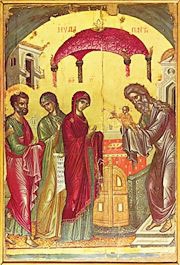
1. Fulfillment of Prophecy
- Reflect on how the presentation of Jesus in the Temple fulfills Malachi’s prophecy. What expectations did the people have regarding God's arrival?
- Consider the response of the Psalm, “Lift up, O gates, your lintels.” How does this connect with the anticipation of a significant event?
2. God's Unexpected Arrival
- Discuss the concept of God coming in humility rather than splendor. How does this contrast with human expectations of divine intervention and power?
- What does the image of Jesus’ humble presentation say about God's nature and priorities?
3. Role of the Messenger
- What is the significance of the messenger in Malachi's prophecy, and how does this relate to the broader theme of preparation for something major?
- Compare this preparation to a modern event, such as a presidential inauguration. What does this suggest about readiness for God’s work?
4. Faithfulness and Recognition
- Examine the role of Mary, Joseph, Simeon, and Anna. How do their actions reflect faithfulness and adherence to the Law?
- How does the Holy Spirit aid Simeon in recognizing Jesus as salvation? Discuss the importance of spiritual readiness in perceiving God’s presence.
5. The Great Reversal
- Explore the concept of “the great reversal” in Luke’s Gospel. How are the poor and humble, like Mary and Joseph, highlighted and uplifted?
- Discuss the role of the “anawim” and why their trust in God leads to joy and fulfillment.
6. Completion of Days and the Outpouring of the Spirit
- Reflect on the phrase “when the days were completed.” What does this signify about the messianic age and the outpouring of the Holy Spirit?
- How does the fulfillment of time relate to the roles of Simeon and Anna?
7. Anna as a Model Evangelist
- Analyze Anna’s role as a prophetess and her response to seeing Jesus. Why is she considered the first evangelist?
- Discuss the significance of Anna’s declaration and what it teaches about sharing the good news.
8. Recognizing God in Our Midst
- How can we apply the lessons from Simeon and Anna to recognize God in our everyday lives?
- What does it mean to see God in humble and unexpected forms today? How can we cultivate a watchful and prayerful attitude?
9. Reflection and Application
- Consider how this narrative challenges our ideas about power, significance, and divine action. How might this perspective shift influence our behaviors and beliefs?
- Share ways in which the group members have experienced God's presence in subtle or unexpected situations.
Closing Reflection
- Conclude by reflecting on the overarching message of the sermon. How does the story of Jesus' presentation invite us to be vigilant and faithful, recognizing God’s work in our lives and the world?
The Great Reversal

EXCERPT: Today’s Gospel highlights one of Luke’s predominant themes: “the great reversal.” Note its unexpected elements: the poor, the lowly, and the needy, who trust in God, experience the joy and fulfillment of salvation. The self-sufficient, who see no need for God, are excluded. Luke’s Gospel centers on the “anawim” (the poor ones), represented here by the humble couple Mary and Joseph and by Simeon and Anna. In Luke’s vision, the lowly are raised up, not for their special gifts or prominence, but because they hunger for God and express that hunger through fidelity.
When the Days Were Completed
EXCERPT: At the beginning of today’s narrative and throughout the infancy narrative, Luke uses the phrase “when the days were completed.” This signals that something significant is taking place: the messianic age is beginning. With the Savior’s arrival comes an outpouring of the Holy Spirit. The prophet Joel (chapter 3)had foretold this outpouring as a hallmark of the Messiah’s coming. Indeed, the Spirit moves Simeon, Anna, and all who remain vigilant. The “days are completed,” and we have the One we have longed for – God’s love made flesh in Jesus Christ.
Although today’s story is set in ancient times, it reflects its historical context. Simeon, elderly and insignificant by societal standards, takes center stage, speaking first and uttering key lines. Luke emphasizes that Simeon had the Holy Spirit three times. Then Anna, the widow and prophetess, steps forward. She is the only woman in the Gospel called a prophet. At 84 years old, she never left the Temple, though she likely remained in the outer court reserved for women. Silent until now, Anna recognizes the Messiah in the infant Jesus and breaks her silence to give thanks and share the good news with others waiting for God’s help. In this way, Anna becomes the first evangelist.
This story, though surprising at first, reveals a consistent theme: God recognizes the faithful, the watchful, the needy, and the insignificant in the eyes of the world. For them, God shows up. Like Anna, they help turn our eyes toward God, enabling us to recognize Jesus when he comes, even in humble and unexpected forms in our own time.

LIFE ISSUES — TOPICAL LIBRARIES
Editor: Jerry Novotny OMI, LifeIssues.Net
Currently, 13511 articles organized into the following Topical libraries:
Presentation of the Lord
Homily Suggestions
Today’s celebration brings forward several themes that illumine in a particular way the Church’s dedication to building the Culture of Life.
The Presentation of Jesus in the Temple emphasizes, for one thing, the fact that he was like us in all things but sin. This child shared the journey each human being makes through his/her mother’s womb. Jesus was an embryo, a fetus, an unborn child. By assuming all the stages of our human journey, he also redeemed them.
This is closely related to a second key theme: we belong to God. The Presentation is also a declaration: this child is God’s. In Jesus’ case this is true in an even deeper way, because he is God’s only-begotten Son. If he belongs to the Father, so do all of us, and so do the poor, the sick, the marginalized, the oppressed, and the unborn. Human life cannot be owned by other human beings nor by the power of the state. It belongs only to God.
Celebrating the Presentation, therefore, gives each of us the privilege and obligation of proclaiming, celebrating, and serving that gift of life as it is entrusted to the care (not the ownership) of all of us.
And our holding of candles on this Feast represents the fact that we shine the light of this truth in a dark Culture of Death. The glory of God, which Christ shines forth to the Gentiles, is a glory reflected in every human life, no matter what its condition.
SOURCE: Priests for Life
LifeIssues.Net Homilies
Editor: Jerry Novotny OMI
No Homilies Available
SOURCE: LifeIssues.net Homilies
 Highlight text or double-click a paragraph anywhere on the site to ADD TO NOTES. You can also click ASK AI to copy your selection to the clipboard with a command prompt, ready for you to paste manually into the chat above.