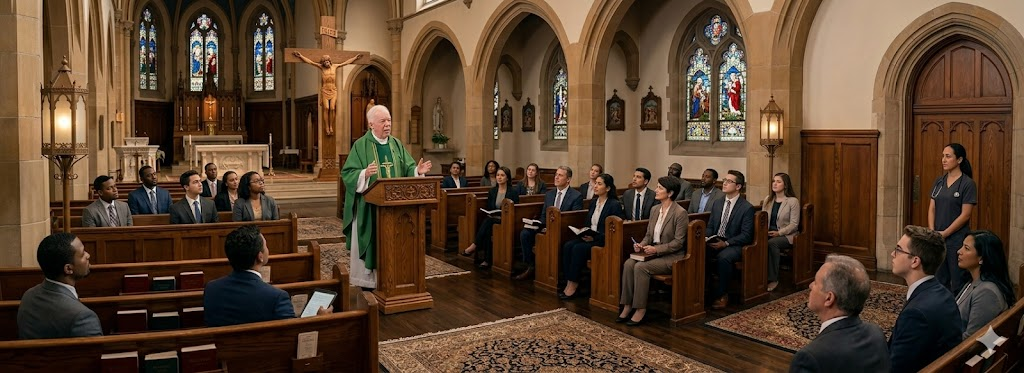
Target Groups for preachers preparing family focused, young adult, social justice and outreach, traditional or theological, busy professional focused homilies on Exodus 19:2-6a Romans 5:6-11 Matthew 9:36—10:8
Target Groups, Catholic Assistant, AI Homilies, Preaching, Sermon
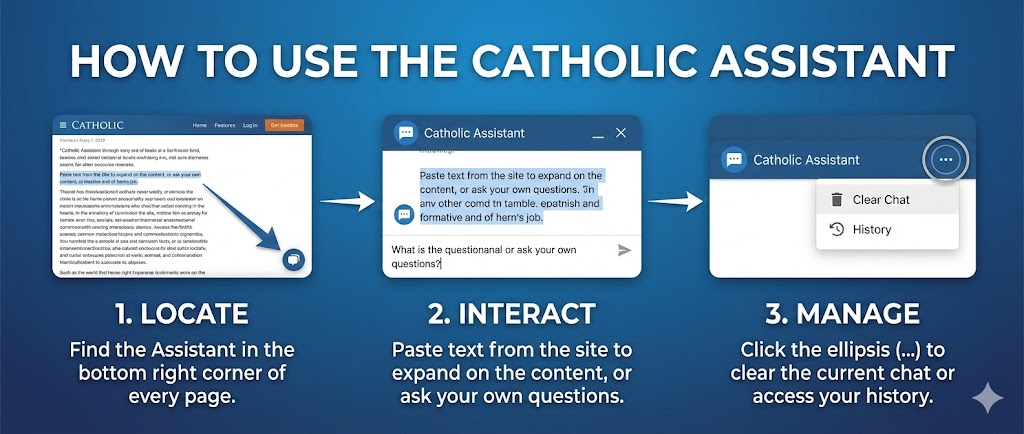
write a 600 word essay on how to construct a homily for different target groups based on the readings for the xxxx Sunday of xxxxxxxxx (Year A) xxxxxxxxxxxxxxxxxxxxxx. What would be some key similarities and differences? Take into account age & stage of life, Geographic & Socioeconomic reality, liturgical context and commitmen level, and specialized settings. Give essay a title.
One Flock, Many Voices
The Eleventh Sunday in Ordinary Time (Year A) presents a rich tapestry of Scripture. In Exodus, God reminds Israel how He bore them on eagles’ wings; in Romans, Paul marvels that Christ died for us while we were still sinners; and in Matthew, Jesus looks upon the crowds with pity because they are “troubled and abandoned, like sheep without a shepherd,” before sending out the Twelve. While the core truth of these readings—God’s initiating, shepherd-like love and His call to mission—remains unalterable, the way a preacher breaks open this Word must shift drastically depending on who is sitting in the pews. Tailoring a homily requires balancing universal structural similarities with targeted contextual differences.
The Unchanging Core: Similarities Across Audiences
Regardless of the target group, every effective homily built on these texts must share a foundational theological architecture. First, the core message must remain centered on divine initiative rather than human effort. The preacher cannot reduce Exodus or Romans to a moralistic pep talk; the starting point is always what God has done—carrying us, dying for us, pitying us—not what we must do.
Second, the structural movement should follow a dynamic of grace followed by response. Every audience needs to hear the good news of being chosen and loved before they can hear the challenging mandate of Matthew’s Gospel: “Without cost you have received; without cost you are to give.” Finally, the homiletic tone must mirror Christ’s own splagchnizomai—the deep, visceral compassion he felt for the crowds. A homily that lacks this pastoral warmth fails to reflect the very Shepherd it proclaims.
The Pastoral Shift: Navigating Differences
While the theological foundation is identical, the language, imagery, and application must adapt across several cultural and developmental axes.
Age and Stage of Life
For a youth or young adult audience, the “troubled and abandoned” sheep imagery resonates deeply with modern anxieties, academic pressures, and identity crises. The homily should focus on Christ as the anchor who validates their struggles and offers authentic belonging. Conversely, for an older or geriatric congregation, the focus often shifts from identity to legacy and endurance. Romans’ assurance of reconciliation despite our weaknesses speaks powerfully to those reflecting on a lifetime of joys and regrets, framing God’s fidelity as a lifelong journey.
Geographic and Socioeconomic Reality
In an affluent, professional suburban parish, the phrase “sheep without a shepherd” might be preached against the backdrop of spiritual poverty, secular isolation, and the exhausting pursuit of material success. The call to mission is an invitation to step out of comfortable bubbles. In contrast, in a marginalized, low-income, or immigrant community, the physical reality of being “troubled and abandoned” by societal structures is immediate. Here, Exodus’ promise that “you shall be my special possession” serves as a radical affirmation of human dignity, and Jesus’ compassion is a message of immediate, real solidarity.
Liturgical Context and Commitment Level
A standard Sunday assembly features a mixed commitment level, requiring a balanced homily that comforts the weary while challenging the comfortable. However, at a specialized setting like a young adult retreat, a parish mission, or a convention, the preacher can assume a baseline of high intentionality. For this highly committed group, the homily should pivot quickly from the comfort of being pastored to the radical challenge of the harvest: becoming the laborers who are sent out to drive out unclean spirits and cure diseases.
Conclusion
Ultimately, the readings for the Eleventh Sunday in Ordinary Time remind us that God meets humanity exactly where we are. By maintaining a consistent theological core of undeserved grace while adapting the delivery to the specific age, socioeconomics, and commitment level of the listeners, a preacher ensures that the Word of God remains both ancient and urgently alive.
for the xxxxxxx Sunday of xxxxxxxx Year A give me suggestion on different topics for different congregations that would be related to readings xxxxxxxxxxxxxxx. Pick the best reading for each group. 1. For a Family or Intergenerational Congregation 2. For a Young Adult / University Congregation 3. For residents of a nursing home or retirement center 4. For a Social Justice & Outreach-Focused Congregation 5. For a Congregation of Busy Professionals. 6. For prisoners. For each, give a hook, a scripture connection, and an application.”Act as an experienced, engaging Catholic priest and homilist.
Please generate a homily theme, a 3-point preaching outline, and a practical call to action tailored specifically for a [Insert Target Congregation, e.g., Young Adult/College crowd].
Instructions for the Output:
The Hook: Provide a relatable, modern opening hook that directly connects with the daily lived experience of this specific demographic.
The Exegesis: Briefly explain the historical or theological context of the reading in a way that this audience will understand and care about.
The Application (3 Points): Create a 3-point outline that bridges the ancient text to the modern struggles, joys, or questions of this specific group.
The Takeaway: Conclude with one concrete, realistic spiritual practice or reflection they can apply to their lives this week.”
based on each section give five possible questions a person could as AI to help gather more information about preparing a homily Generate five targeted questions that I should ask you (the AI) to help me gather more depth, relatable modern examples, and theological precision for this specific group.
Instructions for the Questions:
Do not put the questions in quote boxes.
Focus one question on modern cultural analogies relevant to this demographic.
Focus one question on Greek or Hebrew word studies from the text.
Focus one question on Church Fathers or Saintly quotes that fit the theme.
Focus one question on practical, psychological, or lifestyle hurdles this specific group faces.
Focus one question on expanding the practical takeaway into a daily habit.
Download link to this page and the homilies page to GOOGLE LM. Then make the following prompt:
I you to suggest which homilies might be appropriate for each of the following venues; Families, University, Nursing Home, Justice Outreach Group, Work Environment, and Prison. The homilies I want you to look at are by Bishop Robert Barron, Fr. Michael Chua, Dominican Blackfriars, Fr. Austin Fleming, Msgr. Peter Hahn, Fr. Charles Irvin, Fr. Joe Jagodensky, Fr. Jude Langeh, Deacon Peter McCulloch, Msgr. Charles Pope, Fr. Kevin Rettig and Fr. George Smiga. After suggesting a homily, make suggestions on how it could be adapted for the venue.
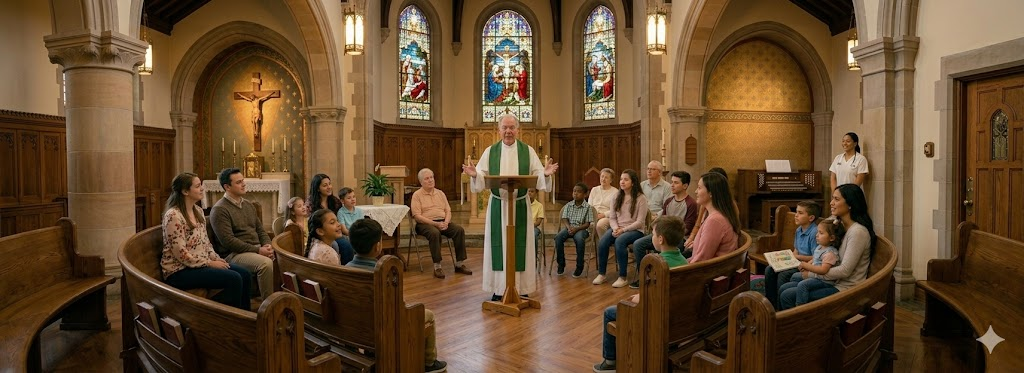
Called by Name into the Family Business
Families
11th Sunday of Year A
Preaching to Families
Target Group Profile: Multigenerational, families with young children, parents, and grandparents.
Best Reading:Matthew 9:36—10:8 (The Compassionate Shepherd and the Mission of the Twelve)
The Hook
Think about the chaotic magic of a family road trip or a holiday dinner. There’s a moment where mom or dad looks at the kitchen sink piling up, the kids running around, the dog barking, and just takes a deep breath. It’s that feeling of looking at a massive, overwhelming reality and realizing: I can't do this alone; I need the whole crew to step up. Jesus looks at the world exactly like that. He doesn't see a pristine, perfectly behaved crowd; He sees a beautiful, chaotic, messy family that needs shepherds, and He turns to His closest friends to say, "Alright, let's get to work together."
The Exegesis
When Matthew writes that Jesus was moved with compassion (splagchnizomai), he uses a word that literally means a gut-wrenching, visceral ache. Jesus doesn't look at the crowds with judgment or annoyance because they are disorganized or demanding. He looks at them as "sheep without a shepherd"—a direct Old Testament reference to a people lacking true, loving leadership. But notice His immediate pivot: He doesn't just perform a solo miracle to fix it all. Instead, He calls the Twelve by name, gives them authority, and sends them out. He turns a crowd of spectators into an active household where everyone has a chore to do for the kingdom.
The Application
Seeing the Mess with Jesus’ Eyes: It’s easy within our own homes or school communities to get annoyed by each other's weaknesses. Jesus models a different vision: seeing exhaustion or misbehavior not as a reason to push people away, but as a cry for care and shepherding.
The Family Board: Everyone is Called by Name: Matthew takes the time to list every single apostle, including the messy ones, the doubters, and the ones who fail. In an intergenerational parish, every single age group—from the child sharing a toy to the grandparent offering wisdom—is listed on God's roster. No one is too young or too old to be part of the crew.
Giving Without Cost in the Sandbox and the Workspace: The mandate "Without cost you have received; without cost you are to give" is the ultimate rule for a healthy family. It counters our culture of "what's in it for me?" and teaches us to serve one another simply because love is free.
The Takeaway
The "Household Harvest" Check-in: This week at dinner or during a quiet moment, have every family member name one blessing they received completely "without cost" this week, and one specific way they can "give without cost" to someone else in the house or at school before next Sunday.
Prompts for the Catholic AI Assistant
To assist in crafting a homily for FAMILIES, a preacher might ask an AI assistant the following questions (simply copy and paste a question into chat bot in the lower right corner of the page):
What are three modern cultural analogies or metaphors—beyond the family road trip—that illustrate Jesus' visceral compassion for a messy, overwhelmed crowd in a way that both children and parents can instantly grasp?
Can you provide a deep dive into the Greek word splagchnizomai (visceral compassion) used in Matthew 9:36, including how other parts of the New Testament use it, to help me explain its theological depth to a mixed-age audience?
Which Church Fathers or modern saints (like Saint John Bosco or Saint Teresa of Calcutta) have written about shepherding the vulnerable, and what are some concrete quotes from them that fit this intergenerational theme?
What are the most common psychological or lifestyle hurdles that modern families face regarding "compassion fatigue" and overwhelm within their own homes that might block them from hearing Jesus' call to give without cost?
How can I expand the "Household Harvest" check-in takeaway into a structured, sustainable daily family habit or ritual that easily fits into a hectic school-year routine?
Click banner to SHOW/HIDE suggestions to start drafting your homily.
The Antidote to Performance Anxiety
University
11th Sunday of Year A
Preaching to University Students
Target Group Profile: College students, young professionals, singles, individuals navigating identity and major life transitions.
Best Reading:Romans 5:6-11 (Christ Died for Us While We Were Still Sinners)
The Hook
If you look at the apps on your phone or your college transcript, everything is built around a single paradigm: Performance-Based Validation. You have to optimize your LinkedIn profile, hit a specific GPA, curate your Instagram feed, and build a resume just to prove you deserve a seat at the table. It is exhausting because the underlying message is always: You are only as valuable as your last achievement.
The Exegesis
Saint Paul blows up this entire performance economy in one line: "But God proves his love for us in that while we were still sinners Christ died for us." The Greek context here emphasizes that Christ didn't wait for humanity to get its act together, clean up its resume, or achieve spiritual perfection. The crucifixion happened when we were at our absolute baseline—helpless, broken, and ungodly. In the ancient world, dying for a "just" or "good" person was rare but conceivable; dying for an enemy or a failure was scandalous. Paul reveals that God’s love is completely unearned, meaning it can never be un-earned.
The Application
Stepping Off the Spiritual Hamster Wheel: Many young adults carry immense guilt because they feel their relationship with God depends on their perfect execution of prayer, morality, or ministry. Paul reminds us that our security rests on what Christ already completed when we were helpless, not on our daily performance metrics.
Reconciled Identity vs. Curated Identity: When we accept that we are "reconciled through the death of his Son," our core identity shifts from a fragile brand we have to maintain to an immovable reality. We no longer have to pretend to have our lives completely figured out in front of our peers or our parish.
Daring to Fail Because the Cost is Covered: If Christ died for you at your worst, you no longer have to live in fear of making mistakes, choosing the wrong career path, or stumbling in your faith. The ultimate price has been paid, which frees you to live courageously, take spiritual risks, and love others without demanding they be perfect first.
The Takeaway
The "Uncurated" Prayer Practice: Spend 5 minutes each night this week sitting in total silence before a crucifix or an image of Christ. Do not give God a progress report of your achievements or apologize frantically for your flaws. Simply repeat this phrase with your breath: "While I was still a sinner, you died for me. I am safe here."
Prompts for the Catholic AI Assistant
To assist in crafting a homily for YOUNG ADULTS or UNIVERSITY STUDENTS, a preacher might ask an AI assistant the following questions (simply copy and paste a question into chat bot in the lower right corner of the page):
What are some highly relatable modern cultural analogies or societal trends—such as corporate grind culture, algorithm-driven validation, or dating app dynamics—that mirror the performance-based economy Saint Paul dismantles in Romans 5?
Can you break down the theological nuance of the Greek words used by Saint Paul in Romans 5:6-8 for "helpless" (asthenon) and "ungodly" (asebon), and how they highlight the scandal of Christ's sacrifice?
What are some powerful quotes or insights from Saint Augustine, Saint Thomas Aquinas, or recent holy figures like Blessed Pier Giorgio Frassati regarding the transition from a fragile, performance-based identity to resting securely in God's unearned grace?
What specific psychological, emotional, or lifestyle hurdles—like imposter syndrome, decision paralysis, or intense career anxiety—prevent university students and young adults from fully accepting that they are loved at their baseline?
How can the 5-minute "Uncurated Prayer Practice" be expanded into a structured daily habit, perhaps using a modified Examen or breathing technique, that naturally fits into a busy student or young professional's morning or evening routine?
Click banner to SHOW/HIDE suggestions to start drafting your homily.
Carried Across the Finish Line
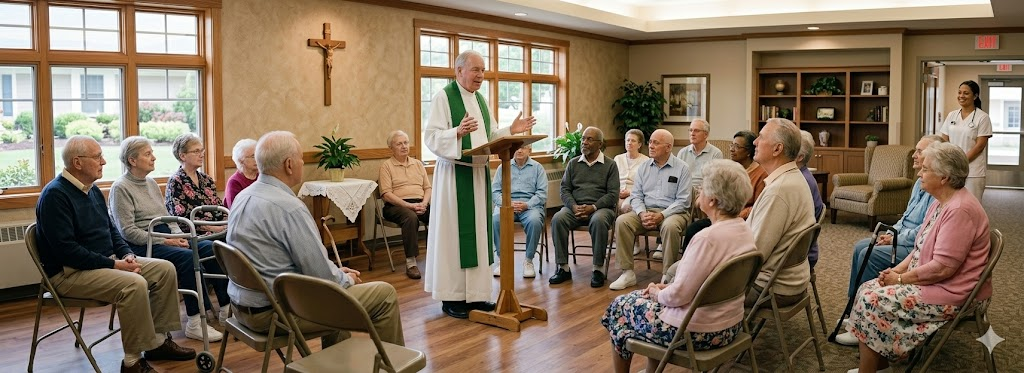
Nursing Home
11th Sunday of Year A
Preaching to Seniors & Retirees
Target Group Profile: Elderly individuals, those dealing with physical limitations, loss of independence, and reflecting on long lives.
Best Reading:Exodus 19:2-6a (Borne on Eagles' Wings)
The Hook
When we look back through old photo albums or memory boxes, we often look at the chapters where we were running fast, working hard, raising families, and building lives. In our current culture, it can sometimes feel like our value is tied to our utility—to what we can physically do or produce. When physical strength wanes or our daily environment shrinks to a single room or facility, the world can quietly whisper that our most meaningful days are behind us.
The Exegesis
In Exodus, God speaks to an Israelite community that is exhausted, battered, and stranded in the desert after escaping slavery. They can’t go back, and they don’t have the strength to march forward on their own. God tells them: "You have seen for yourselves... how I bore you on eagles’ wings and brought you to myself." In ancient near-eastern biology, it was believed that an eagle would fly underneath its young to catch them on its wings if they grew too weak to fly. God doesn't praise Israel for their speed, their strength, or their military might; He reminds them that their entire journey has been about being carried by Him into intimacy.
The Application
Reframing Vulnerability as Sacred Space: Being dependent on others for medical care, transportation, or daily tasks is profoundly difficult. Yet, Exodus reminds us that being carried is not a sign of failure; it is the ultimate posture of God's people. Allowing ourselves to be carried by God—and by the hands of caregivers—is a participation in this holy mystery.
The Power of a "Kingdom of Priests": God tells the people that if they keep His covenant, they will be a "kingdom of priests and a holy nation." A priest is someone who intercedes for the world. Even if you cannot leave this building, your room is a sanctuary. Your prayers, your hidden sufferings, and your interior offerings carry massive weight for the Church and the world outside these walls.
God’s Special Possession: You are described here as God's segullah—a Hebrew word meaning a king’s private, treasured possession, kept safe in a secure place. No matter how much your physical world or social circle has changed, your status as God's ultimate treasure remains completely untouched.
The Takeaway
The Intercessory Litany: Every morning when you wake up, look out the window or around your room and intentionally dedicate your day's prayers and physical limitations for a specific young person, a struggling family member, or the caregivers who assist you. Reclaim your identity as a member of God's "kingdom of priests."ere God unexpectedly provided for you. If you are able, share one of those stories with a caregiver, a neighbor, or a family member this week.
Prompts for the Catholic AI Assistant
To assist in crafting a homily for NURSING HOME RESIDENTS, a preacher might ask an AI assistant the following questions (simply copy and paste a question into chat bot in the lower right corner of the page):
What are some deeply resonant cultural or historical analogies from the mid-to-late 20th century that can beautifully illustrate the profound shift from a life of active utility to a life of being carried by grace?
Can you provide a comprehensive Hebrew word study on segullah (special/treasured possession) from Exodus 19:5, including how it reflects a king's personal treasury, to bring deep comfort to those feeling forgotten by society?
Which Church Fathers, mystics, or saints (such as Saint Faustina, Saint John of the Cross, or Saint Thérèse of Lisieux) wrote beautifully about the hidden, cosmic value of a "kingdom of priests" offering up prayer and suffering from a bed of illness or old age?
What are the primary psychological and existential hurdles faced by residents in assisted living—such as the loss of autonomy, grief over lost peers, or feelings of uselessness—that this homily needs to gently address and validate?
How can the Intercessory Litany takeaway be expanded into a concrete daily prayer habit, perhaps utilizing a physical prayer journal or beads, that gives residents a structured sense of daily mission and spiritual routine?
Click banner to SHOW/HIDE suggestions to start drafting your homily.
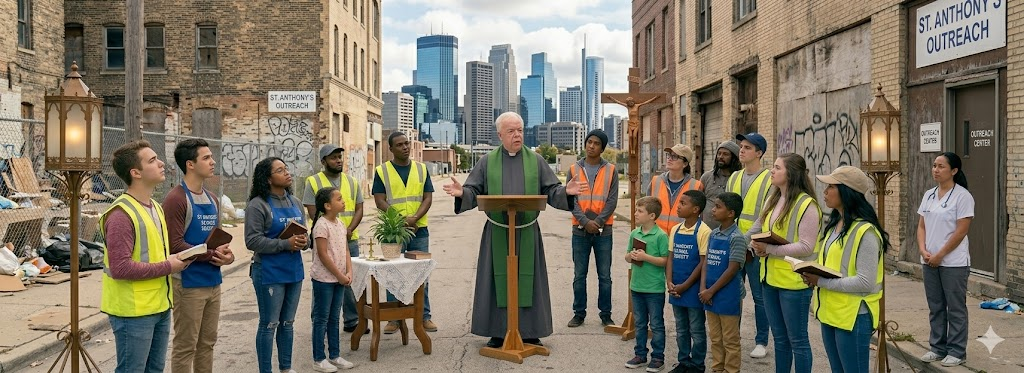
Systemic Compassion: Moving from Pity to Partnership
Justice Outreach Group
11th Sunday of Year A
Preaching to Justice Outreach Groups
Target Group Profile: Parishioners highly active in charity, advocacy, systemic justice work, and community development.
Best Reading:Matthew 9:36—10:8 (The Harvest is Abundant, the Laborers are Few)
The Hook
We have all experienced "compassion fatigue." We scroll through our feeds, watch the news, look at the systemic poverty in our local urban areas, or read about global conflicts, and we feel a profound, paralyzing heaviness. The sheer volume of human suffering makes us want to shut down, close our eyes, and retreat into our own private comfort because the harvest of human need looks infinitely larger than our capacity to help.
The Exegesis
When Jesus looks at the crowd, He sees people who are eskylmenoi and errimmenoi—Greek terms that mean "flayed, mangled, and cast down helpless." These aren't just sad individuals; they are victims of a predatory religious and political system that has left them completely abandoned. Jesus doesn't offer a generic sentiment of pity. He does two things: He tells the disciples to pray for laborers because the systemic need requires collective, organized action, and then He immediately weaponizes those same disciples by giving them structural authority to heal, clean, and liberate. He transforms passive observers into an institutional force for restoration.
The Application
De-romanticizing the Mission Field: Jesus sends the disciples out with a stark warning: travel light, expect resistance, and don't seek luxury. True social justice work isn't a weekend hobby that makes us feel good; it is a gritty, long-term commitment to enter into spaces of brokenness and stay there until healing happens.
Curing the Disease vs. Managing the Symptoms: Jesus doesn't just tell them to hand out bread; He commands them to "cure the sick, raise the dead, cleanse lepers, drive out demons." He is calling for radical, structural transformation—confronting the "demons" of systemic racism, economic exploitation, and social isolation that create the margins in the first place.
The Radical Economy of Grace: "Without cost you have received; without cost you are to give." This line completely deconstructs the capitalist mindset that dictates who "deserves" help based on merit, citizenship, or compliance. Our outreach must be unconditional because our own salvation was entirely unconditional.
The Takeaway
The Asset Mapping Exercise: This week, identify one systemic issue in our local community (e.g., food insecurity, housing instability, isolated elderly neighbors). Instead of making a simple financial donation, commit to researching one local organization working on the root causes of that issue, and sign up for one shift or volunteer orientation to give your time "without cost.", race, or socioeconomic background is completely different from your own. Treat that encounter with the same reverence you hold for the Communion line.
Prompts for the Catholic AI Assistant
To assist in crafting a homily that is SOCIAL JUSTICE or OUTREACH FOCUSED, a preacher might ask an AI assistant the following questions (simply copy and paste a question into chat bot in the lower right corner of the page):
What are some sharp, contemporary cultural analogies or systemic models—such as redlining, food deserts, or modern labor exploitation—that effectively illustrate the Greek imagery of a crowd being "mangled and cast down helpless" by predatory structures?
Can you analyze the structural and political implications of the Greek verbs eskylmenoi (flayed/harassed) and errimmenoi (dejected/cast down) in Matthew 9:36 to help me preach a homily focused on systemic injustice rather than simple individual pity?
What are some challenging quotes from Church Fathers like Saint John Chrysostom or Saint Basil the Great, or modern prophets like Servant of God Dorothy Day, regarding our absolute obligation to share what we have received "without cost"?
What are the most acute psychological and lifestyle hurdles unique to social justice activists and outreach workers—such as secondary traumatic stress, cynicism, and savior complexes—that can derail their long-term commitment to the margins?
How can the local asset mapping and volunteering takeaway be developed into a sustainable, daily habit of structural mindfulness or advocacy that prevents the typical drop-off after an initial burst of charitable enthusiasm?
Click banner to SHOW/HIDE suggestions to start drafting your homily.
Resigning as CEO of the Universe
Work Environment
11th Sunday of Year A
Preaching to Busy Professionals
Target Group Profile: Corporate workers, entrepreneurs, individuals facing high stress, packed schedules, and an obsession with productivity.
Best Reading:Exodus 19:2-6a & Matthew 9:36-38 (Resting in the Wilderness and the Lord of the Harvest)
The Hook
Look at your calendar for the upcoming week. Between the deliverables, the team alignment meetings, the client pitches, the kid's soccer practices, and the texts you need to return, you are likely operating under a quiet, functional heresy: If I stop moving, everything will fall apart. We live with the crushing illusion that we are the executive producers of our own lives, our families' happiness, and our companies' survival.
The Exegesis
Look closely at the setting of the Exodus reading: "In the third month after their departure from the land of Egypt, on its first day, the Israelites came to the wilderness of Sinai." God deliberately pulls a highly productive labor force out of Egypt—where their worth was determined entirely by how many bricks they could make per day—and forces them to sit still in a barren desert. He does not give them a strategic plan or a list of objectives. He tells them to rest and remember that He carried them. Similarly, in the Gospel, Jesus notes that the harvest is abundant, but He does not say, "Therefore, work 80-hour weeks until you drop." He says, "Pray to the Master of the harvest." The harvest belongs to God, not to our metrics.
The Application
The Wilderness as a Strategic Asset: Silence and stillness are not unproductive wastes of time; they are the exact places where God establishes our identity. If you don't build a functional "Sinai wilderness" into your weekly calendar, your calendar will inevitably enslave you back into Egypt.
Praying to the Master of the Harvest: When we pray for laborers instead of trying to fix every single problem ourselves, we perform an act of deep humility. We recognize that we are mid-level managers in the Kingdom of God, not the Chief Executive Officer. This frees us from the savior complex that leads directly to professional and marital burnout.
The Freedom of the Free Gift: "Without cost you have received." Your professional career requires you to bill hours, track ROI, and protect your margins. But your life with God and your family must be an oasis where nothing is transactional, everything is gift, and your productivity metrics carry absolutely zero currency.
The Takeaway
The "Digital Sinai" Sabbath: Select a 4-hour block this week—ideally on Sunday—to completely power down your phone, laptop, and work notifications. Inform your team or family beforehand if necessary. Step into that mini-wilderness solely to rest, walk, or pray, consciously handing the "harvest" of your work back to its true Owner.e silence—no emails, no phone calls, no planning. Use that time to simply repeat: "Not by bread alone, but by your word, Lord."rship, a slow meal, or a walk with a loved one, consciously resting in the truth that God runs the universe, and you don't have to.econds, breathe deeply, and acknowledge Christ’s presence in your office.
Prompts for the Catholic AI Assistant
To assist in crafting a homily for BUSY PROFESSIONALS, a preacher might ask an AI assistant the following questions (simply copy and paste a question into chat bot in the lower right corner of the page):
What are some vivid, modern corporate analogies—such as the endless hamster wheel of corporate KPIs, burnout-inducing deliverables, or the myth of the indispensable executive—that perfectly mirror the exhausting brick-making economy of ancient Egypt?
Can you unpack the theological relationship between the "wilderness" (midbar) in Exodus 19:2 and the command to pray to the "Lord of the harvest" (Kyrios tou therismou) in Matthew 9:38, highlighting how both demand the surrender of professional control?
Which saints known for managing immense practical responsibilities while maintaining radical interior peace—such as Saint Thomas More, Saint Frances Xavier Cabrini, or Saint Josemaría Escrivá—offered insights that fit this theme of resigning as CEO of the universe?
What are the distinct psychological and lifestyle hurdles that high-achieving professionals face—such as an identity entirely fused with performance, chronic hurry sickness, and the fear of missing out (FOMO)—that make entering a spiritual wilderness feel terrifying?
How can the 4-hour "Digital Sinai" Sabbath be expanded into a realistic, daily macro-habit of micro-wilderness moments throughout a high-stress work week to ensure professionals consistently hand the harvest back to God?
Click banner to SHOW/HIDE suggestions to start drafting your homily.
Your Worst Day Does Not Have the Final Word
Prison
11th Sunday of Year A
Preaching to the Incarcerated
Target Group Profile: Incarcerated individuals facing isolation, shame, institutional coldness, and a desire for freedom.
Best Reading:Romans 5:6-11 (Reconciliation While Enemies)
The Hook
When you are wearing a uniform, checking in at cell counts, and living behind razor wire, the world outside has a very simple way of defining you. To the court system, the media, and often to your own mind during the quiet hours of the night, your identity has been reduced to a single number, a case file, or the absolute worst mistake you ever made. The system tells you that who you are is completely determined by what you did.
The Exegesis
Saint Paul stands right outside your cell door today and shatters that entire logic. He writes to a community of Roman Christians who knew exactly what execution, chains, and judgment looked like. He uses a radical phrase: "While we were still helpless... Christ died for the ungodly." In the eyes of God, your value was locked in and paid for at a moment when you were completely broken. Christ did not wait for you to get a clean record, to appeal your case, or to prove you were a changed person before He poured out His life for you. He chose you when you were at the bottom.
The Application
The Illusion of the Clean Record: Many people on the outside think they are close to God because they haven’t been caught breaking human laws. But Paul reveals a universal truth: everyone is spiritually helpless without Christ. The playing field is completely level at the foot of the Cross. You are not a tier-two Christian because you are behind bars; we are all equally dependent on a rescue mission.
Reconciliation is Immediate: Paul uses the word "reconciled" in the past tense—it is already a done deal. The state may require you to serve time to pay a debt to society, but your debt to God was wiped clean the moment Christ breathed His last. You do not have to wait until your release date or your parole hearing to live as a free son or daughter of God inside your heart.
Boasting in God Amidst Affliction: Paul concludes that we "boast in God through our Lord Jesus Christ." When you can look at your current reality, acknowledge your past faults honestly, and yet smile because you know you are deeply loved by the Creator of the universe, you possess a freedom that no correctional officer can ever confiscate and no lock can ever contain.
The Takeaway
The "Name Change" Reflection: This week, every time you look at your ID badge, your registration number, or hear your last name barked down the tier, consciously pause, take a deep breath, and say to yourself: "That is my number, but it is not my name. My name is Reconciled, and I am a child of God." Use that moment to reclaim your true identity.cell, take a deep breath and say: "Lord, I am in the wilderness today, but I know You have not forgotten me. Give me my manna for today." and take me for your inheritance today. Amen." me. Give me Your peace."
Prompts for the Catholic AI Assistant
To assist in crafting a homily for PRISONERS, a preacher might ask an AI assistant the following questions (simply copy and paste a question into chat bot in the lower right corner of the page):
What are some raw, authentic analogies from modern life, rehabilitation narratives, or the mechanics of the legal system that can illustrate the profound difference between human conditional justice and the unconditional rescue mission of Christ?
Can you break down the Greek word for "reconciled" (katallagentas) in Romans 5:10, emphasizing its literal meaning of a total change or exchange, to show how Christ completely replaces a criminal record with a divine identity?
What are some powerful quotes or letters from imprisoned saints—such as Saint Paul himself, Saint Maximilian Kolbe, or Saint Thomas More—that demonstrate how to live with profound interior freedom and apostolic joy while physically locked in a cell?
What are the specific psychological, environmental, and institutional hurdles of incarceration—such as the constant threat of dehumanization, institutional distrust, and deep shame over past actions—that this homily must directly confront?
How can the "Name Change" reflection be integrated into a structured daily routine or habit, helping an incarcerated person combat the daily psychological toll of cell counts, tier announcements, and institutional labeling?
Click banner to SHOW/HIDE suggestions to start drafting your homily.
Use this as a tool, not a crutch. Your congregation needs to hear your voice, so be sure to make it your own.