Target Groups for preachers preparing family focused, young adult, social justice and outreach, traditional or theological, busy professional focused homilies on Jeremiah 20:10-13 Romans 5:12-15 Matthew 10:26-33 for the 12th Sunday in Ordinary Time (Year A)
Target Groups, Catholic Assistant, AI Homilies, Preaching, Sermon
write a 600 word essay on how to construct a homily for different target groups based on the readings for the xxxx Sunday of Ordinary Time (Year A) xxxxxxxxxxxxxxxxxxxxxx. What would be some key similarities and differences? Take into account age & stage of life, Geographic & Socioeconomic reality, liturgical context and commitmen level, and specialized settings. Give essay a title.
Reigning Grace, Conquered Fears
A homily is not a lecture dropped into a vacuum; it is a living bridge between sacred scripture and the concrete reality of the assembly. The readings for the Twelfth Sunday of Ordinary Time (Year A)—Jeremiah’s cry of betrayal and trust ($Jeremiah\ 20:10-13$), Paul’s theological contrast between Adam’s sin and Christ’s grace ($Romans\ 5:12-15$), and Jesus’ command to “fear no one” ($Matthew\ 10:26-33$)—offer rich, multifaceted themes. To preach this Word effectively, a homilist must dynamically adapt the message to different target groups, balancing foundational thematic similarities with strategic pastoral differences.
Key Similarities: The Universal Core
Across every demographic, the core theological message remains identical. The human condition is universally marked by vulnerability—whether from external opposition, structural hardship, or the inherited brokenness of sin described by Paul. Consequently, every target group requires the reassurance of God’s absolute providence. The image of the sparrow and the counting of hairs are universally accessible symbols proving that human worth is safe in God’s hands. Furthermore, every homily must demand a response: a call to modern transparency, spiritual courage, and intentional alignment with Jesus.
Key Differences: Adapting to the Assembly
Age and Stage of Life
When preaching to youth or young adults, the homily should focus on the fear of self-revelation and the anxiety of peer pressure. For this group, “living a transparent life” means authentic vulnerability over curated social media personas, and standing up to the “whispering of many” ($Jer\ 20:10$) in youth culture.
Conversely, an elderly congregation or retirement community may find deeper resonance in Paul’s reflections on mortality and the triumph of grace over death, or Jesus’ words on ultimate judgment. Their fears are less about social exile and more about physical decline, loneliness, or legacy, requiring a homily focused on lifelong fidelity and the comforting promise of Christ’s final advocacy.
Geographic and Socioeconomic Reality
In an affluent, suburban parish, the greatest obstacle is often spiritual apathy or the illusion of self-sufficiency. Here, the homily must challenge the congregation. The “sparrow” imagery can be used to unmask the anxiety of consumerism, urging believers to lose their false sense of privacy and risk their social status to speak the truth in the light.
In a materially impoverished or marginalized community, the tone shifts from challenge to profound comfort. The economic detail of the assarion—the cheap coin of the poor—becomes a powerful tool to remind the forgotten that they possess infinite dignity in the eyes of the Father, even when society deems them worthless.
Liturgical Context and Commitment Level
A standard Sunday assembly features a mixed commitment level, including seekers and those practicing out of habit. The homily must remain highly accessible, focusing on the practical “three commands to trust” to provide immediate, actionable encouragement for daily life.
However, in a specialized setting, such as a parish mission or a seminary community where commitment is high, the homily can dive into deeper theological waters. It can unpack Paul’s typology of Christ as the new Adam or explore the high cost of apostolic ministry, challenging the listeners to a deeper, sacrificial imitation of Jeremiah’s prophetic courage.
Conclusion
Ultimately, constructing an effective homily on these texts requires the preacher to listen to the text with one ear and to the people with the other. While the saving truth of Christ’s grace remains unshakable, the vessel that delivers it must be shaped to fit the specific needs, hurts, and hopes of the souls sitting in the pews.
for the xxxxxxx Sunday of Ordinary Time Year A give me suggestion on different topics for different congregations that would be related to readings xxxxxxxxxxxxxxx. Pick the best reading for each group. 1. For a Family or Intergenerational Congregation 2. For a Young Adult / University Congregation 3. For residents of a nursing home or retirement center 4. For a Social Justice & Outreach-Focused Congregation 5. For a Congregation of Busy Professionals. 6. For prisoners. For each, give a hook, a scripture connection, and an application.”Act as an experienced, engaging Catholic priest and homilist.
Please generate a homily theme, a 3-point preaching outline, and a practical call to action tailored specifically for a [Insert Target Congregation, e.g., Young Adult/College crowd].
Instructions for the Output:
The Hook: Provide a relatable, modern opening hook that directly connects with the daily lived experience of this specific demographic.
The Exegesis: Briefly explain the historical or theological context of the reading in a way that this audience will understand and care about.
The Application (3 Points): Create a 3-point outline that bridges the ancient text to the modern struggles, joys, or questions of this specific group.
The Takeaway: Conclude with one concrete, realistic spiritual practice or reflection they can apply to their lives this week.”
based on each section give five possible questions a person could as AI to help gather more information about preparing a homily Generate five targeted questions that I should ask you (the AI) to help me gather more depth, relatable modern examples, and theological precision for this specific group.
Instructions for the Questions:
Do not put the questions in quote boxes.
Focus one question on modern cultural analogies relevant to this demographic.
Focus one question on Greek or Hebrew word studies from the text.
Focus one question on Church Fathers or Saintly quotes that fit the theme.
Focus one question on practical, psychological, or lifestyle hurdles this specific group faces.
Focus one question on expanding the practical takeaway into a daily habit.
Download link to this page and the homilies page to GOOGLE LM. Then make the following prompt:
I you to suggest which homilies might be appropriate for each of the following venues; Families, University, Nursing Home, Justice Outreach Group, Work Environment, and Prison. The homilies I want you to look at are by Bishop Robert Barron, Fr. Michael Chua, Dominican Blackfriars, Fr. Austin Fleming, Msgr. Peter Hahn, Fr. Charles Irvin, Fr. Joe Jagodensky, Fr. Jude Langeh, Deacon Peter McCulloch, Msgr. Charles Pope, Fr. Kevin Rettig and Fr. George Smiga. After suggesting a homily, make suggestions on how it could be adapted for the venue.
Counted and Kept: The God Who Knows Your Name (and Your Hair Count)
Permission is granted to non-profits to use this images in bulletins presentations, videos, and related media.
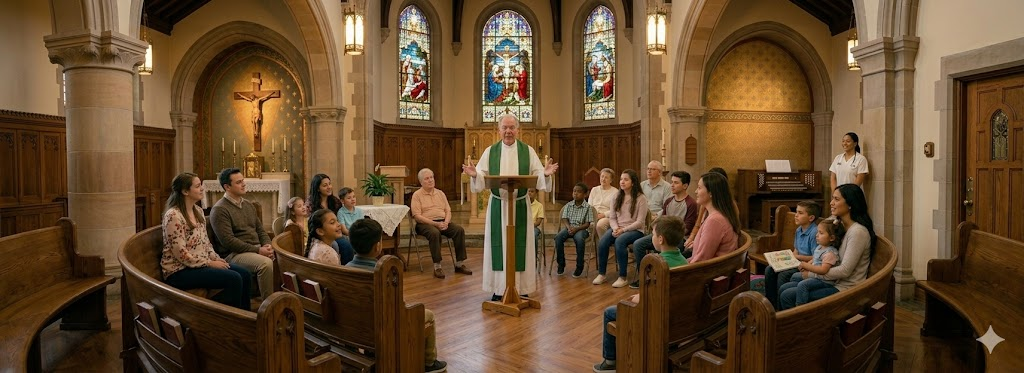
Families
12th Sunday of Year A
Preaching to Families
Target Group Profile: Multigenerational, families with young children, parents, and grandparents.
Best Reading: Matthew 10:26-33 ("Even all the hairs of your head are counted. So do not be afraid; you are worth more than many sparrows.")
The Hook: Think about a time you lost a favorite toy, a pet, or got separated from your parents in a crowded store. Remember that panic? And then the sheer relief of being found?
Scripture Connection: Jesus reassures us that God’s eye is on the smallest sparrow, and He knows us so intimately that every hair on our head is counted. Families experience a lot of daily chaos, but God's protective love is hyper-specific.
The Application:
Overcoming the Fear of 'Not Enough': Parents worry about providing; kids worry about fitting in. Jesus says: You are already infinitely valuable.
Speaking the Truth in the Light: Family life thrives on honesty. What is whispered in secret (grudges, hurts) needs Jesus’ light.
Acknowledging Jesus Together: Standing up for faith at school or work by how we treat one another.ember name one blessing they received completely "without cost" this week, and one specific way they can "give without cost" to someone else in the house or at school before next Sunday.
Prompts for the Catholic AI Assistant
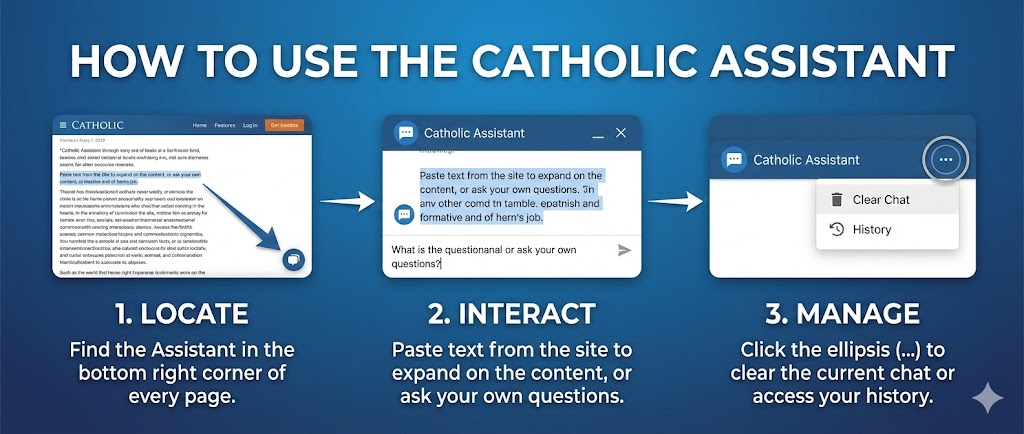
To assist in crafting a homily for FAMILIES, a preacher might ask an AI assistant the following questions (simply copy and paste a question into chat bot in the lower right corner of the page):
What are some modern cultural analogies or shared family experiences—like a chaotic road trip or a child getting lost in a theme park—that can illustrate the transition from panic to the safety of a father's care?
Can you provide a word study on the Greek word used for "sparrows" (strouthia) or "counted" (arithmeo) in Matthew 10, and how that underscores God's hyper-specific attention to microscopic details?
Which Church Fathers or family-focused Saints (like St. Thérèse's parents, Louis and Zélie Martin) wrote beautifully about finding God's immense love within the ordinary, small duties of domestic family life?
What are the primary psychological hurdles or modern lifestyle stressors that Christian parents face today regarding their children's safety and future that make "fear not" a difficult command to live out?
How can we expand the idea of knowing we are "worth more than many sparrows" into a practical, 2-minute daily family prayer habit or dinner-table ritual?
Click banner to SHOW/HIDE suggestions to start drafting your homily.
Unmasked and Unafraid: Finding Identity Beyond the Algorithm
Permission is granted to non-profits to use this images in bulletins presentations, videos, and related media.
University
12th Sunday of Year A
Preaching to University Students
Target Group Profile: College students, young professionals, singles, individuals navigating identity and major life transitions.
Homily Theme:Unmasked and Unafraid: Finding Identity Beyond the AlgorithmSelected Reading: Matthew 10:26-33
The Hook
Look at your phone right now—or just think about your screen time. We are the most connected generation in human history, yet we are arguably the most terrified of being truly seen. We filter our photos, we curate our takes, and we delete posts if they don't get enough likes within ten minutes. There is a deep, ambient anxiety that if people knew the real us—our doubts, our loneliness, our messy mental health days—we’d be canceled, swiped left on, or rejected. We live under the tyranny of the algorithm, constantly afraid of being exposed.
The Exegesis
When Jesus speaks these words to His disciples in Matthew 10, He isn't giving them a generic motivational speech. He is sending them out on mission into a hostile world. He tells them, "Nothing is concealed that will not be revealed." In the ancient world, truth-telling could get you killed by the empire. The religious and political elites operated in secret rooms and back-alley deals. But Jesus flips the script. He tells His followers that the Kingdom of God is an open book. Furthermore, He grounds their courage in a radical theological truth: God’s intimate, providential care. To a culture that saw individuals as mere cogs in the Roman Empire, Jesus says that God counts the very hairs on their heads and watches the cheap sparrows sold in the marketplace. If God sustains the trivial elements of creation, He is fiercely committed to sustaining you.
The Application (3 Points)
1. Fear Not the 'Cancel Culture' of the World Jesus says, "Do not be afraid of those who kill the body but cannot kill the soul." In a university or young adult setting, the fear isn't usually physical death—it’s social death. It's the fear of being excluded from the group, failing to land the job, or standing out for your faith. Jesus calls us to a holy grit. When your identity is anchored in the Creator of the universe, the opinions of your peers lose their power to destroy you.
2. Radical Authenticity Before a Loving Father Because "nothing is concealed that will not be revealed," we can stop wasting energy pretending to be perfect. God already sees the doubts you have during biology class, the temptations you battle late at night on your laptop, and the loneliness you feel in a crowded room. And guess what? He isn't shocked. He cares for you more than the sparrows. We are invited to bring our uncurated, unfiltered selves to the sacrament of Reconciliation and to prayer.
3. Acknowledging Christ in the Public Square "Everyone who acknowledges me before others I will acknowledge before my heavenly Father." This is our call to counter-cultural courage. Acknowledging Jesus on campus or in your first job doesn't mean being obnoxious; it means letting your faith drive your integrity, your kindness, and your defense of the vulnerable. It means refusing to laugh at the joke that degrades someone else. It means being openly Catholic in a world that thinks faith is obsolete.
The Takeaway
This week, let’s unplug from the court of public opinion to plug into the gaze of the Father. Your challenge is to take a 15-minute "Digital Fast" every day this week. Turn your phone completely off, sit in the silence of your room or a chapel, and repeat this simple breath prayer: "Father, you see me, you know me, and I am worth more than the sparrows." Let God look at the real you, so you can walk out into the world unmasked and unafraid.
Prompts for the Catholic AI Assistant
To assist in crafting a homily for YOUNG ADULTS or UNIVERSITY STUDENTS, a preacher might ask an AI assistant the following questions (simply copy and paste a question into chat bot in the lower right corner of the page):
What modern cultural analogies regarding modern digital life—such as the curation of an algorithmic identity, "cancel culture," or the psychological weight of ghosting—best illustrate the fear of being exposed versus the desire to be known?
Can you explore the Greek word study for "confess/acknowledge" (homologeo) in Matthew 10:32, and contrast its literal meaning of "speaking the same word" with the modern pressure to conform to secular cultural scripts?
Which quotes from youth-focused Saints or modern blesseds (like Blessed Carlo Acutis or St. John Paul II speaking to young people) emphasize the courage to strip away masks and live an authentic, heroic Catholic identity?
What are the dominant psychological hurdles and lifestyle realities for university students and young adults today—including the epidemic of loneliness, choice paralysis, and the terror of social exclusion—that fuel this ambient anxiety?
how can we build out the 15-minute "Digital Fast" challenge into a highly structured, sustainable daily habit that helps a young adult transition smoothly from digital noise to the silent presence of the Father?
Click banner to SHOW/HIDE suggestions to start drafting your homily.
The Champion in the Quiet: Finding Strength When the Body Fades
Permission is granted to non-profits to use this images in bulletins presentations, videos, and related media.
Nursing Home
12th Sunday of Year A
Preaching to Seniors & Retirees
Target Group Profile: Elderly individuals, those dealing with physical limitations, loss of independence, and reflecting on long lives.
Best Reading: Jeremiah 20:10-13 ("But the Lord is with me like a mighty champion...")
The Hook: We all know what it feels like to have our physical strength wane, or to look around and feel like the world we once knew has changed, sometimes leaving us feeling isolated or forgotten.
Scripture Connection: Jeremiah feels trapped, hearing the "whispering of many" and feeling terror on every side. Yet, he pivots to praise because God is his "mighty champion" who vindicates the weary.
The Application:
The Power of Intercessory Praise: Like Jeremiah, residents have a profound vocation to praise God and pray for a world in crisis.ho assist you. Reclaim your identity as a member of God's "kingdom of priests."ere God unexpectedly provided for you. If you are able, share one of those stories with a caregiver, a neighbor, or a family member this week.
The Champion in the Quiet: When physical strength fades, God’s strength becomes our primary shield.
Entrusting the Past and Future to God: Letting go of anxieties about what we cannot control and placing our cause in His hands.
Prompts for the Catholic AI Assistant
To assist in crafting a homily for NURSING HOME RESIDENTS, a preacher might ask an AI assistant the following questions (simply copy and paste a question into chat bot in the lower right corner of the page):
What modern cultural analogies or historical touchstones from the mid-to-late 20th century would resonate deeply with this generation when discussing the feeling of the world changing rapidly around them?
Can you unpack the Hebrew word study for "mighty champion" (gibbôr ‘ărîṣ) in Jeremiah 20:11, and explain how its military connotations provide comfort to someone experiencing physical vulnerability?
What quotes or reflections from elderly Saints (like St. Anthony the Great in his later years) or St. John Paul II’s Letter to the Elderly perfectly capture the dignity and spiritual authority of this stage of life?
What are the specific psychological or emotional hurdles unique to senior citizens—such as the grief of losing peers, loss of autonomy, or feelings of hiddenness—that this text directly comforts?
How can we transform Jeremiah's pivot to praise into a concrete daily prayer habit that helps a resident offer up their suffering or isolation as a powerful, hidden intercessory mission?
Click banner to SHOW/HIDE suggestions to start drafting your homily.
The Divine Math: How Overflowing Grace Outruns Systemic Sin
Permission is granted to non-profits to use this images in bulletins presentations, videos, and related media.
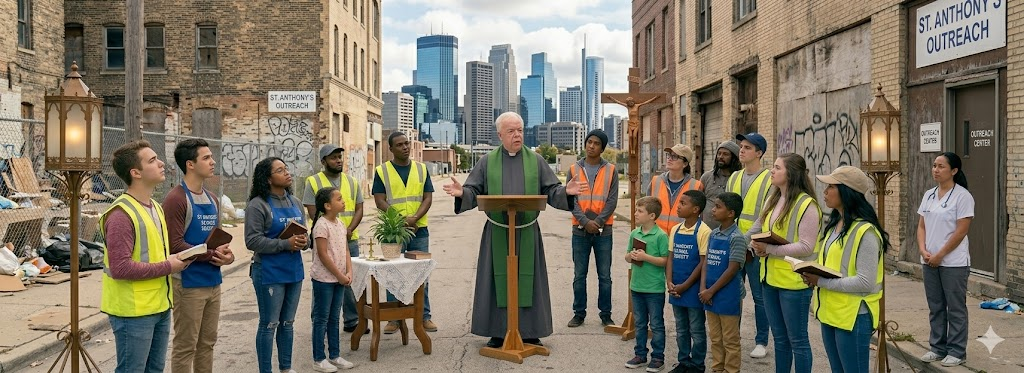
Justice Outreach Group
12th Sunday of Year A
Preaching to Justice Outreach Groups
Target Group Profile: Parishioners highly active in charity, advocacy, systemic justice work, and community development.
Best Reading: Romans 5:12-15 ("But the gracious gift is not like the transgression... how much more did the grace of God overflow for the many.")
The Hook: It is incredibly easy to feel overwhelmed by systemic injustice, poverty, and corruption. The "transgression" of human greed and apathy seems to win every single day.
Scripture Connection: Paul acknowledges the viral, systemic nature of sin entering the world, but introduces a divine math: God's grace is not just a counterweight; it overflows and super-abounds far beyond the damage of sin.
The Application:
Becoming Agents of the 'Much More': Moving past despair into active, overflowing charity and systemic advocacy.al donation, commit to researching one local organization working on the root causes of that issue, and sign up for one shift or volunteer orientation to give your time "without cost.", race, or socioeconomic background is completely different from your own. Treat that encounter with the same reverence you hold for the Communion line.
Diagnosing Systemic Brokenness: Understanding that sin operates systemically, just as Paul describes.
The Overwhelming Power of Grace: Believing that acts of justice and grace are structurally more powerful than the structures of sin.
Prompts for the Catholic AI Assistant
To assist in crafting a homily that is SOCIAL JUSTICE or OUTREACH FOCUSED, a preacher might ask an AI assistant the following questions (simply copy and paste a question into chat bot in the lower right corner of the page):
What modern cultural analogies or systemic models—like the compounding effect of a viral social movement or environmental restoration—can effectively illustrate how Paul's concept of overflowing grace outpaces systemic brokenness?
Can you provide a Greek word study on charisma (gracious gift) versus paraptoma (trespass/transgression) in Romans 5, highlighting how the vocabulary choices show a clash of unequal powers?
Which quotes from modern champions of social justice (like St. Oscar Romero, Dorothy Day, or St. Teresa of Calcutta) tie the depth of Christ's grace directly to the stamina needed for systemic human liberation?
What are the specific psychological hurdles, such as activist burnout, compassion fatigue, or political despair, that Christians focused on justice face when the "transgression" in the world feels overwhelming?
How can we expand the concept of "overflowing grace" into a sustainable daily spiritual habit that protects social justice advocates from cynicism and anchors their work in contemplation?
Click banner to SHOW/HIDE suggestions to start drafting your homily.
Beyond the Brand: Trading Image Management for Eternal Integrity
Permission is granted to non-profits to use this images in bulletins presentations, videos, and related media.
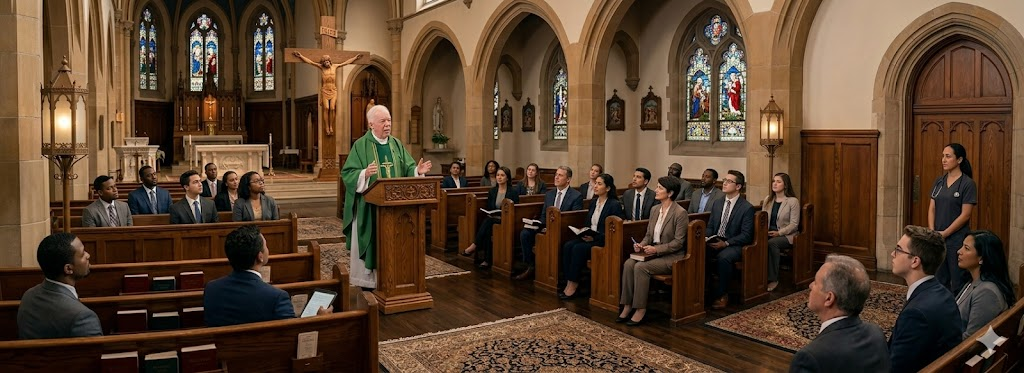
Work Environment
12th Sunday of Year A
Preaching to Busy Professionals
Target Group Profile: Corporate workers, entrepreneurs, individuals facing high stress, packed schedules, and an obsession with productivity.
Best Reading: Matthew 10:26-33 ("Therefore do not be afraid of them. Nothing is concealed that will not be revealed...")
The Hook: We live in a world of curated images, LinkedIn profiles, and non-disclosure agreements. We are constantly managing our personal brand, terrified of making a mistake that could ruin our reputation.
Scripture Connection: Jesus strips away the need for image management. He reminds us that everything hidden will be revealed, and the only evaluation that ultimately matters is God's.
The Application:
Prioritizing Eternal ROI: Investing our time and energy into things that have eternal value, rather than just market value.beforehand if necessary. Step into that mini-wilderness solely to rest, walk, or pray, consciously handing the "harvest" of your work back to its true Owner.e silence—no emails, no phone calls, no planning. Use that time to simply repeat: "Not by bread alone, but by your word, Lord."rship, a slow meal, or a walk with a loved one, consciously resting in the truth that God runs the universe, and you don't have to.econds, breathe deeply, and acknowledge Christ’s presence in your office.
Freedom from Corporate Fear: Fear of layoffs, fear of failure, fear of missing out. God’s sovereignty over our lives breaks the grip of corporate anxiety.
Integrity in the Dark: Living a life where our private ethics match our public success, knowing God sees the heart.
Prompts for the Catholic AI Assistant
To assist in crafting a homily for BUSY PROFESSIONALS, a preacher might ask an AI assistant the following questions (simply copy and paste a question into chat bot in the lower right corner of the page):
What modern cultural analogies from corporate life—like the exhausting pressure of "personal branding," maintaining a flawless LinkedIn persona, or the anxiety of corporate restructuring—parallel the hidden facades Jesus addresses?
Can you look at the Greek word for "concealed" (kalypto) and "revealed" (apokalypto) in Matthew 10:26, and explain the theological precision behind the idea that truth inherently demands exposure?
What quotes from Saints who worked in high-stakes environments or wrote for the professional classes (like St. Francis de Sales in Introduction to the Devout Life or St. Josemaría Escrivá) address maintaining internal integrity amidst worldly ambition?
What are the primary lifestyle and psychological hurdles this demographic faces—such as the idolatry of productivity, performance anxiety, and the golden handcuffs of status—that prevent them from trusting God’s providence?
How can we take the idea of prioritizing eternal ROI over market value and turn it into a concrete, daily micro-habit that a professional can practice right at their desk or during a morning commute?
Click banner to SHOW/HIDE suggestions to start drafting your homily.
Rising Above the Whispers: Freedom Behind the Bars
Permission is granted to non-profits to use this images in bulletins presentations, videos, and related media.
Prison
12th Sunday of Year A
Preaching to the Incarcerated
Target Group Profile: Incarcerated individuals facing isolation, shame, institutional coldness, and a desire for freedom.
Best Reading: Jeremiah 20:10-13 ("For he has rescued the life of the poor from the power of the wicked.")
The Hook: It’s a terrible feeling when people write you off, when old friends turn their backs, or when people are just waiting for you to trip up and fail again so they can say, "I told you so."
Scripture Connection: Jeremiah knew exactly what it felt like to be watched by people hoping for his downfall ("All those who were my friends are on the watch for any misstep of mine"). But he found freedom inside his heart because he knew God was his ultimate defender.
The Application:
Singing in the Cell: Cultivating an inner life of prayer and praise that bars and walls can never lock down.ay, but I know You have not forgotten me. Give me my manna for today." and take me for your inheritance today. Amen." me. Give me Your peace."
Rising Above the Whispers: Refusing to let the labels given by others define your worth or your future.
God as the Ultimate Defense Attorney: Handing our past, our regrets, and our cases over to the only Judge who offers absolute mercy.
Prompts for the Catholic AI Assistant
To assist in crafting a homily for PRISONERS, a preacher might ask an AI assistant the following questions (simply copy and paste a question into chat bot in the lower right corner of the page):
What modern cultural analogies or narrative themes from literature or film—where a protagonist's true identity is vindicated despite a false public reputation or a criminal record—would hit home for this audience?
Can you break down the Hebrew word study for "the poor" or "the needy" (’eb-yôn) in Jeremiah 20:13, showing how it relates to those who are completely destitute of worldly defense and reliant solely on God?
What quotes or stories from Saints who were unjustly or justly imprisoned (like St. Maximilian Kolbe, St. Thomas More, or St. Perpetua) demonstrate how a soul can experience absolute spiritual freedom while physically confined?
What are the intense psychological and institutional hurdles of incarceration—such as the conditioning of paranoia ("watching for any misstep"), deep shame, and the feeling of institutional erasure—that Jeremiah’s experience speaks to?
How can we expand the call to "sing to the Lord" from a prison cell into a realistic daily habit of mental prayer or scripture reflection that survives the noise and chaos of a correctional facility?
Click banner to SHOW/HIDE suggestions to start drafting your homily.
Use this as a tool, not a crutch. Your congregation needs to hear your voice, so be sure to make it your own.