







Related
Pages





PETITIONS
November 29, 2026
The Church
Governments and Salvation of the World
Those Burdened by Adversity
Local Parish / Faith Community
THE WORD
IN SONGS
THIS WEEK
November 29, 2026


Jeff Cavins

Ascension Press (YEAR B)
In this week's Encountering the Word video for the First Sunday of Advent, Jeff Cavins reminds us to prepare and always be ready for Christ's return.
Archdiocese of Brisbane
First Sunday of Advent (B)

Archdiocese of Brisbane (2027)
Two-Minute Homily by Fr John Fowles gives a Two-Minute homily that focuses on serving the suffering and marginalized. By loving and caring for the hungry, thirsty, stranger, naked, sick, and imprisoned, we honor Christ the King. When we turn faith into charitable action, it reveals Christ's kingdom.

Archdiocese of Brisbane (2024)
Two-Minute Homily by Fr Lucius Edomobi for the First Sunday of Advent 2023. "Let us not allow this special grace that Advent brings to pass us by."
Bishop John Dolan
First Sunday of Advent (B)

Diocese of Phoenix (2027)
Join Bishop John Dolan in the new liturgical year as he reflects on an ancient stone sculpture entitled “Xiuhmolpilli” on this First Sunday of Advent. For the Mexica people, this sculpture represented the end of a 52-year calendar cycle. The moment brought profound uncertainty and a fear that the sun may never rise again. Fires were extinguished throughout the city and families waiting in darkness as priests climbed the sacred hill to start a new fire. Bishop Dolan draws the comparison to Advent, a time of waiting in darkness for a new light to dawn. While the ancient Mexica waited for something remarkable to happen, Christians await the coming of Someone remarkable — the Son of God.
Fr. Aidan Rooney, C.M.
First Sunday of Advent (B)

St. John's University (2027)
Fr. Rooney CM urges us to turn inward during the season’s quiet, examine our own hopes and priorities, and transform that self‑reflection into concrete love for our neighbors—especially the vulnerable and marginalized—by turning personal faith into actionable service for all.

St. John's University (2024)
Fr. Rooney's CM - This Sunday: "Begging" for His return
Catholic Women Preach
First Sunday of Advent (B)

Catholic Women Preach (2027)
Annie Selak preaches for the First Sunday of Advent, offering a reflection on Advent’s call to watchfulness as an invitation to listen as God listens: “Are we listening as God listens— to the outcast, the marginalized, the stranger, the migrant?...To whom or to what we listen is just as important, if not more important, than the act of listening, watching, or being alert.”

Catholic Women Preach (2024)
Preaching for the First Sunday of Advent, Ma. Marilou S. Ibita offers a reflection on the intertwined themes of return and watchfulness: "The readings assume that the Lord will come again which opens up a great future where our active participation is required both in discerning the visions of God’s reign and in making the visions come true. If we are asleep, literally, or figuratively, we cannot participate. The repeated commands for 'watching' for the coming of the Lord and our decisive participation signify urgency!"
Bishop James Golka
First Sunday of Advent (B)

Diocese of Colorado Springs (2024)
Bishop Golka's core message is how Advent is a call to actively prepare our lives now—through faithful deeds, reshaped habits, and vigilant anticipation—to welcome Christ both in His imminent return and in His incarnation.
Know Before You Go
First Sunday of Advent (B)
Coming Soon!
Dominican Friars (2027)
TBD

Dominican Friars (2024)
Fr. Brian Walker, OP opens up the readings for the First Sunday of Advent, reminding us not to rush to thoughts of Christmas , but instead, ask ourselves how we need to change to prepare for Christmas, so that we might recognize God's coming in the face of others who are different than us.

Dominican Friars (2021)
Fr. Andrew Carl Wisdom, OP breaks open the readings for the First Sunday of Advent, challenging us to exercise our faith, like we exercise our muscles.
1-Minute Homily
First Sunday of Advent (B)
The Jesuit Post (2024)
When we can’t be near those that we love, we try to keep in touch and look forward to when we see them again. William Manaker, SJ, reminds us that our relationship with Jesus is no different.
Cardinal Luis Tagle
First Sunday of Advent (B)

Jescom TV (2024)
We open a new liturgical year today as we celebrate the First Sunday of Advent. This season invites us to prepare ourselves for our commemoration of the birth of Jesus. We believe that the Word of God “came down from heaven, and by the Holy Spirit was incarnate of the Virgin Mary and became man” in Jesus. He proclaimed the good news of God’s salvation and brought healing to his people. We believe that “he will come again in glory to judge the living and the dead and his kingdom will have no end.”
SOLT Liturgy Prep
First Sunday of Advent (B)

SOLT (2024)
Father Anthony reminds us that Advent is about God answering humanity’s prayer by coming 2,000 years ago and continues to descend to us in the Eucharist at every Mass, calling us to watchfully share His loving presence with those in need.
The Word on the Word
First Sunday of Advent (B)

EWTN (2024)
Do you find it difficult to believe that God loves each of us in the midst of our brokenness? Melissa and Veronica dive into Sunday’s sorrowful first reading to find moments of trust and hope.
Liturgy Notes

Courtesy of The Sunday Mass—2024 Cycle B
First Sunday of Advent (B)
First Sunday of Advent (B)
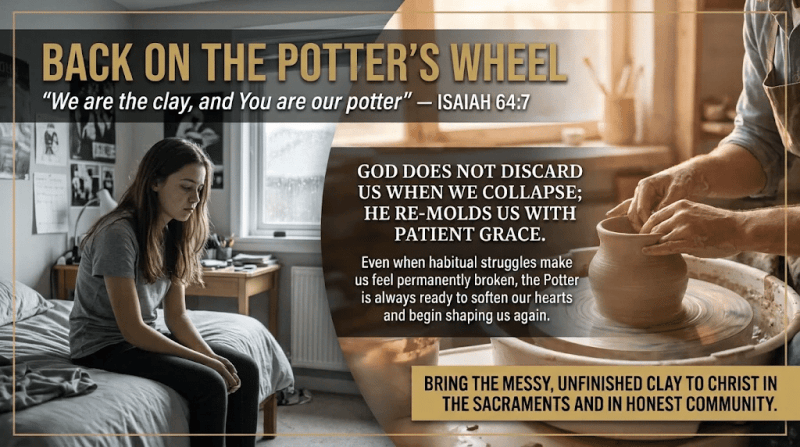
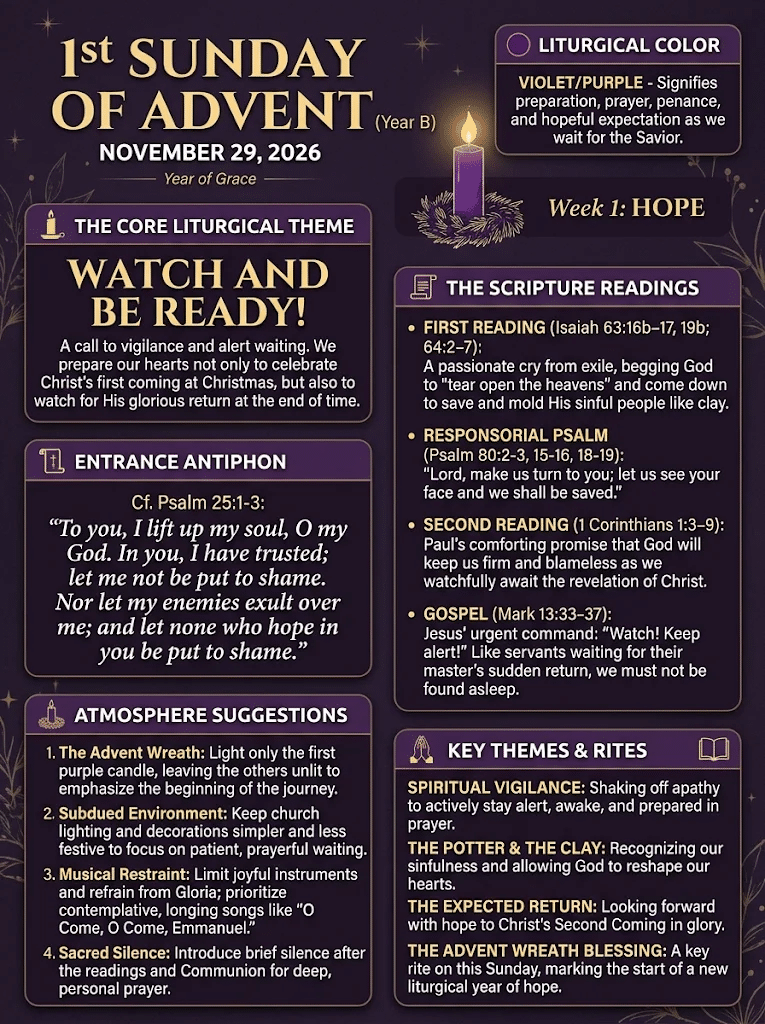
BULLETIN BLURB: Today marks the beginning of a new liturgical year and our sacred journey of Advent! As we light the first violet candle of hope, the readings urge us to "Watch and be ready!" In Isaiah, we cry out for God to reshape our hearts like clay in the Potter's hands, while St. Paul assures us that Christ will keep us firm until the end. In the Gospel, Jesus commands us to stay awake and spiritually alert. This week, let us shake off complacency, embrace quiet prayer, and actively prepare our hearts for Christ’s coming at Christmas and in glory.
First Sunday of Advent (B)
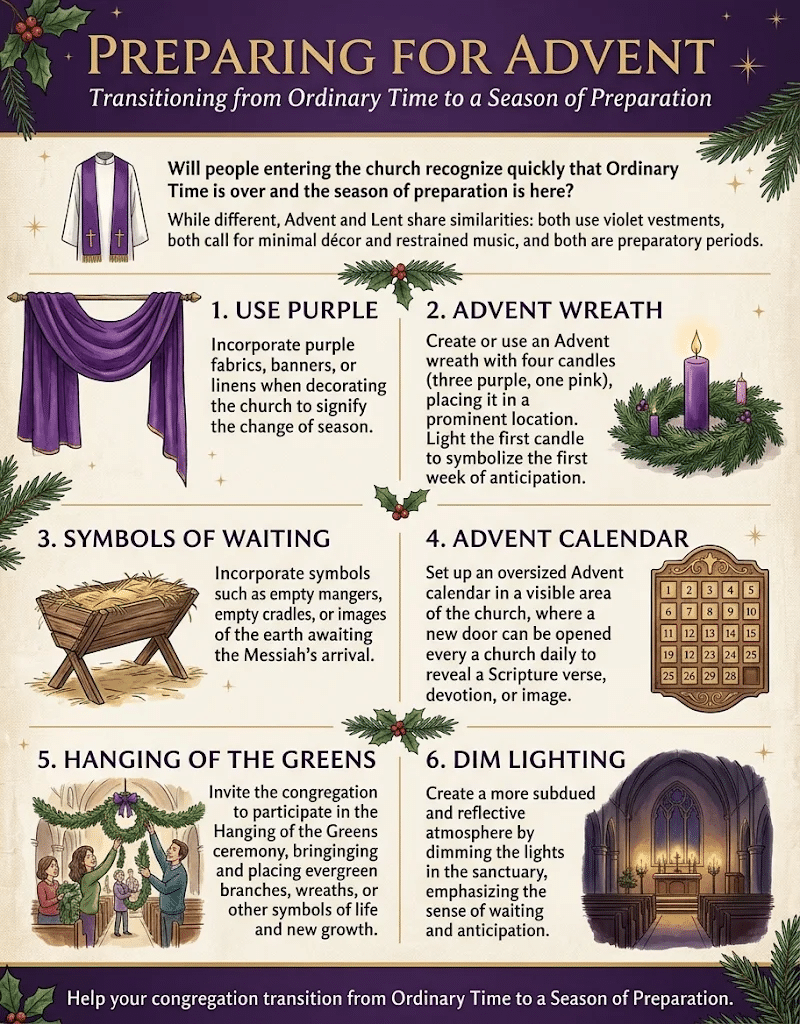
Advent: A Change of Season
Will the environment of the worship space this weekend proclaim the change of season? Will people entering the church recognize quickly that Ordinary Time is over and the season of preparation is here? Though they are very different seasons, there are still some similarities between Advent and Lent. Both use violet vestments, both call for minimal décor and restrained music, and both are preparatory periods.
Here are a few other ideas:
1. Use purple fabrics, banners, or linens when decorating the church.
2. Advent wreath: Create or use an Advent wreath with four candles, one for each week of Advent. Place the wreath on the altar or another prominent location and light the first candle, symbolizing the first week of anticipation.
3. Symbols of waiting and anticipation: Incorporate symbols such as empty mangers, empty cradles, or images of the earth awaiting the Messiah’s arrival. These symbols can be placed near the Advent wreath or in other appropriate locations in the church.
4. Advent calendar: Set up an oversized Advent calendar in a visible area of the church, where each day leading up to Christmas, a new door can be opened to reveal a Scripture verse, devotion, or image related to the season.
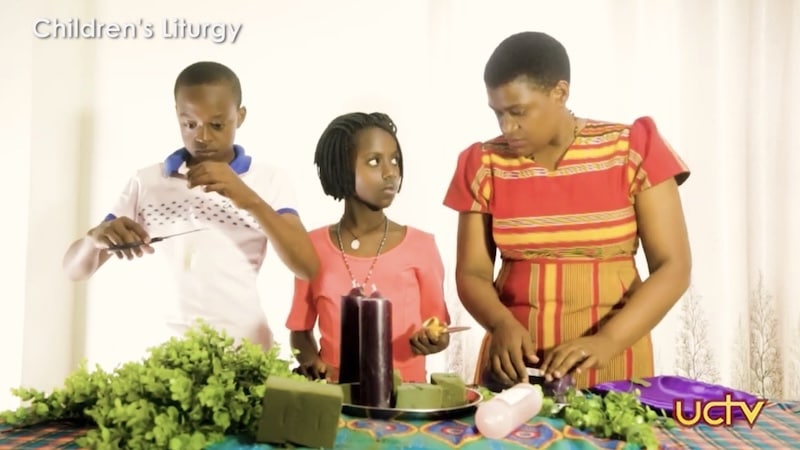
5. Hanging of the Greens: Invite the congregation to participate in the Hanging of the Greens ceremony, where they can bring and place evergreen branches, wreaths, or other symbols of life and new growth around the church. This activity can be done during the service or as a separate event before or after the Sunday service.
6. Dim lighting: Create a more subdued and reflective atmosphere by dimming the lights in the sanctuary. This can help emphasize the sense of waiting and anticipation during the Advent season.
Full Series: Cycle B Resources
OCP Music—Entrance

Response & Acclaim
OCP Music—Responsorial
First Sunday of Advent (B)
Chris Muglia


2027 PLAYLIST (158 S&P VIDEOS)
Owen Alstott


2027 PLAYLIST (158 R&A VIDEOS)
First Sunday of Advent (B)
Josh Blakesley and Grae McCullough

2027 PLAYLIST (158 S&P VIDEOS)
Owen Alstott

2027 PLAYLIST (158 R&A VIDEOS)
Presentation & Preparation
OCP Music—Presentation
First Sunday of Advent (B)


Communion
OCP Music—Communion
First Sunday of Advent (B)

Sending Forth
OCP Music—Sending Forth
First Sunday of Advent (B)

Find Us Ready (Tom Booth)

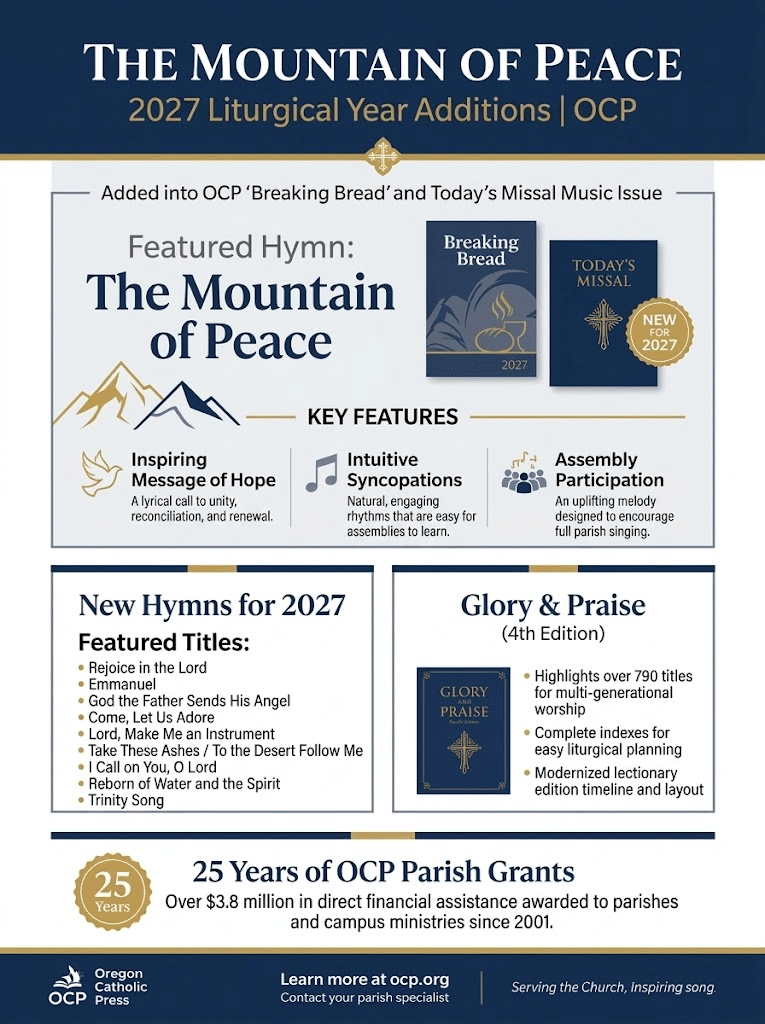
Liturgy Blog is a weekly liturgy planning resource for musicians, liturgists, homilists, youth groups, faith sharing groups, and all who look to the liturgical readings for inspiration and nourishment. Join Ken Canedo as he breaks open the Scripture and suggests tracks from the Spirit & Song contemporary repertoire.
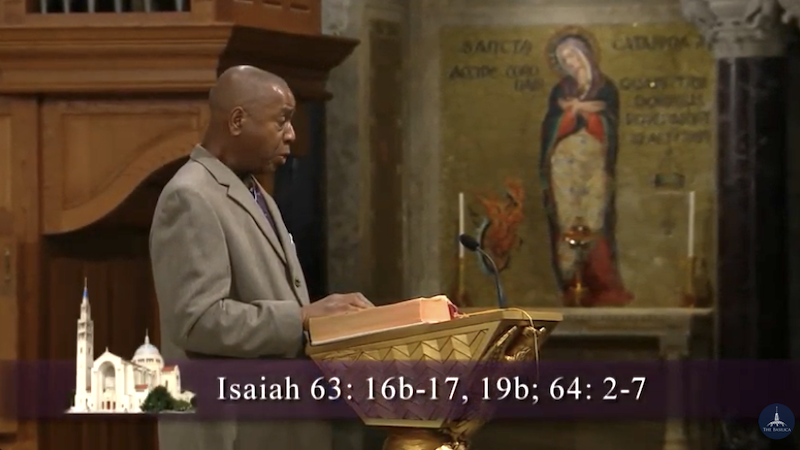

2023 video courtesy of Lector with Lisa

1st Reading—Delivery Blueprint
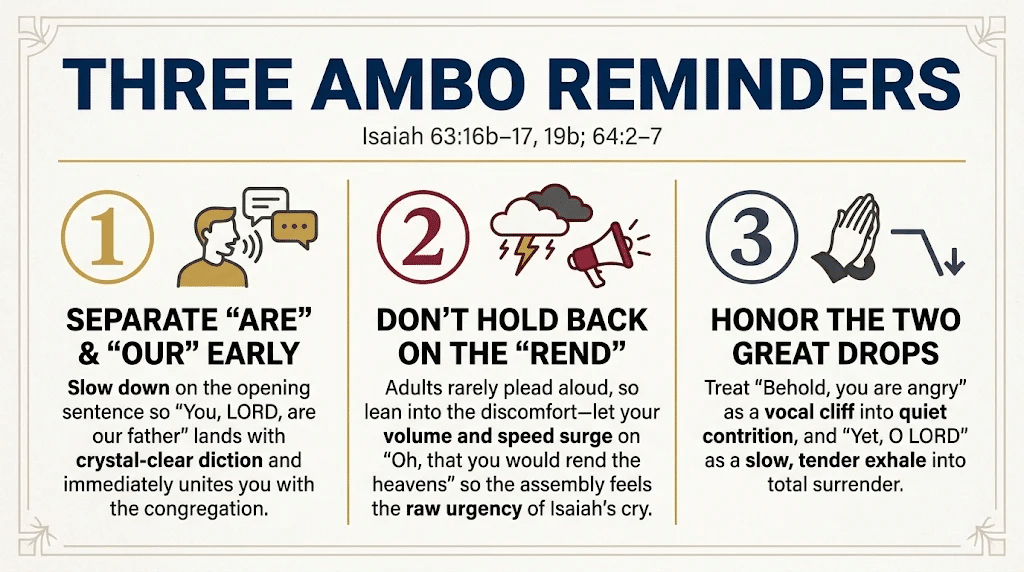
Overarching Pacing Theme: Dynamic contrast — start slow and grounded, surge into rapid, urgent intensity at the plea, drop into sober confession, and resolve in slow, tender surrender.
Core Concept vs. Story Reminder: This is a communal cry of longing grounded in Exodus memory. Do not just narrate ancient history; speak for the assembly with childlike pleading backed by unshakeable trust in God's faithfulness.
Required Vocal Emotional Profile: Courageous, unfiltered, and high-contrast — willing to "let it fly" from loud, visceral urgency to vulnerable humility.
Text Segment | Vocal Tone | Pacing & Ambo Actions |
"A reading from the Book of the Prophet Isaiah." | Clear, steady, grounded | Announce cleanly, then take a mandatory full pause before beginning the text to establish focus and authority. |
"You, LORD, are our father, our redeemer you are named forever." | Warm, trusting, deliberate | Slow down. Clearly enunciate and separate "are" and "our" so they do not blend. Stretch out "our" while scanning the assembly to include everyone in your voice. |
"Why do you let us wander, O LORD, from your ways, and harden our hearts so that we fear you not?" | Questioning, honest, vulnerable | Maintain a measured pace. Make direct eye contact with the congregation on "let us wander" and "harden our hearts" to draw them into the communal question. |
"Return for the sake of your servants, the tribes of your heritage." | Urgent, earnest, rising | Begin building momentum. Shift from questioning into active, heartfelt pleading. |
"Oh, that you would rend the heavens and come down, with the mountains quaking before you..." | Loud, powerful, desperate plea | Let it fly. Project strongly on "Rend" (meaning to tear or rupture open). Pick up the tempo—channel the raw, unfiltered urgency of a child begging a parent to show up in power. |
"...while you wrought awesome deeds we could not hope for, such as they had not heard of from of old." | Strong, bold, awe-struck | Keep it fast and driving. Carry the momentum forward as you recall God's mighty Exodus miracles. |
"No ear has ever heard, no eye ever seen, any God but you doing such deeds for those who wait for him." | Confident, emphatic, resolute | Maintain brisk energy and strong projection, landing firmly on "any God but you." |
"Would that you might meet us doing right, that we were mindful of you in our ways!" | Wistful, yearning, transitional | Ease off the rapid pace slightly as the focus turns inward from God's power to human readiness. |
"Behold, you are angry, and we are sinful;" | Sober, sharp, chastened | Major vocal shift. Drop the volume and intensity immediately—sobering up to face God's righteous anger and our own guilt. |
"all of us have become like unclean people, all our good deeds are like polluted rags;" | Humble, raw, deeply contrite | Dramatic vocal drop. Strip away all pride; speak with stark, unvarnished honesty and quiet gravity. |
"we have all withered like leaves, and our guilt carries us away like the wind." | Hollow, spent, reflective | Keep the tone subdued and heavy, letting the imagery of fragility linger. |
"There is none who calls upon your name, who rouses himself to cling to you; for you have hidden your face from us and delivered us up to our guilt." | Heavy, mournful, longing | Maintain a steady, somber cadence without rushing through the weight of spiritual separation. |
"Yet, O LORD, you are our father;" | Tender, hopeful, pleading | Slow way down. Pause slightly before "Yet." Return to the intimate, trusting warmth of the opening line—now deepened by humility. |
"we are the clay and you the potter: we are all the work of your hands." | Surrendered, reverent, peaceful | Keep the pace slow and deliberate. Let the final words settle gently over the assembly in complete trust. |
"The word of the Lord." | Strong, resonant, victorious | Pause briefly after the reading, then proclaim the closing acclamation with full, unapologetic strength matching the courage of the proclamation. |
Isaiah 63:16ff; 64:2-7
Greg Warnusz


The Historical Situation: Around 600 BC, the Babylonians took the Jews out of the promised land and kept them in exile (a.k.a. the Babylonian Captivity) for about 60 years. When Cyrus, a new emperor, took over Babylon, he sent the Jews home. This reading is set in that troubled period when Judah was trying to put itself back together after returning from Exile. To get the flavor of it, imagine how American Southerners might have felt during Reconstruction, or a contemporary family might feel when they return to a fire-damaged home.
Proclaiming It: The reading contains a pathetic mix of feelings: guilt, outrage at God alternating with praise of God, humility, anguish and hope. Read it to yourself one sentence at a time, naming the feeling captured in that one sentence. Then do the next sentence, and so on. Make a mental catalog (or even a paper list) of each feeling.
Then practice reading it aloud, making sure you pause wherever the feeling changes. This is a hard passage to read. It's even harder for a listener to understand if the sentences just tumble out rapidly. Give your listeners all the help you can.


2023 video courtesy of Lector with Lisa
2nd Reading—Delivery Blueprint
Overarching Pacing Theme: Warm, deliberate, and personal. Avoid rushing this greeting; treat it like a treasured message of affirmation, allowing ample pauses to let the theological weight land.
Core Concept vs. Story Reminder: This is not St. Paul’s famous passage on love, but rather his opening blessing and validation. Your job is to remind the congregation that while they are rich in gifts, Jesus is the sole, enduring source of them.
Required Vocal Emotional Profile: Affectionate, confident, and joyful. Proclaim this with an encouraging, smiling warmth that assures the listeners of their spiritual riches and God's unshakeable faithfulness.

Text Segment | Vocal Tone | Pacing & Ambo Actions |
"A reading from the first letter of Saint Paul to the Corinthians." | Warm, inviting, and clear | Announce with steady presence. Take a mandatory full pause to ground the space before diving into the intimate greeting. |
"Brothers and sisters:" | Inclusive, direct, and familial | Look up and make eye contact. Specifically catch the eye of a man on "Brothers" and a woman on "and sisters" to establish a deeply personal connection. |
"Grace to you and peace from God our Father and the Lord Jesus Christ." | Warm, Benedictory, and heartfelt | Keep making eye contact. Look at one person/section on "Grace to you" and another on "and peace." Scan the room on "from God our Father" to draw the whole assembly into this blessing. |
"I give thanks to my God..." | Grateful, intimate, and sincere | Lean slightly forward. Deliver this with genuine, personal warmth, as if speaking directly to the people before you. |
"...always..." | Emphatic and isolated | Add a mandatory pause before and after "always." Give this single word heavy vocal weight to emphasize the constant nature of Paul’s gratitude. |
"...on your account for the grace of God bestowed on you in Christ Jesus," | Affectionate and generous | Continue at a deliberate pace, ensuring the assembly knows the "grace" being discussed is a gift already present in them. |
"that in him you were enriched in every way, with all discourse and all knowledge," | Uplifting, appreciative, and joyful | Let your voice convey a sense of "aren't you lucky!" Celebrate their blessings. Enunciate "every way," "all discourse," and "all knowledge" to emphasize their abundance. |
"as the testimony to Christ was confirmed among you," | Resolute, affirming, and grounded | Speak with a steady, reassuring tone, recognizing the faith that has already been firmly established in their community. |
"so that you are not lacking in any spiritual gift..." | Celebratory, encouraging, and rich | Lean into "not lacking" and "any spiritual gift" with a slight smile. This is an affirmation of their spiritual readiness. |
"...as you wait for the revelation of our Lord Jesus Christ." | Patient, hopeful, and anticipatory | Let a sense of eager anticipation and trust enter your voice, looking toward the horizon of Advent hope. |
"He will keep you firm to the end..." | Assured, confident, and promising | Speak with absolute conviction. Deliver this like a promise, with steady, comforting strength that invites hope and joy. |
"...irreproachable..." | Slow, deliberate, and expansive | Say this word very slowly. Allow the massive weight of "irreproachable" (meaning completely blameless, with absolutely nothing condemning you) to hang in the air. |
"...on the day of our Lord Jesus Christ." | Solemn yet triumphant | Keep the pace steady and dignified, emphasizing the grace that prepares them for that final Day. |
"God is faithful..." | Radiant, smiling, and certain | Brighten your expression and smile as you speak these words. Deliver "God is faithful" as the ultimate, unshakeable truth of the passage. |
"...by whom you were called to fellowship with his son, Jesus Christ our Lord." | Tender, welcoming, and conclusive | Let your voice soften slightly but remain incredibly rich on "fellowship." Take a long, expansive pause after "Jesus Christ our Lord" to let the deep privilege of this partnership rest with the community. |
"The word of the Lord." | Strong, joy-filled, and resonant | Look directly at the assembly and deliver this closing acclaim with the same happy, gifted, and victorious energy that carried the entire proclamation. |
1 Corinthians 1:3-9
Greg Warnusz

Our Liturgical Setting: We wait for Christ in two ways. The early Sundays of Advent always carry on the end-of-the-world theme, from the last Sundays of the preceding liturgical year. In this theme, we wait for Christ to come again in glory, to judge the living and the dead. The later Sundays of Advent celebrate a different theme, the coming of the Messiah in the flesh, when Jesus was born of Mary.
The Historical Situation: Today's second reading comes from an early letter of Saint Paul, written while he and his audience were sure that Christ's second coming was just around the corner.
Proclaiming It: To bring this out, when you read it, emphasize the phrases that appear here in bold print:
...Likewise, the witness I bore to Christ has been so confirmed among you that you lack no spiritual gift as you wait for the revelation of our Lord Jesus Christ. He will strengthen you to the end, so that you will be blameless on the day of our Lord Jesus Christ.

 Highlight text or double-click a paragraph anywhere on the site to ADD TO NOTES. You can also click ASK AI to copy your selection to the clipboard with a command prompt, ready for you to paste manually into the chat above.