October 26, 2025
October 26, 2025


Catechesis for Catholic Teens
Catechesis for Catholic Teens
- RELIGION TEACHER
- Bishop O’CONNELL
- LIFETEEN
THE RELIGION
TEACHER

JARED DEES provides practical resources and teaching strategies to religious educators.
30th Sunday of Year C

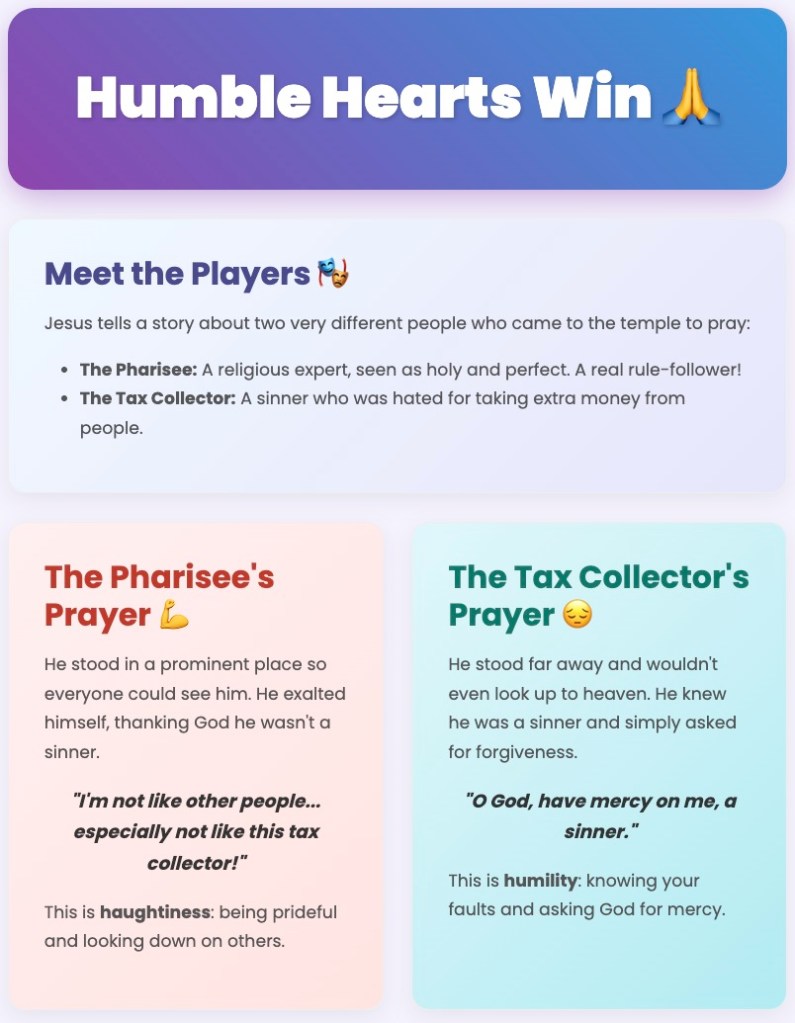
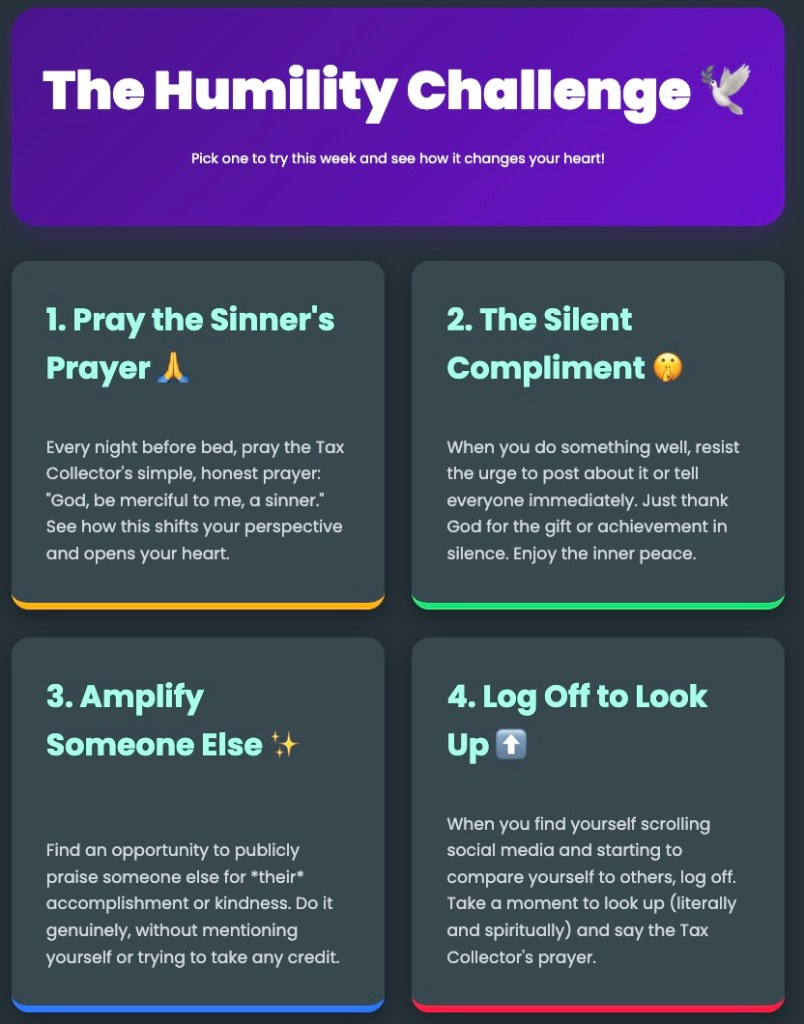
Generated using Google’s AI Gemini 2.5 Pro (w/ Chart.js and Tailwind CSS). Permission for use in any non-profit ministry w/ link to THE WORD THIS WEEK.
BISHOP MARK
O’CONNELL

30th Sunday of Year C


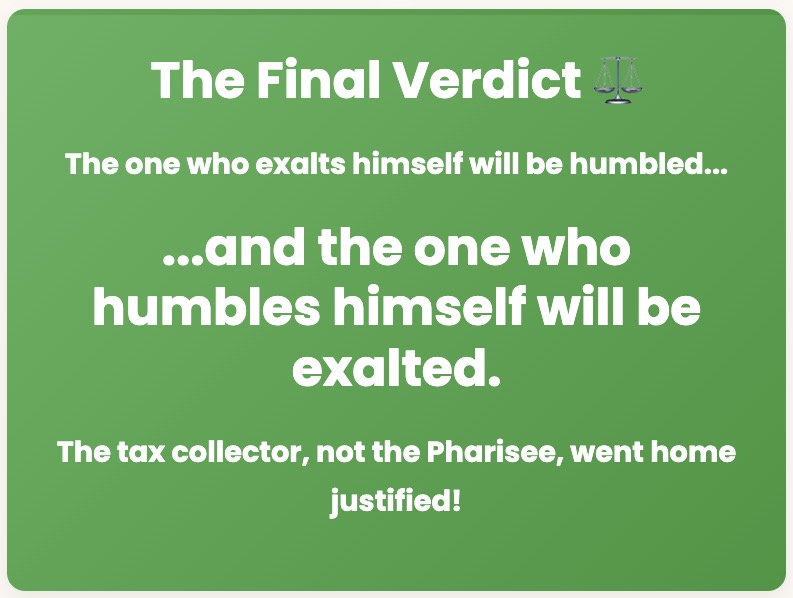
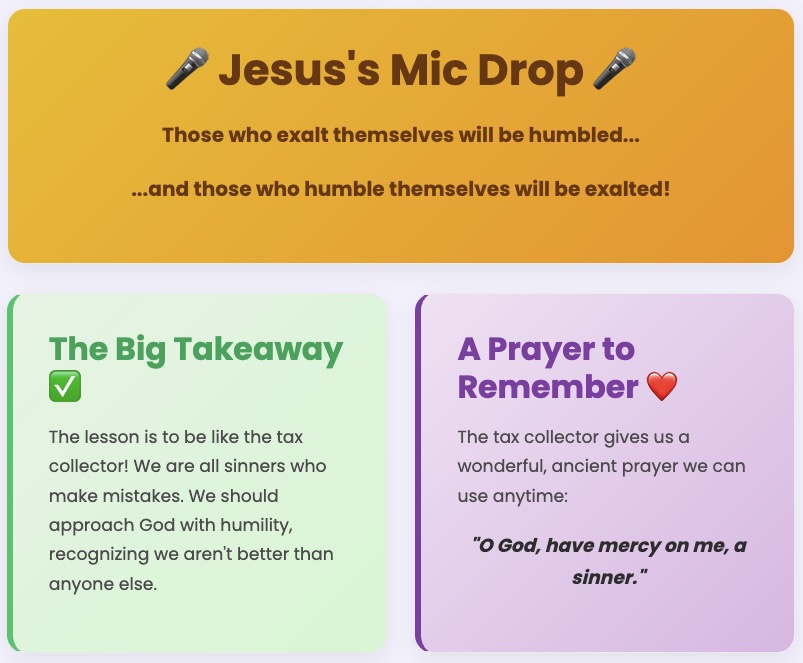
Generated using Google’s AI Gemini 2.5 Pro (w/ Chart.js and Tailwind CSS). Permission for use in any non-profit ministry w/ link to THE WORD THIS WEEK.
LIFE TEEN

Life Teen’s “Summit” is a lectionary-based discipleship program for high school teenagers designed to help them develop a deeper understanding of the Holy Mass and Sacred Scripture.
Videos (2022)
30th Sunday of Year C

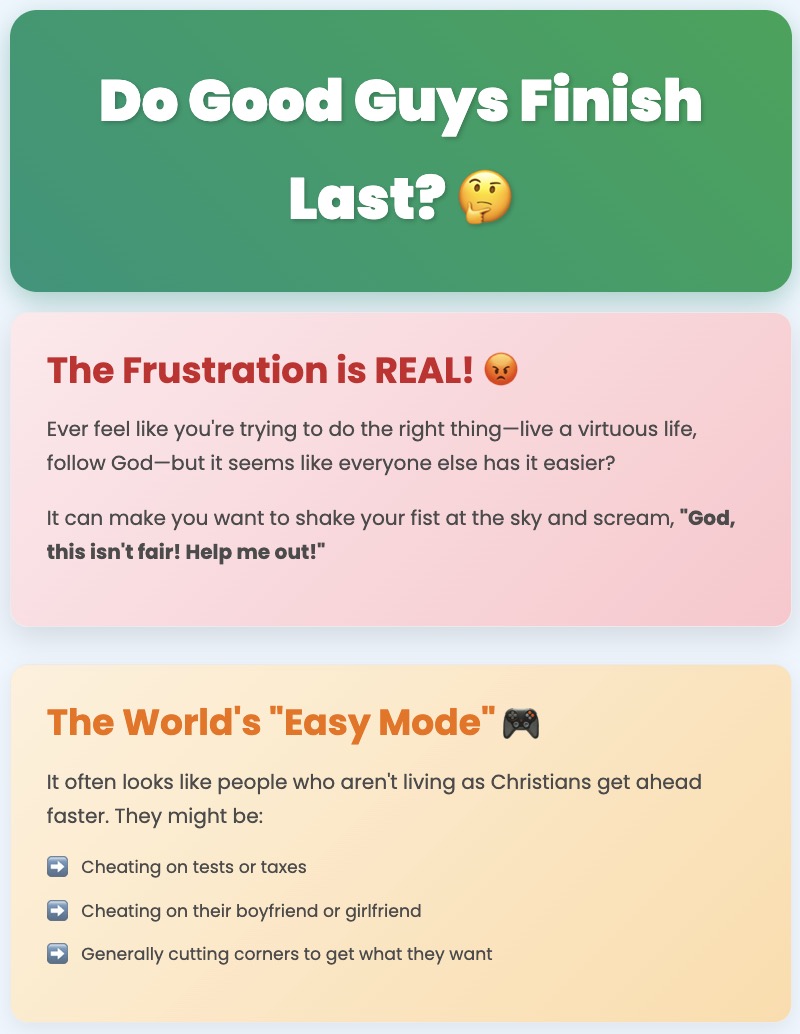
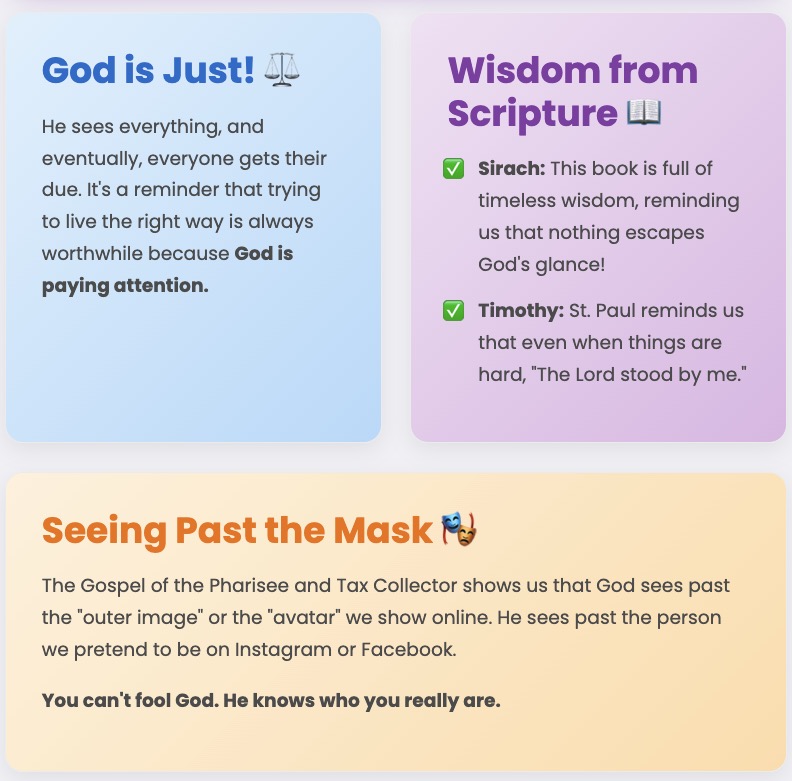

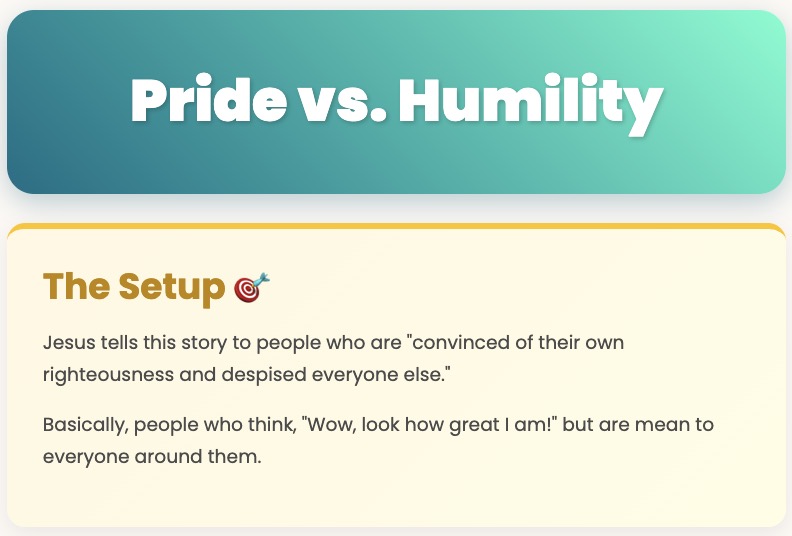
Generated using Google’s AI Gemini 2.5 Pro (w/ Chart.js and Tailwind CSS). Permission for use in any non-profit ministry w/ link to THE WORD THIS WEEK.
Group / Classroom Discussion

30th Sunday of Year C
Perspectives on the Sunday Readings
Bishop Barron | Fr. Kevin Rettig | Msgr. Peter Hahn
Fr. Geoffrey Plant | Priests for Life
PDF Handouts
Reflection Questions
and Commentary
These study guides are the fruit of over a decade of working with students. They are a great resource for classroom group discussion.

Lesson Plan for Catechists
Be Real and Relatable
- Authenticity is Key: Don’t try to be someone you’re not or use slang you don’t know. Youth can spot inauthenticity immediately, so be yourself.
- Be You: Let your personality shine through to make your sermon more relatable and impactful.
- Meet them in their world: Understand the cultural context of the young people you’re speaking to.
Structure for Engagement
- Have One Big Idea: Focus your sermon around a single, clear point to help students remember it.
- Use a Clear Outline: Provide a simple, three-point outline with an introduction, body, and conclusion to help them follow along.
- Keep it Concise: Shorter messages are generally more effective for maintaining engagement and focus.
Make the Message Stick
- Tell Stories: Like Jesus, share stories that illustrate biblical truths and help make personal connections between the message and their lives.
- Use Visuals and Interaction: Engage multiple senses by using movie clips, objects, or games to make the message more memorable.
- Encourage Participation: Involve the audience through actions like raising hands, shouting answers, or taking polls to foster interaction.
30th Sunday of Year C
The Hook: Grab Their Attention (Start with Their World)
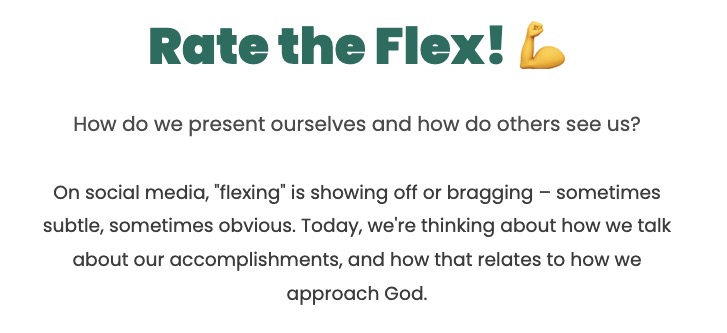

ACTIVITY: The goal is to get teens thinking about how we present ourselves to others, especially in a world of social media where “flexing” (showing off) is common.
- Introduce the concept: “Today we’re talking about how we pray and how God sees us. But first, let’s talk about how we see each other. On social media, this is sometimes called a ‘flex’—when someone is showing off or bragging. It can be subtle or really obvious.”
- Present Scenarios: Read or show the following scenarios and ask the teens to rate the “flex level” from 1 (not a flex) to 10 (major flex).
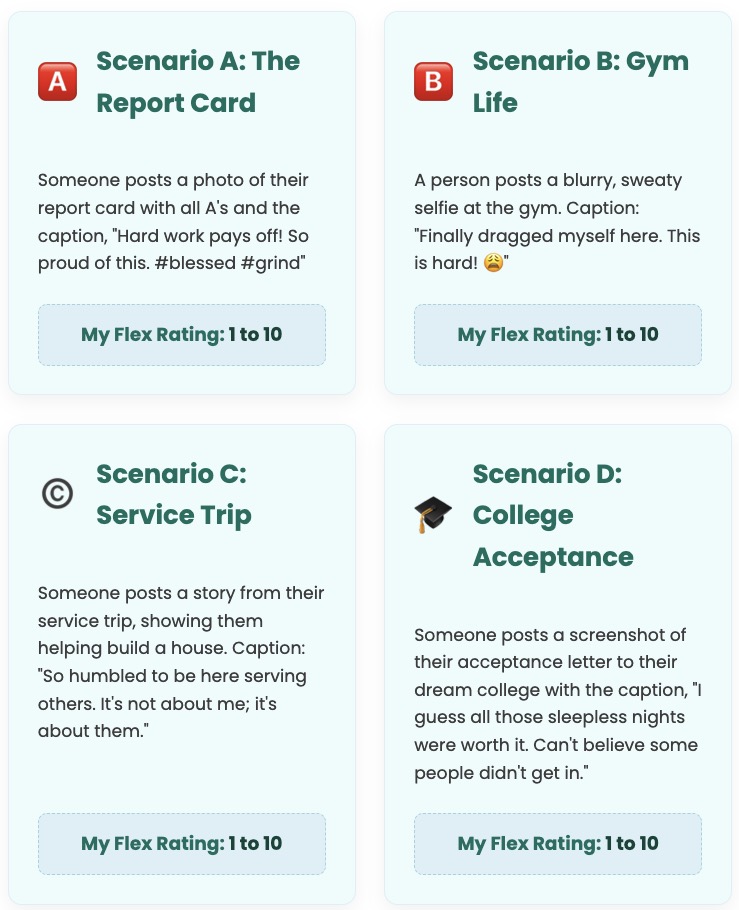
Transition: “It’s interesting how we talk about our accomplishments, right? Sometimes it’s genuine, and sometimes it feels like we’re comparing ourselves to others. Jesus tells a story about two people who pray in very different ways, kind of like two different social media posts to God.”
Unpacking the Scripture: Go Beyond the Surface
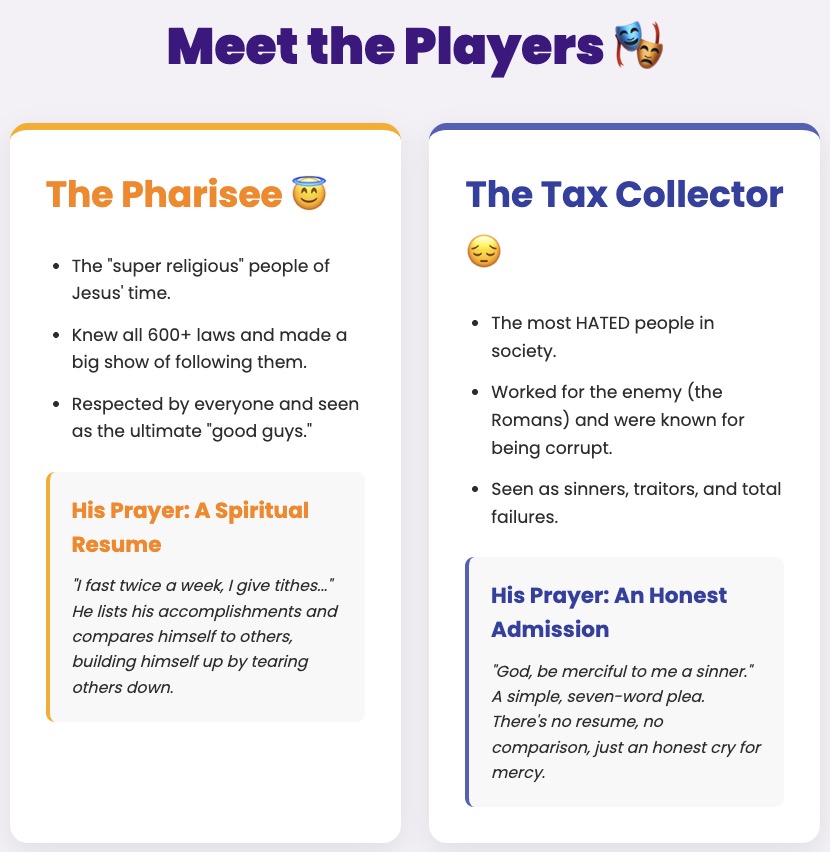
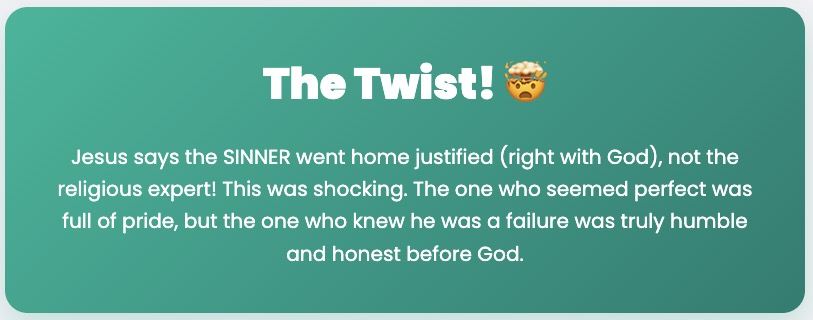
Activities & Discussion Starters for Teens
Choose one or two of the following to spark conversation.
- Discussion Questions:
- Why do you think the Pharisee felt the need to compare himself to the tax collector? When do we do that in our own lives (at school, in sports, online)?
- What is the difference between healthy self-esteem (being proud of your gifts) and the Pharisee’s pride?
- The tax collector’s prayer is “God, be merciful to me a sinner.” Why is that so hard to say and truly mean?
- Jesus says those who “exalt themselves will be humbled.” What does that look like in real life for a teenager?
- How does our social media culture encourage us to be more like the Pharisee than the tax collector?
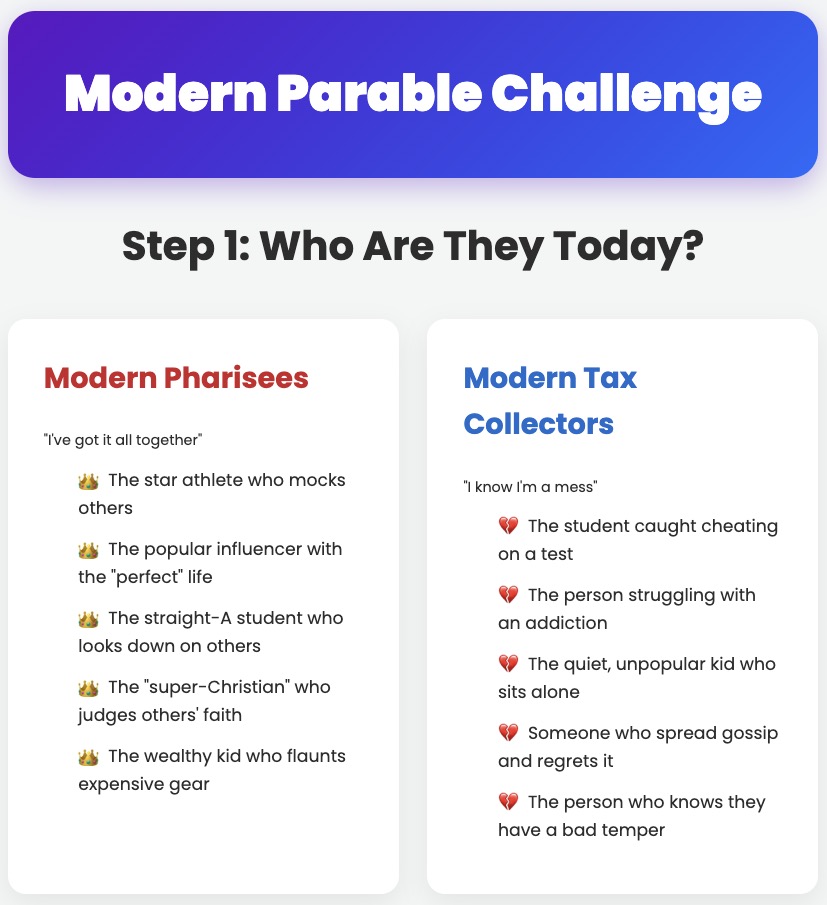
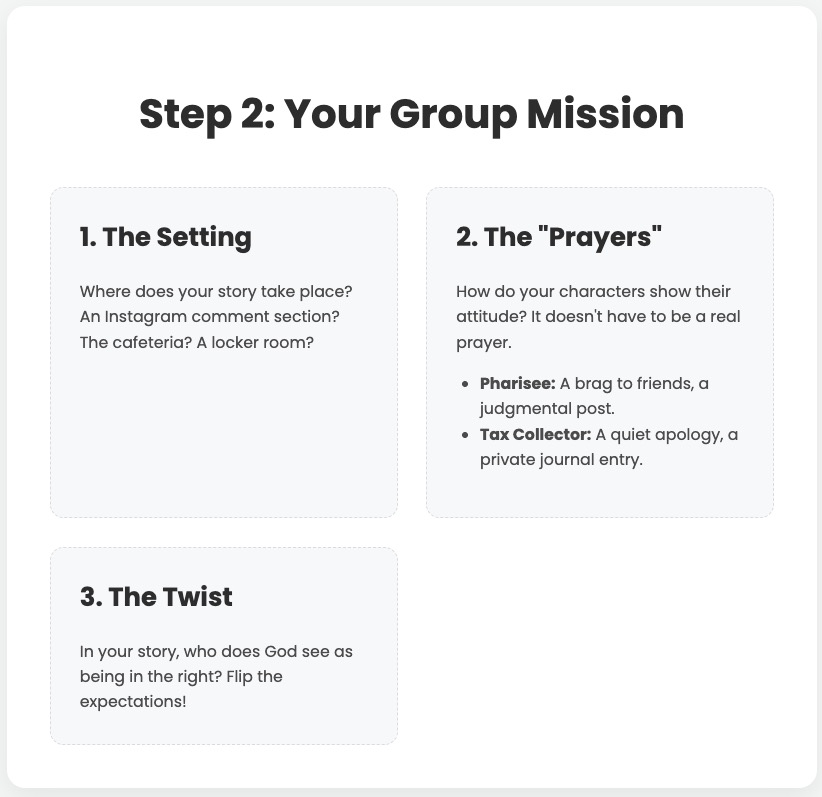
- Activity: Modern-Day Parable
- Divide the teens into small groups.
- Ask them to rewrite the parable in a modern setting. The Pharisee could be a straight-A student, a star athlete, or a popular influencer. The tax collector could be a student who cheated, someone who struggles with addiction, or someone who is unpopular.
- Have them share their modern parables. This helps them see how the themes of pride and humility are still incredibly relevant.

The Takeaway: Make It Practical
Goal: Connect the lesson to their everyday lives.
“It’s easy to point at the Pharisee and say, ‘I’m not like that.’ But if we’re honest, we all have a little bit of the Pharisee in us. We all compare ourselves, we all want to look good, and we all sometimes judge others to make ourselves feel better.
The good news is that God isn’t looking for perfection. He’s looking for honesty. He wants us to come to him just as we are, like the tax collector, and simply say, ‘God, I need you.’ Humility isn’t thinking less of yourself; it’s thinking of yourself less.”