Children, Catholic Home School, Children’s Liturgy of the Word, Catholic Home School
Children, Catholic Home School, Children’s Liturgy of the Word, Catholic Home School
May 31, 2026







LITURGY OF
THE WORD



Most Holy Trinity (A)
↩️ ↪️ Catholic Women Preach
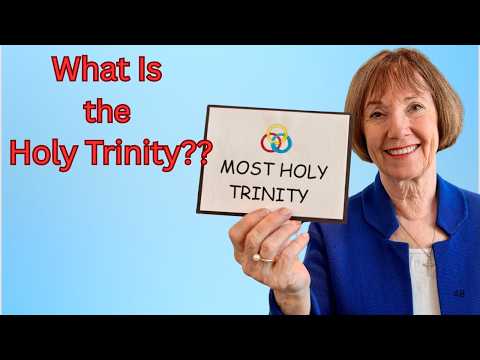
Understanding the Trinity
Q: What analogy explains how three persons form one God?
A: St. Patrick’s shamrock demonstrates the Trinity with three leaves connected to one plant, showing how the Father, Son, and Holy Spirit are distinct persons yet unified as one God.
Q: How does water illustrate the Trinity’s nature?
A: Water exists in three forms—liquid, ice, and steam—paralleling how God exists as three distinct persons (Father, Son, Holy Spirit) while remaining one divine essence.
Trinity’s Role in Our Lives
Q: What happens at baptism regarding the Trinity?
A: Through baptism, we become joined in the life of the Holy Trinity, entering into relationship with the Father, Son, and Holy Spirit as God’s people.
Q: What is the Holy Spirit’s daily function?
A: The Holy Spirit remains with us every day to teach, guide, and help us demonstrate God’s love through being cheerful, helpful, kind, and honest.
Trinity in Catholic Practice
Q: Why do we make the sign of the cross?
A: The cross serves as a daily reminder of the Trinity’s work: the Father created us in love, the Son died for our salvation, and the Holy Spirit guides us daily.
Q: How does the Trinity work together in salvation history?
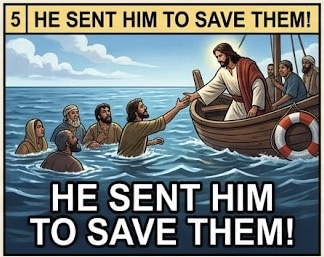
A: God sent Jesus to earth, and Jesus sent the Holy Spirit to teach humanity how to live as God’s people, demonstrating the Trinity’s coordinated mission.
↩️ ↪️ Jeff Cavins

Understanding the Trinity
Q: How did St. Patrick explain the mystery of the Trinity? A: St. Patrick used a shamrock to illustrate how one God exists in three persons: God the Father, God the Son, and God the Holy Spirit, with each leaf representing a distinct person yet united as one plant.
Q: What roles do the three persons of the Trinity fulfill? A: The Father created, the Son redeemed, and the Holy Spirit sanctified, demonstrated through the connected circles illustration showing their distinct yet united nature.
God’s Character and Mercy
Q: What attributes of God were revealed to Moses in Exodus 34:6-7? A: God revealed Himself as loving, kind, and merciful, demonstrating His willingness to forgive sins and give second chances even after the Israelites worshipped a golden calf.
Salvation and Eternal Life
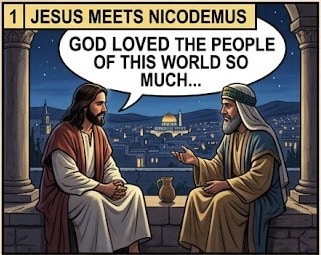
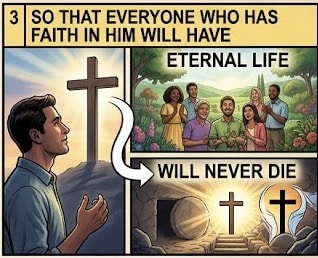
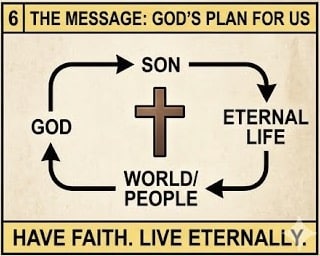
Q: What did Jesus teach Nicodemus about salvation in John 3:16? A: Jesus explained that God loved the world so much He sent His only Son to save humanity, and everyone who has faith in Him will receive eternal life.
Liturgical Practice
Q: How does the Creed express belief in the Trinity? A: The Creed professes belief in the Holy Trinity through three distinct persons—God the Father, God the Son, and God the Holy Spirit—as expressed in liturgical song.
Q: What does the liturgy emphasize about Christian practice? A: The liturgy stresses praising God through prayer, joy, and song, and reminds believers to love God and one another as Jesus taught to receive eternal life.

↩️ ↪️ Bishop James Golka
June 3 – Uganda Martyrs
Uganda Martyrs Play Children from Apricot Nursery School Nakwero Gayaza
Faith-Based Education Model
Q: How does Apricot Kindergarten integrate religious education with performing arts?
A: The school, founded on Christian values, uses drama and music performances about the Uganda Martyrs to simultaneously develop children’s creative talents while teaching obedience, faith in God and Jesus, and the life values exemplified by martyrs who planted the seeds of faith in Uganda.
Authority and Religious Conviction
Q: What core theme about power and faith does the martyrs’ story convey?
A: The play depicts a king declaring “nobody has the right to question my decision” to illustrate the conflict between earthly authority and faith in Jesus, where characters demonstrate that following Jesus’s teachings supersedes submission to human rulers.
Historical Religious Heritage
Q: Why are the Uganda Martyrs central to this kindergarten’s curriculum?
A: The school cherishes the values of the Uganda Martyrs as foundational figures who established Christianity in Uganda, using their story to instill faith and important life values in young children through theatrical reenactment.
↩️ ↪️ Know Before You Go

Understanding the Trinity
Q: How does the Trinity demonstrate the nature of God as love?
A: The Father, Son, and Holy Spirit exist as one through their essence as love itself, with the three persons in constant service to one another and the love between Father and Son manifesting as the Holy Spirit.
Purpose of Creation
Q: Why did God create the universe if the Trinity was already perfect communion?
A: God created the universe and humanity to share his love beyond the already perfect communion of the Trinity, demonstrating that love is meant to flow out to others through creation, support, redemption, and assistance.
Practical Application
Q: What does the Trinity model ask us to do with our gifts?
A: The Trinity calls us to use our gifts to let love pour out onto others, specifically targeting those who are lost, broken, abandoned, frightened, or confused, rather than creating a perfect world only for ourselves.
Real-World Examples
Q: How do generous people reflect the Trinity’s nature?
A: The most generous people, like the speaker’s mother who cared for her family and built a school community, demonstrate the Trinity’s overflowing love that profoundly transforms those around them.
Spiritual Invitation
Q: What does the Holy Spirit invite us to cultivate?
A: The Holy Spirit invites us to develop a heart that overflows with love beyond our personal perfect world, enabling us to give generously to all those around us.
Future Educational Focus
Q: What practical topic will be discussed next year and why?
A: The speaker will discuss the value of education and Registered Education Savings Plans, emphasizing that education is transformative, permanently retained once learned, and provides opportunities to flourish and grow.
↩️ ↪️ 1-Minute Homily

Understanding the Trinity’s Nature
Q: What is the Holy Trinity?
A: The Holy Trinity is three persons in one God — God the Father, God the Son, and God the Holy Spirit — described as a “family of love” and an “endless dance of love” that existed even before the world began, not three separate gods but one unified divine being.
The Trinity’s Expression of Love
Q: How does the Trinity demonstrate “a love that gives”?
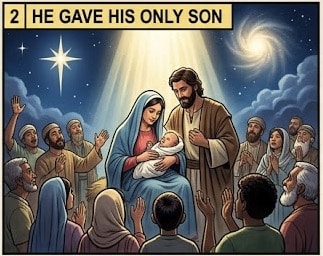
A: John 3:16-17 reveals the Trinity’s giving nature: God the Father gives his only Son Jesus to the world, Jesus gives his life on the cross to take away sins, and the Holy Spirit gives God’s love to us and fills our hearts with that love.
Practical Prayer Relationship
Q: How can we personally respond to the Trinity’s love?
A: Place a hand on your heart and acknowledge God’s closeness by saying “I love you, Father. I love you, Jesus. I love you, Holy Spirit” — the Trinity invites us to share their love and give our love back to them.
Daily Intimacy with God
Q: How close is the Holy Trinity to us in daily life?
A: The Father, Son, and Holy Spirit are never far away and are very close to us, with daily invitations to live close to them and be wrapped safely in their love.
Creating Prayer Space
Q: What practical prayer practice does the video recommend?
A: Spend time later in the day in a quiet space giving love to the Holy Trinity through thank you prayers, sharing about your day, or simply listening to God’s voice in your heart.
The Trinity’s Location
Q: Where does the Trinity reside in relation to believers?
A: The Holy Trinity is described as a family of love all around and in our heart, emphasizing both their transcendent presence and intimate indwelling within believers.
↩️ ↪️ Priests for Life
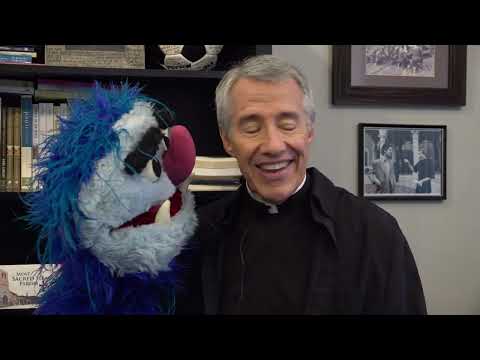
Unity Through Diversity
Q: How does the crayon box metaphor explain the necessity of diversity?
A: The crayon box demonstrates that every color (person) is essential to create a beautiful world, showing that diversity is not optional but fundamental—if we believe our color (perspective) is the only one, we miss the full picture.
Individual Value in Community
Q: What does the story reveal about individual worth versus collective impact?
A: While each crayon (person) is unique with distinct characteristics, they create a complete picture only when working together, proving that every person matters regardless of their background or circumstances.
Inclusive Representation
Q: Which specific groups does the metaphor identify as essential colors?
A: The metaphor explicitly includes young and old, athletes and artists, singers and dancers, and those in hospitals along with their loved ones as necessary components of the complete picture.
Practical Application
Q: What actionable principle does the crayon box teach about human interaction?
A: The metaphor encourages accepting and valuing differences in people, demonstrating that when we come together despite our uniqueness, we create a complete and beautiful picture rather than an incomplete one.



QUESTIONS
Jesus’ Dual Nature and Heavenly Position
Q: How does the Ascension prove Jesus’ complete nature?
A: Jesus’ body and soul ascending to heaven and being seated at the right hand of God the Father solidifies he is fully God and fully man, countering heresies throughout history that attempted to separate his humanity and divinity.
The Holy Spirit’s Mission on Earth
Q: What replaced Jesus’ physical presence after the Ascension?
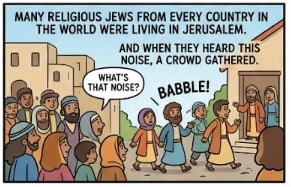
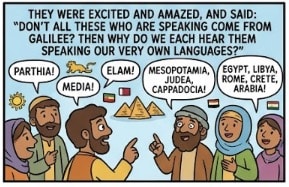
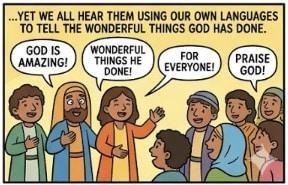
A: Jesus promised the Holy Spirit before ascending, which came on Pentecost to empower disciples to become witnesses of Christ throughout the world, ensuring believers are not alone.
The Second Coming and Bodily Resurrection
Q: What will happen when Jesus returns as the angels prophesied?
A: Angels told disciples Jesus will return in the same way he ascended, and at the Second Coming believers will experience resurrection of the body—both bodies and souls will be raised and taken to heaven, not just souls after death.

Sunday Mass Activities
Daily Gospel Reflections
Catholic Momcast



Most Holy Trinity (A)
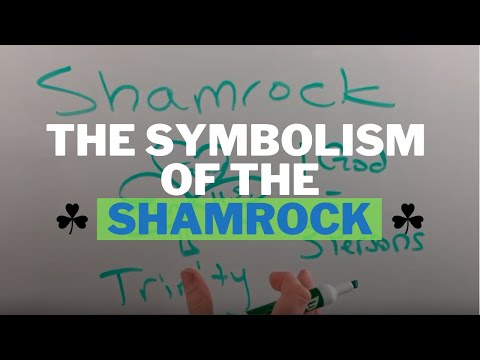

The Symbol of the Shamrock
St. Patrick used the shamrock (or three-leafed clover) in Ireland to teach about God as the Holy Trinity.
The Trinity: God is one substance with three persons: Father, Son, and Holy Spirit.
Here is the Christian meaning of the shamrock symbol:
Three Leaves = God is Three Persons of the Trinity (Father, Son, and Holy Spirit)
One Stem = God is One Substance
The shamrock is sometimes depicted with heart-shaped leaves to show that God is love. God is the love that is shared between each person of the Trinity. That love is poured out to the whole world.
When you see the shamrock decorations for St. Patrick’s Day in March, remember the spiritual meaning of the symbol:
One God, Three Persons (Father, Son, and Holy Spirit)

Our Sunday Visitor


THE WORD THIS WEEK infographics are created using using GOOGLE’S AI Gemini 3 Pro. You are free to use the above infographic in any non profit ministry. Please give credit to TheWordThisWeek.NET and Our Sunday Visitor.
QUESTIONS
Trinity’s Core Structure
Q: What is the fundamental definition of the Trinity?
A: The Trinity describes God as three distinct persons (Father, Son, Holy Spirit) existing in one unified being, not as three separate gods or a divided deity, representing Christianity’s core belief about God’s nature.
Why Analogies Fail
Q: Why do popular Trinity analogies like water, apple, and egg ultimately fail?
A: Analogies such as water (liquid, ice, steam), apple (skin, flesh, core), and egg (shell, yolk, white) all break down at certain points and can inadvertently lead to confusion or heresies when pushed beyond their illustrative limits.
Mystery and Trust
Q: How should believers approach the incomprehensibility of the Trinity?
A: The Trinity is acknowledged as a mystery beyond full human understanding until heaven, requiring believers to trust in God’s nature as loving, powerful, and trustworthy despite incomplete comprehension.
Distinct Roles
Q: What are the specific roles of each person in the Trinity?
A: The Father functions as creator and author of life providing care, the Son (Jesus) represents God’s human form who lived and died for humanity, and the Holy Spirit serves as comforter and empowerer maintaining constant presence.
Faith Response
Q: What practical posture should believers maintain regarding the Trinity?
A: Believers can rest in the assurance that God is bigger, stronger, and more powerful than human capacity, trusting His love and desire for humanity’s best while relying on His presence and guidance.
Most Holy Trinity (A)

What is the Trinity?
This message tackles one of the great challenges of Christian faith: the Trinity. The Trinity can be tough to wrap our heads around, even as adults. To describe, there are many potential illustrations that we might use to explain how God can be one person with three components. There are a few object lesson ideas featured in this message. Ultimately, however, the emphasis is on the mystery of the Trinity. We might never fully grasp what it means, but we trust that God is Father, Son, and Holy Spirit, and we follow Him as loving provider and savior.


QUESTIONS
Remembering the Story
- Where did the workers take the weak baby monkey to help him get better?
- Even after the baby monkey became healthy and strong, how was he acting?
- What kind of animal did the little monkey make friends with?
- Why is it surprising that these two animals became such close friends?
Heart and Feelings
- The story says the baby monkey felt all alone before he met the pigeon. Have you ever felt lonely or left out? What helped you feel better?
- The white pigeon wasn’t afraid and allowed the monkey to be close. How does it feel when someone welcomes you and lets you sit next to them?
- Why do you think having a friend helped the monkey stop being so sad?
Living in Peace
- The Apostle Paul tells us to “live in peace.” What does living in peace look like when you are playing with your friends or siblings?
- The monkey and the pigeon were very different from each other, but they were still friends. How can we be friends with someone who likes different things or looks different than we do?
- What is one small thing you can do today to share friendship and bring peace to someone who might be feeling lonely?

Living in Peace
“Live in peace, and the God of love and peace will be with you” (2 Cor 13:11).
In China a baby monkey became separated from his mother and was very weak when some people found him and took him to an animal shelter. The workers at the animal shelter fed him and cared for him. He gained strength and his health improved, but he acted very sad.
Then a lovely thing happened. He made friends with a white pigeon. The little monkey and the pigeon spend a lot of time together. (Show photo.)
We would not think that a monkey and a pigeon could be friends. They are quite different from each other. In this case the baby monkey felt all alone and reached out to the pigeon. The pigeon was not afraid of the monkey and allowed him to be close. The two became friends and this helped the monkey overcome his sadness. We can learn a lot from animals.
SOURCE: Sermon Writer – © 1997 – 2026 Richard Niell
QUESTIONS
Understanding the Story
- What does it mean when an old building is “condemned”? What needs to happen to it?
- Why do people decide to take down a condemned building instead of leaving it alone?
- According to the story, how can a person feel “condemned” by others?
- What did Jesus say was His true reason for coming into the world?
Heart and Feelings
- The story mentions that being disapproved of is an “unhappy feeling.” Can you think of a time when someone pointed out a mistake you made? How did it make you feel inside?
- Why do you think it hurts so much when someone acts like we are “no longer of use,” just like that old building?
- How does it make you feel to know that Jesus didn’t come to find fault with you or punish you?
Choosing a Better Way
- What is one way we can lift someone up this week instead of making them feel like they aren’t good enough?
- Since Jesus offers us love and forgiveness when we make mistakes, how can we show that same love to a friend or sibling who messes up?
- Think about the condemned building that “can’t be repaired.” How is a person different from a broken building when they make a mistake?
New and Better Life
“For God didn’t send his Son into the world to judge (condemn) the world, but that the world should be saved through him.”
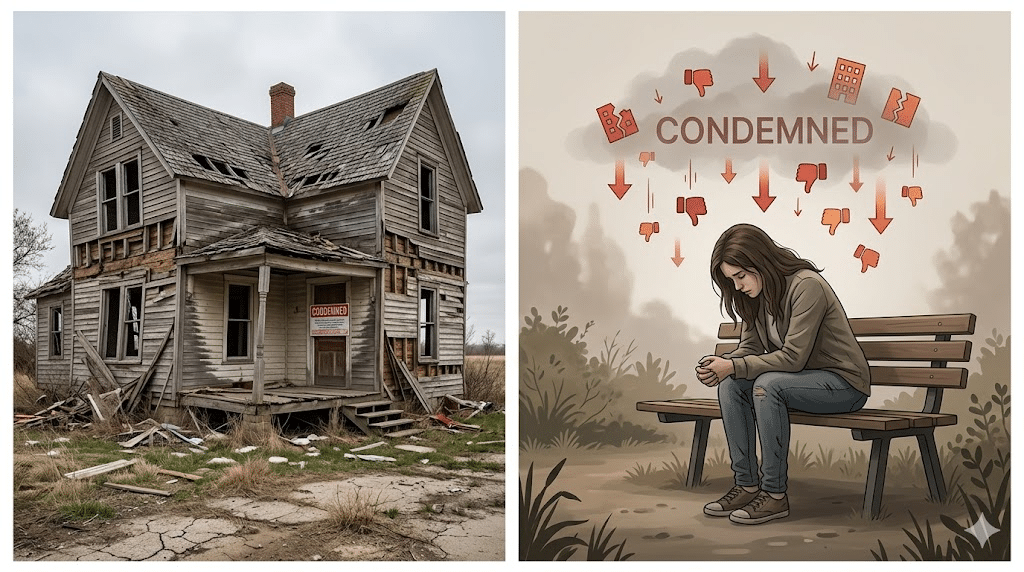
Have you ever seen an old building in such poor repair that it looks as if it is about to fall down? It could be a shed, a barn, or even an old house.
Sometimes the owners may decide the building is so weak and shaky that it must be taken down so it will not injure someone. When that happens, the word that is used is condemned. People say, “That old building has been condemned.” There is just too much wrong with it. It can’t be repaired or given new life; it must be taken down.
This may seem shocking, but people can also be condemned. When we find fault with someone we send a message that they are not good enough, like a building that is no longer of use.
You may know what it feels like to have someone disapprove of you. It is an unhappy feeling. No one likes to have someone tell them they have faults and weaknesses.
SOURCE: Sermon Writer – © 1997 – 2026 Richard Niell

Buddy Takes a Chance
Buddy, a solitary boy who preferred imaginary playmates, eventually found himself entirely isolated from the neighborhood children. Reflecting on his loneliness, he realized the root problem wasn’t his quiet nature, but his own deep-seated lack of trust in others. Resolving to change, Buddy took a leap of faith. He invited his old friend Freddy over to play video games and let George use his favorite skateboard. By sharing his time and possessions, Buddy discovered that extending trust fosters mutual connection, ultimately bringing him joy and new friendships. The story concludes by drawing a parallel to Jesus, noting that God models a much greater trust by giving humanity His Son.
Most Holy Trinity (A)
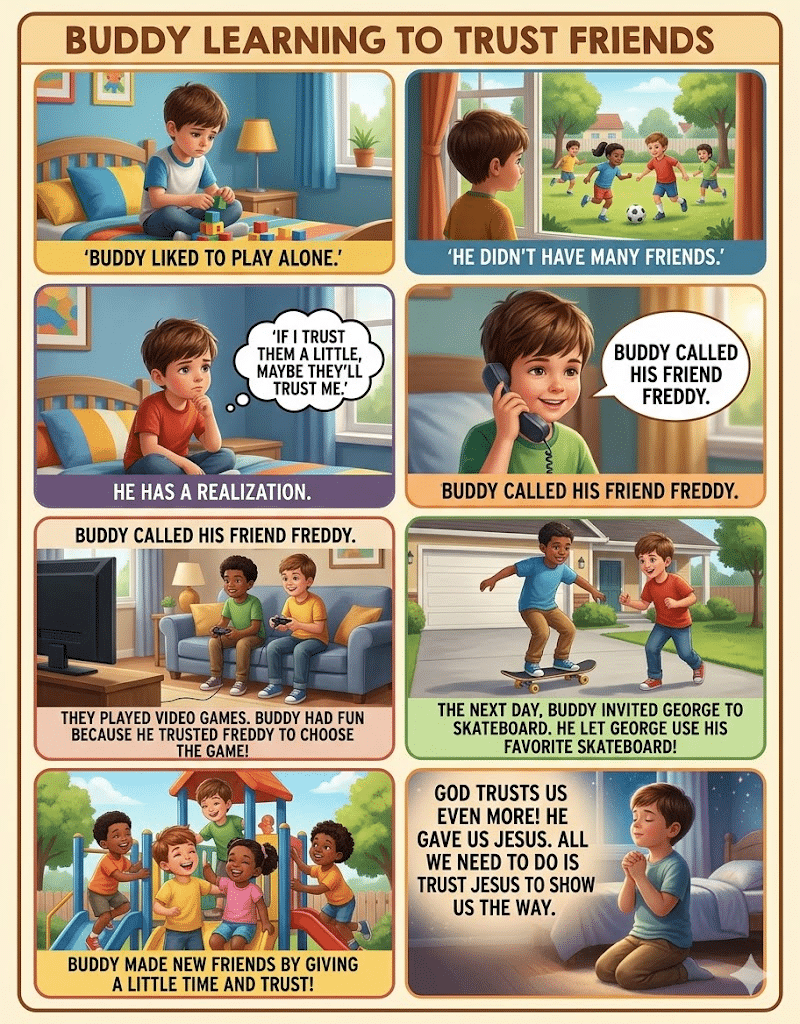
THE WORD THIS WEEK infographics are created using using GOOGLE’S AI Gemini 3 Pro Nano Banana and images from Unsplash. You are free to use the above infographic in any non-profit ministry. Please give credit to TheWordThisWeek.net and the Word-Sunday.
Entrance Song
Understanding the Trinity’s Mystery
Q: What is the Holy Trinity?
A: The Holy Trinity is one God in three persons — the Father, Son, and Holy Spirit — representing one great love that never ends, where each person has a distinct role yet remains unified in divine essence.
The Three Persons’ Distinct Roles
Q: What specific role does each person of the Trinity fulfill?
A: God the Father created the universe and is the source of love; Jesus the Son lived, died, and rose again to set humanity free and show the way; the Holy Spirit serves as our gentle guide who helps us see, pray, and leads us along the way.
Recognizing God’s Love in Daily Life
Q: How can we recognize and experience the Trinity?
A: God is love, so when we see love, we see the three persons of the Trinity; the song calls us to share Jesus’ pure, divine love and invites us into a loving relationship with Him through recognizing His presence in acts of love.
Most Holy Trinity (A)

CATHOLIC KIDS WORLD (2:26)

THE HOLY CALM (3:25)
Response & Acclaim

Response & Acclaim
MIGHTY SOUND KIDS (2:05)
Communion
Understanding the Trinity’s Nature
Q: What is the Holy Trinity?
A: The Trinity is one God with one divine nature existing in three distinct persons: the Father, the Son, and the Holy Spirit, where each person remains distinct yet forms a unified divine being.
Q: How does the chord analogy explain the Trinity’s unity?
A: Saint Ignatius of Loyola compared the Trinity to a chord where different notes are played together—each note remains itself, not mixed up or erased, but together they form one perfect harmony.
Visual Teaching Tools
Q: What physical objects help visualize the Trinity?
A: A pretzel twisted into three holes represents the Trinity as three spaces in one pretzel, while St. Patrick used a shamrock with three leaves, though the video emphasizes that no example is perfect and God is bigger than any analogy.
The Relational Nature of God
Q: Why is God described as love rather than being alone?
A: God is love and cannot be alone; before creation, the Father loved the Son, the Son loved the Father, and the Holy Spirit was the love between them, demonstrating friendship, family, and communion within God’s nature.
Practical Application
Q: How does the Sign of the Cross connect to the Trinity?
A: Making the sign of the cross slowly serves as a reminder that God is love and is the Father, Son, and Holy Spirit: one God, three persons, perfect love.
Most Holy Trinity (A)

CATHOLIC SPIRIT JUICE KIDS (5:36)

CATHOLIC SPIRIT JUICE KIDS (3:19

CATHOLIC CENTRAL (5:44

CHRISTIAN YOUTH CENTRAL (2:08)