Catholic Digest, Homily Themes
Catholic Digest, Homily Themes
May 31, 2026
⭐⭐⭐ What’s New

⬅️  ➡️
➡️










Theology, Apologetics & Evangelization
These channels focus on explaining and defending the Catholic faith, often engaging with modern culture and other viewpoints.
- Bishop Robert Barron (Word on Fire): One of the most influential voices in the Church, offering cultural commentary, movie reviews, and deep theological deep-dives.
- Ascension Presents: A powerhouse channel featuring popular figures like Fr. Mike Schmitz (known for the “Bible in a Year” and “Catechism in a Year” podcasts) and Fr. Josh Johnson, offering accessible videos on faith and life.
- Catholic Answers: The premier channel for Catholic apologetics, featuring live Q&A shows where apologists answer tough questions from callers.
- Pints with Aquinas (Matt Fradd): Long-form interviews and discussions on theology, philosophy, and culture, often over a drink.
- The Counsel of Trent (Trent Horn): Trent Horn, a Catholic Answers apologist, provides rebuttals to atheist and Protestant arguments, as well as commentary on current events.
- Jimmy Akin: A senior apologist at Catholic Answers known for his fairness and deep knowledge, covering everything from bizarre questions to deep theology.
- Breaking In The Habit (Fr. Casey Cole, OFM): A young Franciscan friar who offers fresh, accessible reflections on faith, vocations, and everyday life.
- Thomistic Institute: Excellent, high-quality animated videos and lectures explaining the philosophy and theology of St. Thomas Aquinas.
Most Holy Trinity (A)
PRACTICAL
ACTIONS
Acts 1:1-11 | The Promise of Power and the Ascension
This passage marks the transition from Jesus’ earthly ministry to the mission of the Church through the Holy Spirit.
- Prioritize Prayerful Waiting: Before jumping into new projects or ministry efforts, dedicate specific time to “wait” on God’s timing. Practice a “Sabbath of stillness” this week where you listen rather than act.
- Identify Your “Jerusalem”: The mission started at home. Identify one person in your immediate circle—family, neighbor, or coworker—and commit to a specific act of service for them this week.
- Focus on the Present Mission: When the disciples asked about the future kingdom, Jesus redirected them to the present task. Audit your spiritual life: are you more focused on “end-times” speculation or on being a witness in your current environment?
Ephesians 1:17-23 | The Prayer for Revelation and Authority
Paul prays for the believers to have a deeper spiritual understanding of Christ’s supreme authority over all things.
- Pray for Spiritual Sight: Incorporate Paul’s petition into your own daily routine. Specifically, pray for “the spirit of wisdom and revelation” to see a difficult situation in your life from a divine perspective rather than a purely logical one.
- Acknowledge Christ’s Sovereignty: List three things currently causing you anxiety. Explicitly “place” them under the feet of Jesus, verbally acknowledging that He is seated far above these specific concerns.
- Engage with the Body: Since the Church is described as “His body, the fullness of Him,” seek to contribute one unique gift or talent to your local community this weekend to help complete that “fullness.”
Matthew 28:16-20 | The Great Commission
These final instructions provide the “marching orders” for every believer, centered on authority and companionship.
- Audit Your “Going”: The Great Commission happens “as you are going.” Look at your daily routine (the gym, the grocery store, the office) and identify how you can represent Christ’s teachings in those mundane spaces.
- Commit to Mentorship: “Making disciples” involves teaching others to observe what Jesus commanded. Find one person—perhaps someone younger in their faith—and invite them to coffee to share what you are currently learning.
- Practice Presence Awareness: Jesus promised to be with us “always, to the end of the age.” End each day this week by journaling two moments where you felt or noticed God’s presence during your tasks.
Most Holy Trinity (A)
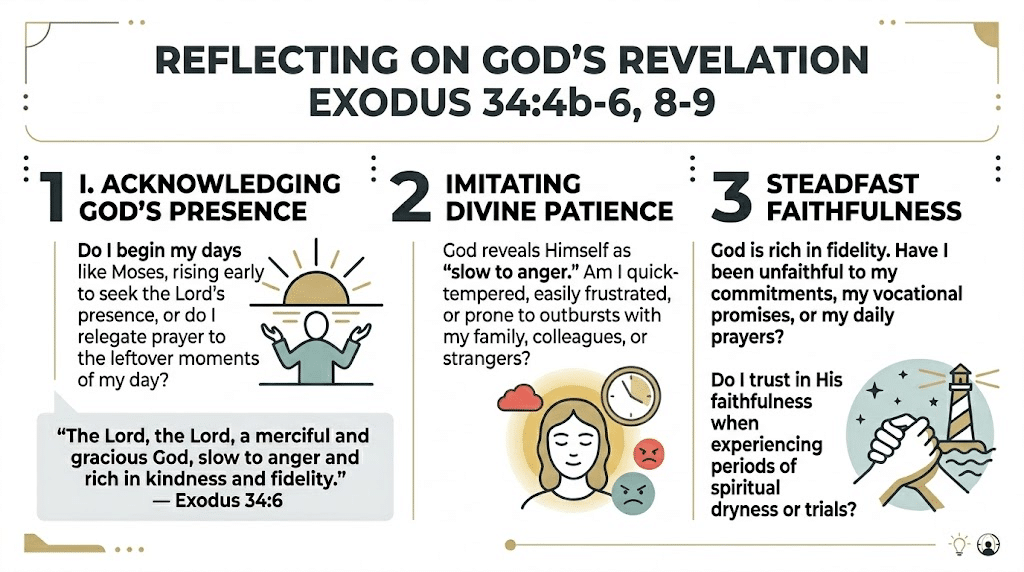
“The Lord, the Lord, a merciful and gracious God, slow to anger and rich in kindness and fidelity.” — Exodus 34:6
- Acknowledging God’s Presence: Do I begin my days like Moses, rising early to seek the Lord’s presence, or do I relegate prayer to the leftover moments of my day?
- Imitating Divine Patience: God reveals Himself as “slow to anger.” Am I quick-tempered, easily frustrated, or prone to outbursts with my family, colleagues, or strangers?
- Steadfast Faithfulness: God is rich in fidelity. Have I been unfaithful to my commitments, my vocational promises, or my daily prayers? Do I trust in His faithfulness when experiencing periods of spiritual dryness or trials?
- Confronting Pride: Moses asks God to accompany the people despite them being “stiff-necked.” Where in my life am I being stubborn, proud, or resistant to God’s grace and the legitimate guidance of others? Do I readily bow down in worship and humility, or do I expect God to conform to my will?
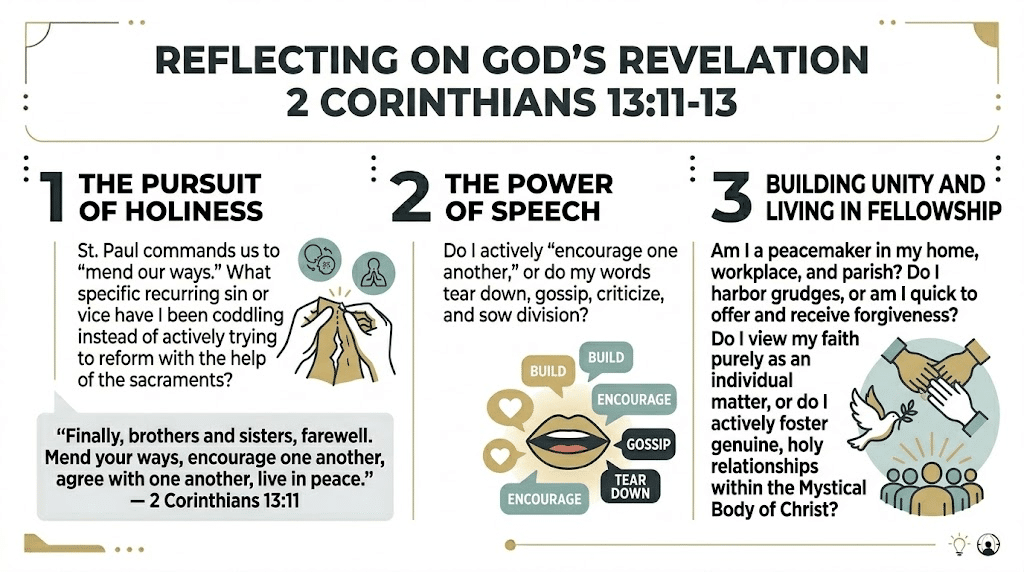
“Mend your ways, encourage one another, agree with one another, live in peace, and the God of love and peace will be with you.” — 2 Corinthians 13:11
- The Pursuit of Holiness: St. Paul commands us to “mend our ways.” What specific recurring sin or vice have I been coddling instead of actively trying to reform with the help of the sacraments?
- The Power of Speech: Do I actively “encourage one another,” or do my words tear down, gossip, criticize, and sow division?
- Building Unity: Am I a peacemaker in my home, workplace, and parish? Do I harbor grudges, or am I quick to offer and receive forgiveness? Do I insist on winning arguments at the expense of charity and truth?
- Living in Fellowship: The reading concludes with the grace of Christ, the love of God, and the fellowship of the Holy Spirit. Do I view my faith purely as an individual matter, or do I actively foster genuine, holy relationships within the Mystical Body of Christ?
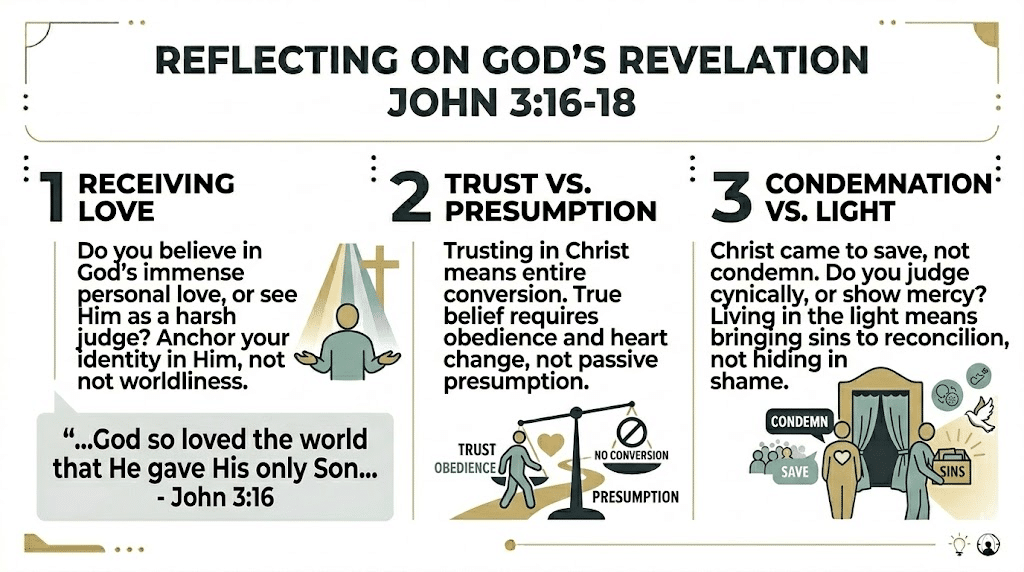
“For God so loved the world that he gave his only Son, so that everyone who believes in him might not perish but might have eternal life.” — John 3:16
- Receiving Love: Do I truly believe in the depth of God’s love for me personally, or do I secretly view Him as a distant, harsh judge? Do I allow the reality of John 3:16 to anchor my identity, or do I seek validation in worldly success and possessions?
- Trust vs. Presumption: To believe means to entrust oneself entirely to Christ. Am I living a life that reflects true belief, or am I drifting into presumption, assuming salvation requires no conversion of heart or obedience on my part?
- The Spirit of Condemnation: Christ was sent not to condemn the world, but to save it. Am I quick to condemn others in my heart? Do I look at the brokenness of the world with cynical judgment, or with the merciful, saving compassion of Jesus?
- Living in the Light: Do I hide my sins in the darkness out of shame or fear, or do I bring them honestly to the light of Christ in the Sacrament of Reconciliation, trusting that He desires to save and heal me?
Non-profits have permission to copy and paste infographics into their publications.
Most Holy Trinity (A)
Minister of Divine Communion
Gospel: Matthew 28:16–20
Theme: The mystery of love — Father, Son, and Spirit.
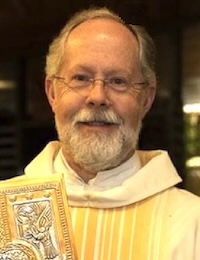
McCulloch
(Diocese of Broken Bay)
After the entire journey of the Paschal Mystery, we arrive at the source and summit of our faith: the Most Holy Trinity. The Trinity is not a maths problem to be solved, but a ‘family photo’ of God – a perfect, dynamic, self-giving communion of love.
This Sunday’s Gospel, the Great Commission, reveals that this divine family is not closed. The mission to ‘Go’ is an invitation. And the goal of that mission is stated in the command to baptize, plunging the world into living water ‘in the name of the Father, and of the Son, and of the Holy Spirit.’ We are not just making disciples; we are inviting all of humanity into the very life and love of God.
The deacon’s threefold ministry of Word, Altar, and Charity is a living icon of this Trinitarian communion. He is ordained to reflect the ‘shared, flowing, and sent’ nature of God’s love.
AT MASS
The Ministry of the Name
The deacon is the preeminent minister of the threshold, and the font is the ultimate threshold.
- Minister of Baptism: The deacon is an ordinary minister of the very sacrament that fulfills this Gospel command. It is the deacon who so often stands at the font and speaks the Name: ‘I baptize you in the name of the Father, and of the Son, and of the Holy Spirit.’ In this act, he is the Church’s official agent, the one who, in Christ’s name, formally invites and ushers a new soul into the communion of the Trinity.
- A Trinitarian Proclamation: At the ambo, the deacon proclaims the Word of the Son. In the Universal Prayer, he brings the people’s needs to the Father. At the dismissal, he sends the people out in the power of the Spirit. His entire liturgical function is Trinitarian.
IN THE PARISH
The Ministry of Relationship
Jesus’ prompt reminds us that holiness is never solitary; it is always shared. The Trinity is the model of all relationship. The deacon, as a man of the ‘world’ and a man of the ‘altar,’ is a professional bridge-builder.
- The Man of Communion: The deacon’s vocation is to build communion. He connects the laity (where he lives) to the clergy (whom he serves). He connects the parish (at the altar) to the world (at the margins). His own dual vocation as a family man and a cleric is a living witness to holiness that is shared.
- Serving the Restless Heart: As St. Augustine prayed, our hearts are restless for God. The deacon, in his pastoral ministry – in marriage preparation, in his witness as a husband and father, in his work with parish committees – helps to build the humancommunity that is the first, tangible reflection of the divinecommunity. He helps restless hearts find their rest in the relational love of the parish family.
AT THE MARGINS
The Ministry of Flowing
The love of the Trinity is not static; it flows outwardly in an unstoppable act of creation and redemption. The deacon’s ministry of diakonia is the overflow of this divine, self-giving love.
- The Echo of Trinitarian Love: Every act of diaconal service reflects the Trinity’s inner life:
- ◦ He reflects the Father’s care when he feeds the hungry and shelters the homeless.
- ◦ He imitates the Son’s service when he washes the feet of the suffering and visits the sick.
- ◦ He is animated by the Spirit’s advocacy when he gives a voice to the voiceless and seeks justice.
- Pointing to our Relational God: The deacon’s service is never just social work. It is a living signpost. When he cares for the poor or consoles the grieving, he is doing more than meeting a need; he is pointingto our relational God. His ministry is the tangible proof that our God is not a solitary monarch, but a ‘Father, Son, and Spirit’ – a communion of love that has sent him to invite everyone into the divine embrace.
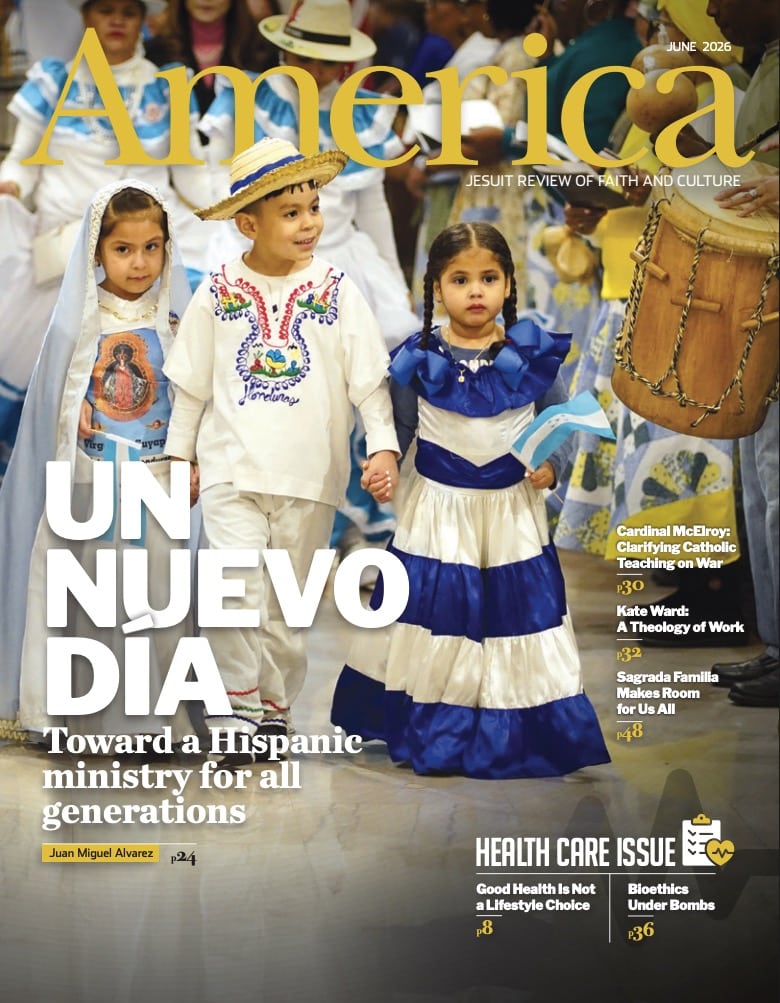
MAY 2026
PDF (68 pages)
America Magazine: Published by the Jesuits, this leading national review is highly regarded for its thoughtful, nuanced commentary on religion, politics, and contemporary culture.
Commonweal: An independent, lay-edited journal of opinion that provides rigorous intellectual perspectives on faith, society, the arts, and public policy.
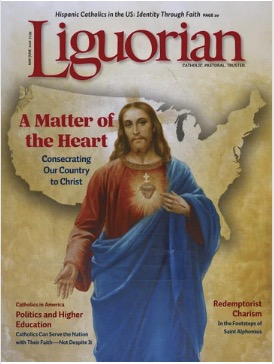
MAY-JUNE 2026
PDF (48 pages)
Liguorian is an award-winning Catholic magazine published since 1913 by the Redemptorists to provide spiritual guidance, pastoral messages, and inspiring stories, helping readers navigate modern life through faith. It acts as a trusted resource for Catholic spirituality, offering insights on faith, social justice, and daily Christian living.
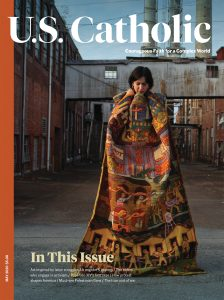
U.S. Catholic: This publication focuses on everyday faith, social justice, and practical insights for living out Catholic teachings in modern, daily life.
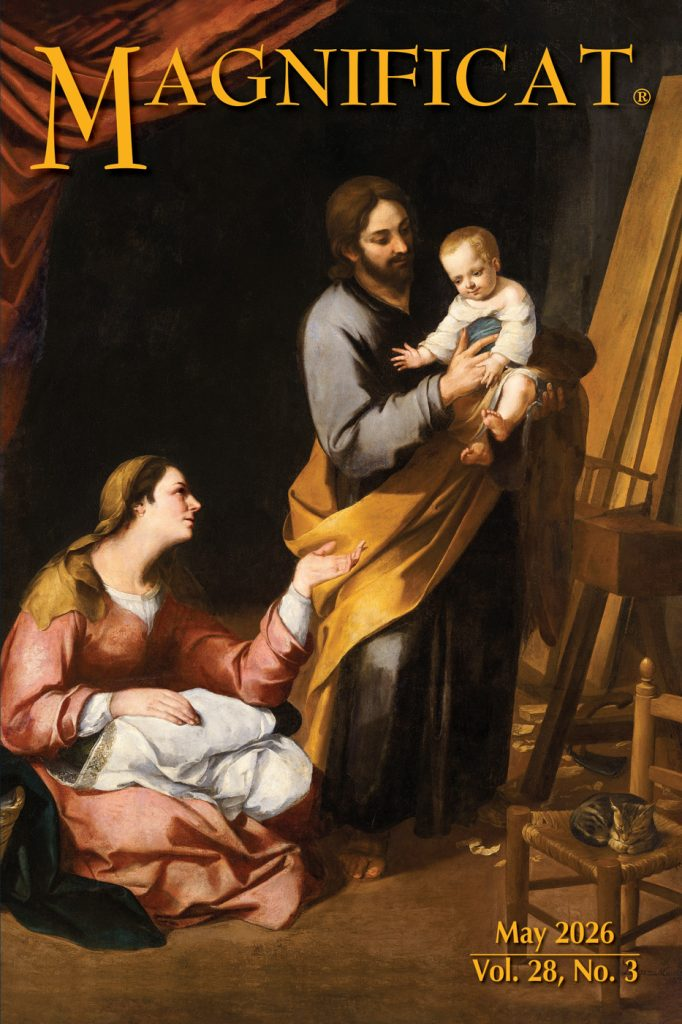
MAY 2026
Magnificat: A beautifully designed monthly publication intended for daily use. It includes the texts of the daily Mass, morning and evening prayers, and spiritual reflections. Exploring its Spanish edition, Magnificat en Español, can also be an excellent way to weave language practice into a daily spiritual routine.
Catholic.com
Most Holy Trinity (A)


Scroll to view all 50 states
Alabama
- One Voice (Diocese of Birmingham)
- The Catholic Week (Archdiocese of Mobile)
Alaska
- The North Star Catholic (Archdiocese of Anchorage-Juneau)
- The Alaskan Shepherd (Diocese of Fairbanks)
- Missionary Disciples (Diocese of Fairbanks)
Arizona
- Voice of the Southwest (Diocese of Gallup)
- The Catholic Sun (Diocese of Phoenix)
- New Outlook (Diocese of Tucson)
Arkansas
- Arkansas Catholic (Diocese of Little Rock)
California
- Angelus Magazine | DIGITAL (Archdiocese of Los Angeles)
- The Catholic Voice | DIGITAL (Diocese of Oakland)
- The Catholic Herald | DIGITAL (Diocese of Sacramento)
- Orange County Catholic (Diocese of Orange)
- Catholic Herald (Diocese of Sacramento)
- Inland Catholic Byte (Diocese of San Bernardino)
- The Southern Cross | DIGITAL (Diocese of San Diego)
- Catholic San Francisco (Archdiocese of San Francisco)
- San Francisco Católico (Archdiocese of San Francisco)
- The Valley Catholic | DIGITAL (Diocese of San Jose)
Colorado
- The Colorado Catholic Herald (Diocese of Colorado Springs)
- Denver Catholic (Archdiocese of Denver)
Connecticut
- Fairfield County Catholic (Diocese of Bridgeport)
- The Catholic Transcript | DIGITAL (Archdiocese of Hartford)
- Four County Catholic | DIGITAL (Diocese of Norwich)
Delaware
- The Dialog (Diocese of Wilmington)
Florida
- Florida Catholic | E-EDITIONS (Archdiocese of Miami; Dioceses of Orlando, Palm Beach, Pensacola–Tallahassee, St. Augustine, Saint Petersburg, Venice)
Georgia
- The Georgia Bulletin (Archdiocese of Atlanta)
- Southern Cross (Diocese of Savannah)
Hawaii
- Hawaii Catholic Herald (Diocese of Honolulu)
Idaho
- Idaho Catholic Register (Diocese of Boise)
Illinois
- The Messenger (Diocese of Belleville)
- Chicago Catholic (Archdiocese of Chicago)
- Catolico (Archdiocese of Chicago)
- Christ is Our Hope (Diocese of Joliet)
- The Catholic Post (Diocese of Peoria)
- The Observer (Diocese of Rockford)
- Catholic Times (Diocese of Springfield)
Indiana
- The Message (Diocese of Evansville)
- Today’s Catholic News (Diocese of Fort Wayne–South Bend)
- Northwest Indiana Catholic (Diocese of Gary)
- The Criterion (Archdiocese of Indianapolis)
- The Catholic Moment | DIGITAL (Diocese of Lafayette)
Iowa
- The Catholic Messenger (Diocese of Davenport)
- The Catholic Mirror | DIGITAL (Diocese of Des Moines)
- The Witness (Archdiocese of Dubuque)
- The Lumen (Diocese of Sioux City)
Kansas
- Southwest Kansas Register (Diocese of Dodge City)
- The Leaven (Archdiocese of Kansas City)
- The Register | DIGITAL (Diocese of Salina)
- Catholic Advance (Diocese of Wichita)
- Avance Católico (Diocese of Wichita)
Kentucky
- Messenger (Diocese of Covington)
- Cross Roads | DIGITAL (Diocese of Lexington)
- The Record | DIGITAL (Archdiocese of Louisville)
- Western Kentucky Catholic (Diocese of Owensboro)
Louisiana
- Church Today (Diocese of Alexandria)
- The Catholic Commentator (Diocese of Baton Rouge)
- Bayou Catholic (Diocese of Houma–Thibodaux)
- Clarion Herald (Archdiocese of New Orleans)
- The Catholic Connection | DIGITAL (Diocese of Shreveport)
Maryland / Washington, DC
- The Catholic Review (Archdiocese of Baltimore)
- Catholic Standard (Archdiocese of Washington)
- El Pregonero (Archdiocese of Washington)
Massachusetts
- The Pilot (Archdiocese of Boston)
- The Anchor (Diocese of Fall River)
- SOPHIA | DIGITAL (Diocese of Springfield)
- The Catholic Free Press | DIGITAL (Diocese of Worcester)
Michigan
- Detroit Catholic (Archdiocese of Detroit)
- FAITH along Michigan’s 45th Parallel | DIGITAL (Diocese of Gaylord)
- Faith Grand Rapids (Diocese of Grand Rapids)
- The Good News (Diocese of Kalamazoo)
- FAITH (Diocese of Lansing)
- The U.P. Catholic (Diocese of Marquette)
- Great Lakes Bay | DIGITAL (Diocese of Saginaw)
Minnesota
- Our Northland Diocese (Diocese of Crookston)
- The Northern Cross (Diocese of Duluth)
- The Prairie Catholic (Diocese of New Ulm)
- Central Minnesota Catholic | DIGITAL (Diocese of Saint Cloud)
- The Catholic Spirit (Archdiocese of Saint Paul and Minneapolis)
- The Courier | DIGITAL (Diocese of Winona-Rochester)
Mississippi
- Gulf Pine Catholic | DIGITAL (Diocese of Biloxi)
- Mississippi Catholic | DIGITAL (Diocese of Jackson)
Missouri
- Catholic Missourian | DIGITAL (Diocese of Jefferson City)
- The Catholic Key | DIGITAL (Diocese of Kansas City–Saint Joseph)
- The Mirror (Diocese of Springfield–Cape Girardeau)
- St. Louis Review (Archdiocese of St. Louis)
- Catholic St. Louis | DIGITAL (Archdiocese of St. Louis)
Montana
- The Harvest (Diocese of Great Falls–Billings)
Nebraska
- West Nebraska Catholic | DIGITAL (Diocese of Grand Island)
- Southern Nebraska Register (Diocese of Lincoln)
- The Catholic Voice (Archdiocese of Omaha)
Nevada
- Desert Clarion (Diocese of Las Vegas)
- High Desert Catholic | DIGITAL (Diocese of Reno)
New Hampshire
New Jersey
- Catholic Star Herald (Diocese of Camden)
- The Catholic Spirit | DIGITAL (Diocese of Metuchen)
- The Catholic Advocate (Archdiocese of Newark)
- The Beacon | DIGITAL (Diocese of Paterson)
- The Monitor (Diocese of Trenton)
New Mexico
- Voice of the Southwest (Diocese of Gallup)
- Agua Viva (Diocese of Las Cruces)
- People of God (Archdiocese of Santa Fe)
New York
- The Evangelist (Diocese of Albany)
- The Tablet (Diocese of Brooklyn)
- The Catholic Union / The Catholic Union and Times (Diocese of Buffalo)
- Western New York Catholic (Diocese of Buffalo)
- The Good Newsroom (Archdiocese of New York)
- North Country Catholic (Diocese of Ogdensburg)
- Catholic Courier (Diocese of Rochester)
- El Mensajero Católico (Diocese of Rochester)
- The Long Island Catholic (Diocese of Rockville Centre)
- The Catholic Sun (Diocese of Syracuse)
North Carolina
- Catholic News Herald (Diocese of Charlotte)
- NC Catholics | DIGITAL (Diocese of Raleigh)
North Dakota
- Dakota Catholic Action | DIGITAL (Diocese of Bismarck)
- New Earth Magazine | DIGITAL (Diocese of Fargo)
Ohio
- The Catholic Telegraph (Archdiocese of Cincinnati)
- Northeast Ohio Catholic (Diocese of Cleveland)
- Catholic Times | DIGITAL (Diocese of Columbus)
- Steubenville Register (Diocese of Steubenville)
- The Catholic Echo (Diocese of Youngstown)
Oklahoma
- Sooner Catholic | DIGITAL (Archdiocese of Oklahoma City)
- Eastern Oklahoma Catholic | DIGITAL (Diocese of Tulsa)
Oregon
- Catholic Sentinel / El Centinela (Diocese of Baker / Archdiocese of Portland)
- The Diocesan Chronicle (Diocese of Baker / Archdiocese of Portland)
- Harvest | DIGITAL (Diocese of Baker / Archdiocese of Portland)
Pennsylvania
- The A.D. Times | DIGITAL (Diocese of Allentown)
- Proclaim TV! | DIGITAL (Diocese of Altoona–Johnstown)
- The Catholic Accent | DIGITAL (Diocese of Greensburg)
- The Catholic Witness | DIGITAL (Diocese of Harrisburg)
- Catholic Philly (Archdiocese of Philadelphia)
- Pittsburgh Catholic | DIGITAL (Diocese of Pittsburgh)
- The Catholic Light (Diocese of Scranton)
Rhode Island
- Rhode Island Catholic (Diocese of Providence)
- El Católico de Rhode Island (Diocese of Providence)
South Carolina
- The Catholic Miscellany | DIGITAL (Diocese of Charleston)
South Dakota
- West River Catholic | DIGITAL (Diocese of Rapid City)
- The Bishop’s Bulletin | DIGITAL (Diocese of Sioux Falls)
Tennessee
- East Tennessee Catholic (Diocese of Knoxville)
- The West Tennessee Catholic (Diocese of Memphis)
- Faith West Tennessee (Diocese of Memphis)
- Catholic Awakenings | DIGITAL (Diocese of Nashville)
Texas
- The West Texas Catholic | DIGITAL (Diocese of Amarillo)
- Catholic Spirit (Diocese of Austin)
- East Texas Catholic | DIGITAL (Diocese of Beaumont)
- South Texas Catholic | DIGITAL (Diocese of Corpus Christi)
- The Texas Catholic (Diocese of Dallas)
- Revista Católica (Diocese of Dallas)
- The Rio Grande Catholic | DIGITAL (Diocese of El Paso)
- North Texas Catholic | DIGITAL (Diocese of Fort Worth)
- Texas Catholic Herald | DIGITAL (Archdiocese of Galveston–Houston)
- West Texas Angelus | DIGITAL (Diocese of San Angelo)
- Today’s Catholic Newspaper | DIGITAL (Archdiocese of San Antonio)
- Catholic East Texas | DIGITAL (Diocese of Tyler)
- The Catholic Lighthouse | DIGITAL (Diocese of Victoria)
Utah
- Intermountain Catholic (Diocese of Salt Lake City)
Vermont
- Vermont Catholic (Diocese of Burlington)
Virginia
- Arlington Catholic Herald (Diocese of Arlington)
- The Catholic Virginian (Diocese of Richmond)
Washington
- Northwest Catholic | DIGITAL (Archdiocese of Seattle)
- Inland Catholic | DIGITAL (Diocese of Spokane)
West Virginia
- The Catholic Spirit (Diocese of Wheeling–Charleston)
Wisconsin
- The Compass | DIGITAL (Diocese of Green Bay)
- Catholic Life | DIGITAL (Diocese of La Crosse)
- Madison Catholic Herald (Diocese of Madison)
- The Catholic Herald (Archdiocese of Milwaukee)
- The Superior Catholic Herald (Diocese of Superior)
Wyoming
- Wyoming Catholic Register (Diocese of Cheyenne)
FORMED is a premier on-demand digital streaming platform dedicated to Catholic media. It is frequently described as a “Catholic Netflix.” Created by the Augustine Institute—in collaboration with Ignatius Press and over 100 other Catholic content providers—FORMED provides a vast library of faith-based media designed to help individuals, families, and parishes learn and grow in their faith.
RECENTLY ADDED

Many Catholic parishes purchase an annual subscription to FORMED for their congregation. If your local church has a subscription, you can usually sign up for a free account by entering your parish’s name or zip code on the site.

Most Holy Trinity (A)
Click banner to SHOW/HIDE latest updates
Communion vs. Calculation: A Trinitarian Critique of AI
Each week TWTW explores Artificial Intelligence through the rhythm of the church calendar by looking at the Sunday Mass readings. Using insights from Pope Leo XIV’s encyclical, the series hopes to offer a balanced view for understanding this emerging technology.
In an era defined by rapid technological acceleration, artificial intelligence stands as the preeminent “next industrial revolution.” As algorithms increasingly mediate human labor, communication, and decision-making, humanity faces a profound existential question: What does it mean to be human in the age of the soulless machine?
To answer this, Christian theology looks not to the mechanical limits of code, but upward to the ultimate archetype of reality—the Most Holy Trinity. By exploring AI through the lens of the eternal, self-giving love shared between the Father, Son, and Holy Spirit, we discover that true intelligence is inherently relational, embodied, and rooted in an absolute reverence for human dignity.
A Communion of Persons vs. Pattern Recognition
The foundational scriptural understanding of God’s internal nature is revealed in Exodus 34:4b-6, 8-9. Here, the Lord proclaims His name to Moses as “a merciful and gracious God, slow to anger and rich in kindness and fidelity.” This revelation underscores that the supreme reality governing the universe is not a cold, calculating cosmic architect, but a personal Communion of Persons characterized by dynamic, overflowing love. The Father, Son, and Holy Spirit exist in an eternal dance of mutual self-emptying and reception.
Artificial intelligence stands in sharp contrast to this Trinitarian mystery. As the Vatican document Antiqua et Nova (2025) observes, modern AI systems operate largely through pattern recognition and statistical calculation. They completely lack the creative, spiritual, and moral dimensions of human thought. A machine can mimic the vocabulary of mercy, but it can never possess a heart that is “slow to anger and rich in kindness.” It processes data, but it cannot offer fidelity.
Pope Leo XIV beautifully illuminated this distinction during his June 2025 Address to the Jubilee of Governments, emphasizing that:
“Our personal life has greater value than any algorithm, and social relationships require spaces for development that far transcend the limited patterns that any soulless machine can pre-package.”
Incarnate Love and the Limits of Simulation
Furthermore, Trinitarian love is fundamentally generative and life-giving, a truth encapsulated in John 3:16-18: “For God so loved the world that he gave his only Son, so that everyone who believes in him might not perish but might have eternal life.” The Father’s love does not remain self-contained; it breaks into human history through the Incarnation. God sends His Son not to condemn, but to save, demanding a relational response of faith. This reminds us that human intelligence and creativity are gifts entrusted to us by the Creator to build up communion.
When Pope Leo XIV addressed the Builders AI Forum in November 2025, he noted that AI, as a product of human invention, springs from this very creative capacity given by God. However, because AI lacks a soul, it cannot replicate the moral discernment required to love. As the Holy Father stated at the 2025 AI for Good Summit, while a machine can simulate aspects of human reasoning, “it cannot replicate moral discernment or the ability to form genuine relationships.”
In his live address to the National Catholic Youth Conference, Pope Leo XIV warned young people that AI misses a very important human element:
“AI will not judge between what is truly right and wrong. And it won’t stand in wonder, in authentic wonder before the beauty of God’s creation.”
Sacred Fellowship in an Algorithmic Age
Finally, the Holy Trinity provides the ultimate blueprint for human community and social relations. In 2 Corinthians 13:11-13, Saint Paul exhorts the faithful to “mend your ways, encourage one another, agree with one another, live in peace,” concluding with the famous Trinitarian blessing: “The grace of the Lord Jesus Christ and the love of God and the fellowship of the Holy Spirit be with all of you.”
This fellowship is precisely what digital automation threatens to distort. When human interactions are reduced to algorithmic optimization designed to maximize engagement, the sacred uniqueness of the person is compromised. Pope Leo XIV forcefully defended this in his 2026 Message for the 60th World Day of Social Communications, asserting that “our faces and voices are unique, distinctive features of every person… Faces and voices are sacred.” True fellowship requires embodied, situated human intelligence passed down through generations, a reality the International Theological Commission’s 2026 document Quo Vadis, Humanitas vigorously defended.
Conclusion
The Superior Ethical Criterion
Ultimately, artificial intelligence must be evaluated by a superior ethical criterion: Does it serve the human person, or does it attempt to replace the divine call to relationship? By anchoring our ethical frameworks in the love of the Father, the grace of the Son, and the fellowship of the Holy Spirit, humanity can ensure that technology remains a tool for the common good, rather than a substitute for the transcendent dignity of the human soul.
TWTW used AI to help write/edit this essay.
Most Holy Trinity (A)
The Revelation of God’s Character
The 10 Commandments (1956)

Cecil B. DeMille’s classic epic handles this era of Exodus with unforgettable theatricality. When Charlton Heston’s Moses climbs back up Mount Sinai after the heartbreak of destroying the first set of tablets, the film captures the heavy gravity of Exodus 34:4b ("Moses rose early in the morning and went up on Mount Sinai").
When he returns to the camp, his hair has turned stark white and his face visibly glows with the residual brilliance of the divine presence—a direct nod to the verses immediately following your passage. Heston delivers his lines with a booming, deeply humbled cadence that mirrors Exodus 34:8-9, falling to his knees to plead for the stiff-necked Israelites. The cinematic focus is on the sheer, terrifying weight of divine glory and the absolute humility required of human leadership.
The Prince of Egypt (1998)
While this animated masterpiece condenses the post-Golden Calf narrative, it captures the raw emotional and theological landscape of Exodus 34 perfectly through its art direction. During Moses' encounters with the divine on Sinai, the animation transitions away from rigid Egyptian-style geometry to fluid, overwhelming light and fire.
The film beautifully visualizes the tension of verses 6-7—the intimidating fire of a holy God contrasted against the warm, enveloping light of a "compassionate and gracious" Creator. Moses is consistently shown prostrate or shield-eyed, visually capturing the posture of verse 8 ("Moses bowed to the ground at once and worshiped").
The Mission of the Son
The Chosen (Season 1, Episode 7: "Invitations")

THE CHOSEN( 10:26) - The impact of our Season 1 Episode 7 scene portraying the most famous conversation in the Bible is set up by six episodes of backstory and executed by two masterful actors and two masterful composers.
This is arguably one of the most celebrated depictions of this passage in modern media. The scene takes place on a dimly lit rooftop at night between Jesus (Jonathan Roumie) and Nicodemus (Erick Avari).
What makes this scene powerful is its profound intimacy. Roumie’s Jesus doesn't preach John 3:16 as a grand public sermon; he whispers it as a personal life-raft to a desperate, brilliant theologian who realizes his entire religious framework is being upended. When Jesus mentions that the Son came "not to condemn the world, but to save it" (John 3:17), you see the visible relief wash over Nicodemus' face. The lighting is warm and casting soft shadows, highlighting the intensely personal nature of the Incarnation.
The Trinitarian Benediction
A.D. The Bible Continues (2015 Miniseries) / Acts (1994 Visual Bible)
In 2 Corinthians 13:11-13, Paul closes his incredibly tumultuous, raw letter to the church at Corinth with a call to joy, restoration, agreement, and peace, concluding with the famous liturgical blessing: the grace of Jesus, the love of God, and the fellowship of the Holy Spirit. Because this passage is a letter's epilogue rather than a narrative event, it rarely appears as a literal scene in standard "Jesus films." Instead, filmmakers capture its essence in depictions of the early Church or the final departures of the Apostles.
In A.D. The Bible Continues, the early believers are frequently shown gathering in secret rooms, clasping hands, and embracing—directly mirroring the cultural reality of the 2 Corinthians 13:12 instruction to "greet one another with a holy kiss." When Peter or the elders dismiss the congregation, they frequently pray a blessing over the room that mirrors the dynamic of 2 Corinthians 13:14: invoking the grace of Christ and the fellowship of the Spirit to keep a persecuted, fragile community unified against external threats.
Gran Torino (2008)

Clint Eastwood directs and stars in Gran Torino as Walt Kowalski, a bitter, prejudiced Korean War veteran living in a changing Detroit neighborhood. When his teenage neighbor, Thao, is forced by a Hmong gang to try to steal Walt’s prized 1972 Gran Torino, an unlikely mentorship begins. Walt becomes a protector to Thao and his sister, Sue, ultimately finding personal redemption by making the ultimate sacrifice to break the cycle of local gang violence.

The Cruciform Stand: Walt Kowalski, a bitter, bigoted Korean War veteran, realizes that his young Hmong neighbor, Thao, and Thao’s family will never be safe from a vicious local gang. Walt confronts the gang on their front lawn, drawing all the neighbors to their windows as witnesses. He reaches into his jacket as if drawing a weapon; the gang panics and guns him down. As he falls to the ground, his arms are spread wide in the shape of a cross, exposing that he was only reaching for a cigarette lighter. The gang is arrested, breaking the cycle of violence and saving Thao.
Theological Connection: This stark visual and narrative choice directly echoes John 3:16: “For God so loved the world, that he gave his only Son…” Walt lays down his life so that those he came to love might live abundantly and free from fear. By refusing to use violence, he ensures the gang’s condemnation comes strictly through their own lawless actions, illustrating the theme of John 3:18—that judgment is self-inflicted by those who choose darkness over light, while salvation comes through a willingness to sacrifice for the beloved.
Les Misérables (2012)

The story follows Jean Valjean, a man imprisoned for 19 years for stealing a loaf of bread to feed his sister’s starving child. Released on parole by the cold, dogmatic prison guard Javert, Valjean finds himself an outcast, rejected by society. When Valjean steals silver from the benevolent Bishop Myriel, the Bishop covers for him to the police and gifts him two silver candlesticks, urging him to use the wealth to become an honest man.

The Gift of the Silver Candlesticks: Jean Valjean, an escaped convict hardened by decades of brutal imprisonment, is caught by police after stealing silver from the benevolent Bishop Myriel. Instead of condemning Valjean, the Bishop lies to the police, claiming the silver was a gift, and then hands Valjean two highly valuable silver candlesticks he “forgot” to take.
Theological Connection: This scene perfectly captures the heart of Exodus 34:6—a God who is “merciful and gracious, slow to anger, and abounding in steadfast love.” The Bishop acts as the hands of God; Valjean deserves the full weight of the law, but receives overwhelming grace instead. This radical act of mercy shatters Valjean’s hardened heart, prompts his repentance, and fundamentally alters the entire trajectory of his life, mirroring how divine grace invites transformation.
Schindler’s List (1993)

Oskar Schindler, a vain German businessman in Nazi-occupied Poland, initially exploits Jewish labor for wartime profit. However, as the horrors of the Holocaust unfold, his greed transforms into profound compassion. Risking his fortune and his life, Schindler outwits the SS and uses his factory as a refugee sanctuary. By the war’s end, his famous list saves more than 1,100 Jews from extermination, turning a flawed profiteer into an enduring symbol of costly, sacrificial redemption.

The Value of One More Soul: At the end of the war, industrialist Oskar Schindler prepares to flee as a war criminal. The Jewish workers he saved present him with a signed letter of testimony and a ring forged from the gold teeth of a worker, inscribed with the Talmudic saying, “Whoever saves one life saves the world entire.” Looking at the ring, Schindler breaks down in tears. He looks at his car and his gold lapel pin, weeping as he realizes he could have sold them to save just a few more lives, crying out, “I could have got more… I didn’t do enough.”
Theological Connection: This emotionally shattering scene directly reflects the logic of John 3:16. Salvation is not a passive concept; it is actively, intensely costly. God “gave His only Son” because love pours out its most precious assets to rescue the beloved. Schindler starts the film seeking profit, but ends by viewing his entire wealth through the lens of redemption. His grief over what more he could have given mirrors the heart of a saving God who holds nothing back to bring humanity out of condemnation and into life.
Most Holy Trinity (A)
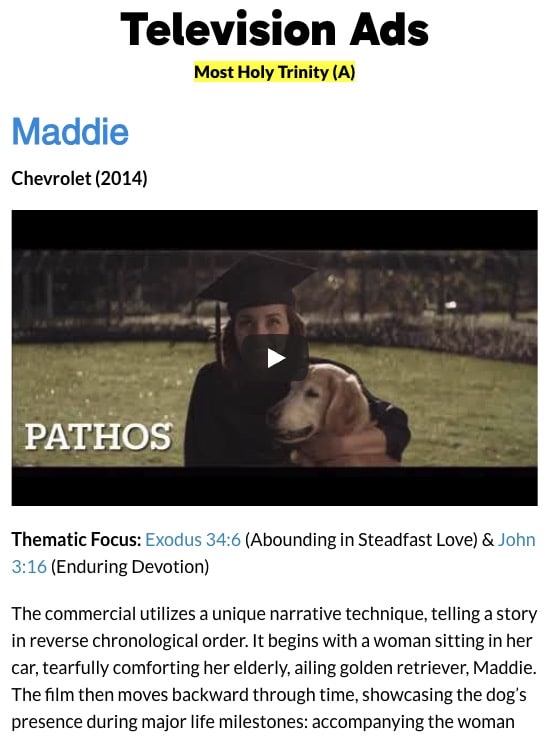
Maddie
Chevrolet (2014)

Thematic Focus: Exodus 34:6 (Abounding in Steadfast Love) & John 3:16 (Enduring Devotion)
The commercial utilizes a unique narrative technique, telling a story in reverse chronological order. It begins with a woman sitting in her car, tearfully comforting her elderly, ailing golden retriever, Maddie. The film then moves backward through time, showcasing the dog’s presence during major life milestones: accompanying the woman on her wedding day, comforting her through a devastating college breakup, and guarding her bedroom door during teenage angst. The ad ends where the relationship began—a young girl cradling a tiny puppy in her arms.n and forgiveness to the world.
Theological Connection
This poignant ad captures the essence of the Hebrew concept Chesed—the “steadfast love” or “loving-kindness” highlighted in Exodus 34:6. Divine Chesed is an unbreakable, covenantal devotion that stays present through every phase of human rebellion, grief, joy, and decay. By framing the dog’s life as an unwavering, non-judgmental presence through all the woman’s life stages, the commercial serves as a domestic reflection of a God who binds Himself to humanity, accompanying us “all the days of our lives.”
Giving is the Best Communication
Thai Phone Company True Move (2013)

Theme: Exodus 34:6 (A God Merciful and Gracious) & 2 Corinthians 13:11 (Restoration)
A poor, young boy is caught stealing medicine and veggie soup from a local street vendor to give to his sick mother. The vendor violently screams at the boy, humiliating him. A nearby noodle-shop owner steps in, pays the angry vendor for the stolen items, and gently hands the bag to the trembling boy along with an extra container of soup.
Thirty years later, the kind noodle-shop owner collapses from a brain tumor, leaving his adult daughter with an astronomical hospital bill she cannot pay. As she weeps by his bedside, she receives a revised bill totaling “$0.00$.” The attached note reads: “All expenses paid 30 years ago with three packs of painkillers and a bag of veggie soup.” The lead doctor on her father’s case was that little boy.
Theological Connection
This viral masterpiece echoes the absolute core of Exodus 34:6. God is revealed as “slow to anger, and abounding in steadfast love.” Where the world demands strict retribution and judgment (the angry vendor), the noodle-shop owner injects pure grace. Decades later, that single act of unmerited mercy results in a profound, life-saving restoration (2 Cor 13:11) for his own family, demonstrating that grace is a creative, enduring force that breaks the cycle of human condemnation.
The Wish Writer
Macy’s Christmas Commercial (2015)

Thematic Focus: John 3:16-17 (Extravagant, Costly Gift of Love / Sent to Bring Life)
A young girl receives a magical, glowing fountain pen as a holiday gift. She quickly discovers that whatever she writes with the pen immediately comes true in the real world: she writes for a snowy day, and a beautiful snowstorm begins; she writes for a treat, and it appears. She delights in using this incredible power for her own amusement.
However, she looks out her window and notices her older brother looking incredibly somber, struggling to fix his broken, old bicycle so he can ride with his friends. Recognizing his deep sadness, she looks at the magical pen—which is rapidly running out of its glowing ink. Realizing she only has enough power left for one final wish, she selflessly gives up her own desires. She writes a wish for her brother, and the bike is instantly restored. The pen goes completely dark, its power entirely spent, but she smiles as she watches her brother’s pure joy.
Theological Connection
This narrative serves as a gentle, domestic parable of John 3:16. The young girl possesses something extraordinarily rare and valuable (the magical pen), representing the ultimate resource. Love is defined by the willingness to completely empty oneself of what is precious for the sake of the beloved. She does not use her power to judge or criticize her brother’s broken situation; instead, she sacrifices the very last of her gift so that he might experience restoration and abundance, beautifully illustrating a love that “sent… not to condemn the world, but that the world might be saved.”
Most Holy Trinity (A)
Download PDF (High Resolution)
Non-profits have permission to use in their ministry.
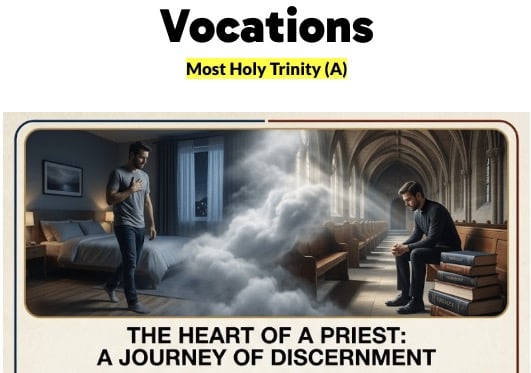
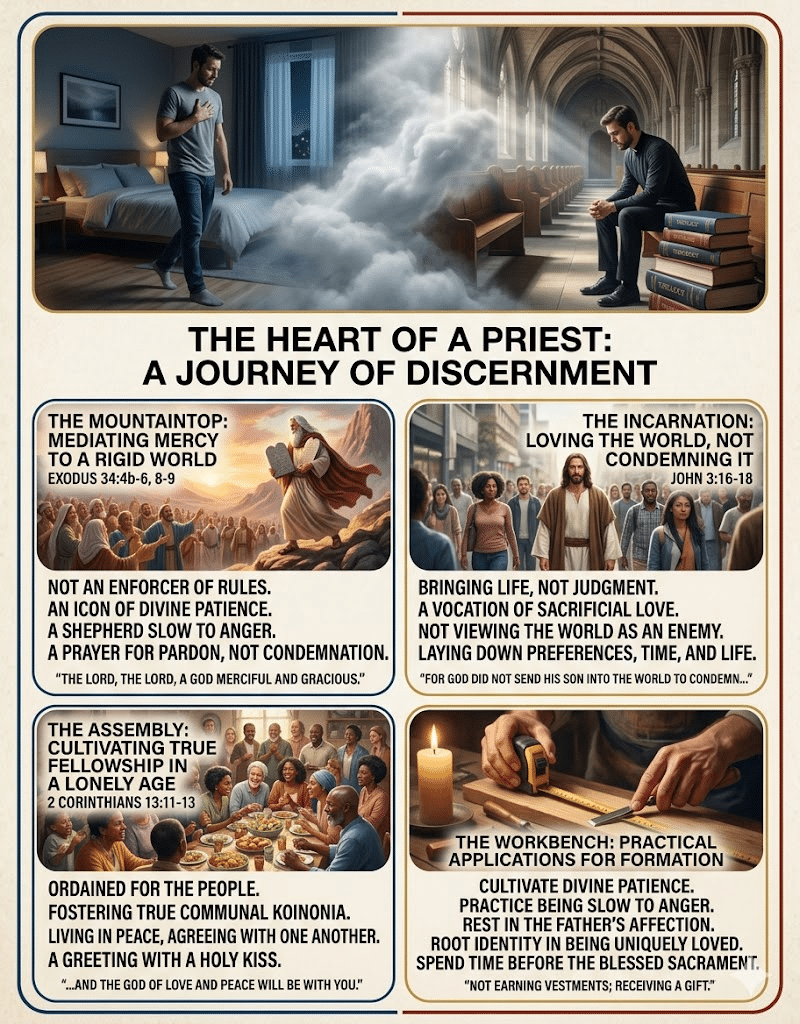
The Weight of the Stole: A Letter to Seminarians
Whether you are pacing the floor of your bedroom wondering if that quiet tug in your chest is truly the voice of God, or you are already sitting in a seminary chapel surrounded by the weight of theology books, I want you to take a deep breath. Discernment is not a puzzle to be solved or a career path to be engineered. It is an invitation to step into a mystery that is as old as the cosmos, yet as intimate as your own heartbeat.
If you look at the scriptures for this Sunday, you will find the exact blueprint for the heart of a priest. It is a blueprint drawn from the raw mercy of Exodus, the communal harmony of 2 Corinthians, and the staggering, self-emptying love of John’s Gospel.
The Mountaintop: Mediating Mercy to a Rigid World
In Exodus 34, we find Moses climbing Mount Sinai early in the morning, carrying two stone tablets. He is ascending on behalf of a “stiff-necked people”—a community that had just fallen into systemic idolatry with a golden calf. Look closely at what happens when God descends in the cloud. God does not unleash lightning bolts of condemnation. Instead, He proclaims His deepest identity:
“The Lord, the Lord, a God merciful and gracious, slow to anger, and abounding in steadfast love and faithfulness.”
As a future priest, this is your first and most critical lesson: you are not called to be a rigid enforcer of rules or a corporate manager of a parish. You are called to be an icon of divine patience. In our contemporary digital culture, we live in a landscape of instant outrage, cancel culture, and unforgiving public scrutiny. People are exhausted by condemnation.
When someone walks into your confessional or sits across from you in a parish office, shattered by their own failures, they need to encounter a shepherd who is slow to anger. Like Moses, your priesthood will require you to bow down and intercede for a broken world, praying, “Pardon our iniquity and our sin, and take us for your inheritance.” You must love the stiff-necked world enough to beg for its healing.
The Incarnation: Loving the World, Not Condemning It
This absolute refusal to condemn is echoed perfectly in John 3:17:
“For God did not send his Son into the world to condemn the world, but in order that the world might be saved through him.”
In a society deeply fractured by political polarization and philosophical isolation, the temptation for a young seminarian can be to retreat into a defensive crouch, viewing the secular world as an enemy to be fought. But Christ did not look at the world with hostility; He looked at it with an aching, sacrificial love that poured itself out entirely.
Your vocation is to bring life, not judgment. You are being formed to lay down your preferences, your time, and your very life so that others might experience the abundance of God.
The Assembly: Cultivating True Fellowship in a Lonely Age
Finally, Paul’s words in 2 Corinthians 13 remind us that this sacrificial love must bear fruit in real, breathing human community.
Paul commands us to “agree with one another, live in peace… greet one another with a holy kiss.”
A priest does not live on an isolated island of holiness. You are being ordained for the people. In a modern world plagued by an epidemic of loneliness and superficial online interactions, your ministry must foster true koinonia—the deep, supernatural fellowship of the Holy Spirit.
How do you practically apply these profound texts right now, where your feet are currently planted?
- Cultivate Divine Patience: First, practice the art of being “slow to anger” in your daily life. When a classmate irritates you, when social media provokes you, or when seminary formation feels restrictive, pause. Intentionally choose to respond with the Chesed—the steadfast love—of God.
- Rest in the Father’s Affection: Second, root your identity entirely in the reality of being uniquely loved by the Father. You cannot give away a love you have not received. Spend time before the Blessed Sacrament simply allowing the reality of John 3:16 to wash over you. You are not earning your vestments; you are receiving a gift.
Brother, the road of discernment is long, and it requires immense courage to carry the cross in the modern age. But if you anchor your heart in the merciful character of God, you will become a priest who does not condemn, but restores. Know of my prayers for you on this sacred journey.
TWTW used AI to help write/edit this essay.
Most Holy Trinity (A)

Standing in the Light: A Trinitarian Response to Teen Bullying
The hallways of a modern high school, whether physical or digital, can often feel like a battleground of social currency. Cyberbullying via anonymous apps, targeted exclusion from group chats, and the quiet cruelty of rumors can leave a teenager feeling utterly isolated and stripped of their worth. When faced with the crushing weight of peer hostility, the natural human reaction is either to strike back in anger or to retreat into silent despair.
However, Christian theology offers teenagers a radically different roadmap for navigating this pain. By looking at the ultimate reality of love—the relation between the Father, Son, and Holy Spirit in the Most Holy Trinity—young people can find both the strength to protect their own dignity and the grace to transform their schools. Through the lens of the Trinitarian scriptures, we discover that the best response to bullying is rooted in divine identity, courageous community, and the refusal to let hatred define our worth.
Finding Identity in the God of Mercy
When a teenager is bullied, the immediate casualty is their sense of self. A cruel comment about someone’s appearance on an Instagram post or mocking text messages can make a person believe they are flawed, unloved, and entirely alone. It is precisely in this dark space that the revelation of God’s character in Exodus 34:4b-6 offers a lifeline. When Moses ascends Mount Sinai, the Lord proclaims His name as “a merciful and gracious God, slow to anger and rich in kindness and fidelity.”
For a teenager enduring mistreatment, this passage serves as a reminder of who defines them. They are not defined by the fleeting, often malicious opinions of their peers, but by a Creator whose very nature is overflowing kindness and unwavering fidelity.
Consider a high school student named Marcus, who finds himself the target of relentless teasing because he doesn’t fit into the popular athletic crowd. Responding to this bullying through the lens of Exodus means Marcus must first anchor his identity in God’s fidelity. Because God is faithful, Marcus’s intrinsic worth is unshakeable.
Responding well to a bully does not mean absorbing the blows; it means standing tall in the quiet confidence that you are fiercely loved by the King of the Universe. This realization defuses the bully’s greatest weapon: the power to make the victim feel worthless.
The Power of a Trinitarian Safe Haven
The Holy Trinity is, at its core, a perfect communion of love and fellowship. In 2 Corinthians 13:11-13, Saint Paul provides a beautiful blueprint for how human relationships should mirror this divine reality, urging the community to “mend your ways, encourage one another, agree with one another, live in peace.” He concludes with the blessing of “the grace of the Lord Jesus Christ and the love of God and the fellowship of the Holy Spirit.”
This text directly speaks to the necessity of building a supportive community to counteract bullying. Bullies thrive on isolating their victims. Therefore, the best practical response for a teenager experiencing or witnessing bullying is to cultivate a “Trinitarian fellowship”—a tight-knit, encouraging circle of safety.
Imagine Sarah, a sophomore who notices a classmate being systematically excluded from lunchtime tables and mocked in group projects. Remembering Saint Paul’s call to “encourage one another,” Sarah chooses to break the cycle of isolation. She steps out of her comfort zone, sits with the lonely classmate, and invites them into her own friend group.
By creating pockets of peace and genuine fellowship, teenagers can build a social network that acts as a shield against cruelty. Responding to bullying is rarely a solo endeavor; it requires the courage of bystanders to step up, tell a trusted adult, and actively construct a community where everyone belongs.
Refusing to Condemn: The Path of Radical Grace
Perhaps the most challenging aspect of a Christian response to bullying is found in John 3:16-17: “For God so loved the world that he gave his only Son… For God did not send his Son into the world to condemn the world, but that the world might be saved through him.” The Father’s response to a broken, hostile world was not a declaration of war or a strike of retaliation, but an act of radical, self-giving love.
For a teenager, this is a call to a heroic level of maturity. When cyberbullied, the easiest response is to fire back with an equally devastating insult. Yet, escalating the conflict only feeds the cycle of hostility. John’s Gospel invites teenagers to see that bullies themselves are often acting out of their own unhealed brokenness and insecurity—they are “condemning” others because they do not feel the saving love of God in their own lives.
Responding like Christ does not mean allowing oneself to be a doormat. True love requires setting firm boundaries, blocking toxic accounts, and seeking help from parents or school counselors. But it also means guarding one’s own heart against bitterness.
When a teenager chooses not to retaliate, when they pray for the person who hurt them, they are reflecting the non-condemning love of Jesus. They prove that the darkness of a bully cannot extinguish the divine light within them. By grounding their identity in the Father’s fidelity, building supportive fellowships, and choosing grace over retaliation, modern teenagers can navigate the trials of adolescence with unyielding dignity and hope.
TWTW used AI to assist him in writing this essay.