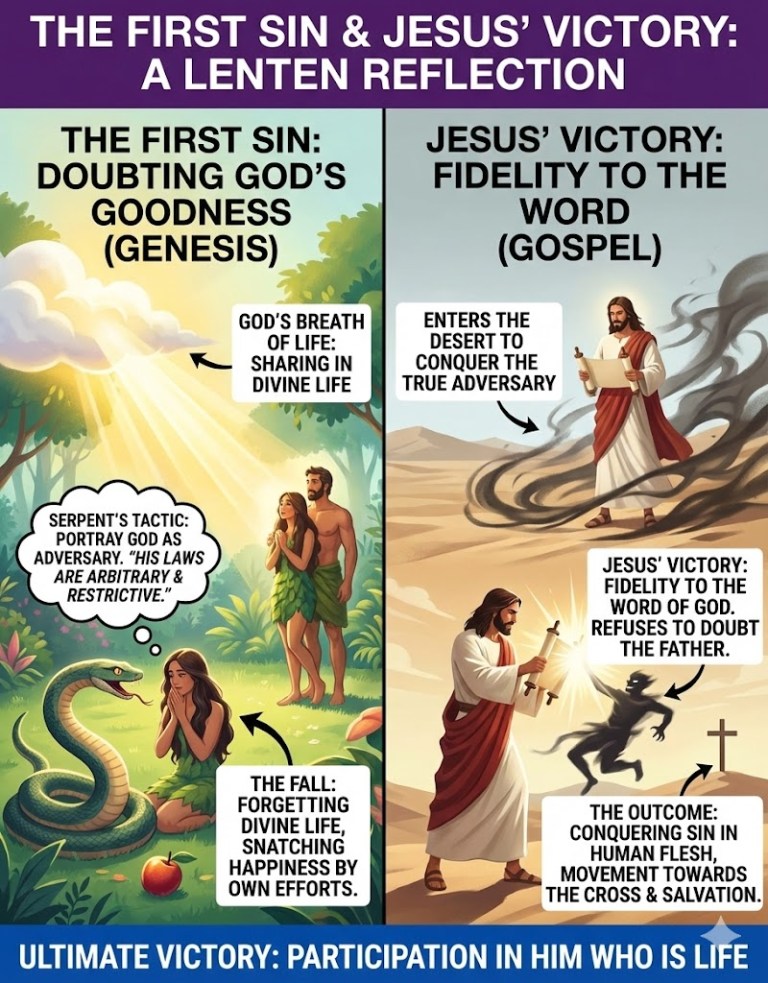
Free clip art, comics, graphics for bulletins, web pages, presentations, etc. for 1st Sunday of Lent (A) Genesis 2:7-9; 3:1-7 Romans 5:12-19 Matthew 4:1-11

Clip art, comics, Bulletin Inserts for Sunday

Clip art, comics, Bulletin Inserts for Sunday

Clip art, comics, Bulletin Inserts for Sunday

Clip art, comics, Bulletin Inserts for Sunday

February 22, 2026

February 22, 2026

1st Sunday of Lent (A)

FR. LONSDALE'S CLIPARTSUNDAY GRINSBULLETIN INSERTS

Using provided gif, reimagine it by colorizing it and making it 3-D so image pops out, keep the white background.

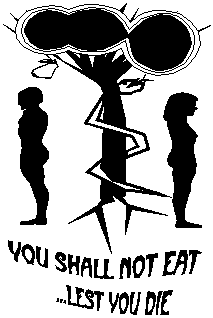
Give a detailed art and theology analysis of the image connecting it ############/

First Reading

CLICK HERE FOR A MORE DETAILED ANALYSIS

Art Analysis

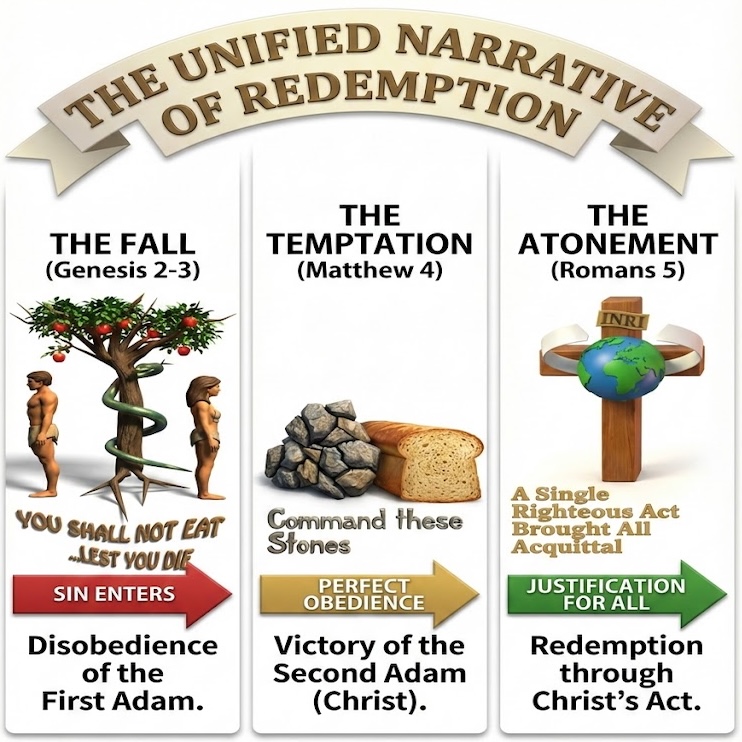
  • Style and Medium: The image is a 3D digital rendering, which gives the figures and objects a tangible, realistic quality. The style is clean and polished, with soft lighting that creates a sense of depth and form. The figures are stylized but proportional, resembling classical sculptures.
  • Composition: The composition is symmetrical, with the Tree of Knowledge as the central axis. Adam (on the left) and Eve (on the right) stand in profile, facing each other across the tree. This arrangement emphasizes their relationship and their shared experience. The serpent is coiled around the trunk, physically bridging the gap between them and the fruit.
  • Symbolism:
    • The Tree: The tree is the central element, symbolizing the "tree of the knowledge of good and evil." Its lush leaves and vibrant red fruit make it visually appealing.
    • The Fruit: The red apples are a common iconographic representation of the forbidden fruit. Their bright color contrasts with the rest of the scene, drawing the viewer's eye.
    • The Serpent: The green serpent, with its forked tongue, is a classic symbol of temptation, deception, and the devil. Its coiling posture around the tree visually represents its role as a tempter.
    • The Figures (Adam and Eve): They are depicted as the first man and woman. Their loincloths are a key detail, symbolizing the moment after they ate the fruit and realized they were naked (Genesis 3:7). Their pose is contemplative, suggesting the moment of decision or its immediate aftermath.
    • The Text: The wooden text at the bottom, "YOU SHALL NOT EAT ...LEST YOU DIE," is a direct quote of God's command. Its prominent placement serves as a caption and a moral warning.

Theological Analysis (Genesis 2:7-9; 3:1-7)

The image visually captures the key theological themes of these biblical passages:

  1. Creation and Command (Genesis 2:7-9): The presence of Adam and Eve, created by God, is implied. The central tree is the "tree of the knowledge of good and evil" that God placed in the garden. The text at the bottom directly references God's command: "but of the tree of the knowledge of good and evil you shall not eat, for in the day that you eat of it you shall surely die" (Genesis 2:17). This command establishes the moral order and the boundaries of human freedom.
  2. Temptation and Deception (Genesis 3:1-5): The serpent is the central figure of temptation. Its placement between Eve and the fruit visually represents the dialogue where it questions God's command ("Did God actually say...?") and deceives Eve ("You will not surely die. For God knows that when you eat of it your eyes will be opened..."). The serpent is the catalyst for the questioning of God's authority.
  3. Sin and its Consequences (Genesis 3:6-7): The presence of the forbidden fruit and the figures' loincloths point to the act of disobedience and its immediate consequence. Genesis 3:6 describes Eve seeing the fruit was "good for food" and "a delight to the eyes," leading her to eat it and give some to Adam. The loincloths are a direct reference to Genesis 3:7: "Then the eyes of both were opened, and they knew that they were naked. And they sewed fig leaves together and made themselves loincloths." The loincloths symbolize the loss of innocence, the experience of shame, and the first consequence of their sin.

The artwork is a powerful visual representation of the biblical account of the Fall. It uses clear symbolism to depict the key elements of the story: the command, the temptation, the disobedience, and the resulting shame and alienation. The 3D rendering makes these abstract theological concepts feel tangible and immediate.


Second Reading

CLICK HERE FOR A MORE DETAILED ANALYSIS

Art Analysis

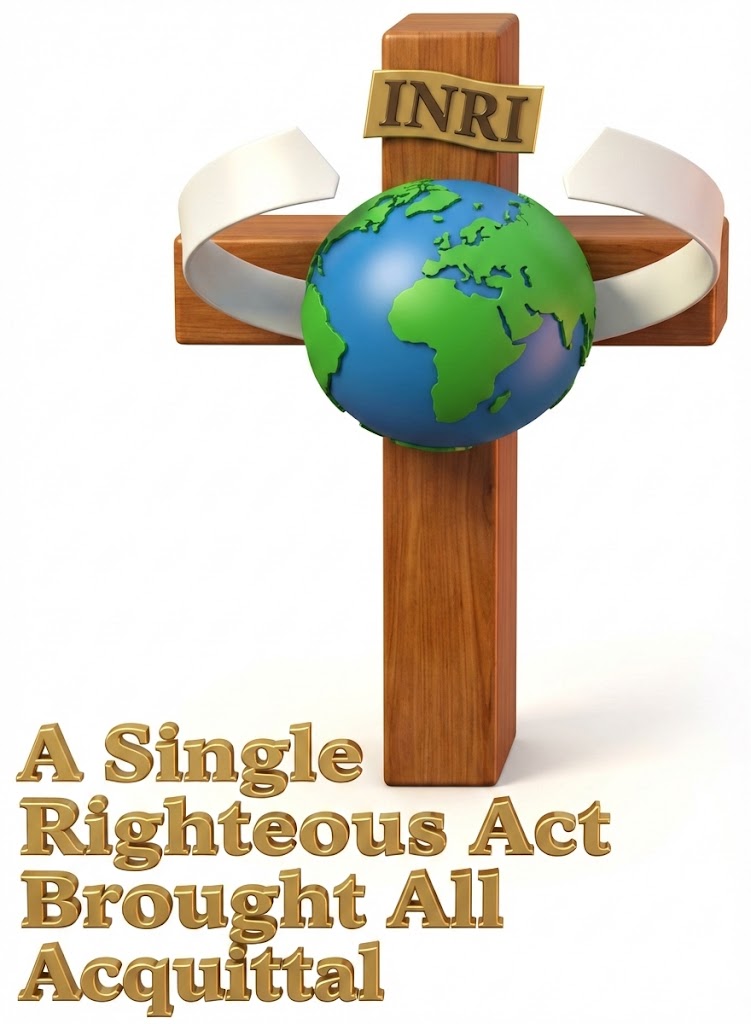
  • Composition and Style: The image is a clean, three-dimensional rendering set against a plain white background. The composition is centered on a wooden cross, which serves as the primary vertical element. This central placement emphasizes the cross as the focal point of the artwork's message.
  • Symbolism:
    • The Cross: A universal Christian symbol representing the crucifixion of Jesus Christ. Its prominent position signifies its central importance in the theological narrative.
    • The 'INRI' Sign: At the top of the cross is a plaque with the letters "INRI". This is the traditional acronym for the Latin phrase Iēsus Nazarēnus, Rēx Iūdaeōrum, translating to "Jesus the Nazarene, King of the Jews," the charge placed above Jesus at his crucifixion.
    • The Globe: A stylized globe is positioned at the intersection of the cross's beams. This represents the entire world and all of humanity.
    • The Banner: A white banner wraps around the cross and the globe. This wrapping motion suggests a universal covering, embrace, or application of what the cross represents to the whole world.
  • Text: At the bottom left, the text reads: "A Single Righteous Act Brought All Acquittal". This text serves as a direct caption, interpreting the visual symbols and summarizing the theological message.

Theological Analysis (Connecting to Romans 5:12-19)

The image is a visual representation of the core theological argument in Romans 5:12-19, which contrasts the disobedience of Adam with the obedience of Jesus Christ.

  1. The "Single Righteous Act": The text "A Single Righteous Act" directly references the concept found in Romans 5:18: "so also one righteous act resulted in justification and life for all people." The wooden cross in the image is the powerful symbol of this single act—the sacrificial death of Jesus Christ. The "INRI" sign historically identifies Jesus as the one who performed this act.
  2. Universal Scope ("All Acquittal"): The globe represents the "all people" or "the many" mentioned throughout the passage (e.g., Romans 5:12, 15, 18, 19) who were affected by Adam's sin and are now offered the gift of grace. The banner encircling the globe and the cross visually illustrates the universal scope of Christ's sacrifice, showing that its benefits extend to the entire world.
  3. Justification and Acquittal: The word "Acquittal" in the image's text is a synonym for "justification" used in Romans 5:16 and 5:18. The passage explains that while Adam's trespass brought condemnation, Christ's free gift brings justification—a legal declaration of righteousness—to all who receive it. The image visually connects the act of the cross to this verdict of acquittal for the world.

The artwork is a concise theological statement. The cross identifies the means of salvation, the globe identifies the recipients, and the text provides the scriptural interpretation, perfectly mirroring the “Adam-Christ” typology and the doctrine of justification found in Romans 5:12-19., large, rough-textured metallic letters spell out a direct reference to the scripture: “I DID NOT COME WITH SUBLIMITY OF WORDS I CAME WITH JESUS AND HIM CRUCIFIED”. The heavy, industrial aesthetic of the text gives it a sense of weight and finality.


Gospel
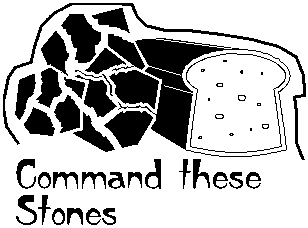
CLICK HERE FOR A MORE DETAILED ANALYSIS

Art Analysis

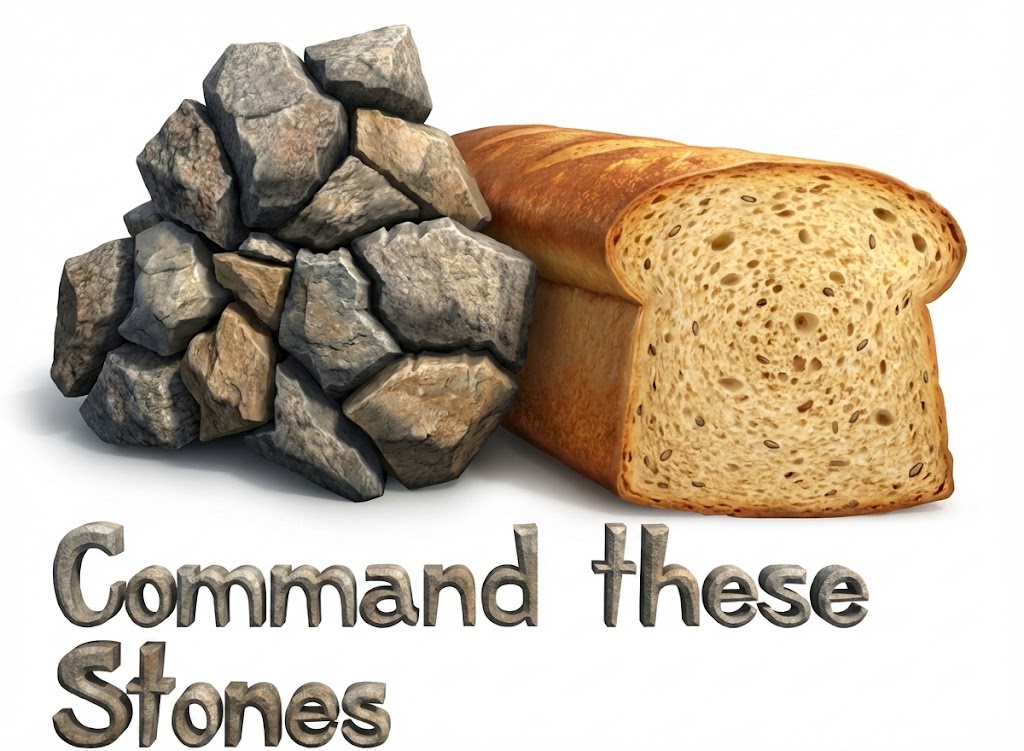
  • Style and Medium: The image is a 3D digital rendering with realistic textures, presented on a plain white background. This modern style makes the biblical subject matter feel tangible and contemporary.
  • Composition: The composition is a simple, balanced arrangement of two main objects and text. The pile of stones on the left is roughly equal in visual weight to the loaf of bread on the right. The text "Command these Stones" is positioned below the objects, serving as a title or caption.
  • Symbolism:
    • The Stones: A pile of rough, grey, and brown rocks is depicted on the left. They are unyielding, hard, and inedible, symbolizing the stark reality of the wilderness and the physical impossibility of the situation.
    • The Bread: To the right is a loaf of golden-brown bread with a sliced end showing its soft, porous texture. This object represents sustenance, physical need, and the immediate gratification of hunger.
    • The Text: The phrase "Command these Stones" is rendered in a 3D font that itself looks like carved stone. This choice of material visually reinforces the subject matter and the theme of power over the physical world.

Theological Analysis (Connecting to Matthew 4:1-11)

The image is a direct visual reference to the first temptation of Jesus as recorded in Matthew 4:1-11.

  • The Context of the Temptation: The passage describes Jesus fasting for forty days and forty nights in the wilderness, after which he was "famished" (Matthew 4:2). The image captures this moment of extreme physical need. The stones represent the barren wilderness environment, and the bread represents the food that Jesus desperately needed.
  • The Tempter's Challenge: The text "Command these Stones" is a direct quote of the devil's first challenge to Jesus: "If you are the Son of God, command these stones to become loaves of bread" (Matthew 4:3). This was a temptation to misuse his divine power for personal, immediate gratification, to prove his identity, and to bypass the human experience of suffering and dependence on God.
  • The Contrast of Stone and Bread: The visual juxtaposition of the hard, cold stones and the soft, warm-looking bread perfectly illustrates the nature of the miracle being demanded. It emphasizes the absurdity and the power required to transform one into the other. The image freezes the moment of the challenge, presenting the viewer with the same choice placed before Jesus: to rely on divine power for self-serving ends or to trust in God's provision.
  • The Implicit Response: While the image only shows the challenge, a viewer familiar with the biblical narrative will immediately recall Jesus' response: "Man shall not live by bread alone, but by every word that comes from the mouth of God" (Matthew 4:4). The image, therefore, serves as a powerful prompt, calling to mind Jesus' victory over the temptation to prioritize physical needs over spiritual obedience. The stone-like text itself could be seen as an ironic nod to Jesus' ultimate authority, which is not exercised at the devil's command but in alignment with God's will.

The artwork is a concise and effective visual summary of Jesus’ first temptation in the wilderness. Through the simple, high-quality rendering of stones, bread, and text, it powerfully communicates the core theological conflict between physical hunger, divine power, and obedient trust in God’s word as presented in Matthew 4:1-11. as leading lines drawing the viewer’s eye up through the text and toward the apex.

SOURCES: Clip art on the left is from Father Richard Lonsdale © 2000. AI enhanced colorized reimagined clip art of Father Lonsdale’s original images are on the right. To copy the clipart images, click with your right mouse button and use “save picture (or image) as…” To view a complete list of clipart images and commentaries: Lonsdale Commentaries and Clipart
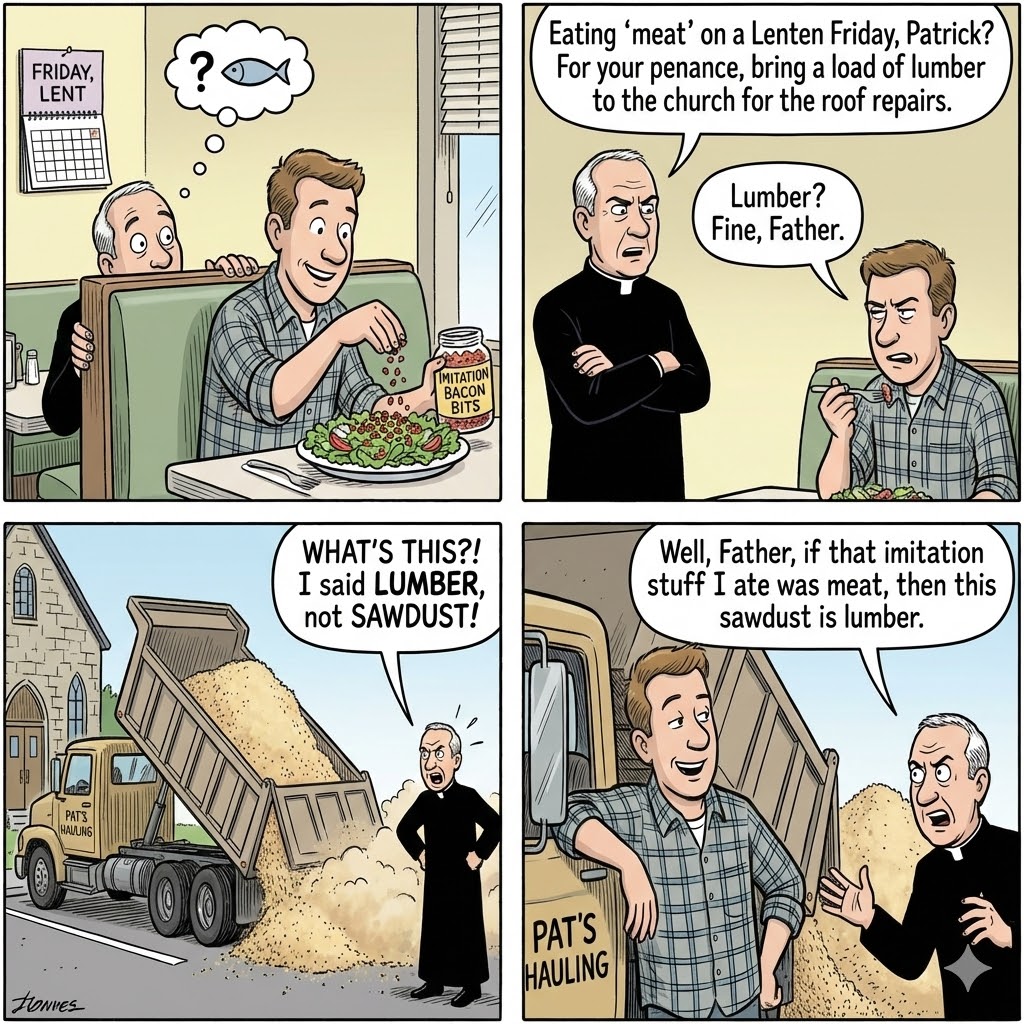
LENTEN PENANCE
TEXT VERSION

Making peace with his penance: A priest spied a parishioner enjoying some tasty smoked sausage on Friday during Lent — a strict no-no in the Church. The priest, being a pragmatic soul, told the man for his penance he was to bring a load of lumber to the church to help repair the roof. The man grumbled but went off to do his penance. He arrived at the church on the next Friday and proceeded to dump a huge load of sawdust into the parking lot. “What’s this?” the priest wanted to know. “I told you your penance was a load of lumber, not sawdust.” The man replied coolly, “Well, if that sausage I ate was meat, then this sawdust is lumber.”

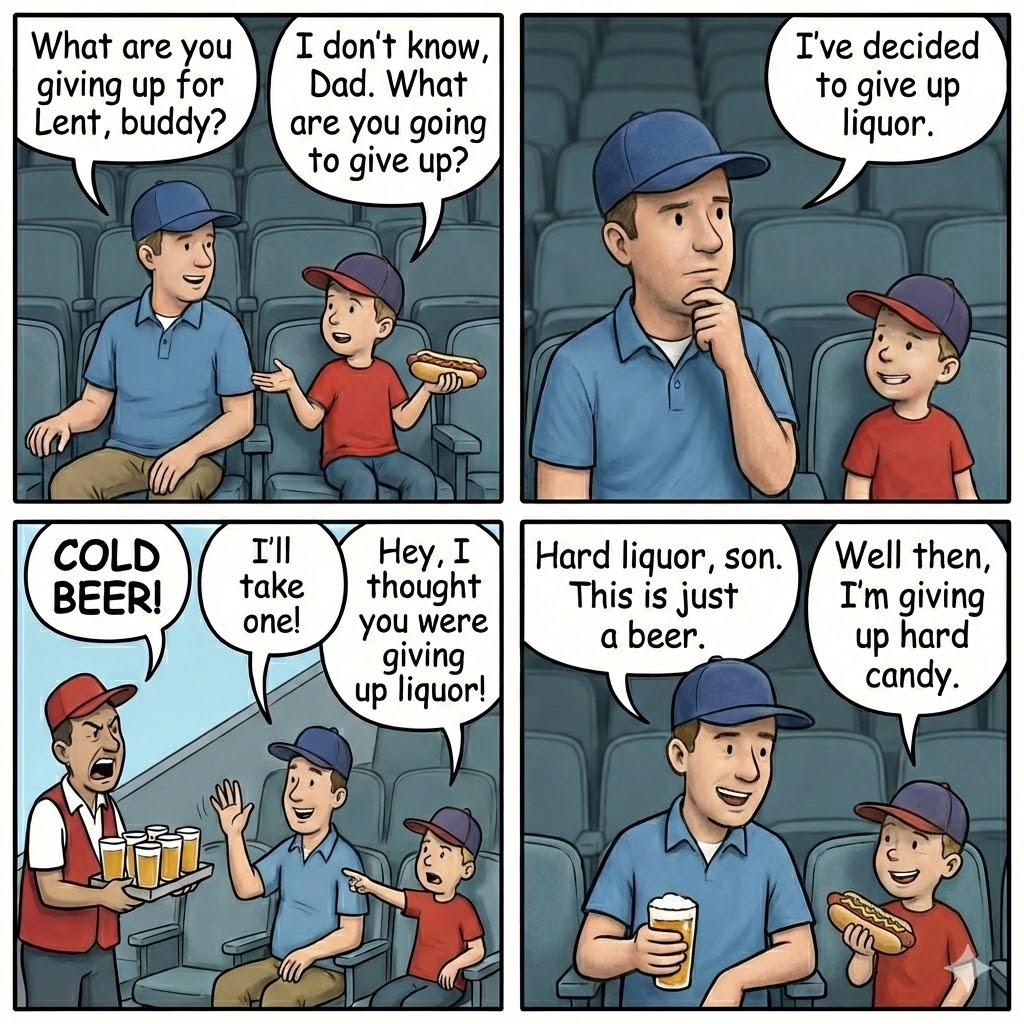
WHAT ARE YOU GOING TO GIVE UP FOR LENT?
TEXT VERSION

A man took his young son to a baseball game. While they were sitting there, he asked the boy what he was going to give up for Lent. The boy replied, “I don’t know, Dad. What are you going to give up?”
His father said, “I’ve thought about this a lot and decided to give up liquor.” Later in the game, the beer man came by, and the man ordered a beer. His son objected, “Hey, I thought you were giving up liquor!” His dad answered, “Hard liquor, son. I’m giving up hard liquor. This is just a beer.” To which the boy replied, “Well then, I’m giving up hard candy.”


GARDEN OF EDEN

TEXT VERSION

Why did Adam and Eve have to leave the Garden of Eden? They didn't read the Apple terms and conditions, and one byte caused the whole system to crash.

ADAM AND EVE

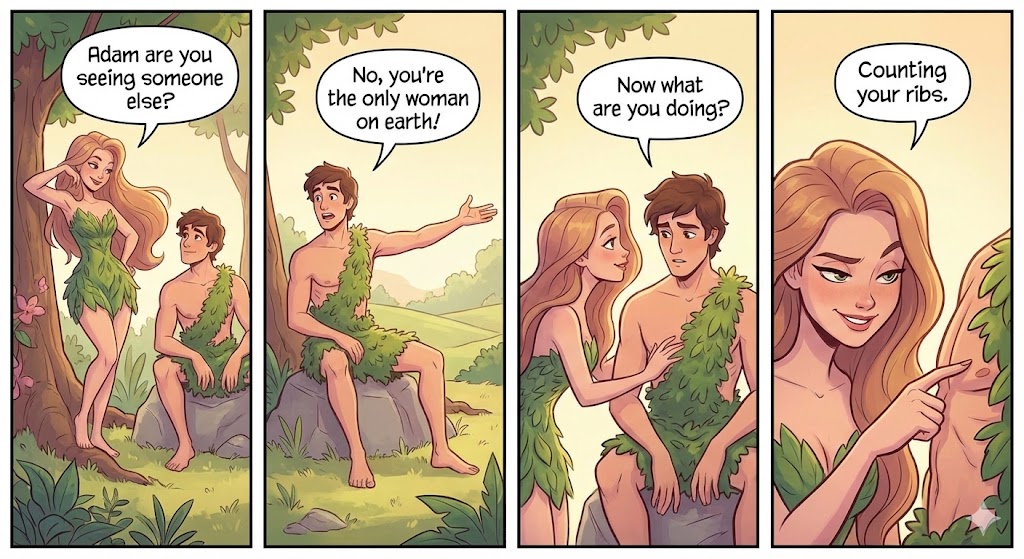
TEXT VERSION

Eve: "Adam are you seeing someone else?"

Adam: "No, you're the only woman on earth!"

Adam: "Now what are you doing?"

Eve: "Counting your ribs."


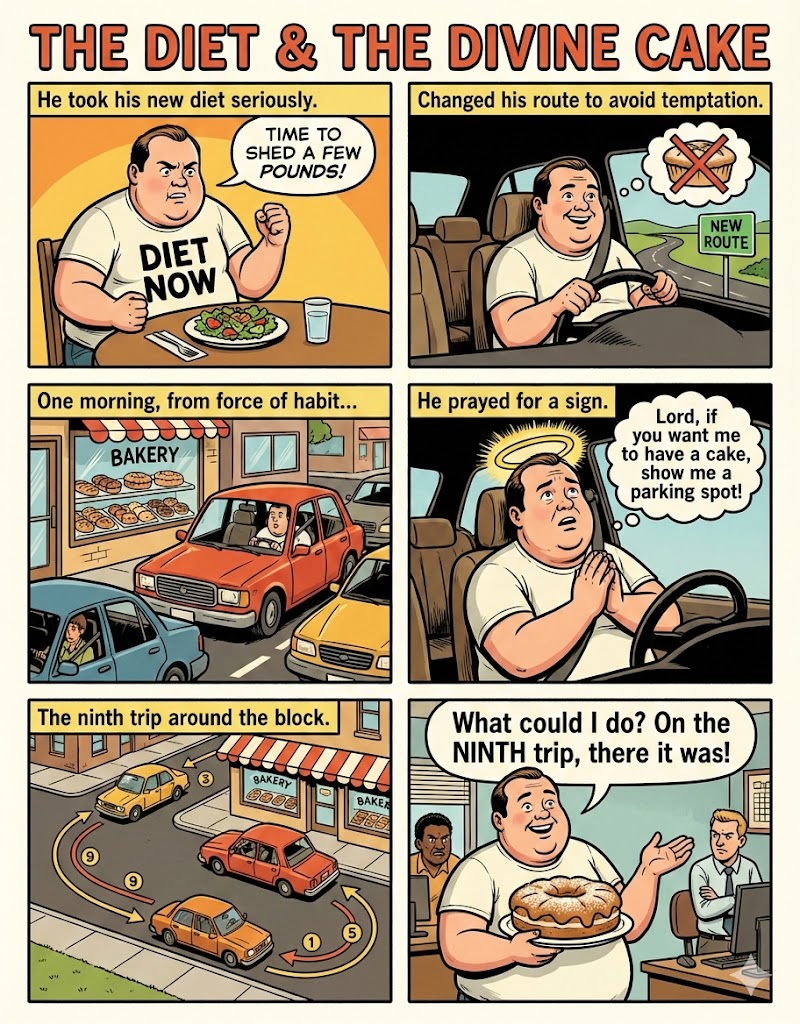
TEXT VERSION

A comical, but illustrative, story shows us how adept we are at rationalizing our actions: A very overweight man decided that it was time to shed a few pounds. He went on a new diet and took it seriously. He even changed his usual driving route to the office in order to avoid his favorite bakery. One morning, however, he arrived at the office carrying a large, sugar-coated coffee cake. His office mates roundly chided him, but he only smiled, shrugged his shoulders and said, “What could I do? This is a very special cake. This morning, from force of habit, I accidentally drove by my favorite bakery. There in the window were trays of the most delicious goodies. I felt that it was no accident that I happened to pass by, so I prayed, ‘Lord, if you really want me to have one of these delicious coffee cakes, let me find a parking place in front of the bakery.’ Sure enough, on the ninth trip around the block, there it was!” — Temptation is strong, but we must be stronger. We should not tempt fate, and we should not rationalize our actions. 


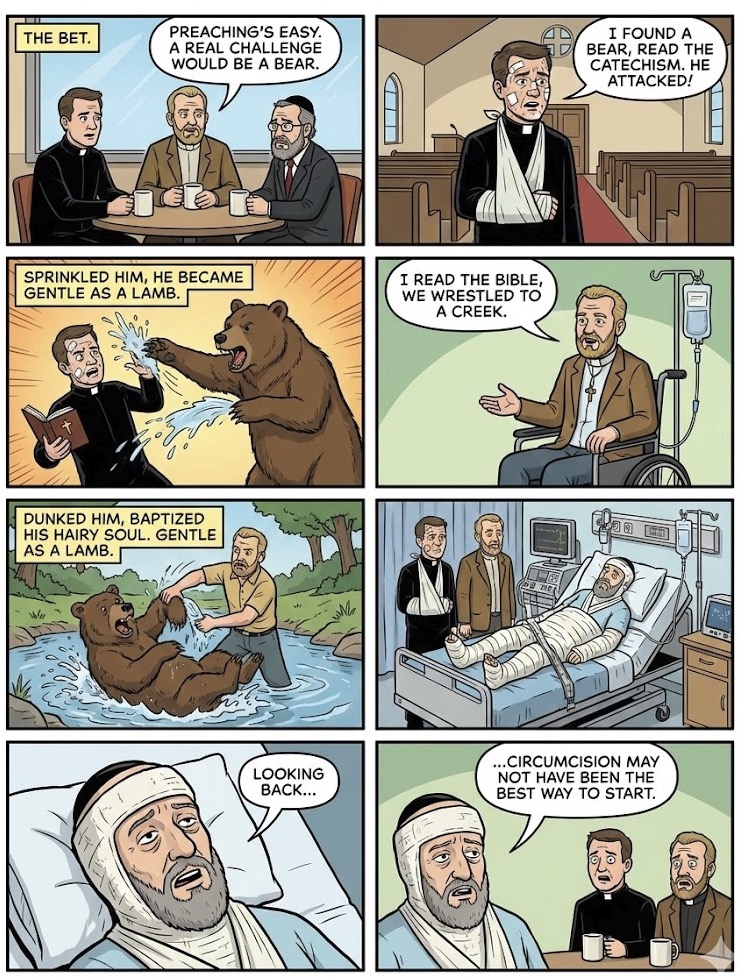
BAPTISM: Catholic, Baptist, Jewish

TEXT VERSION

A Catholic Priest, a Baptist Preacher and a Rabbi were sitting around drinking coffee. Someone made the comment that preaching to people isn’t really all that hard, a real challenge would be to preach to a bear. One thing led to another, and they decided that each would find a bear and attempt to convert it to their religion. Seven days later, they all came together to discuss their experiences.

Father Flannery, who had his arm in a sling and had various bandages on his body and limbs, went first. ‘Well,’ he said, ‘I went into the woods to find me a bear. And when I found him, I began to read to him from the Catechism. Well, that bear came after me and began to slap me around. So I quickly grabbed my holy water, sprinkled him and, Holy Mary Mother of God, he became as gentle as a lamb.’

Reverend Billy Bob the Baptist spoke next. He was in a wheelchair and had an IV drip. ‘I went out and found me a bear. And then I began to read to my bear from the Bible! But that bear came after me. We wrestled down one hill, until we came to a creek. So, I quickly dunked him and baptized his hairy soul. And just like you said, he became as gentle as a lamb.

The Priest and the Reverend both looked down at the Rabbi, who was lying in a hospital bed. He was in a body cast and traction with IV’s and monitors running in and out of him. The Rabbi looked up and said: “Looking back on it, circumcision may not have been the best way to start? 

SOURCE: Comic panels were created using AI based on anecdotes/jokes found at Father Tony’s Homilies. Permission is given for them to be freely copied in any publication for non-commercial use.
Free Clip Art

TWTW bulletin inserts on this page were created using Nano Banana and Gemini AI 3.0 Pro. Permission is granted to non-profits to copy, paste them in their publications and websites. Please credit TWTW website.

Free Clip Art