
Study | Preach | Teach
Bible Study
Bible Study


The Bible Timeline®: The Story of Salvation
The significance of blood in the Old and New Testaments highlights the covenant between God and Israel and Jesus’ establishment of a new covenant through the spilling and consuming of his blood.
- 00:00 The readings for Corpus Christi discuss the significance of blood in the Old and New Testaments, highlighting the covenant between God and Israel and Jesus' words of institution.
- 00:44 The Old Testament shows the people's commitment to following the words of the Lord.
- 01:12 Moses made a covenant with the people of Israel, and they promised to obey the Lord.
- 02:00 The Covenant in Exodus 24 is confirmed with blood, showing the transition from external to internal in the Old Testament to the New Testament.
- 02:24 Adultery is not just external, but also internal, as emphasized in the New Testament.
- 02:51 Consuming the blood of God is a symbol of the Last Supper and the Covenant.
- 03:32 The words of institution during Mass confirm the new and everlasting covenant through the spilling and consuming of God's blood, which is important as some people doubt its reality.
- 04:04 The blood of Christ confirms the new covenant, the foundation of our lives, and we are in a blood covenant with the second person of the Trinity.

SOURCE: A Word Proclaimed
The Eucharist is a physical, real presence of the Lord, offering eternal nourishment and forgiveness for all sins through the body and blood of Christ.
- 00:00 The Eucharist is the physical presence of the Lord, and it was used for healing in the past.
- 01:35 The speaker discusses the historical significance of the location where Jesus celebrated the Eucharist.
- 02:52 Jesus is going to eat the Passover and make it an eternal sacrifice, sending his disciples to prepare for it.
- 04:29 Jesus instructs his disciples to prepare for the Passover, emphasizing the importance of the Eucharist as a physical, real presence.
- 05:35 The bread and wine symbolize Christ's body and blood, offering eternal nourishment, and forgiveness is available for all sins through the blood of the Son of God.
- The bread and wine represent the body and blood of Christ, providing nourishment for eternal life, and the prediction of Judas' treason is omitted during the feasts.
- Choose which kind of traitor you want to be, because forgiveness is offered for anything covered by the blood of the Son of God.
- 07:45 Jesus gives his body and blood to be consumed as an act of love and transformation.
- 09:41 Be ready for confession to prepare for the sacrament of the body and blood of the Lord, and envision the presence of angels and saints during mass.
- 12:01 Jesus gave his blood for the many, open to all who believe, repent, and receive the body and blood of Christ for eternal life.
- Jesus gave his blood for the many, meaning it is open to the whole world, and anyone can be part of the many by believing in Christ, repenting for their sins, and receiving the body and blood of the son of god.
- The speaker emphasizes the promise of eternal life through the consumption of bread and wine as the body and blood of Christ.

SOURCE: A Walk in the Word
Jesus prioritizes doing the will of God over familial ties and challenges the religious elite, while offering redemption through his ministry and the sacrifice of the mass.
- 00:00 Jesus addresses accusations of demon possession, emphasizes doing God's will over familial ties, employs literary technique of sandwiching in Gospel of Mark, engages in spiritual warfare and performs exorcisms, and conducts public ministry in the home of Simon Peter.
- Jesus addresses accusations of being possessed by demons and emphasizes the importance of doing the will of God over familial ties.
- The Gospel of Mark employs a literary technique known as sandwiching or bracketing, where one story is placed inside another to shed light on each other, which can be confusing but is exemplified in the story of gyrus in chapter 5.
- Jesus is interrupted while on his way to heal a ruler's daughter, and in the meantime, he heals a woman with a hemorrhage, showing parallels between their stories and emphasizing the importance of faith in healing.
- The narrative discusses the misunderstanding of Jesus by his friends and relatives, as well as the rejection and contempt of Jesus by the scribes, all sandwiched together to shed light on each other.
- Jesus engages in spiritual warfare and performs exorcisms, followed by healing the sick and demon-possessed in Capernaum.
- Jesus's public ministry was based in the home of Simon Peter, where he preached and healed a multitude of people.
- 11:00 Jesus faces rejection in his hometown, causes controversy with his ministry, and is seen as out of his mind by his friends and relatives.
- Jesus goes to his hometown of Nazareth and is rejected, foreshadowing the rejection he would suffer there.
- The crowd came together again in Capernaum, including people from various regions, making it difficult for Jesus and his disciples to even eat.
- The large multitude in the ancient world was comprised of both Jews and Gentiles, and because Jews were forbidden from breaking bread with Gentiles and pagans, they could not eat together, leading to friction and an awkward situation.
- Jesus's friends heard about his actions and went to seize him, causing confusion and concern among the people in Nazareth.
- Jesus is causing controversy and making enemies, particularly with the religious elite, who are already conspiring to eliminate him.
- Jesus's friends and relatives were concerned about his controversial ministry and expressed their opinion that he was beside himself or out of his mind, which can be interpreted in different ways.
- 21:14 Jesus' controversial actions and teachings prompt religious leaders to conspire against him, leading his family and friends to intervene and protect him from the repercussions, while the Pharisees accuse him of blasphemy and being in league with the devil.
- Speculation about the motivation behind people's beliefs and concerns for Jesus' safety due to his controversial actions and statements.
- Religious leaders conspire to destroy Jesus, prompting his relatives to travel to Capernium to intervene and protect him from the repercussions of his actions and words.
- Blasphemy and rebellion were punishable by death according to the Book of Leviticus, and Jesus' actions and teachings were considered punishable offenses by the Pharisees.
- The family and friends of Jesus were motivated to travel to Capernaum to rescue him and protect their own reputations, as the religious authorities from Jerusalem had traveled to the Galilee to investigate the reports about Jesus.
- The scribes declare Jesus to be demon-possessed and associated with Satan, while his friends believe he is out of his mind.
- The Pharisees accuse Jesus of being in league with the devil and casting out demons by the power of the devil, despite the evidence of Jesus performing numerous exorcisms.
- 34:13 Jesus performs miracles as signs of the Father's sending, but is accused of acting by demons and blasphemy, challenging the religious elite and asserting his power over Satan.
- Miracles performed by Jesus are signs that the father has sent him, inviting belief and strengthening faith, but can also be occasions for offense and rejection.
- Jesus is accused of acting by the power of demons, blasphemy, and false prophecy, leading to the Pharisees and scribes seeking his destruction.
- Jesus taught in Parables as a form of judgment against those with hardened hearts, and in doing so, he pronounced judgment on those who were deafened to the word of God.
- Jesus challenges the religious elite's accusation of being in league with Satan by pointing out the illogicality of their argument.
- Jesus emphasizes that a kingdom divided against itself cannot stand, asserting that Satan's kingdom is coming to an end and that the Son of God appeared to destroy the works of the devil.
- Jesus is the stronger man who has come to overpower Satan and free souls from bondage, fulfilling the declaration made in Genesis 3:15 to crush the head of the serpent.
- 46:05 Jesus declares the end of Satan's reign, forgiveness of sins, and warns against blasphemy of the Holy Spirit leading to eternal damnation.
- The transcript discusses the concept of Jesus as the new Adam and the spiritual warfare between the kingdom of Satan and the kingdom of God.
- Jesus has bound the devil and is declaring that Satan's days are numbered, as he has come to plunder and take back what the devil has stolen.
- Jesus solemnly declares that all sins and blasphemies will be forgiven, including blasphemy against the Holy Spirit, which was controversial and raised eyebrows among the scribes and Pharisees.
- Blasphemy against the Holy Spirit is attributing the works of the Holy Spirit to Satan, which is considered unforgivable.
- Jesus questions the source of his power, attributing it to the Holy Spirit, while others attribute it to Satan, leading to blasphemy against the Holy Spirit.
- The sin against the Holy Spirit, blasphemy, and final impenitence lead to eternal damnation and are considered unforgivable.
- 57:10 Jesus prioritizes those who do the will of God over his biological family, and the term "Brethren" in Greek can refer to close relatives or cousins, not necessarily literal biological brothers and sisters of Jesus.
- The passage in Mark does not disprove the Catholic teaching of the Perpetual Virginity of Mary and the idea that Jesus had siblings is not supported by this verse.
- The term "Brethren" in Greek can refer to close relatives or cousins, and in the New Testament, it does not necessarily mean literal biological brothers and sisters of Jesus.
- Jesus prioritizes those who do the will of God over his biological family.
- Jesus is not insulting his mother and close relatives, but rather fulfilling the commandments and seizing an opportunity.
- Rumors are spreading about Jesus, causing concern for his well-being, leading his mother and close relatives to travel to Capernium to inquire about him.
- Jesus teaches that in the kingdom of God, we are defined by our obedience to God's will, not by blood relations.
- 01:04:56 Jesus emphasizes that following the Gospel may cause tension within families, but those who do the will of God are considered as family, and the church supports the belief that Mary is a Perpetual virgin.
- Jesus implies that following his gospel will have an impact on family dynamics, as he declares in Matthew 10 that he has not come to bring peace on earth.
- Jesus did not come to break up families, but to bring the truth of the Gospel, which may cause friction and tension when one adheres to it.
- Accepting Jesus as Messiah caused friction and tension among Jews, leading to division within families, but those who accept Jesus will gain new brothers and sisters in the Christian community.
- Love for God must be preeminent, and those who do the will of God are considered as family, as religion is the bond of the heart rather than that of the body.
- The church has always understood that the passages referring to the brothers and sisters of Jesus in the Bible are not referring to other children of the Virgin Mary, but rather close relations of Jesus according to an Old Testament expression, supporting the belief that Jesus is the only son of Mary conceived by the Holy Spirit and that Mary is a Perpetual virgin.
- 01:11:26 Christ reveals his mission of Redemption through his ministry, offering us access to the true tree of life through his flesh and blood, as we prepare to celebrate the sacrifice of the mass.
- The responsorial Psalm from Psalm 130 praises God for his mercy and redemption, emphasizing that with the Lord there is steadfast love and plenteous redemption.
- Christ reveals his mission of Redemption through his ministry, and every time we partake in the Holy sacrifice of the mass, we are transported to Calvary and stand at the foot of the cross.
- God cast Adam and Eve out of Eden and denied them access to the Tree of Life, but promised a savior who would crush the head of the serpent.
- Jesus destroys the kingdom of Satan through his passion, death, and resurrection, giving us access to the true tree of life through his flesh and blood.
- God offers us great mercy and the Holy Spirit fills our hearts with love, mercy, and peace as we prepare to celebrate the sacrifice of the mass.
- Support the YouTube channel by liking, commenting, and subscribing, and consider becoming a patron or contributing on buy meac coffee.com to help cover production costs.

SOURCE: Hearers of the Word
The Last Supper and the Eucharist symbolize the covenant and forgiveness of sins, and Jesus’ teachings emphasize the inclusion of all people in the Kingdom of God.
- 00:00 Jesus instructs disciples to prepare for Passover, blesses bread and wine, stating they represent his body and blood, impacting the Christian community.
- The speaker discusses the text of the Lord's Supper from Mark's Gospel and its impact on the Christian community.
- Jesus instructs his disciples to prepare for the Passover meal, and during the meal, he blesses bread and wine, stating that they represent his body and blood.
- 02:56 The community is instructed to care for and then kill a lamb on the 14th day of the month, using its blood to mark their door frames and eating it roasted with unleavened bread and bitter herbs as part of the Lord's passover and feast of unleavened bread, with ancient roots in separate agrarian spring fertility rites.
- The community is instructed to care for and then kill a lamb on the 14th day of the month, using its blood to mark their door frames and eating it roasted with unleavened bread and bitter herbs, as part of the Lord's passover and feast of unleavened bread.
- Observances of Passover and the festival of unleavened bread have ancient roots in separate agrarian spring fertility rites, but are presented as joined festivals with significance for the Israelites related to their flight from Egypt and as a commemoration of the exodus.
- The mishnah reflects the Jewish attitude towards Passover and emphasizes the duty to remember and praise God for bringing them from slavery to freedom.
- 06:49 John's gospel places the last supper on Friday, likely correct in its chronology, with variations in reporting influenced by liturgical tradition.
- The synoptic gospels and the gospel of John have different dating for the events of Jesus' last week, with the synoptic gospels placing the last supper on Thursday, the eve of Passover, and John's gospel placing it on Friday, the eve of Passover.
- John's gospel is likely correct in its chronology, with the link between passover and the lord's supper already made in ancient times, and the variations in the reporting of the event in the New Testament are influenced by liturgical tradition.
- 09:07 Jesus symbolized the covenant and forgiveness of sins with bread and wine, with the earliest versions of the Eucharist found in 1 Corinthians 11 and Luke 22, and the original tradition of the Lord's Supper may have involved taking bread, giving thanks, breaking it, and saying "this is my body" and taking the cup and saying "this cup is the covenant in my blood."
- Jesus took bread and wine, gave thanks, and said they were his body and blood, symbolizing the covenant and forgiveness of sins.
- The earliest versions of the Eucharist are found in 1 Corinthians 11 and Luke 22, with four versions of the same event.
- The original tradition of the Lord's Supper may have looked something like taking bread, giving thanks, breaking it, and saying "this is my body" and also taking the cup and saying "this cup is the covenant in my blood," with all other wordings and details influenced by liturgical and worship practices of the early church.
- 13:12 Jesus practiced open table fellowship as a symbol of God's compassion, with the bread and wine representing covenant renewal, and emphasized the disciples' willingness to undergo the same destiny as him.
- Jesus practiced open table fellowship as a symbol of God's compassion and his destiny was seen as part of the coming kingdom of God, with the bread and wine representing a prophetic gesture of covenant renewal and restoration of Israel.
- The story of the last supper in Mark's gospel includes echoes of the multiplication of the loaves, pointing to the inclusion of both Jews and Gentiles.
- Jesus emphasizes the disciples' willingness to undergo the same destiny as him, symbolized by drinking the cup.
- 16:59 Jesus appointing the 12 apostles symbolizes the restoration of Israel and the renewal of God's covenant with his chosen people, and in Semitic languages, "many" really means "all" in Mark's gospel.
- Jesus appointing the 12 apostles symbolizes the restoration of Israel and the renewal of God's covenant with his chosen people.
- In Semitic languages, the word "many" is not in contrast to "all" but to "few", and in Mark's gospel, "many" really means "all".
- 20:20 The need for new ways of behaving as a community to accommodate the novelty of Jesus' death and resurrection is echoed in the parable of the vineyard and the celebration of the Lord's Supper.
- 22:18 The Kingdom of God is a foundational teaching in Mark's gospel, emphasizing the welcome of all, both Jews and Gentiles, without distinction.
- The Kingdom of God is a foundational teaching in Mark's gospel, with references to it throughout the text, including in the story of the Last Supper.
- The American community would have related the story of the Lord's Supper to their own experiences and teachings, emphasizing the welcome of all, both Jews and Gentiles, without distinction.
SOURCE: The Mass Readings Explained
The Mass Readings Explained
The Tenth Sunday in Ordinary Time continues our journey through the Gospel of Mark, and it brings us to a very fascinating passage from that Gospel that gives us an account of the conflict that took place in Jesus' hometown over his exorcisms that he was performing. And it's in the context of that controversy that Jesus gives one of his most enigmatic sayings. It's the saying about the unforgivable sin, the blasphemy of the Holy Spirit. So today's gospel we’re going to look at this controversy over Jesus’ exorcism and the unforgivable sin and we'll try to unpack how the church understands this very strange and difficult passage and how the church has interpreted it in light of the living tradition. So, let's begin with 3:20-35 of Mark's gospel - that is the reading for today. It’s kind of a long one but there's a lot going on, so it says this...
As the date of Easter fluctuates annually, the liturgical calendar is dynamically arranged, resulting in the absence of the 10th Sunday of Ordinary Time in certain years. As a result, some contributors’ archived resources are not available. When new content is posted by our contributors, it will posted throughout the week.

Fr. Corrigan, OFM
Compiled by
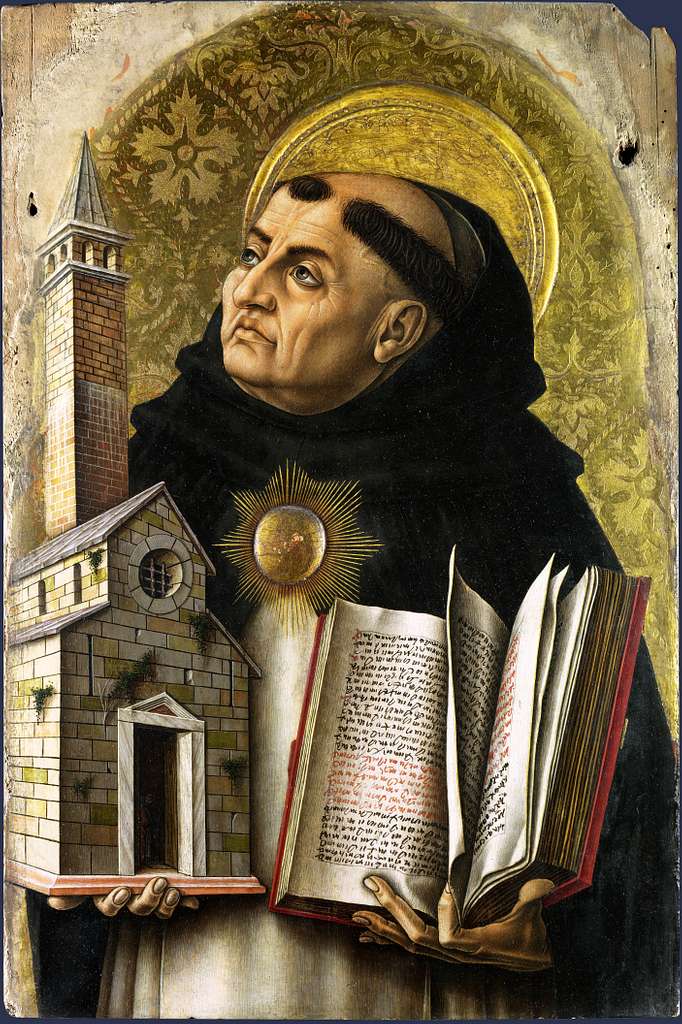
St. Thomas
Aquinas
Thomas Aquinas compiled this opus from sermons and commentaries on the Gospels written by the early Church Fathers, arranging their thoughts in such a way that they form a continuous commentary on each Gospel.
Mk 3:19-22
19. —And they went into an house.
20. And the multitude cometh together again, so that they could not so much as eat bread.
21. And when his friends heard of it, they went out to lay hold on him: for they said, He is beside himself.
22. And the Scribes which came down from Jerusalem said, He hath Beelzebub, and by the prince of the devils casteth he out devils.
BEDE. (ubi sup.) The Lord leads the Apostles, when they were elected, into a house, as if admonishing them, that after having received the Apostleship, they should retire to look on their own consciences. Wherefore it is said, And they came into a house, and the multitude came together again, so that they could not eat bread.
PSEUDO-CHRYSOSTOM. (Vict. Ant. e Cat. in Marc.) Ungrateful indeed were the multitudes of princes, whom their pride hinders from knowledge, but the grateful multitude of the people came to Jesus.
BEDE. (ubi sup.) And blessed indeed the concourse of the crowd, flocking together, whose anxiety to obtain salvation was so great, that they left not the Author of salvation even an hour free to take food. But Him, whom a crowd of strangers loves to follow, his relations hold in little esteem: for it goes on: And when his friends heard of it, they went out to lay hold upon him. For since they could not take in the depth of wisdom, which they heard, they thought that He was speaking in a senseless way, wherefore it continues, for they said, He is beside himself.
THEOPHYLACT. That is, He has a devil and is mad, and therefore they wished to lay hold upon Him, that they might shut Him up as one who had a devil. And even His friends wished to do this, that is, His relations, perchance His countrymen, or His brethren. 1But it was a silly insanity in them, to conceive that the Worker of such great miracles of Divine Wisdom had become mad.
BEDE. (ubi sup.) Now there is a great difference between those who do not understand the word of God from slowness of intellect, such as those, who are here spoken of, and those who purposely blaspheme, of whom it is added, And the Scribes which came down from Jerusalem, &c. For what they could not deny, they endeavour to pervert by a malicious interpretation, as if they were not the works of God, but of a most unclean spirit, that is, of Beelzebub, who was the God of Ekron. For ‘Beel’ means Baal himself, and ‘zebub’ a fly; the meaning of Beelzebub therefore is the man of flies, on account of the filth of the blood which was offered, from which most unclean rite, they call him prince of the devils, adding, and by the prince of the devils casteth he out devils.
PSEUDO-JEROME. But mystically, the house to which they came, is the early Church. The crowds which prevent their eating bread are sins and vices; for he who eateth unworthily, eateth and drinketh damnation to himself. (1 Cor. 11:29)
BEDE. (ubi sup.) The Scribes also coming down from Jerusalem blaspheme. But the multitude from Jerusalem, and from other regions of Judæa, or of the Gentiles, followed the Lord, because so it was to be at the time of His Passion, that a crowd of the people of the Jews should lead Him to Jerusalem with palms and praises, and the Gentiles should desire to see Him; but the Scribes and Pharisees should plot together for His death.
ORIGINAL: e-Catholic 2000
Mk 3:23-30
23. And he called them unto him, and said unto them in parables, How can Satan cast out Satan?
24. And if a kingdom be divided against itself, that kingdom cannot stand.
25. And if a house be divided against itself, that house cannot stand.
26. And if Satan rise up against himself, and be divided, he cannot stand, but hath an end.
27. No man can enter into a strong man’s house, and spoil his goods, except he will first bind the strong man; and then he will spoil his house.
28. Verily I say unto you, All sins shall be forgiven unto the sons of men, and blasphemies wherewith soever they shall blaspheme:
29. But he that shall blaspheme against the Holy Ghost hath never forgiveness, but is in danger of eternal damnation:
30. Because they said, He hath an unclean spirit.
PSEUDO-CHRYSOSTOM. (Vict. Ant. e Cat. in Marc.) The blasphemy of the Scribes having been detailed, our Lord shews that what they said was impossible, confirming His proof by an example. Wherefore it says, And having called them together unto him, he said unto them in parables. How can Satan cast out Satan? As if He had said, A kingdom divided against itself by civil war must be desolated, which is exemplified both in a house and in a city. Wherefore also if Satan’s kingdom be divided against itself, so that Satan expels Satan from men, the desolation of the kingdom of the devils is at hand. But their kingdom consists in keeping men under their dominion. If therefore they are driven away from men, it amounts to nothing less than the dissolution of their kingdom. But if they still hold their power over men, it is manifest that the kingdom of evil is still standing, and Satan is not divided against himself.
GLOSS. (non occ.) And because He has already shewn by an example that a devil cannot cast out a devil, He shews how he can be expelled, saying, No man can enter into a strong man’s house, &c.
THEOPHYLACT. The meaning of the example is this: The devil is the strong man; his goods are the men into whom he is received; unless therefore a man first conquers the devil, how can he deprive him of his goods, that is, of the men whom he has possessed? So also I who spoil his goods, that is, free men from suffering by his possession, first spoil the devils and vanquish them, and am their enemy. How then can ye say that I have Beelzebub, and that being the friend of the devils, I cast them out?
BEDE. (in Marc. i. 17) The Lord has also bound the strong man, that is, the devil: which means, He has restrained him from seducing the elect, and entering into his house, the world; He has spoiled his house, and his goods, that is men, because He has snatched them from the snares of the devil, and has united them to His Church. Or, He has spoiled his house, because the four parts of the world, over which the old enemy had sway, He has distributed to the Apostles and their successors, that they may convert the people to the way of life. But the Lord shews that they committed a great sin, in crying out that that which they knew to be of God, was of the devil, when He subjoins, Verily I say unto you, All sins are forgiven, &c. All sins and blasphemies are not indeed remitted to all men, but to those who have gone through a repentance in this life sufficient for their sins; thus neither is Novatusm right, who denied that any pardon should be granted to penitents, who had lapsed in time of martyrdom; nor Origen, who asserts that after the general judgment, after the revolution of ages, all sinners will receive pardon for their sins, which error the following words of the Lord condemn, when He adds, But he that shall blaspheme against the Holy Ghost, &c.
PSEUDO-CHRYSOSTOM. (Vict. Ant. e Cat. in Marc.) He says indeed, that blasphemy concerning Himself was pardonable, because He then seemed to be a man despised and of the most lowly birth, but, that contumely against God has no remission. Now blasphemy against the Holy Ghost is against God, for the operation of the Holy Ghost is the kingdom of God; and for this reason, He says, that blasphemy against the Holy Ghost cannot be remitted. Instead, however, of what is here added, But will be in danger of eternal damnation, another Evangelist says, Neither in this world, nor in the world to come. By which is understood, the judgment which is according to the law, and that which is to come. For the law orders one who blasphemes God to be slain, and in the judgment of the second law he has no remission. nHowever, he who is baptized is taken out of this world; but the Jews were ignorant of the remission which takes place in baptism. He therefore who refers to the devil miracles, and the casting out of devils which belong to the Holy Ghost alone, has no room left him for remission of his blasphemy. Neither does it appear that such a blasphemy as this is remitted, since it is against the Holy Ghost. Wherefore he adds, explaining it, Because they said, He hath an unclean spirit.
THEOPHYLACT. We must however understand, that they will not obtain pardon unless they repent. But since it was at the flesh of Christ that they were offended, even though they did not repent, some excuse was allowed them, and they obtained some remission.
PSEUDO-JEROME. Or this is meant; that he will not deserve to work out repentance, so as to be accepted, who, understanding who Christ was, declared that He was the prince of the devils.
BEDE. (ubi sup.) Neither however are those, who do not believe the Holy Spirit to be God, guilty of an unpardonable blasphemy, because they were persuaded to do this by human ignorance, not by devilish malice.
AUGUSTINE. (Serm. 71, 12, 21) Or else impenitence itself is the blasphemy against the Holy Ghost which hath no remission. For either in his thought or by his tongue, he speaks a word against the Holy Ghost the forgiver of sins, who treasures up for himself an impenitent heart. But he subjoins, Because they said, He hath an unclean spirit, that he might shew that His reason for saying it, was their declaring that He cast out a devil by Beelzebub, not because there is a blasphemy, which cannot be remitted since even this might be remitted through a right repentance: but the cause why this sentence was put forth by the Lord, after mentioning the unclean spirit, (who as our Lord shews was divided against himself,) was, that the Holy Ghost even makes those whom He brings together undivided, by His remitting those sins, which divided them from Himself, which gift of remission is resisted by no one, but him who has the hardness of an impenitent heart. For in another place, the Jews said of the Lord, that He had a devil, (John 7:20.) without however His saying any thing there about the blasphemy against the Spirit; and the reason is, that they did not there cast in His teeth the unclean spirit, in such a way, that that spirit could by their own words be shewn to be divided against Himself, as Beelzebub was here shewn to be, by their saying, that it might be he who cast out devilso.
ORIGINAL: e-Catholic 2000
Mk 3:31-35
31. There came then his brethren and his mother, and, standing without, sent unto him, calling him.
32. And the multitude sat about him, and they said unto him, Behold, thy mother and thy brethren without seek for thee.
33. And he answered them, saying, Who is my mother, or my brethren?
34. And he looked round about on them which sat about him, and said, Behold my mother and my brethren!
35. For whosoever shall do the will of God, the same is my brother, and my sister, and mother.
THEOPHYLACT. Because the relations of the Lord had come to seize upon Him, as if beside Himself, His mother, urged by the sympathy of her love, came to Him; wherefore it is said, And there came unto him his mother, and, standing without, sent unto him, calling him.
CHRYSOSTOM. (non occ.) From this it is manifest that His brethren and His mother were not always with Him; but because He was beloved by them, they come from reverence and affection, waiting without. Wherefore it goes on, And the multitude sat about him, &c.
BEDE. (ubi sup.) The brothers of the Lord must not be thought to be the sons of the ever-virgin Mary, as Helvidius sayp, nor the sons of Joseph by a former marriage, as some think, but rather they must be understood to be His relations.
PSEUDO-CHRYSOSTOM. (Vict. Ant. e Cat. in Marc.) But another Evangelist says, that His brethren did not believe on Him. With which this agrees, which says, that they sought Him, waiting without, and with this meaning the Lord does not mention them as relations. Wherefore it follows, And he answered them, saying, Who is my mother or my brethren? (John 7:5) But He does not here mention His mother and His brethren altogether with reproof, but to shew that a man must honour his own soul above all earthly kindred; wherefore this is fitly said to those who called Him to speak with His mother and relations, as if it were a more useful task than the teaching of salvation.
BEDE. (Ambr in Luc. 6, 36. Bede ubi sup.) Being asked therefore by a message to go out, He declines, not as though He refused the dutiful service of His mother, but to shew that He owes more to His Father’s mysteries than to His mother’s feelings. Nor does He rudely despise His brothers, but, preferring His spiritual work to fleshly relationship, He teaches us that religion is the bond of the heart rather than that of the body. Wherefore it goes on, And looking round about on them which sat about him, he said, Behold my mother and my brethren.
CHRYSOSTOM. (non occ.) By this, the Lord shews that we should honour those who are relations by faith rather than those who are relations by blood. A man indeed is made the mother of Jesus by preaching Himq; for He, as it were, brings forth the Lord, when he pours Him into the heart of his hearers.
PSEUDO-JEROME. But let us be assured that we are His brethren and His sisters, if we do the will of the Father; that we may be joint-heirs with Him, for He discerns us not by sex but by our deeds. Wherefore it goes on: Whosoever shall do the will of God, &c.
THEOPHYLACT. He does not therefore say this, as denying His mother, but as shewing that He is worthy of honour, not only because she bore Christ, but on account of her possessing every other virtue.
BEDE. (ubi sup.) But mystically, the mother and brother of Jesus means the synagogue, (from which according to the flesh He sprung,) and the Jewish people who, while the Saviour is teaching within, come to Him, and are not able to enter, because they cannot understand spiritual things. But the crowd eagerly enter, because when the Jews delayed, the Gentiles flocked to Christ; but His kindred, who stand without wishing to see the Lord, are the Jews who obstinately remained without, guarding the letter, and would rather compel the Lord to go forth to them to teach carnal things, than consent to enter in to learn spiritual things of Him. (Ambr in Luc. 6, 37.). If therefore not even His parents when standing without are acknowledged, how shall we be acknowledged, if we stand without? For the word is within and the light within.
ORIGINAL: e-Catholic 2000




Gospel Exegesis
“Who are my mother and my brothers?” (v. 33). This sounds disrespectful, as if Jesus has disowned his mother and brothers, but that is not the case. Jesus does not ask this question to exclude his mother and brothers, but rather to set the stage for expanding the concept of family to include all those who do the will of God.
Jesus acknowledges elsewhere, however, that faith requires disciples to put God above family and sometimes results in families divided over the issue of faith (Matthew 10:37; Mark 10:29-30; Luke 12:52-53). Faithfulness to families is important, but faithfulness to God is even more important.
“Behold, my mother and my brothers! For whoever does the will of God, the same is my brother, and my sister, and mother” (vv. 34-35). The word “whoever,” should encourage us. It makes no difference what the color of our skin is—or our socio-economic status—or our nationality—or our gender. Jesus doesn’t even exclude drunks or prisoners or other ne’er-do-well’s. All who do the will of God are automatically enrolled in Jesus’ family circle.
This verse has been of great comfort to Christians who have found themselves separated from their birth families by faith. The faith community becomes their new family.
This verse is also a source of comfort to many of us who have not been disowned by our families. I have lived in many places and have traveled unto the ends of the earth. Wherever I lived, I have been a part of a church family. Wherever I traveled, I sought out a church where I could worship. Even when I could not understand the language, I was strengthened by being among my extended family. Being able to connect with Christian brothers and sisters relieved my loneliness when far from home.
RICHARD NIELL DONOVAN was a Disciples of Christ clergyman who published SermonWriter, for a paid subscription, from 1997-2020. After he died, his family has generously provided his resources without subscription.