Commentary Intro to Mass Readings for Sunday
CommentaryIntro to Mass Readings for Sunday
January 18, 2026
January 18, 2026
2nd Sunday of Year A




Mass Readings Explained
Dr. Brant Pitre
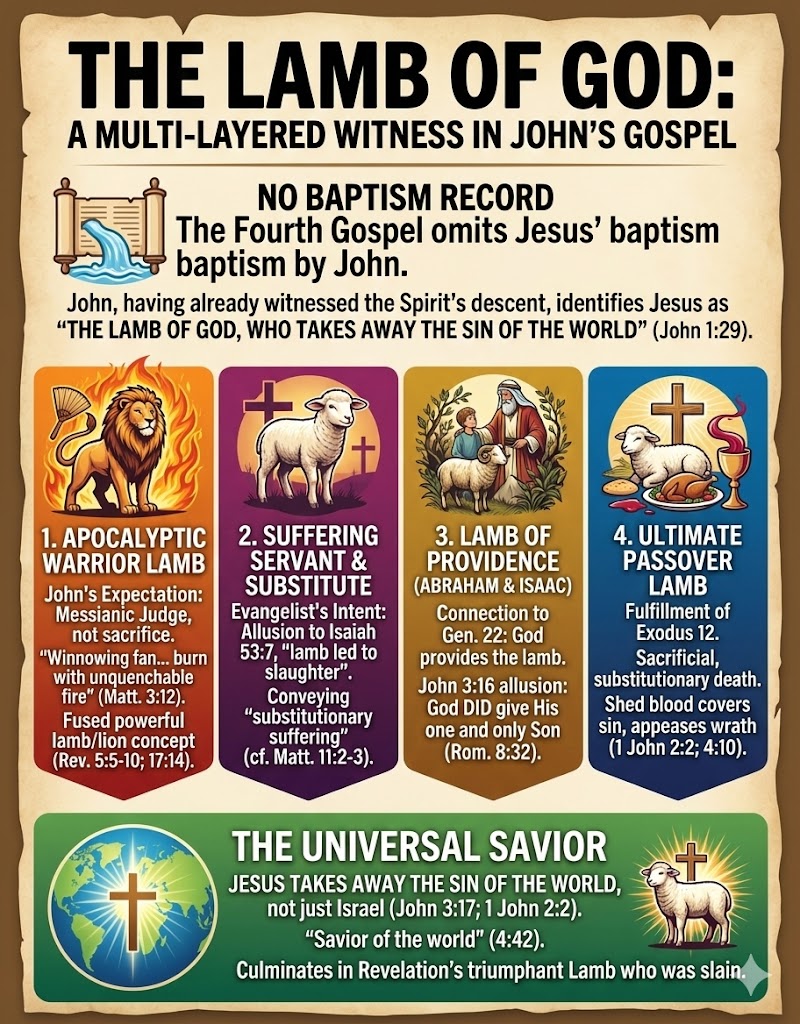
Behold the Lamb of God is perhaps a common phrase we hear amid Christian circles. But, what would “Behold the Lamb of God” have meant in 1st century Judaism when John the Baptist said this of Jesus in John 1? What is the relationship between the Passover lamb, deliverance, and rescue over death that John the Baptist is directing our focus towards? And, what would this have meant about Jesus since the Israelites had to eat the Passover lamb in order to be saved? Will the same be true of Jesus? Will we have to somehow eat this new “Lamb of God”?
BIBLE STUDIES
Michal Hunt
Edrianne Ezell
Vince Contreras
Fr. Kieran O’Mahoney
Fr. Thibodeau

Catholic Biblical
Studies
Father Tim Peters, S.Th.D.
Professor of Biblical Theology
St. John’s Seminary
Camarillo, CA
1st READING | PSALM | 2nd READING | GOSPEL

Homily Presentation
Fr. Geoffrey Plant
Whenever we celebrate Mass we pray the Agnus Dei – “Lamb of God, you take away the sins of the world, have mercy on us.” Then, just moments before the distribution of Holy Communion, the priest raises the host and chalice and says, “Behold the Lamb of God, behold him who takes away the sins of the world.” These words are so familiar that they can slip past us without much thought. But today’s Gospel – John the Baptist’s proclamation “Behold the Lamb of God” – gives us the chance to stop, to listen, and to ask what these words actually mean. What is the Church inviting us to see every time the priest raises the host and chalice? And what did John mean when he first spoke these words on the banks of the Jordan?

Unpacking the Mass
Keith Nester

Larry Broding
Word-Sunday.com
The Call of the Servant
Are you looking to ignite your next homily with the fire of the prophets?
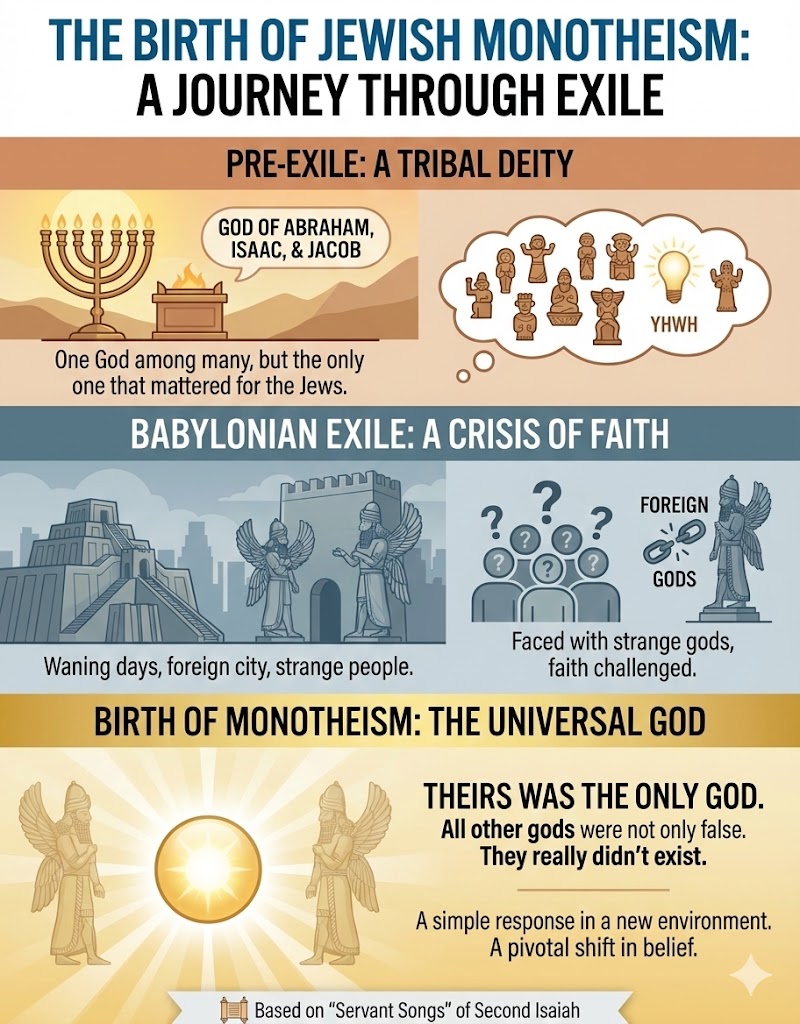
Dive into Larry Broding’s compelling commentary on the “Servant Songs” of Second Isaiah—a text born from the ashes of the Babylonian exile. Broding transports us to the waning days of captivity, where the rise of Persia signaled the end of an era, and the Jewish people faced a profound crisis of faith.
Living as a minority among strange gods, the exiles made a radical, history-altering discovery: YHWH was not merely the only God that mattered to them; He was the only God that existed.
Broding unpacks how this birth of true monotheism shifted the burden of faith. It was no longer enough to simply worship; the “Servant”—representing the people—was now tasked with “enlightening” the nations. They became the bearers of a universal truth: a Deity who not only rules but deeply cares for all of creation.
Why Read This Commentary? For the Christian preacher, Broding bridges the gap between this ancient mandate and the Gospel truth. He illustrates how we see Jesus as the ultimate fulfillment of Isaiah’s words—the Divine Light who doesn’t just show the way, but is the way.
If you want to challenge your congregation to move from passive belief to active witness, this commentary is your blueprint. Discover how the Servant’s call to be a light to the nations is as urgent today as it was in Babylon.
Read Larry Broding’s commentary to help you answer the question: How has Jesus shown you the way today?


Larry Broding
Word-Sunday.com
In Brief
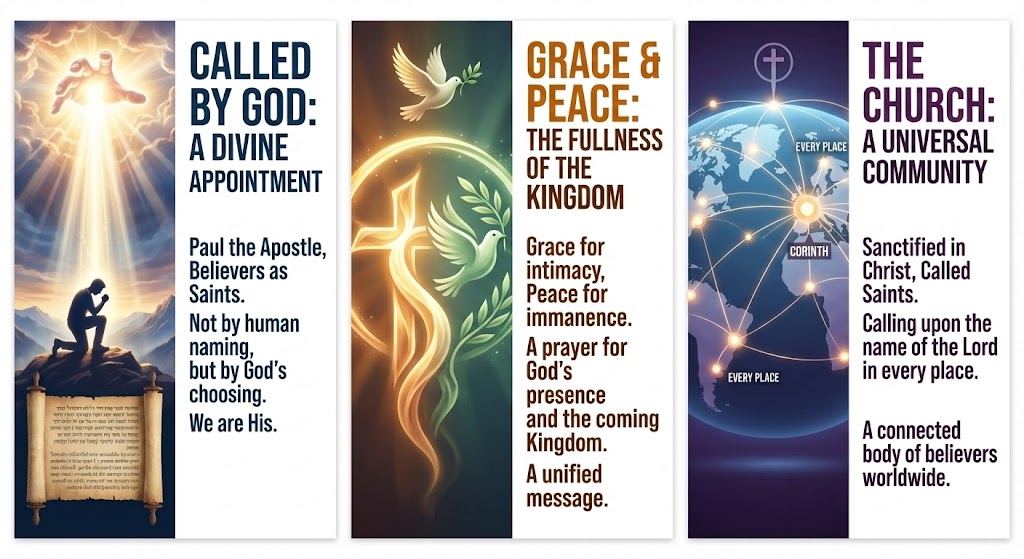
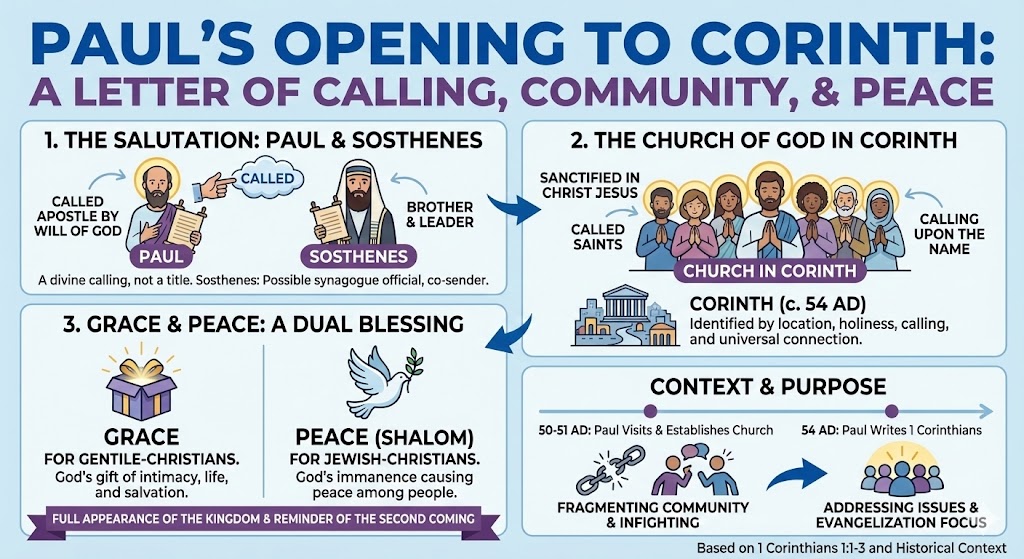
1:1, 2 Divine Summons “Called” is not merely a name; it is a vocation. Just as God called Paul to be an apostle, He actively calls believers to be saints.
1:1 The Associate Sosthenes is likely the synagogue leader mentioned in Acts 18:17, who was beaten by anti-Christian Jews after a failed complaint against Paul.
1:2 The Church Defined Beyond its location in Corinth, the Church is defined as those made holy by Christ, called to sainthood, and united with all who call upon the Lord.
1:3 Grace and Peace Paul bridges cultures. “Grace” (Gentile focus) refers to God’s gift of intimacy. “Peace” (Jewish Shalom) refers to God’s active presence. Together, they proclaim the Kingdom’s fullness and hope of the Second Coming.
Greetings From Paul
Have you ever skimmed past the opening lines of a biblical letter to get to the “real” content?
In his latest commentary on 1 Corinthians 1:1-3, Larry Broding reveals why skipping Paul’s greeting is a theological mistake. What appears to be a standard introduction is actually a calculated reminder of identity for a community in crisis.
Broding takes us back to 54 AD. The Church in Corinth is fragmenting. Infighting and claims of special spiritual knowledge have turned the community inward, distracting them from their mission of evangelization. Into this chaos, Paul speaks a radical truth: You are not just “named” Christians; you are “called” by God.
Why This Commentary Matters for Your Homily: Broding masterfully dissects the difference between a label and a divine summons. He explains that just as God called Paul to be an apostle, He actively calls the believers to be saints. This isn’t a passive title; it’s a vocation.
You will also discover the explosive depth behind the phrase “Grace and Peace.” Broding illustrates how Paul merges the Gentile concept of grace (God’s gift of intimacy) with the Jewish concept of peace (Shalom/God’s immanence). Together, these aren’t just polite wishes—they are a prayer for the full appearance of the Kingdom and a reminder of the Second Coming.
Connect Past Struggles to Present Hope If your congregation struggles with internal divisions or “pettiness,” this commentary offers a powerful antidote. Broding encourages us to read Scripture as personal correspondence—a reminder that despite our local troubles, we are part of something that transcends us.

Larry Broding
Word-Sunday.com
In Brief
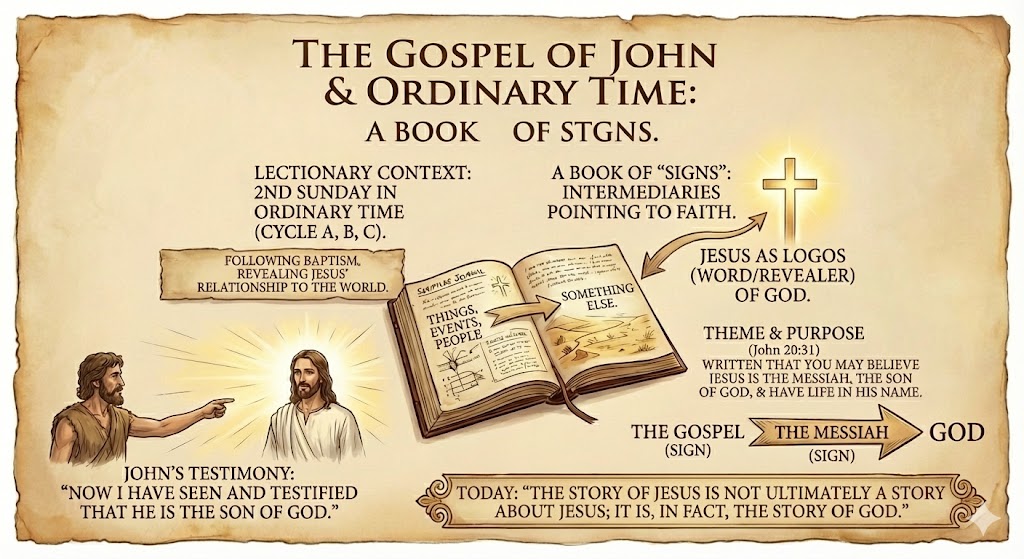
1:29 The Dual Image of the Lamb The title holds two distinct viewpoints. To the Baptist, the “Lamb” was the Victorious Judge of the end times (Rev 17:14). To the Evangelist, He was the Sacrificial Offering (Passover) who takes away the sin of the world.
1:30 A Paradox of Time and Rank John mixes history and hierarchy to describe Jesus. While Jesus followed John in ministry (“comes after me”), He preceded John in eternity (“existed before me”) and superior status.
1:32 The Enduring Vision The verb “saw” implies a past event with a lasting reality. John witnessed the descent (the Father giving Himself to the Son) and the indwelling (the power for Jesus’ ministry) as a continuous event.
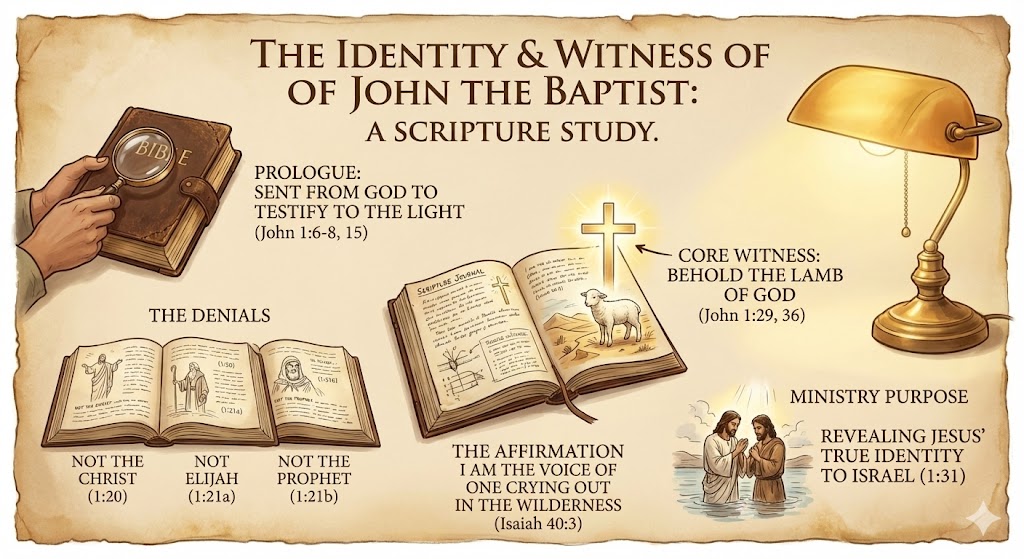
1:34 Unceasing Witness John’s testimony was not a one-time declaration. He continually saw the Spirit’s activity and persistently proclaimed Jesus as the Son of God.
A Humble Witness
“Raise your hand if you are humble!”
It’s an old joke among religious educators, but it points to a profound truth: true humility isn’t something you claim; it’s something you live. In his latest commentary on John 1:29-34, Larry Broding explores how John the Baptist embodies this elusive virtue, not through self-deprecation, but through deference to the Greater One.
Broding invites preachers to look beyond the familiar “Lamb of God” title and discover the tension hidden within the text. He explains the dual nature of this image:
- To the Baptist: The Lamb was likely the Apocalyptic Warrior-Judge, arriving to crush evil.
- To the Evangelist: The Lamb was the Passover sacrifice, arriving to forgive sin.
Why This Commentary is Essential for Your Preparation: Broding offers a fascinating cultural critique of what it means to be a “witness.” In our modern world, a witness provides facts. In Jesus’ world, a witness provided character. John the Baptist staked his entire reputation and life on the identity of Jesus.
You will also find clarity on the confusing timeline of verse 30 (“After me comes a man who was begotten before me”). Broding deftly unpacks how John recognized Jesus’ pre-existence and divine rank, acknowledging that while Jesus followed him in history, He preceded him in eternity.
From Theology to Daily Life This commentary challenges us to redefine our role. Like John, we are called to be pointers—directing attention away from ourselves and toward the One who baptizes with the Spirit. It asks us to consider if our character is strong enough to be a credible witness for Christ.
Read Larry Broding’s commentary to help you answer the question: Which of your friends demonstrates the virtue of humility? How important is that person to you?



Bible Context
Lectionary Context
The Lamb of God