Commentary Intro to Mass Readings Sunday Readings
CommentaryIntro to Mass Readings Sunday Readings
October 25, 2026
⭐⭐⭐ Fr. George Corrigan, OFM—PDF

⬅️  ➡️
➡️
October 25, 2026
Our Sunday Readings
Edrianne Ezell
Catholic Scripture Study
Vince Contreras
Hearers of the Word
Fr. O’Mahony OSA
Friar Musings, OFM
Fr. George Corrigan, OFM
Echoing God’s Word
Fr. Clement Thibodeau


“A Walk in The Word” series is based on the Sunday Mass readings and led by International Catholic evangelist and bible teacher, Hector Molina.

Ten minute video excerpts from the “The Mass Readings Explained” subscription series based resource from Catholic Productions.

Francis Martin (1930 – 2017) was an American Catholic priest of the Archdiocese of Washington, and a professor of Sacred Scripture. His teaching appointments included the Dominican House of Studies, the John Paul II Institute, the Catholic University of America, and Sacred Heart Major Seminary.
Kevin Aldrich
Kevin Aldrich’s “Doctrinal Homily Outlines” is a lectionary-based aid for homilists. A career Catholic K-12 educator in Catholic schools., he has written the teacher guides for nine of the Didache series high school religion texts. He has a Master’s Degree in Theology with an emphasis on Sacred Scripture from Holy Apostles College and Seminary.

Fr. Geoffrey Plant
30th Sunday of Year A

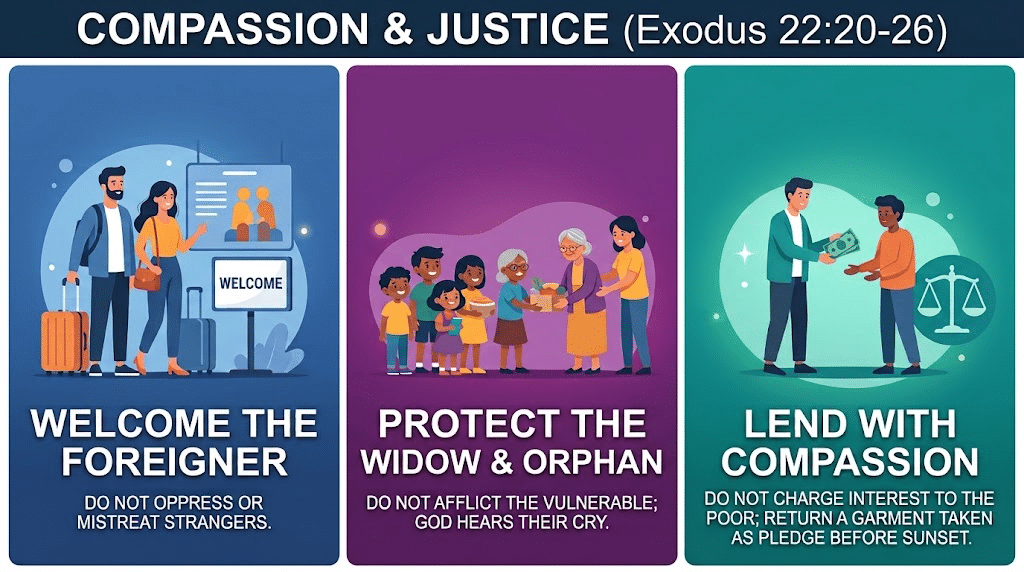
Exodus 22:20-26
Create a verse by verse (NAB) commentary relating xxxxxxxxxxxxx TO CATHOLIC doctrine and practice. Give real life applications when appropriate
give me three thought provoking questions followed up with detailed answer reflection based on xxxxxxxxxxxx
Exodus 22:20–26 serves as one of the foundational legal and moral codes of the Old Testament Covenant. In the Catholic tradition, this passage is recognized as a cornerstone of Catholic Social Teaching (CST), illustrating the preferential option for the poor, the universal destination of goods, and the virtue of solidarity.
Exodus 22:20
"You shall not molest or oppress an alien, for you were once aliens yourselves in the land of Egypt."
- Theological Commentary & Catholic Doctrine:God establishes empathy and historical remembrance as the bedrock of moral behavior toward the outsider (ger). In Catholic doctrine, every human being possesses inherent dignity because they are created in the image and likeness of God (Imago Dei, Catechism of the Catholic Church [CCC] 1700). The Compendium of the Social Doctrine of the Church (no. 505) emphasizes that nations must balance legitimate border regulation with welcoming the stranger, viewing migrants as persons rather than legal liabilities.
- Catholic Practice:The Church’s pastoral care for migrants and refugees—embodied by initiatives like Catholic Charities, the Jesuit Refugee Service, and parish refugee resettlement programs.
- Real-Life Application:Advocating for fair, humane immigration procedures rather than viewing foreign laborers or displaced families solely through an economic lens; sponsoring a refugee family through parish outreach or volunteering at a local community ESL program.
Exodus 22:21
"You shall not wrong any widow or orphan."
- Theological Commentary & Catholic Doctrine:Widows and orphans in antiquity possessed no social safety net, property succession rights, or male representation in civic courts. This verse articulates what the Church defines as the Preferential Option for the Poor and Vulnerable (CCC 2444). St. Thomas Aquinas notes in the Summa Theologiae (II-II, q. 32) that almsgiving and defense of the defenseless are acts of charity and restorative justice, not merely optional philanthropy.
- Catholic Practice:The Corporal Works of Mercy; Church-led adoption initiatives, foster care support networks, crisis pregnancy shelters, and ministries caring for grieving spouses and elder citizens living alone.
- Real-Life Application:Serving or mentoring youth in the foster care system; establishing parish bereavement teams that perform practical maintenance and check-ins for recently widowed seniors.
Exodus 22:22–23
"If ever you wrong them and they cry out to me, I will surely listen to their cry. My wrath will flare up, and I will kill you with the sword; then your own wives will be widows, and your children orphans."
- Theological Commentary & Catholic Doctrine:The cry of the oppressed is categorized in Catholic moral theology as one of the Sins that Cry to Heaven for Vengeance (peccata clamantia ad caelum, CCC 1867), alongside the blood of Abel and the wages withheld from the laborer. God reveals Himself as the ultimate legal guardian (Go'el) of the marginalized. Divine wrath here is not arbitrary malice, but the absolute resistance of Divine Justice against systemic exploitation.
- Catholic Practice:Penitential examination of conscience that accounts for both sins of commission and sins of omission (e.g., passive complicity in unjust social structures).
- Real-Life Application:Refusing to participate in predatory business models (such as subprime predatory lending, wage underpayment, or taking advantage of desperate independent contractors).
Exodus 22:24
"If you lend money to one of your poor neighbors among my people, you shall not act like an extortioner toward him by demanding interest from him."
- Theological Commentary & Catholic Doctrine:The traditional Catholic doctrine on Usury (CCC 2269, 2443; Council of Trent; encyclical Vix Pervenit by Benedict XIV) forbids profiting from the desperate vulnerability of a brother in need. While modern investment returns on productive capital are licit, profiting by extracting compound interest from someone struggling for basic sustenance remains intrinsically illicit.
- Catholic Practice:Microfinance initiatives, Catholic credit unions, St. Vincent de Paul Society emergency micro-loans, and campaigns against payday loan operations.
- Real-Life Application:When lending within a family, community, or to an employee facing an emergency, structuring help as an interest-free personal loan or outright gift rather than seeking a return.
Exodus 22:25–26
"If you take your neighbor's cloak as a pledge, you shall return it to him before sunset; for this mantle of his is the only covering he has for his body. What else has he to sleep in? If he cries out to me, I will hear him; for I am compassionate."
- Theological Commentary & Catholic Doctrine:A debtor's outer garment was often their bedding at night. This statute subordinates strict contractual property rights to basic human survival. In Catholic theology, this underpins the Universal Destination of Goods (CCC 2403): the right to private property is valid, but it is not absolute—it is always subject to the prior right of every person to the basic necessities of life. God’s self-identification, "for I am compassionate", mirrors Christ’s beatitude: "Blessed are the merciful, for they will be shown mercy" (Mt 5:7).
- Catholic Practice:Direct corporal relief: coat drives, emergency shelters, utility-bill assistance funds, and advocacy against utility shut-offs for impoverished households during freezing weather.
- Real-Life Application:A landlord or utility provider working out realistic, compassionate repayment timelines during an acute medical crisis rather than executing an immediate mid-winter eviction.
Algorithmically generated text
give me three thought provoking questions followed up with detailed answer reflection based on xxxxxxxxxxxx. Keep questions and answers appropriate for Sunday congregation giving real life application.
God commands Israel, "You were once aliens yourselves in the land of Egypt" (Ex 22:20). He anchors justice not in condescending charity, but in shared memory and common humanity. When we forget our own seasons of vulnerability—or the struggles of ancestors who arrived in a new land with nothing—our hearts harden into self-sufficiency. We begin to view outsiders or newcomers as competitors for resources or cultural disruptors, rather than brothers and sisters bearing the image of God.
In parish life and daily community encounters, this reflection calls us to move beyond passive tolerance to intentional hospitality. Welcoming the stranger is not merely an institutional policy for diocesan resettlement agencies; it is a personal Christian discipline.
Real-Life Application:
Think back to your first day at a new job, a neighborhood where you knew no one, or an illness where you had to rely on help. Channel that specific memory into action this week: go out of your way to welcome the new family sitting alone at Sunday Mass, introduce yourself to a new neighbor who speaks limited English, or offer patient support to a new coworker struggling to learn the ropes.
Algorithmically generated text
The law regarding the debtor's cloak (Ex 22:25–26) presents a radical check on ownership rights. Legally, the creditor held the pledge and had every contractual right to keep it until the debt was satisfied. Yet God commands: "Return it to him before sunset; for this mantle of his is the only covering he has... What else has he to sleep in?" God makes it clear that property rights and formal agreements are subordinate to human survival and basic dignity.
In a culture dominated by fine print, collections, and rigid enforcement of rules, Christians are challenged to ask: Is my pursuit of what is legally owed to me causing another person to freeze? Justice without mercy ceases to reflect the God who declares Himself fundamentally "compassionate."
Real-Life Application:
If you are a landlord, supervisor, contractor, or family creditor, evaluate ongoing disputes through this lens. If someone owes you money, time, or performance but suffers a sudden personal calamity (such as severe illness, family loss, or job disruption), waive the fee, restructure the payment timeline interest-free, or absorb the cost. Choose human dignity over strict contractual leverage.
Algorithmically generated text
TWTW Bulletin Insert
Create a simple, modern infographic illustrating [INSERT BIBLE PASSAGE OR TOPIC]. Use a [SPLIT-SCREEN / 3-PANEL] layout. The style should be clean, high-quality digital art or vector illustration.
Visuals:
Panel 1: Show [DESCRIBE SCENE 1 – e.g., a stormy sea].
Panel 2: Show [DESCRIBE SCENE 2 – e.g., Jesus calming the waves].
Text & Typography:
Font: Use EXTRA LARGE, BOLD, SANS-SERIF FONT (like Arial). Ensure high contrast so text is easily readable.
Header: Write “[INSERT MAIN TITLE]” at the top.
Captions: Include short, punchy text summaries in the panels: “[TEXT FOR PANEL 1]” and “[TEXT FOR PANEL 2]”.
Overall Vibe: Professional, educational, and uncluttered. Avoid small details; focus on big images and big text.

Write an engaging description meant to get readers to read Larry Broding’s commentary which can be used to help preachers prepare their own homily. After a brief introduction give bulletin points of why this commentary matters for your homily.
God and Neighbor

Ancient law codes can feel distant, but in his reflections on Exodus 22:20–27 (“God and Neighbor”), Larry Broding reveals the core of the Covenant Code: worship of God and justice for the vulnerable are inseparable. By examining Israel’s foundational laws, Broding helps preachers move congregations past passive rule-following into active, transformative love. Here is why his commentary offers essential fuel for your homily:
- Unpacks the Reality of “Religious Nationalism”: Broding shows that in the ancient world, religious devotion and civic loyalty were inseparable. In Israel’s tribal confederation, covenant fidelity to Yahweh served as the community’s foundational constitution. Worshiping foreign gods was not viewed as a harmless private choice, but as an act of treason that threatened the entire nation. Preachers can use this insight to challenge congregants on which cultural allegiances rival their devotion to God today.
- Gives Voice to the Socially Invisible: The commentary contextualizes why resident aliens, widows, and orphans were uniquely vulnerable in a society built entirely on extended kinship and land inheritance. Without legal guardians or economic safety nets, they faced immediate exploitation and debt slavery. Broding equips preachers to paint a vivid picture of systemic marginalization, drawing a direct parallel between ancient Sinai’s defenseless and the overlooked people in modern communities.
- Reframes Divine Wrath as Holy Protection: Rather than soft-pedaling the fierce language of divine anger in Exodus, Broding explains how God’s judgment serves as an essential legal shield for those lacking earthly advocates. When human courts fail the destitute, God personally intervenes as their protector. This allows the homilist to present divine wrath not as arbitrary fury, but as the passionate, protective justice of a God who hears the cry of the poor.
- Exposes the Peril of Indifference: Broding challenges moral complacency by showing that keeping the Covenant Code requires far more than avoiding active cruelty or predatory lending. Quiet apathy, lip-service, and neglect carry the same moral guilt before God as overt oppression. Preachers can use this point to push congregations beyond merely “doing no harm,” calling them to recognize that passive indifference toward suffering violates the covenant.

Commentary by Dr. Brant Pitre | Catholic Productions

Commentary by Fr. Francis Martin | The Word Proclaimed
clean up grammar and spelling, divide into sections with titles for the following transcript xxxxxxxxxxxx
Verbal fillers, stumbles, and repetitions have been removed while keeping the original phrasing, theological precision, and cadence intact.
The Ancient Context of Justice and the Family
In this part, we examine the first reading from Exodus 22 and the psalm, which reflects the central teaching of that passage. The reading opens: "The Lord says, 'You shall not oppress or molest an alien, for you were aliens yourselves in Egypt.'"
To understand what an alien (ger) is, we must understand ancient culture. Today, if a man is standing on a street corner and someone steals his wallet, he can flag down a police officer. The officer blows his whistle, runs down the thief, and catches him. That happens in a world with professional police forces, but that was not the ancient world.
In the ancient world, your family was your police force. That is why people desired large families—especially many sons. Aside from the king, whose principal duty was to look after the poor, there was no civil authority to protect you. If someone ran off with my wallet, I called upon my brother and my cousins. I would say, "He is about 5'6" or 5'8", and he ran in that direction—go get him!" And they would go get him. They served as my protectors.
The Role of Kings and Patriarchs as Adjudicators
In ancient society, it was the primary role of the king to take care of the poor. When King Hussein ruled Jordan, he dedicated every Thursday afternoon to sitting in judgment. The people came before him to adjudicate their disputes: "My brother-in-law stole my cow; you have to make him give it back." The king would investigate: "Is that truly his cow? Then you must return it."
Bishops historically carried the same responsibility. There is a story about Maximos, one of the Melkite Patriarchs, who resided in his patriarchal palace in Damascus. Religious leaders held civil authority in that context. People arrived day and night seeking assistance: "Patriarch, you must resolve this dispute," or "You must tell my wife to return home." Eventually, unable to attend to other duties, he instructed his servants: "Close the entrance gate to the courtyard; I cannot accomplish anything this way."
When the people found the doors barred, they could not enter. On the feast day of Saint Maximos, the elders of Damascus approached him and said: "Sayyidna, you are the light of our life. When you rise, we rise; when you set, we set. Now open the courtyard gate. We have a right to speak with you; you are our leader." The Patriarch reopened the gate. This illustrates a world fundamentally different from our own, where modern civic institutions like police forces and the National Guard take the place of kings, bishops, and extended clans.
The Kinsman-Redeemer (Go'el) and the Vulnerable
In that world, God, the king, and one’s kinship network maintained order. This context illuminates the Hebrew term go'el—the kinsman-redeemer found at the conclusion of Psalm 19: "My rock and my redeemer (go'el)." The go'el is the near relative obligated to rescue family members in times of distress.
If someone fell into debt, the go'el raised the funds to release them from debtor’s prison. Ancient debtor's prisons were simple confinement facilities: dirty earthen floors where survival depended entirely on relatives bringing food. The family raised the necessary redemption price to secure their relative's release as quickly as possible.
Those without such familial protection had no advocates to defend their rights. This vulnerable class comprised the widow, the orphan, and the stranger (ger). The ger is a resident alien: an individual living within the community whose extended clan remains in Syria or another distant land. If an alien is assaulted or robbed, there is no kin network to pursue retribution. A resident alien can be easily oppressed because no one stands ready to avenge them.
Therefore, the Scripture commands: "You shall not molest or oppress an alien, for you were aliens yourselves." Israel spent centuries in Egypt—foreign territory where they lacked language, tribal networks, and legal standing. An appeal to Pharaoh yielded only: "You are my slaves; return to your labor." That memory of acute vulnerability underpins the commandment.
Divine Judgment Against Exploitation
The command continues: "You shall not wrong any widow or orphan." A widow lacks a husband to defend her; unless she has grown sons, she has no male protector.
The Lord declares: "If you ever wrong them and they cry out to me, I will surely hear their cry." While earthly rulers may fail, God acts as the ultimate defender of the defenseless: "My wrath will flare up, and I will kill you with the sword; your own wives will become widows and your children orphans." The divine justice matches the offense: those who exploit families without protectors will have their own protective networks stripped away.
Historical understanding lends intelligibility to this text: kings were anointed to maintain equity for the poor. As Psalm 72 states: "O God, give your judgment to the king; your justice to the son of kings; that he may govern your people with justice, your oppressed with right judgment."
Because God defends the defenseless, our conduct must reflect that same mercy. If an elderly foreign traveler, speaking only Arabic or Russian, is lost in our streets, she is a ger in our midst, and we bear the obligation to assist her.
Economic Mercy and Protection of the Poor
Exodus 22:25 addresses financial transactions: "If you lend money to one of your poor neighbors among my people, you shall not act like an extortioner toward him by demanding interest from him."
While commerce relies on capital return—such as lending a bushel of seed grain that yields twenty bushels at harvest—charging interest on emergency loans to the poor constitutes exploitation.
The text also restricts collateral: "If you take your neighbor’s cloak as a pledge, you shall return it to him before sunset." In agrarian life, a worker might pledge his cloak to borrow an ox-cart to bring in grain. In the arid climate of the Near East, desert nights turn bitterly cold. For an impoverished day laborer sleeping outdoors during harvest, that outer mantle is his sole protection against the elements: "For this cloak of his is the only covering he has for his body; what else has he to sleep in? If he cries out to me, I will listen, for I am compassionate (rahum)."
Psalm 9:18 affirms this care: "For the needy will never be forgotten, nor will the hope of the afflicted vanish forever. Arise, Adonai, do not let human strength prevail!"
This divine solicitude forms the heart of the liturgy and the natural law written on the human conscience: the imperative to protect the powerless, the hungry, the foreigner, the widow, the orphan, and children in the womb who have no voice of their own. All share the fundamental right to life under the protection of God.
Click chevron banner to read transcript
organized into thematic sections.
30th Sunday of Year A

1 Thess 1:5c-10
Create a verse by verse (NAB) commentary relating xxxxxxxxxxxxx TO CATHOLIC doctrine and practice. Give real life applications when appropriate
give me three thought provoking questions followed up with detailed answer reflection based on xxxxxxxxxxxx
1 Thessalonians 1:5c
"You know what sort of people we were among you for your sake."
- Theological Commentary & Catholic Doctrine:Paul highlights the indispensable unity between proclamation and authentic witness. In Catholic doctrine, the credibility of the Gospel depends fundamentally on the personal holiness and integrity of those who proclaim it (Evangelii Nuntiandi, 41: "Modern man listens more willingly to witnesses than to teachers"). Apostolic authority is rooted not merely in office or rhetoric, but in self-emptying pastoral charity (Catechism of the Catholic Church [CCC] 852).
- Catholic Practice:The formation of clergy, catechists, and pastoral ministers, emphasizing human, spiritual, intellectual, and pastoral integration (e.g., the Ratio Fundamentalis Institutionis Sacerdotalis).
- Real-Life Application:In parish ministry, parenting, or supervisory roles, aligning personal behavior with spoken convictions; recognizing that children and seekers are evangelized far more by transparent integrity, humility, and patience than by verbal lectures.
1 Thessalonians 1:6
"And you became imitators of us and of the Lord, receiving the word in great affliction, with joy from the Holy Spirit,"
- Theological Commentary & Catholic Doctrine:Christian discipleship entails mimesis (imitation) of Christ and his apostles, particularly through the theology of the Cross (Theologia Crucis). The paradox of enduring severe trial (thlipsis) while simultaneously experiencing supernatural joy (chara) is a distinct hallmark of the Holy Spirit’s presence (CCC 1832, Gal 5:22). Suffering united with Christ becomes redemptive rather than destructive (Pope St. John Paul II, Salvifici Doloris).
- Catholic Practice:The sacrament of Confirmation, which strengthens the faithful with the gifts and fruits of the Holy Spirit to witness to Christ courageously under cultural pressure or adversity; the veneration of the martyrs as supreme exemplars of joyful perseverance.
- Real-Life Application:Maintaining supernatural peace, charitable speech, and interior joy when facing hostility, workplace marginalization, or family estrangement due to moral convictions, rather than lapsing into bitterness or cynicism.
1 Thessalonians 1:7
"so that you became a model for all the believers in Macedonia and in Achaia."
- Theological Commentary & Catholic Doctrine:The Thessalonian converts transitioned from being imitators to becoming a "model" (typos—a pattern or mold) for entire provinces. The Church teaches that every local community and layperson has an active apostolate (Apostolicam Actuositatem, 2). Holiness is inherently communal and contagious; a vibrant local parish inevitably radiates grace to the surrounding civic order.
- Catholic Practice:The missionary vocation of the laity (Lumen Gentium, 31), sanctifying the world from within the secular realm through professional excellence, civic responsibility, and family life.
- Real-Life Application:Building a home, workplace culture, or parish committee whose visible charity, mutual respect, and ethical standards serve as a recognizable standard and source of inspiration for other families and organizations.
1 Thessalonians 1:8
"For from you the word of the Lord has sounded forth not only in Macedonia and in Achaia, but in every place your faith in God has gone forth, so that we have no need to say anything."
- Theological Commentary & Catholic Doctrine:Paul uses the dynamic verb exechetai ("sounded forth" or "echoed like a trumpet/thunder"). When a community’s faith is alive, the Gospel naturally resounds. In Catholic theology, this illustrates the living Transmission of Divine Revelation (CCC 77–78): Tradition and Scripture are proclaimed and borne forward through the lived communion of the faithful (sensus fidelium).
- Catholic Practice:The New Evangelization, parish missions, overseas missionary societies, and public apostolates that proclaim the Word of God through digital media, publishing, and community outreach.
- Real-Life Application:Letting your active Christian faith be publicly known without fear—whether through defending vulnerable populations, sharing inspirational resources, or candidly articulating the hope that grounds your daily decisions.
1 Thessalonians 1:9
"For they themselves openly declare about us what sort of reception we had among you, and how you turned to God from idols to serve the living and true God"
- Theological Commentary & Catholic Doctrine:Paul defines the essence of biblical conversion (metanoia): a decisive turning away from lifeless idols toward communion with the "living and true God." In Catholic moral theology, idolatry (CCC 2112–2113) is not restricted to ancient pagan statuary; it occurs whenever man honors and reveres a creature in place of God—such as power, wealth, pleasure, prestige, or the state.
- Catholic Practice:The Rite of Christian Initiation of Adults (OCIA/RCIA), where candidates publicly renounce evil and false gods; the regular examination of conscience prior to the Sacrament of Penance to identify modern interior idols.
- Real-Life Application:Auditing your personal schedule, spending habits, and media consumption to uncover subtle idols—such as career obsession, political tribalism, or consumerism—and actively dethroning them to restore primacy to God and His kingdom.
1 Thessalonians 1:10
"and to await his Son from heaven, whom he raised from the dead, Jesus, who delivers us from the coming wrath."
- Theological Commentary & Catholic Doctrine:This verse encapsulates the core Christian kerygma: the Incarnation, the historical bodily Resurrection, the Parousia (Second Coming), and Escatological Salvation. Christian hope is actively expectant. Christ’s Resurrection guarantees our redemption from "the coming wrath"—the righteous judgment of God against sin and death (CCC 988, 1040).
- Catholic Practice:The Eucharistic Liturgy, especially the Memorial Acclamation ("When we eat this Bread and drink this Cup, we proclaim your Death, O Lord, until you come again") and the liturgical season of Advent, which trains the heart for Christ’s final return.
- Real-Life Application:Living with an eternal perspective that frees you from existential dread over geopolitical instability or personal decline; making decisions today that will withstand the scrutiny of Christ's return, anchoring daily hope firmly in the Resurrection.
Algorithmically generated text
give me three thought provoking questions followed up with detailed answer reflection based on xxxxxxxxxxxx. Keep questions and answers appropriate for Sunday congregation giving real life application.
Paul commends the Thessalonians because they received the Gospel "in great affliction, with joy from the Holy Spirit" (1 Thess 1:6). In biblical terms, Christian joy is not shallow optimism or the absence of sorrow; it is the supernatural assurance that Christ has conquered death and remains near, even in the middle of severe trial (thlipsis).
When life is smooth, living a faithful life is relatively easy. But when unexpected adversity strikes—an unjust setback at work, illness, financial strain, or misunderstanding from family and friends—the reaction of a Christian becomes a powerful sermon without words. If our response mirrors the outrage, despair, or cynicism of the surrounding culture, the power of our witness diminishes. However, when we face adversity with supernatural patience, quiet peace, and charitable speech, observers recognize an anchor that is not of this world.
Real-Life Application:
Take stock of the primary source of frustration or tension in your life right now. Rather than venting on social media, complaining to colleagues, or withdrawing into resentment, consciously surrender that specific frustration in morning prayer. Ask the Holy Spirit for the grace to respond to the next stressful event with gentle patience and calm resolve. messy.
Algorithmically generated text
Paul highlights a critical spiritual milestone: the Thessalonians began as imitators of the Apostles and the Lord, and quickly matured into a model (typos) for believers throughout the entire region (1 Thess 1:7). Their faith was dynamic, contagious, and active.In many modern parishes, the subtle temptation is to treat faith as a purely private, Sunday-morning routine—attending Mass, fulfilling obligations, and quietly going home without impacting the surrounding environment. Yet the Second Vatican Council reminds us that lay faithful are called to sanctify the world from within. A vibrant church community is not built on passive attendees, but on mature disciples whose integrity, work ethic, family commitments, and neighborly generosity provide a clear pattern for others to follow.
Real-Life Application:Consider the younger people or newer believers within your circle—your children, grandchildren, young colleagues, or newer parishioners. What "pattern" of Christian life are they absorbing from you? Resolve this week to model one clear habit: speak with uncompromising honesty in a high-stakes professional setting, offer public grace to someone who made an honest mistake, or invite a seeking friend or neighbor into your home for a meal.
Algorithmically generated text
TWTW Bulletin Insert
Create a simple, modern infographic illustrating [INSERT BIBLE PASSAGE OR TOPIC]. Use a [SPLIT-SCREEN / 3-PANEL] layout. The style should be clean, high-quality digital art or vector illustration.
Visuals:
Panel 1: Show [DESCRIBE SCENE 1 – e.g., a stormy sea].
Panel 2: Show [DESCRIBE SCENE 2 – e.g., Jesus calming the waves].
Text & Typography:
Font: Use EXTRA LARGE, BOLD, SANS-SERIF FONT (like Arial). Ensure high contrast so text is easily readable.
Header: Write “[INSERT MAIN TITLE]” at the top.
Captions: Include short, punchy text summaries in the panels: “[TEXT FOR PANEL 1]” and “[TEXT FOR PANEL 2]”.
Overall Vibe: Professional, educational, and uncluttered. Avoid small details; focus on big images and big text.

Write an engaging description meant to get readers to read Larry Broding’s commentary which can be used to help preachers prepare their own homily. After a brief introduction give bulletin points of why this commentary matters for your homily.
The Power of
Christian Example
Larry Broding brings ancient Thessalonica into sharp focus, showing how a young church under civic, religious, and political pressure turned hostility into a contagious witness. He gives preachers a direct blueprint to challenge congregations navigating complex cultures.
- Unity over Chaos: External adversity forged a cohesive assembly free of the infighting and leadership intrigue seen in Corinth.
- The Triple Threat: Contextualizes the pressure from pagan cults, Roman civic loyalty, and synagogal opposition.
- Shared Hardship: Paul saw his own missionary struggles mirrored in the community, linking mutual vulnerability to pastoral trust.
- Reputation as Witness: Explains how a community’s steadfastness under trial carries spontaneous missionary power, proving to listeners that authentic Christian witness often speaks louder through quiet perseverance than loud rhetoric.
- Hospitality and Fidelity: Extracts a practical pastoral model for today’s church: pairing radical hospitality and openness to truth with uncompromising fidelity to the Gospel, even amidst modern skepticism and competing worldviews.
Excerpt from a commentary by Dr. Brant Pitre | Catholic Productions

Commentary by Fr. Francis Martin | The Word Proclaimed
clean up grammar and spelling, divide into sections with titles for the following transcript xxxxxxxxxxxx
Verbal fillers, stumbles, and repetitions have been removed while keeping the original phrasing, theological precision, and cadence intact.
Preaching with Power and Conviction
We move on to the second reading, continuing through 1 Thessalonians. Last week we looked at 1 Thessalonians 1:1–4; now we pick up with verses 5 through 10, where Saint Paul recalls his preaching among the Thessalonians and its fruit.
Paul writes: "You know what sort of people we were among you for your sake, and you became imitators of us and of the Lord, receiving the word in great affliction with the joy of the Holy Spirit." Our proclamation of the Gospel (euangelion) was not mere rhetoric. This highlights the transformative power of the Word: it came "in power and in the Holy Spirit and with full conviction (plerophoria)." Paul recalls the vivid experience of their initial conversion.
The Word carries supreme power when it is lived in the preacher's heart—not merely delivered as an assigned job, but shared out of a direct experience of liberating joy. Paul came to Thessalonica, an unfamiliar Hellenistic city where he had never set foot, speaking to the local Greek community. His preaching was grounded not in oratorical flair, but in the manifest presence of the Holy Spirit and authentic personal witness.
The goal of such preaching is not self-admiration. If an apostle preaches so that listeners merely imitate him, the effort is fruitless. Preaching succeeds only when listeners are drawn to imitate Jesus Christ. A sermon is not successful because a congregation praises it as brilliant or entertaining; it is successful only when the Word of God (Logos) and the Lord Jesus take command of their hearts.
Receiving the Word Amidst
Civic Tribulation
The Thessalonian converts received the Word with great joy despite intense tribulation (thlipsis). Thessalonica was a typical Greco-Roman city. When the apostles arrived—Jewish teachers proclaiming not only the God of Israel (Adonai), but the resurrection of Jesus—the surrounding pagan culture viewed them with suspicion.
The lifestyle of these new Christians seemed baffling to their neighbors. Setting aside a day each week to rest and worship was already considered eccentric when the Jews observed the Sabbath; gathering on the day after the Sabbath to celebrate the Lord's Day appeared even more bizarre to the civic authorities. Furthermore, Christian doctrine appeared entirely foreign to the pagan mindset: the belief that Jesus is God incarnate, that believers feed upon His Body and Blood in the Eucharist, and that they will share in eternal life with God in heaven.
This cultural clash led directly to social and economic harassment (thlipsis). A convert who owed money might find a creditor demanding immediate payment under threat of imprisonment, with all customary forbearance revoked. Much of this animosity stemmed from fear and ignorance: if these Christian preachers were right, everyone had to radically reorder their lives. Yet despite this social friction, the preaching took deep root, confirmed by apostolic power and spiritual joy.
A Model Church and
Responsible Christian Living
The faith of the Thessalonians proved so resilient that they became a model (typos) for believers throughout Macedonia and Achaia. Paul notes: "For from you the word of the Lord has sounded forth, not only in Macedonia and Achaia, but also in every place your faith toward God has gone forth, so that we have no need to say anything."
Their immediate reception of the Gospel spread through natural merchant networks and travelers. They grasped the identity of Jesus Christ and were prepared to reorient their lives while awaiting His return.
Later in the epistle, Paul clarifies the practical consequences of this hope. Some believers had concluded that because the Lord’s return was imminent, daily labor was pointless. Paul corrected that misunderstanding firmly: Christians must work diligently, provide for their households, live as upright citizens, and share surplus resources with those in need—including pagan neighbors who are ill and unable to support themselves. Daily responsibility and charity validate the credibility of the Gospel.
The First Mark of Conversion:
Turning from Idols to the Living God
Paul summarizes the blueprint of genuine Christian conversion (epistrophe): "How you turned to God from idols to serve the living and true God."
The Latin conversio and the Hebrew teshuvah both mean a decisive turning around. The test of authentic conversion lies in that directional shift: turning away from false gods toward the living God. Idols do not simply consist of ancient carved stones; they encompass modern obsessions—wealth, prestige, television, alcohol, sensuality, or power. Whatever rules the human heart becomes its idol, bringing interior servitude.
Conversion shatters that servitude. The Thessalonians ceased going to pagan temples to barter sacrifices in exchange for divine favors. Instead, they placed their trust in the living God, who actively sustains, speaks to, and answers His people. A mature prayer life anchors this reality: believers serve a living Father rather than dead artifacts, empty political ideals, or the state.
The Second Mark of Conversion:
Awaiting the Son from Heaven
The second fundamental movement of conversion is to "await his Son from heaven, whom he raised from the dead, Jesus, who delivers us from the wrath to come."
Awaiting the Lord is not passive idleness. While Christ will certainly return in glory at the end of time, awaiting Him means opening our hearts to His presence each day—turning off secular distractions and spending regular, dedicated time in daily interior prayer. Even when personal prayer feels dry or arduous, perseverance transforms the soul.
This daily vigilance reorders our priorities and prepares us to stand before the divine presence. Scripture speaks of God's wrath (orge)—the reality of divine justice against unrepented evil. God's holiness and burning love can feel like wrath to a heart entirely alienated from Him, just as intense light blinds unaccustomed eyes.
A disciplined life of daily prayer and fidelity conforms the soul to that divine love, removing fear and delivering us into communion with Christ. That is the essence of Christian discipleship: welcoming the power of the Word, bearing authentic witness before the world, and waiting upon the Lord each day in persevering prayer.power, it stands as living proof of God's abundant mercy and love for His people.
Click chevron banner to read transcript
organized into thematic sections.
30th Sunday of Year A

Matthew 22:34-40
Create a verse by verse (NAB) commentary relating xxxxxxxxxxxxx TO CATHOLIC doctrine and practice. Give real life applications when appropriate
Matthew 22:15
“Then the Pharisees went off and plotted how they might entrap him in speech.”
Catholic Doctrine & Practice
- The Danger of Bad Faith and Calumny: The Pharisees’ deliberate plotting illustrates the sin of detraction, malice, and rash judgment. Catholic moral theology warns that twisting speech or actively laying traps to compromise the moral integrity or good name of an innocent person violates the Eighth Commandment (“You shall not bear false witness against your neighbor”, CCC 2477–2479).
- Christ as the Innocent Sufferer: In the economy of salvation, Jesus’ encounter with hostile authorities foreshadows His Passion. As the Catechism notes (CCC 574–576), Christ's ministry constantly brought to light the interior hardness of hearts that preferred human traditions and prestige to the divine truth.
Real-Life Application
Examine everyday speech and intent in work, family, or online discourse. It is easy to engage in "conversational ambushes"—asking loaded questions in meetings, family discussions, or social media comments not to learn or understand, but to corner and expose someone. Catholic practice calls for charity in dialogue: assuming the best intentions of others until proven otherwise and refusing to weaponize conversation for personal victory.
Matthew 22:16
“They sent their disciples to him, with the Herodians, saying, ‘Teacher, we know that you are a truthful man and that you teach the way of God in accordance with the truth. And you are not concerned with anyone’s opinion, for you do not regard a person’s status.’”
Catholic Doctrine & Practice
- The Unholy Alliance: The Pharisees (pious, nationalist opponents of Roman rule) and the Herodians (political opportunists and Roman collaborators) were ideological adversaries. Yet they united to eliminate Christ. Catholic ecclesiology warns against compromising truth for unprincipled political expedience.
- Flattery vs. Genuine Faith: The questioners recite orthodox truths—Jesus is truthful, teaches the true way of God, and does not show partiality (CCC 2480 on flattery and adulation). However, their words are severed from interior faith and love, demonstrating that orthodox vocabulary spoken with a hypocritical heart remains spiritually dead.
- Freedom from Human Respect: Their inadvertent praise captures a vital Catholic virtue: freedom from human respect (the fear of what people think). Christ acts solely in conformity with the Father's will, a core model of Christian prudence (CCC 1806).
Real-Life Application
Be vigilant against flattery and the temptation to alter moral principles to fit the crowd. When asked our stance on difficult moral issues, Catholic professionals, parents, and students often face the pressure to conform to contemporary consensus. Like Christ, we are called to embody "the way of God in accordance with the truth," speaking with gentleness and clarity without watering down the Gospel to win favor with peers, supervisors, or cultural trends.
Matthew 22:17
“‘Tell us, then, what is your opinion: Is it lawful to pay the census tax to Caesar or not?’”
Catholic Doctrine & Practice
- The Dilemma of Dual Citizenship: The census tax (tributum capitis) was paid directly to the Roman emperor. The question set a political and religious trap:
- If Jesus said “Yes”, He would be denounced by the populace and the Zealots as an apostate collaborator aiding pagan Roman oppression.
- If Jesus said “No”, the Herodians would instantly arrest Him for sedition against Rome.
- The Catholic View of Law and Civic Order: Catholic doctrine does not pit civic duty against religious fidelity by default. As articulated in Gaudium et Spes 74–76 and CCC 1900, the Church teaches that civic authority and legitimate laws are part of the moral order established by God for the common good. However, earthly authority has inherent limits.
Real-Life Application
Catholics regularly navigate complex civic and political terrain where political camps attempt to force all-or-nothing binary choices: "Are you with this party or against it?" Our primary loyalty belongs neither to partisan factions nor political ideologies. We evaluate civic legislation, taxes, and policies not through personal political convenience, but through the lens of Catholic social teaching: human dignity, the common good, subsidiarity, and solidarity.
Matthew 22:18–19
“Knowing their malice, Jesus said, ‘Why are you testing me, you hypocrites? Show me the coin that pays the census tax.’ Then they handed him a denarius.”
Catholic Doctrine & Practice
- Divine Omniscience and Interior Truth: Jesus perceives their inward malice immediately. Catholic doctrine confesses that Christ, true God and true man, knows the hearts of all people (CCC 473; cf. Jn 2:25).
- The Exposure of Hypocrisy: By asking them to produce the coin, Jesus reveals that His questioners already carried and used the Roman denarius within the Temple precincts. They were actively utilizing the Roman currency, roads, trade protections, and municipal benefits of the empire while pretending moral aloofness.
- Spiritual Discernment: Jesus does not answer on their flawed terms. In Catholic spiritual direction, this models the virtue of spiritual discernment (discretio spirituum): recognizing when an argument is rooted in spiritual deceit and refusing to let falsehood dictate the battlefield.
Real-Life Application
When confronting tough moral decisions or spiritual confusion, examine interior motives before acting. Are we claiming moral high ground in one area while quietly participating in the very compromises we condemn in others? Integrity requires bringing hidden corners of life—finances, taxes, business ethics, and personal treatment of workers or service staff—into line with the faith we profess publicly on Sundays.
Matthew 22:20
“He said to them, ‘Whose image and inscription is this?’”
Catholic Doctrine & Practice
- The Concept of the "Image" (Icon / Imago): The denarius bore the image (eikon) and title of Tiberius Caesar (“Tiberius Caesar Divi Augusti Filius Augustus” — Tiberius Caesar, August Son of the Divine Augustus).
- The Theological Pivot: In asking for the image, Jesus sets up a direct contrast with Genesis 1:26–27: God made man in His own image and likeness (imago Dei). This distinction forms the cornerstone of Catholic anthropology and human dignity (CCC 355–358, 1700).
Real-Life Application
Look closely at what bears the mark of worldly powers versus what bears the seal of God. Money, career titles, and physical assets carry the marks and stamps of this transient world. But the human beings sitting around your dinner table, working in the cubicle next to you, or begging at the street corner carry the unalterable image of the Creator. We must never sacrifice or devalue the imago Dei in a human person for the sake of monetary gain or career advancement.
Matthew 22:21
They replied, ‘Caesar’s.’ At that he said to them, ‘Then repay to Caesar what belongs to Caesar and to God what belongs to God.’”
Catholic Doctrine & Practice
- Legitimate Autonomy of the Temporal Sphere: Christ refuses both total secularism (submitting entirely to the state) and total theocracy/Zealot isolation (refusing all civic participation). Catholic social doctrine teaches the legitimate autonomy of earthly affairs (Gaudium et Spes 36; CCC 2234–2246):
- Duties of Citizens: Christians have a moral obligation to contribute to the common good, obey just laws, pay legitimate taxes, exercise the right to vote, and defend their country (CCC 2238–2240).
- The Primacy of God and Limits of State Power:
- While the coin bears Caesar's portrait and belongs in Caesar's treasury, man bears God's image and belongs entirely to God.
- Caesar's authority is not absolute; it is subordinate to the moral law. As CCC 2242 affirms (echoing Acts 5:29), whenever civil authorities command actions contrary to the moral order, fundamental human rights, or Gospel teachings, the citizen is morally obliged in conscience to refuse obedience (conscientious objection).
- The Sacramental Seal of Baptism: In Catholic sacramental theology, through Baptism and Confirmation, believers are indelibly marked (sealed) with the character of Christ (CCC 1121, 1272). We belong body, mind, and soul to God, not to any secular power or system.
Real-Life Application
Live out this balance through faithful citizenship and wholehearted discipleship:
- Render to Caesar: Be an upright citizen: pay taxes honestly, vote with an informed Catholic conscience formed by Gospel principles, keep your neighborhood clean, and contribute to civic betterment.
- Render to God: Remember that the state did not create you, cannot save you, and must never own your soul. Do not give to any employer, political party, cultural ideology, or wealth accumulation the devotion, time, and worship that belong exclusively to God.
- Dedicate the first fruits of your day to prayer, keep holy the Sabbath, provide sacrificial support for the Church’s mission, and stand up courageously when civil policies infringe upon the sanctity of human life, religious freedom, or care for the poor.
Algorithmically generated text
give me three thought provoking questions followed up with detailed answer reflection based on xxxxxxxxxxxx. Keep questions and answers appropriate for Sunday congregation giving real life application.
The Roman denarius bore the face of Tiberius Caesar and an inscription declaring him divine. It belonged in Caesar’s monetary system. But human beings bear the indelible image of God (imago Dei, Genesis 1:27). While civic authorities have legitimate jurisdiction over taxes, civil laws, and public order, they do not own the human soul, conscience, or ultimate allegiance.
In our daily lives, the boundary between civic responsibility and idolatry easily blurs. We live in an intensely polarized culture where political parties, social movements, and economic ideologies demand total loyalty. It is tempting to let a political identity shape our morals, determine whom we love or hate, and dictate our worldview more than the Gospel of Jesus Christ.
- The Check: When a political party’s platform or cultural ideology conflicts with the dignity of human life, care for the vulnerable, or Christian charity, which one do we compromise?
- Real-Life Action: Fulfill your civic duties conscientiously—pay your taxes honestly, vote with an informed Christian conscience, and serve your local community. But remember that no nation, political candidate, or economic philosophy died for your sins. Caesar gets his coins; God gets your heart, your worship, and your ultimate obedience.
Algorithmically generated text
The trap set by the Pharisees and Herodians was deeply cynical. They wanted to force Jesus into a corner: endorse Roman oppression and alienate the Jewish crowd, or condemn the tax and get arrested for treason. Jesus exposed their hypocrisy by simply asking to see the coin. By reaching into their pockets and pulling out a Roman denarius within the Temple precincts, they proved they were already active participants in Caesar’s economy, utilizing Roman roads, commerce, and legal protections while pretending to be spiritually detached.
It is easy for Christians to fall into a similar selective morality. We enjoy the comforts, protections, infrastructure, and liberties of modern society, but when civic life demands personal sacrifice—caring for struggling schools, contributing to local community needs, standing up against local corruption, or paying fair wages—we can retreat into a detached, purely private spirituality.
- The Check: Do we critique society from a safe distance while enjoying all its advantages, or are we actively working to sanctify the world around us?
- Real-Life Action: Faithful citizenship requires active, constructive involvement. Rather than cynically opting out of community life or merely complaining about cultural decay, look for where you can contribute to the common good: supporting local charities, mentoring youth, advocating for ethical business practices, and treating civic participation as an arena for Christian service.
Algorithmically generated text
TWTW Bulletin Insert
Create a simple, modern infographic illustrating [INSERT BIBLE PASSAGE OR TOPIC]. Use a [SPLIT-SCREEN / 3-PANEL] layout. The style should be clean, high-quality digital art or vector illustration.
Visuals:
Panel 1: Show [DESCRIBE SCENE 1 – e.g., a stormy sea].
Panel 2: Show [DESCRIBE SCENE 2 – e.g., Jesus calming the waves].
Text & Typography:
Font: Use EXTRA LARGE, BOLD, SANS-SERIF FONT (like Arial). Ensure high contrast so text is easily readable.
Header: Write “[INSERT MAIN TITLE]” at the top.
Captions: Include short, punchy text summaries in the panels: “[TEXT FOR PANEL 1]” and “[TEXT FOR PANEL 2]”.
Overall Vibe: Professional, educational, and uncluttered. Avoid small details; focus on big images and big text.
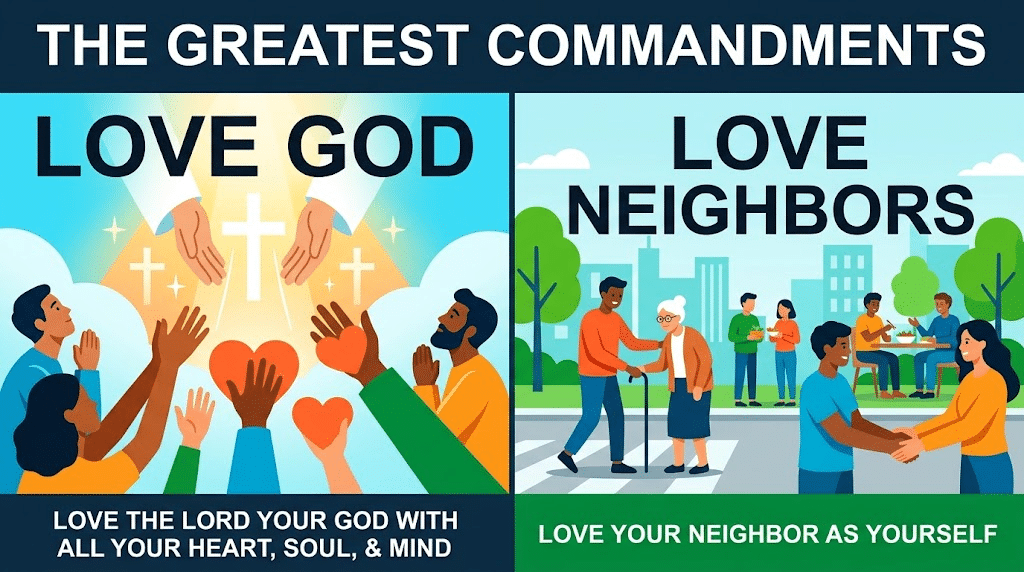
Write an engaging description meant to get readers to read Larry Broding’s commentary which can be used to help preachers prepare their own homily. After a brief introduction give bulletin points of why this commentary matters for your homily.
Love of God,
Love of Neighbor
Larry Broding cuts beneath romantic notions of love to uncover the covenantal framework behind Jesus’ response to the Pharisees.
- Exposes the Strategy Behind the Trap: Broding details how the Pharisees sought to pin down Jesus’ foundational hermeneutic, aiming to uncover the root of his biblical logic so they could systematically corner and discredit him in public debate.
- Redefines Love from Emotion to Fidelity: Broding unpacks the ancient understanding of biblical love, showing that it does not signify romantic sentiment, but rather concrete duty, loyalty, and covenantal response to a God who acts freely on behalf of His people.
- Elevates Neighborly Charity as True Worship: Grounded in Leviticus 19, the commentary demonstrates that loving one’s neighbor carries the same moral and liturgical weight as worshipping God.
- Contrasts Speculation with Embodiment: Broding highlights that while the Pharisees reduced love of God and neighbor to theoretical debate, Jesus embodied both among the marginalized, turning abstract theology into lived reality.


Commentary by Fr. Francis Martin | The Word Proclaimed
clean up grammar and spelling, divide into sections with titles for the following transcript xxxxxxxxxxxx
Verbal fillers, stumbles, and repetitions have been removed while keeping the original phrasing, theological precision, and cadence intact.
The Context of Controversy:
Testing the Master
We now look at the Gospel passage, Matthew 22:34–40. This text represents an expansion of the first reading from Exodus 22, where the Lord commanded Israel not to oppress the alien, the widow, or the orphan, and to show mercy to debtors. Our Lord synthesizes all these precepts into two great commandments.
This encounter takes place in an atmosphere of escalating controversy in Jerusalem. First came the parable of the wedding banquet, followed by the trap regarding payment of taxes to Caesar—where Christ established our dual citizenship, calling us, as Dietrich Bonhoeffer noted, to help the civil authority become a more just state. Having heard that Jesus had silenced the Sadducees regarding the resurrection, the Pharisees assembled to interrogate Him.
One of them, an expert in the law (nomikos), approached Jesus to put Him to the test (peirazon). This was not an inquiry born of sincere wonder, but a trial—the same testing (peirasmos) the devil employs. The religious authorities felt threatened by Jesus’ authority and popularity. While ordinary people welcomed His teachings and brought their sick to be healed, the legal experts sought to trap Him.
The scholar challenged Jesus with a classic rabbinic dilemma: "Teacher, which is the great commandment in the law?" This echoed the traditional rabbinic challenge: "Recite the whole law while standing on one foot." It was a test of synthesis. On one hand, the scribes maintained that all 613 precepts of the Torah were binding and none could be diminished. On the other hand, they debated which core principle anchored the entire covenant. They wanted to see if this Galilean rabbi could truly distill the essence of the Law.
The First Commandment:
The Shema and Total Consecration
Jesus replied by citing the Shema from Deuteronomy 6:4–5: "You shall love the Lord your God with all your heart, and with all your soul, and with all your mind." He declared: "This is the great and first commandment."
The Shema begins: "Hear, O Israel: The Lord (Adonai) our God, the Lord is one." In biblical thought, to love (ahav) God is not merely an emotion; it is total, covenantal obedience. Loving God demands the whole person:
- Heart (lev): The center of the will, understanding, and interior intellect.
- Soul (nefesh): The vital breath, life force, desires, and identity.
- Mind / Strength (me'od): All of one's energy, resources, wealth, and worldly capacities.
This total commitment was embodied historically by Rabbi Akiva during the Bar Kokhba revolt under the Roman Empire. When the Romans outlawed Torah study on pain of death, Akiva continued to teach. Arrested and subjected to execution by having his flesh torn with iron combs, he began calmly chanting the Shema, as was required of every observant Jew three times a day (a practice that early Christian writers like Origen noted was mirrored in the three-times-daily recitation of the Lord’s Prayer).
When his astonished disciples asked how he could pray in such agony, Akiva answered: "All my life I wondered what it meant to love the Lord with all my soul; now that my life is being taken, I finally understand." He breathed his last chanting the final word: Echad ("One").
Without this absolute foundation—loving God alone—all external social activism remains merely human effort. Philanthropy may relieve immediate physical suffering, but it does not open the way to eternal life unless anchored in the living God.
The Second Commandment:
Loving the Neighbor as Oneself
Jesus immediately added a second precept from Leviticus 19:18: "The second is like it: You shall love your neighbor as yourself. On these two commandments depend all the law and the prophets."
The second command is not a separate, unrelated duty; it is "like it," flowing directly from love of God. The standard established is uncompromising: treat every human being with the same dignity, care, and protectiveness that you naturally extend to yourself.
In practice, this kind of sacrificial love is frequently lived out most vividly among the poor. Saint Teresa of Calcutta often recounted giving the single remaining bowl of rice in her convent to a starving mother with a child. The woman accepted the rice, immediately walked out to her neighbor whose children were also starving, divided the bowl in half, and shared it. Having nothing of her own, she gave out of her destitution. Those who possess great wealth often cling to it; those who have endured extreme deprivation often recognize the vulnerability of others instantly.
Loving one's neighbor as oneself begins with clarifying our own deepest longings. What do we truly desire for ourselves above all else? Not fleeting luxuries, but eternal life with God. Therefore, the highest gift we can offer our neighbor is the knowledge of Christ.
Yet evangelization must never bypass physical necessity. If someone is starving, love requires feeding them first. Forcing hungry people to endure a sermon as a condition for receiving a meal distorts the Gospel. Christian charity demonstrates the love of Christ directly through mercy and respect. Even in the depths of poverty or addiction, turning one’s heart toward God and refusing to harm or exploit others is true righteousness in His eyes.
Inverting the Question: Becoming the Neighbor
When the legal scholars asked, "Who is my neighbor?", they were seeking boundaries—asking where their moral obligation could conveniently end.
Jesus shattered that framework with the Parable of the Good Samaritan. While the priest and the Levite passed by the beaten man on the Jericho road, the Samaritan—a cultural and religious outsider—stopped, bandaged his wounds, brought him to an inn, and paid for his recovery.
At the conclusion of the parable, Jesus inverted the lawyer's question. He did not ask, "Who is your neighbor?" Instead, He asked: "Which of these three proved to be a neighbor to the man who fell among robbers?" The scholar was forced to reply: "The one who showed him mercy."
Christ places the initiative on us. We do not look out at the world trying to determine who qualifies as our neighbor; rather, we make ourselves a neighbor to anyone who is vulnerable, suffering, or in need. In this way, love of God and love of neighbor form a single, seamless covenant life. human soul bears His divine image—and defending that dignity without compromise.
Click chevron banner to read transcript
organized into thematic sections.
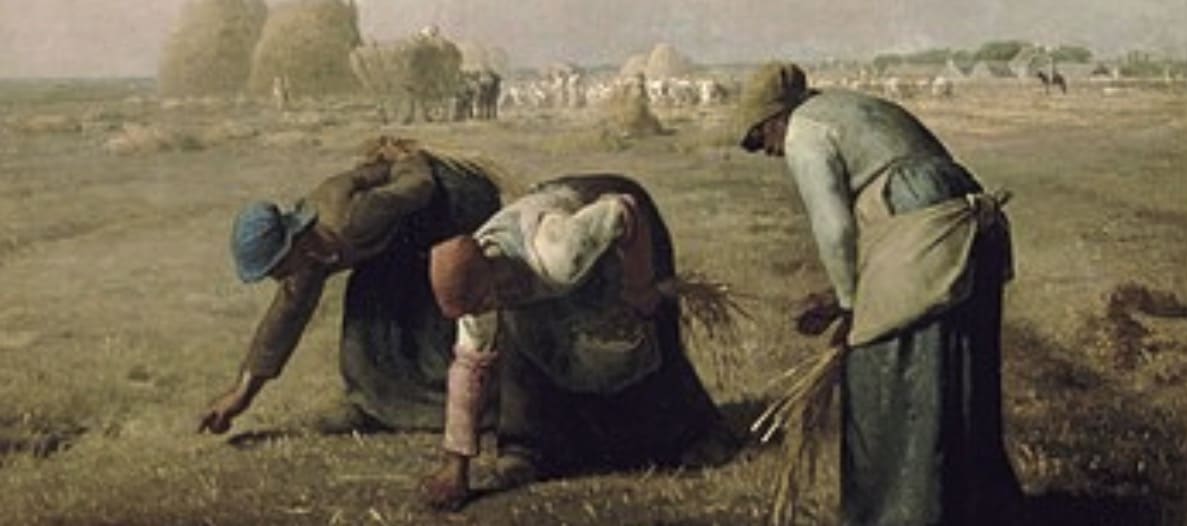
Doctrinal Homily Outlines
Central idea: The greatest commandments
Doctrine: Catholic social teachings
Application: Living Catholic social teachings
Sunday Prep Videos
30th Sunday of Year A