
Click INDEX TAB
in right corner of browser to view featured homilists.

FEATURED HOMILIES

SOURCE: Fr. Kevin’s Homilies
Compassion is a powerful force that unites humanity and inspires action to relieve the suffering of others, as seen in the examples of the Pieta statue, 9/11, the Aurora shooting, and Jesus’ compassion.

SOURCE: Archdiocese of Brisbane
Jesus is the ultimate Good Shepherd who cares for his people, and we can all follow his example by offering care and compassion to others.

SOURCE: Fr. Peter Hahn Archive of Homilies
We should strive to follow the guidance of God as our shepherd and not be led astray by other voices or influences.

SOURCE: Word on Fire
God desires to shepherd his people, and Jesus, as the true shepherd, has arrived to gather and unite all people through his sacrifice on the cross.


SOURCE: Fr. Jude Thaddeus Langeh Basenbang
We are all called to be missionaries, spreading the gospel and making the world a better place through our actions and professions.


SOURCE: Ascension Presents
Rest is essential for achieving physical excellence and holiness, and it is important to prioritize and make time for rest in order to have productive and beautiful work days.
SOURCE: The Word in the World
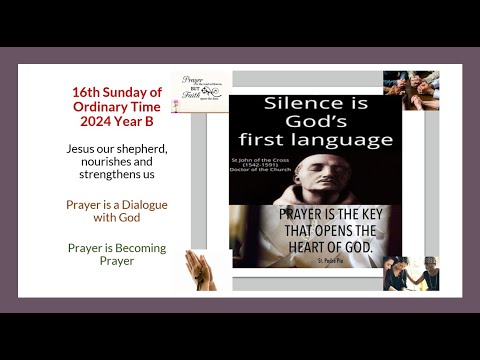
Prayer is essential for nourishing and strengthening our relationship with God, and it should be a transformative practice that allows for genuine encounter and dialogue with Him.

SOURCE: A Jesuit Adventure
Leaders, both earthly and spiritual, have a responsibility to care for and protect their people, and we are called to strive for justice and reconciliation in the kingdom of God.
Homiletic Pastoral Review
Homiletic Pastoral
Review
When Church Leaders Mislead and Scatter the Lord’s Flock
Recognizing the feeling of abandonment: The homily addresses the familiar feeling of being lost or alone in faith, asking whether we’ve ever felt like a “sheep without a shepherd.”
Acknowledging issues within the Church: The homily addresses historical and contemporary problems within the Church, highlighting the failure of leaders and the constant presence of difficulties.
The role of bad shepherds: Drawing on biblical passages and the words of saints, the homily discusses the presence of bad shepherds or leaders throughout history, from Jeremiah’s times to the Church age.
The importance of saintly individuals: The homily emphasizes the impact of heroic and saintly bishops, priests, and laypeople in keeping the faith alive and shepherding the people amid challenges.
Hope in Jesus Christ: Ultimately, the homily emphasizes that our faith is centered on Jesus Christ, who remains present and provides sustenance through the Eucharist, uniting believers across time and space.
Deacon Peter McCulloch
Deacon Peter
McCulloch
On Sabbath Rest

Rethinking our use of time: The homily reflects on how the Covid pandemic has prompted a reevaluation of our busy lives and the need for rest and reflection.
Importance of rest: The speaker highlights the health risks associated with constant work and stress, emphasizing the importance of taking breaks and recharging.
Jesus’ example of rest and compassion: The passage from Mark’s Gospel demonstrates Jesus’ attempt to find a quiet place for rest while still prioritizing the needs of others and connecting with God.
The universality of the Sabbath: The homily discusses the historical significance of the Sabbath in Jewish culture and its widespread adoption across the Roman Empire.
Balancing rest and action: The speaker suggests that the rhythm of the Christian life involves alternating between time spent with God and service to others.
Prioritizing rest: The homily concludes by emphasizing the importance of scheduling regular rest breaks to avoid burnout and maintain focus on life’s purpose.
Fr. Don & Tonya’s Podcast
Fr. Andrew Ricci
Fr. Andrew Ricci
PODCAST: The readings today reveal how God chooses and empowers us so that we might offer our lives for service in the world. Everyday the Lord invites…how will we respond?
Fr. Austin Fleming
Fr. Austin Fleming
The Challenge of Preaching on Shepherds

The challenge of preaching on shepherds: The homily addresses the difficulty for a priest, as a spiritual shepherd, to objectively preach on the topic of shepherds who mislead their flock.
Self-evaluation of faithfulness: The speaker acknowledges that both priests and parishioners will judge the faithfulness of shepherds based on their preaching and leadership.
Three lenses for evaluating fidelity: The homily suggests three perspectives for assessing the faithfulness of preachers: the eyes of faith in Jesus, the eyes of Christ’s Body (the Church and its Tradition), and the eyes of personal experience.
Applying the lenses to personal faithfulness: The speaker emphasizes that these three lenses should also be used by individuals to evaluate their own faithfulness as Christians.
Seeking God’s perspective: The homily concludes by asserting that true beauty and fidelity are seen through God’s eyes, and that the three lenses help us strive for a holy life in alignment with the Gospel.
Archived homily from 2018
Dominican Blackfriars

Dominican Blackfriars

Understanding the Apostles’ experiences: Fr Toby Lees begins by discussing the difficulty in relating to the Apostles’ experiences, particularly the phrase “they had no time even to eat.”
Jesus’ response to the Apostles’ needs: Fr Toby Lees highlights how Jesus addresses the Apostles’ needs in a specific order: rest, teaching, and then feeding, which might reflect the structure of the Mass.
The importance of rest: Fr Toby Lees focuses on the significance of rest, not just as a break from work, but as a time for receptiveness to God and recreation.
Josef Pieper’s perspective on leisure: Fr Toby Lees refers to Josef Pieper’s treatise “Leisure, the Basis of Culture,” which emphasizes leisure as an essential aspect of revitalizing western culture and contrasts two modes of human intellect: ratio and intellectio.
Contemplation as the antidote to restlessness: Fr Toby Lees discusses contemplation as a way to combat restlessness and acedia, the rejection of the divine within us, leading to true fulfillment and love of God.
The significance of silence and stillness: Fr Toby Lees underlines the importance of stillness and silence for rest, enabling attentiveness to God’s Word and recognizing the goodness of creation.
Bishop Robert Barron
Bishop Robert Barron




Our Plans and God’s Plan

The significance of plans: The homily begins by discussing various types of plans we encounter in our lives and how different people approach them.
The apostles’ need for rest: Fr. Irvin recounts the Gospel story of Jesus and the apostles seeking a quiet place to rest after their preaching endeavors.
Interrupted plans: The homily highlights how the apostles’ plans for rest were disrupted by a large crowd, to which Jesus responded with compassion and teaching.
Aligning our plans with God’s: The key message is to recognize that our personal plans may not always align with God’s plans and that we should be open to adjusting our expectations and responding with patience, humility, and love.
Fr. Joe Jagodensky, SDS

Fr. Jagodensky, SDS
The influence of culture: Joe Jagodensky, SDS begins by emphasizing the impact of culture on our lives, leading to a constant desire for more, dissatisfaction, and self-doubt.
Imagining a world without faith: Fr. Joe Jagodensky, SDS. invites listeners to envision a scenario where there is no church, faith, or spiritual nourishment, highlighting the importance of community and shared experiences.
The apostles’ experiences: The homily recounts the apostles’ journey and the challenges they faced while spreading the message of repentance and the Kingdom of God.
The role of the Good Shepherd: Fr. Joe Jagodensky, SDS highlights the significance of the “Good Shepherd” in guiding and comforting us through life’s challenges, referring to the biblical passage of Psalm 23.
Contemporary interpretation of Psalm 23: The homily concludes with a modern take on the Psalm, focusing on trust, comfort, and the recognition of blessings in life despite difficulties.
Fr. George Smiga
Fr. George Smiga
Judging with Compassion

Jesus’s compassion: The homily highlights Jesus’s compassionate nature, as he had pity on those in need and provided both spiritual and physical nourishment to the crowds.
Balancing generosity and dependency: Fr. Smiga discusses the importance of making a thoughtful decision when helping those in need, ensuring that our actions will truly improve their lives instead of fostering dependency.
Starting with compassion rather than judgment: The homily emphasizes the significance of approaching people with compassion, instead of judgment, as it allows us to see the humanity in those who are struggling and to consider how we can best help them.
“There for the grace of God go I”: Fr. Smiga introduces a well-known Christian saying, encouraging listeners to approach those in need with empathy and understanding, recognizing that our lives could easily be different if circumstances were different.
Fr. Anthony Ekpunobi, C.M.

Fr. Anthony
Ekpunobi, C.M.
NO HOMILY FOR THIS WEEK AND NEXT WEEK
The importance of the bigger picture: The homily emphasizes the significance of focusing on the larger, overarching perspective in life rather than being confined to immediate needs and desires.
Materialism and short-term satisfaction: It highlights the human tendency to concentrate on instant gratification, as depicted in the story of people seeking Jesus for material gains.
Long-term spiritual fulfillment: The gospel reading encourages working towards eternal life and seeking the spiritual nourishment offered by Jesus Christ, emphasizing the enduring satisfaction that comes from faith.
Rejecting the old life and embracing truth: The second reading invites listeners to let go of their past lives, marred by fleeting desires, and instead embrace the truth found in Christ as the bread of life.
Msgr. Joseph Pellegrino
Msgr. Pellegrino

Justice and Integrity

The context of Jeremiah’s prophecy: Msgr. Pellegrino’s homily focuses on the historical background of Jeremiah’s writings, emphasizing the prophet’s opposition to faithless leaders and his prediction of a future righteous king.
Biblical justice: The homily explores the concept of biblical justice, highlighting its depth and connection to a way of life that reflects God’s presence and integrity.
Qualities of a good leader: Drawing from the readings, Msgr. Pellegrino identifies two essential qualities of a leader: the ability to unite people in truth, as St. Paul suggests, and a balance between strength and compassion, as seen in Jesus Christ.
Leadership in various contexts: The homily discusses different forms of leadership, including that of spouses in marriage, ordained clergy, and all confirmed Catholics, emphasizing the responsibilities each role entails.
Importance of prayer and support: Msgr. Pellegrino highlights the need for prayer and support within the community, particularly for married couples, single parents, and priests, as they navigate their respective leadership roles.
Emulating Christ’s leadership: The homily encourages leaders to follow Christ’s example by being both strong and compassionate, asking themselves what Jesus would do in challenging situations and relying on the guidance of the Holy Spirit.
Msgr. Charles Pope
Msgr. Charles Pope
Msgr. Charles Pope
Four Teachings on Personal Prayer

As Jesus listens, He urges them (perhaps because they are so overjoyed) to come away and rest awhile, for they have labored long. In so doing, Jesus also teaches us about prayer. Let’s consider four teachings on prayer that are evident in today’s Gospel.
I. The Practice of Praise-Filled Prayer
II. The Peace of Personal Prayer
III. The Primacy of Prioritized Prayer
IV. The Power of Pious Prayer
Bishop John Louis

Bishop John Louis
The shepherd as a leadership metaphor: The homily discusses the significance of the shepherd metaphor in the context of Israelite history and the qualities associated with it, such as courage, selflessness, vigilance, love, and care.
Jesus as the Good Shepherd: Bishop Louis highlights how Jesus Christ embodies these shepherd qualities and serves as a model for church leaders.
Qualities of church leaders: The homily emphasizes five key qualities that bishops, priests, and deacons should possess to be effective and faithful shepherds: fearless courage, selfless sacrifice, patient love, caring provision, and constant vigilance.
Support for church leaders: Bishop Louis encourages the community to pray for their church leaders, acknowledging the challenges and demands of their roles, to help them fulfill their mission and be rewarded by Jesus, the Good Shepherd.
Fr. Michael Chua
Fr. Michael Chua

Understanding clericalism: The homily defines clericalism as the exaggerated importance given to clergy, leading to a power imbalance between clergy and laity, and discusses how both groups can be guilty of it.
Clericalism in the modern context: The speaker questions whether priests are accused of clericalism based on their ordination and fidelity to Church teachings and if democratization or abandoning Church laws would solve the issue.
The need for good shepherds: Emphasizing the Church’s need for compassionate and dedicated leaders, the homily highlights the importance of distinguishing between good and bad shepherds, as seen in the Scriptures.
Christ-centered leadership: The speaker points to Jesus as the model for good shepherds, highlighting the need for prayer and a strong relationship with Christ to avoid clericalism and focus on serving God’s will instead of personal ambitions.
Blurring lines between clergy and laity: The speaker discusses a form of clericalism where priests assume duties of the laity and vice versa, leading to a role reversal that may undermine the unique roles of each.
Disobedience and pastoral reasons: The homily addresses the issue of using “pastoral reasons” to justify disobedience to Church authority, which may actually be based on personal preferences rather than genuine concern for the flock.
Clericalism in liturgy: The speaker acknowledges the danger of clericalism in worship when the priest’s creativity and preferences overshadow the centrality of Christ in the liturgy.
Reflections on being addressed as “father”: The homily concludes with personal reflections on the meaning of being addressed as “father,” which serves as a reminder of the spiritual responsibility and anonymity that comes with priesthood.
Archived homily from 2021
Fr. Vincent Hawkswell
Fr. Vincent Hawkswell

The nature of shepherds and sheep: The homily describes the Biblical imagery of shepherds leading and protecting their sheep, as well as the foolishness of sheep when left without proper guidance.
Archbishop Carney’s motto: The focus shifts to Archbishop Carney’s episcopal motto, “To preserve the unity,” which emphasizes the importance of maintaining unity within the Church.
The role of the Pope: The homily highlights the Pope’s role as the first servant of unity and the significance of submission to the supreme pontiff to avoid schism within the Church.
The dangers of dissent: Fr. Hawkswell warns against maintaining personal opinions in opposition to Church teachings, as it can lead to division and reliance on human wisdom instead of trusting in Christ.
A call for unity: The homily concludes with a call for unity within the Church, quoting St. Paul’s plea for agreement and harmony among believers.
Fr. Tommy Lane
Fr. Tommy Lane
Serving Others and Mental Health

Serving others and mental health: The homily begins by discussing the idea that serving others contributes to improved mental health, while focusing solely on oneself can lead to mental illness.
Old Testament shepherds and leadership: Fr. Lane examines the failure of Old Testament kings, or shepherds, who prioritized their own interests over those of their people. This is contrasted with the promise of a wise, true king in Jesus.
Jesus as a servant leader: The Gospel reading presents Jesus as a leader who serves others, demonstrating love and compassion for his disciples and the people around him.
The importance of love and unity in the Eucharist: The homily emphasizes that the Eucharist should be a reflection of Jesus’ love and sacrifice, encouraging participants to care for one another and foster a sense of unity within the community.
Lessons from the Corinthians: The homily discusses the early practices of the Corinthians, highlighting the importance of inclusivity and the dangers of prioritizing the wealthy over the less fortunate in the context of Eucharistic celebrations.
Fr. John Kavanaugh, S.J.
Fr. John
Kavanaugh, S.J.
Jesus Not A Boy-O

The “boy-o” archetype: The passage introduces the term “boy-o,” used to describe a type of priest who is self-serving, demanding, and unapproachable. This type of priest can cause division, humiliation, and doubt within a parish.
Comparison to Jeremiah’s criticism: The author connects the concept of the “boy-o” to Jeremiah’s criticism of shepherds who neglect their flock, emphasizing the responsibility of leaders to prioritize the well-being of their community.
Relevance to contemporary issues: The passage acknowledges contemporary issues within the Catholic Church, such as abuse scandals and insensitive treatment of laypeople, as further examples of the negative impact of self-serving leaders.
The example of Christ: In contrast to the “boy-o” archetype, the passage presents Christ as a compassionate leader who is gentle with his followers and focused on reconciliation and peace.
The message of the Church: The passage emphasizes the importance of remembering the true purpose of the Church, which is to promote unity, peace, and reconciliation through the teachings and example of Christ.

Bishop Frank Schuster
Bishop Frank Schuster
Finding Jesus in Deserted Places

The importance of discernment in choosing shepherds: Bishop Schuster emphasizes the need to be discerning in choosing who we follow, as many people in positions of power or influence may not have our best interests at heart. Only Jesus can be the true Good Shepherd.
The value of leisure and rest: Bishop Schuster highlights Jesus’ advice to take breaks and find quiet moments to recharge, which is important for maintaining mental and spiritual health.
Two types of vacations: Bishop Schuster differentiates between vacations as a means of escape and those as opportunities for recreation and self-reflection. It encourages planning vacations that allow for spiritual growth and deeper connection with God.
Finding balance: Bishop Schuster suggests that while there is nothing inherently wrong with vacations that provide temporary escape, it is also important to find balance by incorporating vacations that promote self-reflection and spiritual growth.
The pitfalls of a culture of escapism: Bishop Schuster highlights the dangers of a culture that encourages “vacating,” or escaping from the demands of daily life through activities like excessive consumption of alcohol, media, or video games. This can lead to spiritual emptiness and a disconnection from God and others.
The importance of recreation and reflection: In contrast, engaging in recreational activities that allow for reflection and spiritual growth, such as attending church, spending time with loved ones, and finding quiet moments for prayer and contemplation, can lead to a deeper understanding of oneself and one’s relationship with God.
Self-evaluation of one’s vocation: Bishop Schuster encourages readers to regularly assess their lives, considering whether they are focusing on escaping or on growing in their understanding of themselves and their calling.
The role of personal “deserted places”: Jesus’ advice to find a quiet place for rest and prayer emphasizes the importance of creating personal spaces for spiritual growth and reflection, away from the noise and distractions of the world.
Father Bob Warren, SA

Interruptions as a part of life: The passage emphasizes that interruptions and unexpected events are a common part of the human experience, affecting everyone at some point. Some interruptions can be minor, while others can have a significant impact on one’s life.
Jesus’ response to interruptions: When faced with an unexpected crowd interrupting his planned time of rest, Jesus responded with pity and compassion, recognizing their need for guidance and support. He willingly set aside his own needs to teach and care for the people.
Prioritizing compassion over tradition: Jesus often prioritized love, compassion, and the well-being of people over strict adherence to tradition or institutional norms, which sometimes led to conflict with those in power.
Extending compassion to others: The passage challenges readers to consider how they respond to interruptions in their own lives, particularly when they involve people in need. It encourages them to follow Jesus’ example by extending love and compassion to others, even when it is inconvenient or challenging.
Being extensions of Christ: By prioritizing love and compassion in their interactions with others, Christians can serve as extensions of Christ, demonstrating God’s care and concern for all people.
