
Click INDEX TAB
in right corner of browser to view page contents.

The Mass Readings Explained

SOURCE: The Mass Readings Explained
Jesus is depicted as a teaching Messiah and shepherd who feels compassion for the people and responds by guiding, protecting, and feeding them with the truth.
Hearers of the Word

SOURCE: Hearers of the Word
Balancing rest and activity, maintaining prayer during times of refreshment, and showing compassion are important aspects of ministry and following the example of Jesus.
Ascension Presents

The Bible Timeline®: The Story of Salvation
Jesus is the Good Shepherd who cares for, feeds, and protects his church, and we must stay close to him to avoid danger.
The Word Proclaimed

SOURCE: The Word Proclaimed
Jesus shows compassion and care for the people, teaching them about God’s love and providing both spiritual and physical nourishment.
A Walk in the Word

SOURCE: A Walk in the Word
Jesus, as the Good Shepherd, shows compassion and mercy to his people, and the Catholic Church serves as the gateway to Christ, emphasizing the importance of approaching the sacred liturgy in our spiritual lives.
✝️ Catena Aurea
Catena Aurea
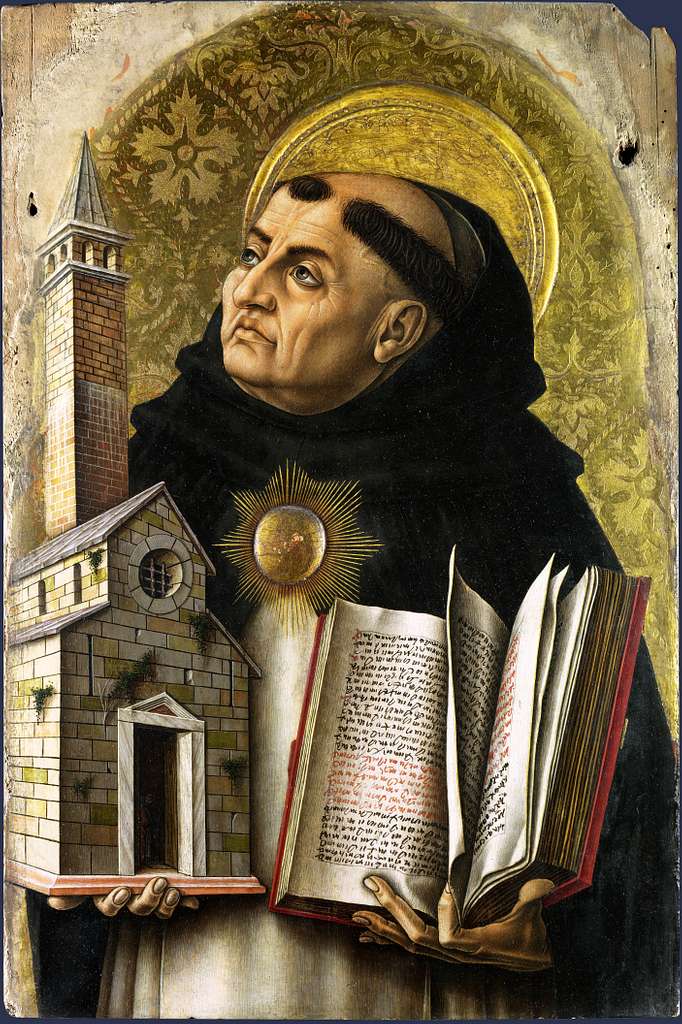
Compiled by St. Thomas Aquinas
After losing a dedicated mentor, the disciples reunite with Jesus, sharing their experiences, progress, and teachings. This gathering strengthens their bond and commitment to their mission.
GLOSS. (non occ.) The Evangelist, after relating the death of John, gives an account of those things which Christ did with His disciples after the death of John, saying, And the Apostles gathered themselves together unto Jesus, and told him all things, both what they had done, and what they had taught.
Returning to their source of wisdom, the disciples express gratitude, recognizing the value of guidance and knowledge. Appreciating divinely inspired teachings, they maintain their humility and grow in understanding.
PSEUDO-JEROME. For they return to the fountain-head whence the streams flow; those who are sent by God, always offer up thanks for those things which they have received.
When assigned tasks, remember to stay within the scope of your responsibilities. Regularly update your superiors, demonstrating accountability, and ensure that actions align with teachings to maintain integrity and balance.xxxxx
THEOPHYLACT. Let us also learn, when we are sent on any mission, not to go far away, and not to overstep the bounds of the office committed, but to go often to him, who sends us, and report all that we have done and taught; for we must not only teach but act.
Sharing experiences, progress, and challenges faced by both teams strengthens the bond between John’s and Jesus’ disciples. Acknowledging hardships and learning from one another, they grow in wisdom and unity.
BEDE. (ubi sup.) Not only do the Apostles tell the Lord what they themselves had done and taught, but also his own and John’s disciples together tell Him what John had suffered, during the time that they were occupied in teaching, as Matthew relates. It goes on: And he said to them, Come ye yourselves apart, &c.
The recounting of events by the disciples helps shed light on the impact of John’s death and the true nature of Herod’s actions. Understanding the context, they grow in wisdom and determination to carry on their mission.
AUGUSTINE. (de Con. Evan. 2. 45) This is said to have taken place, after the passion of John, therefore what is first related took place last, for it was by these events that Herod was moved to say, This is John the Baptist, whom I beheaded.
Christ’s example of seeking rest teaches leaders to recognize the importance of self-care and balance. Those who dedicate themselves to serving others must also prioritize rest and rejuvenation to maintain their strength and commitment to their mission.
THEOPHYLACT. Again, He goes into a desert place from His humility. But Christ makes His disciples rest, that men who are set over others may learn, that they who labour in any work or in the word deserve rest, and ought not to labour continually.
Do not hesitate to approach Christ, for He is a compassionate shepherd. Unlike the Pharisees who only sought to exploit and harm, Christ offers spiritual nourishment and guidance to His flock. He understands the struggles of His followers and responds with empathy, providing them with knowledge and support.
THEOPHYLACT. So do thou not wait for Christ till He Himself call you, but outrun Him, and come before Him. There follows, And Jesus when he came out saw much people, and was moved with compassion towards them, because they were as sheep having no shepherd. The Pharisees being ravening wolves did not feed the sheep, but devoured them; for which reason they gather themselves to Christ, the true Shepherd, who gave them spiritual food, that is, the word of God. Wherefore it goes on, And he began to teach them many things. For seeing that those who followed Him on account of His miracles were tired from the length of the way, He pitied them, and wished to satisfy their wish by teaching them.
Demonstrating true compassion, Christ not only provides spiritual guidance but also heals the physical ailments of His followers. His teachings and acts of healing reflect a genuine empathy and concern for the well-being of the people, both in body and spirit.
BEDE. (in Marc. 2, 26) Matthew says that He healed their sick, for the real way of pitying the poor is to open to them the way of truth by teaching them, and to take away their bodily pains.
Symbolically, Christ’s action of separating His chosen ones serves as a reminder for them to remain steadfast in their faith and not succumb to the influences of those around them. Like Lot, Job, and Obadiah, they must maintain their integrity and resist the temptations and pressures of their environment.
PSEUDO-JEROME. Mystically, however, the Lord took apart those whom He chose, that though living amongst evil men, they might not apply their minds to evil things, as Lot in Sodom, Job in the land of Uz, and Obadiah in the house of Ahab.
Faced with adversity and hardship in their mission to spread the gospel amongst the Jews, the early Christian preachers found solace and respite in sharing the grace of faith with the Gentiles. By expanding their mission beyond Judaea, they were able to persevere and continue their work in the face of challenges.
BEDE. (in Marc. 2, 25) Leaving also Judæa, the holy preachers, in the desert of the Church, overwhelmed by the burden of their tribulations amongst the Jews, obtained rest by the imparting of the grace of faith to the Gentiles.
The challenges and struggles faced by the saints on earth are only temporary, as their ultimate rest lies in the afterlife. Just as Noah’s ark saw animals come and go, the Church too experiences changes in its membership. Despite these setbacks and the grief they may bring, the faithful must maintain their belief, for true peace and solace will only be found in the eternal life promised to those who persevere in their faith.
PSEUDO-JEROME. Little indeed is the rest of the saints here on earth, long is their labour, but afterwards, they are bidden to rest from their labours. But as in the ark of Noah, the animals that were within were sent forth, and they that were without rushed in, so is it in the Church, Judas went, the thief came to Christ. But as long as men go back from the faith, the Church can have no refuge from grief; for Rachel weeping for her children would not be comforted. Moreover, this world is not the banquet, in which the new wine is drank, when the new song will be sung by men made anew, when this mortal shall have put on immortality.
As Christ extends His mission to the Gentiles, many believers leave behind their old ways of life and join Him. This transition symbolizes their willingness to embrace change and follow Christ’s teachings, even if it means abandoning their previous customs and habits.
BEDE. (in Marc. 2, 26) But when Christ goes to the deserts of the Gentiles, many bauds of the faithful leaving the walls of their cities, that is their old manner of living, follow Him.
CONTEMPORARY APPLICATION
📖 Fr. George Corrigan OFM

Fr. Corrigan, OFM
🗒️ Commentary Note Cards
NOTE CARDS
1️⃣ Balancing Service and Self-Care
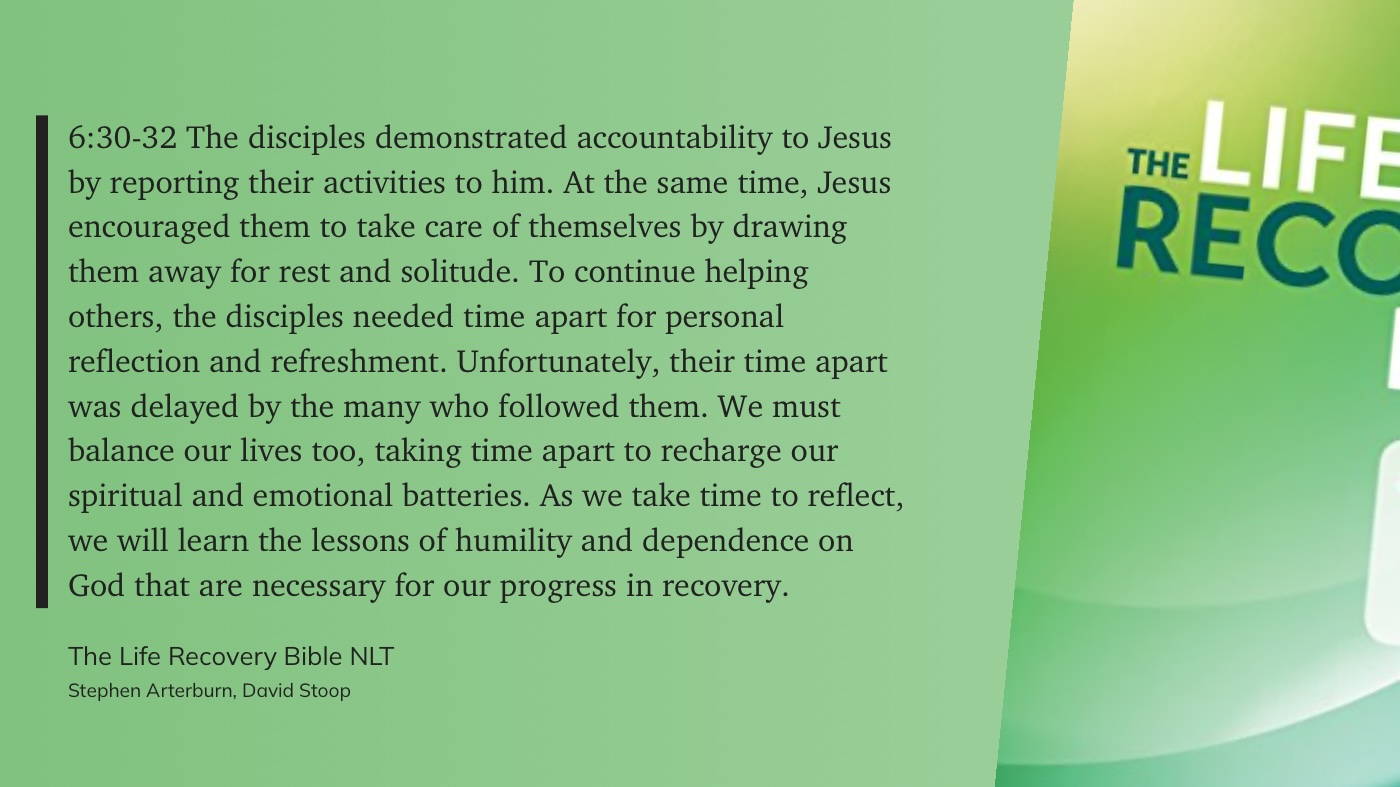
This excerpt emphasizes the need for humility, self-reflection, and reliance on God in our journey towards growth and recovery.
2️⃣ Rooted in Prayer: Balancing Ministry and Spiritual Renewal
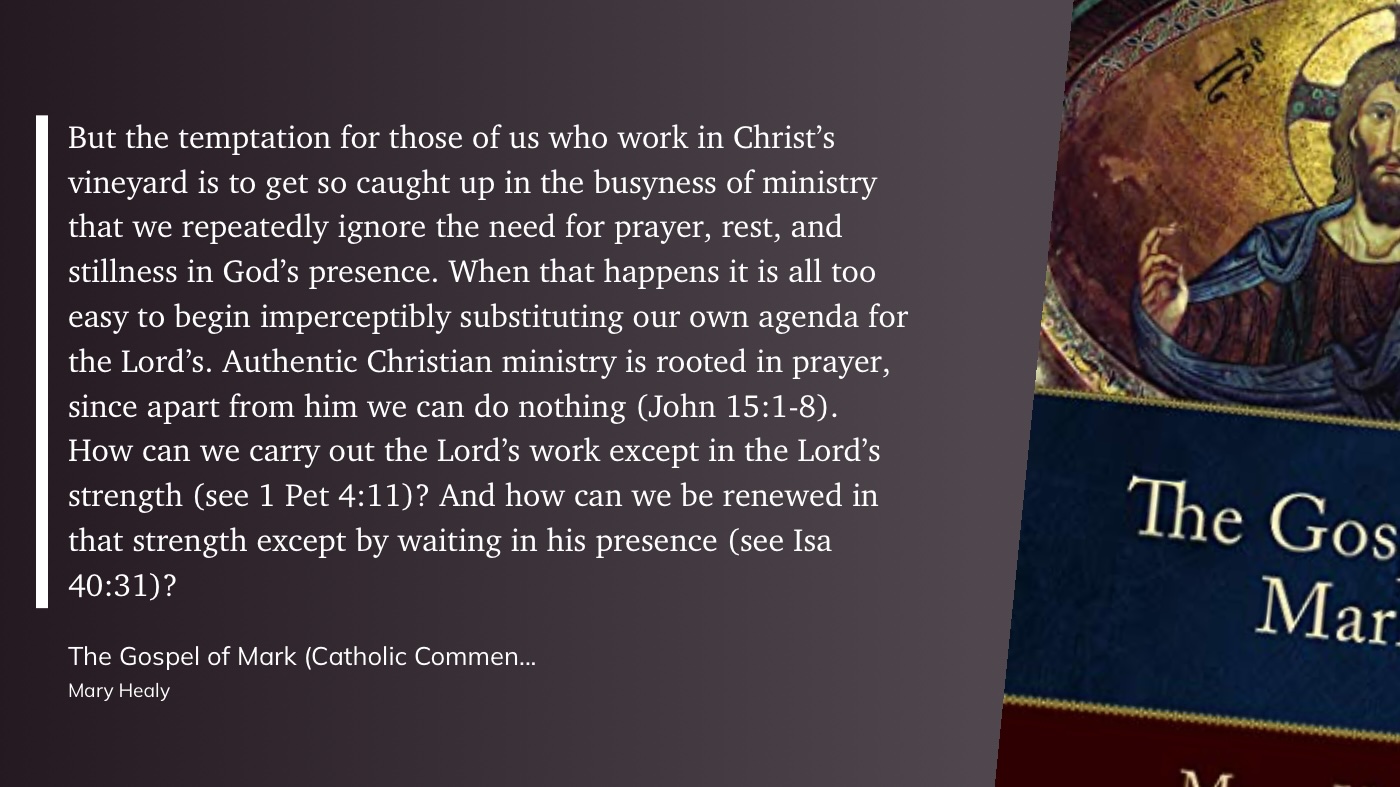
This excerpt highlights the need to remain connected to the Lord and seek His strength in order to authentically carry out His work and experience spiritual renewal.
3️⃣ The Cross as the Marriage Bed
This excerpt highlights the connection between the biblical idea of becoming “one flesh” and the great mystery of Christ’s love for the Church.

⛪ Navarre Bible Notes


🌐 Wikipedia Article


Wikipedia
✍️ Sermon Writer Exegesis

RIchard Niell Donovan

Gospel Exegesis
✨ “because they were like sheep without a shepherd” (v. 34c).
These words remind us of Moses’ request for God to appoint someone to succeed him as leader of the people “so that the congregation of the Lord may not be like sheep without a shepherd” (Numbers 27:17). God chose Joshua, whose name is a variant of the name Jesus.
“Sheep without a shepherd” also reminds us of the words of Ezekiel the prophet, who said, “They were scattered, because there was no shepherd; and they became food to all the animals of the field, and were scattered. My sheep wandered through all the mountains, and on every high hill: yes, my sheep were scattered on all the surface of the earth; and there was none who searched or sought” (Ezekiel 34:5-6).
Sheep need a shepherd to lead them on safe pathways, to help them to find food, to defend them against danger, to find them when they wander off, and to restore them to the fold. “Shepherd” is often used in the Bible as a metaphor:
- For faithful or unfaithful kings, priests and prophets (2 Samuel 5:2; Psalm 78:70-72; Isaiah 56:11-12; Jeremiah 3:15; 10:21; 23:1-4; 50:6).
- For God (Psalms 23:1-4; 28:9; 80:1; Isaiah 40:11; Jeremiah 31:10)
- For Jesus (Matthew 26:31; John 10:11-18; Hebrews 13:20; 1 Peter 2:25; Revelation 7:17)
- For church leaders (John 21:15; Acts 20:28ff; 1 Peter 5:2-4). (Myers, 939-940).
The words, “sheep without a shepherd” imply a rebuke on the religious leaders of Jesus’ day, who have failed in their shepherd role.
RICHARD NIELL DONOVAN was a Disciples of Christ clergyman who published SermonWriter, for a paid subscription, from 1997-2020. After he died, his family has generously provided his resources without subscription.