
Click INDEX TAB
in right corner of browser to view featured homilists.

FEATURED HOMILIES

SOURCE: Fr. Kevin’s Homilies
We should give what we have to Jesus, no matter how small, and he will do great things with it.

SOURCE: Archdiocese of Brisbane
Jesus’ miracle of feeding the five thousand was a test for the disciples and challenges us to share the impact of his sacrifice and compassion with those around us in our daily lives.

SOURCE: Fr. Peter Hahn Archive of Homilies
Our Catholic faith should shape our attitudes and allow the Eucharist to transform us for communion and peace with God, leading us to trust in Jesus and share our talents and gifts for the benefit of all.

SOURCE: Word on Fire
The Eucharist is inseparable from the mass and is a transformative and nourishing experience that brings people closer to Jesus regardless of their background or education.


SOURCE: Fr. Jude Thaddeus Langeh Basenbang
God provides strength and nourishment through feeding, as seen in the Bible, while the devil’s feeding leads to condemnation.


SOURCE: Ascension Presents
The very heart of God is that of a giver, and to live and look like Jesus, we must also be givers, prioritizing where our “first fruits” go and cultivating a mindset of abundance and joy in blessing others.

SOURCE: The Word in the World
Believing in Jesus as the bread of life leads to deeper faith and the Holy Eucharist is a personal encounter with the life of God.

SOURCE: A Jesuit Adventure
God’s care and power are shown through miracles of multiplication, emphasizing the theme of sharing in times of scarcity and the importance of providing for others and trusting in God’s providence.

SOURCE: Fr. Kevin’s Homilies
It is always important to give and help others, especially during times of need, as people are starving for food, understanding, hope, and love.
Homiletic Pastoral Review
Homiletic Pastoral
Review
Satisfying Spiritual Hunger Beyond Miracles
Faith in Jesus vs. Preoccupation with Signs and Miracles: Deacon Greydanus highlights the distinction between having genuine faith in Jesus and being overly focused on signs and miracles. This is illustrated by the Gospel reading where the crowd is more interested in the signs Jesus performs than in understanding his true identity.
Physical Needs vs. Spiritual Growth: The Deacon discusses the crowd’s desire for Jesus to fulfill their physical needs, such as providing food, instead of focusing on spiritual growth and understanding his teachings. This is shown when the crowd asks Jesus for more food instead of seeking his guidance.
Importance of Prayer: Greydanus emphasizes the importance of prayer and seeking a deeper relationship with God. While it is good to turn to God with our needs and wants, our primary focus should be on prayer and recognizing that the Giver is more important than the gifts we receive.
Preconceived Notions about Christ’s Kingship: The homily points out that modern Catholics can sometimes become preoccupied with miraculous signs and treat oracles as equal to Church teaching or the Word of God. This can lead to having our own ideas about what Christ’s kingship should mean in our lives and our world.
Focus on Spiritual Growth: Greydanus stresses the need to let go of our preconceived notions about Christ’s kingship and what the Kingdom of God should be like. Instead, he calls for a focus on spiritual growth and understanding that our ultimate need is not the gifts we receive, but the Giver Himself.
Unity and Community: The Deacon emphasizes the value of unity and the importance of working together to build a strong, thriving community. This is illustrated by the “Stone Soup” folktale, where individuals come together to share limited resources for the benefit of all.
Cooperation, Faith, and Provision in Scripture: By comparing the multiplication of barley loaves in 2 Kings 4:42-44 and the feeding of the multitude in John 6:1-15, Greydanus illustrates the shared message of cooperation, faith, and provision in both scripture passages.
Reflection on the Kingdom of God: Greydanus suggests that, particularly during an election year, Catholics should reflect on their understanding of the Kingdom of God and how it translates into their lives and society.
Encouragement of a More Profound Faith: The homily encourages a more profound faith and a focus on prayer and a relationship with God, rather than seeking signs or focusing solely on personal needs and desires.
Balancing Needs and Spiritual Growth: Deacon Greydanus acknowledges the value of turning to God with our needs and wants but emphasizes the importance of focusing on prayer and the Giver Himself.
Deacon Peter McCulloch
Deacon Peter
McCulloch
On Little Gestures

Power of Little Gestures: Deacon Peter McCulloch emphasizes the significant impact small gestures can have, like a gentle touch, a smile, or a thank-you note, and their ability to positively influence others’ lives.
First World Day for Grandparents and the Elderly: Instituted by Pope Francis during the Amoris Laetitia Year of the Family, this special celebration highlights the crucial role of elderly family members in our lives and encourages staying connected with them.
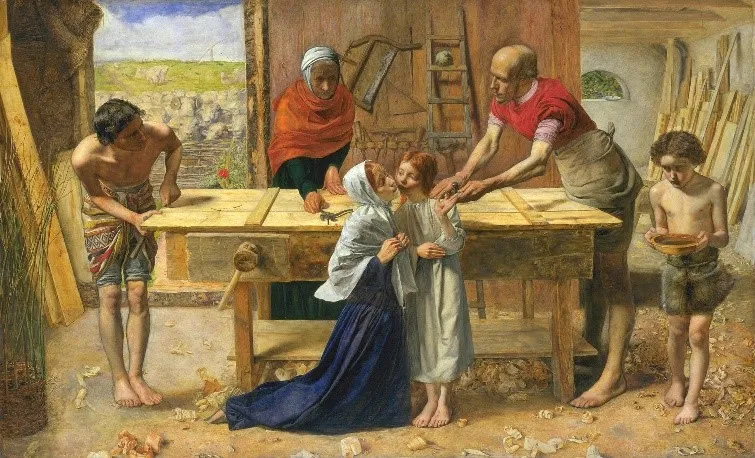
Importance of Extended Family: McCulloch reflects on John Everett Millais’ painting ‘Christ in the House of His Parents,’ emphasizing the value of an extended Holy Family working together and depicting the roles of Jesus’ grandmother and cousin, reflecting the relevance of extended family.
Symbolism in the Painting: Various symbols in the painting, like the wounded hand of Jesus, represent aspects of his life and passion, while the sheep outside represent the flock awaiting the Good Shepherd, indicating how everything in a happy and holy family revolves around Jesus.
Criticism of the Painting: McCulloch mentions the criticism and controversy that surrounded the painting when first exhibited, highlighting the unconventional depiction of the Holy Family as hardworking and poor and the inclusion of extended family members as part of their intimate life.
Homely Gestures and Domestic Churches: He emphasizes the importance of homely gestures, like shared meals or hugs, that make people feel at home and create a loving environment where faith can thrive, asserting that families are the right place for faith to become life and life to grow into faith.
Fr. Don & Tonya’s Podcast
Fr. Don and Tonya’s Sunday Podcast
Fr. Andrew Ricci
Fr. Andrew Ricci
PODCAST: Christ nourishes body and soul as he feeds the 5000 following his time teaching and healing. As the crowd’s hunger is satisfied with the Lord’s abundance, we gain spiritual insight into how we generously give and gratefully receive the blessings of life.
Fr. Austin Fleming
Fr. Austin Fleming
What are our hungers today?

The Miracle of the Loaves and Fishes: Fr. Austin Fleming reflects on the Gospel reading of the multiplication of loaves and fishes, highlighting that it is the only miracle recorded in all four Gospels, emphasizing its importance in understanding Jesus’ mission.
Eucharistic Symbolism: The miracle serves as a prefigurement of the Eucharist, illustrating how Jesus can satisfy both the physical and spiritual needs of the multitude.
God’s Provision and Generosity: Fr. Fleming discusses God’s ability to provide abundantly for His people, as demonstrated in the miracle, and the importance of trusting in God’s provision even amidst apparent scarcity.
Significance of the Twelve Baskets: The twelve baskets of leftover fragments symbolize the twelve tribes of Israel and God’s desire to gather and save His people.
Disciples’ Role in God’s Work: The homily highlights the role of the disciples in distributing the loaves and fishes, emphasizing their importance as conduits for God’s work and the responsibility of all Christians to participate in God’s mission.
The Eucharist as Sustenance: Fr. Fleming reiterates the importance of the Eucharist in sustaining and strengthening Christians on their journey, drawing a parallel to the physical nourishment provided by the loaves and fishes.
Archived homily from 2018
Dominican Blackfriars

Dominican Blackfriars

Multiple Accounts of the Miracle: Fr. Samuel Burke highlights that the feeding of the 5000 is the only miracle reported by all four evangelists, noting that each account offers unique details and perspectives.
Varied Accounts as Truthful: The different ways of telling the same story are interpreted as indicative of truthfulness, as people naturally provide varied descriptions unless influenced by other accounts.
Eucharistic Connection: The homily emphasizes Jesus’ act of giving thanks before distributing food, mirroring the Eucharistic practice and affirming Jesus’ role in carrying out the Father’s will.
Abundance in God’s Generosity: The event shows God’s abundant provision as the crowd had their fill and there were leftovers, urging listeners to reflect on God’s abundant blessings and practice generosity toward others.
Gathering the Fragments: The gathering of leftover fragments in twelve baskets symbolizes the gathering of the twelve tribes of Israel and the Apostles’ mission to preach the Gospel globally, emphasizing the role of the Church in uniting people in faith.
Mass and Eucharist: The homily compares the miracle to the Mass, highlighting that participants are satisfied and filled with Christ’s abundant grace, which inspires them to share the Good News and work toward unity in faith.
Bishop Robert Barron
Bishop Robert Barron


Food for the Journey (2003 PODCAST)

The Word “Can’t” is Deadly

Problem of Despair: Fr. Irvin addresses the issue of despair, citing the apostles’ initial lack of faith in feeding the five thousand people with limited resources.
Life Challenges and Limitations: The homily acknowledges the difficult challenges in life and admits that there are certain things we cannot do, just as Jesus had limitations and enemies.
Power of Faith: Despite limitations, Fr. Irvin emphasizes the power of faith in God, who can take our meager offerings and create something of infinite value, referencing the miraculous results in the lives of recovering addicts who rely on a higher power.
Overcoming Impossible Odds: Examples like the fall of the Berlin Wall, the collapse of the Communist Empire, and eradication of polio serve as reminders that seemingly impossible obstacles can be overcome.
Hope for the Future: The homily questions pessimistic views on the future, suggesting that negative attitudes hinder progress and challenging the notion that going to church doesn’t accomplish much by encouraging the congregation to give their best to God and see what happens.

Fr. George Smiga
Fr. George Smiga
The Advantage of Giving

Cami Walker’s Story: Fr. Smiga recounts Cami Walker’s life-changing experience of giving away one item each day for twenty-nine days, which helped her cope with her multiple sclerosis diagnosis and enriched her life.
Overcoming Scarcity Mindset: Giving helps individuals shift from a mindset of scarcity to one of abundance, fostering a sense of connection and introducing them to something greater than themselves.
The Boy’s Generosity: In the Gospel story, a young boy’s willingness to share his meager food with Jesus becomes an essential component in the miracle of feeding the multitudes.
The Blessing of Giving: Giving not only benefits the receiver but also has a healing and enriching effect on the giver, as evidenced in both Cami Walker’s experience and the Gospel story.
Fr. Anthony Ekpunobi, C.M.

Fr. Anthony
Ekpunobi, C.M.
The importance of the bigger picture: The homily emphasizes the significance of focusing on the larger, overarching perspective in life rather than being confined to immediate needs and desires.
Materialism and short-term satisfaction: It highlights the human tendency to concentrate on instant gratification, as depicted in the story of people seeking Jesus for material gains.
Long-term spiritual fulfillment: The gospel reading encourages working towards eternal life and seeking the spiritual nourishment offered by Jesus Christ, emphasizing the enduring satisfaction that comes from faith.
Rejecting the old life and embracing truth: The second reading invites listeners to let go of their past lives, marred by fleeting desires, and instead embrace the truth found in Christ as the bread of life.
Msgr. Joseph Pellegrino
Msgr. Pellegrino

The Great Gift of the Eucharist

The Sixth Chapter of John: This chapter focuses on the Eucharist, beginning with the story of the multiplication of loaves and fish.
Symbolism in the Miracle: Elements in the story, such as the mountain setting, the proximity to Passover, and the gathering of twelve baskets of remnants, carry significant symbolic meaning.
The Gathering of Fragments: The fragments, being a gift from God, are not to be discarded, just as the consecrated bread and wine in the Eucharist are considered the real presence of Jesus.
Catholic Perspective on the Eucharist: Catholics believe in the real presence of Jesus in the Eucharist, distinguishing their faith from non-Catholic denominations with differing views on communion.
God’s Greatness: God’s greatness is emphasized through His ability to bring people together for the eternal Passover and provide a personal, intimate connection with each individual.
The Eucharist: Communion allows individuals to participate in the Last Supper and fosters an intimate union with God.
Nourishment and Strength: Receiving communion provides spiritual nourishment and strength to proclaim God’s Kingdom.
Deeper Appreciation: The homily encourages a deeper appreciation and reverence for the Eucharist as a profound gift of love.
Msgr. Charles Pope
Msgr. Charles Pope
Msgr. Charles Pope
What Are Your Five Loaves and Two Fishes?
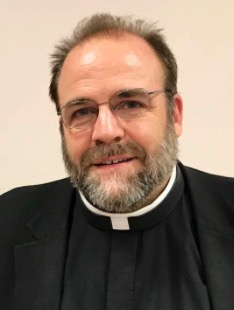
The Image That is Extolled: The focus should be on seeing the world’s spiritual needs rather than solely categorizing people as believers or non-believers. Everyone is precious to the Lord, and we must help in feeding them with grace, mercy, truth, and love.
The Insufficiency That is Expressed: Overwhelmed feelings are understandable when facing the task of evangelizing and feeding the world. Though we may have limited resources, we should work with Jesus and remember that He is there to help us.
The Immensity That is Experienced: We are encouraged to recognize the spiritual hunger in the world and work together with Jesus to provide spiritual nourishment, even in the face of seemingly impossible challenges. Through this collaboration, we can witness miraculous results.
Bishop John Louis

Bishop John Louis
God’s Ability to Provide Abundantly: God has the power to do far more than we can imagine, as demonstrated in the first and gospel readings.
The Miracle of Loaves and Fishes: In both stories, small amounts of food are miraculously multiplied to feed large groups of people, illustrating God’s ability to provide beyond our expectations.
God’s Provisions in Modern Times: The homily shares examples of God providing blessings and miracles in unexpected ways in people’s lives today.
Fr. Michael Chua
Fr. Michael Chua

Importance of the Eucharist: The readings emphasize the centrality of the Eucharist in the life of the Church, reminding us that we can never exhaust the significance of this sacrament.
Elisha and Jesus’ Miracles: A comparison between the miracles of Elisha and Jesus, highlighting that Jesus’ miracle is greater in scale and significance, demonstrating his divinity and superiority.
Eucharistic Motif: The gospel story of the multiplication of loaves and fishes is interpreted as a foreshadowing of the institution of the Eucharist, using similar language and imagery, emphasizing the link between this miracle and the sacrament.
Importance of Offering: The miracles of Elisha and Jesus were performed using offerings from anonymous individuals, symbolizing the significance of humble contributions in God’s work.
Collaboration with God: The Eucharist prayers remind us of our role as collaborators with God in His work of creation and redemption, as our offerings are transformed into something eternal.
Participation in Fulfillment: Our participation in offering our labors to God gives human work its authentic meaning, as it becomes united with Christ’s redemptive sacrifice through the celebration of the Eucharist.
Archived homily from 2018
Fr. Vincent Hawkswell
Fr. Vincent Hawkswell

Typology in Scripture: The concept of “types” in the Bible refers to events in the Old Testament that prefigure or foreshadow events in the New Testament, such as the feeding miracles and the Eucharist.
Miracles and God’s Power: Miracles performed by Jesus, as God incarnate, demonstrate his unity with God the Creator and reveal the divine power behind both ordinary and extraordinary events.
Gratitude for God’s Bounty: Recognizing God’s role in providing for our needs through both natural and miraculous means encourages gratitude and acknowledgement of his presence in all aspects of life.
Fr. Tommy Lane
Fr. Tommy Lane
From Multiplication to Transubstantiation

Different Learning Styles and Jesus’ Miracles: Jesus’ miracles, such as the multiplication of loaves and fish, cater to various learning styles, demonstrating God’s power and preparing believers for understanding and accepting the Eucharist.
Preparation for the Eucharistic Miracle: Old Testament miracles involving food multiplication serve as precursors to Jesus’ miracle, ultimately leading to the understanding of the Eucharist as the body and blood of Christ.
Transubstantiation and Faith: The transformation of bread and wine into the body and blood of Christ during Mass, known as transubstantiation, is an act of faith and affirmed through various Catholic practices and liturgical celebrations.
Fr. John Kavanaugh, S.J.
Fr. John
Kavanaugh, S.J.
The Bread of Life

Eucharistic Controversies and Reverence: The Gospels present ongoing debates surrounding the Eucharist, and challenges in reverence persist in modern Catholic practice, emphasizing the need to recognize and appreciate the sacredness of the sacrament.
Interpretations and Misconceptions: Misunderstandings and varying beliefs about the Eucharist highlight the importance of education and clear communication regarding transubstantiation and the true presence of Christ.
The Challenge of Faith in Miracles: Belief in the Eucharistic miracle, like other tenets of faith, requires a recognition of the transcendent and miraculous, challenging contemporary naturalist and materialist perspectives.
Fr. Leon Ngandu, SVD
Fr. Leon Ngandu, SVD
The Hand of the Lord Feeds Us; He Answers All Our Needs
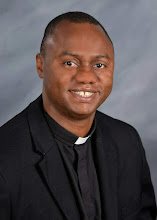
EXCERPT: Unlike in the Synoptic Gospels, in John, Jesus takes the initiative to find a way to feed the crowd through his question to Philip. Also, Jesus is not ignorant but aware of everything because he knows what he will do. The disciples do not understand how the crowd can be fed (5b-7.) This parallels Elisha’s servant, who did not comprehend how twenty barley loaves could feed a hundred people, as Elisha instructed them in our first reading (see 2Kgs 4:42-44). This section teaches us that we should not necessarily wait for the people to ask before we can help. Instead, like Jesus, we should realize the needs of the people and initiate actions to come to their aid. Also, like Jesus’ disciples in the Gospel and Elisha’s servants in the first reading, our lack of understanding and trust in God’s power prevents us from doing good. We do not need to have abundance before we help. Jesus and Elisha call us to assist people with all we have, even little ones, with great faith.
Bishop Frank Schuster
Bishop Frank Schuster
What Do You Hunger for Most?
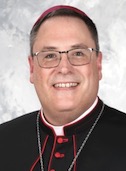
Spiritual Hunger and God’s Superabundant Grace: The story invites believers to examine their spiritual hunger and recognize that God’s grace is abundant and can meet their deepest needs.
Baptism and Following Jesus: The passage connects the concept of following Jesus to the Sacrament of Baptism, drawing parallels to the Hebrews’ journey with Moses across the Red Sea.
Jesus as the Connection to Heaven: The mountain symbolizes the connection between heaven and earth, emphasizing Jesus’ role in bringing people closer to heaven through his teachings and sacrifice.
The Feast of Passover and Jesus’ Sacrifice: The proximity of the Jewish Feast of Passover alludes to Jesus’ death and resurrection, highlighting his role as the “Lamb of God” who takes away the sins of the world.
The Symbolism of Numbers: The numbers mentioned in the passage, such as five, two, seven, and twelve, carry symbolic meanings that connect to the human condition, eternal life, and the Church’s foundation.
Following Jesus and Receiving Eternal Salvation: Following Jesus through baptism leads to a connection with heaven and provides spiritual nourishment for our journey towards eternal salvation.
Jesus as the Savior, Not a Political Ruler: Jesus’ focus is on being the savior of souls, not on earthly power or politics, which emphasizes the importance of prioritizing heavenly pursuits over earthly concerns.
God’s Abundant Grace and the Eucharist: God’s grace is abundant and offered through the Eucharist, which transforms earthly elements into the Body and Blood of Jesus, providing spiritual sustenance for believers.
Father Bob Warren, SA

The Relevance of Ancient Personalities: The characteristics of biblical figures, such as Philip and Andrew, can be observed in people today, demonstrating that human nature remains consistent over time.
Overcoming Pessimism and Embracing Possibility: The story of the loaves and fish teaches that even seemingly inadequate resources can lead to miraculous outcomes when given willingly and generously to God.
Our Responsibility to Address Global Challenges: Modern problems, such as hunger, poverty, and fear, affect all of humanity, and it is essential to recognize our interconnectedness and take action to make a difference.
The Call for Unity and Healing: St. Paul’s message encourages unity within the Church and urges believers to work together to address the needs of the world and those around them.
Small Acts of Kindness as Miracles: Ordinary gestures, such as offering support, forgiveness, and understanding, can make a significant impact and embody the spirit of Christ.
