October 26, 2025
October 26, 2025


Homilies
Homilies
Visual Summaries
Videos & Reflectioneflection Questions
Bishop Barron | Fr. Kevin Rettig | Msgr. Peter Hahn
Fr. Geoffrey Plant | Fr. Jude Langeh | Priests for Life
Homilies with Transcripts
Deacon Greg’s blog has garnered some 20 million readers from around the world since its inception in 2007.
30th Sunday of Year C

Work in Progress

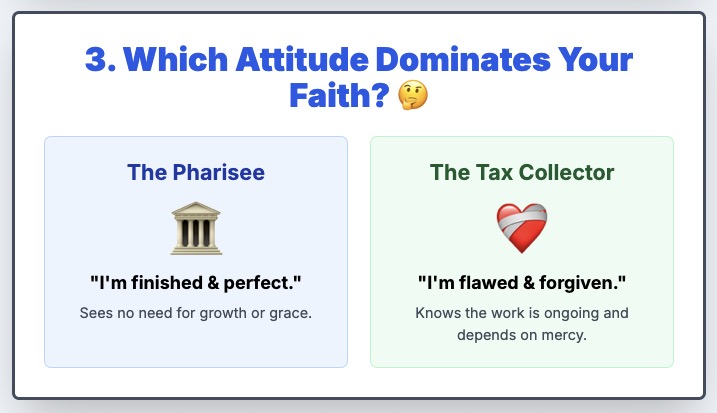
Click on infographics to enlarge them
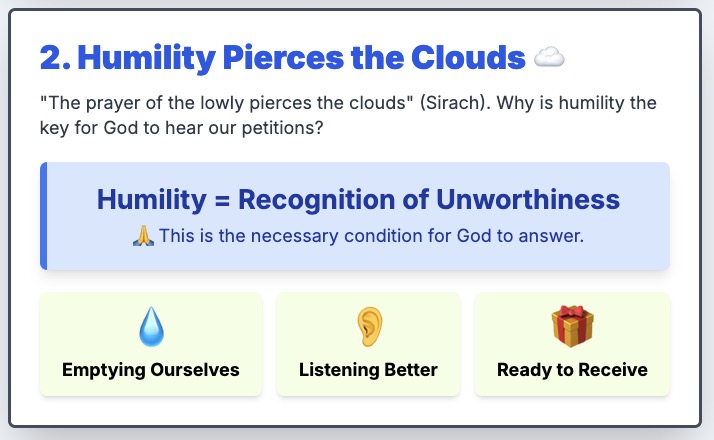


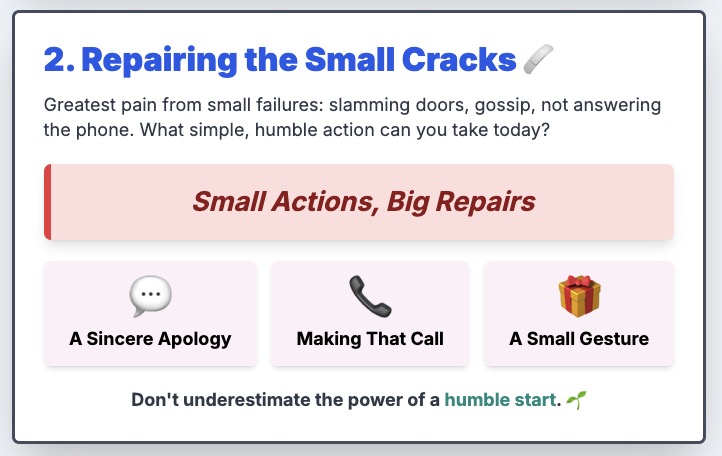
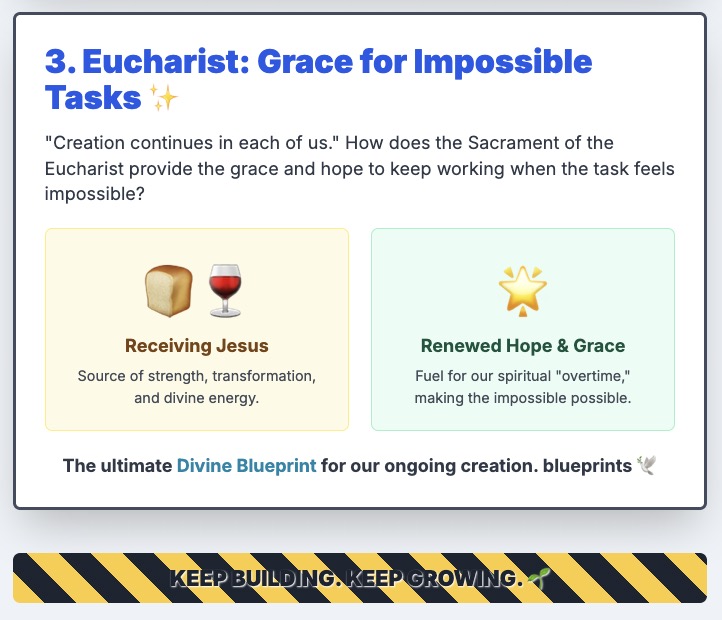
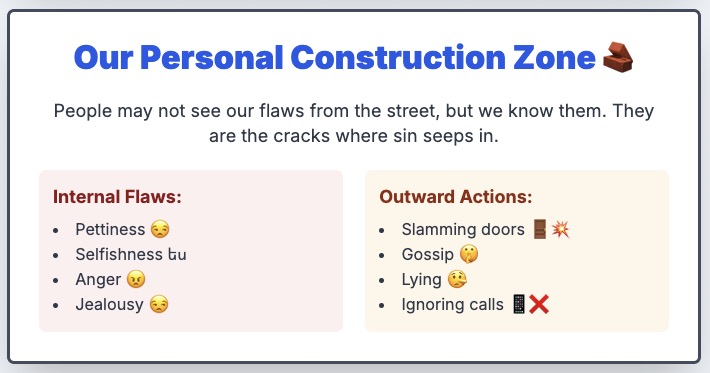
There’s an old joke: New York will be a great city — if they ever finish it.
The city is constantly being dug up and paved over. Buildings are being torn down and rebuilt– and the older ones are always in a state of repair or renovation. I have a feeling those scaffoldings will always be with us. The fact is, New York City is, and probably always will be, unfinished.
It is a work in progress.
And so, for that matter, are we.
That is what makes the parable Jesus tells us in today’s gospel so powerful…
— originally preached on October 28, 2007
────── ⋆⋅☆⋅⋆ ──────
Deacon Peter McCulloch
30th Sunday of Year C

CROSS AND CROWN (16:06) – Step into the footsteps of a wandering pilgrim on a quest for divine truth! This AI-generated short film brings to life the first chapter of The Way of a Pilgrim, the beloved Russian Orthodox classic that has guided Christians for centuries.

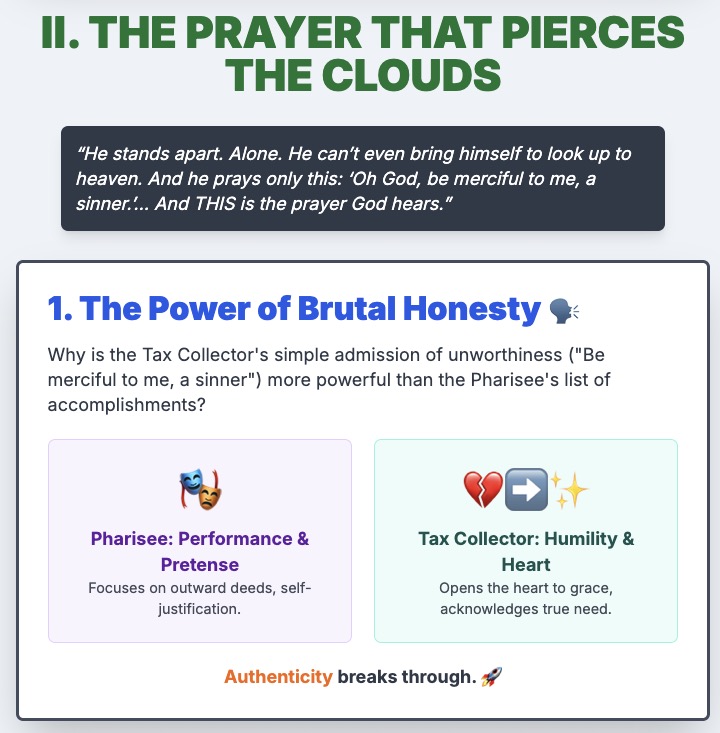
Click on infographic to enlarge it
Infographics on this page have been created using AI generative tools (i.e. GOOGLE'S AI Gemini 2.5 Flash LLM, Chart.js and Tailwind CSS). They are free to use for any non-profit ministry. THE WORD THIS WEEK kindly requests that you show your appreciation by sharing a link to the website.

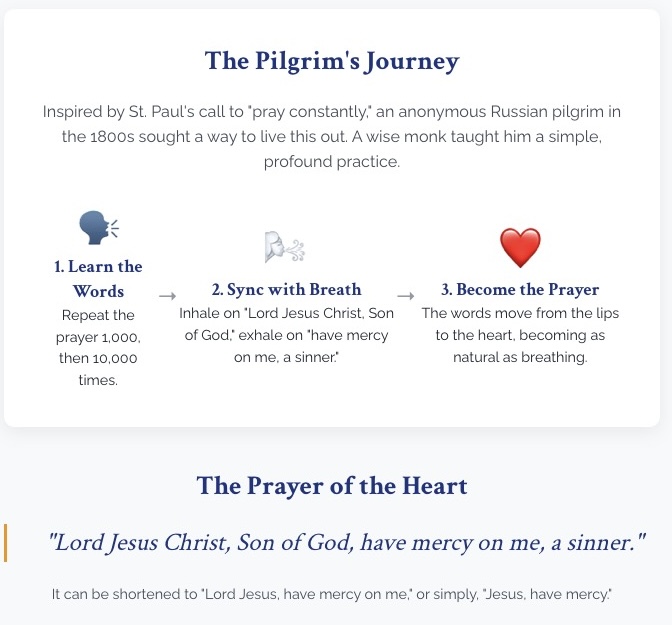
‘Pray constantly,’ St Paul tells the Thessalonians (1Thess.5:17).
But how can anyone pray constantly? That’s the question a young homeless man asks in the spiritual classic, The Way of a Pilgrim, written by an anonymous Russian author.
It’s the 1800s, and this young man hears St Paul’s words in an Orthodox church. He’s puzzled: how can anyone possibly pray non-stop?
He decides to go on pilgrimage to find an answer. He asks many people along the way, and eventually stops at a monastery, where an old monk agrees to help him understand what St Paul means.
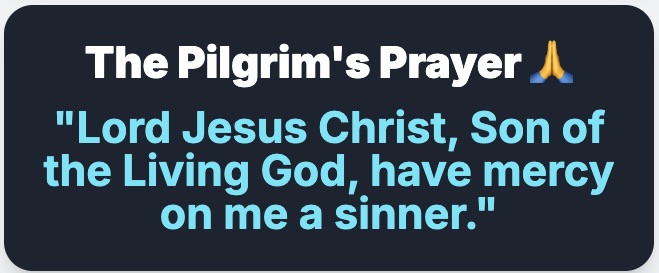
He begins by teaching him the Jesus Prayer.

SANCTUS (25:59) – This video into the journey of John Mary Vianney who became the patron saint of parish priests. Discover how his unwavering faith, dedication to the confessional, and deep love for God transformed the small village of Ars and left an enduring legacy in the Catholic Church.

Click on infographic to enlarge it
Infographics on this page have been created using AI generative tools (i.e. GOOGLE'S AI Gemini 2.5 Flash LLM, Chart.js and Tailwind CSS). They are free to use for any non-profit ministry. THE WORD THIS WEEK kindly requests that you show your appreciation by sharing a link to the website.
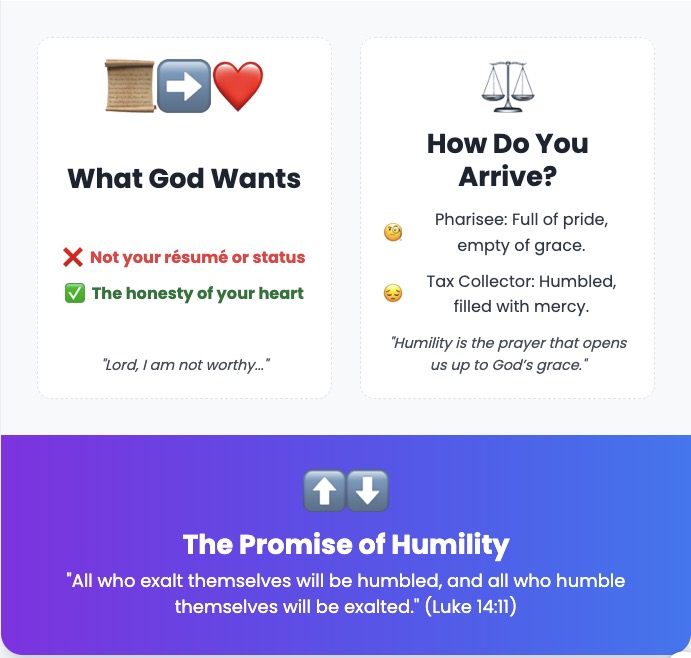
Many people today have a presence on social media. Whether it’s on Instagram, Facebook or some other app, they like posting images of their ‘best self’ – their holidays, successes and filtered photos. Rarely, however, are there any pictures of any failures, mistakes or struggles. This means that their profile is never complete.
In our prayer life, God doesn’t want any such filters. He wants the real us – our raw, messy, but honest selves. That’s what Jesus is saying in his Parable of the Pharisee and Tax Collector today.

────── ⋆⋅☆⋅⋆ ──────

30th Sunday of Year C
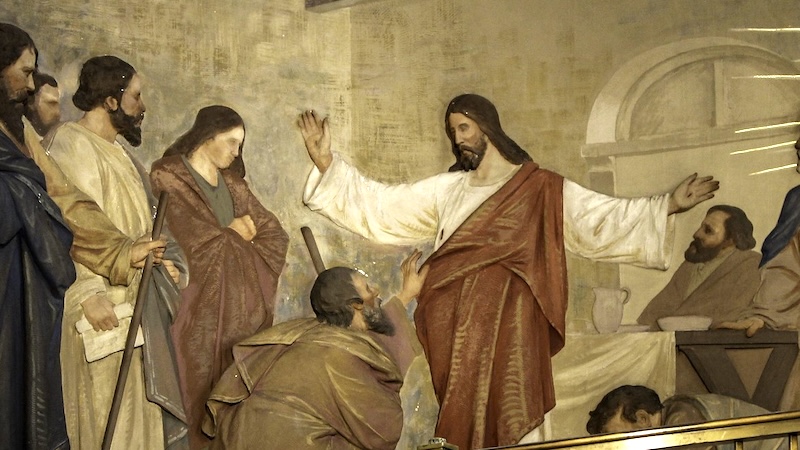
mage: ‘Christ’s Divine Mercy’ by Lawrence Lew OP

Click to enlarge

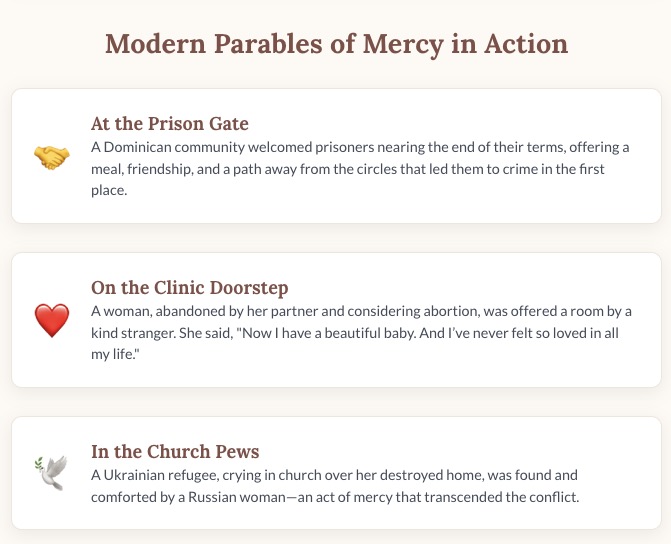
Thirtieth Sunday of the Year. Fr Dominic White invites us to engage imaginatively in the exercise of mercy.
WJust imagine. You’re in church, and in front of you, you see someone who you know to be a extortioner. You know that he’s got money out of your friends, money they can ill afford to pay. And there he is, praying.
Imagine again. Your country is under occupation. The occupying forces make you pay for the privilege – through that same extortioner and others like him. They don’t pay him a salary, of course. So he takes from you what they order him to take, and extra for himself.
That’s what a tax collector is in the New Testament. Not the UK government tax officers (never popular, for obvious reasons, but we do realise that public services have to be paid for somehow). No – this is an extortionist – and a traitor, because he’s not an occupying Roman, he’s a fellow Jew.


Thirtieth Sunday of the Year. Fr Bruno Clifton preaches on the judgement and mercy of God.
‘The Lord is the judge, and with him is no partiality…’ (Sirach 35:15b). This would seem to be a good thing. Justice is blind; no one is above the law. Wealth or influence will make no impression before the righteous Judge. Judgment will be based on the facts of the case, and one would assume that God knows all the facts. ‘No secrets are hidden from him’ (Ezekiel 28:3). Even a plea of otherwise good behaviour will not mitigate or persuade.
────── ⋆⋅☆⋅⋆ ──────
Fr. Austin Fleming
30th Sunday of Year C

The Pharisee in the Mirror
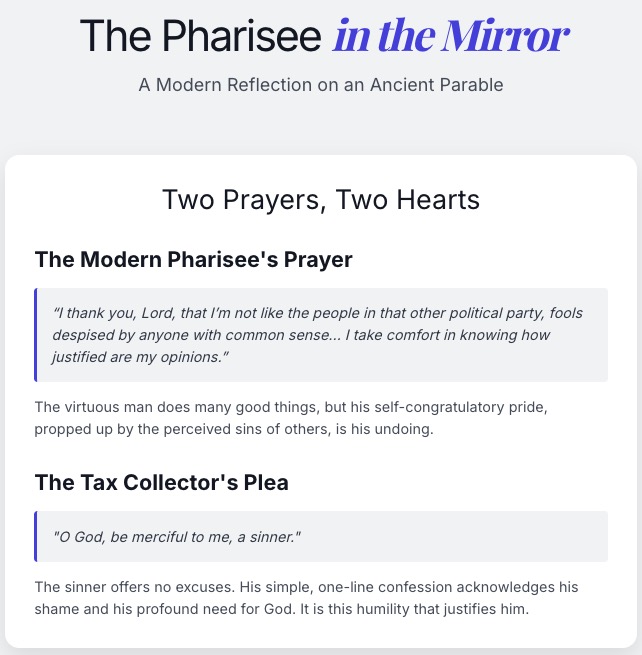

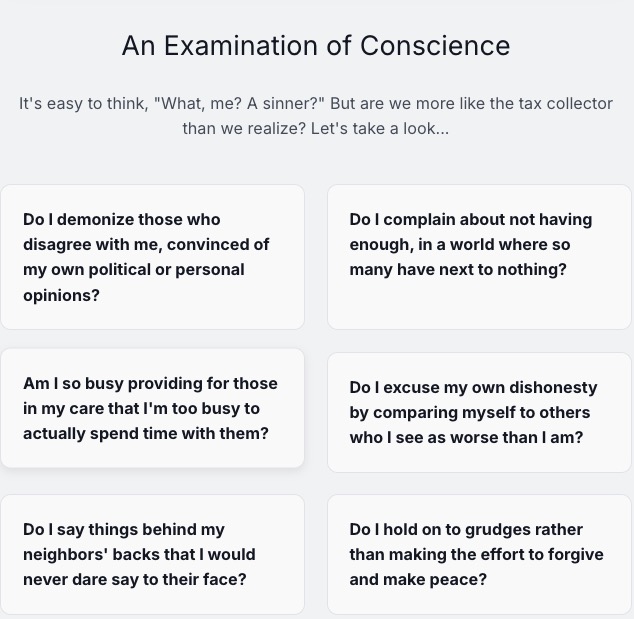
2016 — Make no mistake about it: the Lord’s message in this parable is aimed precisely at any of us who might have felt uncomfortable listening to my list of questions. It’s folks like the tax collector — and you and me — who are invited to seek the healing of God’s mercy. The Pharisee? He went home self-satisfied, patting himself on the back – and alone. The tax collector went home with God in his heart, God who filled him with peace when he bared his soul, came to terms with his sins – and asked for forgiveness.
Today, it’s us, you and I, who have “come up to the temple to pray” and like the Pharisee and the tax collector we stand before God and one another. May God keep us from pointing to the failings of others to justify ourselves and our own behavior. Instead, may we all bow and bend low before the Jesus, who humbled himself and bowed his head on the Cross for us and who now invites us to his table to share in, to feast on, the gift of his mercy.
────── ⋆⋅☆⋅⋆ ──────
Fr. Jude Siciliano, O.P.

30th Sunday of Year C

“I”—”Me”
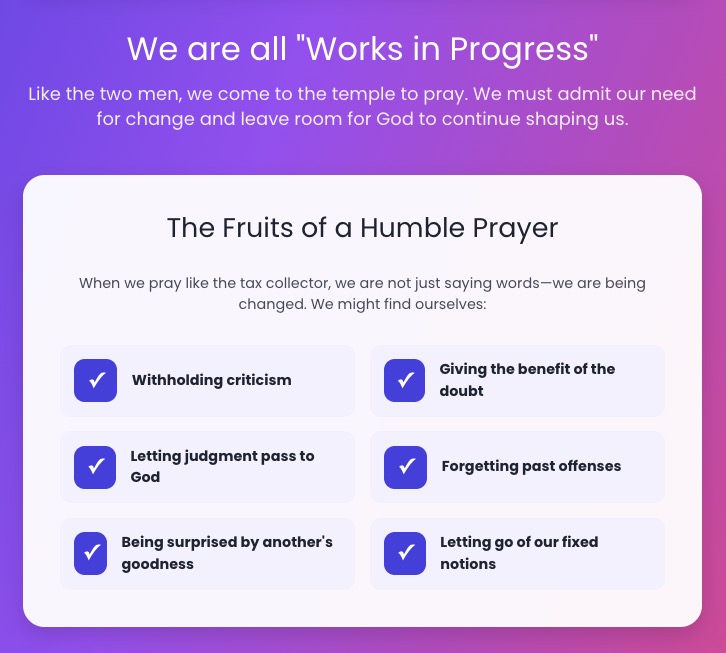
In his brief prayer the Pharisee said “I” four times. While he seems to thank God for his goodness, he really is patting himself on the back. In his view he is singular and unique…. On the other hand, we don’t hear the word “I” from the tax collector. He refers to himself by using “me”—”O God, be merciful to me a sinner.”
“I”—”Me” What’s the difference? One (“I”) is the subject of the sentence, the cause of the action. The other (“ME) is the object, the recipient of another’s action. The tax collector can’t achieve mercy on his own, he reveals his need and desire for God to do something for him. He wants to be changed and he trusts that God will help him make the necessary change in his life.
────── ⋆⋅☆⋅⋆ ──────
Fr. Charles E. Irvin
30th Sunday of Year C



Click to enlarge
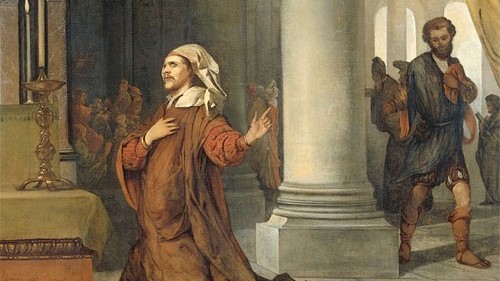
Two Men Went to Pray…

In his homily, Father Irvin delves into the famous parable of the Pharisee and the tax collector to explore the nature of our relationship with God. He argues that the story’s core message is not about comparing ourselves to others or judging who is “holier,” but about honestly seeing ourselves as individuals in the eyes of God.
The foundation of this relationship, Fr. Irvin explains, is that God chooses us first; His love is a gift we haven’t earned. We often run from this love, fearing it’s too demanding or that we’ll lose control of our lives. However, God’s love is unique to each person. He doesn’t grade on a curve or see one child as better than another; He sees our hearts, our struggles, and how we individually respond to the love He offers. Comparing ourselves to those we deem “worse” is simply a way to avoid taking responsibility for our own actions.
Fr. Irvin reframes the common criticism that Catholicism is a “guilt trip,” calling it a “reality trip” instead. The faith realistically acknowledges that we are human and will sin, but its ultimate goal is not to create guilt, but to offer God’s profound mercy. The greatest saints recognized themselves as the greatest sinners because they truly understood the depth of God’s love and their need for it.
Fr. George Smiga
30th Sunday of Year C

Click to enlarge
A Trap in the Gospel

2004 HOMILY – In his homily, Father Smiga explains that the parable of the Pharisee and the tax collector is designed as a trap to expose our prejudices. He begins by providing historical context, noting that Jesus’ original audience would have viewed the Pharisee as a sincere, respected religious figure and the tax collector as a universally hated sinner. The trap is sprung when Jesus reverses these roles, justifying the humble tax collector instead of the self-righteous Pharisee, thereby overturning the listeners’ expectations.
Fr. Smiga argues that this parable serves as a powerful warning against pre-judging others. We often make quick, superficial judgments based on someone’s profession, appearance, or background. To illustrate this, he sets modern traps for the congregation (c.f. infographic below).
He concludes that if we believe we know the answer, we have fallen into the trap of prejudice. We cannot know who prays better until we hear their prayer and understand who they are as individuals. The homily’s core message is a call to recognize and admit our own prejudices and to ask God for the strength to change.

30th Sunday of Year C

Click to enlarge

Why We Are Here

Monsignor Pellegrino’s homily explores why people attend church, concluding it’s not out of spiritual arrogance like the Pharisee, but from a genuine need for God. He centers on the tax collector’s humble prayer, “Lord, have mercy on me a sinner,” as the core of our relationship with God—a relationship initiated and relentlessly pursued by God Himself. When we realize how we’ve resisted His love, we too must ask for mercy. Msgr. Pellegrino reframes the idea of Catholic “guilt trips” as “reality trips,” where acknowledging sin serves to emphasize God’s profound mercy. The homily concludes that the congregation, like the tax collector, is present out of a humble recognition of their need for God’s healing love.

────── ⋆⋅☆⋅⋆ ──────
30th Sunday of Year C

Standing in Need of Prayer
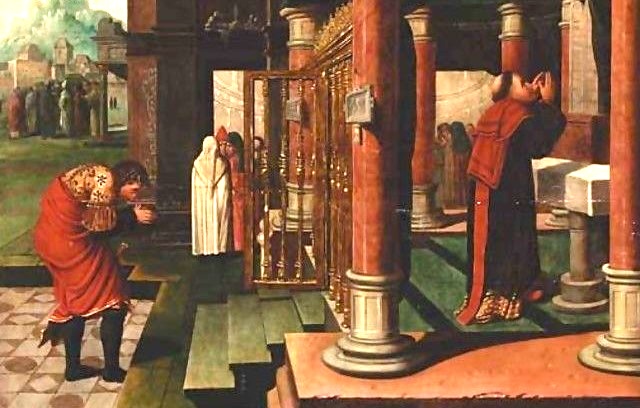
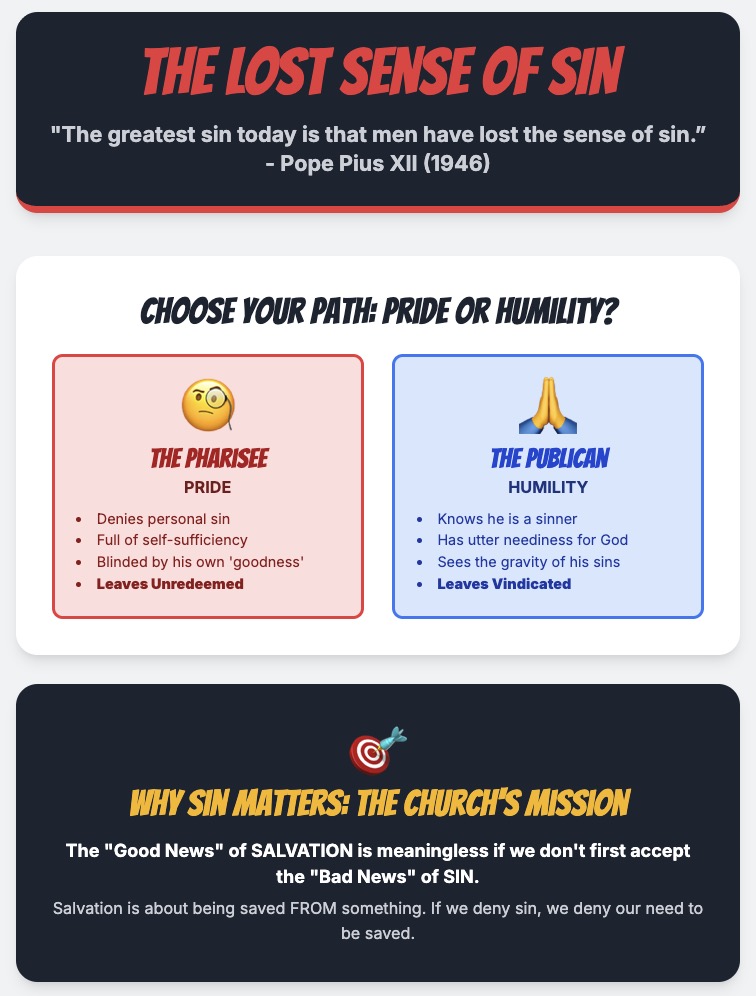
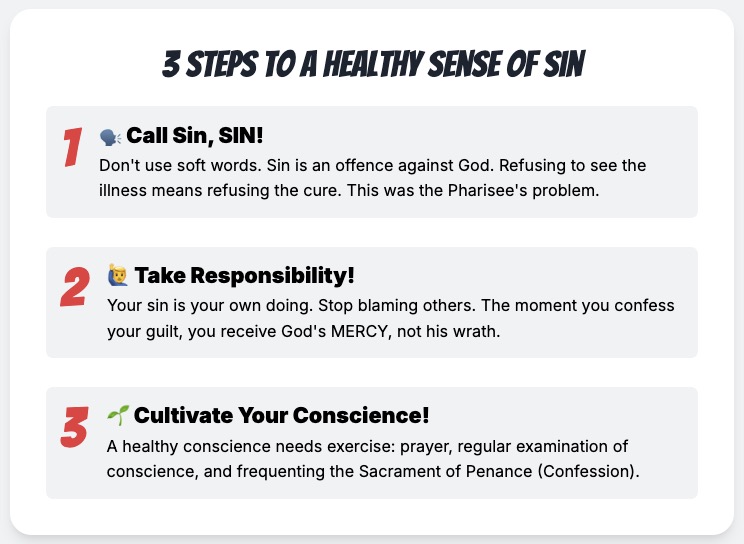
There’s an old saying that goes, “Faults in others I can see, but praise the Lord, there’s none in me.” One is snared in sin by the very act of claiming to have no sin! In fact, it’s the biggest sin of all: pride.
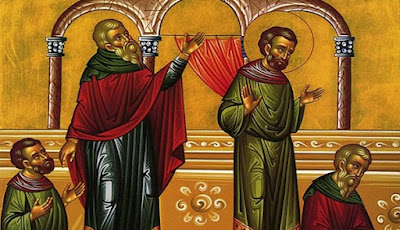
In the Sunday Gospel, the Lord illustrates this through the parable about two men who go to the temple to pray. One man commits the sin of pride and leaves unjustified. The other, though a great sinner, receives the gift of justification through his humility. Let’s look at what the Lord teaches us.
I. Prideful Premise
II. Problematic Perspective
III. Prescribed Practice
IV. The Partnership of Prayer.
V. The Persistence of Prayer.
VI. The Product of Prayer.
────── ⋆⋅☆⋅⋆ ──────
Fr. Michael Chua
30th Sunday of Year C


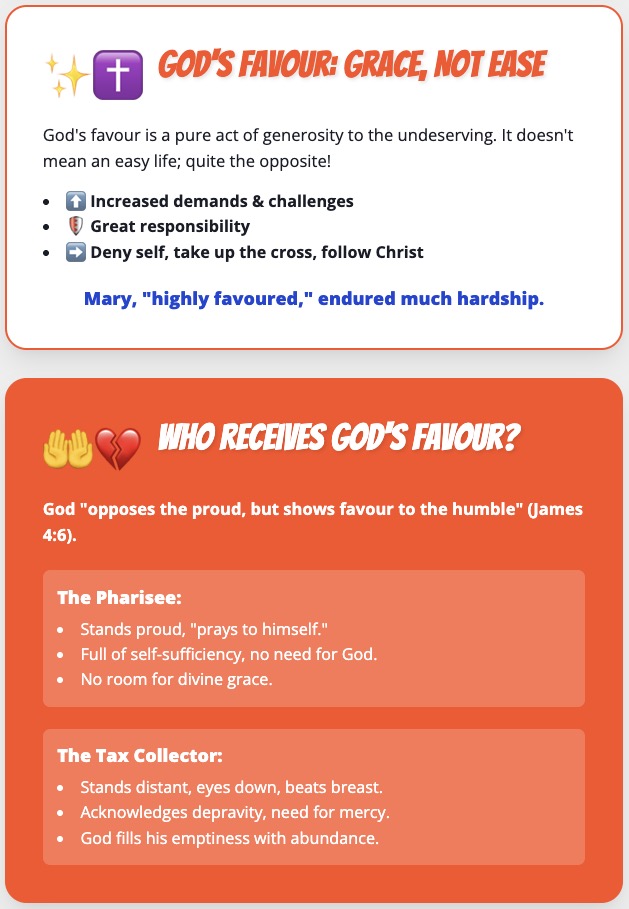

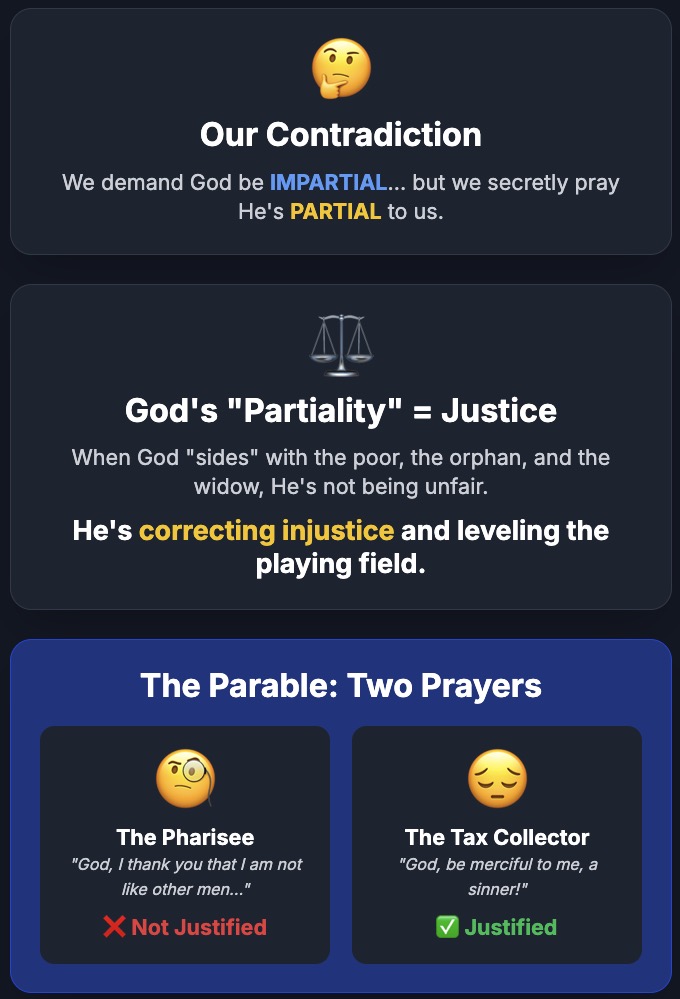
Fr. Chua’s homily questions if God has favorites, noting that while He is a fair judge, scripture suggests a preference for the poor and vulnerable. A key distinction is drawn between human “favoritism”—unfair preference leading to an easier life—and God’s “favour,” which is a generous gift to the undeserving that often brings greater responsibility and challenges, as seen with the Virgin Mary.
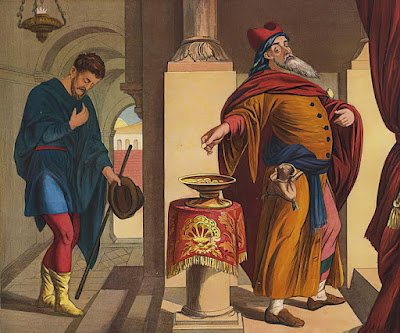
The parable of the Pharisee and the tax collector shows who receives this favour. The proud Pharisee, seeing no need for God, receives nothing. In contrast, the humble tax collector acknowledges his emptiness and need for mercy, creating a space for God’s grace. God favours the weak and humble because their vulnerability leads them to recognize their total dependence on Him, whereas the self-sufficient leave no room for God.
Ultimately, God doesn’t play favorites because His grace is unlimited and available to all. The true gift accompanying His favour is the cross, which all who are favoured must carry on the path to salvation.
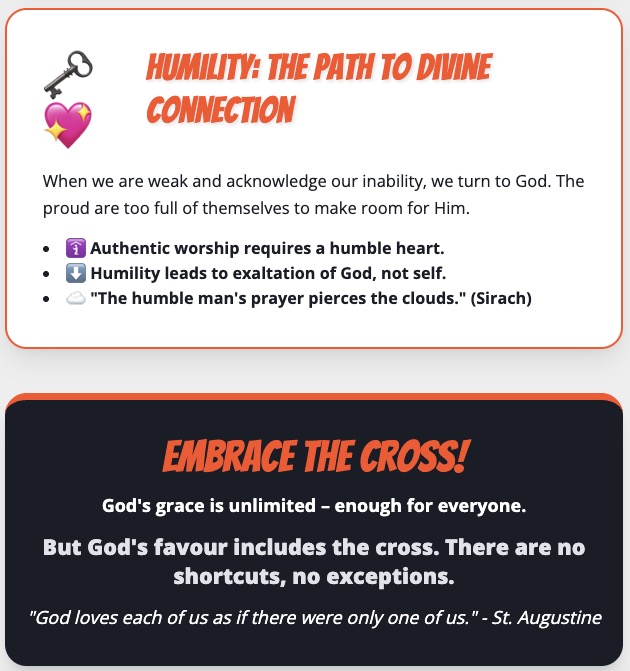
Fr. Chua’s homily highlights the story of ten lepers healed by Jesus, emphasizing that the only one who returned to give thanks was a Samaritan—a despised outcast. This narrative contrasts the Samaritan’s profound gratitude with the other nine’s sense of entitlement. Unable to present himself to a Jewish priest, the Samaritan’s only course of action was to return to the source of his miracle, Jesus.
This act exposes our modern culture of entitlement, which strangles gratitude and prayer. We often take blessings for granted and complain when they cease. The homily posits that true prayer flows from gratitude and desperation, which difficulties can often reveal. Ultimately, the Samaritan’s thankfulness earned him a greater gift than healing: salvation. Jesus’s words, “Your faith has saved you,” reveal that gratitude is the soil in which the gift of saving faith grows and blossoms.
The Impartial God has Favorites
God may appear to be partial while He is really levelling the playing field. When He sides with the poor, the oppressed and even with sinners, He is actually correcting the injustice which they are suffering at the hands of others or due to sin. The values of the Kingdom of God may appear to be upside down when compared to our earthly experience, but it is actually the right side up of how things should be. God loves this beautiful but broken creation of His, and He is going to heal it and remake it according to His original plan. This is what we are witnessing in today’s readings.

────── ⋆⋅☆⋅⋆ ──────
Fr. Jude Langeh, CMF

30th Sunday of Year C

More Resources for Preachers
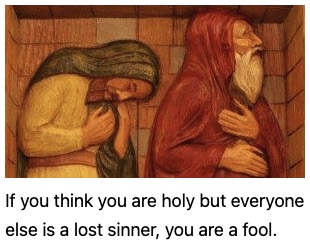
Doctrinal Homily Outlines
The reflection questions and infographics featured in this section have been created with the help of Google Gemini 2.5 AI tools, using Chart.js and Tailwind CSS. THE WORD THIS WEEK is happy to offer these resources to any non-profit ministry for use, and kindly request that you provide credit to the website and the respective contributors whose content is illustrated.